Where Striped Bass Spawn in Maryland
If you've ever cast a line into Maryland's renowned waters, particularly the Chesapeake Bay, you know the thrill of potentially hooking into a striped bass, our beloved rockfish. But have you ever stopped to wonder where these magnificent fish actually come from? Understanding the intricate dance of their spawning ritual and precisely which rivers they choose for this crucial annual event is key to appreciating and protecting this vital fishery. This guide will take a deep dive into the specific spawning grounds of striped bass in Maryland, helping you understand their migratory patterns and the environmental factors that make these locations so critical.
The Chesapeake Bay: The Heart of Striped Bass Reproduction
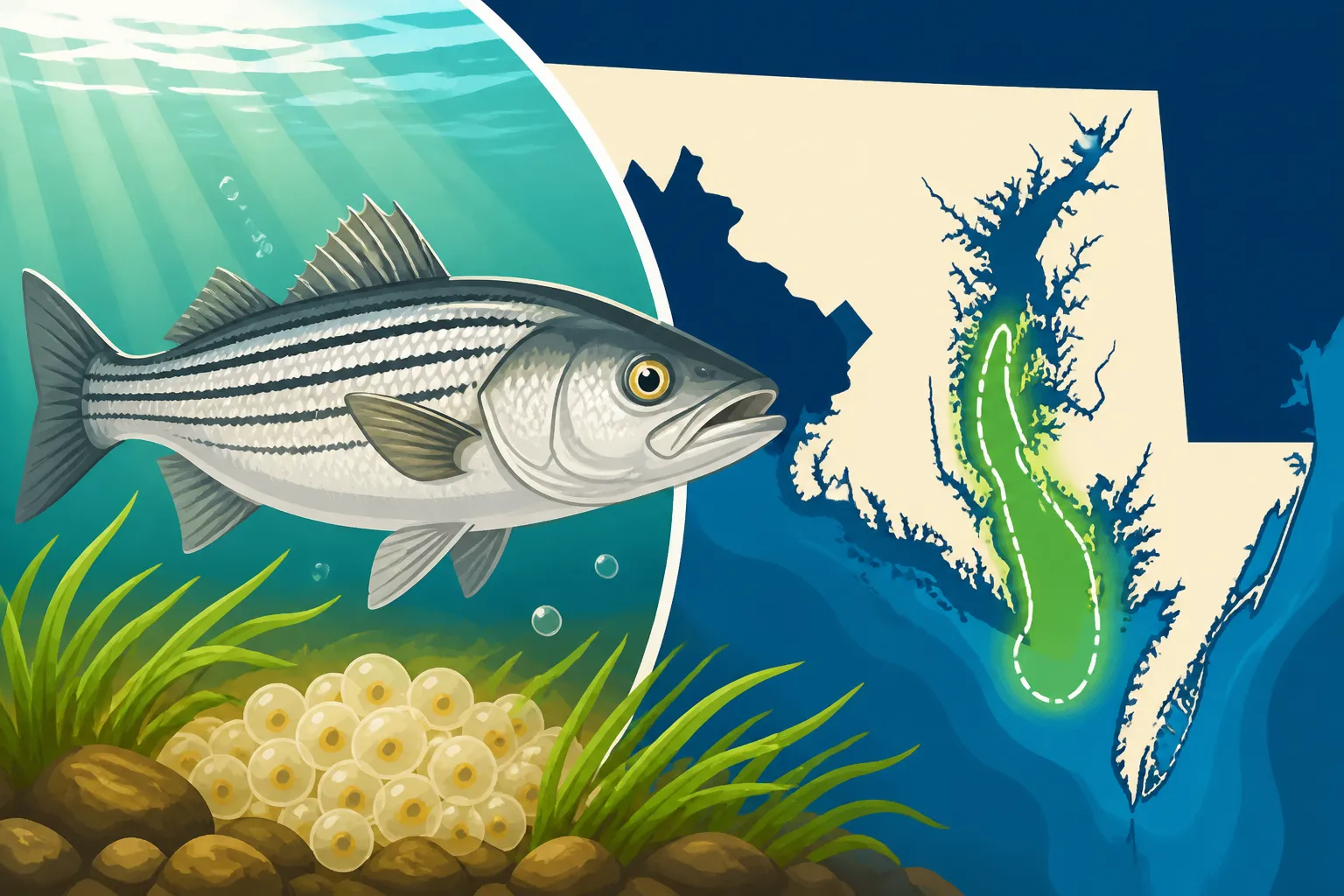
The Chesapeake Bay isn't just a national treasure; it's an absolute powerhouse when it comes to striped bass reproduction. It's often referred to as the largest and most important striped bass nursery area on the Atlantic coast, a title it has proudly held for centuries. For many anglers, the thought of the Bay immediately conjures images of massive schools of rockfish, but the real magic happens in its freshwater tributaries.
Historical Significance of the Bay for Striped Bass
For generations, the Chesapeake Bay has been the primary spawning and nursery ground for the majority of the Atlantic Coast's striped bass population. This isn't just a recent phenomenon; historical records and scientific studies confirm its enduring importance. Year after year, adult striped bass, some of which migrate from as far north as Maine or as far south as North Carolina, make their pilgrimage back to the Bay. They're driven by an ancient instinct, returning to the very waters where they were born to ensure the next generation survives. This cyclical journey is a testament to the Bay's incredible ecological productivity and its unique estuarine characteristics. Without the Chesapeake Bay, the Atlantic striped bass fishery as we know it simply wouldn't exist.
Ideal Conditions for Reproduction
What makes the Chesapeake Bay and its tributaries so perfect for striped bass spawning? It's a delicate balance of conditions that Mother Nature provides each spring. Striped bass are anadromous, meaning they spend most of their adult lives in saltwater but migrate to freshwater to spawn. The Bay's vast network of rivers offers the ideal salinity gradient – moving from the brackish waters of the main Bay into the completely fresh waters of its upper reaches and tributaries. When springtime temperatures hit just the right sweet spot, typically between 50 and 68 degrees Fahrenheit (10-20 degrees Celsius), the female stripers release their eggs, and the males fertilize them. The current of these rivers is crucial, keeping the semi-buoyant eggs suspended in the water column until they hatch. Too much salinity, too little freshwater flow, or an abrupt temperature change can severely impact the success of a spawning season.
The Journey to the Spawning Grounds
As winter gives way to spring, adult striped bass begin their incredible migration up the Chesapeake Bay and into its various freshwater rivers. This isn't a casual stroll; it's a determined, energy-intensive journey. These fish, often referred to as "brood stock," are carrying the future of the species. They navigate complex waterways, sometimes traveling dozens or even hundreds of miles upstream from the main Bay. Their internal clocks and biological cues are exquisitely tuned to detect changes in water temperature and flow that signal the optimal time and place to release their eggs. This upstream migration is why you often see temporary fishing restrictions or closures in these specific rivers during the peak spawning season, all designed to protect these vulnerable fish during their most critical life stage. For anglers hoping to experience the action during other times, understanding Maryland Striped Bass Season and Rockfish Rules is essential.
Key Spawning Rivers and Tributaries
While the entire Chesapeake Bay system is vital, specific rivers stand out as particularly crucial for striped bass spawning. These are the arteries of the Bay, providing the pristine freshwater and habitat necessary for successful reproduction.
The Choptank River: A Prime Example
On Maryland's Eastern Shore, the Choptank River is perhaps one of the most celebrated and studied striped bass spawning rivers. Its expansive watershed and relatively stable environmental conditions often make it a consistent producer of juvenile striped bass. The upper reaches of the Choptank, particularly around Greensboro and above, as well as its tributaries like Tuckahoe Creek, are prime spawning grounds. Here, the river narrows, the current flows steadily, and the water becomes completely fresh – perfect for the striped bass's broadcast spawning ritual. The health of the Choptank is often seen as a barometer for the overall success of the Bay's striped bass population, and it's a focus for many conservation efforts. Anglers interested in fishing this area during appropriate seasons can find more information in our guide to Fishing the Choptank River.
The Nanticoke River: Eastern Shore Gem
Another critical Eastern Shore river is the Nanticoke. Flowing through a more rural landscape, the Nanticoke maintains significant stretches of undeveloped shoreline and vast wetlands, providing excellent water quality and diverse habitats. Striped bass move far upstream into the Nanticoke, well past Seaford, Delaware, to find those crucial freshwater spawning zones. The river's winding course and varied bottom structure offer protection for larval fish and juveniles. The Nanticoke's relatively wild nature also means it supports a robust ecosystem, which indirectly benefits the striped bass by providing a healthy food web for the developing young. Efforts to control invasive species like blue catfish and snakehead in rivers like the Nanticoke are also important for the overall health of the striped bass population, which shares these waters with them. For example, you can learn more about Maryland Invasive Fish Rules: Blue Catfish and Snakehead.
The Potomac River: A Vital Western Shore Tributary
The Potomac River is an immense and complex system, forming a significant portion of Maryland's western boundary with Virginia and extending deep into the heart of the Mid-Atlantic. Its freshwater tidal reaches, especially those upstream from Washington D.C., are incredibly important spawning areas for striped bass. The sheer volume of freshwater and the vastness of its estuarine system make it a powerhouse for reproduction. Striped bass will travel considerable distances up the Potomac, often beyond the fall line, to find suitable spawning locations. The Potomac's size means that it can support a large spawning effort, contributing substantially to the overall Bay population. Managing the Potomac River fishery involves cooperation between multiple jurisdictions, making its conservation a complex but vital endeavor. Those looking to fish these waters can check out Fishing the Potomac River in Maryland.
Other Important Rivers: Susquehanna, Patuxent, Chester, Severn
While the Choptank, Nanticoke, and Potomac are arguably the largest players, many other Maryland rivers and major creeks also serve as important striped bass spawning grounds.
- Susquehanna River: The Susquehanna Flats, just below the Conowingo Dam, is famous for its incredible early spring fishery. While some large fish are caught here, the main spawning activity for striped bass typically occurs further upstream in the freshwater portions of the river and its immediate tributaries. However, the Flats themselves are a critical staging and feeding area before and after spawning.
- Patuxent River: This Western Shore river, flowing through southern Maryland, also hosts a significant striped bass spawning run. Fish move up into its freshwater tidal sections to complete their reproductive cycle. The Patuxent has seen significant recovery efforts and is a testament to dedicated conservation. You can explore Fishing the Patuxent River for more information.
- Chester River: Located on the Eastern Shore, the Chester River is another key spawning tributary. Its broad, shallow upper reaches provide suitable habitat for developing eggs and larvae. Fishing the Chester River provides a closer look at this important waterway.
- Severn River: Closer to Annapolis, the Severn also sees a contingent of striped bass making their way upstream to spawn in its fresh headwaters. While perhaps not as massive in scale as the Choptank or Potomac, it's a crucial local spawning area and nursery.
Each of these rivers, big or small, plays a unique and essential role in the intricate tapestry of the Chesapeake Bay's striped bass life cycle.
Here's a quick overview of some of these vital spawning waterways:
| River Name | Location (Shore) | Primary Spawning Area Characteristics | Key Factors for Success |
|---|---|---|---|
| Choptank River | Eastern Shore | Upper freshwater reaches (e.g., above Greensboro, Tuckahoe Creek) | Stable temperatures, good water quality, ample freshwater flow |
| Nanticoke River | Eastern Shore | Upper freshwater reaches (e.g., above Seaford, DE) | Undisturbed riparian zones, clear water, consistent flow |
| Potomac River | Western Shore | Freshwater tidal reaches (e.g., above Washington D.C.) | Large volume of freshwater, diverse habitat, sustained flow |
| Susquehanna River | Upper Bay | Upper river system (above the Flats), some adjacent tributaries | Freshwater current, large water volume |
| Patuxent River | Western Shore | Upper freshwater tidal sections | Good water quality, recovery efforts paying off |
| Chester River | Eastern Shore | Broad, shallow upper reaches, often tidal freshwater | Productive nursery habitat, lower salinity |
| Severn River | Western Shore | Freshwater headwaters and upper tidal reaches | Local importance for Annapolis-area fish |
The Biological Process of Striped Bass Spawning
The journey of striped bass to their spawning grounds culminates in a truly remarkable biological event. Understanding this process highlights just how vulnerable these fish are during this critical period.
The Spawning Ritual: Broadcast Spawning
When conditions are just right – water temperature, current, and light – female striped bass release their eggs directly into the freshwater column. This process is known as broadcast spawning. There's no nest building, no parental care beyond the initial fertilization. Multiple males will gather around a ripe female, jostling for position, and release their milt (sperm) as she releases her eggs. It's a chaotic, energetic event designed to maximize the chances of fertilization in the flowing water. A single large female can release millions of eggs, but only a tiny fraction will ever survive to adulthood. These eggs are semi-buoyant, meaning they drift gently with the current, gradually sinking and rising as they develop. This drift is crucial; if they settle on the bottom in stagnant water, they quickly perish due to lack of oxygen or siltation.
Egg Development and Larval Stage
Once fertilized, the striped bass eggs begin a rapid development process, typically hatching within two to three days, depending on water temperature. The newly hatched fish, called larvae, are tiny, barely visible to the naked eye, and look nothing like adult fish. They have a yolk sac that provides initial nourishment. During this incredibly delicate larval stage, they are entirely at the mercy of the river's currents, drifting downstream towards the more brackish waters of the estuary. They begin to feed on microscopic organisms in the water. Any sudden environmental shock – a drastic change in temperature, a massive influx of freshwater from heavy rains, or high levels of pollution – can wipe out an entire year class of these vulnerable larvae. This fragility is a huge part of why the timing and conditions in the spawning rivers are so incredibly critical each spring.
Juvenile Nurseries
As the larvae continue their downstream drift and grow, they transform into juvenile striped bass, developing fins and scales, and beginning to resemble miniature versions of the adults. These juveniles then settle into the rich nursery habitats of the upper and middle Chesapeake Bay and its tidal tributaries. These shallow, productive areas – often marshy shorelines, submerged aquatic vegetation beds, and mudflats – provide abundant food and shelter from predators. They feed on small crustaceans and fish, growing rapidly throughout the summer and fall. The success of a "year class" – all the fish born in a particular year – is largely determined by the availability and health of these nursery grounds. Protecting these habitats, along with the spawning rivers, is paramount for a sustainable fishery. For a deeper dive into their early life, checking out resources like those on Amazon for marine biology or Chesapeake Bay ecology can provide fascinating insights.
Factors Affecting Spawning Success
The success of the striped bass spawning season isn't guaranteed; it's a delicate balance influenced by a multitude of environmental factors. Slight shifts can have profound impacts on the number of fish that survive to adulthood.
Water Temperature and Salinity
These two factors are arguably the most critical for successful striped bass spawning. The ideal water temperature range for spawning is quite narrow, typically between 50 and 68 degrees Fahrenheit (10-20 degrees Celsius). If temperatures rise too quickly or too slowly, or if there's a sudden cold snap after spawning has begun, it can drastically reduce egg survival and larval development. Similarly, salinity plays a vital role. Striped bass eggs need freshwater to develop properly. If a drought leads to higher salinity levels extending too far upstream into traditional spawning areas, or if strong tides push saltwater wedges further into the rivers, the eggs may not develop or hatch successfully. Conversely, too much freshwater flow can push eggs out of optimal nursery areas too quickly. This delicate balance is something that scientists monitor closely year after year.
Water Flow and Rainfall
The amount of freshwater flowing down the rivers during the spawning season is another significant determinant of success. Moderate, consistent flow is ideal, keeping the eggs suspended and distributing them gently into the nursery areas downstream. However, heavy spring rains can lead to excessive freshwater runoff, creating torrents that flush eggs out of the system too rapidly or overwhelm the delicate larvae. This runoff also often brings with it increased sediment and pollutants, which can further degrade water quality and reduce oxygen levels, creating lethal conditions for developing eggs and larvae. On the flip side, periods of drought and low flow can mean less oxygenated water, higher water temperatures, and potentially higher salinity moving upstream, all detrimental to spawning.
Habitat Degradation and Pollution
Over time, human development along the shorelines of Maryland's spawning rivers has led to significant habitat degradation. Sedimentation from unchecked erosion can smother spawning beds and fill in crucial nursery habitats. Nutrient pollution from agricultural runoff and wastewater treatment plants fuels algal blooms, which, when they die and decompose, create vast "dead zones" with dangerously low oxygen levels. Chemical pollutants, like pesticides and industrial discharge, can directly poison eggs and larvae or impact the invertebrates they feed on. These cumulative impacts stress the ecosystem and make it harder for striped bass to successfully reproduce and for juveniles to survive their early, vulnerable stages. Continuous efforts are being made to improve water quality, but it's a long and challenging road.
Impact of Human Activity and Fishing Pressure
While fishing is typically prohibited in the primary spawning areas during the peak spawning window – known as Maryland Spawning River Closures for Striped Bass – human activity outside these regulations or just outside the closed zones can still impact the success of the spawn. Catch-and-release fishing, even when done carefully, can stress fish that are carrying millions of eggs. Boats moving through sensitive shallow areas can disturb spawning activity or churn up sediment. Beyond direct fishing pressure, things like dredging, shoreline construction, and even recreational boating can have an effect. This is why it's so important for anglers to be aware of and respect all fishing regulations and to practice responsible boating, especially in the spring. Understanding how long a Maryland fishing license lasts, for instance, helps ensure you're always fishing legally and responsibly.
Conservation Efforts and Management of Spawning Areas
Protecting the striped bass fishery in Maryland and across the Atlantic Coast is a multi-faceted endeavor that relies heavily on sound science, adaptive management, and the cooperation of anglers and the public. A significant part of this effort focuses directly on the spawning grounds.
Protecting Spawning Habitats
Conservation organizations and state agencies like the Maryland Department of Natural Resources (DNR) are actively involved in protecting and restoring critical spawning habitats. This includes initiatives to reduce nutrient and sediment runoff into rivers, restore riparian buffers (vegetated areas along riverbanks) that filter pollutants and prevent erosion, and protect wetlands that serve as vital nursery areas. Projects might involve planting trees along riverbanks, upgrading wastewater treatment facilities, or implementing best management practices in agriculture. The goal is to ensure the water quality and physical structure of these rivers remain conducive to striped bass reproduction. Many of these efforts require long-term commitment and funding, often supported by environmental grants and angler contributions.
Fishing Regulations During Spawning Season
One of the most direct and impactful conservation measures is the implementation of specific fishing regulations during the striped bass spawning season. As mentioned, certain rivers and parts of rivers are often closed entirely to striped bass fishing during the peak spawning period in spring. These closures are designed to minimize disturbance to the spawning fish and protect the broodstock when they are most vulnerable. Even in areas where fishing is permitted, catch limits, size restrictions, and gear restrictions might be in place. These regulations are not arbitrary; they are carefully determined based on scientific monitoring of the striped bass population, aiming to allow enough adult fish to successfully reproduce each year to maintain a healthy and sustainable population. Keeping up to date on Maryland's 2026 Striped Bass Season Dates and Maryland Fishing Size and Catch Limits by Species is crucial for all anglers.
Monitoring and Research Initiatives
The Maryland DNR, in partnership with other state and federal agencies and academic institutions, conducts extensive monitoring and research on striped bass. This includes tracking adult migrations, assessing the health and abundance of spawning populations, and critically, measuring the success of each year's spawn. The "Juvenile Abundance Index" (JAI), often referred to as the "young-of-the-year" survey, is a key metric. Each summer, scientists conduct seine net surveys in the nursery rivers to count the number of juvenile striped bass. This index provides an early warning system, indicating whether a particular year class was strong or weak, which then informs future management decisions and fishing regulations. This data-driven approach is fundamental to adaptive management, allowing regulators to adjust strategies as conditions and populations change. Resources, often found on government websites or specialist books from Amazon, delve deeper into these scientific methods.
Seasonal Timing and Environmental Cues for Spawning
The annual striped bass spawn is a finely tuned event, perfectly timed by nature to maximize the chances of survival for the next generation. It's truly incredible how these fish know exactly when and where to perform their most critical life function.
Spring: The Peak Spawning Window
There's no single "day" when striped bass spawn in Maryland; rather, it's a window of time in the spring, typically from late March through early June. This period is highly dependent on environmental conditions, particularly water temperature. As the sun gets higher and the days get longer, the freshwaters of the spawning rivers gradually warm up. When the temperature consistently reaches that critical 50 to 68-degree Fahrenheit range, the biological signals are triggered, and the fish begin to spawn. Early springs with rapid warming can lead to earlier spawning, while prolonged cold snaps can delay it. This flexibility in timing allows striped bass to adapt to annual variations in weather, increasing their chances of reproductive success even when conditions aren't perfectly uniform year after year. For a broader understanding of fishing opportunities, consider exploring Best Time of Year to Fish in Maryland.
Understanding Water Temperature Cues
Water temperature is the primary environmental cue for striped bass spawning. It not only signals when to spawn but also dictates the speed of egg development. Warmer water within the optimal range means faster embryonic development, which can be advantageous as it reduces the time eggs are vulnerable to predators and environmental shocks. However, temperatures that are too warm can also be detrimental, potentially stressing the fish or reducing egg viability. Scientists often focus on sustained temperatures within that optimal range over several days as the key trigger, rather than just a single warm day. This allows for a more robust spawning event, as fish will continue to spawn in pulses over a period, ensuring a better chance of success if an initial batch of eggs encounters unfavorable conditions.
Impact of Early vs. Late Springs
The character of spring in Maryland – whether it's an early, warm spring or a late, cold one – can have significant implications for the striped bass spawn. An unusually early spring, characterized by rapid warming and stable conditions, might lead to an early and successful spawn, giving the resulting year class a head start on growth. However, a spring that warms up too quickly and then experiences a sudden, prolonged cold snap (a "cold shock") can be devastating, potentially killing off newly laid eggs or delicate larvae. Conversely, a very late spring with persistently cold water might delay spawning, meaning the eggs hatch later in the season. While this could avoid early cold shocks, it might also mean that the young fish have less time to grow before the challenges of summer, or that their food sources (plankton blooms) are out of sync with their hatching. It's a complex interplay, and understanding these annual variations helps fisheries managers predict recruitment success. While anglers cannot control these factors, being aware of them helps understand the long-term health of the fishery and why regulations might shift. Those thinking about fishing with a guide might want to check out Maryland Chesapeake Bay Fishing Charters, What to Expect.
Disclaimer
This article is for general informational purposes only and does not constitute professional advice. Laws, prices and regulations vary by location and change over time. Consult a qualified professional for guidance on your specific situation.