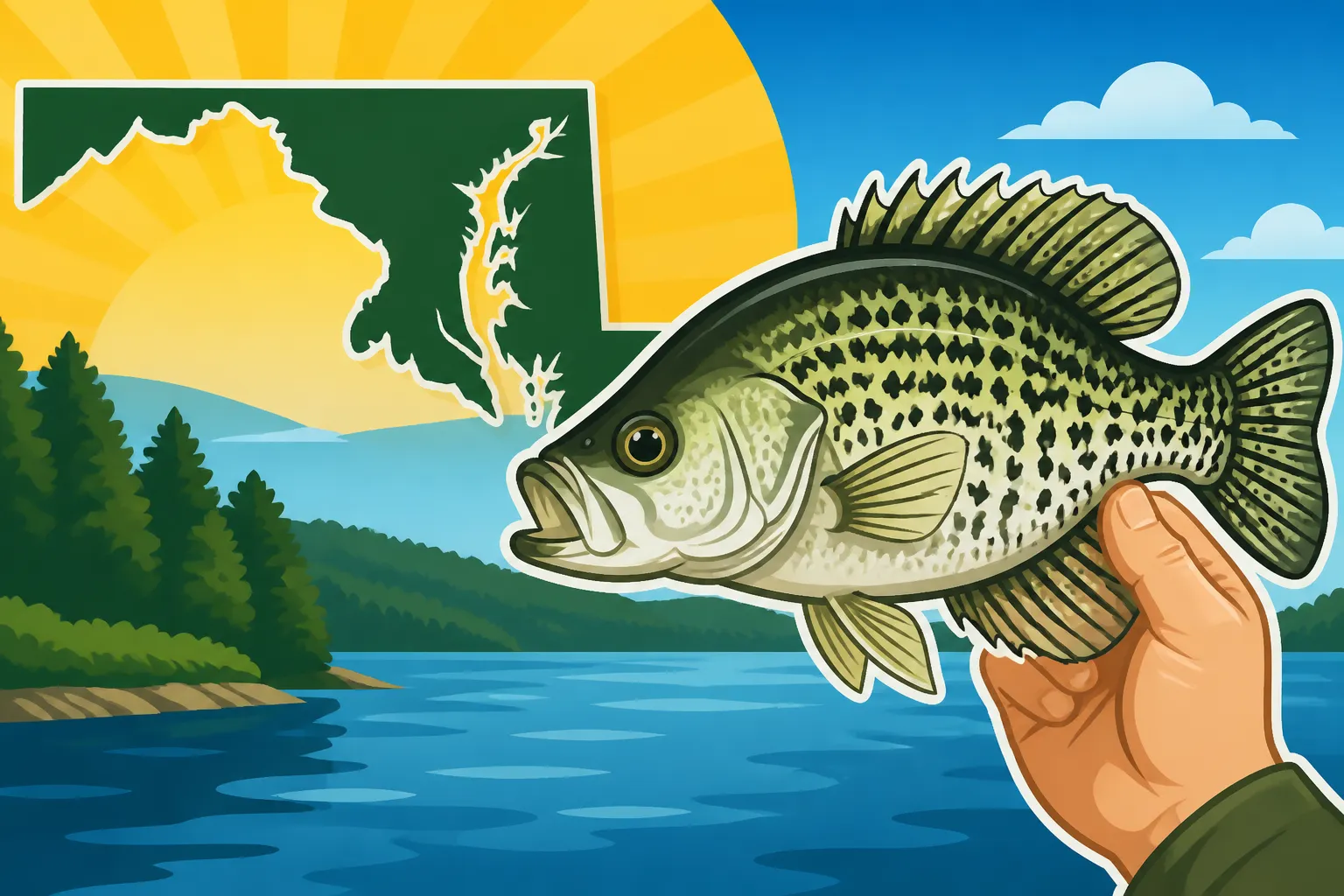
How Big Do Crappie Get in Maryland Reservoirs?
It's a question every crappie angler in Maryland eventually asks: just how big do these feisty panfish really get in our local reservoirs? You've probably reeled in your fair share of respectable slabs, but that curiosity always lingers about the true giants lurking beneath the surface. This guide is dedicated to shedding light on crappie size expectations across Maryland's varied reservoir system, offering insights into what influences their growth and where you might just find that personal best.
Understanding Maryland Crappie Populations and Growth
Crappie are beloved by anglers for their delicious white meat and their tendency to school, offering exciting action when you find a good bite. But their size can vary dramatically, even within the same body of water. Understanding what drives this variation is key to appreciating the potential in Maryland's reservoirs.
Factors Influencing Crappie Size
Several critical factors play a role in how large crappie can grow in any given reservoir. It’s a delicate balance of biology, environment, and angler pressure.
First and foremost is food availability. Crappie are voracious eaters, primarily feasting on smaller baitfish like minnows and shad, as well as insects and their larvae. A reservoir with a healthy and abundant forage base will generally produce larger, fatter crappie. Conversely, a body of water with scarce food can lead to stunted growth, where fish are numerous but small. Think of it like a crowded buffet – if there's not enough food for everyone, no one really gets full.
Water quality and habitat are equally crucial. Clean, well-oxygenated water is essential for all fish species, and crappie thrive in reservoirs that offer a good mix of shallow, vegetated areas for spawning and deeper, structured zones for feeding and escaping predators. Submerged timber, brush piles, rock formations, and even old roadbeds provide vital cover. Reservoirs with diverse underwater structures often support healthier crappie populations with a wider range of sizes. Water temperature also plays a role; crappie are cold-blooded, and their metabolism, and thus their growth rate, is directly tied to the water temperature.
Finally, population density and genetics also come into play. If a reservoir becomes overpopulated with crappie, especially if there aren't enough predators to thin the herd, competition for food becomes intense. This often results in a large number of smaller fish. While there's a genetic component to how big an individual crappie can grow, a strong gene pool for large fish won't matter much if environmental factors are limiting. This is why fisheries management is so important in maintaining a balance.
Average Crappie Size in Maryland Reservoirs
When you head out to a Maryland reservoir, what can you realistically expect in terms of crappie size? Most anglers will consistently catch crappie in the 8 to 12-inch range. These are your "dinner plate" crappie, perfectly respectable for the frying pan and a joy to catch. They offer a good fight on light tackle and are usually plentiful once you locate a school.
However, the exciting part is the potential for larger fish. Many Maryland reservoirs have the capacity to produce crappie that push past the 12-inch mark, often reaching 13, 14, or even 15 inches. These are often referred to as "slab" crappie – broad-shouldered, thick-bodied fish that truly test your gear. While less common, catching a crappie over 15 inches is a legitimate goal in several of our bigger impoundments. Anything beyond that starts moving into genuine trophy territory, the kind of fish that makes your heart pound. Keep in mind that consistent growth to these larger sizes often happens in environments where food is plentiful and competition isn't stifling, allowing individual fish to maximize their genetic potential.
Key Reservoirs for Crappie Fishing in Maryland
Maryland is blessed with a fantastic network of freshwater reservoirs, many of which hold robust crappie populations. Knowing which ones offer the best chance at a truly sizable fish can greatly enhance your fishing experience.
Crappie Hotspots and Their Characteristics
When we talk about reservoirs known for their crappie, a few names consistently rise to the top. These bodies of water often combine deep water, abundant structure, and a healthy forage base, creating ideal conditions for crappie to thrive and grow.
Loch Raven Reservoir near Baltimore is a perennial favorite, and for good reason. Its extensive network of submerged timber, creek channels, and varying depths provides ample habitat for crappie to hide and feed. Anglers often find success working brush piles and drop-offs, especially in the spring and fall. The reservoir's vast size means there's always a new spot to explore, and it consistently produces crappie well into the 12-14 inch range, with occasional larger surprises. If you're looking for Best Jigs for Crappie at Loch Raven, you'll find plenty of local advice pointing to small hair jigs or soft plastics.
Liberty Reservoir, also in the Baltimore area, is another excellent choice. Like Loch Raven, it's a large, deep impoundment with a complex underwater topography. It holds a healthy population of both black and white crappie. Fishing around the standing timber and along the old river and creek channels can be particularly productive. The fish here benefit from a rich food supply, allowing them to grow to impressive sizes, often rivaling those found in Loch Raven.
Further south, the Triadelphia and Rocky Gorge Reservoirs, managed by the Washington Suburban Sanitary Commission (WSSC), offer fantastic crappie fishing opportunities. These reservoirs are known for their clear waters and extensive submerged structures, which provide prime ambush points for crappie. Crappie here regularly hit the 10-13 inch mark, and dedicated anglers can find even bigger slabs. Access is often shore-based or via electric-motor boats, which can create a quieter, less pressured fishing environment.
Piney Run Reservoir in Carroll County, while smaller than some of the others, is well-managed and known for its healthy crappie population. It offers good bank access and boat rentals, making it a family-friendly option. Crappie here are generally abundant and can reach very respectable sizes, though perhaps not the absolute giants of the larger impoundments. It's an excellent place for consistent action and quality fish.
These reservoirs, among others in the state, provide the necessary ecosystem for crappie to achieve significant size. The key is often finding the structure they relate to at different times of the year and presenting the right bait or lure. Many anglers swear by their favorite ultralight setup, which you can easily find reviews for on Amazon, ensuring you feel every subtle tap.
Maryland State Records and Trophy Potential
Every angler dreams of catching a state record, and while it's a rare feat, it's a testament to the trophy potential within Maryland's waters. The Maryland state record crappie typically hovers in the mid-three-pound range, sometimes even pushing four pounds, which translates to a fish that could be upwards of 17-18 inches or more, depending on its girth. While specific record weights can fluctuate and are best checked with the Maryland DNR's official records, the existence of such behemoths proves that truly massive crappie are out there.
Reaching or breaking a state record is, of course, exceptionally difficult. However, targeting crappie that qualify as "trophies" in your personal log is a much more achievable goal. For most anglers, a crappie exceeding 14 or 15 inches is definitely a trophy. These larger fish are typically older, smarter, and often more solitary than their smaller counterparts. They've survived countless encounters with predators and anglers, meaning you'll need to employ refined techniques and a good deal of patience.
The biggest crappie tend to be found in reservoirs that have a long history of good management, a stable and rich food supply, and often, less fishing pressure on the largest individuals. Targeting these larger fish often involves understanding their specific habitat preferences, which can differ from smaller, more abundant crappie. While the records might feel out of reach, knowing they exist inspires us to keep casting, always hoping that the next bite will be the one. You'd be surprised what a good fish finder, also available on Amazon, can reveal about the depths where these giants might be hiding.
Techniques and Tips for Catching Larger Crappie
Landing those bigger crappie slabs isn't just about luck; it's about understanding their behavior and refining your approach. Bigger fish are often older, wiser, and require a bit more finesse and strategy.
Targeting Bigger Fish: Gear and Strategy
To consistently catch larger crappie, you often need to adapt your gear and strategy from what you might use for average-sized panfish.
Go a little heavier on your line and rod. While ultralight gear is fantastic for feeling every nibble, a slightly heavier setup, perhaps a light action rod with 4-6 pound test line, can give you more control when a big slab decides to dive into cover. Monofilament or fluorocarbon lines are popular choices, offering a good balance of sensitivity and abrasion resistance. A sensitive graphite rod, often found in various lengths and actions on Amazon, will help you detect subtle bites.
Bait choice matters. While smaller crappie will hit almost anything, larger crappie can be more selective. Live minnows, particularly medium to large shiners or fatheads, are often irresistible to big crappie. Rigging them on a small hook (size 1 or 2) under a slip bobber allows them to swim naturally at a specific depth, which is often crucial for targeting suspended fish. Artificial lures, such as small tube jigs (1/16 to 1/8 ounce), hair jigs, or tiny soft plastic grubs, can also be highly effective. Experiment with colors; sometimes a subtle, natural hue works best, while other times a bright chartreuse or pink can trigger a strike. For a varied selection, many anglers start by looking at crappie jig kits on Amazon.
Structure is key. Larger crappie almost always relate to some form of submerged structure. This could be brush piles, fallen trees, old stumps, rock piles, bridge pilings, or even submerged creek channels and humps. These structures provide ambush points for feeding and protection from predators. Use your electronics (if you have them) to locate these spots. Without electronics, look for visual cues like standing timber along shorelines or significant depth changes marked on contour maps. Jigging vertically over these structures, or slowly easing your bait down to them, is often the most effective presentation. Remember that Fishing Maryland's Channel Edges and Drop-Offs for Striped Bass often applies to crappie too, just at a different scale and depth.
Seasonal Movements and Prime Times
Crappie movements are highly seasonal, and understanding these patterns is vital for intercepting the bigger fish.
Spring is prime time. As water temperatures climb into the 50s and low 60s, crappie move into shallower waters to spawn. This is arguably the best time to catch large numbers of fish, including some of the biggest. They'll be found around submerged vegetation, brush, and docks in 2-10 feet of water. Fan casting small jigs or slow-trolling minnows are effective strategies.
Summer requires depth. Once the spawn is over and water temperatures rise, crappie retreat to deeper, cooler water. They'll often suspend over submerged creek channels, around deep timber, or near thermoclines. Finding them can be a challenge, but when you do, you can often catch them by vertical jigging or slow-trolling live bait at precise depths. Early morning and late evening bites can be productive during the warmer months.
Fall is a feeding frenzy. As water temperatures cool down again in autumn, crappie become highly active, feeding aggressively to build up fat reserves for winter. They'll often move back to slightly shallower depths, particularly around the edges of channels and large brush piles, and can be caught using similar techniques as in spring. This is another fantastic time to target those slab crappie.
Winter offers unique opportunities. Don't count out winter crappie fishing! While challenging, cold water often concentrates crappie in large schools in deep water, often near the deepest structure available. Using electronics to pinpoint these schools and then carefully vertical jigging small spoons or ice jigs can lead to incredible catches, especially in reservoirs where ice fishing is permitted, such as Ice Fishing at Deep Creek Lake, Maryland. Even in open water, probing deep structures with a sensitive rod can pay off with big, slow-moving crappie.
| Reservoir | Typical Crappie Size Range (inches) | Trophy Potential (15+ inches) | Primary Features for Crappie | Recommended Fishing Method |
|---|---|---|---|---|
| Loch Raven Reservoir | 9-14 | High | Submerged timber, creek channels | Jigging, Live Minnows |
| Liberty Reservoir | 9-13 | High | Standing timber, old riverbeds | Vertical Jigging, Trolling |
| Triadelphia/Rocky Gorge | 8-12 | Medium-High | Clear water, varied structure | Slip Bobber, Small Jigs |
| Piney Run Reservoir | 8-12 | Medium | Brush piles, shore access | Bank Fishing, Small Boat Trolling |
Conservation and Sustainable Crappie Fishing
As much as we love catching crappie, especially those big ones, it's vital to practice responsible angling to ensure healthy populations for future generations. Maryland's fisheries management plays a crucial role, and so does every individual angler.
Maryland Regulations and Bag Limits
Maryland, like most states, has specific regulations in place to manage its crappie populations. These typically include size limits (a minimum length a fish must be to be kept) and creel limits (the maximum number of fish you can keep per day). These rules are designed to protect younger fish, allowing them to grow and reproduce, and to prevent overharvesting of mature fish.
For crappie, specific regulations can vary by body of water or might be statewide. It's not uncommon for there to be a minimum size limit of 9 or 10 inches, and daily creel limits often range from 15 to 25 fish per angler. However, these figures are subject to change, and it's absolutely paramount that you check the most current Maryland Department of Natural Resources (DNR) Fishing and Boating Guide before you head out. This guide, often referred to as Maryland's DNR Fishing and Boating Guide, Explained, will detail all the current rules for crappie and other species. Ignoring these regulations can lead to penalties, and more importantly, harm the fishery we all cherish. Always remember to acquire your necessary fishing licenses, which can often be done online or at local tackle shops; for example, you might look into Maryland Resident Nontidal Fishing License Cost if you plan to fish freshwater reservoirs frequently.
Beyond the regulations, it’s worth thinking about selective harvesting. While it's great to take home a meal, consider releasing the largest crappie. These big "slabs" are often the prime breeders, and releasing them allows them to continue contributing to the gene pool, potentially leading to more trophy fish in the future.
Practicing Catch and Release for Larger Crappie
Catch and release isn't just for trophy bass or stripers; it's a valuable practice for crappie fishing too, especially when you encounter those truly exceptional fish. The goal is to ensure that any released fish has the best possible chance of survival.
Handle with care. When you land a large crappie, try to minimize its time out of the water. If possible, use a net with a rubberized mesh to protect the fish's slime coat and fins. Avoid grasping the fish by its eye sockets or gills. A gentle grip on the lower jaw or supporting the belly are better options. If you plan to release a fish, consider using barbless hooks, or pinch down the barbs on your hooks; this makes removal much quicker and less damaging to the fish's mouth. Many anglers specifically choose lures with easy-to-remove hooks when they intend to practice catch and release, and these can be found in various styles and sizes on Amazon.
Quick release. Have your camera ready for a quick photo, but don't prolong the process. Gently place the fish back into the water, headfirst, and hold it upright until it swims away under its own power. Sometimes a gentle forward and backward motion can help push water through its gills, aiding in recovery, especially if it put up a long fight.
Practicing responsible catch and release, particularly for the biggest and oldest crappie, is a significant way that individual anglers can contribute to the long-term health and quality of Maryland's crappie fisheries. It helps ensure that there will always be big crappie for others (and yourself) to catch down the line. It's a key part of sustainable angling, much like understanding Maryland Fishing Size and Catch Limits by Species for all fish. Remember, our reservoirs are a precious resource, and how we treat them directly impacts the quality of fishing they provide.
Disclaimer
This article is for general informational purposes only and does not constitute professional advice. Laws, prices and regulations vary by location and change over time. Consult a qualified professional for guidance on your specific situation.