Maryland’s Striped Bass Slot Limit and What Counts as Legal
There's nothing quite like the thrill of feeling that tug on your line, knowing you've hooked into a spirited Maryland striped bass – or "rockfish" as we lovingly call them here. But that excitement can quickly turn into a moment of anxiety when you pull a beautiful fish aboard and start wondering, "Is this one legal to keep?" The ever-evolving regulations, especially the specific slot limits, can be confusing, leaving even seasoned anglers scratching their heads. This comprehensive guide is here to untangle the complexities of Maryland's striped bass slot limit, clarifying what exactly counts as a legal catch and helping you fish with confidence.
Understanding the "Why" Behind Maryland's Striped Bass Slot Limits
Before we dive into the nitty-gritty of measurements and numbers, it’s really helpful to understand why these slot limits exist in the first place. It’s not just a way for the Maryland Department of Natural Resources (DNR) to make things complicated, I promise! These rules are designed with the long-term health of our beloved striped bass population in mind, and ultimately, to ensure there are plenty of fish for future generations of anglers to enjoy.
The Conservation Imperative for Striped Bass
Striped bass, being Maryland's official state fish and a major draw for our fishing community, are under constant fishing pressure across their entire migratory range along the Atlantic coast. They're a slow-growing, long-lived species, and their populations can fluctuate dramatically due to various environmental factors, spawning success, and, of course, fishing effort. In recent years, the overall health of the striped bass stock has faced challenges, leading to stricter regulations across all states involved in their management. Maryland, with the Chesapeake Bay being the primary spawning and nursery ground for a significant portion of the Atlantic coast stock, plays a critical role in conservation.
This conservation imperative means that managers have to make tough decisions to protect the breeding stock and allow younger fish to reach maturity. If too many large, older female fish (which produce the most eggs) are removed, or if too many small, juvenile fish are harvested before they're able to spawn even once, the population simply can't sustain itself. This is why you see rules like Maryland Striped Bass Season and Rockfish Rules come into play, often changing year to year based on scientific assessments. The slot limit is a powerful tool to protect those crucial parts of the population.
Balancing Recreational Angling with Stock Health
The challenge for fisheries managers is always a delicate balancing act: how do you allow people to enjoy the fantastic recreational fishery for striped bass while simultaneously ensuring the species' long-term survival? It’s not an easy task, especially when you have passionate anglers who want to catch dinner, and charter captains who rely on good fishing for their livelihoods. Slot limits are a strategic compromise in this equation.
Instead of a simple minimum size limit (which tends to protect younger fish but allows all larger, prime spawners to be harvested) or a maximum size limit (which protects the big spawners but doesn't allow many trophy fish to be kept), a slot limit targets a specific range of fish. The idea is to protect the very young fish and the very large, older, most reproductively valuable fish, while allowing anglers to keep fish from the middle of the size spectrum. This way, you encourage the survival of those crucial breeding fish and allow the younger ones to grow into that "keeper" slot. It’s a dynamic approach that tries to spread the fishing pressure across the population more evenly.
Deciphering the Maryland Striped Bass Slot Limit
Alright, let's get down to brass tacks: what exactly is a slot limit when it comes to Maryland striped bass, and how do you navigate it once you've landed a fish? It can feel a bit like a math problem on the water, but once you understand the core concept, it becomes much clearer. The key is knowing the specific numbers and, perhaps even more importantly, how to accurately measure your catch.
What "Slot Limit" Actually Means for Your Catch
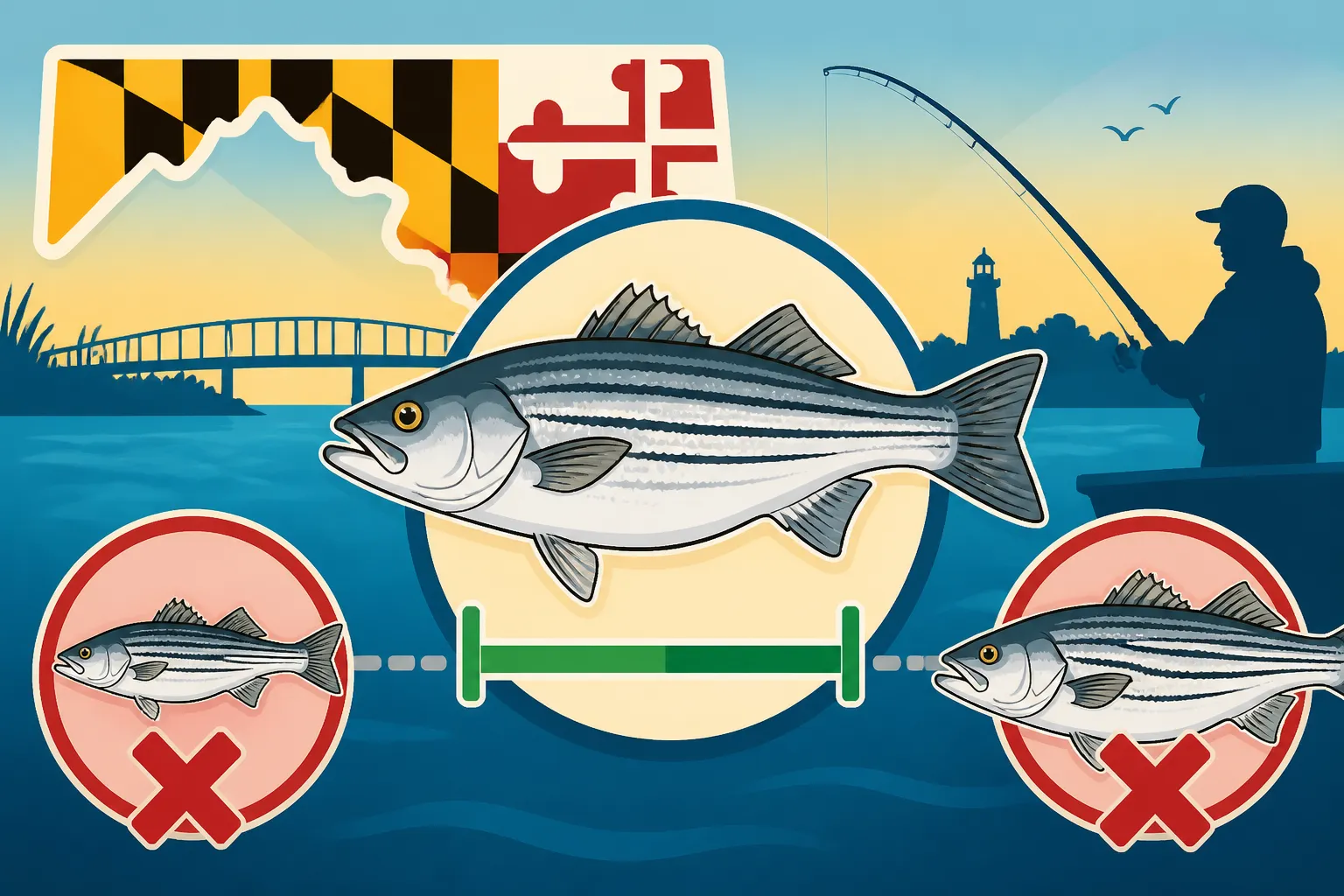
A slot limit, quite simply, means that you can only keep fish that fall within a specified range of lengths. Fish that are shorter than the minimum length are considered "undersized" and must be immediately released. Fish that are longer than the maximum length are considered "oversized" and also must be immediately released. Only those fish whose total length falls precisely between the designated minimum and maximum measurements are legal to possess.
For example, you might see a regulation stating a slot limit of 19 to 24 inches. This means:
- If your striped bass is 18.5 inches, it's too small – release it.
- If your striped bass is 21 inches, it's within the slot – you can keep it (assuming you haven't hit your daily bag limit).
- If your striped bass is 25 inches, it's too big – release it.
It's a very specific window, and it's designed to protect those very young and very old fish, as we discussed. These numbers can change, sometimes seasonally, so always consult the latest Maryland's DNR Fishing and Boating Guide, Explained or the official DNR website before you head out. These rules are crucial for helping Striped Bass: Maryland's State Fish recover and thrive.
The Importance of Accurate Measurement
This is where many anglers can run into trouble, not because they're trying to skirt the rules, but simply because they're not measuring correctly. Accurate measurement is absolutely critical to avoid violations. Maryland regulations specify "total length," which means from the tip of the fish's snout (mouth closed) to the tip of its tail (compressed to give the maximum measurement).
Here’s a breakdown of how to get it right:
- Lay the Fish Flat: Place the fish on a flat surface, such as a bump board, ruler, or measuring tape. A dedicated fish measuring board, often made of durable plastic or aluminum, is the best tool for this. Many anglers strap one to their cooler or boat deck for easy access. You can find excellent, easy-to-read measuring boards on Amazon that will make this process foolproof.
- Mouth Closed: Ensure the fish's mouth is completely closed and touching the "zero" end of your measuring device. Don't let the fish's jaw gape open, as this will artificially lengthen your measurement.
- Tail Compressed: Gently squeeze or "compress" the tail fin to get the maximum possible length. Sometimes a fish's tail might be naturally splayed; compressing it gives you the legal, true total length.
- Read Clearly: Take your reading from the tip of the compressed tail fin. Double-check your measurement, especially if it's close to the minimum or maximum of the slot.
Practicing this technique, even with smaller fish you intend to release, will build your confidence. It’s better to be overly cautious than to accidentally keep an illegal fish. Remember, even a quarter-inch difference can be the difference between a legal catch and a violation. You’ll often see specific numbers like What Does a Rockfish Slot Limit of 19 to 24 Inches Mean? – these exact numbers are non-negotiable.
Practical Application: When Your Striped Bass is "Legal"
Navigating the waters with Maryland's striped bass slot limit doesn't have to be a guessing game. It's all about understanding the numbers and being prepared. Let's walk through some common scenarios you might encounter on the water, so you know exactly what to do when that beautiful rockfish comes aboard.
Scenarios: Keeping a Fish Within the Slot
Imagine you’re out on the Chesapeake Bay, enjoying the fresh air, and your rod bends over with a solid hit. You reel in a lively striped bass, and now it’s time for the moment of truth: the measurement. Let’s assume, for this example, the current slot limit is 19 to 24 inches.
- Scenario 1: The Perfect Keeper. You carefully lay your striped bass on your measuring board, close its mouth, and compress its tail. The measurement reads exactly 21 inches. Bingo! This fish is perfectly within the 19-24 inch slot. As long as you haven't already reached your Maryland Striped Bass Daily Limit Per Angler, this fish is a legal keeper. You can place it on ice and start thinking about dinner! This is the scenario every angler hopes for.
- Scenario 2: Just Barely In. Another strike, another fish! You measure it, and it comes in at 19.25 inches. Again, hooray! Even though it's just barely over the minimum, it's still legal to keep. The key here is confidence in your measurement. If you're ever in doubt, or if your measuring device isn't perfectly clear, it’s always best to err on the side of caution and release the fish. A slight misreading can lead to big problems.
Having a reliable measuring device is essential. Many anglers use a durable, waterproof ruler or a dedicated fish measuring board from brands available on Amazon. These tools often have clear markings, making it easier to read quickly and accurately, especially if the fish is still feisty.
Scenarios: When Your Fish is Too Small or Too Big
It's important to be equally prepared for when a fish falls outside the legal slot. This happens more often than not, and knowing what to do quickly and correctly is vital for the fish's survival and your compliance with the law.
- Scenario 1: The Shorty. You pull in a feisty little rockfish, full of fight, but as soon as you lay it on the board, you see it's only 17 inches. It's below the 19-inch minimum. Immediate release is required. Don't hesitate, don't try to stretch it, and certainly don't put it in your cooler. Get it back into the water as quickly and gently as possible. This young fish has a vital role to play in growing up to spawn and eventually become a legal keeper for someone else.
- Scenario 2: The Giant. This is often a bittersweet moment for many anglers. You land what feels like a true monster, a trophy-sized striped bass. You measure it, and it stretches out to 27 inches – well over the 24-inch maximum. This is also an immediate release. While it's exhilarating to catch such a large fish, these bigger, older fish are often the most prolific spawners. Protecting them ensures the future of the fishery. Catching and releasing these "oversized" beauties responsibly is a mark of a good conservation-minded angler. For guidance on safe release, check out Maryland Catch and Release Rules During Closed Seasons.
It’s crucial to understand that there is no "trophy fish" exemption for oversized striped bass in Maryland's general recreational fishery during the slot limit seasons. No matter how big, if it's over the maximum, it goes back.
Understanding Daily Bag Limits in Conjunction with Slot Limits
The slot limit is just one piece of the regulatory puzzle. You also need to keep a close eye on the daily bag limit, which dictates how many legal-sized fish you can keep per angler, per day. These two rules work in tandem.
For instance, if the slot limit is 19-24 inches, and the daily bag limit is one fish per person:
- You catch a 21-inch striped bass (legal). You keep it. You have now met your daily bag limit.
- Later, you catch another 20-inch striped bass (also legal). You must release this second fish because you have already kept your one legal fish for the day.
You can't keep two legal fish if the bag limit is one, even if both fish fall perfectly within the slot. Similarly, if the bag limit allowed two fish within the slot, you could keep two fish measuring 20 and 22 inches, for example, but still no fish outside the 19-24 inch range.
It's a common mistake to forget about the bag limit after focusing so intensely on the slot. Always confirm both the slot limit and the daily bag limit, along with any open seasons or closures, before each trip. Details about this are often consolidated in resources like Maryland Fishing Size and Catch Limits by Species. Remember, these regulations are designed to sustain the fishery, so respecting both the size and quantity limits is paramount.
| Scenario | Fish Length (Example Slot: 19-24 inches) | Legal Status | Action Required |
|---|---|---|---|
| Too Small | 18 inches | Illegal | Immediate Release |
| Minimum Edge | 19.5 inches | Legal | Keep (within bag limit) |
| Mid-Slot | 22 inches | Legal | Keep (within bag limit) |
| Maximum Edge | 23.75 inches | Legal | Keep (within bag limit) |
| Too Big | 25 inches | Illegal | Immediate Release |
| Over Bag Limit | 20 inches (after keeping 1st fish) | Illegal | Immediate Release |
Gear and Techniques for Responsible Striped Bass Fishing
Being a responsible angler goes beyond just knowing the rules; it also involves having the right tools and using best practices to ensure the fish you must release have the best possible chance of survival. This is especially true when dealing with slot limits, where many of your catches will need to go back into the water.
Choosing the Right Measuring Tools
As we discussed, accurate measurement is paramount. Don't rely on estimations or the length of your tackle box. Invest in reliable measuring equipment.
- Dedicated Fish Measuring Boards: These are by far the best option. They typically feature a hard stop for the fish's mouth and clear, easy-to-read markings. Many are long enough to handle large striped bass and are made from durable, waterproof materials like marine-grade plastic or aluminum. Some even have raised edges to help keep the fish still for a quick measurement. You can find a wide variety of these on Amazon, ranging from portable roll-up mats to rigid boards that attach directly to your boat.
- Flexible Measuring Tapes/Rulers: While not as foolproof as a board, a high-quality, clearly marked, waterproof measuring tape can work in a pinch. The key is to ensure it can be laid perfectly flat and you can reliably position the fish's mouth at the zero mark. It's often harder to get a truly accurate "mouth closed, tail compressed" measurement with a flexible tape, especially on a moving boat.
- The "Honor System" is a No-Go: Absolutely avoid guessing. If you don't have a reliable measuring device, you should assume any fish is illegal to keep. It's not worth the risk of a citation.
When choosing a measuring tool, consider its length (make sure it goes beyond the maximum potential slot limit), clarity of markings, and durability. A good measuring tool is a small investment that pays off immensely in peace of mind and compliance.
Best Practices for Catch and Release Outside the Slot
Since a significant number of your striped bass catches will likely be outside the legal slot (either too small or too big), mastering catch-and-release techniques is essential. Your goal is to minimize stress and injury to the fish, giving it the best chance to survive and thrive.
- Use Barbless or Crimped Hooks: This is perhaps the single most effective way to reduce damage to fish. Barbless hooks come out much more easily, reducing tearing and allowing for quicker release. If your hooks aren't barbless, simply take a pair of pliers and gently crimp down the barb. For areas with specific barbless hook regulations, such as some trout streams, this is mandatory. While not always mandated for striped bass, it's a great practice, especially when you know many fish will be released.
- Minimize Air Time: A fish cannot breathe air, and prolonged exposure can cause significant stress and damage to their gills. Keep the fish in the water as much as possible. If you need to bring it aboard for a quick measurement or a photo, do so quickly and get it back in the water within seconds, not minutes. If you’re fishing from a boat, consider using a net to keep the fish partially submerged while you remove the hook and take your measurement.
- Handle with Care:
- Wet Hands: Always wet your hands before touching a fish. Dry hands can remove the fish's protective slime coat, making it vulnerable to disease and infection.
- Support the Body: If you must lift the fish, support its entire body horizontally, especially larger fish. Avoid holding them vertically by the jaw or gills, which can damage their internal organs and spine. A proper fish grip tool can help secure the jaw without causing undue stress.
- Avoid the Gills: Never put your fingers into the fish's gills. These are delicate and easily damaged, which can be fatal for the fish.
- Quick Hook Removal: Use de-hooking tools like long-nosed pliers or a specialized de-hooker to remove hooks quickly and efficiently, especially if the hook is deep. If the fish is deeply gut-hooked and you can't remove the hook easily without causing further damage, cut the line as close to the hook as possible. Studies show that hooks often rust out over time, and this can be less damaging than trying to force a deeply embedded hook out.
- Revive If Necessary: If a fish seems lethargic before release, gently hold it in the water, facing into the current (if there is one), or move it slowly back and forth to force water over its gills. Only release it when it swims away strongly on its own.
By following these guidelines, you contribute directly to the health of the striped bass population, ensuring that those fish you release have the best chance to recover and continue their life cycle. These practices are crucial not just for slot limits, but for all catch and release fishing, including specific periods like Maryland's Winter Catch and Release Striped Bass Season.
Penalties and Avoiding Violations
Let's be direct: fishing without proper adherence to regulations, especially those concerning size and bag limits, can lead to serious consequences. Nobody wants to have a great day on the water ruined by a run-in with law enforcement, but ignoring the rules isn't just about avoiding a fine; it's about respecting the resource we all cherish.
The Consequences of Not Adhering to Regulations
Maryland has clear regulations, and the DNR police are diligent in enforcing them. The penalties for violating striped bass slot limits or bag limits can range from substantial fines to confiscation of your catch and even your fishing equipment. It's not a slap on the wrist.
- Fines: Expect a significant monetary penalty for each fish that is outside the legal slot or over the bag limit. These fines can quickly add up, especially if multiple illegal fish are found. Imagine a scenario where you have three fish, and two are found to be just under the minimum size; that could be two separate citations and associated fines.
- Confiscation: Law enforcement has the authority to confiscate your illegal catch. It's a double whammy: you pay a fine and lose your fish. In more egregious cases, especially repeat offenses, your fishing gear (rods, reels, tackle boxes) or even your boat could potentially be seized.
- License Suspension/Revocation: Depending on the severity and frequency of violations, your Maryland fishing license could be suspended or even permanently revoked. This means no more fishing in Maryland waters for a specified period, which for a passionate angler, is a tough pill to swallow.
- Reputation and Record: A fishing violation becomes part of your record. While not as severe as other legal issues, it can be an embarrassment and tarnish your reputation among the angling community, which often holds conservation in high regard.
The specific penalties are subject to change, so always be aware of the current laws. You can find more detailed information on the repercussions of non-compliance in articles like Maryland Fishing License Penalties for Violations. It's a stark reminder that these rules aren't suggestions; they are legally binding.
Resources for Staying Up-to-Date on Maryland Regulations
The regulations for striped bass, and other species, are not static. They can change annually, and sometimes even mid-season, based on scientific assessments of fish stocks, environmental factors, and interstate agreements. Staying informed is your best defense against accidental violations.
Here are your go-to resources:
- Maryland Department of Natural Resources (DNR) Website: This is the official source for all current fishing regulations. The DNR website will have the most up-to-date information on slot limits, bag limits, seasons, and any emergency closures or rule changes. Make it a habit to check it before your first trip of the season, and periodically throughout the year. The DNR’s online platform is very user-friendly and crucial for understanding the latest, such as How Maryland Updates Its Fishing Regulations.
- Maryland Guide to Fishing and Crabbing: The DNR publishes an annual guide that summarizes all regulations. While it's a fantastic resource, always remember that digital updates on their website might supersede the printed guide if mid-year changes occur. Many tackle shops and licensing agents will have physical copies, and it's also available as a PDF online.
- Local Tackle Shops: These often have printouts of the latest regulations and their staff are usually very knowledgeable about local rules and recent changes. They are a fantastic community resource.
- Fisheries Alerts and Email Subscriptions: Many states, including Maryland, offer email alert services that will notify you directly of important regulatory changes. Signing up for these is a smart move for any dedicated angler.
- Apps: There are a growing number of fishing apps available for smartphones that aim to provide real-time regulation updates. While convenient, always cross-reference with the official DNR website to ensure accuracy, as third-party apps might not always be instantly updated.
Ignorance of the law is never an excuse. Taking a few minutes to review the current regulations before you cast your line can save you a lot of headache, heartache, and money. Being a well-informed angler means you can enjoy your time on the water knowing you’re doing your part to protect the incredible resource that is Maryland fishing.
Disclaimer
This article is for general informational purposes only and does not constitute professional advice. Laws, prices and regulations vary by location and change over time. Consult a qualified professional for guidance on your specific situation.