Maryland Striped Bass Fishing Techniques
Anglers often find themselves staring at the vast expanse of Maryland's Chesapeake Bay, wondering how to consistently hook into its legendary striped bass, or "rockfish" as we lovingly call them. The sheer size of the Bay, coupled with ever-changing regulations and the elusive nature of these powerful fish, can feel overwhelming. This comprehensive guide is here to demystify striped bass fishing, breaking down the most effective techniques, essential gear, and seasonal strategies to help you navigate Maryland's waters and land that prized catch.
Understanding Striped Bass Behavior and Movement
Successfully targeting striped bass in Maryland begins with truly understanding these magnificent fish. They aren't just swimming aimlessly; their movements, feeding, and even their preferred hangout spots are deeply influenced by the time of year, water conditions, and the availability of their favorite meals. Ignoring these fundamental behaviors is like trying to solve a puzzle without looking at the picture.
Seasonal Migrations and Habitat Preferences
Striped bass are what we call anadromous, which means they spend most of their adult lives in saltwater but return to freshwater rivers to spawn. In Maryland, this means a significant portion of the Chesapeake Bay population will journey up major tributaries like the Susquehanna, Choptank, Patuxent, and Potomac Rivers each spring to reproduce. After the spawn, these fish disperse back into the Bay, often heading towards cooler, deeper waters as the summer heat sets in.
Throughout the warmer months, striped bass spread out across the Chesapeake, utilizing main channels, deeper pockets, and various forms of underwater structure. They'll follow baitfish into shallower coves and along marsh edges during cooler parts of the day, but retreat to cooler sanctuaries when the sun is high. As fall approaches, they begin to gather, often moving towards the mouth of the Bay before many eventually head out into the Atlantic Ocean for the winter. However, a significant number of "resident" rockfish remain in the Bay's deeper reaches year-round, especially in the middle and lower sections. Understanding these migration patterns is key to being in the right place at the right time, and it's why staying updated on the Maryland Striped Bass Season and Rockfish Rules is absolutely critical.
These movements are not random; they are driven by instinctual needs for spawning, feeding, and seeking optimal environmental conditions. For the angler, this translates to predictable patterns you can exploit. For instance, knowing when the larger "trophy" fish are making their spring run means you should be concentrating your efforts in the main stem of the Bay or the lower reaches of major rivers. Conversely, during the dog days of summer, you'll likely find more success targeting them around deeper channel edges or cooler thermal refuges. Paying attention to these patterns will dramatically increase your chances of success.
Feeding Habits and Preferred Forage
Striped bass are voracious, opportunistic predators, and their diet in the Chesapeake Bay is remarkably diverse. Their primary food sources include a host of schooling baitfish such as menhaden (often called bunker), spot, croaker, anchovies, and silversides. They also readily consume eels, various crustaceans, and even smaller white perch. The presence and abundance of these forage species directly dictates where the striped bass will be found and what they’ll be willing to strike.
This direct link between predator and prey is why "matching the hatch" is such a prevalent concept in striped bass fishing. If the rockfish are gorging on small silvery baitfish, then lures that mimic that profile and flash will be far more effective than, say, a large, dark soft plastic. Similarly, if they are feasting on chunky menhaden, then larger, shad-profile swimbaits or umbrella rigs designed to imitate a school of bunker will be your best bet. A keen eye for what baitfish are present in the water, or even what fish the local tackle shop reports are being caught on, can quickly narrow down your lure selection.
Beyond simply what they eat, how they eat is also important. Striped bass are ambush predators, often hiding in structure or along current seams, waiting for bait to drift by. They also engage in aggressive feeding frenzies, known as "blitzes," where entire schools will drive bait to the surface. Their feeding patterns can also shift with the tides, time of day (often more active at dawn and dusk), and even water clarity. Understanding these nuances allows you to not only select the right lure but also to present it in a way that truly entices a strike.
Impact of Water Temperature and Salinity
Water temperature is perhaps the single most critical factor influencing striped bass behavior. These fish thrive in a relatively specific temperature range, typically between 55 and 68 degrees Fahrenheit. When water temperatures fall below or rise above this range, their metabolism slows down, making them less active and often pushing them to seek out more comfortable thermal zones. In the spring, warming waters trigger their migration upriver to spawn, while in the summer, excessively warm surface temperatures will drive them to deeper, cooler channels or areas where freshwater runoff creates a thermal refuge.
Conversely, in the late fall and early winter, as Bay waters cool significantly, remaining striped bass will congregate in deeper, stable temperature pockets. Targeting these fish requires slower presentations and a willingness to explore deeper contours with your fishfinder. Being able to read a water temperature gauge and understanding what temperatures typically hold active fish is an invaluable skill for any Maryland angler.
Salinity, the amount of salt in the water, also plays a role, particularly in the estuarine environment of the Chesapeake Bay. While striped bass are known for their remarkable tolerance for a wide range of salinities—from pure freshwater during spawning to full ocean salinity—their general preference shifts. They typically prefer brackish water, which offers a rich environment for their preferred baitfish. Extreme freshwater events, like heavy rain after a long dry spell, can push fish downstream as they seek more saline conditions, while prolonged drought can draw saltwater-loving species further upriver. By paying attention to these environmental cues, you can often predict where the fish will be holding, whether they're following the salt line or seeking comfort in a fresher tributary.
Essential Gear for Targeting Maryland Striped Bass
Having the right tools for the job is non-negotiable when you're pursuing striped bass in Maryland's diverse waters. From the powerful drag of your reel to the sharpness of your hooks, every piece of equipment plays a role in your success. Investing in quality gear not only makes your fishing more enjoyable but significantly increases your chances of landing that trophy fish when it finally bites.
Rod and Reel Combos for Bay Fishing
When it comes to selecting a rod and reel for striped bass fishing in the Chesapeake Bay, versatility is key, but specialization helps. For heavy-duty tasks like trolling large umbrella rigs or deep vertical jigging, a robust conventional setup is often preferred. This typically involves a medium-heavy to heavy conventional rod, usually between 7 and 8 feet in length, paired with a powerful conventional reel. Think models like a Penn Squall, Shimano Tekota, or Daiwa Saltist in sizes ranging from 20 to 30. These reels are built for brute strength, offering superior cranking power and a reliable drag system to handle the powerful runs of a large rockfish.
For lighter tackle applications, such as casting soft plastics, live-lining spot, or working topwater lures, a good spinning setup is your friend. A medium-heavy spinning rod, around 7 to 7.5 feet, coupled with a 5000 to 8000 series spinning reel (like a Shimano Stradic, Penn Battle, or Daiwa BG), offers excellent casting distance and sensitivity. The key here is a smooth, reliable drag that allows the fish to take line without snapping your leader, while also providing enough stopping power to turn a stubborn striper. Many anglers will have both types of setups on board to adapt to different techniques and conditions throughout the day.
Regardless of your chosen setup, the balance between the rod and reel is crucial for comfort and reducing fatigue, especially during long days on the water. A poorly balanced combo can feel cumbersome and make it harder to detect subtle bites or effectively work a lure. Don't be afraid to visit a local tackle shop and "feel" different combos in your hands before making a purchase. While you can find a vast array of options on Amazon, handling them in person first can make a huge difference in your ultimate satisfaction.
Line Choices and Terminal Tackle
The line you spool onto your reel is your direct connection to the fish, and choosing wisely can be the difference between a triumphant catch and a heartbreaking snap-off. For most striped bass applications, braided line is the undisputed champion. Its minimal stretch offers incredible sensitivity, allowing you to feel even the lightest taps, and its thin diameter for its breaking strength allows for longer casts and cuts through water with less resistance. A good starting point for braid is 30 to 65 lb test, depending on the technique and target size.
However, braid is highly visible in the water and lacks abrasion resistance. This is where a fluorocarbon leader comes into play. Tying a 30 to 50 lb fluorocarbon leader of about 3 to 6 feet in length (or longer for specific presentations) to your braid provides a nearly invisible connection and protects your line from sharp teeth, barnacles, or submerged structure. The knot connecting your braid to your fluoro leader is critical; the FG knot is widely considered the strongest and most streamlined, though a good Albright or double uni can also suffice if tied carefully. You can find excellent deals on braided line and fluorocarbon leaders on Amazon, making it easy to stock up for the season.
Your terminal tackle—swivels, snaps, and hooks—must be equally robust. Use high-quality, corrosion-resistant components. For bait fishing, particularly with live spot, using 6/0 to 8/0 circle hooks is not only effective but also highly recommended, and sometimes mandated, for conservation purposes to ensure a healthy release. This is especially true when following Maryland Catch and Release Rules During Closed Seasons or aiming for the best survival rate. For artificial lures, strong J-hooks are standard. Always inspect your terminal tackle frequently for wear and tear, especially after battling a fish or getting snagged, as a weakened component is a weak link in your chain.
Essential Accessories and Safety Gear
Beyond your rod and reel, a few key accessories will significantly improve your striped bass fishing experience. A large, rubber-coated landing net is crucial for safely bringing fish into the boat and for easy, less damaging releases, especially for larger fish. Long-nosed pliers or de-hooking tools are indispensable for safely removing hooks, particularly with a feisty striper. A robust cooler is a must for keeping your legal catch fresh on ice, ensuring it makes it to the dinner table in prime condition.
For navigating the vast Chesapeake Bay and locating fish, modern electronics are almost mandatory. A reliable GPS unit will help you mark productive spots, navigate safely, and comply with any depth or zone restrictions. A high-quality depth finder or fishfinder is paramount for identifying underwater structure like channel edges, humps, and wrecks, as well as for marking bait balls and the striped bass themselves. A good set of binoculars can also be a game-changer for spotting distant bird plays, which often signal active feeding frenzies. A reliable fishfinder or a detailed nautical chart from brands like Garmin or Humminbird, available on Amazon, can be a game-changer for finding these underwater structures.
Finally, never overlook safety gear. The Chesapeake Bay can be unpredictable, and conditions can change rapidly. Always have properly fitting personal flotation devices (PFDs) for everyone on board, a comprehensive first-aid kit, and reliable communication devices (a VHF radio is ideal, but a fully charged cell phone in a waterproof case is a good backup). Check the weather forecast meticulously before every trip, and be prepared to cut your day short if conditions deteriorate. It’s always better to be safe than sorry, especially on a large body of water like the Bay.
Mastering Trolling Techniques for Striped Bass
Trolling is arguably one of the most effective and widely used methods for catching striped bass in the Chesapeake Bay, particularly when trying to cover large expanses of water or locate scattered schools of fish. It involves dragging lures or baits behind a moving boat, presenting them at various depths and speeds to mimic baitfish. It’s a technique that requires both patience and precision, but the rewards can be substantial, often resulting in some of the Bay's largest rockfish.
Choosing the Right Trolling Spreads and Lures
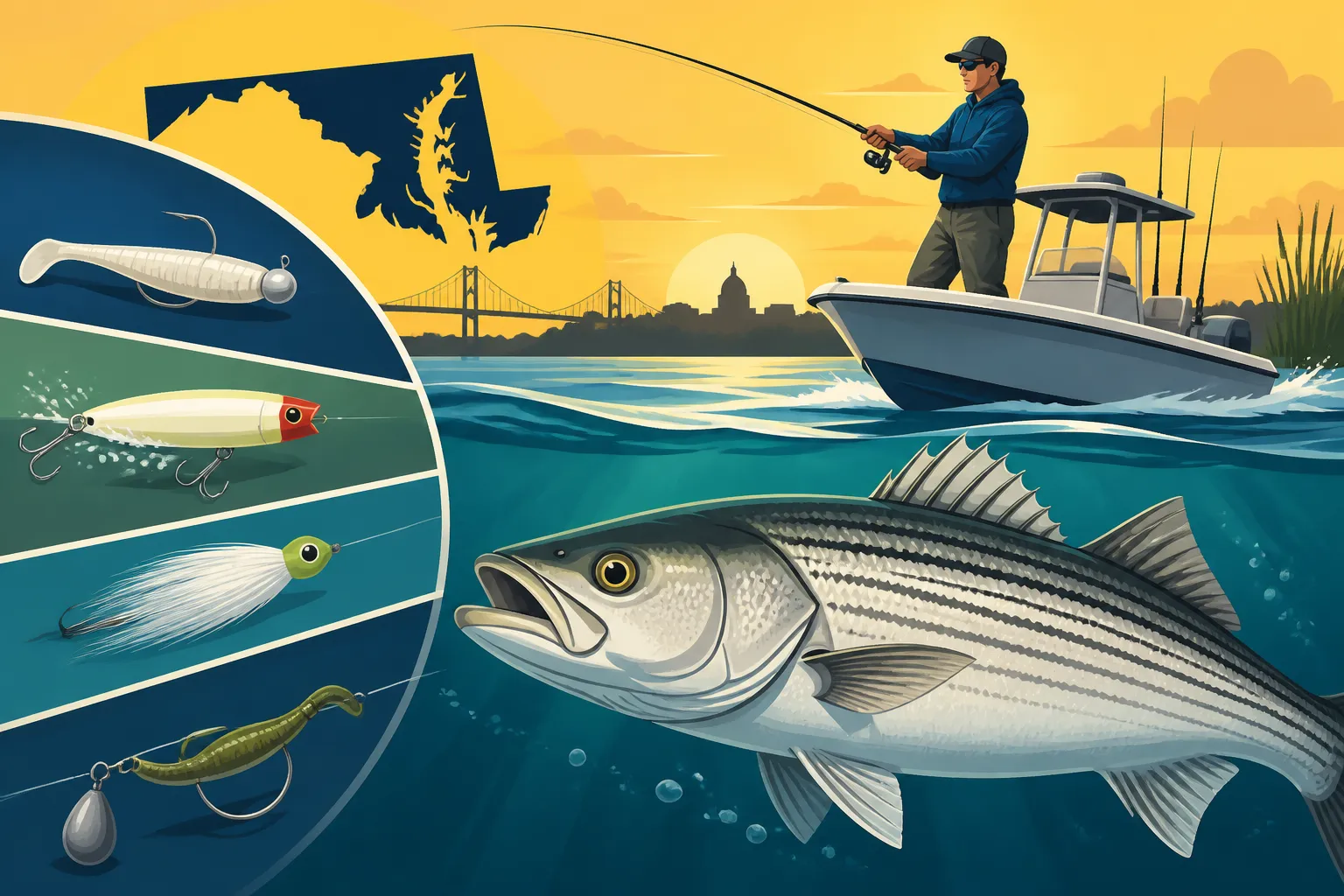
The heart of successful trolling lies in your "spread"—the array of lines, lures, and depth-controlling devices you deploy behind your boat. A diverse spread is crucial because striped bass can be particular about lure size, color, and action on any given day. Popular lure choices include classic bucktails, often adorned with a soft plastic trailer; surgical hoses, which imitate eels or large baitfish; soft plastic swim shads; and the ever-popular Mojo rigs, which are heavy lead jigs dressed with bucktail or plastic that run deep.
For covering more water and imitating a school of bait, umbrella rigs are incredibly effective. These rigs typically consist of a central lure (the "teaser") surrounded by several smaller lures or teasers on wire arms, creating the illusion of a baitball. Tandem rigs, which pair a larger, heavier lure with a lighter, trailing lure, are also highly productive. The key is to match your lure size and color to the prevailing baitfish in the area. For example, if you see small silversides, opt for smaller, natural-colored swim shads. If large menhaden are present, then bigger, more robust Mojos or umbrella rigs in chartreuse or white might be better. Don't be afraid to experiment, and always pay attention to which lure in your spread is getting hit. For a wide selection of trolling lures and planer boards, check out Amazon, where you can compare options and read reviews from other anglers.
Controlling Depth with Planer Boards and Downriggers
Controlling the depth and lateral spread of your lures is paramount to trolling success. Without proper depth control, your lures will simply run in the prop wash, scaring fish, or they won't reach the strike zone where the fish are holding. This is where tools like planer boards and downriggers become indispensable. Planer boards are designed to take your fishing lines away from the boat, spreading your lures horizontally and covering a wider swath of water. This is particularly useful for presenting lures in shallower water without spooking fish with your boat's shadow or engine noise. Both in-line boards (attached directly to your fishing line) and larger mast-and-bridle systems are commonly used.
Downriggers, on the other hand, are essential for precisely targeting deep-holding fish or specific thermal layers, especially during the warm summer months when striped bass retreat to cooler depths. A downrigger uses a heavy lead "ball" (cannonball) to carry your fishing line down to a set depth, releasing the line from a clip when a fish strikes. This allows you to place your lure exactly where the fish are marked on your sonar, often just above them. Combining these tools—using planer boards for your shallow and mid-depth lines, and downriggers for your deepest presentations—ensures maximum coverage of the water column and gives you the best chance to intercept fish wherever they are holding. Many anglers looking to refine this technique will consult guides like Trolling Bucktails for Maryland Striped Bass for detailed rigging and deployment strategies.
Optimal Trolling Speeds and Patterns
Achieving the right trolling speed and maintaining effective patterns are critical factors that directly influence your catch rate. For striped bass in the Chesapeake Bay, a typical trolling speed ranges from 2.5 to 4 knots. However, this is not a hard and fast rule; experienced anglers constantly adjust their speed based on water temperature, current strength, and, most importantly, the action of their specific lures. Slower speeds are often more effective when fish are lethargic or in very cold water, while a slight increase in speed can entice a strike from more active fish. Watch your rod tips: they should be vibrating rhythmically, indicating your lures are swimming correctly.
Beyond just speed, the way you maneuver your boat can trigger strikes. Rather than simply driving in a straight line, making subtle S-turns or gentle figure-eights is a highly effective tactic. These turns cause your lures on the inside of the turn to slow down and drop, while those on the outside speed up and rise, creating a dynamic action that often triggers a reaction strike from following fish. It also allows you to cover more varied bottom contours.
When targeting areas, focus on channel edges, underwater humps, points, and drop-offs—these are natural ambush points where striped bass wait for baitfish. If you mark a school of fish or bait on your sonar, try circling back over the area, adjusting your depth and speed until you find the sweet spot. Patience and meticulous observation of your electronics and rod tips are the hallmarks of a successful troller.
Effective Jigging Strategies for Striped Bass
Jigging is a highly interactive and versatile fishing technique that can be incredibly effective for striped bass in Maryland, particularly when fish are concentrated around structure or balled up in schools. Unlike the more passive nature of trolling, jigging puts you directly in control of your lure's action, allowing for precise presentations and immediate feedback from the fish. It's a technique that often leads to exciting, hard-hitting strikes and can be adapted to a wide range of conditions and depths.
Selecting Jigs and Soft Plastics
The world of jigs for striped bass is vast, but two main categories dominate: metal jigs and soft plastic jigs. Metal jigs, such as Stingsilvers, Crippled Herring, or larger vertical jigs, are dense and sink quickly, making them ideal for vertical presentations in deep water or for casting long distances into breaking fish. Their weight is crucial; you need a jig heavy enough to reach the bottom quickly in current, but light enough to impart good action. Typical weights range from 1 to 6 ounces, sometimes more.
Soft plastic paddle tails rigged on lead jig heads are incredibly versatile and often imitate baitfish with remarkable realism. Brands like Bust 'Em Baits, Z-Man, or Gulp! are popular choices. The size of the soft plastic can range from 4 inches for smaller fish to 9 inches or more for larger trophy seekers. The jig head weight needs to be matched to the depth and current, allowing the lure to reach the strike zone while still having a natural "swim" on the retrieve. Different tail designs on soft plastics create varying actions, from tight wiggles to wide thumping motions, so having a selection is always a good idea.
Color choice, while sometimes debated, generally follows a few rules of thumb. Natural baitfish colors—white, pearl, chartreuse, olive, and silver—are almost always effective. Brighter colors like pink, electric chicken, or fire tiger can be excellent in murky water, low light conditions, or to trigger a reaction strike when fish are finicky. It's wise to have a variety of colors and sizes on hand, as striped bass can be quite particular on any given day.
Vertical Jigging vs. Casting and Retrieving
Once you've selected your jig, the next step is deciding how to present it. The two primary methods are vertical jigging and casting and retrieving. Vertical jigging is most effective when you've located fish directly beneath your boat using your sonar, typically concentrated over deep structure or in tight schools. The technique involves dropping your jig to the desired depth (often just above the fish or right on the bottom), then imparting a series of rhythmic lifts and drops with your rod tip, varying the intensity and speed. The idea is to make the jig appear like a wounded or fleeing baitfish. It’s a precise method, allowing you to target a specific depth and school of fish. Many anglers dedicated to this method will study resources like Jigging Techniques for Maryland's Chesapeake Bay Striped Bass to perfect their form.
Casting and retrieving, conversely, is ideal when fish are more scattered, feeding near the surface, or holding in shallower water around points and ledges. This involves casting your jig out, letting it sink to the desired depth, and then retrieving it with a varied cadence. This might include a steady reel, a series of sharp jerks, or a "twitch-twitch-pause" method, mimicking a baitfish trying to escape. This technique allows you to cover more horizontal ground and probe different areas from a single boat position.
Knowing when to switch between these techniques is a mark of an experienced angler. If your fishfinder shows a dense school, go vertical. If you see busting fish in the distance or your sonar shows scattered marks, casting and retrieving might be more productive. Always pay attention to what the fish are telling you through your rod tip and the activity on your sonar.
Targeting Structure and Schools
Striped bass are structure-oriented fish, and understanding where and how they relate to underwater features is crucial for jigging success. Bridge pilings, artificial reefs, submerged wrecks, rock piles, and distinct channel edges are all prime locations where these predators will stage to ambush baitfish. When jigging these areas, precise boat positioning is key. You want to be able to drop your jig directly onto or around the structure, often letting the current carry your lure into the target zone. Sometimes, a well-placed cast that allows the jig to sink alongside a piling is all it takes.
Beyond fixed structure, striped bass also congregate in schools, often indicated by bait balls on your fishfinder or visible bird activity on the surface. When you locate a school, whether deep or shallow, the challenge is to approach without spooking them. Often, a slow, quiet approach upcurrent or upwind of the school, then dropping anchor or using a trolling motor to hold position, allows you to effectively present your jigs. Watching your electronics is paramount here; it tells you the depth, density, and movement of the school, guiding your jigging efforts.
Current breaks and eddies, formed by points, pilings, or sudden depth changes, are also prime ambush points. These areas provide a resting spot for striped bass and funnel baitfish directly to them. Mastering the art of identifying these zones, whether through charts or on-the-water observation, and then effectively presenting your jig within them, will significantly elevate your jigging game.
The Art of Live-Lining and Bait Fishing
While artificial lures offer excitement and versatility, sometimes nothing beats the primal effectiveness of live bait. Live-lining, in particular, is a time-honored tradition in Maryland for targeting striped bass, especially when the fish are finicky or during the warmer months when a natural presentation can outperform anything artificial. It's a method that often requires patience but can yield some of the largest and most sought-after rockfish.
Best Live Baits for Striped Bass
When it comes to live bait for striped bass in Maryland, one species reigns supreme: the spot. These small, silvery panfish are a natural and irresistible food source for rockfish, making them the absolute king of live baits in the Chesapeake Bay. They are caught using sabiki rigs, often around shallower areas, oyster beds, or channel edges, particularly in the mid-to-lower Bay. The fresher and livelier your spot, the better, so a good livewell with plenty of oxygenation is essential for keeping them frisky.
Beyond spot, other effective live baits include eels, which are particularly deadly for targeting large stripers lurking in heavy structure like bridge pilings or wrecks. Their snake-like appearance and natural oil content are hard for a big rockfish to resist. Small white perch, herring, or even peanut bunker (juvenile menhaden) can also be highly productive when available. The key is to use bait that is naturally present in the area and to keep it as healthy and active as possible. A struggling or dead bait rarely entices a wary striper.
The size of your live bait can also matter, especially when targeting different classes of striped bass. Smaller spot or perch might appeal to schoolie-sized fish, while larger spot, eels, or big peanut bunker are often preferred when you're trying to tempt a true trophy rockfish. Knowing what size baitfish are in the area and matching your presentation accordingly will increase your chances of success.
Chumming Strategies for Rockfish
Chumming is a classic bait-fishing technique that creates an irresistible scent trail in the water, drawing fish directly to your boat. It’s an incredibly effective way to concentrate striped bass, especially during the summer and fall when they might be scattered. The most common chum in Maryland is ground menhaden (bunker), often sold in frozen blocks, but clam chum can also be effective. The goal is to create a consistent, slowly dispersing plume of scent and small food particles that will attract fish up-current and lead them right to your waiting baits. For a detailed breakdown of this method, anglers often turn to guides like Chumming and Chunking for Maryland's Chesapeake Bay Striped Bass.
Setting up an effective chum slick requires careful consideration of current and boat positioning. You want to anchor your boat up-current from a known fishing spot, structure, or where you've marked fish. A sturdy chum pot or mesh bag, filled with your chosen chum and suspended off the stern of the boat, will slowly release the scent. The key is consistency; you want a continuous, unbroken slick. Some anglers supplement with "chunking"—throwing small pieces of cut bait into the slick—to give fish something tangible to eat, further enticing them.
Once your chum slick is established, presenting your baits within it is crucial. Your live or cut bait should drift naturally with the chum, appearing as part of the irresistible feast you've created. This often means using minimal weight, allowing your bait to flutter and drift with the current, just like the chum particles. The natural presentation is what separates successful chumming from simply dumping bait overboard.
Anchoring and Presenting Bait Effectively
Proper anchoring is fundamental to successful bait fishing, especially when chumming or live-lining over specific structure. You need to position your boat precisely, often up-current from a channel edge, oyster bar, or underwater hump, to allow your baits (and chum) to drift naturally into the strike zone. This requires a good anchor with plenty of rode (anchor line) to ensure it holds securely, even in strong currents or choppy conditions. Having a reliable anchor system and knowing how to deploy it effectively will save you a lot of frustration and repositioning.
Rigging your live bait correctly is equally important. For live spot, a simple fish-finder rig is popular. This involves a small sliding egg sinker above a swivel, with a fluorocarbon leader (2-4 feet) tied to a circle hook. The hook is typically inserted through the nose or just behind the dorsal fin of the spot, allowing it to swim naturally. Using circle hooks is particularly effective with live bait, as fish often hook themselves in the corner of the mouth, leading to healthier releases and better hook-up ratios. This technique is outlined in detail in guides like How to Rig a Live Spot for Striped Bass.
The retrieve, or lack thereof, is also a critical aspect of bait fishing. Once your bait is deployed, it's often a waiting game. Striped bass will typically pick up the bait and run with it. With circle hooks, resist the urge to "set the hook" aggressively. Instead, let the fish take the bait, feel the line tighten, and then slowly reel into the fish, allowing the circle hook to do its job. This patience is often rewarded with a solid hook-up and a powerful fight, making bait fishing a relaxing yet highly effective method, especially during the warmer months when fish might be less aggressive towards artificial lures.
Topwater and Artificial Lure Casting
While trolling and bait fishing have their undeniable merits, there’s a special thrill that comes from casting artificial lures, particularly topwater baits, to actively feeding striped bass. This highly engaging style of fishing puts the angler directly in the action, offering explosive strikes and the satisfaction of working a lure to perfection. It's a technique that truly shines when fish are aggressive and willing to chase, turning a day on the water into an unforgettable experience.
Topwater Lures for Explosive Strikes
Few things in fishing compare to the heart-stopping excitement of a striped bass erupting on a topwater lure. Poppers, walking baits, and prop baits are the mainstays of this technique. Poppers create a loud "bloop" or "pop" sound and splash by pushing water, mimicking a struggling baitfish. Walking baits, like the Heddon Super Spook or various Zara Spook clones, are designed to glide side-to-side across the surface with a "walk-the-dog" retrieve, creating an irresistible commotion. Prop baits feature a small propeller that churns water, generating both sound and splash.
Topwater lures are most effective in specific conditions: low light (dawn and dusk are prime times), calm water, around shallow structure (marsh edges, oyster bars, rock piles), or during active feeding frenzies when striped bass are driving bait to the surface. When conditions align, the strikes are often incredibly aggressive and visual, making for an exhilarating fishing experience.
Retrieval techniques are key to unlocking the potential of topwater. For poppers, a sharp twitch of the rod tip followed by a pause creates the desired pop and splash. For walking baits, a rhythmic, subtle twitching of the rod tip while reeling in slack allows the lure to "walk." Consistency in your retrieve, mixed with occasional pauses, often triggers the most strikes. Remember, sometimes the fish will follow for a while before deciding to strike, so keep working that lure all the way back to the boat.
Soft Plastics and Hard Baits for Shallow Water
Beyond topwater, a wide array of soft plastics and hard baits are incredibly effective for casting to striped bass in shallower to mid-depth waters. Soft plastic paddle tails, as discussed in the jigging section, can be equally devastating when cast and retrieved. Rigged on lighter jig heads (1/4 to 1 oz depending on depth and current), they mimic baitfish with a natural swimming action. Soft jerkbaits, or flukes, are another excellent option, offering an erratic, darting action when twitched, especially effective for finicky fish.
Hard baits, such as shallow-diving crankbaits and suspending jerkbaits, also have their place. Crankbaits are great for covering water and often trigger reaction strikes with their wobbling action and internal rattles. Suspending jerkbaits, which hang tantalizingly at a specific depth when paused, can be deadly when fish are holding just above structure or are hesitant to commit to a fast-moving lure. These are particularly useful around prominent points, channel bends, or even in the shallow waters of the Susquehanna Flats or other areas.
These lures shine when targeting marsh edges, grass beds, shallow points, rocky shorelines, and other areas where striped bass might ambush bait. During cooler parts of the day or in areas with strong current, fish will often move into these shallower zones to feed. Experiment with different retrieve speeds, twitching actions, and pauses to discover what the fish prefer on any given day. On Amazon, you'll find an extensive selection of these versatile lures, making it easy to stock your tackle box for any scenario.
Working Lures in Various Conditions
The ability to adapt your lure presentation to different conditions is what separates a good caster from a great one. Water clarity, current, and fish activity all dictate how you should work your artificial lures. In clear water, more natural baitfish colors and subtle actions are often best, as the fish have a better view of your offering. In murky or stained water, brighter colors or lures that create more vibration and disturbance can help fish locate your bait.
Current is another critical factor. Casting your lure up-current and allowing it to drift naturally into a potential strike zone, while slowly retrieving, can be incredibly effective. Alternatively, working a lure across the current can create a different action that triggers a strike. Understanding how your lure behaves in different current speeds will help you select the right weight and retrieve.
Lastly, pay attention to the level of fish activity. If fish are actively breaking the surface in a "blitz," then a fast, aggressive retrieve with a topwater or fast-moving swimbait is likely to be productive. If fish are sluggish or holding deep, a slower, more methodical presentation with a soft plastic or suspending jerkbait might be more effective. The Chesapeake Bay is constantly changing, and your ability to adjust on the fly will lead to more consistent success.
Reading the Water and Environmental Factors
Beyond understanding the fish themselves and having the right gear, truly successful striped bass fishing in Maryland hinges on your ability to "read the water." This means interpreting the subtle and not-so-subtle cues that the environment provides, helping you locate fish and anticipate their behavior. From the ebb and flow of tides to the tell-tale signs of feeding fish, these environmental factors are your map to success.
Interpreting Tides and Currents
In the Chesapeake Bay, tides and currents are king. They dictate where baitfish will congregate and, consequently, where striped bass will lie in ambush. Generally speaking, moving water is good water for fishing. Both incoming and outgoing tides create current, which disorients baitfish and makes them easier targets for predators. Strong currents around points, channel edges, and bridge pilings are often prime fishing spots. The moving water carries plankton, which attracts smaller baitfish, which in turn attracts the stripers. Anglers often find that the last hour of an outgoing tide and the first hour of an incoming tide are particularly productive as bait is flushed out or pushed into feeding zones.
Understanding "slack tide," the period of minimal current between the change of tides, is also important. While often slower, slack tide can sometimes be productive for targeting lethargic fish that aren't actively fighting current and might be resting in deeper holes or tight to structure. It can also be a good time to move between spots or to try different presentations.
Current breaks and eddies are natural ambush points that every angler should learn to identify. When current flows around an obstruction like a point, a piling, or a submerged structure, it creates areas of slower water (eddies) or distinct seams where fast water meets slow water (current breaks). Striped bass will often sit in these calmer areas, expending minimal energy while waiting for baitfish to be swept past them in the main current. Positioning your boat to cast into or drift through these zones is a highly effective tactic. Consulting the Best Time of Day to Fish Maryland's Chesapeake Bay can provide further insights into tidal impacts.
Locating Structure and Drop-offs
Striped bass are almost always associated with some form of structure, whether natural or man-made. This could be anything from oyster reefs and submerged rock piles to bridge pilings, artificial reefs, and distinct channel edges. These structures provide cover, concentrate baitfish, and create current breaks that are ideal for ambush predators. To effectively fish these areas, you need to be able to locate them, and that's where modern electronics and good charts come in.
High-definition contour maps and advanced sonar (fishfinder) units are invaluable tools. They allow you to "see" the underwater topography, identifying subtle humps, ledges, and drop-offs that might hold fish. Learning to interpret your sonar screen to distinguish between baitfish, individual striped bass, and bottom structure is a skill that comes with practice. Mark productive spots on your GPS, as these areas often hold fish year after year. A reliable fishfinder or a detailed nautical chart from brands like Garmin or Humminbird, available on Amazon, can be a game-changer for finding these underwater structures.
Bridge pilings, in particular, are notorious striped bass magnets. They offer vertical structure, create massive current breaks, and provide ample hiding spots for both predators and prey. Fishing them effectively often requires precise boat control to position your baits or lures right alongside the pilings. Wrecks and other submerged debris, while sometimes hazardous for navigation, can also be hidden gems, holding large schools of striped bass that often go unpressured. Always exercise caution when fishing around wrecks, but don't ignore their potential.
Spotting Bird Plays and Bait Balls
One of the most exciting and reliable indicators of active striped bass is the presence of feeding birds. Diving gulls, terns, and ospreys are often signaling that baitfish (usually menhaden or anchovies) are being driven to the surface by predatory fish, including striped bass, from below. This spectacle, often called a "bird play" or "blitz," is an undeniable sign of action and can be spotted from a considerable distance.
When you see birds working, approach the area cautiously. Your goal is to get within casting range without spooking the fish or driving the bait down. Look for "nervous water," splashes, or even actual baitfish jumping out of the water – these are all signs that the blitz is active. Once you're in position, cast into the chaos with topwater lures, soft plastics, or metal jigs. The fish will often be in a feeding frenzy, striking almost anything that resembles a wounded baitfish.
Even if there are no birds visible, your sonar can still tell you if bait balls and striped bass are present. Sometimes, the fish are working bait deeper in the water column, not pushing it all the way to the surface. Learning to distinguish between dense bait schools and larger individual marks on your fishfinder will help you identify these sub-surface feeding opportunities. Always keep a watchful eye on your surroundings, scan the horizon for bird activity, and pay close attention to your electronics – together, they paint a comprehensive picture of where the fish are and what they're doing.
Seasonal Strategies for Maryland Striped Bass Fishing
The Chesapeake Bay offers year-round opportunities for striped bass, but the techniques and locations change dramatically with the seasons. A truly successful angler understands these seasonal shifts and adapts their approach accordingly. What works in the chilly spring might be entirely ineffective in the scorching summer.
Spring Trophy Season Tactics
Spring in Maryland is synonymous with the "Trophy Rockfish Season," a highly anticipated period when anglers target large, mature striped bass migrating into and out of the Bay's spawning rivers. These are the big girls, often pushing 40-50 pounds, making their annual journey. The primary focus during this time is on trolling. Anglers will deploy massive tandem rigs, Mojo rigs, and umbrella rigs, often with large profile lures in white, chartreuse, or pink, to imitate the substantial baitfish these large stripers are feeding on.
Key areas to target during the spring include the main stem of the Bay, particularly the deep channel edges near the mouths of major spawning rivers like the Susquehanna, Choptank, and Potomac. Fish will often hold along these edges, waiting to move upriver or feeding heavily after spawning. Understanding the Maryland Spawning River Closures for Striped Bass is crucial, as certain areas are closed to protect the spawning fish. Anglers must respect these regulations and focus their efforts in legal fishing zones.
Timing is absolutely paramount in the spring. The season dates are often short and specific, designed to minimize impact on the spawning stock. Keeping up-to-date with the Maryland Department of Natural Resources (DNR) regulations and specific season dates, such as Maryland's 2026 Striped Bass Season Dates, is non-negotiable. This is a time for big boats, big gear, and often, big fish, offering the chance of a lifetime for a true trophy.
Summer Deep Water and Night Fishing
As Maryland's summer temperatures soar, the striped bass often move to deeper, cooler waters where oxygen levels are more stable and temperatures are more comfortable. This is when deep-water jigging, live-lining over prominent structure, and night fishing become the most productive methods. Fish will congregate around deep channel edges, artificial reefs, and submerged wrecks, making them perfect targets for vertical presentations.
During the day, focus your efforts on areas where you can mark fish holding in 25-50 feet of water or more. Live-lining spot or eels directly over these deep schools, or vertically jigging heavy metal jigs, can be incredibly effective. The key is to get your bait or lure down to where the fish are residing and present it slowly, as their metabolism might be a bit lower in the heat.
Night fishing, however, can be a game-changer in the summer. Under the cover of darkness, striped bass often become much more active, moving into shallower areas to feed on unsuspecting baitfish. Lighted bridges, piers (check if a Maryland Fishing License for Non-Boat Anglers is needed), and prominent points become hotspots. Casting topwater lures, soft plastics, or even live-lining eels can yield fantastic results. Fish are often less pressured at night and willing to strike aggressively. Combining these two strategies—targeting deep structure during the day and transitioning to shallower, active zones at night—can ensure consistent action throughout the summer.
Fall Run Blitzes and Feeding Frenzies
The Maryland Fall Run is legendary, an epic feeding event as striped bass gorge themselves in preparation for their winter migration. This is arguably the most exciting time to fish for rockfish in the Bay. Massive schools of striped bass will chase vast schools of baitfish, often menhaden, driving them to the surface in spectacular "blitzes" that can stretch for acres. This is prime time for casting artificial lures.
Look for acres of birds diving and working over breaking fish, particularly in the middle and lower sections of the Chesapeake Bay. Be prepared to move quickly and strategically to get within casting range of these frenzies. Topwater lures, soft plastic paddle tails rigged on jig heads, and metal jigs are incredibly effective. Cast into the melee and retrieve aggressively, mimicking a fleeing baitfish. The action can be fast and furious, with multiple hookups possible.
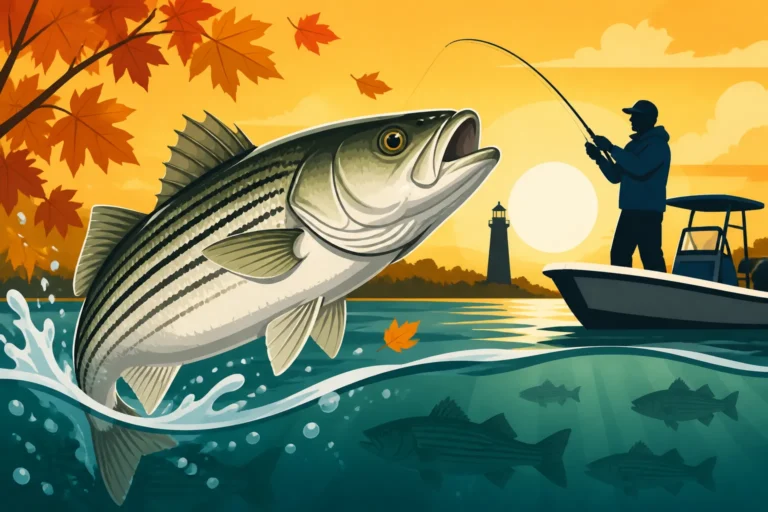
While the Fall Run offers abundant action, it’s also crucial to be mindful of regulations. The Maryland Rockfish Slot Limit Explained is especially important during this time, as fish of various sizes will be present. Always have a measuring board or tape readily available and be prepared to quickly and safely release fish outside the legal slot. The Fall Run is a magical time for striped bass fishing, but responsible angling ensures these incredible fish will be around for future generations.
Winter Catch and Release Approaches
While many striped bass migrate out of the Bay as temperatures plummet, a significant population of "resident" fish will overwinter in the deeper, more stable channels and estuaries. This is primarily a catch-and-release fishery, and it requires specialized techniques and a robust understanding of fish handling in cold water. For winter fishing, for both striped bass and other species, understanding techniques like Winter Fishing for White Perch in Maryland can provide valuable cross-over insights for general cold-water angling.
During the winter, striped bass are lethargic, their metabolism slowed by the cold. They won't chase fast-moving lures. The most effective technique is often vertical jigging with heavy metal jigs or larger soft plastics, presented slowly and deliberately in deep channels and holes where fish are congregated. Using your fishfinder to pinpoint schools and dropping your lure directly to them is key. Subtle lifts and drops, with long pauses, are often more effective than aggressive jigging.
Practicing responsible catch and release is paramount during the colder months, as fish are more susceptible to stress and mortality in cold water. Minimize handling time, use single barbless hooks where possible (though not required by regulation for stripers, it's a good practice), and ensure fish are revived before release. For cold-weather gear like insulated gloves or waterproof jackets, Amazon offers a wide range of options to keep you comfortable during winter fishing trips. While the action can be slower, the chance to connect with a big winter striper is a rewarding experience for dedicated anglers.
Maryland Striped Bass Fishing Techniques Comparison
Here's a quick look at the main techniques we've covered, to help you decide which to employ based on conditions and your preference:
| Technique | Primary Lure/Bait | Optimal Conditions | Target Fish Size | Pros | Cons |
|---|---|---|---|---|---|
| Trolling | Umbrella Rigs, Mojos, Bucktails | Searching open water, deep channels, covering ground | Medium to Trophy | Covers vast areas, effective for deep fish and trophy hunting | Requires specific boat setup, less "hands-on" engagement |
| Jigging | Metal Jigs, Soft Plastics | Over structure, marked schools, varied depths | Small to Trophy | Versatile, active, good for targeting specific fish | Can be physically demanding, requires finesse and boat control |
| Live-Lining | Live Spot, Eels | Calm water, over structure, chumming for results | Medium to Trophy | Highly effective for larger, finicky fish | Requires live bait maintenance, slower pace, often anchored |
| Chumming | Ground Menaden, Cut Bait | Anchored over structure, strong current | Medium to Trophy | Draws fish to you, relaxing, consistent action | Can be messy, attracts other species, requires bait |
| Topwater Casting | Poppers, Walking Baits | Low light, calm water, active blitzes | Small to Medium-Large | Exciting visual strikes, highly engaging | Limited conditions, can be frustrating when fish aren't active |
| Soft Plastics Casting | Paddle Tails, Swimbaits | Shallow to mid-depth, around structure, active fish | Small to Medium-Large | Versatile, good mimicry of baitfish, highly adaptable | Requires good casting technique, can be snag-prone in structure |
Disclaimer
Fishing regulations, including licensing requirements, size limits, and seasons, can change frequently in Maryland. While this guide provides comprehensive information, it is the angler's responsibility to consult the most current Maryland Department of Natural Resources (DNR) rules and regulations before fishing. Always prioritize safety on the water and practice responsible angling to conserve Maryland's precious fisheries.