How to Rig a Live Spot for Striped Bass
There's nothing quite like the thrill of chasing big striped bass in Maryland, but sometimes it feels like you're throwing everything but the kitchen sink at them with no real bites to show for it. If you've been frustrated by artificial lures or static bait, you're in the right place. This guide will take you deep into the art of rigging a live spot, a technique that many seasoned anglers swear by for enticing those elusive trophy rockfish in the Chesapeake Bay. We'll cover everything from the gear you need to the exact steps for rigging and presenting your bait, helping you unlock a whole new level of success on the water.
Understanding Why Live Spot are Striped Bass Magnets
When it comes to catching big striped bass, especially in the challenging waters of the Chesapeake Bay, having the right bait can make all the difference. And for many anglers, nothing beats a lively spot. There's a reason this little baitfish is so highly regarded; it’s a natural attractant that striped bass simply can't resist.
The Irresistible Appeal of a Live Baitfish
Imagine being a hungry striped bass, cruising the channel edges or lurking around submerged structure, looking for an easy meal. Suddenly, a small, vibrant baitfish like a spot, flashing its scales and struggling ever so slightly, swims into view. This isn't just a dead piece of cut bait sitting motionless on the bottom; it's a living, breathing creature sending out all the right signals. The vibrations it creates, the way it moves, and even its scent are powerful attractants to a predatory fish like a rockfish.
Spot are particularly effective because they are a natural part of the striped bass's diet in the Chesapeake Bay. They are prevalent in the Bay's shallower areas and often school up, making them a common food source. Their lively nature means they're constantly moving, even when hooked, which perfectly mimics a natural prey item trying to escape. This erratic movement, combined with their shiny scales, creates a visual and sensory experience that larger striped bass find almost impossible to ignore. The effort of catching and maintaining live spot truly pays off when you hook into that trophy fish you've been dreaming of.
When and Where This Technique Shines
Live-lining with spot is a technique that truly comes into its own during specific times of the year and in particular locations within Maryland's waters. While it can be effective in late spring, it really hits its stride from summer through the fall. As the water temperatures rise, striped bass tend to move to deeper, cooler waters, often congregating around structures or along pronounced channel edges where baitfish, like spot, are also found. This is when the tactic of suspending a live spot right in front of them becomes incredibly productive.
Think about those warm summer days when the baitfish are thick. The Chesapeake Bay becomes a vibrant feeding ground, and spot are everywhere. You'll find success fishing the deeper channel edges, especially those with sharp drop-offs, or around prominent underwater structures like oyster reefs, bridge pilings, or even the remnants of old submerged wrecks. Prime spots also include points where currents create eddies and funnel baitfish. Areas like the Bay Bridge pilings, the R2 buoy, or the mouth of the Patuxent River are legendary for this kind of fishing. The cooler fall months, when striped bass are actively feeding to bulk up for winter, also offer fantastic opportunities for live-lining spot. The fish are often more aggressive, and a struggling live spot is just too tempting to pass up. Knowing the best time of year to catch striped bass in Maryland and understanding how tides affect fishing in Maryland's Chesapeake Bay will significantly boost your chances.
Essential Gear for Live-Lining Success
Before you even think about putting a hook through a lively spot, you need to make sure you've got the right tools for the job. You wouldn't try to build a house with a hammer and nails if you needed a power saw, and the same goes for serious striped bass fishing. Having the correct rod, reel, line, and terminal tackle is paramount to not only hooking but also landing that big fish.
Rod, Reel, and Line Selection
For live-lining, you're going to want gear that can handle a serious fight. We're talking about potentially hefty striped bass, so a delicate freshwater setup simply won't cut it. A medium-heavy to heavy action rod, typically 6.5 to 7.5 feet long, is ideal. You want enough backbone to turn a strong fish away from structure, but also a sensitive enough tip to detect those subtle initial takes from a striped bass mouthing the bait. Fiberglass or composite rods often provide a good balance of power and sensitivity.
When it comes to reels, you have options. Many anglers prefer a conventional baitcasting reel for its power and control when fighting larger fish, especially if you're anchoring or drifting slowly. Look for a reel with a smooth, reliable drag system and good line capacity, like models from Penn or Shimano. If you prefer spinning gear, choose a heavy-duty saltwater spinning reel that can hold a good amount of line and has a robust drag. For your main line, 30 to 50 lb braided line is a popular choice for its strength-to-diameter ratio and lack of stretch, which enhances sensitivity. Always tie on a fluorocarbon or monofilament leader of 40 to 60 lb test. This leader provides abrasion resistance against sharp oyster shells or barnacle-covered pilings and is less visible in the water. You can find a fantastic selection of suitable rods, reels, and high-quality braided line on platforms like Amazon, often with reviews that can help you gauge their saltwater performance.
Hooks, Weights, and Swivels
The terminal tackle you choose is just as critical as your rod and reel. This is the business end of your setup, and it needs to be reliable. For live-lining spot, circle hooks are absolutely non-negotiable, especially in Maryland. They are mandatory for striped bass fishing in tidal waters when using bait, and for good reason. Circle hooks are designed to hook fish in the corner of the mouth, greatly reducing gut hooking and increasing the survival rate of released fish. This is crucial for conservation, especially when dealing with Maryland striped bass season and rockfish rules, and particular Maryland rockfish slot limit explained. Choose a sturdy, sharp circle hook in sizes ranging from 7/0 to 9/0, depending on the size of your spot and the striped bass you're targeting.
For weights, egg sinkers or slip sinkers are preferred because they allow the line to slide freely through them. This means the fish doesn't immediately feel the weight when it picks up the bait, giving it more time to fully commit. The weight you choose will depend on the current and depth you're fishing. Typically, 1 to 4 ounces is a good starting point. You'll also need quality swivels to connect your main line to your leader. A strong barrel or crane swivel will prevent line twist, which can be a real headache, especially if you're drifting. Look for swivels with a breaking strength exceeding your main line and leader. Again, reputable brands offering these essential components can be easily found on Amazon, ensuring you have durable and effective tackle.
Keeping Your Spot Alive and Lively
The "live" in "live-lining" is the most important part! A listless, dying spot is far less effective than a vibrant, energetic one. Therefore, having a proper system for keeping your baitfish healthy is crucial. The most effective way to do this is with a well-maintained livewell. A good livewell continuously circulates fresh water, or at least provides strong aeration to keep the oxygen levels high.
If your boat doesn't have a built-in livewell, you can use a large, insulated cooler with a portable aerator. Brands like Engel or Yeti offer rotomolded coolers that can be adapted with aftermarket aerators and hoses for excellent bait keeping. When transporting spot, try to keep the water temperature consistent with the water you caught them in. Avoid overcrowding the livewell, as this can quickly deplete oxygen and stress the fish. Change a portion of the water periodically, especially if it starts to get murky or if you're holding bait for an extended period. Always handle your spot gently; use a soft-mesh net to transfer them to and from the livewell, avoiding direct hand contact as much as possible, as the oils on your skin can be harmful to their delicate slime coat. Remember, a lively spot is a tempting meal; a sluggish one is just an appetizer.
Step-by-Step Guide to Rigging Your Live Spot
Now that you've got your gear and your lively bait, it's time to put it all together. Rigging a live spot effectively isn't complicated, but it does require attention to detail to ensure your bait presents naturally and your hookup ratio is high. We'll start with the most common and effective method, often referred to as a Carolina-style rig, and then discuss some variations.
The Basic Live-Lining Rig Carolina-Style
This rig is a staple for a reason: it's simple, effective, and allows the bait to swim freely while keeping your line on the bottom. Here's how you set it up:
- Thread Your Sinker: Take your main line (or braided line, if using a leader system) and thread it through the center of your egg or slip sinker. The sinker should be able to slide freely up and down the line. This free-sliding action is key; when a striped bass picks up the bait, it won't immediately feel the resistance of the weight, giving it more time to mouth the bait and get hooked.
- Tie on Your Swivel: After the sinker, tie on a sturdy barrel or crane swivel. This acts as a stopper for the sinker, keeping it from sliding down to your hook, and also serves as the connection point for your leader. Use a strong knot, like a Palomar knot or an improved clinch knot, ensuring it's cinched down tightly.
- Attach Your Leader: To the other end of the swivel, tie on your fluorocarbon or monofilament leader. For striped bass, a leader length of 2 to 4 feet is usually sufficient. This length provides some separation between your main line and the bait, which can be crucial in clear water, and also protects your main line from abrasion.
- Tie on Your Circle Hook: Finally, tie your chosen circle hook (7/0-9/0) to the end of your leader. Again, a strong, reliable knot like a snell knot or a Palomar knot is essential. Make sure the hook point is completely unobstructed once tied.
Now for the most delicate part: hooking the spot. You have two primary methods, each with its pros and cons:
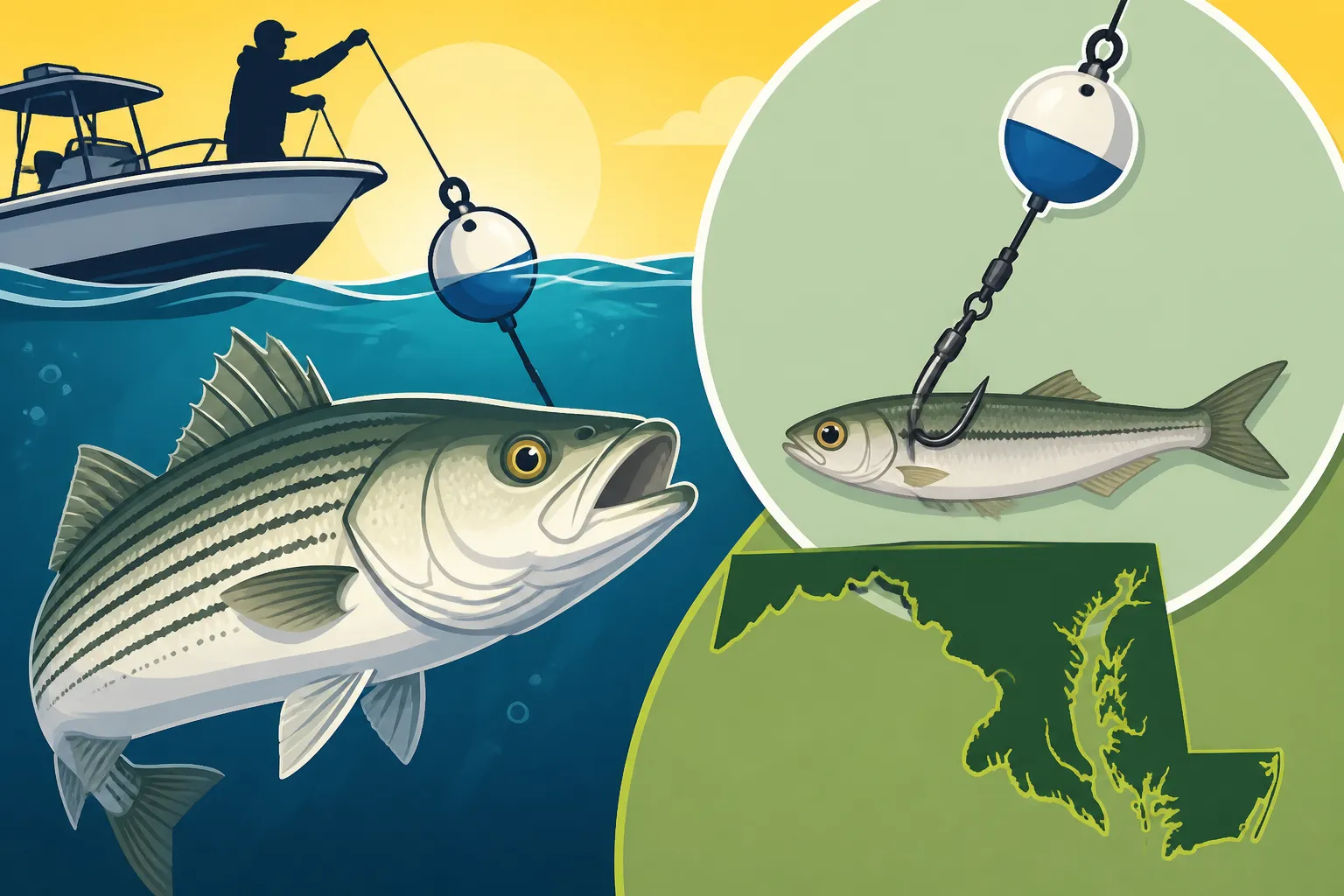
- Through the Nose/Lips: This is often the preferred method as it allows the spot to swim most naturally and live longer. Gently hold the spot and carefully pass the circle hook through both upper and lower lips, or just through the tough cartilage of the nose. Ensure the hook point is facing forward and fully exposed. The advantage here is that the spot can breathe easily and will look very natural to a cruising striped bass.
- Through the Back: This method is effective when you want the spot to stay in a particular depth or swim slightly deeper. Carefully insert the hook just behind the dorsal fin, making sure not to injure the spine. The spot will try to swim down, creating an erratic, struggling action that can be very enticing. However, be mindful not to hook it too deeply, as this can quickly kill the baitfish.
Imagine you're fishing a channel edge near the Bay Bridge. You've located a good school of bait and some marks on your fish finder that look like striped bass. You rig your spot through the nose, cast gently, and let it sink. The egg sinker quickly takes the rig to the bottom, but the leader allows your spot to swim freely a few feet above the weight, dancing tantalizingly for any rockfish hiding in the depths below. This natural presentation is often what triggers a strike when other baits fail. For other effective methods, check out our guide on how to chum for striped bass in the Chesapeake Bay.
Advanced Rigging Considerations
While the basic Carolina-style rig is a fantastic starting point, there are a few other rigging considerations that can be useful depending on the fishing scenario. Knowing these variations can help you adapt to different conditions and present your live spot in the most appealing way possible.
One common variation is using a float rig, sometimes called a bobber rig. This setup is particularly useful when fishing shallower water, around visible structure like docks or submerged pilings, or over oyster beds where you want to keep your bait from snagging on the bottom. Instead of a free-sliding sinker that goes to the bottom, you'll have a float (or bobber) positioned on your line above the leader. The float keeps your live spot suspended at a predetermined depth, allowing it to swim freely in the strike zone without getting tangled. This is especially effective if you know the striped bass are holding at a specific depth or feeding near the surface. You can use a slip float rig, which allows you to adjust the fishing depth easily by sliding a bobber stop up or down your main line, making it versatile for varying depths.
Another, less common but sometimes effective, method is balloon rigging for live spot. This technique is often employed in situations where you need to get your bait further away from the boat, in strong currents, or present it over very deep water. A balloon is attached to your main line (or directly to your leader) at a set distance from your bait. The balloon acts as a float, carrying your live spot out with the current or wind, and can also help you suspend your bait at a specific depth in the water column. When a fish strikes, the balloon will typically pop or detach, giving you a direct fight. This can be particularly useful when fishing around areas like the mouth of the Potomac where strong currents might push your bait down too quickly without a floatation aid.
Finally, while generally not recommended for conservation due to potential deeper hooking, some anglers consider using stinger hooks in very specific scenarios where fish are "short biting" – meaning they're nipping at the tail of the spot without fully inhaling the main hook. This usually involves a small treble hook attached to a short piece of wire or heavy monofilament and lightly secured to the tail of the spot. However, using stinger hooks greatly increases the risk of gut-hooking, especially with circle hooks, and is often discouraged or even illegal in certain areas or during specific seasons. Always check the latest Maryland fishing size and catch limits by species and local regulations from the Maryland DNR Fishing and Boating Guide before attempting this. No matter which rig you choose, always ensure your hooks are razor-sharp. A dull hook can be the difference between a solid hookup and a missed opportunity, especially with a powerful fish like a striped bass. You can find excellent hook sharpeners and pre-sharpened hooks from reliable brands on Amazon.
Presenting Your Live Spot for the Strike
Getting your live spot rigged correctly is half the battle; the other half is presenting it in a way that maximizes your chances of a strike. Striped bass are smart predators, and while a live spot is tempting, a poorly presented bait can still be ignored. This is where a little finesse and understanding of their behavior comes into play.
Deploying Your Bait and Waiting Game
Once your live spot is rigged, the next step is to get it into the water without startling the fish or tangling your line. A gentle, underhand cast is often best, especially with a lively baitfish that might try to swim off the hook during a hard cast. You want the bait to enter the water softly, minimizing splash, and then quickly sink to the desired depth. If you're using a conventional reel, make sure your thumb is on the spool to feather the line and prevent a backlash.
After the cast, the waiting game begins. You'll typically want to either drift or anchor, depending on the current and the specific structure you're targeting. When drifting, you're allowing the boat to move with the current or wind, covering more ground and presenting your bait to new fish. This can be very effective over expansive flats or along long channel edges. Pay close attention to your depth finder to ensure your bait stays in the strike zone. When anchoring, you're setting up over a known fish-holding spot, like a specific oyster bar or a cluster of bridge pilings. This allows you to precisely target a small area, especially if you've seen fish on your sonar. Once anchored, you might make a few casts in different directions to cover the immediate area.
The most crucial part of the waiting game is watching your rod tip and your line. With a free-sliding sinker, a striped bass often won't immediately yank the rod down. Instead, you might see a slight twitch, a subtle bend, or simply notice your line starting to move steadily away from the boat. This is the moment to resist the urge to immediately set the hook! Remember, with a circle hook, the fish needs to turn away with the bait for the hook to properly engage in the corner of its mouth. So, when you feel or see a bite, slowly pick up your rod, letting the tension build naturally as the fish moves. The circle hook will do its job as the line comes tight. It’s a very different approach than the aggressive hookset often associated with J-hooks, and it takes some getting used to. Many Maryland Chesapeake Bay fishing charters will use this exact technique, so paying attention to your captain can provide valuable lessons.
Reading the Water and Adjusting Your Strategy
Successful live-lining isn't just about setting your rig and waiting; it's about constantly reading the water and making adjustments. The Chesapeake Bay is a dynamic environment, and conditions can change rapidly. Understanding these changes and adapting your strategy is key to consistent success.
Tides and current are perhaps the most influential factors. Striped bass are ambush predators, and they often use current to their advantage, positioning themselves to intercept baitfish that are swept past them. Fishing the peak of the outgoing or incoming tide, especially around structures that create current breaks or eddies, can be incredibly productive. For example, when fishing around bridge pilings, fish often sit on the down-current side, waiting for bait to be washed to them. Observing the current direction and speed will help you position your boat and understand where your bait is likely to be carried. Sometimes, a strong current might require a heavier sinker to keep your bait in the strike zone, while a slack tide might call for lighter weight or even a float rig to keep the spot from just sitting lifelessly on the bottom.
Water depth and structure are also vital. Your fish finder isn't just for locating fish; it's also for mapping the bottom contours and identifying potential holding areas. Look for sudden changes in depth, submerged humps, shell beds, or even isolated pieces of debris. These are all places where striped bass love to hide and ambush prey. If you're not getting bites in one spot, don't be afraid to move a short distance and try another piece of structure or a different depth. Sometimes moving just 50 yards can make all the difference.
Finally, boat positioning directly impacts how effectively you can present your bait. If you're drifting, try to position your boat so your lines are flowing over the most promising structure. If you're anchored, ensure you're far enough up-current that your bait has time to sink and settle into the desired zone before it drifts out of the target area. Being patient is a virtue in fishing, but don't be stubborn. If a spot isn't producing after a reasonable amount of time, especially after adjusting your presentation, it’s often best to pull anchor and try a new location. Remember, the goal is to make your live spot look like the easiest meal in the Bay.
| Hooking Method | Description | Pros | Cons | Best Use Case |
|---|---|---|---|---|
| Nose/Lip | Hook through both upper & lower lips/nose. | Spot swims most naturally; lives longest; easy breathing. | Can sometimes rip out with aggressive casts. | General live-lining; when natural presentation is key. |
| Back | Hook just behind dorsal fin. | Creates erratic, struggling action; swims deeper. | Risk of injuring spine; shorter lifespan for baitfish. | When fish are aggressive; targeting deeper fish. |
Disclaimer
Fishing regulations, seasons, and licensing requirements in Maryland can change frequently. Always consult the latest Maryland Department of Natural Resources (DNR) guidelines before heading out on the water. This information is intended for general guidance and educational purposes only.