Ice Fishing Safety on Deep Creek Lake
There's nothing quite like the crisp air and serene quiet of ice fishing on Deep Creek Lake, but that peacefulness can quickly turn dangerous if you're not prepared for the unique challenges winter presents. Many anglers, especially those new to the ice, underestimate just how quickly conditions can change or how vital certain safety precautions are. This comprehensive guide will walk you through everything you need to know to stay safe, enjoy your time on the ice, and ensure you come home with nothing but great memories and, hopefully, a few fish.
Understanding Deep Creek Lake's Ice Conditions
Deep Creek Lake, nestled in Garrett County, Maryland, is one of the few places in the state where ice fishing is consistently possible, thanks to its higher elevation and colder climate. However, just because it freezes over doesn't mean the ice is uniformly safe. The lake's dynamic nature, with varying depths, currents, and underlying structures, means ice conditions can differ significantly even within a small area. Respecting the ice is the first rule of safety.
Factors Affecting Ice Thickness
Several elements play a crucial role in how thick and stable the ice becomes on Deep Creek Lake. It’s not just about how cold it’s been.
- Air Temperature: This is the most obvious factor, but it's not the only one. Consistent sub-freezing temperatures for several days or weeks are necessary for thick ice. However, a sudden warm spell, even for a day or two, can significantly degrade ice quality without visibly melting the surface.
- Water Depth and Currents: Shallower areas often freeze faster and thicker, but they can also be more susceptible to rapid thawing. Deeper sections, especially near the dam or inlets where there might be subtle currents, will freeze slower and can have thinner ice, even if the surrounding areas look solid. Water flowing under the ice can create weak spots that are invisible from above.
- Snow Cover: A blanket of snow might look picturesque, but it acts as an insulator, slowing down the freezing process. If heavy snow falls on new, thin ice, it can weigh it down, pushing water up through cracks and creating "slush ice," which is extremely dangerous and weak.
- Underlying Structure: Docks, submerged structures, rocks, and even vegetation can absorb sunlight or disrupt water flow, leading to localized thin spots. Areas around bridges or culverts where water might be flowing are also notorious for unstable ice. Always be wary around man-made structures extending into the water.
- Springs and Inflows: Deep Creek Lake has various springs and feeder streams. These areas introduce warmer water, creating pockets of thin or non-existent ice, regardless of the overall cold. These spots can be particularly deceptive as they might be hidden under a dusting of snow.
Safe Ice Thickness Guidelines
Determining safe ice thickness is not an exact science, but general guidelines are widely accepted. It's crucial to remember that these are for clear, solid, new ice. Slushy, honeycombed, or discolored ice is always weaker. Never assume. Always check.
| Ice Thickness (Clear, Solid) | Activity | Notes |
|---|---|---|
| 2 inches or less | STAY OFF! | Absolutely unsafe. |
| 4 inches | Ice fishing (foot travel only) | Minimum for single angler on foot. Distribute weight. |
| 5-7 inches | Small group ice fishing, snowmobile, ATV | Allows for more people spread out, light vehicles. |
| 8-12 inches | Small car or light truck | For carefully placed vehicles. Always check ice under vehicle. |
| 12-15 inches | Medium truck | Very rare on Deep Creek Lake. Only in prolonged extreme cold. |
When venturing out onto the ice, especially for the first time in a season, it’s critical to use an ice chisel or auger to check thickness every few yards. Don't just rely on where others have gone, as conditions can change rapidly. Remember, an experienced angler would tell you that the ice is never 100% safe, and caution is always your best bet. You can learn more about how to gauge ice stability in our guide on How Thick Does Ice Get at Deep Creek Lake?.
Essential Safety Gear for Deep Creek Lake Ice Fishing
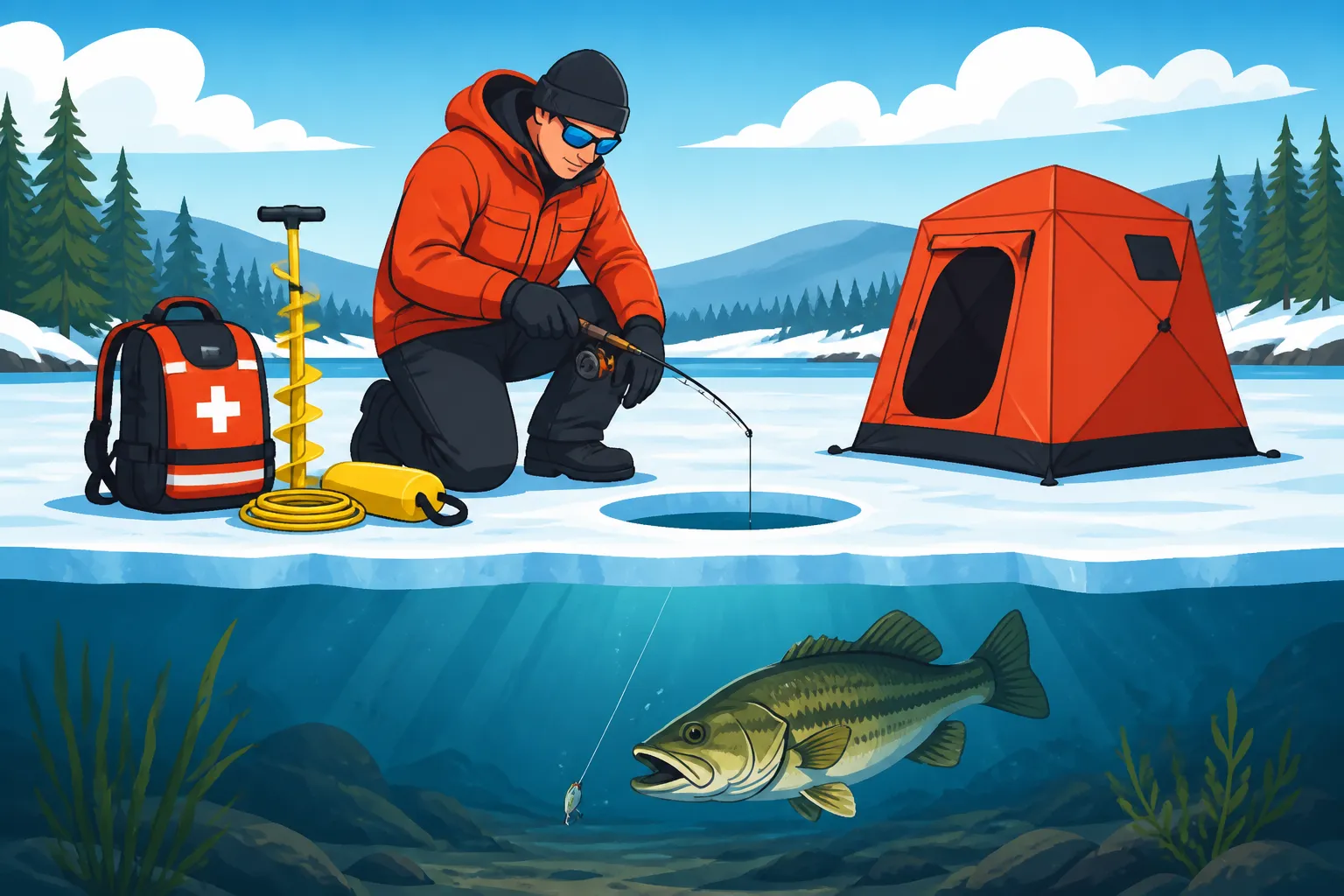
Preparing for an ice fishing trip means more than just having the right bait and tackle. It means equipping yourself with a specific set of safety gear designed to prevent accidents and aid in emergencies. Think of it as your insurance policy against the unpredictable nature of frozen water.
Personal Safety Equipment
Your personal kit is your first line of defense. These items are designed to keep you from falling through, or to help you get out if you do.
- Ice Picks: These are perhaps the most crucial piece of safety gear and often overlooked. Worn around your neck or easily accessible on your jacket, ice picks are two spiked handles connected by a rope. If you fall through, you can use them to dig into the ice and pull yourself out. They provide grip on the slippery surface that bare hands cannot. You can find reliable and affordable ice picks on platforms like Amazon, and they're a small investment for potentially life-saving assistance.
- Flotation Suit or Vest: A specialized flotation suit offers warmth, waterproofing, and buoyancy, making it incredibly difficult to sink if you go through the ice. Many modern ice fishing suits are designed with built-in flotation. If a full suit isn't feasible, a personal flotation device (PFD) worn over or under your outer layers is a non-negotiable must-have. Even a thin auto-inflating PFD can make all the difference.
- Spud Bar or Ice Chisel: This heavy metal bar with a chisel point is essential for checking ice thickness as you walk. Before taking a step, you should strike the ice ahead of you. If it penetrates easily, the ice is too thin. This is a critical tool for gauging conditions, especially in areas where you're unsure.
- Throw Rope: A buoyant rope, typically 50-75 feet long, stored in an easily accessible bag. If someone else falls through, you can throw the rope to them from a safe distance, allowing them to grab on while you pull them to safety. Practicing how to deploy one quickly is a smart move.
- Headlamp or Flashlight: Winter days are short, and conditions can change rapidly. A reliable light source is vital for early morning setups, late evening packing, or if an emergency extends into darkness. Ensure it has fresh batteries and consider carrying a spare.
Emergency and Communication Tools
Beyond keeping yourself afloat, you need the means to call for help and to provide initial care if an accident occurs.
- Fully Charged Cell Phone: Keep your phone in a waterproof, warm pocket close to your body to preserve battery life. A dead phone is useless in an emergency. Consider a portable power bank, which can also be easily ordered from Amazon, to ensure it stays charged.
- First-Aid Kit: Even minor cuts, scrapes, or frostbite can become serious in freezing conditions. A basic first-aid kit with bandages, antiseptic wipes, pain relievers, and hand warmers is essential.
- Whistle: A loud whistle can attract attention faster and more effectively than yelling, especially in vast, open ice environments or during whiteout conditions. It's a simple, inexpensive tool that can be invaluable.
- Map and Compass/GPS: While Deep Creek Lake might seem familiar, disorienting weather conditions like fog or heavy snow can quickly make you lose your bearings. A waterproof map, coupled with a compass or a reliable GPS device, will help you navigate back to shore safely. Apps on your phone can serve this purpose, but a dedicated GPS device or a traditional map is wise as a backup.
- Extra Warm, Dry Clothing: If you or someone else gets wet, hypothermia can set in rapidly. Pack a dry bag with spare warm layers, socks, and gloves. Even if you don't go through the ice, a splash or prolonged exposure to strong winds can warrant a change of clothes.
Bringing along a knowledgeable guide who understands Ice Fishing at Deep Creek Lake, Maryland can also significantly enhance your safety and success. They often carry advanced safety gear and know the lake's specific hazards.
Best Practices for Ice Fishing Safely
Even with the best gear, your knowledge and judgment are your most important safety tools. Ice fishing isn't just about having the right equipment; it's about making smart decisions before, during, and after your trip. Taking a careful, methodical approach to your outing on Deep Creek Lake will minimize risks and maximize enjoyment.
Pre-Trip Planning and On-Ice Conduct
Solid preparation starts long before you ever step foot on the ice. These practices are about mitigating risks through information and smart behavior.
- Check the Forecast and Ice Reports: Never head out without knowing the current and anticipated weather conditions. Look for extreme temperature swings, heavy snowfall, or high winds. Equally important are official ice reports from Maryland DNR or local bait shops and guides. These local sources often have the most up-to-date information on specific lake conditions. You should also check if Is Ice Fishing Allowed at Deep Creek Lake? before you go, as regulations can change.
- Inform Someone of Your Plans: Always tell a trusted friend or family member exactly where you're going, who you're with, and when you expect to return. Give them a contact number for local authorities (like the Garrett County Sheriff's Office or Maryland DNR) in case you don't check in.
- Fish with a Buddy: There's safety in numbers. If an accident occurs, a fishing partner can provide immediate assistance, call for help, or go for rescue. Never ice fish alone, especially on a large body of water like Deep Creek Lake.
- Spread Out: While it's great to have company, avoid congregating in one small area, especially on thinner ice. Spreading out your weight reduces stress on the ice, making it safer for everyone. If you’re setting up a shanty, ensure there’s ample space between structures.
- Use Proper Footwear: Ice cleats or spikes on your boots provide essential traction and prevent slips and falls on the slippery surface. A bad fall on ice can lead to serious injuries, even if you don't go through. Amazon offers a wide selection of attachable ice cleats that are easy to use.
- Avoid Alcohol and Drugs: Impaired judgment is a recipe for disaster on the ice. Save the celebratory drinks for after you're safely off the lake. Your focus needs to be sharp to assess conditions and react quickly.
- Keep Your Area Tidy: Tripping hazards on ice can be very dangerous. Keep your lines, buckets, and gear organized and close to you to prevent falls. If you are using an ice shanty, ensure your entry and exit paths are clear.
Recognizing and Reacting to Dangerous Situations
Even with all precautions, unexpected situations can arise. Knowing how to identify potential dangers and react appropriately can save lives.
- Listen to the Ice: Ice often "talks." Cracks, groans, and pops are common as the ice expands and contracts, but sudden, loud cracks or a feeling of the ice sinking or flexing underfoot are immediate warning signs. If you hear or feel something unusual, immediately spread your weight (lie down if necessary) and slowly retreat to safer, thicker ice.
- Look for Changes in Ice Color: Clear blue ice is generally the strongest. White or opaque ice (often from refrozen snowmelt) is typically weaker. Gray or dark ice indicates water underneath or rotten ice, and you should avoid it entirely. These visual cues can be subtle, so always pay close attention.
- Never Drive on Ice Without Extreme Caution: While some larger lakes with consistent, thick ice might allow vehicles, exercising extreme caution on Deep Creek Lake is paramount. If you must drive a snowmobile or ATV, know the precise ice thickness, stick to well-traveled paths, and always leave vehicle doors ajar to allow for quick escape if you break through. Never drive a full-sized vehicle unless conditions are absolutely confirmed to be safe by multiple sources, which is a rare occurrence on Deep Creek.
- What to Do If Someone Falls Through:
- Don't Rush In: Your first instinct might be to run to them, but that could put you in danger too. Stay calm.
- Call for Help: Immediately call 911 or local emergency services. Provide your exact location.
- Reach, Throw, Go: If possible, reach out with a long object (a branch, a fishing rod, a ladder) from a safe distance, or throw them your throw rope or a spare PFD. If they can grab it, slowly pull them to safety while staying low to distribute your weight. Only go for them if you absolutely must and have no other options, and even then, only on your stomach, pushing rescue aids ahead of you.
- Administer First Aid: Once the person is out, get them to a warm, dry place immediately. Remove wet clothing, wrap them in blankets, and provide warm, non-alcoholic drinks. Watch for signs of hypothermia.
- Know When to Call It a Day: If the weather suddenly deteriorates, ice conditions become questionable, or you feel unsafe for any reason, pack up and head in. No fish is worth risking your life. Deep Creek Lake will be there another day.
By being mindful of these practices and always prioritizing safety, your ice fishing adventures on Deep Creek Lake can be truly memorable experiences. For more general advice on fishing this beautiful body of water, check out our Deep Creek Lake Fishing Guide.
Disclaimer
Please remember that fishing regulations and safety guidelines can change. This guide is intended for informational purposes only. Always consult the latest Maryland Department of Natural Resources (DNR) regulations and local advisories before planning any fishing trip. Your safety is your responsibility.