Chumming and Chunking for Maryland’s Chesapeake Bay Striped Bass
For many anglers targeting striped bass in Maryland's magnificent Chesapeake Bay, there comes a point when the topwater bite is just a distant memory, or the fish aren't cooperating with traditional trolling or jigging. It's incredibly frustrating to know those trophy rockfish are down there but simply won't hit. This is precisely when tried-and-true methods like chumming and chunking become not just an option, but often the most effective strategy to entice those elusive striped bass into biting, and this guide will walk you through everything you need to know.
Understanding Chumming and Chunking Techniques
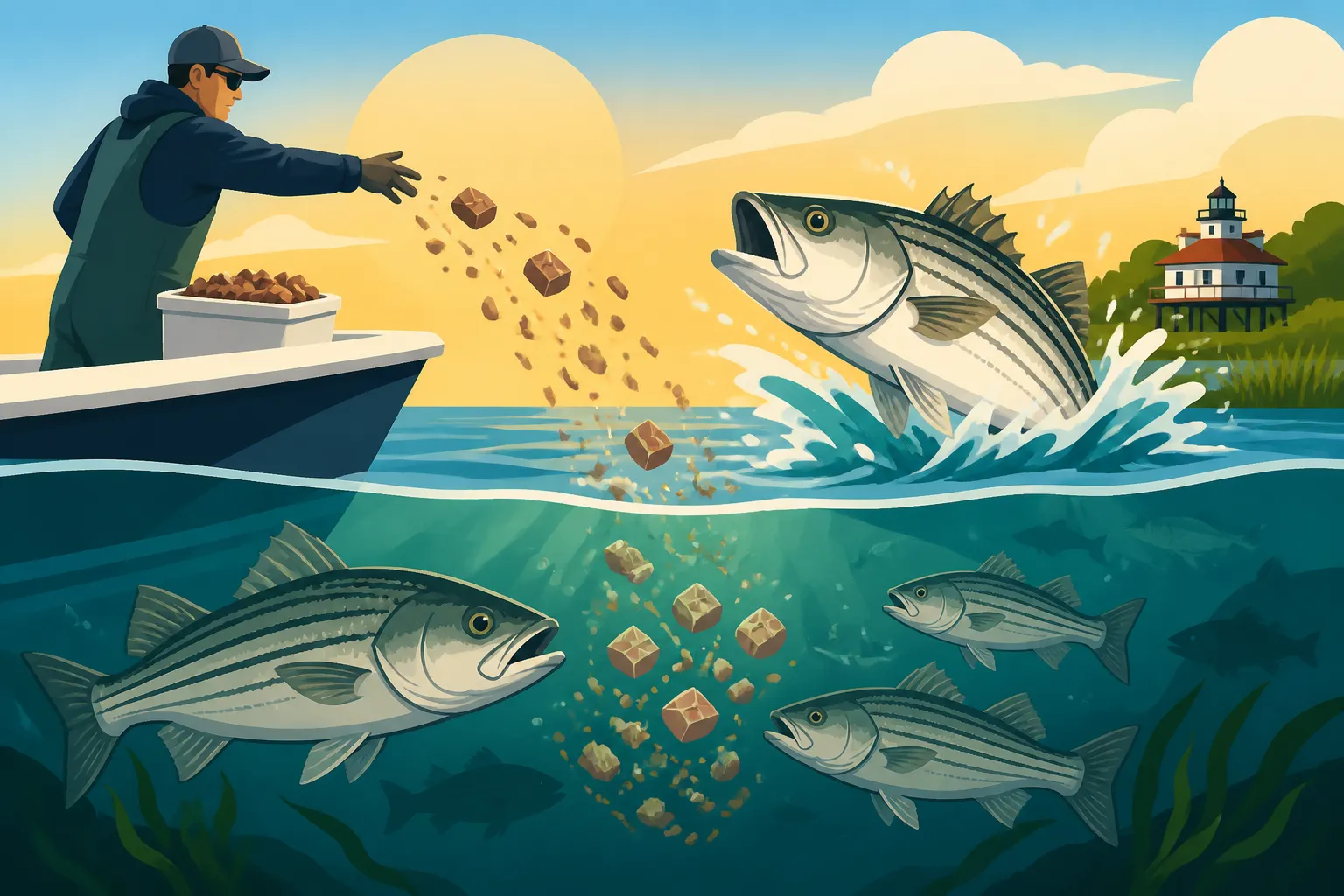
Chumming and chunking are deeply ingrained traditions in Chesapeake Bay fishing, renowned for their effectiveness, especially when fish are holding deep or are less active. These methods involve systematically creating an irresistible scent trail in the water to draw fish to your boat, then presenting cut bait, or "chunks," that perfectly match the chum. It's a game of patience and precision, mimicking a natural feeding frenzy that striped bass simply can't ignore.
The Core Concept of Chumming
At its heart, chumming is about broadcasting a continuous stream of finely ground bait or baitfish parts into the water to attract fish. Think of it as an olfactory beacon, a scent highway guiding hungry striped bass right to your boat. The idea is to create a "chum slick" that drifts with the current, luring fish upstream and directly into your fishing zone. It's a proactive approach that brings the fish to you, rather than you having to constantly search for them. The constant flow of small, edible particles stimulates their feeding instincts, making them more likely to strike your carefully presented chunk bait.
The Precision of Chunking
Chunking goes hand-in-hand with chumming. Once the chum slick has established itself and fish are drawn into the area, you introduce larger, more substantial pieces of bait – the "chunks" – to hook them. These chunks are typically cut from the same type of baitfish used for chum, making them appear as just another piece of food in the enticing trail you've created. The key is to present these chunks as naturally as possible, drifting them back with the chum so they look like easy meals. It's crucial that your chunk baits are indistinguishable from the chum, both in smell and appearance, to avoid spooking the fish.
Choosing and Preparing Your Chum
The success of your chumming operation heavily relies on the quality and type of chum you use. Not all chum is created equal, and understanding the nuances can make a significant difference in your catch rates. The goal is to create a consistent, attractive scent trail that brings the fish to your boat without feeding them so much that they ignore your hooks.
Best Types of Chum for Striped Bass
When it comes to the Chesapeake Bay, menhaden (also known as bunker or pogy) is king. This oily, nutrient-rich baitfish is a natural food source for striped bass, making it the ideal ingredient for your chum. You can often find frozen menhaden chum in bricks at local bait and tackle shops, especially those catering to saltwater anglers. Some experienced anglers even prefer to grind their own fresh menhaden for an even more potent and active slick, though this requires a bit more effort and specialized equipment. Another less common, but still effective, option can be ground clams, which sometimes work wonders in certain areas or conditions, particularly in muddier waters where their scent profile might cut through better.
Fresh vs. Frozen Chum Considerations
While frozen chum bricks are incredibly convenient and widely available, fresh chum typically offers a more robust scent and oil trail, which can be a game-changer on slower days. Fresh menhaden, when ground, releases more active enzymes and oils, creating a more irresistible slick. However, keeping fresh chum fresh and grinding it on the boat can be messy and requires a dedicated grinder. For most anglers, high-quality frozen menhaden chum, thawed just enough to allow for a steady stream of particles, is perfectly adequate and much less hassle. Ensure that if you buy frozen, it's not freezer-burned, as this can diminish its effectiveness.
Preparing and Deploying Your Chum
Once you've decided on your chum type, preparation is key. If using frozen bricks, let them thaw slightly so they can be easily broken apart or placed in a chum bag. For maximum effectiveness, you'll need a good quality mesh chum bag, often weighted, to suspend off the side of your boat. The bag allows the chum to slowly disperse, creating that vital continuous slick. Hang your chum bag off the stern or side of your boat, ensuring it's submerged enough to allow the current to work its magic but not so deep that it drags the bottom. A consistent drip and stream of chum is what you're aiming for; a sporadic flow won't be nearly as effective. It's a fine balance between releasing enough scent to attract fish and not overfeeding them.
Mastering the Chunk Bait Presentation
Getting the fish to your boat with a vibrant chum slick is only half the battle; presenting your chunk bait in a way that fools a wary striped bass is the other, equally critical, component. The goal is seamless integration – your chunk should appear as a natural, free-floating piece of the chum.
Cutting and Rigging Your Chunks
Your chunk bait should ideally come from the same source as your chum, typically menhaden. Cut your menhaden into pieces roughly 1-2 inches thick, ensuring each piece has a bit of skin and some meat. The skin helps keep the bait on the hook and adds to the natural presentation. When rigging, use a single, sharp circle hook. The size of the hook should match the size of your chunk; typically, a 5/0 to 8/0 circle hook works well for striped bass. Thread the hook through the chunk once, ensuring the hook point is exposed. The goal is a natural drift with the current, so avoid over-rigging or using too much bait on the hook, which can make it spin unnaturally.
The Art of the Drifting Chunk
The most crucial aspect of chunking is making your bait drift back naturally with the chum slick. This means minimizing any weight on your line if possible, or using just enough lead to get the chunk down to the desired depth without impeding its natural movement. Many anglers start with unweighted chunks, letting them drift freely into the slick. As the current carries them back, they should mimic the chum particles perfectly. Pay close attention to your line; any unnatural drag or speed will quickly tip off a striped bass. If you need to add weight, use small split shots or an egg sinker that can slide freely on your main line above a swivel. This allows the chunk to move independently, presenting a more enticing target.
Depth Control and Varying Your Presentation
Striped bass won't always be at the same depth. Sometimes they'll be near the surface, attracted by the oil slick, while other times they might be holding deeper in the water column, closer to structure or cooler temperatures. This is where you need to get creative with your chunk presentation. Start by letting some chunks drift unweighted, then try adding a small amount of weight to others to explore different depths. Have multiple lines out at varying depths if regulations allow. Observe where your bites are coming from and adjust accordingly. Don't be afraid to let a chunk sink all the way to the bottom, especially in deeper channels or near ledges, as hungry stripers often patrol these areas.
Selecting the Right Fishing Spot
Choosing where to deploy your chum slick is just as important as how you deploy it. The Chesapeake Bay is vast, and knowing where striped bass are likely to congregate, especially when enticed by chum, will dramatically increase your chances of success. It's all about understanding current, structure, and fish behavior.
The Importance of Current and Tide
Current is the lifeblood of a good chum slick. It carries your scent trail downstream, attracting fish from a wide area. When choosing your anchoring spot, always consider the prevailing current and tide. You want to anchor upstream of where you expect the fish to be, allowing your slick to drift back over them. This means paying close attention to the tide charts for your specific fishing area. Fishing the beginning or end of a tide, when current speeds are moderate, often works best, as a slack tide won't carry your chum, and a ripping current will disperse it too quickly. Look for areas where the current will carry your slick past known fish-holding structures. For more on this, check out our guide on How Tides Affect Fishing in Maryland's Chesapeake Bay.
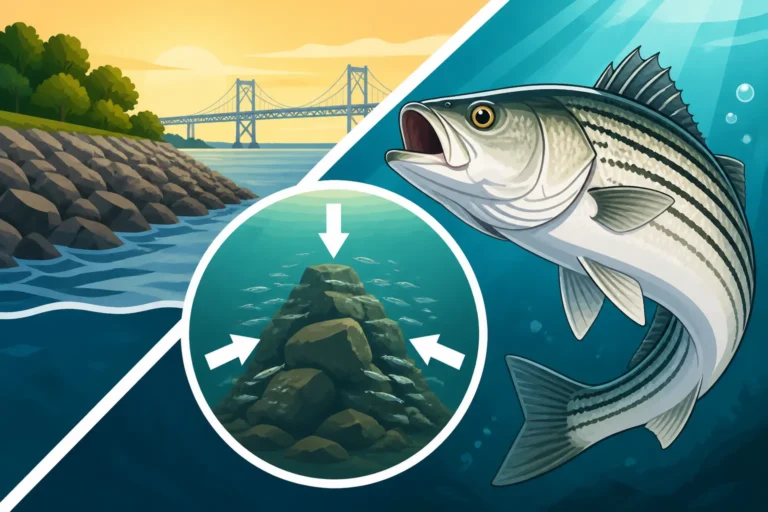
Targeting Structure and Channel Edges
Striped bass, even when drawn in by chum, will often relate to some form of underwater structure. This could be channel edges, ledges, submerged wrecks, artificial reefs, or oyster beds. These structures provide ambush points and cover, as well as holding areas for baitfish. When selecting your spot, try to anchor so your chum slick will drift over or alongside these features. For example, if you're fishing a deep channel, position your boat so the chum drifts along the edge where the bottom drops off. This gives the striped bass a natural pathway to follow the scent directly to your lines. Places like the Best Places to Fish in Maryland and Fishing Maryland's Chesapeake Bay, A Complete Guide can offer great starting points for identifying these key areas.
Ideal Depths for Chumming
While striped bass can be found at various depths, chumming is often most effective in moderate to deeper waters, typically 15 to 40 feet. This allows the chum to disperse in a larger water column, creating a broader attraction zone. In shallower waters, the chum can sometimes fall to the bottom too quickly, attracting unwanted species like catfish or crabs, or simply not spreading out effectively enough. However, don't rule out shallower areas if they have significant current and structure, especially during cooler water temperatures when stripers might move up. Always check your depth sounder to understand the bottom contour and identify potential holding areas.
Essential Gear for Chumming and Chunking
Having the right tackle is fundamental to a successful chumming and chunking experience. You need gear that can handle the powerful runs of a Chesapeake Bay striped bass, yet still allow for a sensitive presentation of your chunk bait. Skimping on tackle can lead to frustration and lost fish.
Rods and Reels for the Job
For chunking, you'll want a medium-heavy to heavy action conventional or spinning rod, typically 6.5 to 7.5 feet long. The rod should have enough backbone to handle a strong fish but a somewhat sensitive tip to detect subtle bites. Paired with this, a robust baitcasting reel (like a Penn Squall or a Shimano Tekota) or a strong spinning reel (such as a Shimano Saragosa or a Daiwa BG) is essential. Your reel needs a smooth, reliable drag system and good line capacity, at least 250-300 yards of 20-30 lb test line. Remember, striped bass can make powerful runs, especially those trophy fish. For many anglers, purchasing reliable gear through a platform like Amazon allows for comparison and quick delivery before a trip.
Line, Leaders, and Hooks
Monofilament line in the 20-30 lb test range is a good all-around choice for chunking due to its stretch, which can absorb sudden shocks from a striking fish, and its manageability. Some anglers prefer braided line (30-50 lb test) for its sensitivity and strength, but its lack of stretch means you'll need to be more careful with your drag settings and absorb shock with your rod. Regardless of your main line, you'll want to use a fluorocarbon leader of 30-50 lb test, about 3-6 feet long, connected to your main line with a strong barrel swivel. Fluorocarbon is nearly invisible underwater, which is a huge advantage when presenting your natural-looking chunk bait. As mentioned, 5/0 to 8/0 circle hooks are preferred, as they are safer for the fish and generally result in hookups in the corner of the mouth, reducing gut hooks.
Terminal Tackle and Accessories
Beyond the basics, a few key accessories will make your chumming and chunking experience smoother.
- Chum Bag: A sturdy, weighted mesh chum bag is non-negotiable. Look for one with a wide opening for easy filling and a durable zipper or drawstring.
- Knives & Cutting Board: A sharp bait knife and a dedicated cutting board are essential for preparing your chunk baits.
- Cooler: A good cooler to keep your chum and bait fresh, as well as your catch on ice, is crucial.
- Gloves: Dealing with oily chum and fish can get messy, so a pair of fishing gloves is a good idea.
- Net: A large, sturdy landing net is vital for safely bringing in larger striped bass.
- Rod Holders: Having multiple rod holders allows you to spread out your lines and fish different depths effectively.
- Anchor System: A reliable anchor and plenty of rode are necessary to hold your position firmly against the current, especially in the Bay's strong tides.
| Gear Item | Recommended Specifications | Purpose |
|---|---|---|
| Rod | 6.5-7.5 ft, Medium-Heavy to Heavy Action | Power for fighting fish, sensitivity for bites |
| Reel | Baitcasting or Spinning, 250-300 yds 20-30lb line, smooth drag | Handling strong runs, good line capacity |
| Main Line | 20-30 lb Mono or 30-50 lb Braid | Strength, varying stretch for shock absorption or sensitivity |
| Leader | 30-50 lb Fluorocarbon, 3-6 ft | Invisibility, abrasion resistance |
| Hooks | 5/0 – 8/0 Circle Hooks | Safe hookups, secure hold on chunks |
| Chum Bag | Weighted Mesh, Durable | Slow, consistent chum dispersion |
| Sinkers | Egg sinkers (1/2 oz – 2 oz), Split Shots | Depth control, natural drift with current |
| Bait Knife | Sharp, Fillet style | Efficient and clean cutting of baitfish |
| Cooler | Insulated, High-Capacity | Preserving chum and catch freshness |
| Landing Net | Large, Strong Hoop | Safely landing larger fish without stress |
The Art of the Chum Slick and Its Maintenance
Deploying and maintaining an effective chum slick is a nuanced skill that often separates successful chumming trips from disappointing ones. It's not just about tossing chum overboard; it's about understanding hydrodynamics and fish behavior.
Establishing the Initial Slick
Once you've anchored in your chosen spot, the first step is to establish a strong initial chum slick. This means getting a good flow of chum into the water quickly to start attracting fish. If using a chum bag, you might initially squeeze it or jiggle it to release a concentrated burst of chum. This strong initial "call" sends a clear signal to any nearby striped bass that a meal is available. Observe how the chum disperses in the water; you want to see a consistent, cloudy trail of particles drifting downstream. This visual confirmation tells you your slick is working. Remember, patience is key here; it can take anywhere from 15 minutes to an hour for the slick to fully develop and for fish to find it.
Maintaining a Consistent Flow
The trick to a truly effective chum slick is consistency. You don't want bursts and then long lulls; you want a steady, continuous stream of chum particles. This keeps the fish actively feeding and moving up the slick towards your boat. Periodically checking and gently agitating your chum bag helps maintain this flow. If using a chunking setup with a chum pot, ensure the holes aren't clogged and the release rate is steady. Pay attention to the current. Stronger currents might require more frequent agitation or a slightly faster release rate to keep the slick robust, while weaker currents might need less intervention. This constant, moderate flow is what sustains the fish's interest and keeps them in your zone.
Monitoring and Adjusting to Conditions
The Chesapeake Bay's conditions are rarely static. Wind shifts, tide changes, and even boat traffic can affect your chum slick. Continuously monitor your slick's direction and dispersion. If the wind changes, your slick might start drifting off to the side, away from your lines. You might need to adjust your anchor, reposition your boat, or even re-anchor entirely to keep your slick flowing over your target zone. Similarly, changes in current speed will affect how your chum disperses; adjust your chum release rate accordingly. Being adaptable and responsive to these environmental factors is crucial. Sometimes, if the current or wind is pushing your boat too much, deploying a small drift sock from the bow can help stabilize your vessel and ensure your chum slick stays directly behind you.
Reading the Bite and Setting the Hook
Chumming and chunking often lead to subtle bites, especially from larger, more cautious striped bass. Unlike aggressive topwater strikes, a chum bite can be a gentle tug or simply a sudden increase in pressure. Detecting these nuances is a skill that comes with practice.
Recognizing Subtle Takes
When a striped bass takes a chunk bait drifting naturally in a chum slick, it's often not a violent strike. Instead, you might notice your line slowly pulling away, a slight twitch of your rod tip, or just a sudden, heavy weight. With circle hooks, you typically don't need a hard "hook set" like you would with a J-hook. In fact, a forceful hook set can actually pull the bait out of the fish's mouth. The beauty of a circle hook is that as the fish swims away with the bait, the line tightens, and the hook naturally rotates and catches in the corner of its mouth. Pay close attention to your rod tip and the movement of your line. Any deviation from the natural drift warrants investigation.
The Circle Hook Advantage
As previously mentioned, circle hooks are the preferred choice for chumming and chunking. Not only do they promote healthier catch-and-release by significantly reducing gut-hooking, but they are also incredibly effective. When you feel a bite, resist the urge to violently yank the rod. Instead, gently pick up the rod, reel down to remove any slack, and steadily apply pressure. The fish's own movement against the line will do the work of setting the hook. This gentle approach ensures the hook finds its mark in the corner of the jaw, making for a solid hookup and easier release. This is especially important given the specific size and catch limits on striped bass in Maryland. Learn more about Maryland Fishing Size and Catch Limits by Species.
Fight Tactics for Striped Bass
Once hooked, Chesapeake Bay striped bass can put up a formidable fight. Keep your drag set appropriately – not too tight that it breaks your line, but not so loose that the fish can easily run into structure or snap off. Maintain steady pressure on the fish, pumping the rod up and reeling down to gain line. Be prepared for multiple runs, especially from larger fish. If you're fishing with multiple lines, be aware of other lines to avoid tangles. If the fish starts running under the boat, be ready to move around the boat to keep the line clear. Landing a big striper is a team effort if you have others on board. Be mindful of the Maryland Striped Bass Daily Limit Per Angler and plan to release any fish outside of the slot or daily limit responsibly.
Common Mistakes and Troubleshooting
Even seasoned anglers can make mistakes when chumming and chunking. Recognizing these common pitfalls and knowing how to troubleshoot them can turn a slow day into a successful one. It's all part of the learning curve in becoming a better angler on the Chesapeake Bay.
Overfeeding the Fish
One of the most common mistakes in chumming is overfeeding the fish. If you're pouring out too much chum too quickly, you're essentially providing an all-you-can-eat buffet that doesn't require them to bite your hook. The goal is to entice, not to satiate. If you notice fish on your sonar but aren't getting bites, try slowing down your chum flow. Less is often more, creating just enough scent and small particles to attract their attention and keep them interested, but leaving them hungry enough for your chunk bait. This fine balance is a skill developed over many trips.
Inconsistent Chum Slick
A sporadic or weak chum slick is another recipe for a slow day. If your chum flow is inconsistent, fish will either pass by without noticing, or they'll lose interest and swim away. The current can be tricky, so it's vital to ensure a steady, visible trail. If your chum bag isn't dispersing properly, check for clogs or try a different mesh size. If the current is too strong and dispersing your chum too quickly, consider moving to a calmer area or using a heavier, more finely ground chum that won't dissipate as fast. A well-maintained chum slick should be a continuous, inviting trail. Our guide on Anchoring and Chum Lines for Chesapeake Bay Rockfish in Maryland delves deeper into this.
Improper Bait Presentation
Even with the best chum slick, a poorly presented chunk bait will be ignored. Your chunk needs to look, feel, and drift like a natural piece of the chum. If your chunk is spinning, sinking too fast, or not drifting at the same speed as the chum, it will look unnatural and alarm wary striped bass. Re-examine how you've cut and hooked your bait. Ensure your sinker (if used) allows for a natural drift. Experiment with different weights or go entirely weightless if conditions allow. Sometimes, simply changing the size or shape of your chunk can make a difference. Also, ensure your hooks are sharp; a dull hook can lead to missed bites even with a perfect presentation. For alternatives, consider Live-Lining Spot for Maryland's Chesapeake Bay Rockfish if live bait is an option.
Ignoring Regulations and Licensing
Finally, a common oversight, especially for those new to Maryland fishing, is neglecting the specific regulations and licensing requirements. Before you even cast a line, ensure you have the proper licenses. Our comprehensive Maryland Fishing License Guide for 2026 can help you navigate this. Additionally, always be aware of the current Maryland Striped Bass Season and Rockfish Rules, including slot limits and daily creel limits. Regulations can change, so always consult the latest Maryland DNR guide. Fishing without a license or violating size/creel limits can lead to hefty fines and penalties, overshadowing any fishing success.
Advanced Chumming and Chunking Strategies
Once you've mastered the basics, there are always ways to refine your approach and adapt to more challenging conditions. Advanced techniques can give you an edge when the bite is tough or you're targeting particularly wary fish.
Chumming with Multiple Baits and Depths
Don't be afraid to experiment with different types of chunk baits or even different species of chum if permitted. While menhaden is standard, some days striped bass might prefer a clam chunk, or even a small piece of peeler crab if they are actively feeding on crustaceans. Similarly, running multiple lines at different depths can help you pinpoint where the fish are holding. One line unweighted, one with a small split shot, and one with a heavier egg sinker can cover the entire water column effectively. This also allows you to test different leader lengths and hook sizes, quickly identifying what the fish prefer on that particular day. For a broader perspective on techniques, consider exploring Maryland Striped Bass Fishing Techniques.
Finessing the Slick for Wary Fish
Sometimes, striped bass can be incredibly cautious, even when attracted by chum. If you're seeing fish but they aren't committing, it might be time to finesse your slick. This could mean using a finer grind of chum, reducing the quantity even further, or even "sweetening" your chum with a bit of fish oil or an attractant. Additionally, try making your chunk baits smaller, or even lighter, using smaller hooks to make them disappear more naturally into the slick. The goal is to make your presentation so subtle and enticing that the fish can't resist, even if they're acting shy. Remember, when comparing to other methods like Trolling vs Jigging for Maryland Striped Bass, chumming demands a different kind of patience and precision.
Integrating Technology: Sonar and GPS
Modern fishing technology, particularly good sonar and GPS, can greatly enhance your chumming and chunking success. Your sonar will help you identify depths, bottom structure, and, crucially, the presence of fish in your slick. Watch for arches or marks appearing in your chum slick on the sonar – this is your confirmation that fish are responding. GPS allows you to mark successful spots precisely, so you can return to them on future trips, accounting for current and drift. It also helps you stay anchored in the exact sweet spot that puts your chum slick over the most productive ground. Before heading out, ensure your electronics are functioning optimally.
Disclaimer
Fishing regulations and conditions in Maryland's Chesapeake Bay are subject to change. Always consult the latest Maryland Department of Natural Resources (DNR) rules and advisories before heading out on the water. This guide is for informational purposes only and does not supersede official regulations. Stay safe and fish responsibly.