Maryland Striped Bass Daily Limit Per Angler
Oh, the ever-present question of how many rockfish you can actually keep in Maryland! It’s a topic that can make even the most seasoned angler scratch their head, thanks to regulations that seem to change faster than the tide. If you've ever felt a knot of anxiety wondering if you're abiding by the rules, especially when it comes to the daily limit for our beloved striped bass, you are absolutely not alone. This comprehensive guide is here to untangle the complexities, giving you a clear understanding of Maryland's striped bass daily limit per angler, how it works, and what you need to know to stay on the right side of the law.
Understanding Maryland's Striped Bass Daily Creel Limit
Let's face it, keeping up with fishing regulations can feel like a full-time job. One minute you think you've got it figured out, and the next, there's a new rule or a slight adjustment to the size or creel limit. For Maryland anglers, few species are as iconic and as heavily regulated as the striped bass, affectionately known as rockfish. These limits aren't just arbitrary numbers; they're the bedrock of conservation efforts aimed at ensuring healthy fish populations for generations to come.
Why the Limits Matter So Much
The fluctuating fortunes of the striped bass population are a constant concern for fisheries managers, scientists, and anglers alike. Over the years, the Chesapeake Bay and its tributaries have seen periods of both abundance and decline for this crucial species. Each decision made about daily limits, size restrictions, and season closures is a careful balancing act, designed to protect the spawning stock, allow younger fish to mature, and still provide opportunities for recreational anglers to enjoy their passion. Ignoring these limits can have a devastating cumulative effect on the population, undermining years of hard work by countless individuals and organizations dedicated to preserving our natural resources. It’s a collective responsibility we all share as stewards of the water.
Beyond the ecological impact, there's the very real frustration that comes when regulations are difficult to follow or change frequently. Many of us have experienced that moment of confusion while out on the water, trying to remember if it's one fish or two, or if the slot limit changed since last week. This constant evolution is a direct response to scientific data and the health of the fishery, but it doesn't make it any easier for us to navigate. That's why understanding the "why" behind the limits can often help solidify the "what."
The Standard Daily Limit for Anglers
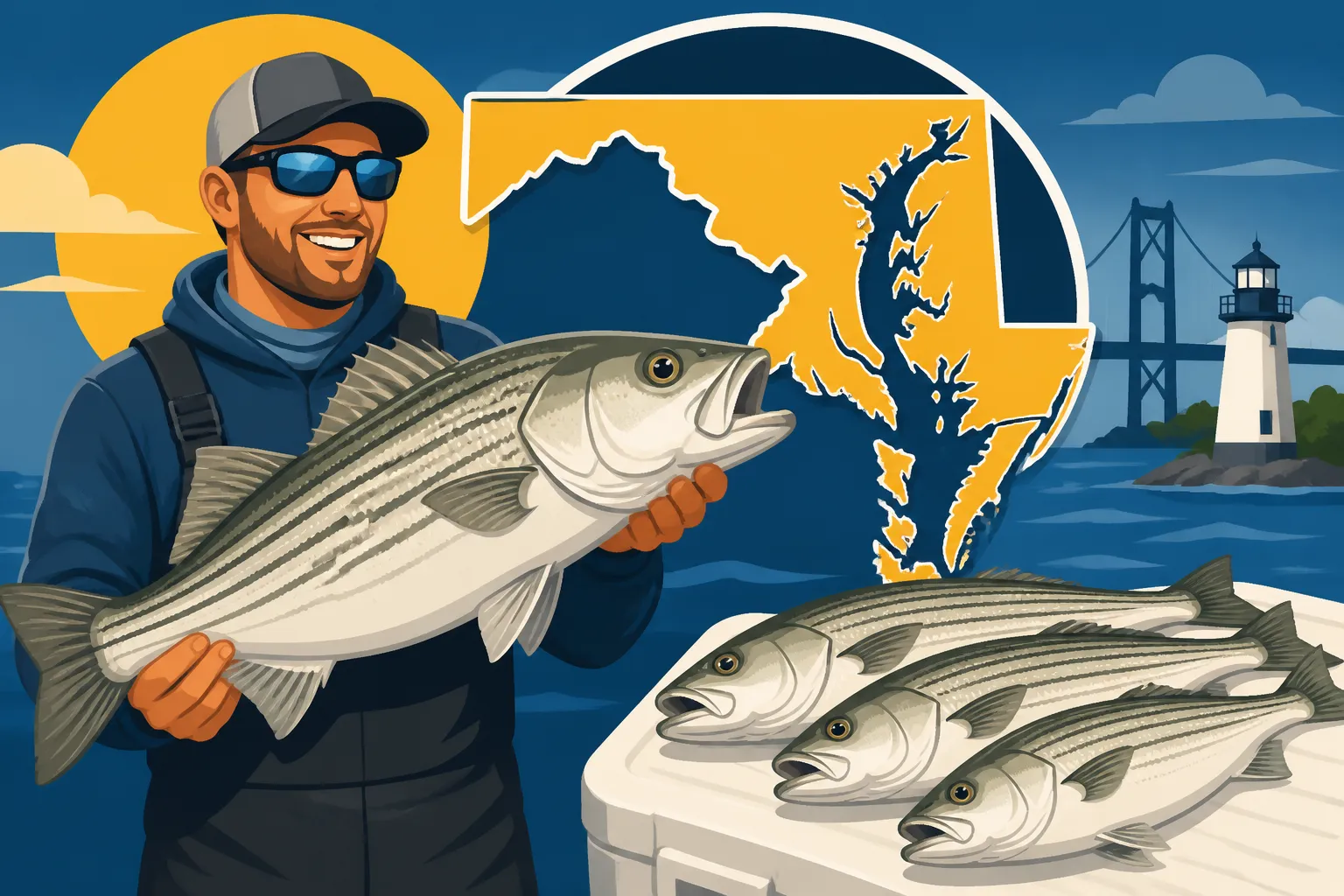
Alright, let's get down to brass tacks. As a general rule of thumb for recreational anglers in Maryland's Chesapeake Bay and its tributaries, the standard daily limit for striped bass is typically one fish per person, per day. This means that no matter how many lines you have in the water, or how many times you drop anchor in a new spot, you are personally allowed to keep only a single striped bass during a 24-hour period.
It's crucial to understand what "per angler" truly implies. This isn't a "per boat" limit where you can pool catches from everyone on board. If you're out with three buddies on your boat, each of you, assuming you each hold a valid fishing license, is entitled to keep one legal striped bass. That makes for a total of four fish for the boat, but never more than one per individual angler. Imagine a scenario where you're fishing solo and catch a beautiful rockfish that meets the size requirements. That's your one for the day. If you then meet up with a friend who hasn't caught anything yet, you can't transfer your fish to their limit or go out and catch another one for yourself. The limit is tied directly to the person doing the fishing. These rules are in place to ensure equitable harvest and to prevent individuals from circumventing the intent of the regulations. For specifics on how your license works, especially if you're new to the area, you might find our guide on the Maryland Fishing License Guide for 2026 incredibly helpful.
Navigating the Nuances of Striped Bass Regulations
The daily limit is just one piece of the puzzle when it comes to responsibly fishing for striped bass in Maryland. To truly comply and contribute to conservation, you need to be aware of the interplay between the daily limit, size limits, and the specific seasons that govern our waters. It's not just about how many, but also how big, and when.
Size Limits and Slot Limits: A Critical Combination
Beyond the number of fish you can keep, there's the often-tricky matter of size. Maryland, like many states, employs both minimum and sometimes maximum size limits to protect different age classes of fish. For striped bass, the game often involves a "slot limit." A slot limit means you can only keep fish that fall within a very specific size range – not too small, and not too big. For example, a common slot limit for striped bass in the Chesapeake Bay might be 19 to 24 inches. This means any striped bass you keep must measure at least 19 inches but no more than 24 inches from the tip of its nose to the tip of its tail (with the tail compressed).
This slot limit strategy is designed to protect both the younger, immature fish, allowing them to grow and reach spawning age, and the large, older "trophy" fish, which are vital for successful reproduction and the genetic health of the stock. It's a highly effective conservation tool, but it requires diligent measuring on your part. If you catch a fish that is, say, 18 inches, it's too small and must be immediately released. If you catch a real monster that's 26 inches, it's too big and must also be released. Even if it's the only fish you've caught all day and you're within your one-fish daily limit, if it's outside that slot, it cannot be kept. This is a common point of confusion for anglers, so having a reliable measuring device on hand is not just recommended, it's essential. Understanding these nuances is key, and our article on the Maryland Rockfish Slot Limit Explained goes into even more detail.
Here's a simplified look at how the slot limit typically works:
| Condition | Action |
|---|---|
| Fish is under 19" | Must be immediately released |
| Fish is 19"-24" | Can be kept (if within daily limit) |
| Fish is over 24" | Must be immediately released |
Note: These dimensions are illustrative based on common Maryland regulations and are subject to change. Always consult the latest Maryland DNR guide.
Seasonal Variations and Closed Periods
The daily limit for striped bass isn't static throughout the year; it often dances to the tune of the seasons. Maryland implements specific seasons, each with its own set of rules, including possible adjustments to the daily creel limit or size slot. For instance, you might encounter a "trophy season" in the spring, which, while still often a one-fish-per-angler limit, might allow for a slightly larger minimum size for a brief period, targeting those massive migratory fish. Conversely, there are often periods of complete closure.
A prime example is the summer rockfish closure in the Chesapeake Bay, which often occurs during the month of August. During this time, targeting or possessing striped bass is completely prohibited in certain areas, even if you intend to release them. This closure is critical for the survival of the species, as summer months bring warmer water temperatures, which can stress striped bass, making them more vulnerable to mortality even after catch and release. Understanding these seasonal shifts is paramount to responsible angling. For detailed dates and areas, checking resources like Maryland's 2026 Striped Bass Season Dates or understanding Why Is Maryland's Rockfish Season Closed in August? can save you a lot of headache. You'll also encounter specific Maryland Spawning River Closures for Striped Bass in the spring, where even catch-and-release is often prohibited to protect the most vulnerable part of their reproductive cycle. Always double-check these dates and specific regulations before heading out, as they are strictly enforced.
Practical Scenarios and Common Questions
Even with the rules laid out, real-world fishing situations can throw a curveball. What happens when you're fishing with a group? Does catch and release count towards your limit? These are common questions, and it’s important to have clear answers to avoid accidental violations.
Fishing with Others: Whose Fish is Whose?
This is where things can get a little fuzzy if you're not careful. The rule is consistently "one fish per angler, per day." This means that even if you're on a charter boat with a group of friends, each individual is responsible for their own catch and adhering to their personal daily limit. For example, if you and five friends are on a fishing trip, and you all catch a legal rockfish, that's six fish total for the group, and each of you has met your individual daily limit. But what if one person catches two legal fish while another catches none? The person who caught two cannot legally keep both, nor can they give their extra fish to their friend who hasn't caught one yet. Transferring fish, especially once they're off the line and retained, is generally not permitted and can lead to violations.
This is particularly relevant when you start thinking about the cooler. It's best practice, especially if you're fishing with multiple people, to keep each person's catch separate or clearly identifiable until you're back on shore and ready to process them. This prevents any confusion, especially if DNR officials conduct a check. Imagine the hassle of trying to explain whose fish is whose if they're all mixed in a single cooler! It’s always best to be overly cautious. If you're considering a charter trip, you might be curious about topics like Does the Charter Captain's License Cover Passengers in Maryland? which clarifies licensing, and How Many Fish Can You Keep on a Maryland Charter?, addressing overall catch limits on those types of trips.
Catch and Release and Its Impact on Limits
Many anglers, myself included, practice catch and release for various reasons—conservation, sport, or simply not wanting to keep a fish that's just barely legal. The good news is that properly released fish do not count towards your daily limit. If you catch a beautiful striped bass that's perfectly within the slot, take a quick photo, and then carefully release it back into the water, you still have the opportunity to catch and keep another legal fish that day, should you choose to. The key here is "properly released." This means minimizing handling, using appropriate gear (like circle hooks when required), and ensuring the fish is revived before letting it go.
However, once you decide to retain a fish, that fish then counts towards your limit. You can't catch a fish, put it in the cooler, and then later decide to release it and try for another. The act of retention seals the deal. This is especially important during seasons when specific catch and release rules are in effect, such as Maryland Catch and Release Rules During Closed Seasons. Always be mindful of the stress warm water temperatures can put on released fish, particularly during the summer months. It's a great practice to check out resources on minimizing fish mortality if you plan on significant catch and release. If you're wondering about the basic requirements for just letting them go, you'll find answers in Is a Maryland Fishing License Required for Catch and Release?.
Staying Informed and Avoiding Penalties
Ignorance of the law is never a valid excuse, especially when it comes to fishing regulations. With regulations changing due to conservation needs and scientific findings, it's on each of us to ensure we have the most current information. Failing to do so can lead to some pretty unpleasant consequences that no one wants.
Where to Find the Most Current Regulations
The absolute gold standard for Maryland fishing regulations is the Maryland Department of Natural Resources (DNR). Their website is constantly updated and serves as the official source for all rules, limits, and seasonal closures. I always recommend bookmarking their fisheries page on your phone or computer. Beyond the website, many bait and tackle shops throughout Maryland will have physical copies of the annual fishing guide, or at least signage reflecting the most current regulations. It's a smart move to grab one of these guides each year or whenever you notice significant changes being announced. These shops are also fantastic local resources, as the staff often know the specific quirks and updates for their area.
You can often find the latest Maryland DNR Fishing and Boating Guide, or similar comprehensive guides, on platforms like Amazon, making it easy to have a physical copy or e-book on hand even when signal is scarce. Keep in mind that while apps and online forums can be helpful for general information and fishing reports, they should never be your sole source for regulatory compliance. Always cross-reference with the official DNR site or a recent, official publication. Our article on Maryland's DNR Fishing and Boating Guide, Explained can help you navigate that essential document. It's also wise to check How Often Maryland Updates Its Fishing Regulations so you know when to anticipate potential changes.
Consequences of Exceeding the Daily Limit
Let's not sugarcoat it: violating fishing regulations in Maryland can come with significant penalties. Exceeding the daily limit for striped bass isn't just a minor infraction; it's a serious offense that the Maryland DNR takes very seriously. Depending on the severity of the violation, you could be looking at hefty fines that run into hundreds or even thousands of dollars. Beyond monetary penalties, officials have the authority to confiscate your catch, your fishing gear (including rods, reels, and even your boat in egregious cases), and you could face suspension or revocation of your Maryland fishing license. Imagine losing the privilege to fish in your favorite spots for months, or even years.
These consequences are designed to be a strong deterrent, underscoring the importance of adhering to conservation efforts. No one wants to end a relaxing day on the water with a citation or a trip to court. It's a stark reminder that personal responsibility is paramount. Always, always err on the side of caution. If you're unsure, it's better to release the fish or verify the rule than to risk a penalty. To understand the full scope, it’s worth reading up on Maryland Fishing License Penalties for Violations and What Happens If You Fish in Maryland Without a License?. These resources paint a clear picture of the repercussions for not following the rules.
Disclaimer
Please remember that fishing regulations, including daily limits and size restrictions, are subject to change. While this guide provides a comprehensive overview of Maryland's striped bass daily limit per angler based on general and common regulations, it is your responsibility to consult the most current official Maryland Department of Natural Resources (DNR) publications and website before engaging in any fishing activities. This content is for informational purposes only and does not constitute legal advice.