Flounder Fishing in Maryland
Ah, the elusive flounder! There's nothing quite like the thrill of feeling that distinct "thump" on your line, knowing you've hooked into one of Maryland's most delicious bottom dwellers. But let's be honest, finding these camouflaged flatfish can sometimes feel like trying to solve a riddle, especially with constantly changing conditions and regulations. This comprehensive guide is here to demystify flounder fishing in Maryland, helping you understand their habits, find the best spots, and employ the techniques that will put more flounder in your cooler, from the sandy coast to the lower Chesapeake Bay.
Understanding Maryland Flounder
Before you can consistently catch flounder, you've got to understand the fish itself. Maryland waters are home to a few different species that are often grouped under the general term "flounder," but knowing their specific traits can make a huge difference in your approach.
Flounder Species in Maryland
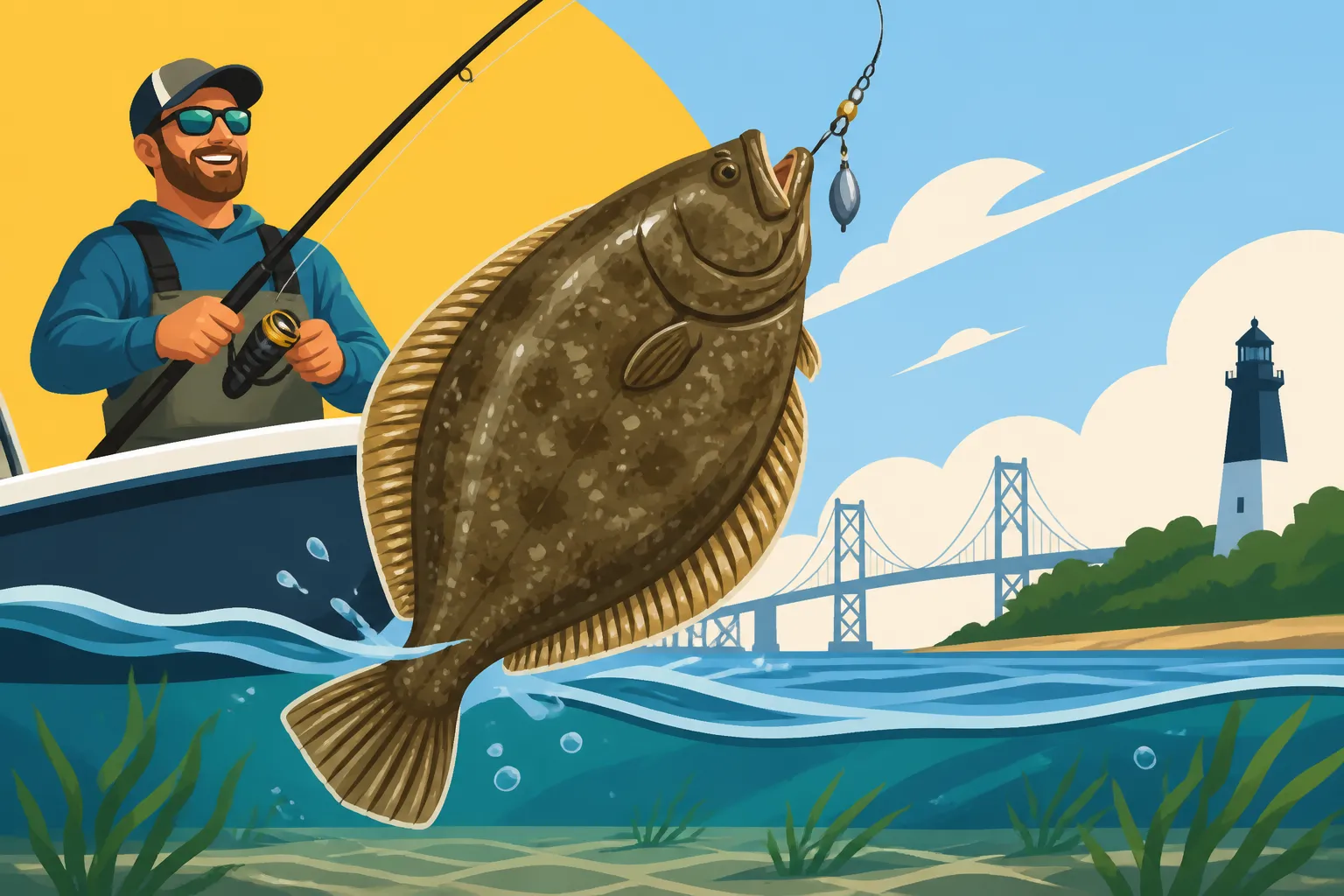
Primarily, when we talk about flounder fishing in Maryland, we're targeting the Summer Flounder, often affectionately called "fluke." These are the classic, delicious flatfish that change color to match their surroundings, making them masters of camouflage on sandy or muddy bottoms. They're characterized by having both eyes on their left side when viewed from above, and they have a large mouth with sharp teeth, perfect for ambushing baitfish. Their presence is a hallmark of warmer waters, moving into Maryland's coastal bays and the lower Chesapeake Bay as spring transitions to summer.
While less commonly targeted by recreational anglers, you might also encounter Winter Flounder (also known as blackback flounder). These are generally smaller and prefer colder water, often being found closer to shore or in deeper bay channels during the cooler months. Their eyes are typically on the right side of their body, and they have a smaller mouth compared to their summer counterparts. Though delicious, their populations are more delicate, and they are less frequently the target of dedicated flounder trips in Maryland. Understanding the distinction helps you anticipate what you might find and what regulations apply.
Beyond these two primary species, occasionally other flatfish like Hogchoker or Windowpane Flounder might show up, but these are almost always incidental catches due to their smaller size or different habitat preferences. The focus for most Maryland anglers is squarely on the Summer Flounder, which offers a great fight and an even better meal. Knowing your target helps you choose the right gear and location, improving your chances of success.
Identifying Flounder: Summer vs. Winter
Differentiating between Summer and Winter Flounder once you've landed one is crucial, not just for curiosity's sake, but because regulations often differ. The easiest way to tell them apart is by looking at which side their eyes are on. For a Summer Flounder (fluke), if you hold the fish with its dark, eyed side facing up and its belly towards you, its eyes will be on the left side of its head. They also tend to be thinner-bodied with a more elongated shape and have a larger, more prominent mouth, often with visible teeth. Their coloration can vary wildly, from mottled browns and greens to match sandy bottoms, to darker, almost black patterns on muddy seabeds.
In contrast, the Winter Flounder will have its eyes on the right side of its head when held in the same orientation. These fish are generally thicker, more oval-shaped, and have a much smaller mouth. Their coloration is usually a uniform dark brown or olive, without the intricate spots and patterns of the fluke. While both are excellent table fare, misidentifying them could lead to regulatory issues, so it's wise to double-check. Always refer to the latest Maryland Fishing Size and Catch Limits by Species to ensure you're compliant.
It's important to remember that flounder are masters of camouflage. Their ability to change color and pattern rapidly to blend with their surroundings is remarkable. This means a flounder caught over a sandy patch might be light tan, while one caught over a dark, silty bottom could appear much darker. This adaptive coloration helps them ambush prey and avoid predators, making them truly fascinating creatures to observe once you get them in the boat.
Flounder Habits and Habitat in Maryland Waters
Flounder are primarily ambush predators, perfectly designed to lie flat on the bottom, often partially buried in the sand or mud, waiting for an unsuspecting meal to swim by. Their wide, flat bodies and incredible camouflage allow them to remain virtually invisible to baitfish, shrimp, and squid. They prefer areas with good current that brings food past them, but also areas where they can easily blend in and find cover. This means targeting channel edges, drop-offs, underwater humps, oyster beds, and the sandy edges around structure like piers, jetties, and bridge pilings.
In Maryland, Summer Flounder typically arrive in the coastal bays and lower Chesapeake Bay in late spring as water temperatures rise, peaking during the summer and early fall. They'll frequent shallower, warmer waters in the coastal bays like Assawoman and Sinepuxent during these months, often congregating near inlets and thoroughfares where baitfish are abundant. As fall approaches and water temperatures begin to drop, they start their migration offshore, moving towards deeper ocean waters where they'll spend the winter months. Best Time of Year to Fish in Maryland for flounder is generally from late spring through early fall, but their exact movements are dictated by water temperature and food availability.
Understanding this migratory pattern and their preference for specific bottom structures is key to successful flounder fishing. You won't typically find them suspended in the water column like striped bass; they are bottom-oriented hunters. Think about where baitfish would naturally congregate and where a flatfish could easily hide and strike. Current is your friend when targeting flounder, as it not only brings food but also helps them orient themselves for ambush.
Prime Flounder Fishing Locations in Maryland
Maryland offers a variety of fantastic spots to pursue flounder, from the bustling coastal towns to the quieter tributaries of the lower Chesapeake Bay. Each area presents unique opportunities and challenges.
Coastal Bays and Inlets (Ocean City, Assawoman Bay)
When most anglers think of flounder fishing in Maryland, their minds immediately drift to Ocean City and its surrounding coastal bays like Assawoman Bay and Sinepuxent Bay. These shallow, brackish waters are a prime nursery for baitfish, making them a flounder paradise, especially during the warmer months. The Ocean City Inlet, with its constant flow of tidal water, is a renowned hotspot. Here, flounder lie in wait along the sandy edges and channels, ambushing bait swept in and out with the tides. Fishing from the jetties, the fishing pier, or a boat drifting through the main channel can be incredibly productive. Fishing Ocean City's Inlet and Jetties is a popular strategy.
Moving into the back bays, areas around the Route 90 and Route 50 bridges offer excellent opportunities, as do the various channels and thoroughfares. Spots where depth changes, particularly around points, marsh islands, and submerged structures, are always worth investigating. These bays are often shallower, making them ideal for smaller boats, kayaks, or even shore fishing in certain accessible areas. The key here is to find the channel edges and areas where baitfish are abundant, especially during incoming or outgoing tides when the current is moving food. Many anglers find success drifting with the current, presenting their bait or lure slowly along the bottom.
Assateague Island's bayside waters also provide excellent flounder habitat. While the ocean surf fishing at Assateague is famous for other species, the protected bayside offers calm waters for flounder. Focus on the channels and grass beds, especially near the causeways and points. Knowing where to go and what conditions to look for can significantly increase your catch rate in these dynamic coastal environments. Always check local regulations, as they can be specific to these areas.
Nearshore Ocean Wrecks and Reefs
For those with access to offshore-capable boats, venturing a few miles out into the Atlantic Ocean from Ocean City opens up a whole new world of flounder fishing, especially for larger "doormats." Flounder love structure, and the numerous artificial reefs and natural wrecks that dot the ocean floor off Maryland's coast provide exactly what they're looking for. These underwater havens attract a wide variety of marine life, including the baitfish that flounder feed on, and offer excellent ambush points. The "Del-Jersey-Land Inshore Reef" and various other concrete and rubble piles are prime examples.
Fishing these locations typically involves anchoring up-current of the structure and letting your baits drift naturally down into the flounder's hiding spots. Alternatively, slow-trolling or drifting directly over the structure can also be effective, allowing you to cover more ground. The key here is precision – you need to be able to accurately position your boat and present your bait directly to where the flounder are holding tight to the wreck or reef. Stronger currents and deeper water mean you'll need heavier tackle and more robust rigs than you might use in the bays.
While it requires more specialized equipment and often a longer trip, the reward can be substantial. These deeper, colder waters tend to hold some of the largest flounder Maryland has to offer. Many charter captains in Ocean City specialize in these wreck and reef trips, and it's a fantastic option for experienced anglers looking for a trophy fish. Just be prepared for the possibility of encountering other species like seabass, tautog, or even triggerfish, which also call these structures home.
Lower Chesapeake Bay Tributaries
While the coastal bays get a lot of attention, don't overlook the potential for flounder fishing in the lower reaches of the Chesapeake Bay, particularly in its southern tributaries. As summer progresses, flounder migrate into the Bay from the ocean, following warmer water and abundant bait. Rivers like the Pocomoke, Nanticoke, and even portions of the Patuxent can hold flounder, especially in their lower sections closer to the mainstem Bay where salinity levels are higher. Fishing the Nanticoke River can offer good flounder opportunities.
The key to finding flounder in these Bay tributaries is similar to the coastal bays: look for areas with current, channel edges, drop-offs, and structure. Oyster reefs, submerged grass beds, and sandy points where baitfish congregate are all prime real estate. Many anglers find success drifting along channels, especially where they intersect with shallower flats or where smaller creeks flow into the main river, creating current seams. Targeting these areas with traditional bottom rigs or bucktails tipped with bait can be very effective.
While the sheer numbers might not always rival a peak day in Ocean City, the lower Bay offers a different kind of fishing experience, often less crowded and surrounded by more natural beauty. It's a fantastic option for anglers who prefer to stay within the Bay system or who are looking for a change of scenery. Local knowledge can be invaluable here, so don't hesitate to consult local tackle shops or fellow anglers for recent reports on where the flounder are holding. The fishing can be spotty, but when you find them, it can be truly rewarding.
Best Times to Fish for Flounder in Maryland
Timing is everything when it comes to flounder fishing. Understanding their seasonal movements, tidal preferences, and reactions to weather can significantly improve your chances of a successful outing.
Seasonal Patterns: Spring to Fall
The window for consistent flounder fishing in Maryland generally opens in late spring and extends through the fall. As ocean waters begin to warm, typically from April into May, Summer Flounder start their migration from deeper offshore waters into the shallower coastal bays and the lower Chesapeake Bay. This "arrival" can be somewhat gradual, with smaller fish often showing up first. The spring bite can be excellent, especially as the water temperatures reach the mid-50s to low 60s Fahrenheit.
Summer is prime time for flounder fishing, particularly in the coastal bays like Ocean City. From June through August, these flatfish are abundant and actively feeding, making them a primary target for many anglers. The warmer water means higher metabolism, and they're constantly on the hunt for food. Best month to catch flounder in Maryland is often July or August, but consistent fishing can be had all summer long. As summer gives way to fall, typically September and October, flounder begin to prepare for their offshore migration. This often triggers a "fall feeding frenzy" where they become incredibly aggressive, trying to pack on weight before heading to deeper, colder waters. This can be an excellent time to target larger fish, but the window can close quickly as water temperatures drop rapidly.
Fishing during the shoulder seasons (late spring and early fall) can sometimes yield larger fish, as the bigger individuals are often the first to arrive and the last to leave. Pay close attention to local fishing reports and water temperature readings, as these are the most critical factors in determining flounder presence and activity.
Tidal Influence and Optimal Fishing Windows
For flounder, which are ambush predators highly reliant on current to bring them food, the tide plays an absolutely critical role. They position themselves to intercept baitfish and crustaceans being swept along by the moving water. Generally, moving tides – both incoming and outgoing – are considered the best times to fish for flounder. The stronger the current, the more food is displaced and carried past their hiding spots, triggering their feeding instincts.
Many experienced flounder anglers have a preference, with some swearing by the incoming tide for bringing new bait into an area, while others find the outgoing tide concentrates baitfish as water levels drop from the back bays. The truth is, both can be productive, but the key is to be fishing when the water is moving. Slack tide, the period of minimal current between high and low tide, is often the slowest for flounder activity, as there's less food delivery. Think of it from the flounder's perspective: why exert energy to hunt when the buffet isn't moving? How Tides Affect Fishing in Maryland's Chesapeake Bay is a major factor to consider.
The sweet spot within the moving tide is often during the middle hours of the tide cycle, when the current is at its strongest. For example, if low tide is at 9 AM and high tide is at 3 PM, the peak fishing might be from 10 AM to 1 PM. Plan your trips around these periods, especially if you're drifting, as the current will naturally carry your bait across prime flounder habitat. Observing current lines, eddies, and rips can also tell you where flounder might be positioning themselves to take advantage of the flow.
Weather and Water Conditions
Flounder, like many fish, are influenced by weather and water conditions. Generally, stable weather patterns with consistent water temperatures lead to more predictable fishing. Sudden changes, such as a strong cold front or a major rain event, can sometimes put the fish off the bite or cause them to move to different areas.
Clear to moderately clear water is usually preferred. Flounder rely on their eyesight for ambushing prey, and excessively murky or cloudy water can hinder their ability to hunt effectively. After a heavy rain, for instance, runoff can cloud up shallow bay waters and push flounder into deeper, clearer areas or cause them to temporarily cease feeding. However, a slight chop on the water's surface can sometimes be beneficial, breaking up light penetration and providing an extra layer of cover for the flounder as they ambush.
Water temperature is paramount. Summer Flounder prefer a range typically between 55°F and 70°F. If the water gets too warm in very shallow areas during intense summer heat, they might seek slightly deeper, cooler spots. Conversely, if it drops too low in the fall, they'll begin their migration offshore. Keeping an eye on water temperature reports, often available from marine forecasts or local fishing apps, is a smart move before heading out. Overcast days without strong winds are often ideal, as they provide comfortable conditions for both angler and fish, promoting consistent feeding activity.
Essential Gear for Maryland Flounder Fishing
Having the right tackle can make all the difference between a frustrating day and a successful one. Flounder aren't massive fighters, but they require a sensitive touch and specific rigs.
Rods, Reels, and Line Selection
For flounder fishing in Maryland, especially in the shallow coastal bays, a medium-light to medium power spinning rod, typically 6'6" to 7'6" in length, is a great all-around choice. You want a rod with a sensitive tip that can detect those subtle flounder bites, but enough backbone to set the hook and handle a decent-sized fish. Many anglers opt for rods designed for inshore saltwater fishing or even heavier freshwater bass rods. Look for something that feels comfortable and isn't too heavy, as you might be holding it for extended periods while drifting.
Pair your rod with a reliable spinning reel in the 2500 to 4000 size range. A smooth drag system is important, even for flounder, as you don't want to snap your line on a sudden run. The reel should be capable of holding enough line for the depths you'll be fishing, and crucially, it should be corrosion-resistant for saltwater use. Brands like Penn, Shimano, and Daiwa offer excellent options that are widely available, and you can often find great deals on these through retailers like Amazon.
When it comes to line, braided line in the 10-20 lb test range is highly recommended. Braid offers superior sensitivity due to its lack of stretch, allowing you to feel even the lightest taps from a flounder. Its thinner diameter also helps cut through current, making it easier to keep your bait on the bottom. Always tie a fluorocarbon leader of 15-25 lb test, about 2-4 feet long, to the end of your braid. Fluorocarbon is nearly invisible in water, more abrasion-resistant, and provides a little stretch, which can be beneficial when a flounder makes a head shake. The knot connecting your braid to fluorocarbon, like an FG knot or a double uni knot, should be strong and reliable.
Terminal Tackle: Rigs and Hooks
The type of rig you use is paramount for flounder fishing, as you need to present your bait right on the bottom where they live. The most popular and effective setup is a "flounder rig" or "bottom rig." This typically consists of a sinker (pyramid, bank, or Sputnik style) at the very bottom, with one or two snelled hooks (often called dropper loops) tied above it. The hooks should be offset from the main line by about 6-12 inches, allowing your bait to flutter naturally just above the bottom. Sinker weight will vary depending on current and depth, from 1/2 oz in calm, shallow bays to 4 oz or more in strong currents or deeper ocean wrecks.
For hooks, 2/0 to 4/0 sized Kahle hooks, wide-gap hooks, or traditional J-hooks are common. Kahle hooks are often favored because they present the bait nicely and are very effective at hooking flounder in the corner of the mouth. Ensure your hooks are sharp; a dull hook will result in missed bites, especially with the flounder's bony mouth. Some anglers also incorporate brightly colored beads, spinner blades, or small floats above their hooks on the leader. These additions can add visual attraction and help lift the bait slightly off the bottom, making it more visible to lurking flounder. Bottom Rig Setup for Maryland Flounder Fishing can be quite simple but effective.
Another popular setup, especially for drifting or jigging, involves a bucktail jig tipped with bait. The jig weight will again depend on conditions, typically from 1/2 oz to 2 oz. Tying a short leader with a plain hook about 6-12 inches above the bucktail, sometimes called a "teaser" rig, can be highly effective. This allows you to present two baits at different heights, increasing your chances. Having a variety of sinker weights, hook sizes, and pre-tied rigs on hand is always a good idea, as conditions can change rapidly.
Baits and Lures for Flounder
Flounder are not particularly picky eaters, but some baits are undeniably more effective than others. Live bait is often king, particularly live minnows (like mud minnows or killifish), peanut bunker, or small spot. Live bait's natural movement is irresistible to an ambush predator like a flounder. Rig live bait by hooking it lightly through the lips or behind the dorsal fin, allowing it to swim freely. Many tackle shops in Ocean City and other fishing areas will carry live minnows during the flounder season.
Cut bait is another excellent option. Strips of fresh squid, Gulp! artificial baits (especially the swimming mullet or shrimp patterns), or strips of belly meat from smaller fish like spot or mackerel are all proven flounder getters. These baits release scent into the water, attracting flounder from a distance. Squid is a perennial favorite, durable and effective. Thread cut bait onto your hook so that it lies flat and presents a natural profile in the water. Mixing and matching can often yield results, for example, a strip of squid with a live minnow, or a Gulp! bait on one hook and cut bait on another. Best Bait for Flounder in Ocean City usually involves a combination of these.
Artificial lures can also be very effective, especially when paired with a scent or a strip of real bait. Bucktail jigs, as mentioned earlier, are fantastic. Tip them with a strip of squid, a Gulp! grub, or a piece of a fish belly for added scent and visual appeal. The jig itself mimics a baitfish, and the added scent makes it irresistible. Small paddle tail or curly tail grubs rigged on a jig head can also work, especially in clearer water. Experimentation is key; what works one day might not work the next, so be prepared with a variety of options in your tackle box.
| Bait/Lure Type | Description | Best Use | Key Benefit |
|---|---|---|---|
| Live Minnows | Small, lively baitfish (e.g., mud minnows) | Drifting, slow-trolling, anywhere flounder are actively feeding | Natural movement, highly attractive |
| Squid Strips | Freshly cut strips of squid, often 4-6 inches long | Bottom rigs, tipping bucktails, static presentations | Durable, strong scent, widely available |
| Gulp! Baits | Scented artificial baits (swimming mullet, shrimp, grub patterns) | Bottom rigs, jigging, tipping bucktails | Excellent scent, durable, good alternative to live bait |
| Fish Belly Strips | Strips from smaller fish like spot, mackerel, or bluefish | Bottom rigs, adding to bucktails | Natural bait, strong oil/scent, often readily available |
| Bucktail Jigs | Lead head jig with deer hair, often tipped with bait | Jigging, drifting, active fishing | Mimics baitfish, good for feel, versatile when tipped |
| Small Paddle Tails | Soft plastic grubs on jig heads | Jigging, casting in shallow areas, often tipped with scent | Mimics baitfish, good vibration, can be worked actively |
Effective Flounder Fishing Techniques
Flounder fishing isn't just about showing up with bait; it's about presenting that bait in a way that triggers their predatory instincts. Different techniques work best depending on your location and the conditions.
Drifting and Slow Trolling
Drifting is arguably the most popular and effective method for flounder fishing, especially from a boat in the coastal bays or over large flat areas in the lower Chesapeake. The idea is simple: let the current (or sometimes a very slow motor troll) move your boat and your bait across productive bottom. This allows you to cover a lot of ground and present your offering to numerous flounder lurking in wait. Drifting vs Anchoring for Flounder in Maryland often comes down to personal preference and conditions, but drifting is highly effective for covering water.
When drifting, you want to maintain a speed that allows your sinker to occasionally tap the bottom without dragging excessively or getting hung up constantly. Too fast, and your bait might lift off the bottom; too slow, and you won't cover enough territory. Use just enough weight to maintain bottom contact. Pay attention to changes in depth, current seams, and any structure you pass over, as these are prime flounder holding spots. Many anglers use a short leader of about 12-24 inches from their main line to their sinker, and then a dropper loop or two above that for their hooks, or a simple three-way swivel rig.
Slow trolling, often done with an electric trolling motor or by "bumping" a gas engine in and out of gear, is a variation of drifting where you control your speed and direction more precisely. This is particularly useful in areas with weak currents or when you want to follow a specific contour or channel edge. Both techniques require patience and a keen eye on your rod tip, as flounder bites can sometimes be very subtle – a gentle tap, a slight weight, or just a hesitation in the line.
Bottom Fishing from Piers and Shore
Not everyone has a boat, and thankfully, you don't need one to catch flounder in Maryland! Many piers, jetties, and accessible shorelines offer excellent opportunities, especially in Ocean City and along the lower Chesapeake Bay. The key is to find locations where there's a channel, a drop-off, or some kind of structure within casting distance. Popular spots include the Ocean City Fishing Pier, the jetties at the inlet, and various state park piers. Do You Need a License to Fish From a Maryland Pier? is a common question, and usually, yes, unless it's a designated free fishing pier or free fishing day.
When fishing from shore or a pier, you'll typically use a standard bottom rig with a pyramid or bank sinker heavy enough to hold your bait in place against the current and cast it out. Aim for channel edges, deeper pockets, or any visible structure like old pilings. Patience is crucial here; unlike drifting, you're waiting for the flounder to come to your bait. Cast out, let your rig settle, and then retrieve it very slowly, dragging the sinker along the bottom a few feet at a time before pausing. This imparts a little action to your bait and covers a small area.
Consider fishing during moving tides, as the current will bring baitfish closer to shore or past the pier, increasing flounder activity. Early morning and late evening can also be productive from shore, as flounder may move into shallower areas to feed under lower light conditions. Don't be afraid to experiment with different casting distances and angles to find where the fish are holding. Always be mindful of other anglers on crowded piers and give everyone ample space.
Jigging and Artificial Lure Presentations
While bait fishing is often considered the gold standard for flounder, jigging with artificial lures, especially bucktail jigs, can be incredibly effective and is a more active, engaging way to target these flatfish. This technique works well from boats, kayaks, and even some piers or jetties. The general idea is to mimic a fleeing baitfish or a struggling crustacean, triggering the flounder's predatory strike.
To jig effectively, cast your bucktail jig (tipped with a strip of bait like squid or a Gulp! grub for added scent and appeal) out and let it sink to the bottom. Once it hits, lift your rod tip sharply a foot or two, then let it fall back down on a semi-slack line, allowing the jig to flutter naturally. Repeat this motion, slowly retrieving your line as you go, covering ground and exploring the bottom. The "thump" of a flounder bite can be subtle, so pay close attention. It might feel like a little extra weight or a soft tap.
Jigging is particularly effective around structure like bridge pilings, jetty rocks, and oyster reefs where flounder often congregate. Different jig colors and weights can be experimented with; white, chartreuse, and pink are perennial favorites, but sometimes a natural baitfish pattern will outperform others. Techniques for Catching Flounder in Maryland's Back Bays often involves jigging. It's an active technique that requires practice to master the feel for the bottom and the delicate bite of a flounder, but once you get the hang of it, it can be incredibly rewarding and a great way to catch larger, more aggressive fish.
Maryland Flounder Regulations and Conservation
Navigating fishing regulations can sometimes feel like a puzzle, especially with species like flounder that are managed regionally. Staying informed is crucial for responsible angling.
Size and Creel Limits
Maryland's regulations for flounder are designed to protect the population and ensure sustainable fishing for future generations. These regulations can change year to year, or even mid-season, based on stock assessments and management goals. For Summer Flounder (fluke), there will always be a minimum size limit and a daily creel (possession) limit. For instance, the Maryland Flounder Size Limit has historically been around 19 inches, but this can fluctuate. The daily creel limit typically allows anglers to keep a certain number of fish per person per day.
It is absolutely vital to check the most current regulations before heading out. The Maryland Department of Natural Resources (DNR) website is the definitive source for this information, and local tackle shops will also have up-to-date printed guides. Carrying a tape measure is non-negotiable; if a fish is even slightly under the legal length, it must be immediately released unharmed. Ignorance of the law is not an excuse for violations, and penalties can be significant. The Maryland DNR Fishing and Boating Guide, Explained is an essential resource.
Remember that these limits apply to everyone, regardless of whether you're fishing from your own boat, a charter, or from shore. Even on a charter boat, while the captain is responsible for knowing the rules, you are individually responsible for the fish you possess. Always measure carefully and err on the side of caution.
Important Dates and Seasonal Closures
In addition to size and creel limits, flounder fishing in Maryland might also be subject to specific open and closed seasons. These seasonal restrictions are put in place to protect spawning fish or to manage harvest during critical times for the stock. For Summer Flounder, the season is generally open for most of the warmer months, corresponding to their presence in Maryland's coastal and bay waters. However, there might be specific closure periods, or the season length itself might be adjusted annually.
For example, sometimes the Maryland Flounder Regulations for 2026 might specify that flounder may only be caught between certain dates. These dates are determined by fisheries managers in conjunction with other states along the Atlantic coast, as flounder are a migratory species that don't respect state lines. Understanding these important dates is just as critical as knowing the size and creel limits. Fishing during a closed season, even if you release the fish, can still be a violation.
Always consult the official Maryland DNR fishing regulations for the most up-to-date information on season dates. Don't rely solely on word-of-mouth or last year's regulations, as changes are common. Planning your trip around open seasons ensures that your efforts are legal and contribute to the sustainable management of this valuable fishery.
Responsible Angling and Release Practices
Catching and releasing fish is an integral part of conservation, especially when dealing with fish that are undersized or when you've reached your creel limit. Practicing responsible angling techniques minimizes harm to the fish you release, giving them the best chance of survival.
Firstly, try to use tackle appropriate for the fish you're targeting. Overly heavy gear can stress smaller flounder unnecessarily, while too light gear can prolong the fight, leading to exhaustion. Circle hooks are often recommended, especially when using natural bait, as they tend to hook fish in the corner of the mouth, avoiding deep gut hooks that are almost always fatal. If you do use J-hooks, be vigilant and set the hook quickly at the first sign of a bite.
When a flounder is too small or you need to release it, handle it gently and quickly. Minimize its time out of the water. Avoid touching its eyes or gills. Use a dehooking tool or needle-nose pliers to remove the hook efficiently. If a fish is deeply hooked, especially in the gills or gut, it's often best to cut the line as close to the hook as possible rather than trying to rip the hook out, which will likely cause more internal damage. Always release fish headfirst back into the water, helping water flow over their gills immediately. By following these simple practices, you contribute to a healthy and thriving flounder population for years to come.
Advanced Tips for Bigger Flounder
While catching any flounder is fun, the quest for a "doormat"—a truly large flounder—requires a bit more strategy and often a willingness to go beyond the most common tactics.
Targeting Structure
Big flounder are almost always found on or very near significant structure. While smaller flounder might be scattered across open sandy flats, the largest ones often prefer to ambush from prime real estate. This includes deeper channel edges, submerged wrecks and reefs, oyster beds, bridge pilings, and even subtle changes in bottom contour like humps or depressions. These areas provide both cover and a reliable ambush point for larger prey. Best Structure to Target for Chesapeake Bay Striped Bass also often applies to flounder, as both species relate to similar underwater features.
When fishing structure, precision is paramount. You need to be able to accurately position your boat (or cast from shore/pier) to put your bait right in the strike zone. If drifting, aim to pass directly over or just alongside the structure. If anchoring, drop anchor up-current so your baits drift back into the desired spot. Sonar and GPS are invaluable tools for identifying and marking these subtle features. Look for baitfish schools on your fishfinder, as large flounder are never far from their food source.
Don't ignore less obvious structure, either. A sudden drop-off of only a few feet or a patch of rubble on an otherwise featureless bottom can be enough to hold a trophy flounder. These fish are opportunists, and they'll choose the best possible ambush point available. Targeting these key areas consistently is a huge step towards upgrading your catch size.
Specialized Baits and Presentation
While a basic minnow and squid combo will catch flounder, going for bigger fish often means using bigger, or more specialized, baits. Large live baits are excellent for targeting doormats. Consider using a larger live spot, mullet, or even a small bunker if available. These larger baits will deter smaller flounder and are precisely what a big flounder is looking for. Hook these larger live baits in a way that allows them to swim naturally but with enough vigor to attract attention.
Presenting your bait correctly is also critical. A fluttering strip of fish belly or a Gulp! Swimming Mullet can often outfish a static piece of bait for larger, more discerning flounder. Experiment with the length of your leader above the sinker, as sometimes having the bait ride higher or lower can make a difference. A simple three-way swivel rig with a long leader (2-3 feet) for your hook can allow your bait to swim or flutter more enticingly.
Don't shy away from larger artificial lures either, especially heavier bucktail jigs (2-4 oz) tipped with a whole Gulp! Swimming Mullet or a substantial strip of fresh bait. The larger profile can attract the attention of larger fish. The action you impart to the jig is also important; aggressive lifts and drops can provoke a strike from a big flounder that might ignore a more subtle presentation.
Understanding Flounder Behavior on the Feed
Big flounder are often more territorial and patient than their smaller counterparts. They aren't going to chase a bait all over the flat. Instead, they'll pick a prime ambush location and wait. This means you need to bring the bait to them and keep it there for a sufficient amount of time. If you're drifting, focus on those specific spots, making multiple passes if necessary.
When a big flounder bites, it often feels different. Instead of the typical "tap-tap" of a smaller fish, it might be a solid thud or a steady weight as the fish inhales the bait. Resist the urge to set the hook immediately. Flounder often "mouth" the bait first. Give them a few seconds to fully engulf it before reeling down and setting the hook with a firm, sweeping motion. Some anglers even suggest loosening the drag slightly after the initial bite to allow the fish to take the bait without feeling immediate resistance.
Learning to differentiate between a snag, a pick-up from a trash fish, and a genuine flounder bite comes with experience. The more you fish for them, the better you'll become at interpreting what your rod tip is telling you. Pay attention to how your line moves and feels, and remember that patience and subtle adjustments to your retrieve or drift speed can often be the key to triggering a strike from that trophy doormat.
Preparing Your Flounder Catch
Once you've successfully landed your legal flounder, the journey isn't over! Proper handling, cleaning, and cooking are just as important as the catch itself to ensure a delicious meal.
Proper Handling and Storage
The moment a flounder comes over the rail, its quality as table fare begins. The first step is to humanely dispatch the fish. A quick whack to the head with a priest or a firm stab behind the eyes will do the trick. This minimizes stress, which can release lactic acid into the meat and negatively impact flavor.
Once dispatched, get your flounder on ice as quickly as possible. A cooler full of ice (not just cold water) is essential. Lay the fish flat on the ice, ensuring they are chilled throughout. This rapid cooling slows down bacterial growth and maintains the firm texture and fresh taste of the meat. If you have a long day of fishing ahead, consider bleeding your flounder by cutting one of the gill arches before putting it on ice. This helps remove blood from the flesh, resulting in a cleaner, whiter fillet.
Avoid piling fish on top of each other in a bucket without ice, or leaving them exposed to the sun. This quickly degrades the quality. Proper handling from the moment of catch to the cleaning table is a non-negotiable step for any angler who values eating their catch. Taking the time to do this correctly will be rewarded when you sit down to dinner.
Filleting Techniques
Filleting a flounder might seem intimidating due to its unique flat shape, but it's quite straightforward once you get the hang of it. You'll need a sharp, flexible filleting knife. Lay the flounder dark-side up on a clean cutting surface.
- First Cut (Top Side): Make a cut along the backbone, from head to tail, just deep enough to hit the bone.
- Rib Cuts (Top Side): Starting from the head end, insert your knife flat against the backbone and work it towards the tail, cutting along the top set of ribs. As you cut, lift the fillet away from the bones. You'll create one large fillet from the top side.
- Second Fillet (Top Side): Repeat the process for the second fillet on the top side, from the other side of the backbone.
- Bottom Side: Flip the flounder over to its white side. You'll repeat the same two fillet cuts, one along each side of the central bone structure, yielding two more fillets.
This process gives you four clean fillets from each flounder. Many anglers then go a step further to "skin" the fillets. Lay each fillet skin-side down on your cutting board. Starting from the tail end, make a small cut to separate a corner of the flesh from the skin. Hold this skin flap firmly with one hand, and with your knife angled slightly downwards, carefully work the blade between the flesh and the skin, drawing the knife towards the head. With a bit of practice, you'll be able to remove the skin in one smooth motion. Don't worry if your first few attempts aren't perfect; practice makes perfect, and soon you'll be filleting flounder like a pro.
Simple Cooking Ideas
Flounder is celebrated for its delicate, mild flavor and flaky white flesh, making it one of the most versatile and delicious fish to prepare. The simplest preparations often highlight its natural taste best.
Pan-Seared or Fried: This is a classic for a reason. Pat the fillets dry, season them lightly with salt, pepper, and a touch of paprika or old bay seasoning. Dredge them lightly in seasoned flour or a breading mix (panko breadcrumbs work wonderfully for extra crispiness). Heat a pan with a mixture of olive oil and butter over medium-high heat. Cook the fillets for 2-4 minutes per side, depending on thickness, until golden brown and cooked through. Serve with a squeeze of lemon and some fresh parsley.
Baked or Broiled: For a lighter option, baking or broiling is fantastic. Place the fillets in a lightly greased baking dish. Drizzle with olive oil or melted butter, season with herbs like dill or thyme, and a dash of lemon juice. Bake at 375°F (190°C) for 10-15 minutes, or broil for 5-7 minutes, until the fish flakes easily with a fork. This method preserves the delicate texture beautifully.
Flounder Francaise or Piccata: For a slightly more gourmet touch, flounder shines in dishes like Francaise or Piccata. Dip fillets in an egg wash, then quickly sauté until golden. Finish with a lemon-butter-white wine sauce (Francaise) or a caper-lemon-butter sauce (Piccata). The mild flavor of the flounder perfectly complements these bright, tangy sauces. No matter how you prepare it, fresh Maryland flounder is always a treat, and knowing you caught it yourself makes it taste even better!
Disclaimer
This article is for general informational purposes only and does not constitute professional advice. Laws, prices and regulations vary by location and change over time. Consult a qualified professional for guidance on your specific situation.