Drifting vs Anchoring for Flounder in Maryland
It’s a classic dilemma for any angler targeting flounder in Maryland’s rich coastal and bay waters: do you drop anchor and stay put, or do you let the boat drift, covering more ground? Both methods have their staunch advocates and their unique benefits and drawbacks. This guide will dive deep into the nuances of drifting versus anchoring for flounder, helping you understand when and where each technique shines so you can make the most of your time on the water.
Understanding Flounder Behavior in Maryland Waters
Before we even talk about how to fish for them, it’s crucial to understand a bit about what makes flounder tick. These flatfish are masters of camouflage, hugging the bottom and waiting for an unsuspecting meal to swim by. They're not chasing baitfish through open water like a striped bass; they're ambush predators. This fundamental behavior heavily influences whether drifting or anchoring will be more effective on any given day.
Where Flounder Like to Hide
Flounder are structure-oriented fish, meaning they gravitate towards features on the bottom that offer cover, current breaks, or ambush points. Think about it: if you're a flat fish blending into the sand, you want to be where shrimp, crabs, and baitfish are funneled past you, or where you can disappear against a change in scenery. In Maryland, this often means they'll be found along channel edges, oyster beds, bridge pilings, artificial reefs, submerged wrecks, and even subtle changes in bottom composition like where sand meets mud. In the back bays of places like Ocean City, they love to hang out around docks, bulkheads, and the edges of marsh grasses. Knowing these hotspots is half the battle, regardless of your chosen technique.
How Tides and Current Influence Flounder Location
The tide and current are perhaps the most significant factors in flounder fishing, dictating not only where flounder position themselves but also how you should present your bait. Flounder will typically face into the current, waiting for food to be swept towards them. This means on a strong incoming tide, they might be on one side of a channel, and on an outgoing tide, they could shift to the other.
A strong current can be a blessing and a curse. It brings food, making flounder active, but it can also make it challenging to keep your bait on the bottom without using excessive weight. Conversely, slack tide periods, when the current nearly stops, often mean less active fish and can be less productive for either method. Understanding How Tides Affect Fishing in Maryland's Chesapeake Bay is critical, and a keen eye on the current will tell you if flounder are likely to be hunkered down or actively feeding. Always check your local tide charts before heading out.
The Art of Drifting for Flounder in Maryland
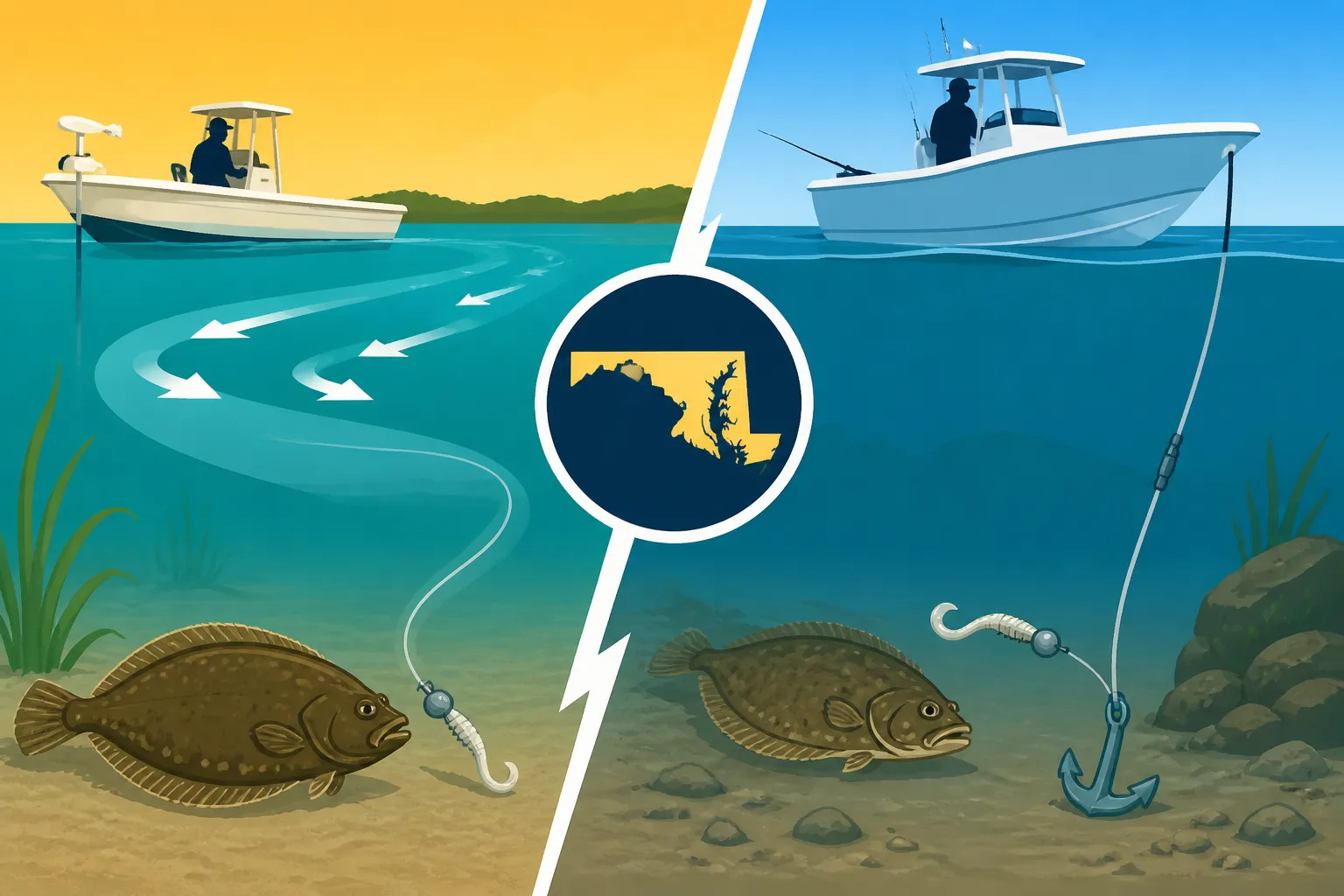
Drifting is perhaps the most popular method for flounder fishing, especially in wider bodies of water like the Chesapeake Bay or larger back bay areas. It allows you to cover a lot of ground and essentially "hunt" for flounder rather than waiting for them to come to you.
When Drifting Is Your Best Bet
Drifting truly shines when you're exploring new territory, or when the flounder are spread out over a wide area. If you're not entirely sure exactly where the fish are holding, drifting lets you systematically search likely areas. It's also incredibly effective when you have a moderate current and a gentle breeze that allows for a controlled drift. Think of covering a vast flat, the edge of a channel, or a large oyster bar. This method is particularly popular in areas like the Thorofare near Ocean City or the shallower parts of the Eastern Shore's bay tributaries, where flounder might be scattered. If you're looking for general locations, our guide on Where to Catch Flounder Near Ocean City might offer some ideas.
A steady drift allows your bait to cover a long stretch of bottom, increasing the odds that it will pass directly over a waiting flounder. When the flounder are actively feeding and somewhat dispersed, drifting can put your bait in front of many more fish than anchoring would.
Essential Gear and Rigging for Drifting
For drifting, you'll want a medium-light to medium action spinning rod, about 6 to 7 feet long, paired with a reel spooled with 10-20 lb braided line. The sensitivity of braid is invaluable for detecting subtle flounder bites when drifting. A fluorocarbon leader of 20-30 lb test is also a good idea for abrasion resistance against the bottom and reduced visibility in the water.
The most common rig for drifting flounder in Maryland is a simple two-hook bottom rig, sometimes called a "flounder rig." This usually consists of a sinker (pyramid or bank sinker) at the very bottom, with two snelled hooks (often Kahle or circle hooks, size 1/0 to 3/0) attached via dropper loops a foot or two above the sinker. Some anglers also incorporate a small spinner blade or a colorful bead on each snell to add attraction. You can find pre-tied Bottom Rig Setup for Maryland Flounder Fishing online, or build your own with components readily available on Amazon.
Crucially, you'll need enough weight to keep your bait consistently on the bottom as you drift. The amount of weight depends entirely on the current and depth. It's common to carry a range of sinkers from 1 ounce up to 6 ounces or more. Too little weight, and your bait will lift off the bottom; too much, and you'll feel every snag and lose the natural presentation. Another key piece of gear for controlling your drift speed is a drift sock or sea anchor. This parachute-like device drags in the water, slowing your boat down and allowing for a more controlled, slower presentation, especially on windy days or with strong currents. You can easily find various sizes of drift socks on Amazon.
Mastering Your Drift and Presentation
The real skill in drifting comes from controlling your speed and presentation. Ideally, your drift should be just fast enough to cover ground, but slow enough for your bait to remain on the bottom and for a flounder to react.
- Reading the Conditions: Pay close attention to the wind and current. Sometimes they work together, speeding you up; other times, they oppose each other, creating a slower, more erratic drift. Adjust your drift sock or even use your trolling motor intermittently to maintain a consistent speed.
- Bait Selection: Fresh bait is paramount. Live minnows, strips of squid, small spot, or silversides are all excellent choices. Some anglers swear by Gulp! scented artificial baits, which can be particularly effective when combined with a strip of real bait. For more ideas, check out our guide on Best Bait for Flounder in Ocean City.
- Bottom Contact: The key is to keep your sinker tapping the bottom without dragging excessively. You'll feel the sinker bounce along, indicating it's in the strike zone. If you stop feeling it, reel in a bit to take up slack and confirm you're still on the bottom. If you're consistently not feeling the bottom, you need more weight.
- Fan Casting: Don't just drop your bait straight down. Make short casts out from the boat in a fan pattern, allowing your bait to cover a wider swath of the bottom as you drift. This increases your chances of hitting a flounder's ambush point. When you feel a bite, it often feels like a subtle tap or extra weight. Don't set the hook immediately. Drop the rod tip back a bit, count to two or three, then sweep upward to set the hook. Flounder often mouth the bait before committing.
The Strategy of Anchoring for Flounder in Maryland
While drifting is about covering ground, anchoring is about precision. It's about finding that perfect spot and working it thoroughly.
When Anchoring Provides an Advantage
Anchoring is the superior technique when you've pinpointed a specific, high-percentage area where flounder are concentrated. This could be a small wreck, a distinct hump, a tight channel bend, or a patch of hard bottom that's holding fish. If you're getting consistent bites in one small area while drifting, it’s often a sign to drop anchor.
Anchoring also works well in strong currents or very deep water where maintaining bottom contact while drifting becomes a struggle. If the wind and current are fighting each other and making a controlled drift impossible, anchoring can save your day. It allows you to fish multiple rods more easily, and it's fantastic for families or less experienced anglers who might struggle with the constant adjustments required by drifting. If you're wondering about specific strategies, our article on Techniques for Catching Flounder in Maryland's Back Bays touches on both methods.
Choosing Your Anchorage Spot Wisely
The success of anchoring hinges entirely on your spot selection. This is where good navigational charts, a reliable fishfinder, and local knowledge truly pay off.
- Find Structure: Look for distinct bottom features – a sharp drop-off, a rock pile, a submerged crab pot line, or the edge of an oyster reef. Flounder will be nestled in or around these features.
- Observe Current Flow: Remember that flounder face into the current. Position your boat upcurrent from your target structure so your baits can drift back into the strike zone naturally. This means if the current is flowing north, you anchor south of the structure.
- Precise Placement: Don't just drop your anchor anywhere. Use your GPS and fishfinder to get as close to your target as possible without scaring the fish or getting snagged immediately. It often takes a bit of practice and adjustment to get your anchor to set exactly where you want it. Consider an anchor that holds well in muddy or sandy bottoms, depending on where you typically fish. You can find quality anchor systems, including various anchor types, on Amazon.
- Fan Casting from Anchor: Even when anchored, don't just fish straight down. Fan cast around the boat to explore the immediate vicinity of your chosen spot. This helps you cover the area around your anchor effectively, ensuring you're presenting your bait to any flounder holding nearby.
Effective Baits and Techniques While Anchored
When anchored, your bait presentation can be a bit more subtle than when drifting. Since you're relying on fish to come to you, enticing them is key.
- Fresh Bait, Always: This cannot be stressed enough. Live minnows, strips of fresh cut bait (squid, spot, mackerel), or a combination are excellent. Some anglers will tip a jig head with Gulp! Swimming Mullet or Shrimp for added scent and visual appeal.
- Vary Your Presentation: Don't just leave your bait sitting motionless. Give it a gentle lift and drop every few seconds to mimic a struggling baitfish or a crab scuttling on the bottom. This "jigging" motion can often trigger strikes from flounder that might otherwise ignore a stationary bait.
- Multiple Rods: With the boat stationary, you can easily deploy multiple rods, each with a slightly different bait or rig, to see what the fish prefer on that particular day. Just be mindful of tangles, especially if you're fishing with others.
- Chumming (Optional): While not as common for flounder as for striped bass, a small amount of clam or squid chum in a mesh bag can sometimes help draw fish to your anchored position, especially if they are slightly scattered nearby.
Comparing Drifting vs. Anchoring: Pros and Cons
Both drifting and anchoring have their distinct advantages and disadvantages. The best method often depends on the specific fishing conditions, your knowledge of the area, and your personal preference.
| Feature | Drifting | Anchoring |
|---|---|---|
| Coverage | Excellent, covers wide areas | Limited to a specific spot |
| Precision | Lower, relies on current/wind | High, targets specific structure |
| Ideal Conditions | Moderate current, light wind | Strong current, specific hot spots |
| Bait Presentation | Natural, covers more fish | Focused, can be worked more intensely |
| Gear Required | Drift sock, various sinker weights | Reliable anchor system, anchor ball (optional) |
| Effort Level | Requires constant adjustment, active | Can be more relaxed once set |
| Finding Fish | Good for searching and prospecting | Best when fish location is known or suspected |
| Learning Curve | Can be tricky to control drift speed | Mastering anchor placement takes practice |
| Multiple Anglers | Can be challenging to manage lines | Easier to manage multiple lines and people |
Situational Advantages and Disadvantages
-
Drifting Advantages:
- Exploration: If you're in an unfamiliar area or suspect flounder are spread out, drifting is your best bet for locating active fish.
- Natural Presentation: Your bait moves with the current, mimicking natural prey, which can be very appealing to flounder.
- Efficiency: You can cover a lot of ground in a relatively short period, increasing your chances of encountering fish.
-
Drifting Disadvantages:
- Control: Can be frustrating on very windy days or with strong, erratic currents. Without a drift sock or consistent motor input, your drift can be too fast or unpredictable.
- Snags: Covering more ground means a higher chance of snagging on unseen bottom structure.
- Line Management: With multiple anglers, lines can easily tangle if not carefully managed.
-
Anchoring Advantages:
- Precision: Allows you to thoroughly work a known hotspot, maximizing your time over productive structure.
- Stability: Offers a stable platform for fishing, especially in choppy conditions, making it more comfortable for anglers, particularly beginners or those prone to seasickness.
- Control: You have full control over your bait presentation within a confined area, allowing for focused jigging or soaking.
-
Anchoring Disadvantages:
- Limited Coverage: If flounder aren't right where you dropped anchor, you might be wasting time.
- Trial and Error: It can take several attempts to anchor exactly where you want to be, especially in current.
- Boat Movement: Even when anchored, a strong current can cause the boat to swing, moving your bait out of the ideal strike zone. You might need to adjust your scope or use a secondary anchor.
Making the Right Choice for Your Fishing Day
Ultimately, the choice between drifting and anchoring for flounder in Maryland comes down to analyzing the conditions and your knowledge of the fishing grounds.
If you're heading to a vast area like the main stem of the Chesapeake Bay, and you're not sure where the flounder are holding, starting with a drift, especially along a channel edge, is a smart move. Look for subtle changes in depth or bottom composition on your fishfinder. If you start getting bites consistently within a small stretch, then you might consider making a note of that spot and anchoring on a return trip. For specific conditions, understanding Best Time of Day to Fish Maryland's Chesapeake Bay can also influence your approach.
On the other hand, if you know of a specific wreck, reef, or oyster bar that has produced flounder in the past, and you can pinpoint it on your electronics, then anchoring directly upcurrent of that structure is likely to yield better results. This is especially true in areas with defined structure, like the Bay Bridge pilings (though flounder aren't the primary target there, the principle applies).
Many experienced flounder anglers employ a hybrid approach: they'll start by drifting to locate active fish or productive bottom, and once they find a concentrated school or hot spot, they'll quickly drop anchor to thoroughly work that area. This combines the best of both worlds, using drifting for reconnaissance and anchoring for exploitation. Always remember that conditions can change throughout the day – a light breeze in the morning might turn into a stiff wind by afternoon, necessitating a switch in tactics. Be flexible, observe, and adapt!
Disclaimer
This article is for general informational purposes only and does not constitute professional advice. Laws, prices and regulations vary by location and change over time. Consult a qualified professional for guidance on your specific situation.