How Big Do Brown Trout Get in Maryland Rivers?
For many anglers in Maryland, the dream of hooking into a strong, beautiful brown trout is a powerful motivator. But when you hit the streams, you might find yourself wondering just how big these fish really get in our local rivers. Are we talking about small, feisty stream dwellers, or genuine trophy fish that could stretch your measuring tape? This guide is going to dive deep into the typical sizes of brown trout you can expect to encounter across Maryland's diverse waterways, exploring the factors that influence their growth and where you might just find that once-in-a-lifetime catch.
The Allure of Brown Trout in Maryland Rivers
Brown trout hold a special place in the hearts of many anglers, and for good reason. They are notoriously challenging, strikingly beautiful, and can be found in some of the most serene and picturesque parts of our state. But beyond their aesthetic appeal, their growth patterns in Maryland waters present a fascinating puzzle for those who pursue them.
Why Brown Trout Are So Prized by Anglers
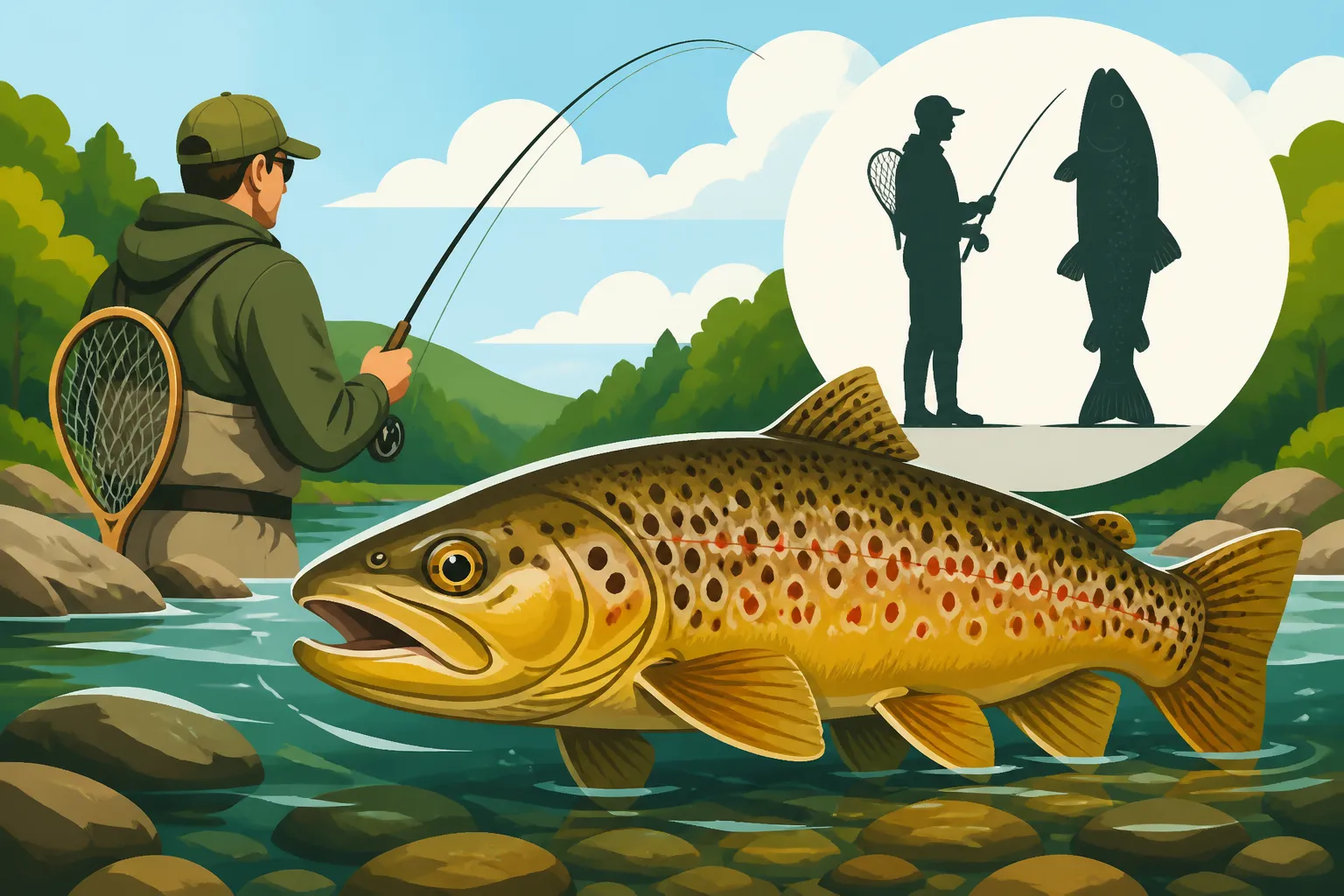
There's just something about a brown trout. Maybe it's their elusive nature, often hiding in complex cover and requiring a subtle approach. Or perhaps it's their stunning coloration – those iridescent flanks speckled with red and black spots, sometimes haloed in pale rings. When you hook one, especially in a swift, cold stream, you know you're in for a fight. They have a reputation for being strong fighters, often jumping and making powerful runs. Unlike some other trout species that might be more readily caught, browns often demand a higher level of skill and patience, which only adds to the satisfaction of landing one. This challenge, combined with their striking beauty, is what makes them such a prized catch for fly fishers and spin anglers alike across Maryland.
Understanding Maryland's Brown Trout Habitats
To understand how big brown trout get, we first need to look at where they live. Maryland offers a mix of habitats for these incredible fish. You'll primarily find brown trout in the colder, oxygen-rich waters of our Western Maryland mountain streams and their tributaries. Think about the crisp, clear flows of the Gunpowder River, the Savage River, or sections of the Youghiogheny River, often running through shaded ravines and dense forests. These rivers provide the ideal conditions – gravel beds for spawning, undercut banks and fallen timber for cover, and a steady supply of aquatic insects and small baitfish.
It’s important to distinguish between wild, naturally reproducing brown trout populations and those that are stocked by the Maryland Department of Natural Resources (DNR). Wild browns tend to be found in the smaller, more remote headwaters, fighting for resources and living entirely off the land. Stocked trout, on the other hand, are raised in hatcheries and released into designated "put-and-take" or "delayed harvest" areas, often entering the system at a larger size. This difference in origin plays a huge role in the average size an angler can expect to encounter. Understanding these distinct environments is key to knowing what to expect when you hit the water. You can learn more about these differences in our guide on Maryland Trout Species Guide.
Typical Sizes and Factors Influencing Growth
Now, let's get down to the nitty-gritty: how big do these brown trout actually get in Maryland rivers? The answer, like most things in nature, isn't a simple one, but we can break it down by their origin and the conditions they face.
Average Size of Wild vs. Stocked Brown Trout
When we talk about wild brown trout in Maryland, particularly in our self-sustaining populations in streams like the headwaters of the Gunpowder or the remote stretches of the Savage River, you're generally looking at fish in the 8 to 14-inch range. A wild brown trout pushing 16-18 inches is considered a truly excellent catch, and anything beyond that is quite rare and often the result of exceptional conditions and a long lifespan. These fish grow slower, face natural predation, and compete for limited natural food sources. They are lean, muscular, and incredibly vibrant in color, truly a testament to their resilience.
Stocked brown trout, however, often present a different story. These fish are typically raised in a hatchery environment with consistent feeding and protection from predators. When they are released, they can range anywhere from 10 inches up to 20 inches or more, depending on the stocking program and the age of the fish. These larger, sometimes more robust-looking fish provide a more immediate fishing opportunity, especially in areas with heavier fishing pressure. While still beautiful, they might not have the same hard-won character as their wild counterparts.
Here's a quick comparison of what you might typically find:
| Feature | Wild Brown Trout (Maryland) | Stocked Brown Trout (Maryland) |
|---|---|---|
| Typical Size | 8-14 inches (occasionally up to 18 inches) | 10-20+ inches (depending on stocking size) |
| Growth Rate | Slower, dependent on natural food sources | Faster, due to consistent hatchery feeding |
| Body Shape | Lean, streamlined, muscular | Can be a bit chunkier, less streamlined (initially) |
| Coloration | Intense, vibrant, distinct spots | Can be paler, less defined spots (initially, then adapt) |
| Lifespan | Often shorter due to environmental challenges | Variable, depends on survival post-stocking and fishing pressure |
| Habitat | Headwaters, pristine coldwater streams | Stocked sections of rivers, larger creeks, some reservoirs |
Key Factors Affecting Brown Trout Growth Rates
A brown trout's size isn't just about its genetics; it's heavily influenced by its environment. Several key factors play a critical role in how big a brown trout can grow in a Maryland river:
- Food Availability: This is arguably the most significant factor. Rivers with abundant insect hatches, sculpins, dace, and other small baitfish, or even crayfish, will support larger trout. A stream that is rich in a diverse food web allows trout to put on weight and length more rapidly. Conversely, a sparse food supply means slower growth and smaller fish.
- Water Temperature and Oxygen Levels: Brown trout thrive in cold, well-oxygenated water, ideally below 68°F (20°C). Maryland's summers can be tough on trout, especially in lower river sections. Consistent cold water, often fed by springs or deep reservoirs, reduces stress on the fish, allowing them to expend energy on growth rather than survival. Low oxygen levels, often associated with warmer water or pollution, severely stunt growth and can be fatal.
- Stream Size and Habitat Complexity: Larger rivers with deep pools, long runs, and ample cover (like fallen trees, large rocks, or undercut banks) provide more space and security for brown trout to grow. These larger, more varied habitats offer more feeding lies and refuge from predators, allowing older, larger fish to survive and thrive. Smaller, uniform streams, while home to wild browns, usually can't support the largest individuals.
- Fishing Pressure and Harvest Rates: In areas where anglers frequently keep their catch, especially larger fish, the average size of the population can decrease over time. This is why "catch and release" regulations and "delayed harvest" waters, where keeping fish is restricted or forbidden for certain periods, are so crucial for allowing brown trout to reach larger sizes. Understanding Maryland Fishing Size and Catch Limits by Species is essential for responsible angling.
Trophy Brown Trout: Maryland's Elusive Giants
While average sizes might seem modest, Maryland does hold trophy brown trout – those truly exceptional fish that push the boundaries of what's common. Catching one is a badge of honor and the result of dedication, knowledge, and a fair bit of luck.
Where to Find Larger Brown Trout in Maryland
If you're dreaming of a brown trout that breaks the 20-inch mark, you'll need to focus your efforts on specific waters and conditions. The prime areas are often those with special regulations, ample food, and stable, cold water year-round. The lower sections of the Gunpowder River, for instance, particularly the tailwater sections below Prettyboy Dam, are renowned for their ability to produce larger brown trout. The constant cold water release from the dam, combined with a rich aquatic insect population and forage fish, creates an ideal environment. These areas also often have "trophy trout" or "catch and release" designations, which helps protect larger fish.
Another spot where you might encounter an exceptional brown is in some of Maryland's larger reservoirs, particularly those with deep, cold thermoclines that support trout populations. While not strictly "rivers," these larger bodies of water can hold some surprisingly big fish that feed on a variety of forage. Access might be trickier, often requiring a boat, but the rewards can be significant. It's about looking for those places where all the growth factors align – abundant food, consistent cold water, deep cover, and low harvest pressure.
Maryland's State Record Brown Trout and What It Means
Maryland's state record for brown trout stands as a testament to the potential of our waters, even if such a catch is exceedingly rare for the average angler. While I won't list the exact dimensions here (as records can change and exact numbers aren't what this guide is about), suffice it to say, the fish that holds that title was truly massive for a brown trout in our region.
What does the state record mean for you, the everyday angler? It means that those incredible, once-in-a-lifetime fish are out there. It provides a benchmark of what's possible, a glimmer of hope that a true giant might be lurking in the deep pools of your favorite stream. However, it's crucial to understand that such a catch is a significant outlier, often requiring years of experience, specialized techniques, and a healthy dose of pure luck. It's a goal to aspire to, but not necessarily an expectation for every outing. The vast majority of brown trout you'll encounter, even in prime waters, will be well below that record-breaking size.
Strategies for Targeting Bigger Brown Trout
If your goal is to specifically target those larger, more elusive brown trout in Maryland, you'll need to adjust your approach. It's not just about being in the right place, but also about employing the right gear and techniques, and doing so responsibly.
Gear and Techniques for Trophy Browns
Chasing bigger brown trout often means thinking differently from how you might fish for smaller, more abundant stockers. For fly anglers, this often involves stepping up your game. Instead of delicate dry flies, you might be throwing larger streamers that imitate baitfish or crayfish, or heavily weighted nymphs to get down to deep runs where big browns lurk. A 6 or 7-weight fly rod, stronger leaders, and a sturdy reel become your friends when trying to subdue a larger fish in heavy current. For those who prefer spinning gear, larger inline spinners, minnow-imitating crankbaits, or even substantial live baits like nightcrawlers (where legal) can be effective. You can find a fantastic selection of specialized fly fishing and spinning gear for trout, including larger lures and heavier lines, on Amazon. Having the right tackle, capable of handling a powerful fish and protecting your line from snags, is paramount.
Beyond the gear, technique is everything. Big brown trout are often solitary and wary. This means fishing during low light conditions – dawn, dusk, or even into the night – when they are more likely to come out from cover to feed. Targeting deep pools, significant current seams, and areas with complex structure like logjams or large boulders is key, as these offer the refuge and ambush points that big fish prefer. Patience is also critical; you might make hundreds of casts for just one opportunity, but that one fish can make your entire season. Consider reading up on advanced techniques for Fly Fishing in Maryland or specific spots like Fishing the Gunpowder River for Trout.
Conservation and Responsible Angling Practices
When pursuing larger brown trout, especially in waters known for them, practicing responsible angling is not just good etiquette, it's essential for maintaining these valuable fisheries. Many of the areas that produce big browns are managed under special regulations precisely to protect these larger, older fish.
- Catch and Release: For trophy-sized brown trout, practicing catch and release is highly encouraged, if not legally mandated in some areas. These larger fish are vital to the health of the population, contributing significantly to spawning and passing on strong genetics. Minimizing the time the fish is out of water, handling it gently with wet hands, and using a knotless rubber net can greatly increase its chances of survival.
- Barbless Hooks: In many of Maryland's trophy trout management areas, barbless hooks are required. Even where they aren't, using them is a great practice. Barbless hooks reduce damage to the fish and make release quicker and easier, allowing the fish to swim away healthier. If you're buying flies or lures, check if they come with barbless hooks, or consider pinching down the barbs on your existing hooks with a pair of pliers, which you can easily find on Amazon. Our article Barbless Hook Rules on Maryland Trout Streams has more details on this.
- Know the Regulations: Always, always check the current Maryland DNR fishing regulations before you head out. Rules can change seasonally and vary significantly from one water body to another. This includes understanding Maryland Trout Stamp Requirements, daily creel limits, size restrictions, and any special bait or tackle restrictions for specific rivers or sections, such as those covered in Maryland Delayed Harvest Trout Waters Explained. Being informed ensures you're fishing legally and contributing to the conservation of these magnificent fish for future generations.
By understanding the unique characteristics of Maryland's brown trout populations, where they thrive, and how to approach them responsibly, you'll greatly increase your chances of encountering one of these beautiful, challenging fish. While catching a true giant is never a guarantee, the pursuit itself, in Maryland's stunning natural settings, is a reward in itself.
Disclaimer
This article is for general informational purposes only and does not constitute professional advice. Laws, prices and regulations vary by location and change over time. Consult a qualified professional for guidance on your specific situation.