Are There Wild Trout in Maryland Streams?
It's a question I hear so often from fellow anglers: "Are there really wild trout swimming in Maryland streams, or is it all just stocked fish?" And I get it – when you spend your hard-earned time chasing fish, the idea of hooking into a truly wild, stream-born trout just hits different. You dream of those pristine, untamed waters. The good news is, yes, Maryland absolutely boasts wild trout populations, but finding them and understanding their delicate ecosystems requires a bit more knowledge and a lot more respect than simply following the stocking truck. This guide will take you deep into the heart of Maryland's wild trout country, helping you understand where they thrive, what species call these waters home, and how we can all do our part to protect them.
The Elusive Nature of Wild Trout in Maryland
For many anglers, the term "trout fishing" in Maryland conjures images of freshly stocked streams, bustling with eager fishermen right after the DNR truck pulls away. While those put-and-take fisheries are a fantastic way to introduce new anglers to the sport and provide readily accessible opportunities, they paint only half the picture. The true treasure for many seasoned anglers lies in discovering and responsibly fishing Maryland's wild trout streams. These are often smaller, more remote waters where trout reproduce naturally, their survival a testament to clean water and healthy habitat.
Defining "Wild" vs. "Stocked" Trout
Let's clear up the lingo because it really makes a difference. A stocked trout is, quite simply, a fish raised in a hatchery and then released into a public waterway. These fish are typically larger, often less wary, and are meant to be caught. They provide an immediate recreational opportunity, especially in areas where wild trout cannot sustain themselves due to habitat limitations. Maryland's Department of Natural Resources (DNR) does an incredible job with its stocking program, creating fantastic Maryland Put-and-Take Trout Waters, What That Means and Fishing Maryland's Spring Trout Stocking Season opportunities across the state.
A wild trout, on the other hand, is born and raised in the stream itself. Its parents spawned naturally, the eggs hatched in the gravel, and the fry grew up facing all the challenges and opportunities of a natural environment. These fish are typically smaller, incredibly wary, and possess a vibrant, wild beauty that's unmistakable. They are perfectly adapted to their specific stream, often displaying intense coloration and strong fighting spirit. Catching one is often considered a higher achievement, not just for the challenge, but for the connection it represents to a truly healthy ecosystem.
Maryland's Unique Geography and Water Conditions
Maryland is a surprisingly diverse state, geographically speaking. From the sandy beaches of the Eastern Shore to the rugged mountains of Western Maryland, the landscape changes dramatically, and with it, the potential for wild trout. The key factors that determine whether a stream can support a wild trout population are primarily water temperature and water quality. Trout, especially our native brook trout, need cold, clean, highly oxygenated water year-round to survive and reproduce.
This is why you'll find the vast majority of Maryland's wild trout waters nestled in the western part of the state, in counties like Garrett, Allegany, and Washington. Here, the topography provides steep gradients, creating fast-flowing streams that remain cold even during the dog days of summer. Think of the shaded mountain hollows, the dense forest canopies, and the spring-fed trickles that keep water temperatures consistently low. Further east, as streams widen, slow down, and are exposed to more sunlight and agricultural runoff, the water warms up beyond a trout's tolerance, making it impossible for them to complete their life cycle naturally. These wild trout streams are truly special places, often requiring careful hiking and bushwhacking to reach, rewarding the persistent angler with solitude and pristine beauty.
Where to Find Wild Trout Waters in Maryland
While Maryland isn't known for its widespread wild trout fisheries like some western states, it certainly holds some gems. The secret is knowing where to look – and often, where not to look if you're expecting big, easy catches. These are often small, intimate streams that demand a stealthy approach and an appreciation for the subtle beauty of nature.
Western Maryland: The Primary Stronghold
When you talk about wild trout in Maryland, you're almost exclusively talking about Western Maryland. The Appalachian Mountains provide the perfect recipe: higher elevations, dense forest cover, and a network of spring-fed streams that tumble down steep ravines. Counties like Garrett and Allegany are your best bet. Here, the streams are typically small, often no wider than a car, and heavily canopied. They might not look like much to the casual observer, but these tiny waterways are the lifeblood of Maryland's wild trout.
Rivers like the North Branch of the Potomac and its feeder streams, or the upper reaches of the Youghiogheny River, contain wild trout. Even smaller, unnamed tributaries that feed into these larger systems can hold pockets of wild fish. These are places where you might find a Fishing the Savage River for Trout opportunity, or seek out the Fishing the Gunpowder Falls Delayed Harvest Section where regulations favor wilder fish behavior. It’s not just about the larger, named rivers; it’s about the countless small veins of water that keep the ecosystem alive. Anglers often spend years exploring these regions, finding little pockets of ideal habitat that hold surprising numbers of wild fish.
The Challenges of Locating and Accessing Wild Trout Streams
Finding these wild trout streams isn't always easy, and that's often by design. Many are located deep within state forests or parks, requiring a good map, a compass (or reliable GPS), and a willingness to hike. You won't find paved parking lots or manicured trails leading directly to the best pools. Sometimes, the access might be through less-traveled areas, or even require navigating private land (always secure permission first!).
The "secret spot" culture is very real in wild trout fishing. Anglers who discover these pristine, delicate streams often guard their locations closely to protect the resource from overfishing or damage. This isn't out of selfishness, but a genuine desire to preserve these fragile ecosystems. While local tackle shops or guide services can offer general advice, don't expect them to hand over GPS coordinates for a secret brook trout hideaway. The journey of discovery is part of the allure. Online resources, historical stocking records (to see where they don't stock, suggesting wild populations), and topographical maps can be invaluable tools for the dedicated wild trout seeker. Sometimes, a good guidebook on local streams, which you can often find on Amazon, can provide clues without giving away all the specific honey holes.
Key Species of Wild Trout in Maryland
Maryland is home to several species of trout, but when we talk about wild populations, two species truly dominate: the native brook trout and the naturalized brown trout. Rainbow trout, while abundant in stocked fisheries, are far less common as truly wild, naturally reproducing populations.
Native Brook Trout: The True Maryland Original
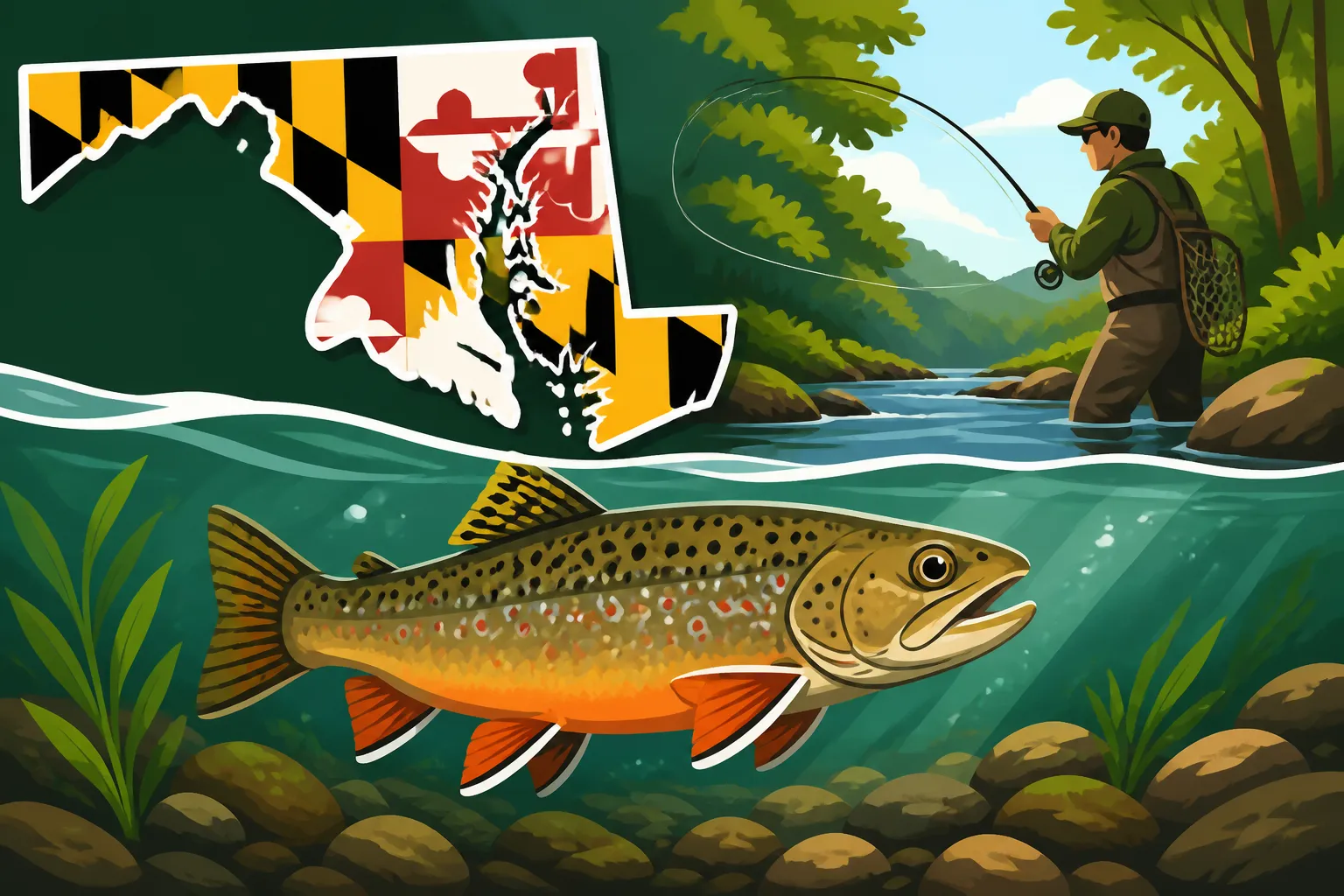
The brook trout, Salvelinus fontinalis, is Maryland's only native cold-water salmonid. It's often referred to as the "jewel of the forest" and for good reason. These fish are stunning, with intricate worm-like markings (vermiculations) on their backs, red spots (sometimes haloed in blue) along their sides, and distinctive white leading edges on their lower fins. They are a sight to behold and a symbol of pristine aquatic health.
Brook trout are incredibly sensitive to habitat degradation. They require the coldest, cleanest, most oxygenated water to survive and spawn. This means their presence is an indicator of a truly healthy stream ecosystem. You'll find them in the headwater springs and small, shaded tributaries of Western Maryland, often in streams so small you can easily step across them. They rarely grow large, with a 10-inch wild brook trout being a true trophy in Maryland. Catching one often means carefully approaching small plunge pools or slow runs, using light tackle and delicate presentations. Their populations are under threat from climate change, habitat fragmentation, and pollution, making every wild brook trout a precious catch. For those interested in Where Do Wild Brook Trout Survive in Maryland?, it’s often in the highest, most isolated reaches of our mountain streams.
Wild Brown Trout: A Resilient, Established Non-Native
Brown trout, Salmo trutta, are not native to North America, but they have been introduced and have established wild, self-sustaining populations in many parts of Maryland. Originating from Europe, brown trout are incredibly hardy and more tolerant of slightly warmer water and a wider range of habitat conditions than brook trout. This resilience means they can sometimes thrive in streams that might be marginal for brook trout.
You'll find wild brown trout in many of the same Western Maryland stream systems as brook trout, often coexisting, though brook trout tend to inhabit the very uppermost, coldest reaches. Brown trout are identifiable by their brown, black, and often red spots, some with light halos, on a golden-brown background. They lack the white leading edges on their fins that brook trout possess. Wild browns in Maryland can grow considerably larger than wild brook trout, with fish exceeding 15 inches not uncommon in prime habitats. Their wild populations contribute significantly to the challenging angling experience in some of Maryland's more storied trout waters. Understanding How Big Do Brown Trout Get in Maryland Rivers? can give you a sense of the potential for these resilient fish.
The Rarity of Wild Rainbow Trout
While rainbow trout, Oncorhynchus mykiss, are by far the most commonly stocked trout species in Maryland, truly wild, naturally reproducing populations are incredibly rare. Rainbows are native to the Pacific drainages of North America and thrive in rivers with consistent flows and gravel bottoms for spawning. In Maryland, conditions are generally not ideal for widespread natural reproduction.
You might occasionally find a "holdover" rainbow trout in a stream, a stocked fish that survived long enough to adapt to a wilder existence, but these are not truly wild in the sense of being stream-born and raised. Any rainbow trout you encounter in Maryland streams is almost certainly either a recently stocked fish or a long-term survivor from a stocking event. While they are a fantastic sport fish and provide incredible angling opportunities, especially during the Maryland Trout Season, Month by Month, don't mistake them for the wild, self-sustaining populations of brook or brown trout that define Maryland's wild trout fisheries.
Conserving Maryland's Wild Trout Populations
The presence of wild trout in Maryland streams is a delicate blessing, and their continued survival depends heavily on our collective efforts. These populations are incredibly vulnerable to environmental changes and human impact. As anglers and outdoor enthusiasts, we have a vital role to play in their conservation.
The Threats to Wild Trout Habitat
Wild trout, especially the native brook trout, are sentinel species. Their health directly reflects the health of their aquatic environment. Unfortunately, many threats loom large over their habitats:
- Habitat Degradation: Deforestation, especially along stream banks, leads to increased water temperatures, erosion, and sedimentation. Sediment smothers the gravel beds where trout spawn, preventing eggs from hatching.
- Pollution: Runoff from agriculture, urban development, and even residential areas can introduce chemicals, nutrients, and silt into streams, reducing water quality and oxygen levels.
- Climate Change: Warming global temperatures mean warmer stream temperatures, pushing wild trout out of their thermal comfort zones and shrinking their available habitat. This is particularly concerning for the cold-loving brook trout.
- Habitat Fragmentation: Roads, culverts, and dams can block trout migration, isolating populations and reducing genetic diversity, making them more susceptible to disease and environmental stress.
- Invasive Species: The introduction of non-native fish species can create competition for food and habitat, or even predation on juvenile trout.
The cumulative effect of these threats means that every healthy wild trout stream is a precious, irreplaceable resource. Organizations focused on watershed protection and stream restoration are crucial in this fight.
Angler Responsibility and Catch-and-Release Practices
For those lucky enough to find and fish Maryland's wild trout streams, responsible angling is paramount. These aren't high-harvest fisheries; they are delicate ecosystems that require our respect and protection.
- Catch and Release: This is the golden rule for wild trout. Unless regulations specifically permit harvest and you are certain of the species and size, assume catch-and-release is the best practice. Handle fish as little as possible with wet hands, keep them in the water, and release them quickly. Barbless hooks greatly minimize harm. Many wild trout areas are designated Maryland Delayed Harvest Trout Waters Explained where catch-and-release is often mandatory for parts of the year, or even year-round in some special regulation areas. You might consider purchasing specialized barbless hooks or tools for easy release, often found on Amazon.
- Tread Lightly: Stay on established trails where possible, avoid disturbing stream banks, and pack out everything you pack in. Reduce your footprint to protect the delicate flora and fauna around the stream.
- Appropriate Tackle: Ultra-light rods, fine tippets, and small flies or lures are not just more sporting, but they also minimize stress on these smaller, more delicate fish.
- Educate Yourself: Understand the specific regulations for the stream you are fishing. Rules can vary significantly, especially in special regulation or wild trout management areas. The Maryland's DNR Fishing and Boating Guide, Explained is an essential resource.
Local Conservation Efforts and How to Get Involved
There are many dedicated individuals and organizations working tirelessly to protect Maryland's wild trout. Groups like Trout Unlimited chapters across the state (e.g., the Maryland Chapter of Trout Unlimited) often lead stream restoration projects, advocating for better land use practices and educating the public.
These efforts can involve tree plantings to shade streams, installing structures to create better fish habitat, monitoring water quality, and advocating for policies that protect riparian buffers. Getting involved can be as simple as volunteering for a stream cleanup, becoming a member of a conservation organization, or financially supporting their work. Even just spreading awareness about the importance of wild trout and practicing ethical angling helps. The more people understand and appreciate these hidden treasures, the better their chances of survival for future generations of anglers.
| Trout Species | Wild Population Status in Maryland | Preferred Habitat | Key Identification Notes |
|---|---|---|---|
| Brook Trout | Native, self-sustaining in cold, pristine headwaters | Small, cold, high-gradient, heavily shaded mountain streams | Worm-like markings on back, red spots with blue halos, white leading edges on lower fins |
| Brown Trout | Introduced, self-sustaining in many streams | Slightly larger, often more tolerant of marginal conditions than brookies | Brown/black/red spots, some with light halos, no white leading fin edges |
| Rainbow Trout | Primarily stocked; rare truly wild, self-sustaining populations | Stocked into various waters; rarely naturalizes in Maryland | Pink/red stripe along sides, small black spots; most are hatchery-origin |
Disclaimer
This article is for general informational purposes only and does not constitute professional advice. Laws, prices and regulations vary by location and change over time. Consult a qualified professional for guidance on your specific situation.