Where Do Wild Brook Trout Survive in Maryland?
Finding wild brook trout in Maryland can feel like searching for a needle in a haystack, especially with so much development and habitat change across our beautiful state. Many anglers dream of encountering these vibrant, native fish, but often wonder if they even exist in significant numbers anymore, or if they're confined to distant, inaccessible pockets. This guide is here to shed light on exactly where these elusive, pristine creatures manage to survive and thrive in Maryland, helping you understand their critical habitats and how you can be a part of their preservation.
The Last Strongholds of Maryland Brook Trout
Maryland's wild brook trout, with their striking colors and distinctive worm-like markings, are true gems of our natural heritage. Unlike their stocked cousins, these fish have adapted over millennia to the unique conditions of their native streams. This resilience, however, has been tested by centuries of human activity, pushing them into increasingly isolated havens. To find them, you really need to understand where these last strongholds are. It’s not about fishing a big, popular river; it’s about venturing into the smaller, often overlooked tributaries and headwaters.
Identifying Prime Brook Trout Habitat
Wild brook trout aren't like other fish you'll find across Maryland; they have incredibly specific demands for their living quarters. They are indicator species, meaning their presence signals a healthy, undisturbed aquatic ecosystem. What exactly constitutes this prime habitat? Think cold, crystal-clear water, year-round. These aren't the murky, warm rivers of the piedmont or coastal plain. We're talking about streams where the water temperature rarely climbs above the mid-60s, even on the hottest summer days. This often means spring-fed sources and high-elevation creeks that stay naturally cool.
Beyond temperature, brook trout demand pristine water quality. They need high oxygen levels and water free from excessive sediment and pollution. This usually translates to streams flowing through heavily forested areas, where the tree canopy provides crucial shade, preventing the water from heating up. These woods also create natural leaf litter and woody debris that become food and shelter for insects and other invertebrates, which are the primary diet of young brook trout. A diverse stream bed with gravel for spawning, riffles for feeding, and deeper pools for refuge is also absolutely essential. You'll rarely find wild brook trout in a stream that's been channelized, had its banks cleared, or flows through agricultural fields without significant buffer zones.
Key Geographic Regions
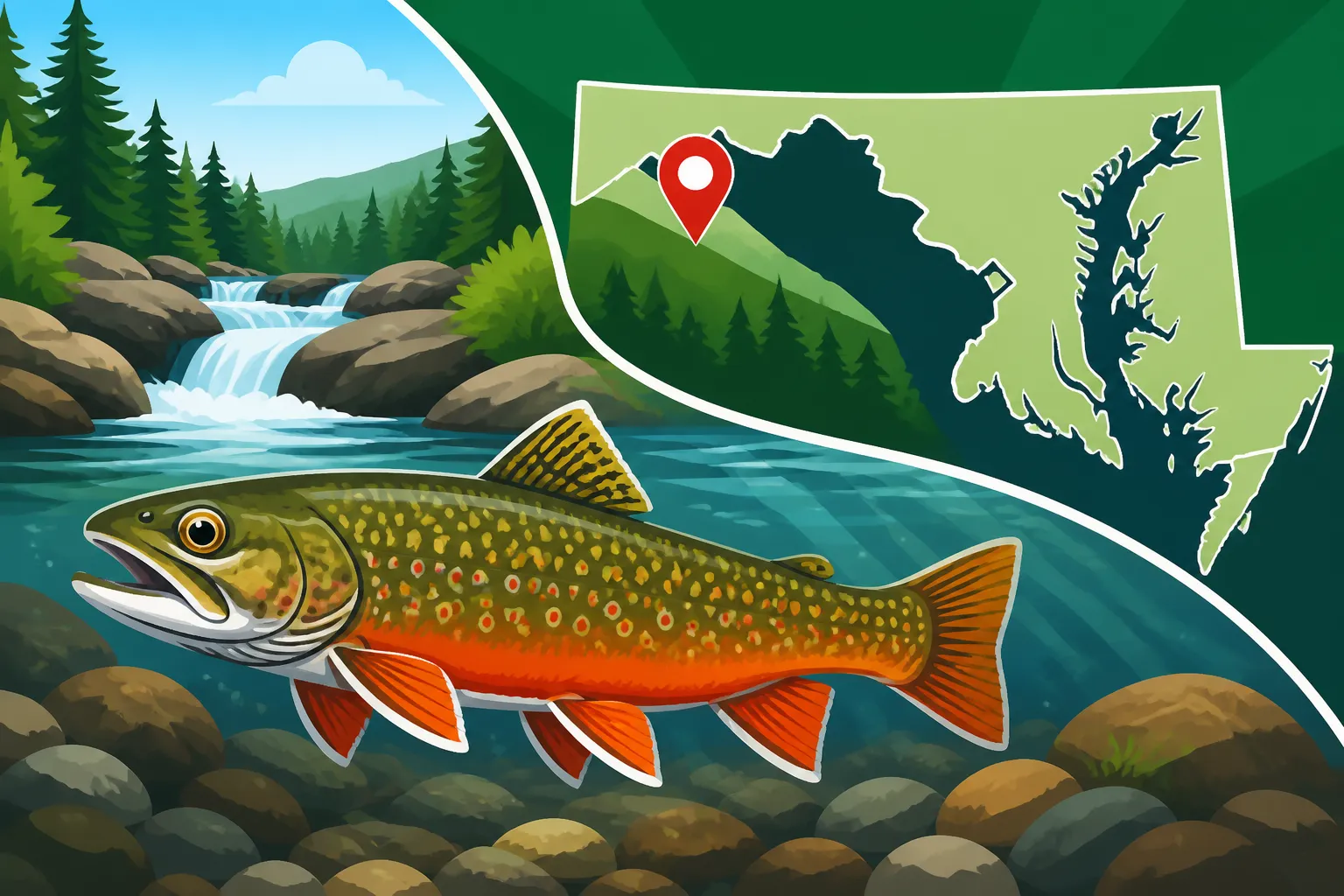
When you think about where cold, clear, undisturbed waters might still exist in Maryland, your mind should immediately turn westward. The mountainous regions of Western Maryland are, without a doubt, the primary redoubts for wild brook trout populations. Specifically, Garrett and Allegany counties hold the vast majority of these precious resources. These are areas characterized by steep terrain, dense forests, and numerous small, spring-fed streams that tumble down mountainsides. While you won't find specific streams named here (as that knowledge is often protected by local anglers and conservationists to prevent overfishing), know that the smallest, most remote tributaries in these areas are your best bet.
Further east, but still within the cooler climes, you might find remnant populations or efforts to reintroduce brook trout in higher elevation areas of Frederick and Washington counties, particularly in streams that feed into larger river systems like the Potomac. These populations are often more scattered and vulnerable, but their presence is a testament to ongoing conservation work. It’s important to understand that these aren’t large, easily accessible fishing spots. They often require hiking through dense woods, navigating uneven terrain, and a keen eye for subtle signs of a healthy stream. It’s a journey, not just a fishing trip. For a broader look at fishing in these areas, you might want to check out Fishing Spots in Western Maryland's Mountains or Best Trout Streams in Western Maryland.
Why Wild Brook Trout Are So Elusive
Catching a wild brook trout in Maryland is a special experience, partly because these fish are truly rare. Their elusiveness isn't just about their intelligence; it's a direct result of their demanding environmental needs and the relentless pressures they face in a developed landscape. They are fragile creatures, and their survival is a delicate balance.
Habitat Requirements and Sensitivities
As mentioned, wild brook trout are incredibly sensitive to their environment. Their preferred water temperature range is quite narrow, generally between 50 and 68 degrees Fahrenheit. Anything consistently above that can cause stress, reduce growth, and even lead to death. This is why shade, spring-fed sources, and high-altitude streams are non-negotiable for their survival. They also require high levels of dissolved oxygen, which is often inversely related to water temperature. Colder water holds more oxygen, which is critical for their metabolic processes.
Beyond temperature and oxygen, brook trout need clean, gravelly streambeds for spawning. The females lay their eggs in shallow depressions, called "redds," where the eggs can be naturally oxygenated by clean, flowing water. Siltation – fine particles of dirt washing into the stream – can smother these eggs and destroy future generations. This is a common problem in areas with poor land management, logging, or agricultural runoff. They also need plenty of "cover" – fallen trees, undercut banks, large rocks – to hide from predators like birds and larger fish, and to escape strong currents during floods. A healthy stream for brook trout is a complex mosaic of these elements, all working together to support their life cycle. If you're wondering how they compare to other trout, take a look at Rainbow Trout vs Brown Trout in Maryland Streams.
Threats to Survival
The challenges facing Maryland's wild brook trout populations are significant and multifaceted. Historically, extensive logging in Western Maryland stripped away critical stream-side forests, leading to increased water temperatures and erosion. Acid rain, a legacy of industrial pollution, also decimated populations in some areas by making waters too acidic for trout survival. While some of these historical issues have improved, new threats continually emerge.
Today, the primary threats include habitat degradation from ongoing development, urbanization, and agricultural runoff. Impervious surfaces like roads and parking lots increase stormwater runoff, carrying pollutants and sediment directly into streams, and causing rapid temperature fluctuations. Climate change also poses a major long-term threat, as rising ambient temperatures could push stream temperatures above the brook trout's tolerance limits, shrinking their available habitat. Competition from non-native species, like brown trout or rainbow trout (which are often stocked for recreational fishing), can also put pressure on brook trout populations, as these species often tolerate slightly warmer waters and can outcompete native brookies for food and space. Understanding these threats is crucial to appreciating why these fish are so special and why efforts like the Maryland Trout Stamp Requirements are so vital for conservation.
Conservation Efforts and the Angler's Role
The good news amidst these challenges is that dedicated conservation efforts are underway, and anglers have a crucial role to play. Protecting Maryland's wild brook trout isn't just about pristine wilderness; it’s about maintaining the health of entire watersheds, which benefits everyone. These efforts range from large-scale government programs to grassroots volunteer initiatives, all working to give these native fish a fighting chance.
Protecting Their Homes
Many organizations, both state and private, are actively involved in brook trout conservation in Maryland. The Maryland Department of Natural Resources (DNR) works to identify, monitor, and protect these sensitive populations, often implementing special regulations in brook trout waters. Non-profit groups, such as local Trout Unlimited chapters, are on the front lines, organizing stream cleanups, planting trees along stream banks to restore riparian buffers, and advocating for policies that protect water quality. These restoration projects are vital for creating and enhancing the cold, clean water habitat that brook trout need. This might involve stabilizing eroding stream banks with natural materials, installing in-stream structures to create cover and diverse flow patterns, or removing barriers to fish migration.
Land conservation is another critical component. Protecting undeveloped forest lands and acquiring easements along stream corridors ensures that vital headwaters remain undisturbed and shaded. These efforts sometimes involve working with private landowners to implement best management practices that reduce runoff and protect water quality. These combined approaches are slow and require sustained commitment, but they are essential for the long-term survival of wild brook trout. For more information on state efforts, you might find Maryland's DNR Fishing and Boating Guide, Explained very useful.
Responsible Angling for Brook Trout
As anglers, we are often the first to appreciate the beauty and fragility of these wild places. Our actions on the stream can make a significant difference. The most important practice when fishing for wild brook trout is catch and release. These populations are often small and vulnerable, and removing even a few fish can have a disproportionate impact on their ability to sustain themselves. Many dedicated brook trout streams in Maryland are managed as catch-and-release only, or have very strict size and creel limits. You can find detailed rules by checking the state's fishing regulations, which are updated regularly.
Beyond simply releasing the fish, proper handling is paramount. If you do catch a wild brook trout:
- Minimize handling: Try to keep the fish in the water as much as possible.
- Wet your hands: Always wet your hands before touching the fish to protect their delicate slime coat.
- Use barbless hooks: Barbless Hook Rules on Maryland Trout Streams are often in place for good reason. Barbless hooks minimize tissue damage, allowing for a quicker, less stressful release. You can easily crimp the barb on most hooks with a pair of pliers.
- Use appropriate gear: Ultralight gear allows for a quicker fight, reducing stress on the fish.
Consider carrying a small pair of hemostats or forceps to quickly remove hooks. The goal is to get the fish back into the water quickly and safely, giving it the best chance of survival. Remember, the privilege of fishing for these wild treasures comes with the responsibility to protect them.
Finding Them: Tips for the Dedicated Angler
So, you're ready to embark on the quest to find Maryland's wild brook trout? It's not always easy, but the reward of holding one of these native beauties is truly unparalleled. It requires a bit of homework, some old-fashioned footwork, and a healthy dose of respect for their environment.
Research and Reconnaissance
Your journey begins long before you cast a line. Start by immersing yourself in maps and local resources. Topographic maps, available through various outdoor recreation apps or even good old-fashioned paper maps, are invaluable. Look for areas with steep gradients, dense forest cover, and networks of small, unnamed tributaries. These are the veins of the mountains where brook trout persist. While the Maryland DNR doesn't publish specific wild brook trout stream locations to prevent overfishing, their general guides can point you towards regions known for wild trout management. You might be able to find historical accounts or environmental studies online that mention specific stream characteristics in certain watersheds.
Local knowledge is also key. Visit small, independent tackle shops in Western Maryland. Strike up conversations with seasoned local anglers. They often have a deep understanding of the local waters and are sometimes willing to share general advice, though you might need to prove your commitment to conservation first. Additionally, specialized books on local stream entomology or fishing guides for specific regions can provide clues. You can often find such niche publications and detailed maps on platforms like Amazon, making it easy to research from home before you ever hit the road.
Gear and Approach for Wild Trout
Fishing for wild brook trout is often a minimalist affair. Forget your heavy fly rods or big spinning outfits. These are small fish in small streams, and subtlety is your best friend.
- Rods and Reels: An ultralight spinning rod (4-5 feet) with 2-4 lb test line or a light fly rod (2-4 weight, 6-7 feet) is ideal. The short rod helps navigate overgrown stream banks, and the light line allows for delicate presentations.
- Lures and Flies: For spinning gear, tiny spinners (size 0 or 1), micro-jigs, or very small inline spoons can be effective. For fly anglers, small dry flies (e.g., Adams, Elk Hair Caddis in sizes 14-20), small nymphs (e.g., Hare's Ear, Pheasant Tail), or tiny streamers are excellent choices. Again, if you're looking for specific patterns or brands, Amazon can be a great place to broaden your search and stock up on these specialized, smaller offerings.
- Wading Gear: Chest waders are often helpful, not just for staying dry and warm, but also for approaching streams stealthily. Often, you'll be wading upstream, so felt-soled or rubber-soled wading boots with good grip are essential for navigating slippery rocks.
- Stealth: Wild brook trout are incredibly wary. Approach the stream cautiously, keeping a low profile. Often, the fish are in plain sight near the banks or under cover. Make your first cast count, as a poor presentation can spook the entire pool. Move slowly and deliberately.
Remember, the emphasis here is on the experience and the appreciation of these unique fish and their pristine environment. It’s not about how many you catch, but about the quality of the encounter. For more on the art of fishing with flies, consider delving into Fly Fishing in Maryland, and always remember to check Maryland Trout Daily Creel Limit for any regulations specific to your chosen stream.
| Feature | Wild Brook Trout | Stocked Trout (Rainbow/Brown) |
|---|---|---|
| Appearance | Vibrant colors, worm-like markings (vermiculations) on back, red/orange spots with blue halos, white leading edges on fins. | More muted colors, often silver or olive, distinct spots without halos, fins may be worn. |
| Fins | Often perfect, undamaged. | Can be worn, frayed, or clipped (from hatchery rearing). |
| Size | Typically smaller (5-10 inches), though larger specimens exist in rare, rich habitats. | Varies, often larger depending on stocking size, can be uniformly sized. |
| Behavior | Extremely wary, quick to dart for cover, prefers pristine, fast-flowing, cold water. | Can be less wary, congregate near stocking points, may be more tolerant of warmer, slower water. |
| Habitat | Remote, cold, high-gradient headwater streams with dense tree canopy and clean gravel. | Found in a wider range of streams, rivers, and lakes, especially those with good public access. |
| Resilience | Highly sensitive to habitat degradation and temperature fluctuations. | Generally more tolerant of varied conditions and human presence. |
This table provides a quick reference to help you distinguish between the wild brook trout you might encounter and the more common stocked rainbow or brown trout. Knowing the difference enhances the appreciation of your catch!
Disclaimer
This article is for general informational purposes only and does not constitute professional advice. Laws, prices and regulations vary by location and change over time. Consult a qualified professional for guidance on your specific situation.