What Does a Rockfish Slot Limit of 19 to 24 Inches Mean?
One of the most common head-scratchers for Maryland anglers, especially those new to the Chesapeake Bay, is understanding the ever-evolving regulations for our beloved striped bass, often called rockfish. It can feel like you need a law degree just to go fishing! This guide is here to untangle the specifics of Maryland's 19 to 24-inch rockfish slot limit, helping you understand exactly what it means for your next fishing trip and why these rules are so vital for the health of our fisheries.
Understanding the "Slot Limit" Concept in Maryland Fishing
If you've spent any time on the water in Maryland, you've likely heard the term "slot limit" thrown around, particularly when discussing rockfish. It's a regulation that sometimes baffles even seasoned anglers, because it's not as straightforward as a simple "minimum size" rule. Essentially, a slot limit means there's a specific size range – a "slot" – within which you are allowed to keep a fish. Any fish smaller than the slot, or larger than the slot, must be released. It's a nuanced approach to fisheries management that aims to achieve very specific conservation goals.
Think of it this way: instead of just saying "fish must be at least 18 inches to keep," the state is telling us, "we only want you to keep the fish that fall into this particular growth window." This targeted approach is a powerful tool for maintaining healthy fish populations, but it does place a greater responsibility on us, the anglers, to understand and adhere to the rules. It requires a bit more thought at the side of the boat or on the pier, but the long-term benefits for the fish are significant.
Why Maryland Uses Slot Limits for Rockfish (Striped Bass)
Maryland's Department of Natural Resources (DNR) doesn't implement these rules just to make our lives harder; they do it based on extensive scientific data and a deep understanding of fish populations. For striped bass, which are incredibly important both ecologically and recreationally in the Chesapeake Bay, a slot limit is a critical conservation strategy. The primary goal is to protect certain segments of the fish population that are most vulnerable or most vital to the species' future.
Specifically, slot limits for rockfish typically aim to protect two key groups: the very young fish and the very large, mature breeding stock. The younger fish need time to grow and mature, contributing to the population for years to come. The largest fish, often referred to as "trophy" fish, are crucial spawners. These big females produce the most eggs, and protecting them ensures that future generations of rockfish are strong and abundant. By allowing anglers to harvest fish from the middle of the size range, the DNR attempts to balance recreational fishing opportunities with sound conservation practices. It’s a delicate dance, but one that is essential for the long-term health of the Striped Bass: Maryland's State Fish population.
How a Slot Limit Differs from Minimum or Maximum Size Limits
To really grasp the slot limit, it helps to compare it to the more common minimum and maximum size limits you might encounter for other species. Let's break down the differences:
- Minimum Size Limit: This is the most common regulation. It means a fish must be at least a certain length to be legally kept. For example, if there's a 10-inch minimum size limit for a species, you can keep any fish that is 10 inches or longer. Anything shorter must be released. This protects juvenile fish, allowing them to grow to a reproductive age and contribute to the population before being harvested.
- Maximum Size Limit: Less common, but sometimes used, a maximum size limit means a fish must be no longer than a certain length to be kept. Anything exceeding that length must be released. This regulation specifically protects the largest, most prolific breeding fish, ensuring they remain in the water to spawn.
- Slot Limit: This combines aspects of both. With a slot limit, you can only keep fish that fall between two specific lengths. Fish smaller than the lower end of the slot, and fish larger than the upper end of the slot, must both be released. This dual protection strategy is incredibly effective for species where both juvenile and trophy-sized breeding fish need safeguarding.
For rockfish, Maryland's slot limit of 19 to 24 inches means that smaller fish are protected so they can grow up, and larger, mature spawning fish are protected so they can continue to reproduce. It's a comprehensive approach that recognizes the different roles fish play at various stages of their life cycle in maintaining a healthy ecosystem. Understanding these distinctions is crucial for any responsible angler, and it's a core component of Maryland Fishing Size and Catch Limits by Species.
The Specifics of Maryland's 19 to 24-Inch Rockfish Slot Limit
Okay, let's get right down to the nitty-gritty of the 19 to 24-inch rockfish slot limit in Maryland. This isn't just a guideline; it's a strict regulation that determines whether the fish you just caught can go into your cooler or must be gently returned to the water. Getting this wrong can lead to serious penalties, so it's vital to be absolutely clear on what these numbers mean when you're out on the Bay or its tributaries.
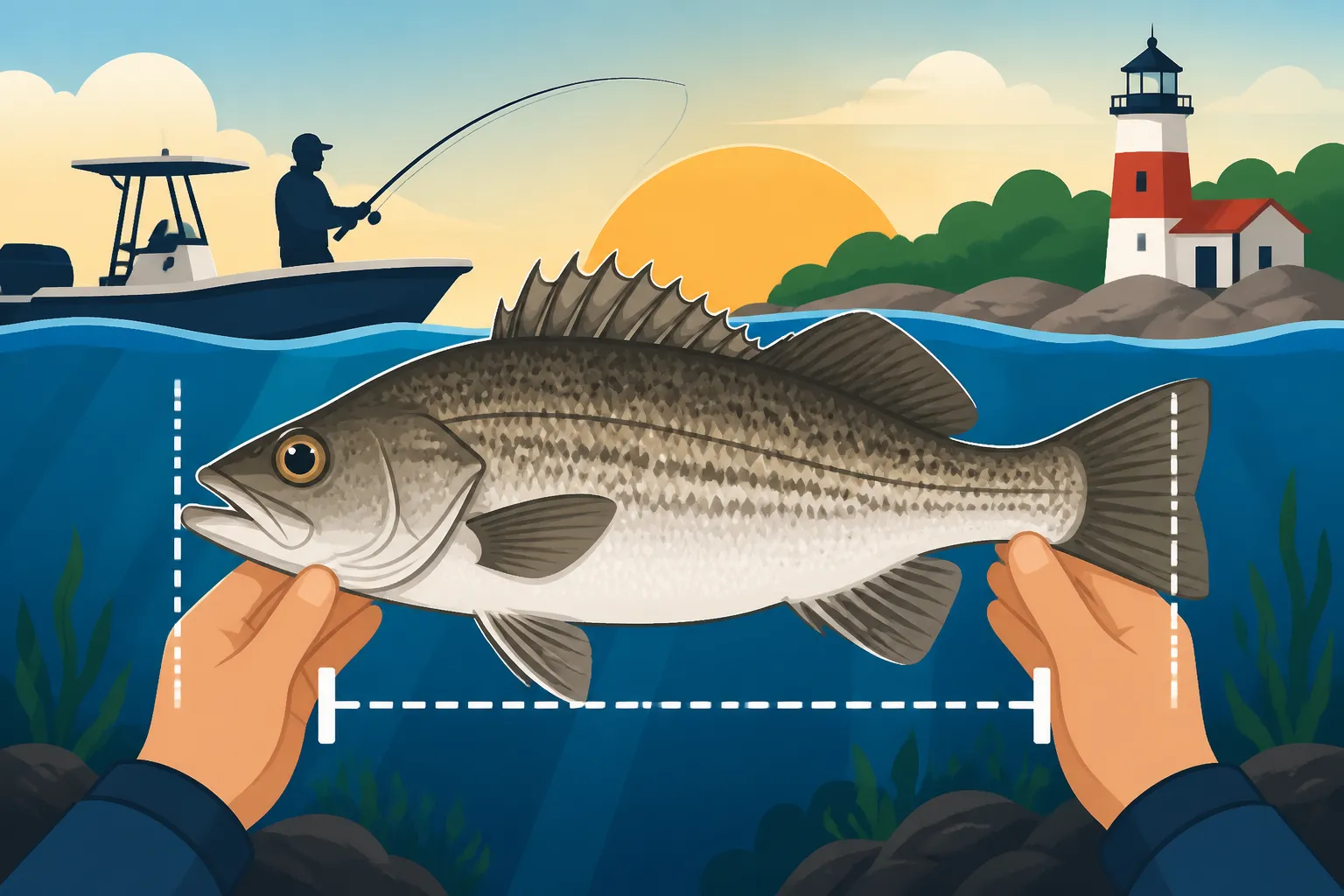
The phrase "19 to 24 inches" refers to the total length of the fish. This measurement is taken from the tip of the nose (snout) to the tip of the tail, with the tail compressed (squeezed together) to achieve the maximum possible length. It's not about the fork of the tail or some other arbitrary point; it's snout-to-compressed-tail. This standard method ensures consistency across all measurements. If a fish measures 18.9 inches, it's too short. If it measures 24.1 inches, it's too long. Only those beautiful striped bass that fall precisely within that 19.0 to 24.0-inch window are legal to keep, assuming you're within your daily creel limit.
What "19 to 24 Inches" Truly Means for Anglers
Let's unpack what this means practically for you, the angler, when you pull a rockfish out of the water.
Imagine you're fishing near the Bay Bridge Pilings for Striped Bass and you hook into a feisty rockfish. You bring it aboard, and before anything else, you grab your measuring device.
- Scenario 1: It's 17 inches. This fish is too short. It's below the 19-inch minimum of the slot. You must release it immediately and with as little harm as possible. This fish is a future breeder, and letting it go is an investment in the Bay's health.
- Scenario 2: It's 21 inches. Ah, a perfect fish! 21 inches falls squarely within the 19 to 24-inch slot. This is a legal keeper, provided you haven't already reached your daily bag limit.
- Scenario 3: It's 26 inches. This is a beautiful, big fish, perhaps a mature female. However, it's too long for the slot. It exceeds the 24-inch maximum. This fish, too, must be released. While it might be tempting to keep such a magnificent specimen, remember that these large fish are the most critical for spawning and ensuring the continuation of the species. Releasing them allows them to continue their vital role in the ecosystem.
The rule is designed to ensure that the fish you take home are not the youngest, still-growing members of the population, nor the biggest, most productive spawners. It’s about sustainable harvest from the middle ground, and it’s critical for supporting Are Chesapeake Bay Striped Bass Populations Declining?.
Practical Implications for Your Fishing Trip
Understanding the slot limit isn't just about avoiding a fine; it fundamentally changes how you approach your fishing trip.
First, gear considerations become more important. You need a reliable measuring device that's easily accessible. Whether it's a simple tape measure or a dedicated fish measuring board, make sure it's accurate and ready to go. Many anglers even pre-mark their coolers or boat decks with the slot limit for quick checks. You can find excellent, durable measuring tools on platforms like Amazon, often specifically designed for saltwater fishing and marked with common slot limits.
Second, your fishing techniques and mindset will adapt. You'll likely become very proficient at quick, accurate measurements. You'll also need to prioritize catch and release for fish outside the slot. This means having the right tools for a clean release – de-hookers, pliers, and possibly even a landing net with rubberized mesh to minimize scale and slime removal. Even if you're targeting big fish, the knowledge that you can't keep them might shift your focus to the pure joy of the catch and the fight, rather than just the harvest. Remember that even during Maryland's Winter Catch and Release Striped Bass Season, proper handling is crucial.
Finally, daily limits still apply within the slot. Even if you catch ten legal 21-inch rockfish, you can only keep the designated number of fish per angler per day, typically one fish, as specified by current regulations. Always check the most up-to-date Maryland Fishing Regulations Guide, Where to Find It before heading out. It's a complex system, but it's all designed to keep our striped bass fishery healthy for generations of anglers to come.
Navigating the Rules: Tips for Maryland Anglers
Navigating Maryland's fishing regulations, especially something as specific as a slot limit, can feel like a challenge. But with a bit of preparation and the right approach, it becomes second nature. It's all about being a responsible angler, understanding that our actions directly impact the health of the fishery, and preparing ourselves to follow the rules diligently. These tips will help you stay on the right side of the law and ensure you're doing your part for conservation.
One crucial element that often gets overlooked in the excitement of a catch is the precision of measurement. A half-inch can be the difference between a legal fish and a violation. Similarly, knowing how to properly release a fish that doesn't fit the slot is paramount. We want those fish to swim away strong and continue to contribute to the population. It's not enough to just throw them back; we need to give them the best possible chance of survival.
Measuring Your Catch Accurately and Legally
When it comes to the 19 to 24-inch rockfish slot, accuracy is everything. Here’s how to ensure you’re measuring correctly every time:
- Use a Reliable Measuring Device: Invest in a good quality ruler or measuring board. Many marine stores and online retailers like Amazon offer rigid measuring boards that go up to 30 inches or more, often with a raised end to butt the fish's nose against. This eliminates human error that can occur with flexible tape measures. Keep it easily accessible in your boat or tackle bag.
- Measure Snout to Compressed Tail: This is the standard. Place the fish on its side, with its snout firmly against the fixed end of your measuring device. Gently, but firmly, squeeze the tail lobes together (compress the tail) to get the maximum possible length. Read the measurement at the very tip of the tail.
- Measure on a Flat Surface: Don't try to measure a wriggling fish in your hands. Use a flat, stable surface like a measuring board, cooler lid, or boat deck. This ensures the fish lies straight and gives you an accurate reading.
- Quickly and Efficiently: The longer a fish is out of water, the more stressed it becomes. Practice measuring quickly and accurately so you can make a decision and either keep or release the fish promptly.
- Double-Check if Unsure: If you're borderline, it's always better to err on the side of caution and release the fish. A few inches can seem insignificant, but they make all the difference in legality and conservation. Many anglers find it helpful to mark their cooler lids or a boat deck with the exact slot range, making visual checks even faster.
Following these steps will help you confidently identify legal keepers while respecting the conservation efforts behind the Maryland Striped Bass Season and Rockfish Rules.
Best Practices for Catch and Release Outside the Slot
Catch and release is a crucial component of fishing under a slot limit. Since you'll be releasing every fish that's too small or too large, mastering proper catch and release techniques is essential for minimizing post-release mortality. After all, the goal of protecting these fish is defeated if they don't survive being released.
Here are some best practices:
- Minimize Handling Time: Keep the fish in the water as much as possible. If you must bring it aboard for a quick measurement or hook removal, do so swiftly.
- Wet Hands and Gloves: Always wet your hands or use wet gloves before touching a fish. Dry hands can remove the fish's protective slime layer, making it more susceptible to disease.
- Support the Fish: If you lift the fish, support its entire body, especially larger rockfish. Avoid hanging them vertically by the jaw or gill plates, as this can damage internal organs and the spinal column. Cradle them horizontally.
- Use Appropriate Gear:
- Barbless Hooks: Consider using barbless hooks, or crimp down the barbs on your existing hooks. This makes hook removal much easier and quicker, reducing stress and injury to the fish. Many trout streams have Barbless Hook Rules on Maryland Trout Streams, and while not always mandated for striped bass, it's a good practice for catch-and-release.
- De-hooking Tools: Keep a pair of long-nosed pliers or a specialized de-hooking tool handy. These allow you to remove hooks quickly without putting your fingers too close to sharp teeth and minimize handling the fish directly. You can find various de-hooking tools on Amazon.
- Rubberized Nets: If you use a net, opt for one with rubberized or knotless mesh. Traditional knotted nylon nets can remove protective slime, damage fins, and injure eyes.
- Revive if Necessary: If a fish seems sluggish before release, hold it gently in the water, facing into the current. Move it back and forth slightly to push water over its gills until it regains strength and swims away on its own.
- Avoid Excessive Photos: While a trophy shot is tempting, prioritize the fish's health. If you must take a photo, do it quickly with the fish mostly in the water.
By adhering to these practices, you ensure that the fish you release, whether they are small juveniles or massive spawners, have the best possible chance of survival, contributing to the overall health and future of Maryland's rockfish fishery. For more specific guidance on different species, check out Maryland's DNR Fishing and Boating Guide, Explained.
Comparing Maryland's Striped Bass Size Limits
To help clarify the different types of regulations we've discussed, here's a quick comparison of how various size limits work in practice for anglers. This table focuses on the primary goals and the direct impact on what you can keep.
| Limit Type | Description | Primary Conservation Goal | Angler's Action with a 22-inch Striped Bass (if applicable) | Angler's Action with a 17-inch Striped Bass | Angler's Action with a 26-inch Striped Bass |
|---|---|---|---|---|---|
| Minimum Size | Fish must be at least this length to be kept. (e.g., 18 inches) | Protects juvenile fish, allows them to mature. | Keep | Release | Keep |
| Maximum Size | Fish must be no longer than this length to be kept. (e.g., 25 inches) | Protects large, mature spawning fish. | Keep | Keep | Release |
| Slot Limit | Fish must be within a specific range of lengths to be kept. (e.g., 19-24 inches) | Protects both juveniles and large spawners. | Keep | Release | Release |
This table highlights why the slot limit is a powerful tool for fisheries managers, allowing them to precisely target which fish are removed from the population to promote overall sustainability. It really is a key aspect of Maryland's New Striped Bass Rules for 2026 and future regulations.
Disclaimer
This article is for general informational purposes only and does not constitute professional advice. Laws, prices and regulations vary by location and change over time. Consult a qualified professional for guidance on your specific situation.