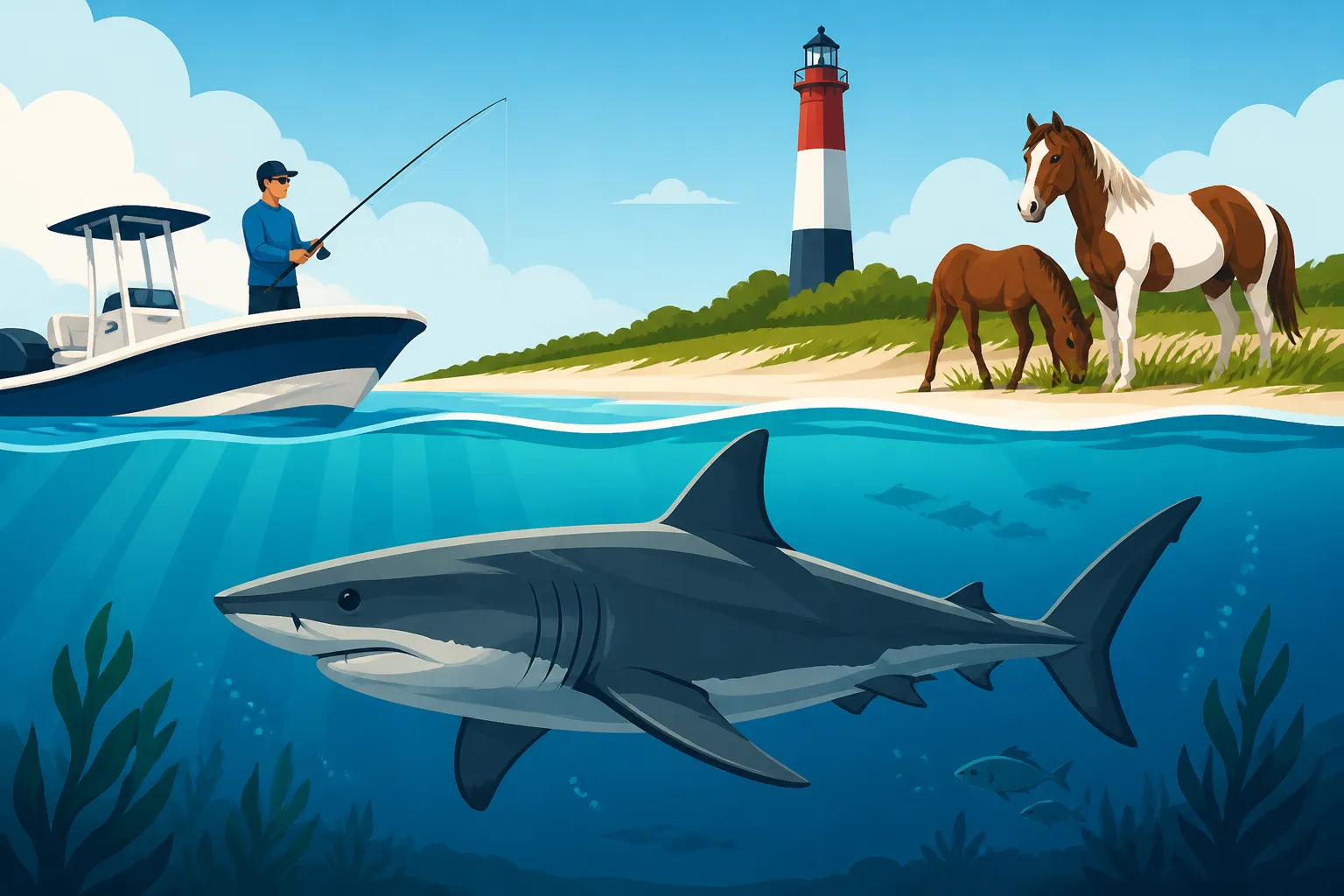
Sharks Found Near Assateague Island, Maryland
The thought of a shark fin slicing through the waves near our beloved Assateague Island can send a shiver down anyone's spine, especially when planning a relaxing beach day or an exciting surf fishing trip. It’s natural to feel a mix of awe and apprehension when you consider sharing the ocean with these magnificent predators. This comprehensive guide aims to demystify the sharks found near Assateague Island, offering clear, realistic information on which species you might encounter, why they are there, and how to safely enjoy the beautiful Maryland coast alongside them.
Common Shark Species Found Near Assateague Island
Assateague Island, with its dynamic surf, rich back bays, and proximity to the open Atlantic, is a vibrant ecosystem that supports a variety of marine life, including several shark species. While the image of a great white might be the first thing that springs to mind, the sharks you're most likely to encounter are far less formidable and play crucial roles in the local food web. Understanding who they are is the first step in appreciating their presence.
Coastal Sharks: Sandbar and Smooth Dogfish
When we talk about sharks near the Maryland coast, especially around Assateague, the sandbar shark and the smooth dogfish are probably the most common inhabitants. These aren't the monsters of sensationalized cinema; they are generally smaller, often wary of humans, and primarily focused on foraging for their natural prey.
Sandbar sharks are quite prevalent in the mid-Atlantic waters. They're typically found over sandy or muddy bottoms, often in estuaries, bays, and along coastal beaches, which makes Assateague an ideal habitat. Adults can reach impressive lengths, but younger, smaller sandbars are often encountered closer to shore. They have a distinctive tall, triangular dorsal fin and are a brownish-gray color, helping them blend into the seabed. Their diet usually consists of small fish, crabs, and other invertebrates. Anglers often encounter them while bottom fishing, and they can put up a surprisingly strong fight. While capable of biting if provoked, they are not considered a significant threat to swimmers and are generally quite timid around human activity. However, like any wild animal, they should be given respect and space.
Smooth dogfish, often affectionately called "dog sharks" by local anglers, are much smaller, typically only reaching lengths of a few feet. They are sleek, gray or brownish, and lack the sharp, pointed teeth usually associated with sharks; instead, they have flatter, crushing plates that are perfect for their diet of crabs, lobsters, and other crustaceans. You'll often find them in shallow coastal waters, even in the back bays of Assateague. They are incredibly common, and many a surf caster has reeled in a smooth dogfish, sometimes mistaking it for a larger species in the low light or excitement of the moment. These sharks are entirely harmless to humans, more akin to a bottom-feeding scavenger, and are a good indicator of a healthy inshore ecosystem.
Occasional Visitors: Hammerheads and Blacktips
Beyond the usual suspects, Assateague Island occasionally hosts other fascinating shark species that pass through its waters, particularly during warmer months when baitfish are abundant. These can include various hammerhead species and blacktip sharks.
Hammerhead sharks, particularly the smaller bonnethead and occasionally the larger scalloped or smooth hammerhead, can make appearances. Bonnetheads, easily identified by their shovel-shaped heads, are relatively small and primarily feed on crabs and other small invertebrates. They're often found in shallow, grassy areas and estuaries. Larger hammerheads, while impressive, tend to stay further offshore in deeper waters but can follow baitfish schools closer to the coast. Their distinctive head shape is thought to aid in electroreception and hunting, allowing them to scan a wider area for prey. While their size can be intimidating, interactions with humans are rare, and they are typically focused on their natural diet.
Blacktip sharks are another species that can migrate through the waters near Assateague, especially as ocean temperatures rise. These sharks are known for their acrobatic jumps out of the water while feeding, a spectacular sight if you're lucky enough to witness it from a safe distance. They get their name from the black tips on their fins. Blacktips are fast, agile predators that feed on schooling fish like menhaden and mullet, which are often found in the surf zone. They are generally not aggressive towards humans but can be curious, and incidents, though rare, have occurred where they've mistaken a swimmer's splashing for a schooling fish. If you're Surf Fishing at Assateague Island National Seashore, you might see them cruising just beyond the breaking waves.
Deepwater Species You Won't Encounter from Shore
It's important to remember that the vast majority of shark species inhabit the deeper, offshore waters of the Atlantic, far beyond where most beachgoers or even surf anglers will ever venture. While species like Mako sharks, Thresher sharks, and even the occasional Great White shark certainly swim in the broader Atlantic Ocean off the coast of Maryland, they are highly unlikely to be encountered from the beaches of Assateague. These pelagic species prefer the open ocean, often chasing larger prey like tuna or marine mammals.
Anglers venturing far offshore on deep-sea charters out of Ocean City might encounter some of these larger predators, but from the perspective of someone enjoying the surf or wading in the shallows at Assateague, these species are generally not a concern. The marine environment shifts dramatically just a few miles offshore, and with it, the types of aquatic life, including sharks, change as well. Our focus here is on the immediate coastal environment that average visitors will experience, emphasizing that the species posing any conceivable risk are almost exclusively the larger coastal sharks, and even then, incidents are exceedingly rare.
Understanding Shark Behavior and Habitat
To truly appreciate and safely coexist with sharks around Assateague Island, it's essential to understand why they are there and what they are doing. Sharks are not mindless predators; they are intricate parts of the marine ecosystem, driven by instinct and the constant search for food and suitable environments. Their movements and habits are largely predictable if you know what to look for.
Why Sharks Come Close to Shore
Sharks don't typically "hunt" humans, and their presence near shore is almost always tied to the availability of their natural food sources. The surf zone and nearshore waters of Assateague are incredibly rich environments. These areas often teem with baitfish – schools of mullet, bunker (menhaden), and spot – as well as crustaceans like crabs and shrimp, and various smaller bottom-dwelling fish. When these prey species congregate near the beach, their predators, including sharks, will naturally follow.
Coastal sharks like sandbar sharks and blacktips utilize these shallower waters for feeding, especially during twilight hours or periods of lower light, which offer them an advantage. Juvenile sharks, too, often seek refuge in shallower, warmer waters to avoid larger predators and find abundant food sources for growth. The dynamic nature of the ocean, with its shifting sandbars and currents, creates fertile feeding grounds that are irresistible to many marine animals. Additionally, temperature plays a huge role; as the ocean waters warm throughout the spring and summer, more species, including sharks, migrate northward into these areas, following the warmer currents and the food that thrives within them.
Feeding Habits and Preferred Prey
The feeding habits of sharks found near Assateague are incredibly diverse and directly influence where and when they might be encountered. Smooth dogfish, for instance, are primarily benthic feeders, meaning they forage along the bottom for crabs, lobsters, and other shellfish. You're unlikely to see one of these chasing a large school of fish in the surf. Their "teeth" are designed for crushing, not tearing, making them highly specialized for their crustacean diet.
Sandbar sharks, while more generalized predators, still prefer smaller fish like menhaden, herring, eels, and bottom-dwelling crabs. They are opportunistic feeders but typically avoid large, complex prey. When a school of baitfish is "balled up" in the surf, it's a prime target. Blacktip sharks are known for their lightning-fast strikes on schooling fish, often leaping clear of the water in a dramatic display of hunting prowess.
Understanding these preferences helps us realize that sharks are not seeking out humans. They are simply responding to the scent, sight, or vibrations of their preferred meals. Avoiding swimming or fishing in areas where there's a visible abundance of baitfish, or where fishermen are cleaning fish and discarding carcasses, can help reduce the chances of inadvertently attracting a shark's attention. Think about what's attracting them – if it's not you, you're usually safe.
Seasonal Patterns and Migrations
Just like birds migrate with the seasons, many shark species undertake impressive migrations driven by water temperature and food availability. The waters off Assateague Island experience distinct seasonal changes, and with them, the shark population fluctuates.
Spring often sees the arrival of some species as the water begins to warm. As summer progresses and ocean temperatures peak, you'll generally find the highest diversity and abundance of sharks in the area. This is when baitfish are most plentiful, and species like blacktips and various hammerheads might be seen closer to shore. Best Time of Year to Fish in Maryland often coincides with these warmer waters and abundant marine life. As fall approaches and the waters cool, many of these species begin their southward migration to warmer wintering grounds.
For instance, sandbar sharks have distinct pupping grounds, and juveniles might be more prevalent in specific nursery habitats during certain times of the year. Knowing these seasonal patterns can help beachgoers and anglers understand the natural ebb and flow of marine life. If you're visiting Assateague in the colder months, your chances of encountering a shark are significantly lower than in the peak of summer, simply because many species have moved on. This natural rhythm is a vital part of the coastal ecosystem and helps manage the populations of various marine species.
Shark Safety Tips for Assateague Visitors
While shark encounters are extremely rare and bites are even rarer, it's always wise to exercise caution and awareness when entering any wild environment, especially the ocean. Being proactive and understanding how to minimize potential risks can help ensure a safe and enjoyable experience for everyone visiting Assateague Island. Remember, you are entering their home, and respecting that is key.
Swimming Smart: Avoiding Risky Situations
The vast majority of shark encounters with humans are accidental, often a case of mistaken identity or curiosity. By following a few simple guidelines, you can significantly reduce any potential risks while swimming or recreating in the ocean at Assateague.
Firstly, avoid swimming at dawn, dusk, or night. These are prime feeding times for many shark species, and reduced visibility makes it harder for both you and any marine life to accurately identify each other. Stick to daylight hours when possible. Secondly, always swim in groups. There's safety in numbers, and a larger group presents a more intimidating presence to any curious marine creature. Avoid swimming alone or too far from shore. If you're a strong swimmer, you might feel comfortable venturing out, but it’s always better to stay within designated swimming areas where lifeguards are present and can monitor conditions.
Another critical tip is to avoid splashing excessively or wearing shiny jewelry. Erratic movements and reflective items can mimic the appearance or behavior of struggling prey, which might attract a shark's attention. If you see large schools of baitfish, or if there's evidence of fish activity (like birds diving and feeding), consider choosing another spot to swim. This indicates that predators, including sharks, might be actively feeding in the area. Finally, if you have any open wounds or are menstruating, it's generally advised to stay out of the water, as sharks have an incredibly keen sense of smell. Being mindful of these practices doesn't mean living in fear, but rather being a responsible and informed ocean user.
Fishing Responsibly to Minimize Encounters
For those who love to fish the productive waters around Assateague, especially Surf Fishing at Assateague Island National Seashore, responsible practices are paramount to minimizing unwanted shark encounters. Your fishing activities, while enjoyable, can inadvertently attract sharks if not managed carefully.
The most important rule for anglers is to avoid cleaning fish in the water or near swimming areas. Discarding fish carcasses or entrails directly into the surf is like ringing the dinner bell for any scavenger or predator in the vicinity, including sharks. Instead, bag your scraps and dispose of them properly on land, or clean your catch well away from popular beach areas.
When reeling in fish, especially struggling ones, be aware that their distress can attract larger predators. If you hook a shark accidentally, cut the line as close to the shark as safely possible to avoid injuring yourself or the animal. Never try to bring a large shark onto the beach or boat without proper training and equipment. Keep your distance and respect its power. Some anglers use wire leaders when targeting toothy species, which might be overkill for smaller coastal sharks, but it’s a consideration for certain setups. Be especially careful when handling bait, and rinse off any fish blood or scent from your hands and gear before swimming or wading. Many anglers find high-quality fishing gloves helpful, not only for protection from hooks and teeth but also for minimizing the transfer of scent.
First Aid and Emergency Protocols
Despite all precautions, accidents can happen in any outdoor activity. While shark bites are incredibly rare, being prepared for any medical emergency while at Assateague is a wise idea. This preparation isn't just for shark incidents; it applies to jellyfish stings, cuts from shells, or other common beach mishaps.
Always carry a well-stocked first-aid kit, especially if you're venturing to more remote sections of Assateague. Kits available on Amazon often include antiseptic wipes, bandages, gauze, and tape, which are essential for treating minor injuries. For serious incidents, immediate medical attention is crucial. Know where the nearest ranger stations or medical facilities are located. On Assateague, emergency services can be reached by calling 911.
If a shark incident were to occur, the immediate steps are to get the person out of the water, apply direct pressure to the wound to control bleeding, and seek emergency medical help without delay. Keep the person calm and warm, and monitor for signs of shock. It’s also helpful to have a communication device, such as a fully charged cell phone, readily available. While the chances of needing this protocol for a shark bite are incredibly slim, being informed and prepared for any emergency is a fundamental aspect of responsible outdoor recreation.
Identifying Sharks: A Visual Guide
Being able to identify different shark species can turn a moment of fear into one of fascination. While it's best to maintain a respectful distance from any wild animal, knowing the general characteristics of the sharks you might see around Assateague Island can help you assess a situation calmly and appreciate the diversity of marine life.
Key Features for Different Species
Each shark species has unique characteristics that help distinguish it from others. Knowing what to look for can be incredibly helpful.
Sandbar Shark:
- Dorsal Fin: Large, triangular first dorsal fin that originates over or slightly in front of the pectoral fins. This is often the most visible feature.
- Coloration: Gray or brownish-gray on top, fading to white on the belly.
- Size: Can grow to 6-8 feet, but juveniles (the ones most likely to be closer to shore) are smaller.
- Snout: Relatively long and rounded.
- Habitat: Commonly found over sandy or muddy bottoms in coastal waters, estuaries, and bays.
Smooth Dogfish:
- Dorsal Fin: Two dorsal fins of similar size, without spines.
- Coloration: Sleek, gray to brownish-gray, no spots or markings.
- Size: Small, typically 3-4 feet.
- Teeth: Flat, blunt crushing plates, not sharp, pointed teeth.
- Habitat: Very common in shallow coastal waters and bays, often over muddy or sandy bottoms.
Blacktip Shark:
- Fin Markings: Distinctive black tips on the pectoral, dorsal, and anal fins, and often on the tail.
- Body Shape: Streamlined and fast-looking.
- Size: Generally 5-6 feet.
- Behavior: Known for leaping out of the water while feeding.
- Habitat: Coastal, often found near baitfish schools in the surf.
Bonnethead Shark (a type of Hammerhead):
- Head: Distinctive shovel-shaped head, much narrower than larger hammerhead species.
- Size: Small, usually 2-3 feet.
- Coloration: Grayish-brown on top, lighter underneath.
- Diet: Primarily crabs and crustaceans.
- Habitat: Often in shallow, grassy, estuarine environments.
Observing these features from a distance, perhaps with the aid of binoculars, can be a rewarding experience. Never approach a shark for a closer look.
Distinguishing Sharks from Other Marine Life
Sometimes, what appears to be a shark fin can actually be another marine creature. Misidentification is common, especially when visibility is poor or the animal is far away.
Dolphins: Dolphin dorsal fins are often confused with shark fins. The key difference is movement. Dolphin fins typically move with an undulating, rolling motion as the animal surfaces and dives, whereas a shark's dorsal fin usually stays rigid and slices through the water in a straight line. Dolphins also tend to surface in rapid succession for breaths, often in groups. The dorsal fin of a dolphin is also typically more curved or hooked than the straighter, more triangular fins of most coastal sharks.
Sunfish (Mola Mola): These bizarre-looking fish have very tall, narrow dorsal and anal fins that can appear shark-like when they cruise near the surface. However, their fins are usually accompanied by a similar-looking anal fin, and their overall body shape is unmistakably distinct if you get a fuller view. They move quite slowly compared to a shark.
Large Fish: Other large fish, like red drum or even very large striped bass, might create a wake or disturb the water in a way that could momentarily be mistaken for a shark. However, they lack the prominent, rigid dorsal fin of a shark. Learning about Red Drum Along Maryland's Coast can help distinguish them.
The key is to observe the overall behavior, shape, and movement. When in doubt, err on the side of caution and give the animal plenty of space.
Using Field Guides and Local Resources
For the truly curious, diving deeper into marine biology can be fascinating. A good marine life field guide can be an invaluable tool for identifying species you might encounter, whether it's a shark, a bird, or a unique shell. Many excellent guides are available, often illustrated with clear drawings or photographs, and can be purchased from retailers like Amazon. Having one handy on your beach trip or fishing excursion can enhance your understanding and appreciation of the natural world.
Beyond printed guides, Maryland's Department of Natural Resources (DNR) is an excellent resource. They often publish information on marine life, fishing regulations, and safety guidelines. Consulting resources like Maryland's DNR Fishing and Boating Guide, Explained can provide up-to-date local information specific to the waters around Assateague. Additionally, local nature centers and visitor information kiosks on Assateague Island often have displays or knowledgeable staff who can share insights into the local ecosystem. Engaging with these resources can transform an unknown fin in the water into a recognizable, and less intimidating, part of the vibrant marine community.
The Role of Sharks in Maryland's Ecosystem
Sharks are often portrayed as villains, but in reality, they are vital components of healthy marine ecosystems. Their presence in the waters around Assateague Island is not just a curiosity; it's an indicator of a thriving and balanced environment. Understanding their ecological role helps us shift from fear to appreciation for these magnificent creatures.
Top Predators: Maintaining Ocean Health
As apex predators, sharks play a critical role in maintaining the health and balance of the marine food web. They help control the populations of other species, ensuring that no single group overpopulates and depletes resources. By preying on the weak, sick, or slower individuals, sharks also contribute to the overall fitness and genetic strength of their prey populations. It's a harsh but necessary aspect of nature.
Imagine an ecosystem without sharks: populations of certain fish species could explode, leading to overgrazing of marine plants or shellfish beds, which in turn could disrupt the entire food chain. Sharks are nature's ocean clean-up crew, removing carrion and preventing the spread of disease. Their role at the top of the food chain trickles down, affecting everything from plankton blooms to the health of coral reefs (though less so around Assateague's sandy shores). When you see sharks, it's a sign that the system below them is robust enough to support them. The absence of sharks can often signal a struggling or unhealthy marine environment.
Assateague's Unique Marine Environment
Assateague Island's diverse habitats—from its windswept ocean beaches to its calmer bay-side marshes and channels—create a perfect mosaic for various shark species. The constant influx of nutrient-rich water from the ocean and the protection offered by the barrier island structure create ideal conditions for a wide array of marine life.
The surf zone, with its breaking waves, acts as a natural conveyor belt, bringing in small baitfish and invertebrates, making it a prime feeding ground for species like blacktip and sandbar sharks. The shallow, warmer waters of the back bays offer nursery habitats for juvenile sharks, providing them with protection from larger predators and ample food to grow. Even the deep channels within the bay and just offshore provide corridors for larger species to traverse. This varied landscape supports not only the resident sharks but also many migratory species that pass through, following the seasonal changes and abundant food sources. Learning about Bayside vs Oceanside Fishing at Assateague highlights these different environments and the distinct species they host.
Conservation Efforts and Why They Matter
Many shark populations worldwide are facing significant threats, primarily from overfishing and habitat degradation. While the species found near Assateague are generally more robust than some of the more endangered deep-sea sharks, their populations still benefit from thoughtful conservation efforts. Maryland, along with federal agencies, has regulations in place to manage shark populations, including size limits and quotas for certain species.
Conservation of sharks isn't just about protecting a single species; it's about safeguarding the health of the entire ocean. Healthy shark populations mean a healthy ocean, which benefits all marine life and, ultimately, us. Support for sustainable fishing practices, reduction of plastic pollution, and protection of coastal habitats are all critical components of shark conservation. Anglers can contribute by practicing catch-and-release, especially for protected species, and by minimizing stress on any accidentally hooked sharks. Education plays a huge role too; by understanding sharks, we can dispel misconceptions and foster a greater appreciation for their place in the natural world.
Dispelling Myths and Facing Realities
The media often sensationalizes sharks, creating an image of relentless, bloodthirsty hunters. While the power and mystique of sharks are undeniable, the reality of their interactions with humans, especially in places like Assateague Island, is far less dramatic and much more nuanced. It's time to separate fact from fiction.
The Truth About Shark Attacks
Let's get this straight: actual unprovoked shark attacks are incredibly rare, especially when compared to the millions of people who enter the ocean each year. The chances of being bitten by a shark are astronomically low, far less than being struck by lightning, getting into a car accident, or even being injured by a falling coconut. Most incidents that do occur are often cases of mistaken identity, where a shark confuses a splashing swimmer or surfer with a natural prey item like a seal or a schooling fish.
Sharks are not interested in humans as food. We are not part of their natural diet, and our bony composition and unfamiliar taste make us unappealing. When a shark does bite a human, it's often a "test bite" or an exploratory nip, after which the shark typically realizes its mistake and retreats. The injuries can be severe, of course, but the intent is usually not predatory in the way we often imagine. This is not to downplay the seriousness of any incident, but rather to put the risk into a realistic perspective. The vast majority of people who visit Assateague Island will never even see a shark, let alone have an encounter. Are Sand Sharks Dangerous to Swimmers at Assateague? directly addresses this common fear with realism.
Sensationalism vs. Scientific Fact
Unfortunately, news headlines and movies often thrive on sensationalism, perpetuating myths about sharks that are far from scientific reality. The image of a rogue shark specifically hunting humans is a powerful narrative, but it's largely fictional. Scientific research has shown that sharks are complex creatures with specific ecological roles, not monsters.
For example, the idea of a "shark frenzy" triggered by a drop of blood is largely overblown. While sharks do have an incredible sense of smell and can detect minute traces of blood, a small cut on a swimmer is highly unlikely to trigger a mass feeding event. Their hunting behavior is typically much more calculated and focused on natural prey. Similarly, the notion that all sharks are enormous, razor-toothed predators ready to devour anything in their path ignores the vast diversity of shark species, many of which are small, harmless, and feed on crustaceans or plankton. Relying on reputable scientific sources, conservation organizations, and local fisheries departments for information helps combat these misleading narratives.
Coexisting with Marine Predators
Ultimately, learning to coexist with sharks is about understanding and respecting the marine environment. When we enter the ocean, we are visitors in their habitat. By following common-sense safety guidelines and educating ourselves about shark behavior and ecology, we can enjoy the beauty of Assateague Island without undue fear.
Instead of seeing sharks as threats, consider them as indicators of a healthy and vibrant ecosystem. Their presence signifies that the waters are teeming with life, from the smallest baitfish to the largest predators. For those who enjoy fishing, understanding the local fish populations, including species like Maryland Striped Bass Season and Rockfish Rules or Maryland Flounder Size Limit, can help you select appropriate gear and techniques that minimize incidental shark catches. Equipping yourself with knowledge, perhaps from a well-regarded marine biology book from Amazon, empowers you to make informed decisions and appreciate the ocean's intricate balance. It's about shifting our perspective from fear to respect, allowing us to share our coastlines responsibly with all its inhabitants.
| Shark Species | Typical Size (Feet) | Primary Diet | General Behavior | Threat to Humans (Unprovoked) | Common Habitat Near Assateague |
|---|---|---|---|---|---|
| Sandbar Shark | 4-8 | Small fish, crabs | Generally timid, bottom feeder | Very Low | Surf zone, nearshore, estuaries |
| Smooth Dogfish | 2-4 | Crabs, shellfish | Very docile, bottom scavenger | None | Shallow coastal waters, back bays |
| Blacktip Shark | 5-6 | Schooling fish | Fast, agile, can leap while feeding | Very Low | Surf zone, nearshore, baitfish schools |
| Bonnethead Shark | 2-3 | Crabs, small fish | Skittish, bottom feeder | None | Shallow estuaries, grassy flats |
Disclaimer
This article is for general informational purposes only and does not constitute professional advice. Laws, prices and regulations vary by location and change over time. Consult a qualified professional for guidance on your specific situation.