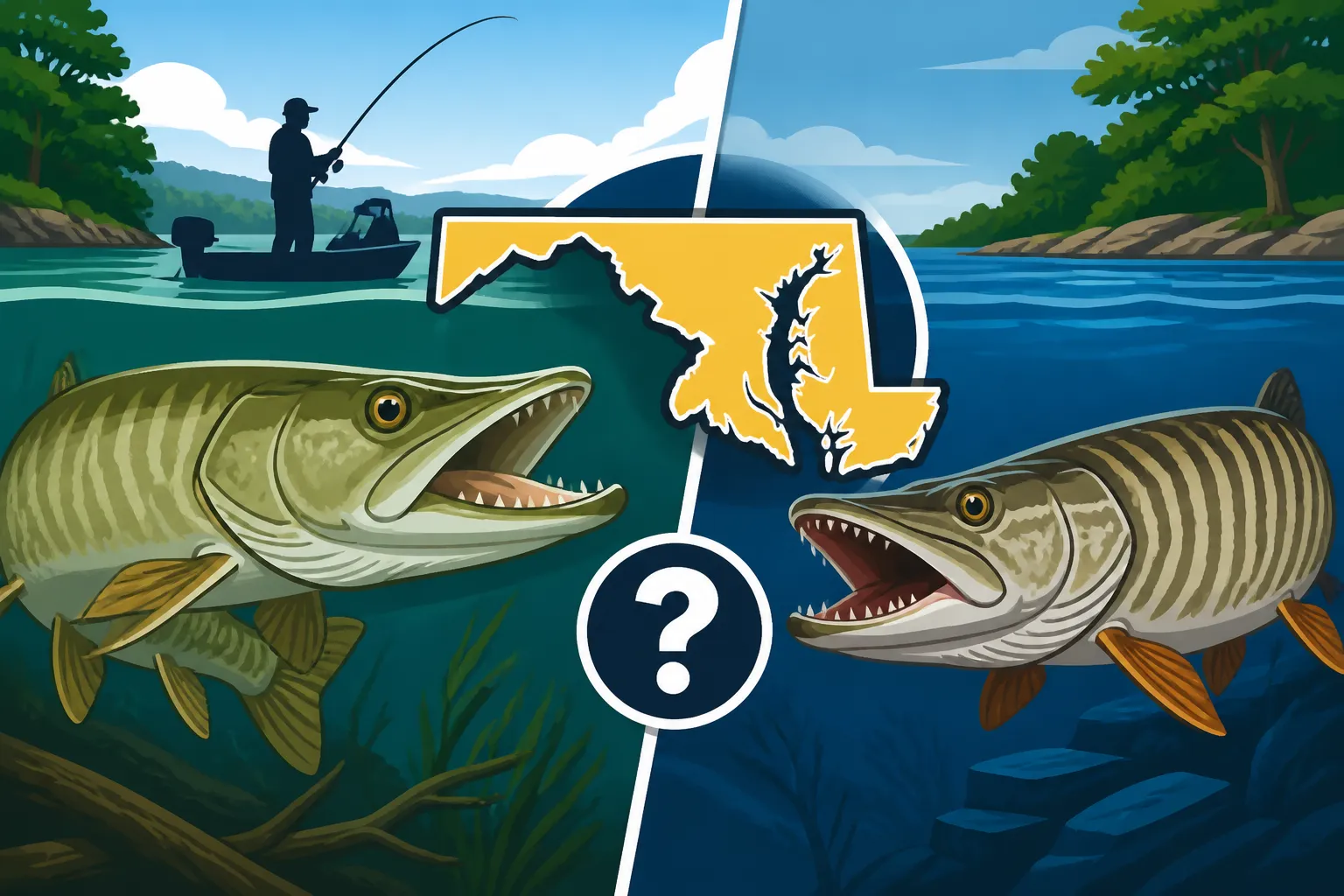
Do Maryland Lakes Have Muskellunge or Tiger Muskie?
It's a question many dedicated anglers find themselves asking, often whispered with a mix of hope and skepticism: "Are there really muskie or tiger muskie lurking in Maryland's waters?" For those who dream of battling one of freshwater's most elusive and formidable predators, the idea of finding them right here in the Old Line State can be incredibly exciting. This guide will dive deep into the presence of these magnificent fish in Maryland, explore where they might be found, and discuss what it takes to pursue them.
Understanding Maryland's Muskie and Tiger Muskie Question
Before we get into specific locations, let's clarify what we're talking about when we mention "muskie" and "tiger muskie." They're often lumped together, but there are distinct differences that are important for anglers to understand.
What's the Difference Between a Muskie and a Tiger Muskie?
Muskellunge (or "muskie" for short) are a pure species, Esox masquinongy. They are native to cooler, larger lakes and rivers across the northern United States and Canada, known for their solitary nature and incredible fighting prowess. These are the giants of the pike family, often reaching impressive lengths and weights. A pure muskie typically has dark markings (bars or spots) on a lighter body, though coloration can vary. Their caudal fin (tail) is deeply forked, and they possess a menacing set of teeth that are legendary among anglers.
Tiger muskie, on the other hand, are a sterile hybrid. They are the result of cross-breeding a true muskellunge with a northern pike (Esox lucius). The "tiger" in their name comes from their distinctive pattern: dark, irregular, vertical bars or spots that resemble tiger stripes, often on a lighter green or silver background. Because they are a hybrid, they tend to grow faster and are often considered a bit more aggressive than pure muskie, sometimes making them a popular choice for stocking programs in waters where pure muskie might struggle. They share the muskie's powerful build and impressive size, making them equally challenging and rewarding to catch. In Maryland, if you hear talk of "muskie," it's almost certainly a reference to tiger muskie due to stocking history.
The Lure of These Apex Predators
Why do anglers get so excited about muskie and tiger muskie? It's simple: they are the ultimate freshwater trophy fish. Often referred to as "the fish of 10,000 casts," their elusiveness is legendary. They are ambush predators, often hiding in submerged structure or weed lines, waiting for the opportune moment to strike. When they do, the strike is explosive, and the fight is often violent, testing an angler's gear and resolve.
Catching a muskie isn't just about landing a fish; it's about the entire experience—the dedication, the hours of casting, the specialized techniques, and the incredible reward of finally fooling such a wary and powerful creature. They command respect, and their pursuit fosters a unique camaraderie among those who chase them. Many anglers consider it the pinnacle of freshwater fishing, and the dream of landing a true Maryland "toothie" is a powerful motivator.
The Reality: Where Muskie Could Be in Maryland
So, down to brass tacks: do Maryland lakes have muskellunge or tiger muskie? The answer is a nuanced "yes," but with significant caveats. Maryland isn't exactly a muskie hotbed like some northern states, but efforts have been made to introduce and maintain populations of primarily tiger muskie in very specific locations.
Deep Creek Lake: Maryland's Primary Muskie Haven
If there's one place in Maryland where the dream of catching a muskie (specifically, a tiger muskie) is most realistic, it's Deep Creek Lake in Garrett County. This large, deep, cold-water lake in Western Maryland offers the kind of habitat that these powerful fish appreciate. Historically, Deep Creek Lake has been the focus of stocking efforts by the Maryland Department of Natural Resources (DNR) to establish a viable population of tiger muskie. These stockings have aimed to create a unique trophy fishery in the state's largest freshwater lake.
Anglers targeting Deep Creek Lake often report seeing or occasionally catching large tiger muskie here, though they remain an elusive catch. The lake's clear waters, abundant forage fish, and diverse structure provide a challenging but rewarding environment for those dedicated to their pursuit. It’s not uncommon to hear tales of massive follows or sudden, brutal strikes from these freshwater leviathans. If you're going to commit to a muskie hunt in Maryland, Deep Creek Lake is undoubtedly your best bet. You'll want to be familiar with the lake's geography, including its deeper channels, submerged timber, and extensive weed beds, which are prime ambush points for these predators.
Upper Potomac River: A Faint, Historic Whisper
While Deep Creek Lake is the primary focus for tiger muskie today, there's a historical connection to pure muskellunge in the Upper Potomac River, particularly in the stretches bordering West Virginia. In decades past, some true muskellunge were stocked in parts of the Potomac, sometimes as part of interstate efforts. These fish would have faced challenges in establishing widespread, self-sustaining populations due to water temperatures and habitat suitability in all areas, but some very dedicated anglers might still tell you stories of the occasional, rare muskie sighting or catch in the river.
Today, finding a pure muskellunge in the Fishing the Potomac River in Maryland is exceptionally rare, bordering on anecdotal. Most anglers targeting larger predators in the Potomac would be focusing on species like smallmouth bass, or the more abundant and invasive blue catfish and northern snakehead. If any muskie persist, they would be incredibly sparse and highly localized, making them truly the fish of a lifetime if encountered. For practical purposes, when planning a muskie trip in Maryland, the Upper Potomac is not where you'd typically focus your efforts for a consistent chance.
The Story of Stocking Efforts
Maryland's muskie and tiger muskie story is largely one of intentional stocking. Unlike some states where pure muskellunge are native, Maryland's populations are primarily sustained through the release of hatchery-reared tiger muskie. The DNR periodically stocks tiger muskie fingerlings or juveniles into Deep Creek Lake to supplement and maintain the fishery. These stockings are carefully planned to ensure genetic viability and to provide future trophy opportunities for anglers.
The goal of stocking these hybrids is often to provide a unique angling experience and to help control populations of panfish or other forage species without introducing a new self-sustaining, potentially problematic predator. Since tiger muskie are sterile, they cannot reproduce naturally, meaning their numbers are entirely dependent on continued stocking efforts. This is a critical factor for anglers to remember; without these programs, the chances of encountering a muskie in Maryland would be virtually zero. These efforts highlight the commitment to diversifying Maryland's fishing landscape, offering something truly special for those willing to put in the time and effort.
Pursuing Muskie in Maryland: Gear, Strategy, and Regulations
If you're serious about chasing muskie or tiger muskie in Maryland, you'll need to adjust your mindset and your tackle box. This isn't your everyday panfish outing.
Specialized Gear for the Toothiest Challenge
Muskie fishing demands heavy-duty gear built to withstand powerful strikes and long, grueling fights. Forget your ultralight spinning rod; we're talking about serious equipment here.
- Rods: You'll need a long, heavy-action casting rod, typically 7 to 9 feet in length. This extra length helps with casting large lures and controlling powerful fish.
- Reels: A sturdy baitcasting reel with a high retrieve ratio is essential. Muskie lures are often large and heavy, requiring a robust reel to handle the torque. You'll want a reel that can quickly pick up slack line, which is crucial when a muskie makes a sudden run or changes direction.
- Line: Braided line, usually in the 80 to 100-pound test range, is the standard. Its lack of stretch provides excellent sensitivity for detecting subtle takes and incredible strength for muscling fish out of heavy cover.
- Leaders: This is non-negotiable. Muskie and tiger muskie have rows of razor-sharp teeth that will easily slice through standard fishing line. A heavy fluorocarbon leader (100-150 lb test) or a steel wire leader is absolutely necessary. Attach it with strong swivels and snaps that can handle the stress. You can find robust leader material and other specialized tackle on Amazon or at dedicated fishing shops.
- Lures: Muskie lures are often massive. Think large bucktails, oversized crankbaits, jerkbaits, glide baits, and topwater lures that can be 8 to 12 inches long, sometimes even more. These lures are designed to provoke an aggressive strike from a territorial predator. The cost of muskie lures can be substantial, so be prepared to invest in a few key presentations.
- Landing Gear: A large, rubberized net designed specifically for muskie is critical for safe handling and release. Standard bass nets simply won't cut it. Long-nose pliers or specialized jaw spreaders are also vital for safely removing hooks from a toothy maw.
This specialized gear isn't just about catching the fish; it's also about angler safety and, more importantly, the fish's well-being for catch-and-release, which is often encouraged or even required.
Patience, Persistence, and a Plan
Muskie fishing is a mental game as much as a physical one. They are called the "fish of 10,000 casts" for a reason. You might spend an entire day, or even several days, casting large, heavy lures, covering vast amounts of water, without a single bite. But it only takes one.
A successful muskie angler in Maryland needs a solid plan. Research the specific waterbody you're fishing, like Deep Creek Lake. Look for areas with submerged structure, drop-offs, weed edges, and points where muskie might ambush prey. Focus your efforts during prime feeding windows, often at dawn, dusk, or during periods of changing weather conditions. Best Time of Year to Fish in Maryland for muskie can often be cooler months in the spring or fall when they are more active.
Vary your retrieve speeds and lure presentations. A common technique is the "figure-eight" at the boat, where you draw the lure in a large figure-eight motion right beside the boat before lifting it out of the water. This can often trigger a follow or strike from a muskie that has been tailing your lure. Every cast is an opportunity, and every retrieve is a chance to entice a bite. It's a sport for the truly dedicated, and the reward is immense.
Important Regulations and Conservation
Maryland DNR has specific regulations for muskie and tiger muskie, especially in Deep Creek Lake. These regulations are designed to protect the trophy fishery and ensure sustainable angling opportunities. Always consult the latest Maryland Fishing and Boating Guide or the DNR website before your trip to verify current size limits, creel limits, and any special restrictions. Often, muskie are managed with very restrictive slot limits or high minimum sizes, emphasizing their status as a trophy fish.
Conservation is paramount in muskie fishing. Many muskie anglers practice catch and release exclusively, recognizing the value of these slow-growing fish. Proper handling techniques are crucial for ensuring the survival of released fish:
- Minimize Time Out of Water: Get the fish in the net, unhook it, and get it back in the water as quickly as possible for photos, or better yet, take photos of the fish while it's still partially submerged.
- Wet Hands: Always wet your hands before touching the fish to protect its slime coat.
- Support the Fish: If you must lift it, support its body horizontally with one hand under the belly and the other gripping the lower jaw. Never hang a large muskie vertically by its jaw.
- Revive Carefully: If the fish seems sluggish, hold it upright in the water, facing into the current, until it regains strength and swims off on its own.
These practices are not just suggestions; they are vital for preserving the limited muskie and tiger muskie fishery in Maryland.
Other Large, Hard-Fighting Fish in Maryland Waters
While the pursuit of muskie and tiger muskie is certainly captivating, Maryland offers other incredible opportunities to tangle with large, aggressive freshwater predators. If you're looking for a serious fight but muskie aren't biting, these species can provide excellent action.
Northern Pike: The Other Esocid
Yes, Maryland has northern pike! While not as widespread as in some northern states, Northern Pike in Maryland's Western Waters are found in a few specific locations, most notably in parts of Western Maryland, including Deep Creek Lake, and occasionally in some larger reservoirs or river systems. Northern pike are another member of the Esox family, sharing the muskie's torpedo-shaped body and sharp teeth. They are aggressive ambush predators, known for their explosive strikes and powerful runs.
Pike fishing often involves similar tackle to muskie fishing, though you can usually get away with slightly lighter gear. Large spoons, spinnerbaits, and crankbaits are effective. Like muskie, they love weed beds, submerged structure, and drop-offs. Catching a large pike can be just as thrilling as a muskie, offering a fantastic challenge to anglers looking for a serious freshwater battle. Anglers might wonder How Big Do Northern Pike Get in Maryland?, and the answer is they can reach impressive sizes, often exceeding 10-15 pounds, with some even larger.
Northern Snakehead: An Invasive Apex Predator
If you're looking for an aggressive, hard-fighting, toothy predator that is much more common and encouraged for harvest in Maryland, look no further than the Northern Snakehead in Maryland Waters. These invasive fish have established thriving populations in many of Maryland's tidal rivers and creeks, particularly in the Potomac River system and on the Eastern Shore. Unlike muskie, snakeheads are not native and pose a threat to native species, so anglers are actively encouraged to remove them from the ecosystem.
Snakeheads are voracious predators, known for their explosive topwater strikes and incredibly powerful fights. They inhabit shallow, weedy areas, often found in lily pads, dense grass, and submerged timber. Fishing for snakeheads often involves using weedless topwater frogs, chatterbaits, or large swimbaits. The fight from a snakehead is often described as brutal, with head shakes and powerful surges that will test your tackle. The best part? There are generally no size or creel limits on snakeheads in Maryland, and they are excellent eating!
Trophy Largemouth Bass: A More Common Challenge
For those who enjoy targeting large, powerful fish but want a more accessible option, Maryland offers fantastic opportunities for Largemouth Bass Fishing in Maryland. While not in the same league as muskie in terms of sheer size, a trophy largemouth bass in Maryland can still provide a heart-pounding fight and requires skill and patience to catch. Many Maryland lakes and reservoirs, like Loch Raven, Liberty Reservoir, and countless smaller ponds, hold impressive populations of big bass.
Largemouth bass are known for their aggressive strikes and aerial acrobatics. They can be found in a variety of habitats, from shallow weed beds to deep structure, and can be caught using a wide array of baits, from plastic worms and jigs to crankbaits and topwater lures. Targeting Best Lakes in Maryland for Trophy Largemouth Bass can be a rewarding experience for those who appreciate the challenge of outsmarting a cunning predator. They may not have the mystique of a muskie, but a 5-pound-plus largemouth is still a fantastic catch, and much more common across the state.
Disclaimer
This article is for general informational purposes only and does not constitute professional advice. Laws, prices and regulations vary by location and change over time. Consult a qualified professional for guidance on your specific situation.