Fishing Maryland’s Channel Edges and Drop-Offs for Striped Bass
It can be incredibly frustrating to head out onto the vast expanse of the Chesapeake Bay, staring at endless miles of water, and wonder where on earth the striped bass are hiding. While rockfish (as we call them here in Maryland) can be found in many different habitats, some of the most consistent and productive spots are the subtle, yet crucial, channel edges and drop-offs that crisscross our waters. This guide will dive deep into understanding these underwater highways and how to effectively fish them for striped bass.
Why Channel Edges and Drop-Offs Are Striped Bass Magnets
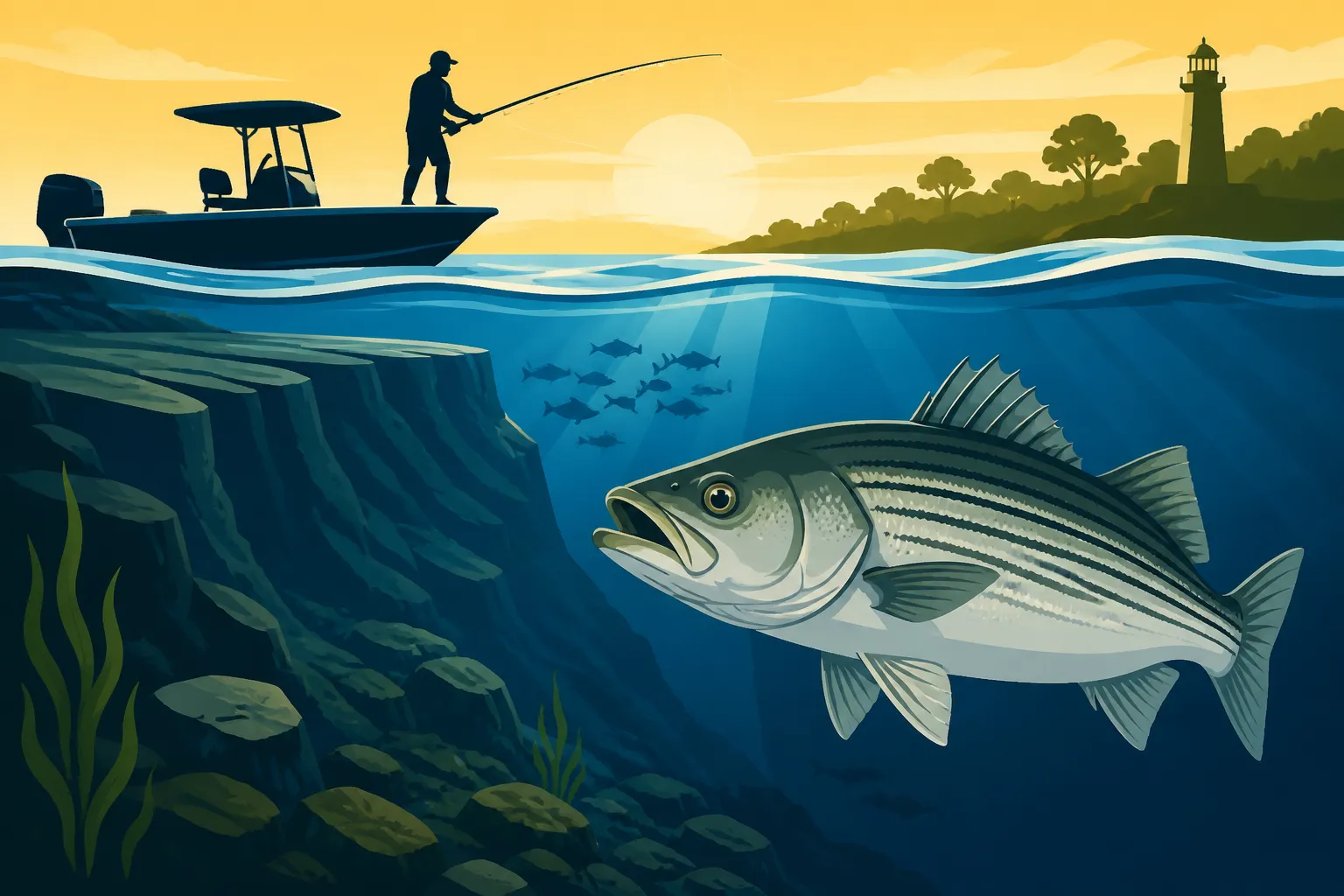
When you're trying to locate fish, especially a migratory predator like the striped bass, understanding their preferred habitats is half the battle. Channel edges and drop-offs aren't just random underwater features; they are dynamic zones that concentrate baitfish and, by extension, the striped bass that feed on them. Think of them as underwater highways with convenient rest stops and feeding stations.
Concentrating Baitfish and Prey
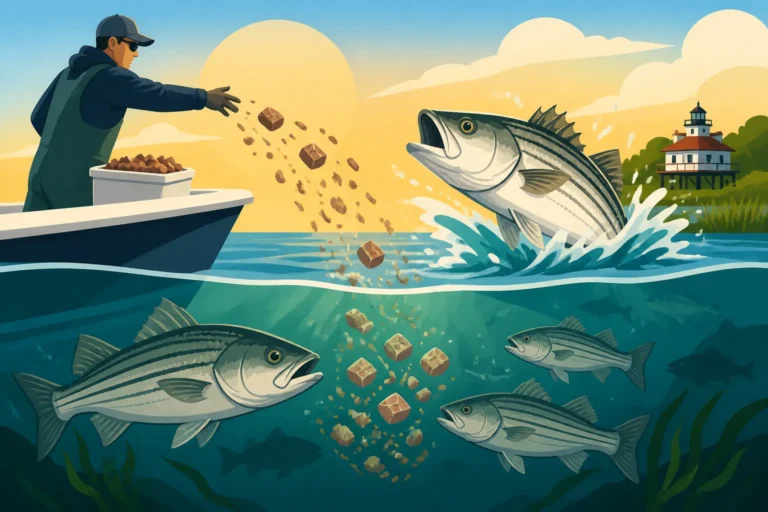
The primary reason these areas are so effective is their role in concentrating bait. As currents move through the Chesapeake Bay, they often run faster along the deeper channels and scour the edges. This action disorients baitfish like bunker (Atlantic menhaden), spot, and even smaller perch, making them easier targets for predators. The abrupt change in depth also provides a natural barrier or ambush point.
Imagine a school of baitfish happily swimming along in 10 feet of water, and suddenly, they encounter a sheer drop-off to 25 feet. Their natural instinct might be to stick close to the shallower water, but the current can push them over the edge. Striped bass, being opportunistic predators, will often position themselves right along that drop, waiting for an easy meal to be swept their way. Furthermore, the varying depths often create eddies and slack water, giving bait a place to hide and feed, which in turn draws in the bigger fish. This consistent food source makes these areas prime hunting grounds for striped bass throughout the year.
Providing Structure and Shelter
Beyond just food, channel edges and drop-offs offer vital structure and shelter for striped bass. Like any predator, rockfish appreciate a place to hide, conserve energy, and stage their attacks. The deeper water offers refuge from harsh sunlight and boat traffic, especially during bright, sunny days or when the water is clear.
The varying contours of a channel edge, whether it's a gradual slope or a sharp, sudden plunge, can provide thermal refuge in both summer and winter. In summer, deeper water is cooler and holds more oxygen, making it a comfortable spot for striped bass to escape the heat. In winter, the deeper channels can be slightly warmer and more stable, acting as critical overwintering grounds. These features also give the fish a place to get out of strong currents, allowing them to rest and ambush prey with minimal energy expenditure. It’s all about efficiency for a predator, and these structures provide it in spades.
Understanding Maryland's Underwater Topography for Fishing
To truly master fishing channel edges and drop-offs, you need to be able to "read" the water and, more importantly, what lies beneath it. The Chesapeake Bay and its tributaries have a fascinating and complex underwater landscape, carved by ancient rivers and shaped by constant currents. Learning to interpret this topography is like having a secret map to where the fish are.
Reading Your Electronics
Your fish finder, or sonar unit, is your absolute best friend when it comes to locating these subtle underwater features. Most modern units offer various display options, including traditional 2D sonar, Down Imaging, and Side Imaging, all of which are invaluable. Spend time learning what different depths, contours, and bottom compositions look like on your screen.
When you're on the water, pay close attention to depth changes. A sudden shift from, say, 15 feet to 25 feet over a short distance indicates a drop-off or channel edge. Look for baitfish schools suspended along these edges, or even better, larger arcs or solid lines representing striped bass often positioned just off the bottom or slightly up the water column on the deeper side, ready to strike. Using your GPS to mark these transitions as waypoints can help you repeatedly drift or troll over the most productive zones. High-quality marine electronics from brands like Garmin or Humminbird can make a huge difference here, helping you pinpoint those elusive fish-holding structures.
Identifying Key Locations and Depth Changes
Maryland's waters are full of prime locations where prominent channel edges and drop-offs exist. The main stem of the Chesapeake Bay itself is essentially a massive channel, with numerous smaller channels and tributaries branching off. These intersections are often incredibly productive. For instance, the edges of the main shipping channels, particularly where they intersect with shallower flats or ledges, are well-known hotspots.
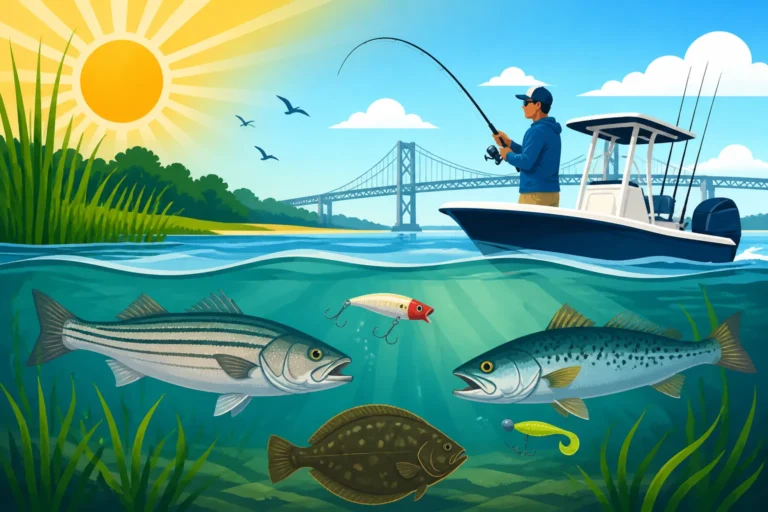
Specific areas like the Bay Bridge pilings, the edges of the deep water at Thomas Point, or the mouths of major rivers like the Patapsco, Choptank, or Potomac, all feature significant depth changes that attract striped bass. You'll find excellent charts online or through your plotter that clearly delineate these channels and depth contours. Pay attention to how the tide interacts with these features; a strong incoming or outgoing tide can push bait right along an edge, creating a feeding frenzy. Even in shallower nontidal rivers, you'll find subtle creek channels and submerged ledges that act as miniature versions of these larger Bay structures. You can also explore options for detailed charts on platforms like Amazon.
Essential Gear for Fishing Channel Edges and Drop-Offs
Having the right tackle is crucial for effectively fishing these dynamic zones. The depths and currents you encounter along channel edges require specific setups to present your lures or bait correctly and to handle potentially large, powerful striped bass. Don't skimp on your gear; it's an investment in successful fishing trips.
Rods, Reels, and Line Selection
For fishing channel edges and drop-offs, you'll generally want a medium-heavy to heavy action rod, typically in the 6'6" to 7'6" range. This length offers good casting distance and enough backbone to muscle a big striped bass out of deeper water or away from structure. A fast action tip is beneficial for detecting subtle bites, which can sometimes be the case when fish are lethargic in deeper, colder water.
Pair your rod with a sturdy conventional or spinning reel that has a smooth, powerful drag system and good line capacity. For trolling or heavy jigging, a conventional reel like a Penn Fathom or an Okuma Coldwater is often preferred. For casting jigs or live-lining, a reliable spinning reel in the 5000-8000 size range, such as a Shimano Saragosa or a Daiwa BG, will serve you well. As for line, braided line is almost a must. It offers superior sensitivity, minimal stretch, and incredible strength for its diameter. I recommend 30-50 lb test braid, tied to a 30-50 lb fluorocarbon leader (around 3-6 feet long) with an FG knot or a double uni knot. Fluorocarbon's invisibility and abrasion resistance are key in clear water around sharp structures.
Lures and Baits That Perform Well
The choice of lure or bait depends heavily on the technique you're employing, but several stand out for their effectiveness along channel edges and drop-offs. Jigging is perhaps the most common and versatile method. Heavy metal jigs, like the traditional Tony Acetta-style jigs or vertical jigs from brands like Shimano and Williamson, in weights from 2-8 ounces, are excellent for getting down to fish quickly. Soft plastic swimbaits on heavy jig heads (1-4 ounces) are also incredibly effective, especially when tipped with a piece of Gulp! or real bait. Colors like chartreuse, white, pearl, and natural baitfish patterns are consistent producers.
For trolling, umbrella rigs, tandem rigs, and Mojo rigs are workhorses. These rigs often feature large, heavy bucktail jigs or parachute lures paired with shad or sassy shad teasers. Again, white, chartreuse, and sometimes darker colors like black and purple can be very effective. If live-lining is your game, healthy spot or small white perch are irresistible to hungry striped bass. Make sure your live bait hooks (circle hooks are mandatory for striped bass when using bait) are appropriately sized and sharp. You can often find a great selection of these specialized lures and tackle on Amazon.
Effective Techniques for Targeting Striped Bass on Structure
Fishing channel edges and drop-offs isn't just about finding them; it's about presenting your offerings in a way that entices a strike. The best technique often depends on the current, depth, and the mood of the fish. Mastering a few key methods will significantly increase your success rate.
Jigging the Edges
Jigging is arguably one of the most effective and active ways to fish channel edges. Once you've located a promising edge and marked fish on your sonar, position your boat upstream or upcurrent from the fish. Drop your jig directly down to the bottom or to the depth where you're marking fish.
The key to successful jigging is varying your retrieve. Start with sharp, upward snaps of the rod tip, letting the jig flutter back down on a semi-slack line (often called "yo-yoing"). Most strikes occur on the fall, so be alert for any unusual pause or tap. Experiment with the height and speed of your snaps. Sometimes a subtle lift and drop is all it takes, other times an aggressive rip is needed to trigger a reaction strike. Drifting with the current along the channel edge allows you to cover more ground, presenting your jig to new fish continually. If the current is strong, using heavier jigs will help you stay vertical and maintain contact with the bottom or the desired depth.
Trolling Parallel to Contours
Trolling is another highly productive method for covering extensive channel edges and drop-offs, especially when fish are spread out or actively feeding. The goal is to present your lures at the correct depth, right along the edge where striped bass are likely holding. This often means running your boat parallel to the depth contour you're targeting.
You'll need a good trolling motor or your main engine for this, maintaining a consistent speed (typically 2-4 knots, but adjust as needed). Use planer boards, downriggers, or lead core line to get your lures to the desired depth. Umbrella rigs, Mojo rigs, and large bucktails are staples for trolling. Pay close attention to your speed and the action of your lures; you want them to be swimming naturally. If you're consistently catching fish at a certain depth or speed, try to replicate that precisely. Trolling allows you to explore long stretches of channel edge, making it an excellent search pattern to find schools of active striped bass.
Live-Lining on Anchored Structure
When striped bass are holding tight to a specific piece of structure along a channel edge, or when they are finicky and prefer natural bait, live-lining can be deadly. This technique involves anchoring your boat strategically and presenting live bait, usually spot or small white perch, directly to the fish.
Choose an anchor point that positions your boat so that the current carries your live bait directly over the fish-holding structure or along the channel edge. Use a simple rig: a circle hook (mandatory for striped bass in Maryland with bait), an appropriately sized sinker (often a sliding egg sinker or a three-way swivel rig) to get the bait down, and your fluorocarbon leader. Hook your live bait through the nose or back, allowing it to swim freely. The key is to let the bait do the work, swimming naturally and enticing the bass. Keep your rod in hand or in a light rod holder, ready to respond to a bite. Many times, you'll feel a subtle tap before the rod loads up. Don't set the hook; simply reel down until the line comes tight and let the circle hook do its job. For a deeper dive into this, check out our guide on how to live-lining spot for Maryland's Chesapeake Bay rockfish.
Here's a quick comparison of these techniques:
| Technique | Best Current | Best Depth Range | Ideal Bait/Lure | Pros | Cons |
|---|---|---|---|---|---|
| Jigging | Moderate-Strong | 15-60+ feet | Metal jigs, soft plastics on jig heads | Active, good for pinpointing fish, versatile | Requires constant attention, can be tiring |
| Trolling | Any | 10-50 feet | Umbrella rigs, Mojo rigs, large bucktails | Covers large areas, consistent depth control, can run multiple lines | Less active, requires specialized gear, can be slower to react to bites |
| Live-Lining | Light-Moderate | 10-40 feet | Live Spot, White Perch | Extremely natural presentation, effective for picky fish | Requires live bait, less active, can only fish one area at a time |
Seasonal Strategies for Productive Fishing
The behavior of striped bass along channel edges and drop-offs changes significantly with the seasons. Understanding these seasonal shifts is crucial for maximizing your chances of a successful outing. What works in spring might be useless in summer or fall.
Spring and Fall Transitions
Spring and fall are prime times to target striped bass on channel edges, as these periods coincide with major migrations and feeding frenzies. In spring, as water temperatures rise, striped bass migrate into the Bay's tributaries to spawn. Post-spawn fish, often hungry and recuperating, will stage along the main channel edges in the lower and middle Bay before heading out.
During this time, look for fish actively feeding on baitfish pushed by currents along these edges. Trolling umbrella rigs or Mojo rigs in depths of 20-40 feet is often effective for larger "trophy" fish, especially in the early part of the season. As the season progresses, live-lining with spot or jigging soft plastics can also be incredibly productive. Similarly, in the fall, as water temperatures begin to drop, striped bass migrate back down the Bay, aggressively feeding to build up their fat reserves for winter. The channel edges become major feeding lanes. This is often when you'll see massive schools of bait and striped bass, making jigging and trolling very productive. Understanding the Maryland Striped Bass Season and Rockfish Rules is essential, as certain periods, like the spring trophy season, have specific regulations.
Summer and Winter Challenges
Summer fishing on channel edges can be challenging but rewarding. As water temperatures climb, striped bass often seek cooler, deeper water, making the deeper sections of channel edges and drop-offs critical. You'll often find them suspended closer to the bottom, especially during the heat of the day.
Early mornings, late evenings, or even night fishing can be more productive during summer as fish move shallower to feed. Vertical jigging heavy metal jigs or live-lining in these deeper zones (30-60 feet) can be effective. Keep a close eye on your fish finder for thermoclines – temperature breaks where fish are often found. Don't forget that Maryland has an August rockfish closure, so you'll need to adapt your fishing if you're out then. Winter, while less popular, can also yield some impressive catches, particularly in the deeper, more stable waters of the main channels. Striped bass will hold in these deep channels, often congregating in large schools. Jigging is the primary method, working your lure slowly and deliberately right on the bottom. The fish are often lethargic, so a subtle presentation is key.
Navigating Common Challenges and Maximizing Success
Even with the best gear and knowledge, fishing channel edges for striped bass can present its own set of challenges. Understanding these hurdles and having strategies to overcome them will separate a good day from a great one.
Dealing with Strong Currents and Tides
The Chesapeake Bay is a tidal estuary, and strong currents are an undeniable factor when fishing channel edges. While currents can be beneficial for concentrating bait, they can also make it difficult to maintain proper lure presentation. Too much current can make your jig "kite" away from the bottom or cause your trolled lures to ride too high.
The key is to adjust your weight and speed. For jigging, you might need to go up several ounces in jig weight to stay vertical. For trolling, slowing your boat speed or using heavier trolling weights, Mojo rigs, or downriggers will help keep your lures in the strike zone. Sometimes, it's about timing your trips around slack tide, when currents are at their weakest, offering a brief window for easier fishing. Conversely, learning to use the current to your advantage, drifting a jig or bait along an edge, can be incredibly productive. You can also explore How Tides Affect Fishing in Maryland's Chesapeake Bay in more detail.
Locating Productive Spots and Fish Schools
Finding the right channel edge – the one holding fish – can sometimes feel like searching for a needle in a haystack. While charts show all the edges, not all of them hold fish consistently. Productive spots often feature additional structure, such as submerged oyster reefs, rock piles, or wrecks that break up the current and offer even more hiding spots for bait and predators.
Start your search in areas known for good fishing, like the main channels of the Upper Chesapeake Bay or the Lower Chesapeake Bay Near Point Lookout, or specific features like the Bay Bridge. Use your electronics not just to see depth changes, but to actively search for bait schools and individual fish. Look for "nervous" bait on the surface, or diving birds, which are often indicators of active feeding below. Don't be afraid to move if you're not seeing fish. Sometimes, a subtle bend in the channel, a slight change in bottom composition (from sand to mud, for example), or a small hump near an edge can be the difference-maker. Online fishing forums and local tackle shops are also great resources for up-to-date fishing reports.
Maximizing Your Chances on the Water
Beyond the technical aspects, maximizing your success also involves patience, adaptability, and preparedness. Striped bass fishing can be unpredictable, and what worked yesterday might not work today. Always be willing to switch up your techniques, lure colors, or even move to a different location if you're not getting bites.
Pay attention to factors like water temperature, clarity, and weather changes. A sudden cold front can shut down a bite, while an approaching storm might trigger a feeding frenzy. Have a variety of lures and baits on hand to adapt to changing conditions. Keep your hooks sharp and your knots strong. And don't forget the importance of proper fish handling, especially with our precious striped bass population. If you're planning to keep fish, make sure you know the Maryland Striped Bass Daily Limit Per Angler and other regulations. Even if you're just enjoying the sport, there's nothing quite like the thrill of feeling a strong striped bass on the end of your line, especially when you've outsmarted it by understanding its habitat along Maryland's channel edges and drop-offs.
Disclaimer
Fishing regulations, including size and catch limits, seasons, and licensing requirements, can change frequently. While this guide aims to provide accurate and up-to-date information, it is always the angler's responsibility to consult the latest official Maryland Department of Natural Resources (DNR) regulations before heading out on the water.