What Is a Golden Rainbow Trout?
It's always a thrill to be out on a Maryland stream or lake, patiently waiting for a bite. But every now and then, you might hook into something truly extraordinary – a fish that flashes brilliant gold and orange in the water, making you do a double-take. This striking catch isn't a myth or a rare hybrid, but a very real and increasingly popular addition to Maryland's stocked waters: the golden rainbow trout. If you've ever wondered about this dazzling fish, where it comes from, or how to catch one, you've come to the right place. This guide will demystify the golden rainbow, explaining its origins, how it thrives in our local waters, and what makes it such a sought-after catch for anglers of all ages.
The Allure of the Golden Rainbow Trout
Imagine pulling a fish from the water that doesn't just shimmer, but practically glows. That's the magic of the golden rainbow trout, a fish that stands out dramatically from its more camouflaged cousins. For many anglers, encountering one of these vibrant beauties is a truly memorable experience, often becoming the highlight of their fishing trip.
A Unique Catch That Turns Heads
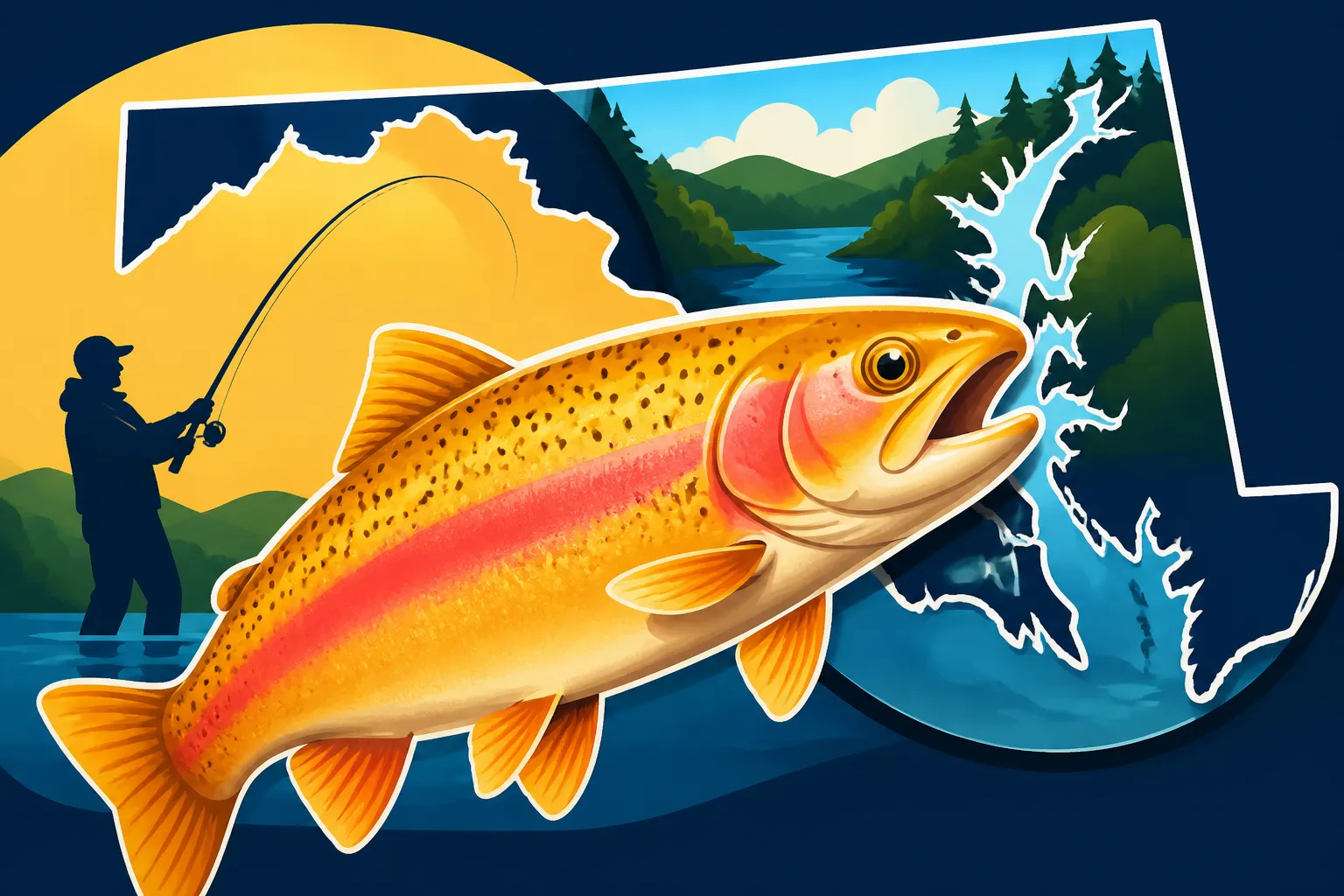
The most obvious characteristic of a golden rainbow trout is its incredible coloration. Instead of the typical silvery-pink hue of a standard rainbow trout, these fish boast a dazzling golden, orange, or even yellowish-red body, often with a vibrant red lateral line that pops against their bright scales. Sometimes they have subtle spots, sometimes they appear almost entirely solid gold. It’s like they were dipped in sunshine! When you reel one in, you'll instantly understand why they cause such a stir. Anglers often call them "Palomino trout" or "Lightning trout" due to their radiant appearance. There's just something inherently exciting about landing a fish that looks so distinctly different and beautiful, sparking conversations and inspiring awe among fellow anglers.
The Mystery Behind Its Striking Color
When you first see a golden rainbow, it’s natural to wonder if it's some exotic, newly discovered species, or perhaps a hybrid of several different fish. Many folks initially assume it's an albino or a completely separate "golden trout" species. However, the truth is a bit more nuanced and quite fascinating. The golden rainbow trout isn't a different species at all; it's actually a specific genetic variation of the common rainbow trout (Oncorhynchus mykiss). This vibrant coloring isn't naturally occurring in wild populations to any significant degree, but rather the result of careful selection and breeding by fish hatcheries. Understanding this origin helps us appreciate not just their beauty, but also the science behind bringing such unique fish to our local waters.
Unpacking the "Golden" Gene: How They're Made
The story of the golden rainbow trout is less about finding a new species and more about a remarkable genetic discovery and a successful breeding program. It's a testament to how human intervention can enhance the recreational fishing experience.
Not a Hybrid, But a Genetic Mutation
The origin of the golden rainbow trout traces back to a natural genetic mutation found in a single rainbow trout discovered in a West Virginia hatchery in the 1950s. This particular mutation resulted in a fish with significantly reduced melanin (dark pigment) and increased xanthophyll (yellow/orange pigment), leading to its distinctive golden color. Far from being a separate species or a hybrid cross, it’s simply a "color phase" of the rainbow trout, much like how some people have red hair while others have brown, but they are all still humans.
Hatchery geneticists recognized the unique potential of this fish. Instead of being an accidental anomaly, they saw an opportunity to create a visually spectacular trout for stocking programs. Through selective breeding, where fish exhibiting this golden trait were carefully chosen to reproduce, hatcheries were able to develop stable lines of these golden-hued rainbow trout. They’re still 100% rainbow trout, but with a dazzling wardrobe change! This process has allowed the golden rainbow trout to become a staple in many stocking programs across various states, including Maryland.
Hatchery Breeding for a Special Stock
The journey from a single mutated fish to a widespread stocking phenomenon involves dedicated hatchery work. State hatcheries, often working in conjunction with federal programs, raise these golden rainbow trout in controlled environments. They carefully manage brood stock – the parent fish – ensuring that the desirable golden genes are passed down consistently to new generations. This isn't just about aesthetics; it's about providing a unique and exciting angling opportunity.
When you purchase your Maryland Fishing License Guide for 2026 or Maryland Trout Stamp Requirements, part of those funds often goes towards supporting these stocking efforts. The careful breeding ensures that the fish are healthy and robust when released into public waters. Because of their bright color, golden rainbows are more visible to predators in the wild than their drabber counterparts, meaning they wouldn't likely thrive long-term if left entirely to nature's course. This is precisely why they are primarily a "put-and-take" species, intended to be caught by anglers shortly after stocking, rather than establishing self-sustaining wild populations. The fact that they are bred for stocking makes them a reliable target for anglers seeking that special catch.
Golden Rainbow Trout in Maryland: Where and Why They're Stocked
Maryland's landscape offers a diverse range of fishing opportunities, from the vast Chesapeake Bay to serene mountain streams. The stocking of golden rainbow trout plays a specific, important role in enhancing the freshwater fishing experience across the state.
Maryland's Trout Stocking Program
The Maryland Department of Natural Resources (DNR) maintains a robust trout stocking program, primarily to provide recreational fishing opportunities. While traditional rainbow trout, brown trout, and even brook trout are commonly stocked, golden rainbow trout have become a popular addition to this mix. They are typically stocked in waters designated as "put-and-take" trout fisheries, meaning they are periodically replenished with hatchery-raised fish to meet angler demand. These waters are often easily accessible and found throughout the state, particularly in Western Maryland's colder streams and in various community ponds and small lakes that can support trout for at least part of the year.
You’ll find these vibrant fish alongside their rainbow brethren in many of Maryland's well-known trout waters, especially during the spring and fall stocking seasons. Areas like the Gunpowder River, Savage River, and various state park lakes and community ponds are prime locations. The DNR aims to distribute these fish widely, ensuring that anglers across different regions have a chance to experience the thrill of catching one. This makes checking the DNR's stocking schedules crucial for those hoping to specifically target golden rainbows. Knowing when and where they've been stocked can significantly increase your chances of success. It’s similar to how some anglers target specific areas when Fishing Maryland's Spring Trout Stocking Season or Maryland's Put-and-Take Trout Waters, What That Means.
The Angler's Perspective: A Boost to Recreation
For many anglers, especially families with young children or those new to fishing, the golden rainbow trout offers an unparalleled thrill. Their brilliant color makes them easier to spot, and their eagerness to bite often leads to quicker success. There’s something truly magical for a child to reel in a fish that looks like it came from a treasure chest, fostering a lifelong love for the outdoors.
Beyond the initial excitement, the presence of golden rainbows adds a unique element to the fishing experience. It turns a regular day on the water into a potential treasure hunt. Anglers will often compare notes on who's seen or caught a "golden" that day. It's a novelty that keeps people coming back, creating memorable stories and photographs. This recreational value is a key reason why the DNR continues to include them in their stocking efforts, boosting angler participation and enjoyment across Maryland. It’s not just about catching fish; it’s about creating an unforgettable outdoor adventure.
Fishing for Golden Rainbow Trout: Tips and Techniques
Catching a golden rainbow trout often feels like winning a small lottery, but with the right approach, you can certainly improve your odds. While they are still rainbow trout, their hatchery upbringing and distinct color can influence their behavior and how best to target them.
Baits and Lures That Stand Out
Golden rainbow trout, being hatchery-raised, often respond well to baits and lures that are familiar from their feeding routines or that are simply very visible. Think bright colors and enticing scents.
Here's a breakdown of effective options:
- PowerBait & Dough Baits: These are perennial favorites for stocked trout. The various colors, scents, and floating properties of PowerBait (often found in small jars, easily available on Amazon or at your local tackle shop) can be irresistible. Try bright colors like chartreuse, orange, or even glitter-infused varieties. Mold a small ball around your hook, ensuring it floats just off the bottom.
- Worms: A classic for a reason! Live earthworms or mealworms are natural food sources and provide scent and movement that can trigger a strike.
- Corn: Yes, sweet corn! Many hatcheries feed their trout a pellet diet, and surprisingly, corn often mimics the texture and appearance of these pellets. It’s an inexpensive and effective bait, especially in heavily stocked areas.
- Small Spinners & Spoons: Lures like Panther Martins, Mepps, or Rooster Tails in sizes 0-2 can be very effective. Their flashy rotation and vibrant colors (think gold, silver, or fire tiger patterns) mimic small baitfish or insects and catch the eye of a curious golden rainbow. You can find a huge selection of these types of lures on Amazon, too.
- Flies: While golden rainbows are less selective than wild trout, small nymphs, wet flies, or even brightly colored streamers can work, especially if you're fly fishing in a stocked stream. Patterns like Woolly Buggers (black, olive, or white) or San Juan Worms are often good starting points. For dedicated fly anglers, consider something that stands out.
Because their bright color makes them more vulnerable to predators, golden rainbows might be a bit more wary than other stocked trout. Present your bait or lure naturally, and remember that subtle movements can sometimes be more effective than aggressive retrieves.
Targeting Stocked Waters and Habits
The key to finding golden rainbow trout is knowing where and when Maryland DNR stocks them. Keep a close eye on the DNR's stocking reports, particularly for "put-and-take" waters. When they are newly stocked, golden rainbows, like other hatchery trout, tend to congregate in certain areas.
Consider these habits:
- Freshly Stocked Areas: Directly after a stocking, these fish might be found in large numbers near the access points where they were released. They may be a bit disoriented initially.
- Deeper Pools and Runs: As they settle in, golden rainbows will seek out deeper pools, areas with moderate current, and undercut banks for cover and security. Look for breaks in the current or areas with submerged structure.
- Around Cover: While their color stands out, they still appreciate cover from overhead predators (like birds of prey) and sunlight. Areas with overhanging trees, fallen logs, or rocky bottom structure can hold fish.
- Feeding Behavior: Hatchery trout are accustomed to pellet food, so they are generally less selective than wild trout. They often cruise around looking for easy meals. Casting and slowly retrieving a lure, or still fishing with bait, can be very effective. Sometimes, their sheer visibility can be a disadvantage; they might be picked off by predators more quickly, so timing your trip shortly after a stocking can be beneficial. Don't be afraid to experiment with different depths, as trout can suspend at various levels in the water column.
Remember, patience and observation are your best friends. Watch for other anglers catching fish, pay attention to where they are casting, and don't be afraid to move around the stream or pond until you find where the fish are holding.
Distinguishing Golden Rainbows from Other Trout Species
One of the biggest questions that comes up when people see a golden rainbow trout is "What exactly did I just catch?" It's easy to confuse them with other species, especially if you're not intimately familiar with all the various trout in Maryland. Let's clear up some common misunderstandings.
Golden Rainbow vs. Wild Golden Trout (True Golden Trout)
This is perhaps the most significant point of confusion. There is a fish called a "golden trout" (Oncorhynchus aguabonita), but it is a distinct, separate species native to high-altitude streams and lakes in California's Sierra Nevada mountains. These are truly wild, native golden trout, and they are incredibly rare, often found only in pristine, remote wilderness areas. They have a different body shape, fin structure, and typically more pronounced parr marks and a distinctive crimson band.
The key takeaway for Maryland anglers: If you catch a golden-colored trout in Maryland, it is almost certainly a hatchery-raised golden rainbow trout, a variant of the rainbow trout. You will not find true wild golden trout in Maryland waters. It's a common misconception, but understanding this difference is important for proper identification and appreciating the unique origins of the fish you've caught.
Golden Rainbow vs. Albino Rainbow Trout
Another common mix-up is between golden rainbow trout and albino rainbow trout. While both are color mutations of the standard rainbow trout, they are visually distinct:
- Golden Rainbow Trout: As described, these fish have a vibrant yellow, golden, or orange body, often with a visible red lateral stripe and sometimes faint spots. Their eyes are typically dark, like a normal fish.
- Albino Rainbow Trout: True albino fish lack all melanin pigment. This means they are typically a stark white or very pale pink color, and crucially, they have characteristic red or pink eyes. Their overall appearance is much paler and less colorful than a golden rainbow.
So, if your catch is a brilliant golden hue with dark eyes, it’s a golden rainbow. If it's ghostly white with red eyes, it's an albino rainbow trout. Both are unique and special catches, but they arise from different genetic expressions.
Golden Rainbow vs. Brown Trout or Brook Trout
Maryland is home to other beautiful trout species, both wild and stocked, and the golden rainbow stands out clearly from them.
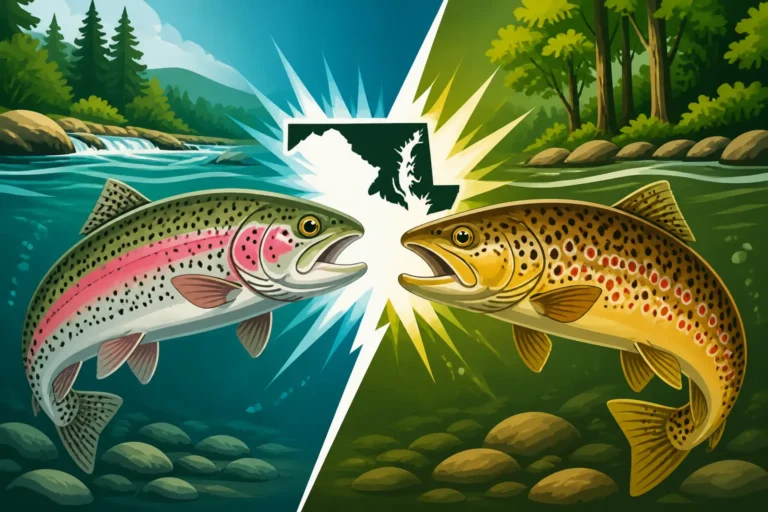
- Brown Trout (Salmo trutta): Brown trout typically have a brownish-golden body (but not the vibrant, solid gold of a golden rainbow), with distinct dark spots surrounded by lighter halos, and often red spots on their sides. Their tails are usually unforked or only slightly forked. They are known for being warier and more challenging to catch than rainbows.
- Brook Trout (Salvelinus fontinalis): Maryland's only native trout species (found primarily in pristine, cold mountain streams, as discussed in Are Brook Trout Native to Western Maryland?), brook trout are identifiable by their worm-like markings (vermiculations) on their backs and dorsal fins, and distinct red spots with blue halos along their sides. Their lower fins often have white leading edges, and they have a more elongated body shape.
When you compare these side-by-side with a golden rainbow, the difference in coloration is stark. The golden rainbow's bright, uniform golden-orange body and often prominent red lateral line are unmistakable. For anglers wondering about specific regulations, always check the Maryland Fishing Size and Catch Limits by Species, as rules can vary between trout species.
Enjoying the Golden Rainbow Experience
The golden rainbow trout, whether you call it a Palomino or a Lightning Trout, truly adds a spark to Maryland fishing. It's a testament to the dedication of fish hatcheries and wildlife management that such a visually stunning fish can be brought to our local waters, enhancing the angling experience for everyone. These aren't just fish; they're dazzling surprises that make a day on the water a little more magical. So next time you're casting your line in a stocked Maryland stream or pond, keep an eye out for that flash of gold – you might just catch a living treasure! And remember, when you successfully land one of these beauties, it’s a moment worth savoring, often making for a fantastic photo opportunity before deciding whether to keep it within your Maryland Trout Daily Creel Limit or gently release it.
Disclaimer
This article is for general informational purposes only and does not constitute professional advice. Laws, prices and regulations vary by location and change over time. Consult a qualified professional for guidance on your specific situation.