Bottom Fishing Techniques for Maryland Catfish
There’s nothing quite like the thump of a big catfish on your line, especially when you’re fishing the depths of Maryland’s expansive waterways. However, many anglers find themselves scratching their heads when it comes to consistently targeting these powerful bottom dwellers. Whether you're chasing the invasive blue catfish in our tidal rivers or the feisty channel cats in local reservoirs, mastering the art of bottom fishing for them can seem daunting. This guide is here to break down the techniques, tackle, and best spots to help you land more catfish in Maryland, turning those frustrating slow days into memorable hauls.
Understanding Maryland's Catfish Species and Their Habits
Before you can effectively bottom fish for catfish, it's crucial to understand who you're targeting. Maryland is home to several species, each with unique preferences and behaviors that will influence your approach. Knowing your quarry means you can tailor your setup and strategy for maximum success.
The Invasive Giants: Blue Catfish
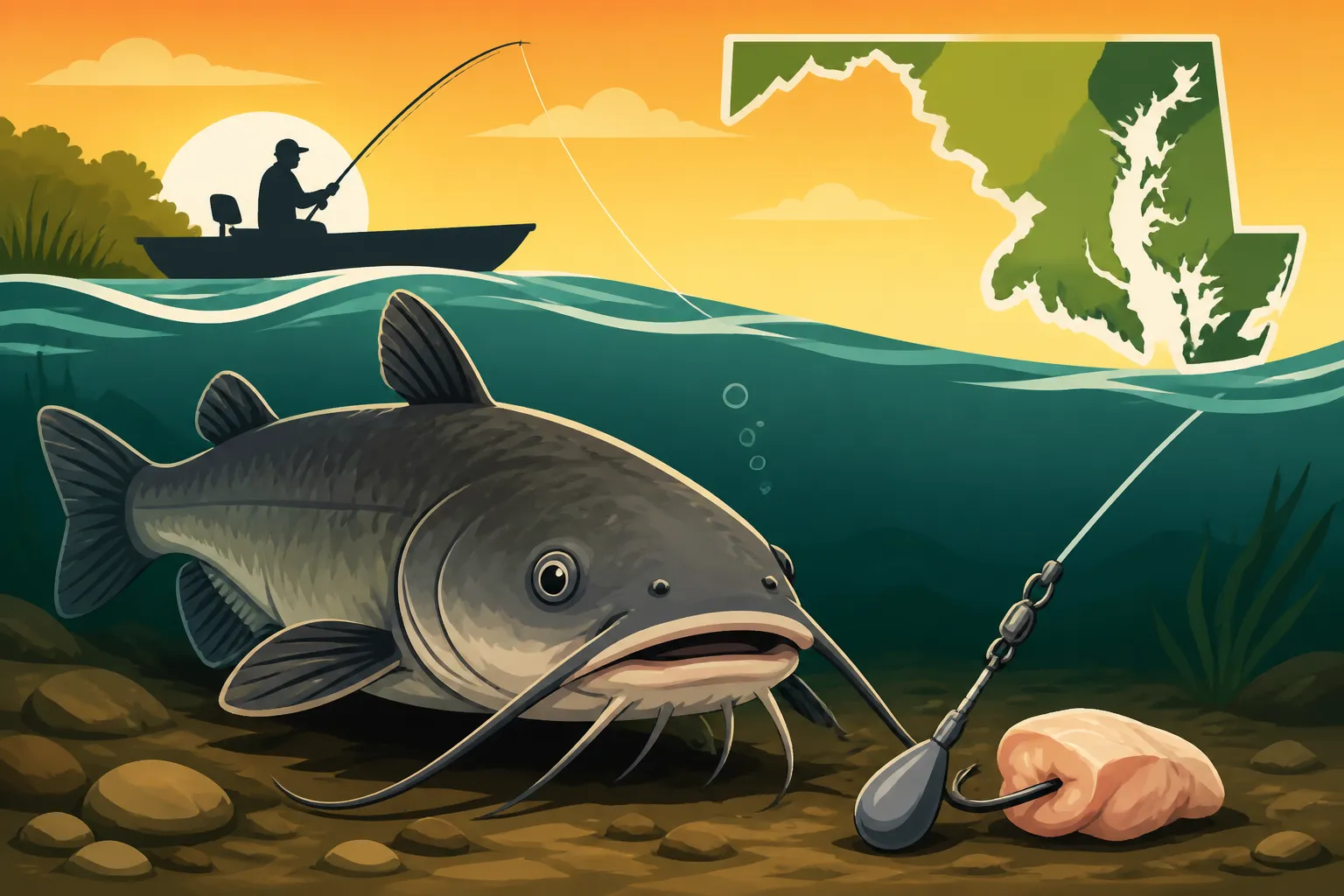
Ah, the blue catfish – the poster child for invasive species in Maryland's tidal rivers. These behemoths weren't always here, but now they’re thriving, particularly in the Chesapeake Bay tributaries like the Potomac, Patuxent, Choptank, and Nanticoke Rivers. They prefer deep, slow-moving channels, especially those with structure like bridge pilings, submerged wrecks, or sudden drop-offs. Blue cats are opportunistic scavengers and predators, meaning they'll eat just about anything, from fresh cut bait to live fish. Their robust growth rates and lack of natural predators here mean they can reach astounding sizes, often exceeding 50 pounds, making them an incredible sportfish for those willing to put in the effort. The Maryland Department of Natural Resources (DNR) actually encourages anglers to harvest blue catfish, as their unchecked population growth poses a significant threat to native fish species by outcompeting them for food. It’s a fantastic feeling to pull one of these out of the water, knowing you’re helping the ecosystem.
The Ubiquitous Channel Catfish
While blue catfish get a lot of attention for their size, the humble channel catfish remains a beloved target for many Maryland anglers. These native cats are much more widespread, found in nearly every nontidal river, pond, and reservoir across the state, as well as the upper reaches of the Chesapeake Bay tributaries where the salinity is lower. Channel cats typically don't reach the immense sizes of their blue counterparts, often ranging from 2-10 pounds, though bigger ones are certainly out there. They're characterized by their sleek, spotted bodies and deeply forked tails. Unlike blue cats, channel cats tend to be less migratory and will hold in specific areas like deep holes, undercut banks, and around submerged logs or vegetation. They're also keen on a variety of baits, but often favor more pungent, 'stinky' options like chicken liver or prepared stink baits. Learning to distinguish between Flathead Catfish vs Blue Catfish, How to Tell Them Apart can be key to understanding which species you're encountering in different waters.
Lesser-Known Bottom Dwellers: Flatheads and White Catfish
Maryland also has populations of flathead catfish and white catfish, though they are generally less targeted by the average angler than blues or channels. Flatheads are solitary, ambush predators that prefer rocky bottoms and slack water areas, often near submerged timber or log jams. They are primarily piscivorous, meaning they prefer live bait such as sunfish, bluegill, or smaller perch, making them a tougher catch on traditional bottom rigs with cut bait. They can also grow quite large, sometimes rivaling the size of blue cats. White catfish, on the other hand, are the smallest of Maryland's prominent catfish species, typically maxing out around 1-3 pounds. They are common in tidal rivers and estuaries, tolerating a wider range of salinity than channel catfish. They're often caught incidentally while targeting other species like white perch or even stripers, but they put up a surprisingly good fight for their size and are excellent table fare.
Essential Gear for Bottom Fishing Catfish in Maryland
Having the right equipment is paramount when you're going toe-to-toe with Maryland's catfish. These fish are powerful, and the environments they inhabit often demand robust tackle. Skimping on your gear can lead to broken lines, lost fish, and a lot of frustration.
Rods, Reels, and Line Selection
For serious bottom fishing, you'll want to lean towards a more heavy-duty setup. A medium-heavy to heavy power rod, typically 7 to 9 feet long, is ideal. This length provides the leverage needed to cast heavier weights and the backbone to turn a big fish away from snags. Rods from brands like Ugly Stik are popular among catfish anglers for their legendary durability and sensitivity. The action should lean towards moderate-fast, giving you enough flex for casting but plenty of power in the fight.
When it comes to reels, you have a couple of choices:
- Baitcasting reels are often favored by experienced catfish anglers, especially when targeting larger blue catfish in strong currents. They offer superior power, larger line capacity, and more precise casting control with heavy weights. Look for models with a good drag system and a low gear ratio for cranking in big fish.
- Spinning reels are a great option for beginners or those targeting smaller channel cats. They're easier to use and less prone to backlashing. Just make sure to choose a larger size (4000-6000 series or higher) with a sturdy retrieve and a smooth drag. Brands like Penn offer reliable options for both baitcasting and spinning reels that can handle the abuse of catfishing.
Line selection is equally critical. Many anglers opt for braided line because of its incredible strength-to-diameter ratio, zero stretch for excellent bite detection, and abrasion resistance, which is important when fishing around rocky bottoms or submerged timber. A 30-60 pound test braided line is a good starting point. However, some prefer monofilament line for its shock absorption (which can be beneficial when a large cat makes a powerful run) and its lower visibility. If using mono, aim for 20-40 pound test. Regardless of your main line, it’s always a good idea to use a leader of heavier monofilament or fluorocarbon (40-80 pound test) to provide extra abrasion resistance and to protect your main line from sharp teeth or rough structure. While you might be focusing on catfish, the principles of selecting strong, reliable gear overlap with other species; for instance, many of the heavy-duty rod and reel combos recommended for Best Gear for Winter Striped Bass Fishing in Maryland would also serve you well for big cats.
Rigging for Success: Sinkers, Hooks, and Swivels
The right rig is what connects you directly to the fish, so precision here is key. Your choice of sinkers, hooks, and swivels will depend on the current, depth, and the size of the fish you’re after.
Sinkers: The goal is to hold your bait on the bottom without it rolling away.
- Pyramid sinkers are excellent for current, as their shape digs into the bottom.
- No-roll sinkers (often flat-sided) are great for keeping your bait stationary in calmer waters or where you want minimal movement.
- Disc or flat bank sinkers are another good option for gripping the bottom without tumbling.
- The weight of your sinker will vary greatly depending on the current and depth, but typically ranges from 1 to 8 ounces. Always carry a variety.
Hooks: For catfish, particularly the larger species, circle hooks are non-negotiable for ethical and effective fishing. They are designed to hook fish in the corner of the mouth, significantly reducing gut-hooking, which makes for healthier releases (even for invasive species you plan to harvest). Sizes 5/0 to 9/0 are common for blue and channel catfish. If you're using more traditional J-hooks (though less recommended for catch and release), ensure they are stout and sharp.
Swivels: Heavy-duty barrel swivels or ball-bearing swivels are crucial. They prevent line twist, especially when using cut bait that might spin in the current, and help connect your leader to your main line. A 50-80 pound test swivel is usually sufficient.
Here’s a quick overview of some common bottom rigs for catfish:
| Rig Type | Components | Ideal Use Case | Pros | Cons |
|---|---|---|---|---|
| Carolina Rig | Sinker, Bead, Swivel, Leader, Hook | Versatile, works well in moderate current, allows bait to move naturally. | Good bite detection, bait presentation. | Can get tangled easily in heavy current or snags. |
| Santee Cooper Rig | Sinker, Bead, Swivel, Leader, Float, Hook | Similar to Carolina, but float lifts bait off bottom, avoiding snags. | Keeps bait visible above weeds/mud, less snagging. | Float can sometimes hinder natural bait movement in strong current. |
| Three-Way Swivel Rig | Main line, three-way swivel, leader to hook, leader to sinker | Deep water, strong currents, allows for multiple bait presentations. | Very stable in current, multiple baits increase chances. | More components, can be prone to tangles if not set up right. |
| Slip Sinker Rig | Sinker, Bead, Swivel, Leader, Hook (simple Carolina) | Calm to moderate current, very sensitive to bites. | Excellent bite detection as line slips freely. | Not ideal for heavy currents or very snaggy bottoms. |
The Right Bait Makes All the Difference
Catfish are notoriously unfussy eaters, but certain baits consistently outperform others. This is where a bit of local knowledge and a good tackle shop come in handy.
For blue catfish and larger channel catfish in tidal waters, fresh cut bait is king.
- Menhaden (Bunker): Oily, pungent, and a natural food source in the Bay. Cut them into 1-2 inch chunks, leaving the skin on for durability.
- Alewife/River Herring: Also very oily and effective.
- Gizzard Shad: Excellent choice where available.
- Perch (White or Yellow): Small pieces of fresh perch are also highly effective.
For channel catfish in reservoirs and nontidal rivers, as well as smaller blue cats:
- Chicken Liver: This is a classic for a reason – it's incredibly stinky and effective. It can be messy and soft, so some anglers cure it in garlic salt or bring a bait-threader to keep it on the hook.
- Clam Snouts: Another pungent option, readily available at some bait shops, particularly near the Bay.
- Nightcrawlers/Worms: Always a solid, all-around choice, especially for smaller cats and in freshwater.
- Prepared Stink Baits: Brands like Catfish Charlie or Secret 7 have developed powerful scents that attract catfish from a distance. These can be molded onto treble hooks or sponge baits.
When it comes to sourcing bait, local tackle shops often have the freshest options, particularly for cut bait. However, for things like specialized prepared baits, or even bulk hooks and swivels, online retailers like Amazon can be a convenient way to stock up before your trip. Always check the regulations for Best Bait for Blue Catfish in Maryland Rivers to ensure you're using legal methods, as some areas may have restrictions on certain baitfish or live bait.
Master Bottom Fishing Techniques for Maryland's Diverse Waters
Once you have your gear ready and your bait selected, it's time to put your skills to the test. Bottom fishing isn't just about dropping a line and waiting; it involves strategic positioning, careful presentation, and keen attention to detail.
Anchoring and Setting Up a Chum Line
One of the most effective ways to attract catfish to your fishing zone, especially in tidal rivers, is to anchor strategically and establish a chum line. Catfish have an incredible sense of smell, and a good chum slick can draw them in from a surprising distance.
Strategic Anchoring: Before you even think about chum, consider where you're dropping anchor. Look for areas with a combination of depth, current, and structure. Deep holes, channel edges, and the upstream side of bridge pilings or submerged wrecks are prime spots. Use your fish finder to identify these features and look for baitfish or large arcs that might indicate catfish. Once you've chosen your spot, anchor up-current from where you intend to fish. This allows your chum and bait to drift naturally back into the target zone. Use a heavy anchor appropriate for the current, ensuring you're held firmly in place. A good quality anchor, a long length of anchor rode, and a chain can be essential, especially in strong currents like those found in the lower Potomac or Susquehanna River.
Deploying a Chum Line: Chumming involves introducing small bits of oily, smelly bait into the water to create a scent trail. You can use a dedicated chum pot filled with ground menhaden or a mix of fish scraps. Hang the chum pot over the side of the boat, ensuring it's close to the bottom to spread the scent where the catfish are. Alternatively, you can periodically throw out small handfuls of cut bait (this is often called "chunking"). The goal is to create a consistent, but not overwhelming, scent trail that leads fish directly to your hooks. Remember that while Anchoring and Chum Lines for Chesapeake Bay Rockfish in Maryland primarily discusses striped bass, the principles are quite similar for attracting hungry catfish with scent. Be patient, as it can take some time for the chum to work its magic and for catfish to arrive.
The Art of Casting and Presenting Your Bait
Once your chum is working, the next step is to present your bait effectively. This isn't just about throwing it out there; it's about putting it in the right place, at the right depth, and in a way that looks natural to a hungry catfish.
Casting Strategies: With your boat anchored and chum line flowing, cast your lines down-current from the boat, directly into the chum slick. If you're fishing multiple rods, spread them out to cover a wider area, and consider varying your depths slightly if you're not sure where the fish are holding. In stronger currents, you might need to cast further upstream to allow your bait to settle and drift into the desired zone without being swept too far away. When shore fishing, cast towards deeper channels, drop-offs, or around visible structure. The key is to get your bait on the bottom and keep it there.
Allowing Bait to Settle and Detecting Bites: Once your bait hits the water, let it sink naturally to the bottom. Keep a slight tension on your line as it descends to detect any subtle bites on the drop. Once it's settled, tighten your line just enough to create a slight bend in your rod tip – this acts as a visual indicator of a bite. You can also use bell alarms or electronic bite alarms attached to your rod tip for added detection, especially when fishing multiple rods or in low light conditions. The goal is a natural presentation, so avoid excessive jerking or moving of the bait once it's on the bottom, as this can make it look unnatural. Many experienced anglers focus on being sensitive to the feel of the current against the line and quickly distinguishing that from a fish actually picking up the bait. This can be particularly true when learning How to Catch Blue Catfish in the Potomac River, where currents can vary significantly.
Patient Persistence and Strike Detection
Catfishing is often a game of patience, but when a bite finally comes, you need to be ready. Catfish bites can range from subtle nudges to aggressive slams, and learning to differentiate between current and a fish is a critical skill.
The Waiting Game: Catfish, especially big ones, can take their time finding and deciding to eat your bait. Don't be discouraged by long periods of inactivity. This is where patience pays off. Keep your eyes on your rod tips, listen for your bells, and be attentive to any unusual vibrations or slack in your line. Sometimes, a big fish will actually pick up the bait and swim directly towards you, creating slack in the line before you feel the tell-tale pull. This is why a vigilant eye on the line is as important as feeling the rod.
Distinguishing Subtle Bites: In a strong current, your rod tip will constantly be moving. You need to learn to identify the rhythmic tug of the current from the more erratic, deliberate pulls of a fish. A catfish bite often starts with a gentle tap or a slow, steady pull. Don't immediately grab the rod at the first tap; often, they're just investigating. Wait for a more sustained pull or a consistent series of thumps. With circle hooks, the fish often hooks itself as it swims away with the bait, so a gentle, steady reel-in is usually all that’s needed to fully set the hook. Avoid the instinct to "set the hook" with a violent jerk when using circle hooks, as this can actually pull the hook out of the fish’s mouth. Instead, simply lift the rod tip and begin reeling steadily until you feel the weight of the fish.
Prime Locations and Seasonal Considerations for Maryland Catfish
Maryland offers an incredible variety of waters, each with its own potential for catfish. Knowing where and when to focus your efforts can drastically improve your chances of success.
Tidal Rivers: Potomac, Patuxent, Choptank
Maryland's tidal rivers are arguably the best places to target blue catfish, especially if you're looking for trophy-sized fish. These river systems feed into the Chesapeake Bay, offering extensive habitat.
- Potomac River: This river is a blue catfish paradise, particularly the stretch from Fort Washington south towards Colonial Beach. Look for deep channels, particularly around major bends, historical structures, and bridge pilings like the Woodrow Wilson Bridge or the Governor Harry W. Nice Memorial Bridge. The river's strong currents create ideal ambush points for these opportunistic predators. Early spring and late fall are prime times, but they can be caught year-round. Check out specific areas by exploring resources like Fishing the Potomac for Blue Catfish.
- Patuxent River: Another excellent tidal river, the Patuxent offers fantastic blue catfishing opportunities. Focus on the deeper sections, especially around the Benedict Bridge and south towards Solomons Island. The Patuxent has numerous deep holes and ledges where big catfish love to congregate.
- Choptank River: Located on the Eastern Shore, the Choptank River is also highly productive for blue cats. The area around Cambridge and further downstream towards the Bay offers extensive deep water and plenty of baitfish. Look for defined channel edges and depressions on your sonar.
- Nanticoke River: Further south on the Eastern Shore, the Nanticoke is another blue catfish hotspot. It's a bit wilder in places, with plenty of submerged wood and diverse bottom structure that catfish find appealing.
In all these tidal rivers, the best fishing often occurs around the slack tide (the period of minimal current movement between incoming and outgoing tides) or just as the tide starts to move again. This allows catfish to feed without fighting strong currents, and it also makes it easier for your bait to stay on the bottom.
Nontidal Waters: Reservoirs and Upper Rivers
While tidal rivers dominate for blue catfish, Maryland's nontidal waters are fantastic for channel catfish and offer opportunities for flatheads and white catfish.
- Loch Raven Reservoir, Liberty Reservoir, and Prettyboy Reservoir (Baltimore County): These large freshwater impoundments are teeming with channel catfish. Look for them in deeper sections, particularly near submerged creek channels, points, and around areas of woody cover. Night fishing can be especially productive here during warmer months. While often targeted for Fishing Loch Raven Reservoir for Largemouth Bass, these reservoirs offer incredible catfishing too.
- Deep Creek Lake (Garrett County): Maryland's largest freshwater lake, Deep Creek, holds a good population of channel catfish, particularly in the deeper basins and coves. They can be found near the bottom, especially where structures provide cover.
- Upper Susquehanna River: Above the tidal influence, the upper Susquehanna River offers excellent fishing for channel catfish, especially below the Conowingo Dam. The moving water here provides an oxygen-rich environment where cats thrive. Look for eddies and slower pockets of water near the main current.
- Smaller Lakes and Ponds: Don't overlook smaller public lakes and ponds scattered across the state. Many of these waters are stocked with channel catfish and can offer surprisingly good fishing, often with easier access for shore anglers.
For nontidal waters, factors like water temperature, oxygen levels, and available cover become even more crucial. During hot summer months, catfish will often seek out deeper, cooler water with higher oxygen concentrations.
Best Times of Year and Day
Catfish are a truly year-round fishery in Maryland, but their activity levels and preferred locations can shift with the seasons.
- Spring: As water temperatures rise, catfish become very active and start moving into shallower areas to feed and eventually spawn. This is a fantastic time for both tidal and nontidal catfishing.
- Summer: During the heat of summer, catfish often become nocturnal feeders, especially in shallower waters. Targeting them at night can be incredibly productive. During the day, they'll retreat to deeper, cooler water.
- Fall: As water temperatures begin to drop, catfish will go on a feeding frenzy to bulk up for winter. This is another prime time for big fish, as they're actively seeking out food in a variety of depths.
- Winter: Don't put your rods away! Catfish can still be caught in winter, though their metabolism slows, and they'll be concentrated in deeper holes and channels. Using electronics to locate these wintering holes and presenting bait slowly is key. To get more specific on seasonality, refer to a guide like Best Month to Catch Blue Catfish in Maryland.
Generally, low light conditions – dawn, dusk, and night – are excellent times to target catfish, particularly in warmer months. On overcast days or during periods of stable weather, they can be active throughout the day. Tidal movement (as mentioned for tidal rivers) is also a significant factor to consider.
Handling Your Catch and Conservation Ethics
Catching catfish, especially the larger ones, is a thrilling experience. However, proper handling is essential, both for the fish you intend to release and for the ones you plan to take home for dinner.
Safe Handling and Release (for non-invasive species)
For native species like channel catfish or flatheads (if regulations permit their release), practicing safe handling is crucial to ensure their survival after release.
- Gloves and Pliers: Catfish have sharp pectoral and dorsal fins, which can deliver a painful poke. Always use a pair of heavy-duty gloves when handling them. Long-nosed pliers or a de-hooking tool are invaluable for removing hooks cleanly and quickly, minimizing stress on the fish. You can find excellent options for these on Amazon.
- Support the Fish: If you're going to lift a large catfish for a photo, always support its belly with one hand while holding its jaw with the other (avoiding the gill rakers). Never hold a large fish purely by the jaw, as this can damage its internal organs and jaw structure.
- Quick Release: Have your camera ready and get your measurements quickly. Return the fish to the water as soon as possible, allowing it to recover and swim away on its own power. For larger fish, gently cradle them in the water until they kick off strongly.
The Importance of Harvesting Invasive Species
When it comes to blue catfish and Northern Snakehead, the script flips. Maryland DNR actively encourages anglers to harvest these species due to their detrimental impact on native ecosystems. These fish are not native to Maryland waters and have rapidly established populations, outcompeting native species for food and habitat.
- Blue Catfish: There are generally no size or creel limits for blue catfish in Maryland. If you catch one, you're encouraged to keep it. This isn't just about fun; it's a direct contribution to conservation efforts. To clarify specific rules around releasing them, read up on Is It Legal to Release a Blue Catfish in Maryland?. It's a great example of how responsible fishing can directly benefit the environment.
- Northern Snakehead: Similar to blue catfish, if you catch a snakehead, it is illegal to release it alive back into the water. Anglers are instructed to dispatch them humanely immediately. The DNR offers specific guidelines in resources like Maryland Invasive Fish Rules: Blue Catfish and Snakehead and Maryland Blue Catfish Possession Rules.
By harvesting these invasive species, you're helping to reduce pressure on native fish populations and preserve the delicate balance of Maryland's aquatic environments.
Delicious Maryland Catfish Recipes
Beyond the fight, catfish offer another reward: they are incredibly delicious! Both blue catfish and channel catfish have firm, white, flaky meat with a mild flavor, especially when properly prepared.
- Cleaning: The first step is proper cleaning. Skinning catfish can be a bit tricky for beginners due to their tough skin and lack of scales, but there are many online tutorials (and specialized skinning tools available on Amazon) that can guide you. Fillet the fish and remove any red meat or fat lines, as these can contribute to a stronger flavor.
- Cooking Methods: Catfish are versatile in the kitchen.
- Frying: A classic choice. Dredge fillets in seasoned cornmeal or flour and fry until golden brown and crispy.
- Baking/Broiling: Lighter options. Season fillets with your favorite herbs and spices, a squeeze of lemon, and a pat of butter, then bake or broil until cooked through.
- Grilling: Great for larger fillets. A simple marinade can enhance the flavor before grilling.
Don't let the "catfish" name fool you; when properly cleaned and cooked, they are a sought-after delicacy, especially fresh out of Maryland's waters. Enjoy the fruits of your labor!
Disclaimer
Fishing regulations in Maryland can change, sometimes without much advance notice. It is always the angler's responsibility to stay informed about the latest rules, including licensing requirements, size limits, creel limits, and any special restrictions for specific bodies of water or species. Before heading out, please consult the current Maryland Department of Natural Resources (DNR) fishing guide or visit their official website for the most up-to-date information. Fishing licenses are generally required for all anglers 16 years of age and older in Maryland waters, so be sure to check the Maryland Fishing License Guide for 2026 to ensure you're compliant.