Are Channel Catfish Common in Maryland Rivers?
If you've ever wondered about the whiskered denizens lurking in Maryland's rivers, you're not alone. Many anglers, especially those new to the state or curious about freshwater opportunities beyond bass and trout, often ask: are channel catfish common in Maryland rivers? The short answer is a resounding yes! They are not only common but also widely distributed, providing fantastic fishing opportunities for both seasoned and novice anglers. This guide will dive deep into their prevalence, how to identify them, the best ways to catch them, and why they're such a cherished part of Maryland's diverse aquatic ecosystem.
The Widespread Presence of Channel Catfish Across Maryland's River Systems
Maryland's landscape is crisscrossed by an incredible network of rivers, from the mighty Potomac to the winding creeks of the Eastern Shore, and many of these waterways are teeming with channel catfish. These robust fish have adapted wonderfully to a variety of environments, making them one of the most accessible and enjoyable species to pursue across the state. They thrive in waters that might be too warm or murky for other game fish, and their opportunistic feeding habits mean they can be found nearly everywhere there's a good food source.
From the Potomac to the Pocomoke: Their Diverse Habitats
Channel catfish are incredibly adaptable, making themselves at home in both tidal and non-tidal sections of Maryland's rivers. In the vast Fishing the Potomac River in Maryland, particularly its tidal stretches closer to the Chesapeake Bay, channel cats are abundant. Here, they navigate everything from deep channels to shallow flats, often congregating in areas with structure like submerged logs, rock piles, or bridge pilings. Further east, rivers like the Patuxent, Choptank, Nanticoke, and Pocomoke also boast strong channel catfish populations. The slower, often muddier, waters of these rivers provide ideal habitat where they can forage comfortably.
Even in many of Maryland's larger reservoirs and lakes, you'll find channel catfish. They are not limited to just the big-name rivers. If a body of water has a decent current or consistent inflow and outflow, chances are good that channel cats are present. They can tolerate a wide range of water conditions, from slightly brackish tidal areas to purely freshwater systems, which is a testament to their resilience. For anglers looking to explore diverse fishing grounds, knowing where these fish are prevalent opens up a huge array of potential spots. You might even stumble upon them in smaller creeks feeding into larger systems, particularly after heavy rains when they move upstream looking for new feeding grounds.
Understanding Their Native Status and Population Dynamics
Unlike some other prominent catfish species in Maryland, such as the widely discussed blue catfish, channel catfish are considered native to many of Maryland's river systems. This distinction is crucial, as it means they've been a natural part of the ecosystem for a very long time, evolving alongside other native species. Their populations are generally healthy and self-sustaining, supported by strong natural reproduction.
The population dynamics of channel catfish are often quite stable because of their adaptability. They spawn in late spring or early summer, typically when water temperatures reach a consistent range. The males are known for building nests in secluded spots, like under logs, in hollows, or in rock crevices, and diligently guarding the eggs and fry. This parental care contributes to a high survival rate for their young, ensuring robust populations year after year. While they face predation from larger fish and birds, their sheer numbers and rapid growth, especially in nutrient-rich environments, help maintain their standing. Factors like water quality, habitat availability, and food sources certainly influence their local abundance, but overall, Maryland's rivers provide excellent conditions for them to thrive. The fact that they are native also means they integrate into the food web without the disruptive impact that non-native species can sometimes have on local ecosystems.
How to Identify a Channel Catfish: Distinguishing Them from Their Cousins
When you're out on the water, especially in a state like Maryland with multiple catfish species, knowing exactly what you've caught can be half the fun. Channel catfish have some distinct characteristics that set them apart from their whiskered relatives. While all catfish share a general body shape and barbels, paying attention to the finer details will help you confidently identify your catch.
Spotting the Key Physical Traits
Channel catfish are often described as having a sleek, somewhat streamlined body compared to the more stout appearance of some bullheads. Here are the tell-tale signs:
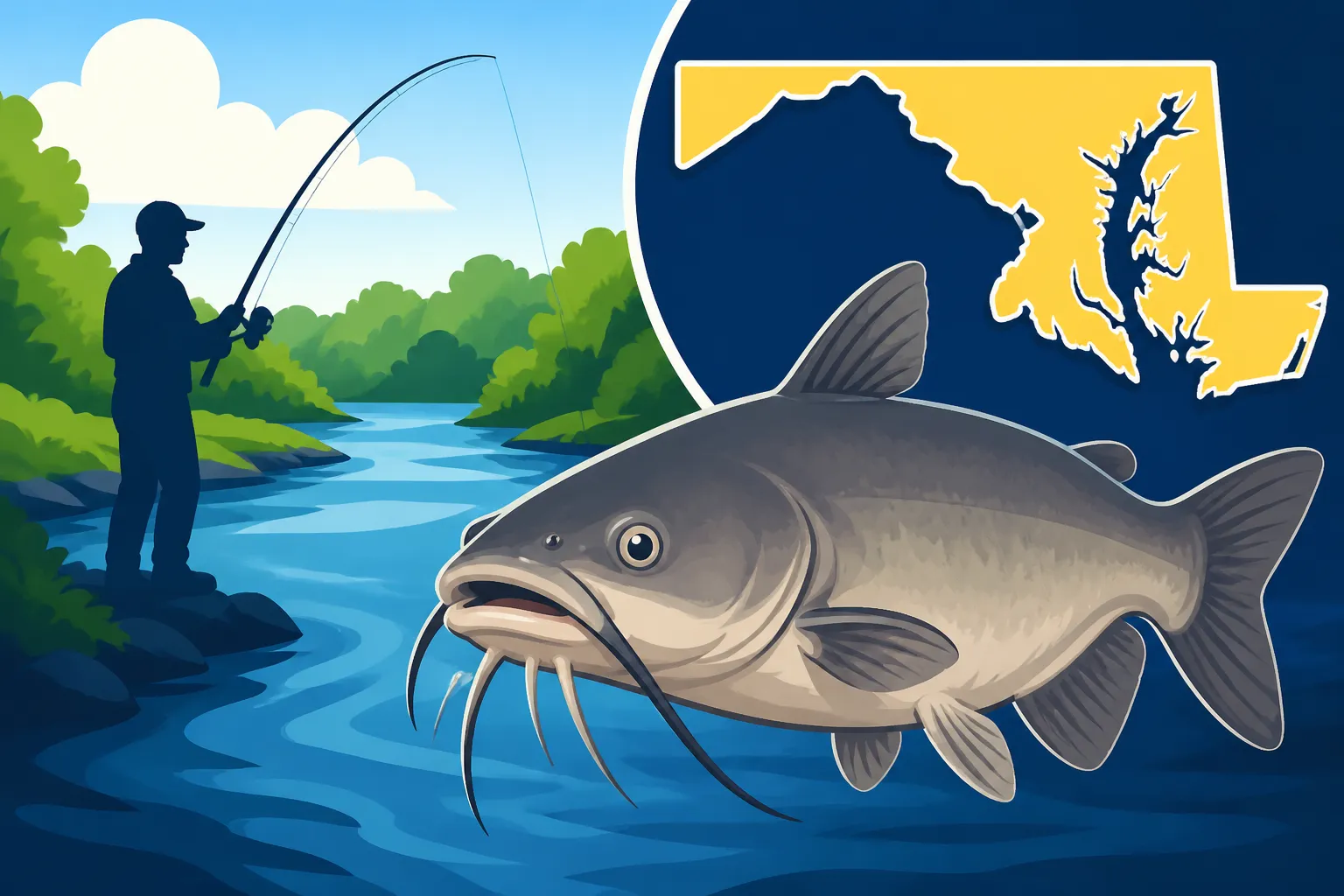
- Forked Tail: This is perhaps their most defining feature. Unlike the rounded or slightly notched tails of bullheads, or the subtly notched tail of a white catfish, a channel catfish has a deeply forked tail, almost like a swallow's. This efficient design helps them move quickly through the water.
- Spots: Younger channel catfish typically have distinct, irregular dark spots along their sides. As they age, these spots can fade significantly, and very large, old channel cats might have few to no visible spots, often taking on a more uniform olive-brown or grayish hue.
- Barbels: Like all catfish, they possess prominent barbels (whiskers) around their mouth. Channel catfish usually have eight barbels: two on the upper jaw, four on the chin, and two nasal barbels. These are highly sensitive, used for detecting food in murky water.
- Anal Fin: Look at the anal fin (the fin on the underside of the fish, behind the anus). Channel catfish have a long, rounded anal fin with 24 to 29 rays. This is a subtle but consistent identifier.
- Coloration: Their color can vary depending on water clarity and habitat, ranging from olive-green to blue-gray on the back, fading to silvery sides and a white belly. In clearer waters, they might appear darker, while in murkier environments, they can be paler.
When you bring one to hand, feel its skin. It's smooth, without scales, which is characteristic of all catfish. Their dorsal and pectoral fins each have a sharp, serrated spine that can deliver a painful poke if you're not careful. Always handle them with respect, especially the larger ones, which can put up a surprisingly strong fight.
Channel Catfish vs. Blue Catfish vs. White Catfish: A Quick Guide
Maryland is home to several types of catfish, and sometimes it can be tricky to tell them apart, especially when they're of similar size. Here's a handy comparison to help you differentiate channel catfish from two other common species you might encounter in Maryland's waters: the blue catfish and the white catfish.
| Feature | Channel Catfish | Blue Catfish | White Catfish |
|---|---|---|---|
| Tail Shape | Deeply forked | Deeply forked | Slightly notched, almost straight |
| Spots | Present on younger fish, fade with age | Absent | Absent |
| Anal Fin | Rounded edge, 24-29 rays | Straight edge, 30-35 rays | Rounded edge, 19-22 rays |
| Head Shape | Moderately sized, somewhat pointed | Large, sloped | Broad, flat, somewhat rounded |
| Barbels | Usually 8, dark | Usually 8, dark | Usually 8, pale to white |
| Body Shape | Sleek, slender | Heavy-bodied, larger overall | Stout, often shorter |
| Max Size | Up to 20-30 lbs (Maryland) | Can exceed 100 lbs (Maryland record) | Up to 10-15 lbs (Maryland) |
| Native Status | Native to many MD waters | Invasive in Chesapeake Bay watershed | Native to many MD waters |
As you can see, the tail shape and the number of rays in the anal fin are usually the most reliable indicators. If you've caught a giant catfish with a deeply forked tail and no spots, chances are it's a blue catfish, which are becoming increasingly prevalent, particularly in the lower Chesapeake Bay tributaries. If it's smaller, stout, and has a less-forked tail, it might be a white catfish. For more specific comparisons, you can always check resources like Difference Between a Blue Catfish and a White Catfish or What's the Difference Between a Bullhead and a Channel Catfish?.
Top Strategies for Catching Channel Catfish in Maryland
Catching channel catfish can be incredibly rewarding, not just for the fight they put up but also for the delicious fillets they provide. They're often quite eager to bite, making them a fantastic target for anglers of all skill levels. While they can be caught year-round, certain baits, techniques, and locations will significantly increase your chances of success.
Essential Baits and Rigging Techniques
Channel catfish are opportunistic feeders with an incredible sense of smell, making them highly receptive to strong-smelling baits. You don't need fancy, expensive lures to entice them; often, the simpler, smellier options work best.
- Cut Bait: This is a perennial favorite. Pieces of fresh or slightly spoiled fish like menhaden, herring, perch, or even bluegill work wonders. The oilier the fish, the better. Cut them into chunks about an inch or two square, leaving the skin on for durability.
- Chicken Livers: An old-school classic that still performs. Their strong scent and soft texture are irresistible to channel cats. The challenge is keeping them on the hook, so consider using a bait holder hook or even wrapping them with a little bit of pantyhose to secure them.
- Prepared "Stink Baits": There's a wide array of commercially available stink baits, dips, and dough balls designed specifically for catfish. Brands like Catfish Charlie or Sonny's Super Sticky often come in different scents and consistencies. These can be particularly effective in warmer waters where scent disperses quickly. You can often find a great selection of these on Amazon, along with baitcasting reels perfect for tackling larger cats.
- Worms: Good old nightcrawlers or red worms are always a reliable option, especially for smaller channel cats.
- Other Options: Hot dogs, shrimp (especially if it's been sitting out a bit), and even corn can sometimes tempt a channel cat, particularly if it's what they're used to seeing in a specific area.
For rigging, a basic bottom rig is almost always the way to go for channel catfish. This typically involves a sinker (pyramid, egg, or no-roll sinkers are good) heavy enough to hold your bait on the bottom, a swivel, and a leader with a hook. A common setup is a Carolina rig or a three-way swivel rig. Circle hooks are highly recommended, usually in sizes 2/0 to 5/0, as they are effective at hooking fish in the corner of the mouth, reducing gut-hooking and making catch-and-release easier if you're not planning to keep your fish. For more detailed insights on presentation, check out Bottom Fishing Techniques for Maryland Catfish which offers great tips relevant to channel cats too. And don't forget, you'll need a valid Maryland Fishing License Guide for 2026 to participate in this fun.
Prime Locations and Best Times to Target Channel Cats
Finding channel catfish isn't usually the hardest part; they're quite widespread. The key is finding where they are actively feeding.
- Structure: Channel cats love structure. Look for submerged timber, rock piles, bridge pilings, jetties, and sudden drop-offs or holes in the riverbed. These provide cover, ambush points, and often hold baitfish. In deeper rivers like the Potomac, target the edges of channels and deep bends. For specific locations, researching Best Places to Fish in Maryland can give you a head start.
- Confluence Points: Where two rivers or a river and a major creek meet, the current often creates eddies and concentrates food, making these prime catfish hunting grounds.
- Muddy Bottoms: They prefer soft, muddy, or silty bottoms where they can root around for invertebrates and where their scent trails are easily followed.
- Time of Day: While channel catfish can be caught at any time, they are often most active from late afternoon through the night, and into the early morning. Their excellent sense of smell and touch gives them an advantage in low light. During hot summer days, they might retreat to deeper, cooler water, becoming more active after sundown.
- Season: While catchable year-round, the warmer months (late spring through early fall) are generally the most productive. This is when their metabolism is high, and they are actively feeding to bulk up.
When you're fishing rivers like the Patuxent or the Nanticoke, pay attention to current seams – where faster water meets slower water. These are natural feeding lanes for catfish. A sturdy rod and reel combo, perhaps a medium-heavy spinning or baitcasting outfit, loaded with 15-20 lb monofilament or braid, will serve you well. You can find durable and affordable fishing combos for catfish on Amazon that will stand up to the challenge of these hard-fighting fish.
The Sporting and Culinary Appeal of Maryland's Channel Catfish
Beyond their prevalence and catchability, channel catfish offer a fantastic blend of exciting sport and delicious table fare. They are a true everyman's fish, providing enjoyment for anglers of all stripes.
Battling a Channel Cat: The Fight and the Fun
Don't let their bottom-dwelling reputation fool you; channel catfish can put up a surprisingly strong fight, especially the larger specimens. When hooked, they often make powerful, dogged runs, burrowing towards cover or simply holding their ground in the current. This makes them a thrilling catch on appropriate tackle. While they might not be known for acrobatic leaps like a bass or the sheer speed of a striped bass, their raw power and stubborn refusal to give up make for an exhilarating tussle. Many anglers, myself included, find a deep satisfaction in landing a big channel cat.
Their accessibility is another huge plus. You don't need specialized boats or remote locations to find them. They are often abundant near public piers, riverbanks, and accessible shorelines. This makes them an ideal target for families, beginners, or anyone looking for a relaxing day of fishing without the pressure of chasing more finicky species. It's a fantastic way to introduce kids to the joys of fishing, as they often get consistent bites and the excitement of a decent fight. If you're wondering about specific size and catch limits, it's always smart to review Maryland Fishing Size and Catch Limits by Species before you head out, as regulations can change.
From River to Table: Enjoying Your Fresh Catch
One of the greatest benefits of catching channel catfish is their culinary value. When properly handled, they offer firm, flaky, white meat with a mild, slightly sweet flavor. They are incredibly versatile in the kitchen and are a staple in many Southern and Midwestern cooking traditions.
Preparation Tips:
- Bleed Immediately: If you plan to keep your catch, bleeding the fish immediately after landing it can significantly improve the taste and texture of the meat. A quick cut to the gills and placing it on ice will achieve this.
- Keep on Ice: Keep your catfish on ice in a cooler right away. This prevents spoilage and preserves the quality of the meat.
- Filleting: Catfish are relatively easy to fillet, though their tough skin requires a sharp knife and a bit of technique. Many anglers prefer to skin them entirely before filleting. You can find many instructional videos on YouTube or even specialized filleting knives on Amazon to help you get the job done right.
- Cooking Methods: Fried catfish, often coated in cornmeal or a seasoned breading, is a classic for a reason. But they are also excellent baked, broiled, grilled, or even used in stews and chowders. Their mild flavor takes well to various seasonings.
While channel catfish are native, Maryland also has invasive species like blue catfish. While they can be delicious, always check current advisories regarding consumption from specific waterways. For example, Are Blue Catfish Good to Eat From Maryland Rivers? discusses this issue generally. For channel cats from healthy, clean Maryland rivers, you're usually in for a treat. Just remember to always practice responsible harvesting and adhere to all local regulations.
Disclaimer
This article is for general informational purposes only and does not constitute professional advice. Laws, prices and regulations vary by location and change over time. Consult a qualified professional for guidance on your specific situation.