Are Chesapeake Bay Striped Bass Populations Declining?
The question of whether Chesapeake Bay Striped Bass populations are declining is one that weighs heavily on the minds of many Maryland anglers, and it’s a valid concern we all share. When you spend countless hours on the water, you develop an intimate connection with these fish, and any whisper of trouble hits home. This guide will delve into the complexities of the Striped Bass population in the Chesapeake Bay, exploring the history, current status, and the many factors influencing their numbers, to give you a clearer, more realistic understanding of what's truly happening with our beloved rockfish.
The Historical Context of Striped Bass in Maryland
Understanding the current situation requires a look back at where we've been. Striped Bass, or rockfish as we affectionately call them here in Maryland, have always been an integral part of the Chesapeake Bay ecosystem and our fishing culture. Their story is one of resilience, but also of vulnerability, marked by periods of great abundance and startling decline.
A History of Booms and Busts
The truth is, fish populations, especially those as prolific and long-lived as Striped Bass, naturally experience cycles of high and low numbers. However, human activity can amplify these natural fluctuations, sometimes to a dangerous degree. We saw this most dramatically in the late 1970s and early 1980s. During that period, intense fishing pressure combined with other environmental factors led to a catastrophic collapse of the Striped Bass population. It was a wake-up call, and Maryland, along with other Atlantic states, implemented a full fishing moratorium, a tough but necessary decision that lasted several years.
That moratorium, though painful for anglers and the seafood industry, allowed the population to rebound significantly. It demonstrated that with proper management and a commitment to conservation, these fish can recover. The Chesapeake Bay is, after all, the primary spawning and nursery ground for the majority of the Atlantic coast Striped Bass stock. Where Striped Bass Spawn in Maryland This historical recovery gives us hope, but it also serves as a stark reminder that past successes don't guarantee future stability without continued effort.
Why They're So Important to the Bay
For us in Maryland, Striped Bass are more than just a fish; they're an icon. They hold the esteemed title of Maryland's State Fish for a reason. Striped Bass: Maryland's State Fish Their presence supports a vibrant recreational fishing industry, from individual anglers chasing trophy fish to the thriving charter boat fleet. The local economy in many water-front towns relies heavily on the fishing season, from bait and tackle shops to restaurants and marinas.
Beyond the economic and cultural impact, Striped Bass play a crucial ecological role as a top predator in the Chesapeake Bay. They help maintain the balance of the food web, preying on smaller fish like menhaden, spot, and various crustaceans. When their numbers dip, it can have ripple effects throughout the entire Bay ecosystem. That deep connection—both personal and ecological—is why any concerns about their population are taken so seriously by anglers, scientists, and resource managers alike.
Current Status of Chesapeake Bay Striped Bass
So, are their populations declining right now? It's a question that doesn't have a simple yes or no answer, but rather a nuanced picture that requires us to look at the science and the trends.
Understanding Population Assessments
Fisheries scientists, primarily through the Atlantic States Marine Fisheries Commission (ASMFC) and individual state agencies like the Maryland Department of Natural Resources (DNR), conduct regular stock assessments to gauge the health of the Striped Bass population. These assessments look at several key metrics:
- Spawning Stock Biomass (SSB): This measures the total weight of adult fish capable of reproducing. A healthy SSB means there are enough mature fish to produce the next generation.
- Fishing Mortality (F): This tracks the rate at which fish are removed from the population due to fishing, both recreational and commercial.
- Recruitment: This refers to the number of juvenile fish that survive to a certain age (typically one year) and enter the fishable population. Strong recruitment years are vital for future abundance.
When these assessments are released, they often contain scientific jargon that can be confusing, but the general takeaway is crucial. You can always find the latest detailed reports through official sources like the Maryland's DNR Fishing and Boating Guide, Explained on their website. The short answer is that recent assessments have indeed indicated concerns, specifically that the stock is currently "overfished" and "overfishing is occurring."
The Nuance of "Declining": Is it a Crisis?
Hearing terms like "overfished" can sound alarming, and it absolutely indicates a serious issue that needs addressing. However, it's important to understand what these terms mean in fisheries management.
- "Overfished" means that the spawning stock biomass (SSB) has fallen below a certain threshold. In simpler terms, there aren't enough adult Striped Bass to sustain a healthy population in the long run, even if we completely stopped fishing them.
- "Overfishing" means that the rate at which fish are being caught (fishing mortality) is too high, leading to a decline in the population. It's about the rate of removal, not necessarily the current size of the stock.
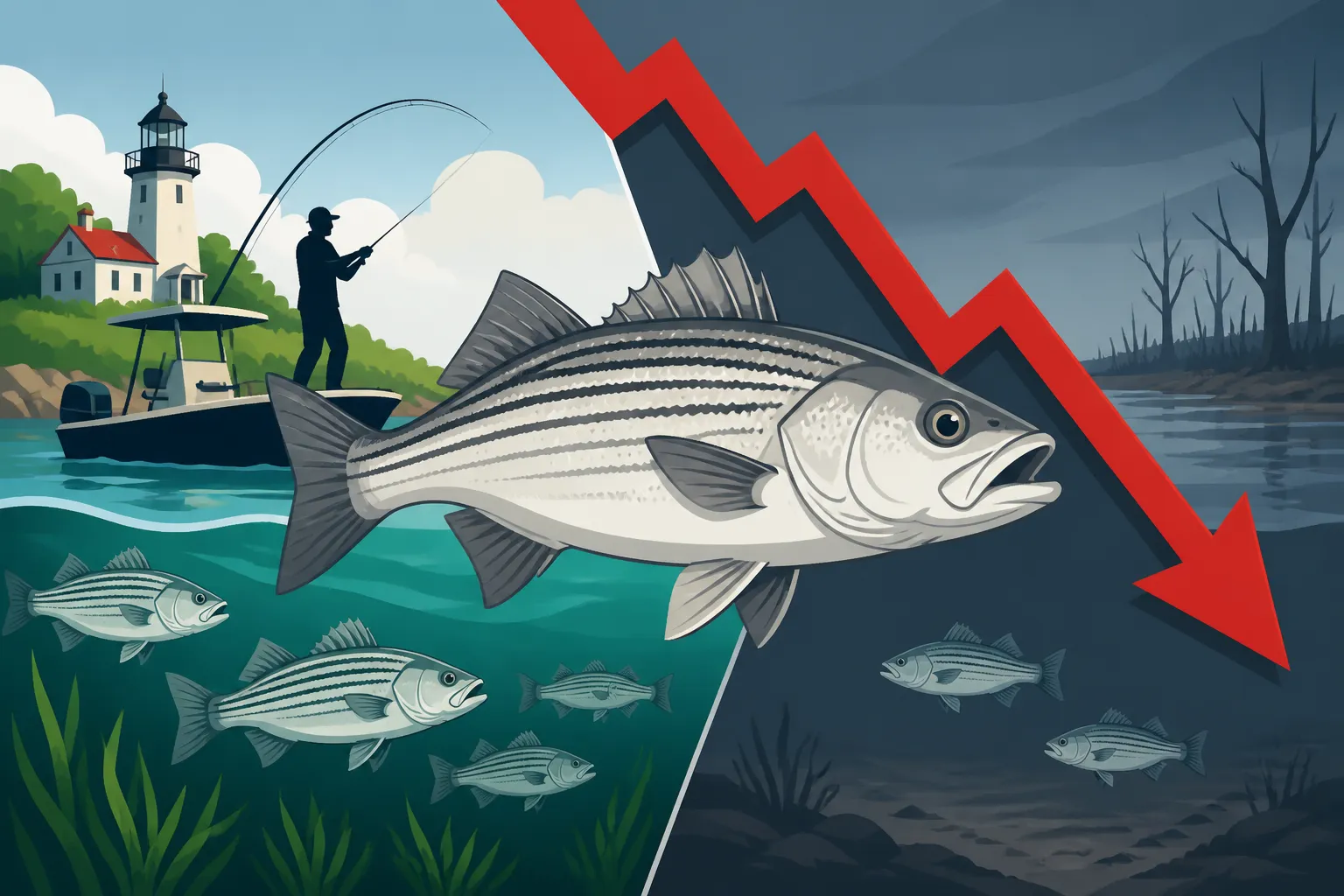
So, when scientists say the stock is "overfished," it means we need more adult fish. When they say "overfishing is occurring," it means we are catching too many fish, too quickly, preventing the population from rebuilding. This isn't necessarily a crisis like the 1980s collapse, but it's a clear warning signal that immediate and effective management actions are required to prevent a slide back into more severe decline. It means the population isn't as robust as it needs to be, and action is being taken to course-correct.
Factors Contributing to Population Changes
The health of the Striped Bass population is influenced by a complex web of environmental factors, fishing pressure, and ecosystem dynamics. It's rarely one single cause, but rather a combination of stressors that collectively impact these iconic fish.
Environmental Pressures
The Chesapeake Bay, while a vital estuary, faces numerous environmental challenges that directly affect Striped Bass.
- Water Quality: Pollution from agricultural runoff, urban development, and sewage treatment plants can degrade water quality, particularly in spawning rivers. Excess nutrients lead to algal blooms, which then die and decompose, creating "dead zones" with dangerously low oxygen levels. These anoxic conditions can be lethal to Striped Bass, especially juveniles, and can limit their available habitat.
- Climate Change: Warmer water temperatures can stress Striped Bass, altering their migration patterns, affecting spawning success, and making them more susceptible to disease. The timing of their spawn is often tied to specific water temperatures, and shifts can impact the survival rates of eggs and larvae.
- Habitat Degradation: Essential habitats like submerged aquatic vegetation (SAV) beds and clean, rocky bottoms in spawning rivers are crucial for juvenile Striped Bass to hide from predators and find food. Sedimentation and pollution can reduce the availability and quality of these critical areas.
Fishing Pressure and Management
Even with regulations, fishing pressure remains a significant factor in population dynamics. Both recreational and commercial fishing contribute to overall mortality. While individual anglers might feel their single fish doesn't make a difference, the cumulative effect of millions of fishing trips across the Atlantic coast is substantial.
- Regulations: Management agencies continually adjust regulations, such as minimum size limits, daily creel limits, and seasonal closures, based on the latest stock assessments. These changes, like the Maryland Striped Bass Season and Rockfish Rules or Maryland Fishing Size and Catch Limits by Species, are direct responses to the data indicating a need to reduce fishing mortality. For example, the ongoing discussions around slot limits are a direct attempt to protect larger, spawning-age fish.
- Interstate Management: Striped Bass are a migratory species, traveling up and down the Atlantic coast. This means effective management requires cooperation among all states in their range, from Maine to North Carolina. The ASMFC plays a critical role in coordinating these efforts, ensuring that management decisions are made on a regional scale, which can be a challenging balancing act.
- Illegal Fishing: While difficult to quantify precisely, poaching and fishing outside of regulations can also put additional, unreported pressure on the stock. It's a frustrating reality that undermines the efforts of conservation-minded anglers.
Food Web Dynamics
A healthy Striped Bass population also depends on a healthy food web. What they eat, and who else is competing for that food, matters greatly.
- Forage Fish: Menhaden are a critically important forage fish for Striped Bass throughout their life cycle. Concerns about menhaden populations directly impact the food source for Striped Bass. What Is a Menhaden and Why Does It Matter to Maryland Fishing? If their primary food source is scarce, Striped Bass growth rates and overall health can suffer.
- Competition and Predation: The Chesapeake Bay ecosystem is dynamic. Invasive species like the Maryland Blue Catfish, an Invasive Giant and Northern Snakehead in Maryland Waters are prolific predators that can compete with Striped Bass for food resources, and in some cases, even prey on juvenile Striped Bass. While these invasives offer exciting new fishing opportunities, their long-term impact on native species is still being studied and is a factor in the overall health of the Bay.
What Anglers and Managers Are Doing
Given the concerns, a lot of work is being done on multiple fronts to support the recovery and long-term sustainability of Chesapeake Bay Striped Bass. This involves scientific research, regulatory actions, and, crucially, the participation of individual anglers.
Conservation Efforts and Regulations
Resource managers are not sitting idly by. The ASMFC, in conjunction with state agencies like the Maryland DNR, continually reviews data and implements adaptive management strategies.
- Regulatory Adjustments: This often means adjusting the rules we fish by. Recent years have seen changes to Maryland Rockfish Slot Limit Explained, daily bag limits, and even seasonal closures, all designed to reduce fishing mortality and allow more fish to reach spawning age. These decisions are often tough, leading to discussions and debates among anglers, but they are rooted in the best available science.
- Catch and Release Best Practices: For many anglers, catch and release is a passion, not just a necessity. Even when a license is required, responsible anglers often release fish to fight another day. Is a Maryland Fishing License Required for Catch and Release? There's a strong emphasis on using techniques and gear that minimize harm, such as single, non-offset circle hooks when fishing with natural bait, which significantly reduces gut hooking. Understanding proper fish handling – keeping fish in the water as much as possible, using wet hands, and quickly releasing them – is vital.
- Research and Monitoring: Ongoing scientific research helps us understand more about Striped Bass biology, migration patterns, and their interactions within the ecosystem. This data is the foundation upon which all management decisions are made.
The Angler's Role in Recovery
As anglers, we have a significant role to play in the recovery of our Striped Bass population. Our actions, collectively, can make a real difference.
- Be Informed and Follow Regulations: The most fundamental step is to understand and adhere to all current fishing regulations. These change, so regularly checking the Maryland DNR website or picking up a current fishing guide is essential.
- Practice Responsible Catch and Release: If you're targeting Striped Bass, especially during a time of conservation concern, consider practicing catch and release. If you do, use appropriate gear and techniques to ensure the fish's best chance of survival. Many excellent resources, including books and guides found on platforms like Amazon, offer detailed advice on catch and release best practices.
- Report Violations: If you see illegal fishing activity, don't hesitate to report it to the Maryland DNR. Reporting a Maryland Fishing Violation This helps enforce the rules that protect our fish.
- Advocate for Conservation: Stay engaged in the conversation. Participate in public comment periods when new regulations are proposed, and support organizations dedicated to Chesapeake Bay conservation. Even simply choosing fishing gear and tackle from reputable brands available on Amazon or at your local tackle shop that support sustainable practices contributes.
- Support Local: Your patronage of local tackle shops, marinas, and charter services helps keep the angling community strong and knowledgeable, which in turn supports conservation efforts.
Looking Towards the Future
The situation with Chesapeake Bay Striped Bass is a marathon, not a sprint. Rebuilding a fish population takes time, especially one as long-lived as Striped Bass. There will be good years and challenging years, and likely more adjustments to regulations as scientists gather new data.
It's easy to feel frustrated or disheartened when you hear about declining populations. We've all had those days on the water where the bite just isn't what it used to be. However, the history of Striped Bass in the Chesapeake Bay shows us that recovery is possible with dedicated effort. The species is resilient, and the scientific community and the vast majority of anglers are committed to its future. By staying informed, adhering to regulations, practicing ethical angling, and supporting conservation efforts, we can all contribute to a healthier, more abundant Striped Bass population for generations to come.
| Factor | Historical Impact (e.g., 1970s-80s) | Current Impact (e.g., last decade) |
|---|---|---|
| Fishing Pressure | High, leading to severe decline | Managed with stricter rules, but still a significant factor |
| Water Quality | Significant, but less understood at the time | Ongoing concern, impacting spawning and survival |
| Prey Availability | Varied, but generally robust | Fluctuating, with concerns about specific forage species (e.g., menhaden) |
| Environmental Shifts | Less recognized as a major driver | Increasing concern (e.g., climate change, warmer waters) |
| Management Response | Moratoriums, severe restrictions, slow recovery | Adaptive regulations, ongoing scientific assessment, interstate cooperation |
Disclaimer
This article is for general informational purposes only and does not constitute professional advice. Laws, prices and regulations vary by location and change over time. Consult a qualified professional for guidance on your specific situation.