Where Do Striped Bass Go in the Winter in Maryland?
Ah, winter in Maryland. For many, it means cozying up indoors, but for those of us with fishing in our blood, it presents a unique challenge: where do those elusive striped bass, our beloved rockfish, go when the mercury drops? It's a question that can leave even seasoned anglers scratching their heads, feeling like the fish just vanish. This guide is here to unravel the mystery of the striped bass's winter habits in Maryland waters, helping you understand their movements and giving you the best chance to hook into one, even in the coldest months.
Understanding Striped Bass Winter Behavior in Maryland
The change of seasons brings a dramatic shift in how striped bass operate in Maryland. Gone are the days of chasing blitzes on the surface or casting to eager schools in shallow water. Winter transforms these powerful fish into more deliberate, conservation-minded creatures, driven by the primal need to survive the cold. It’s not just about finding them; it’s about understanding their entire physiological response to dropping water temperatures.
The Great Migration North and South
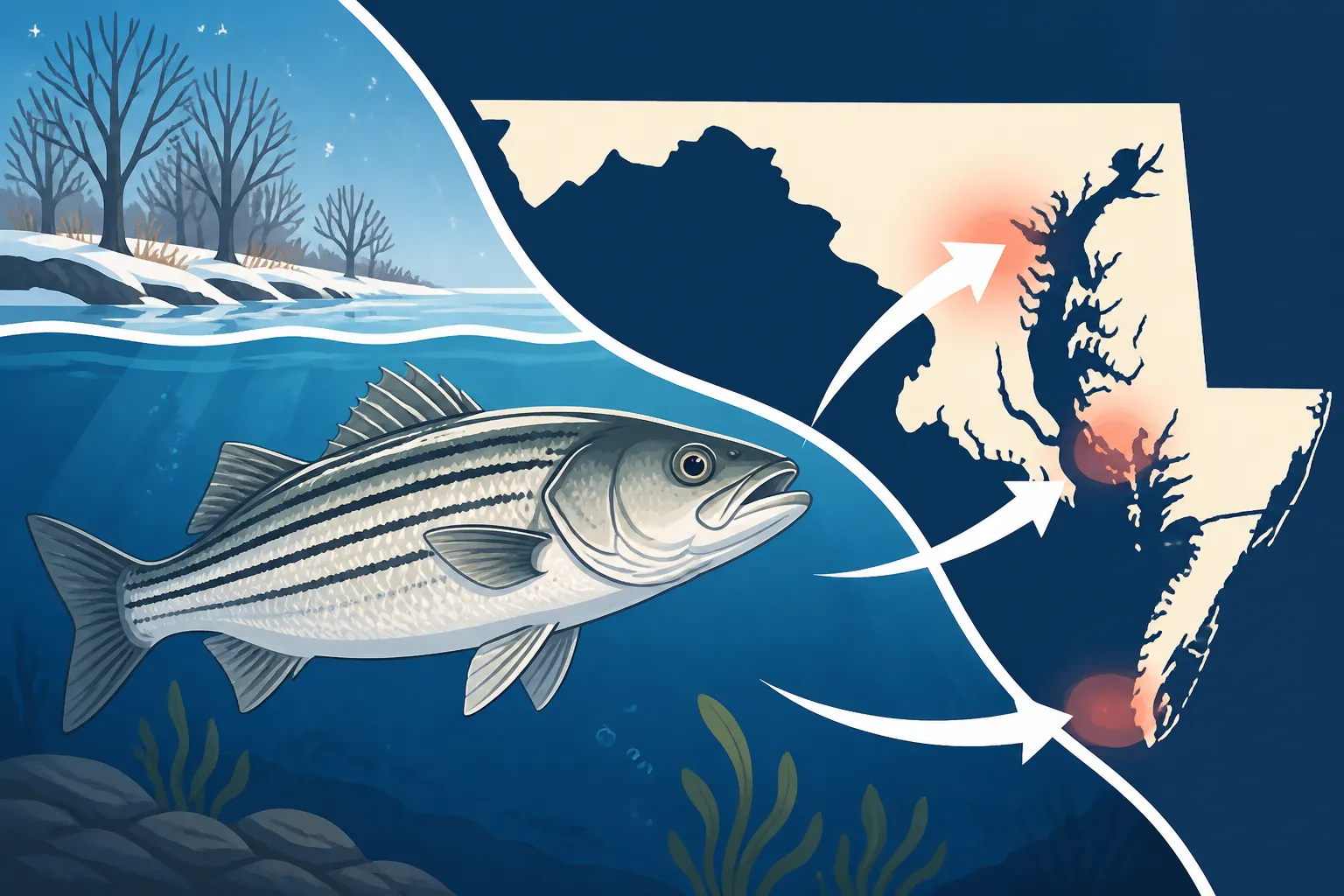
Many anglers associate "migration" with the spring and fall runs, when striped bass travel along the coast or funnel into the Chesapeake Bay for spawning. And while those migrations are certainly spectacular, the winter period has its own subtle, yet critical, migratory patterns within Maryland's waters. As the ambient air temperature drops and the bay water begins to cool significantly, much of the striped bass population that spent the summer in the upper and middle Chesapeake Bay will start to seek out more stable, deeper waters. This isn't always a long-distance journey, but often a movement from shallower feeding grounds to deeper overwintering areas.
Some of the larger, more migratory striped bass might even move out of the Chesapeake Bay entirely, heading south along the coast to warmer ocean waters, while others will stay within the bay and its major tributaries, finding refuge in the deepest channels. It’s a dynamic process, and their exact whereabouts can shift depending on how harsh the winter turns out to be. They’re looking for thermal refuge, essentially the warmest available water they can find that also offers some protection and, ideally, a food source.
Why Winter Changes Everything for Rockfish
Imagine trying to stay warm and find food when everything around you is getting colder and scarcer. That's essentially what a striped bass faces in winter. Their entire metabolism slows down considerably, making them less active and less inclined to chase fast-moving prey. This isn't just a minor adjustment; it's a fundamental change in their behavior. They become lethargic, conserving energy for survival rather than expending it on aggressive feeding.
This slowdown is why traditional spring and fall tactics often fail miserably in winter. You can't expect them to smash a topwater lure or chase a fast-retrieved jig when their bodies are telling them to conserve every calorie. Understanding this metabolic shift is the first step to successfully targeting them in colder conditions. It means adjusting your expectations, your presentation, and even your timing on the water.
Survival Instincts and Metabolism
At its core, the winter behavior of striped bass is all about survival. As water temperatures drop below a certain threshold—typically in the low to mid-40s Fahrenheit—their metabolism plummets. They need less food, move less, and often congregate in large, tight schools, a behavior thought to offer some protection from predators and potentially even a slight thermal advantage. These schools can be massive, but they're often tucked away in very specific locations, making them challenging to locate if you don't know where to look.
Their digestive systems also slow down, meaning that even if they do eat, they won't need to feed again as quickly. This is crucial for anglers to remember; a fish that bites in winter might not be actively "feeding" in the same way it would in summer, but rather taking an opportunistic meal with minimal energy expenditure. This makes proper bait presentation and patience absolutely paramount. Think of it as a fish equivalent of a bear's hibernation, but they're still somewhat active. You can find more details about how cold water affects their behavior in How Cold Water Affects Striped Bass Behavior in the Bay.
Key Wintering Grounds for Striped Bass in Maryland
When the chill sets in, striped bass don't just disappear; they relocate to specific areas within the greater Maryland aquatic ecosystem that offer them the best chance for survival. These spots provide consistent water temperatures, often deeper water, and sometimes a stable food source. Knowing these typical holding patterns is half the battle in cold-weather fishing.
Deep Channels of the Chesapeake Bay
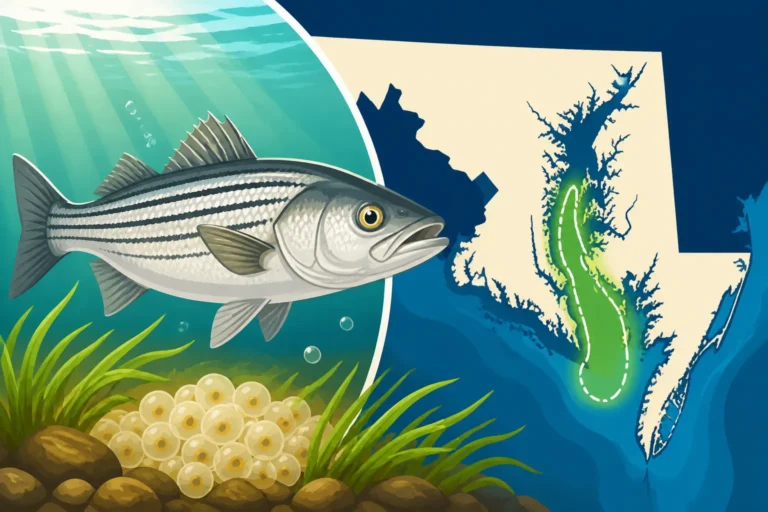
The main stem of the Chesapeake Bay becomes a critical wintering ground for a significant portion of the striped bass population. The deep shipping channels, particularly in the lower and middle bay, offer the most stable water temperatures. While the surface might be frigid, the deeper waters (often 40 to 100 feet or more) maintain a more constant, and relatively warmer, temperature throughout the winter. These deep troughs act like thermal refuges, drawing striped bass down from shallower areas.
Anglers often find schools stacked tightly against channel edges, particularly near sharp drop-offs, underwater humps, or distinct changes in bottom contour. These fish might hold just off the bottom or suspend at various depths within the channel, depending on bait presence and the most comfortable temperature layer. It requires good electronics to locate these schools, as they can be practically invisible without a fish finder. Spots around the Bay Bridge and further south towards Solomons Island are notorious for holding wintering fish.
Tidal Rivers and Their Deeper Sections
It's not just the main bay that holds winter rockfish; many of Maryland's major tidal rivers also serve as vital overwintering areas. Rivers like the Choptank, Patuxent, Nanticoke, and even the lower Potomac and Susquehanna can hold impressive numbers of striped bass in their deeper sections. These fish often push far upriver, seeking out the deep holes and channels that offer stable temperatures and protection from strong bay currents.
The key here is "tidal." These are not typically the swift-moving upper river sections, but the wider, deeper, slow-moving lower river stretches that behave more like extensions of the bay itself. Similar to the main bay, anglers should focus on distinct channel edges, bends in the river, and deep holes where the fish can congregate. Accessing these areas often requires a boat, but knowing which rivers historically hold fish can save a lot of time and effort. Keep an eye on local fishing reports, as conditions in these rivers can vary greatly year to year.
The Ocean City Inlets and Coastal Waters
While many striped bass move into the bay, a considerable portion, especially larger ocean-run fish, will overwinter in the coastal waters off Maryland. The inlets around Ocean City, particularly the Ocean City Inlet itself, can be fantastic places to find winter striped bass. These areas benefit from the warmer, more stable temperatures of the Atlantic Ocean, even if just slightly. The jetties, bridges, and deeper sections of the inlet offer complex structure and current breaks that striped bass adore.
Surf anglers might also find some success along the beaches, especially during warmer spells or after a period of stable weather. These coastal fish are often larger, migratory specimens that have not entered the bay for the winter. They're typically targeted using different methods than bay fish, often involving heavier tackle and larger baits. Remember to check Maryland Striped Bass Season and Rockfish Rules and Maryland Fishing Size and Catch Limits by Species carefully for coastal regulations, as they can differ from the bay.
| Overwintering Location | Typical Depths | Preferred Structure | Fishing Method Examples |
|---|---|---|---|
| Main Bay Channels | 40-100+ feet | Channel edges, humps, wrecks, bridge pilings | Jigging, vertical jigging, live lining (if legal), trolling deep |
| Tidal River Holes | 20-50+ feet | Deep bends, scour holes, dock pilings | Jigging, slow trolling, bottom fishing |
| Ocean City Inlets | 15-40 feet | Jetties, bridge abutments, rocky bottom | Plug casting, jigging, live lining, chunking |
| Coastal Nearshore | 15-60 feet | Sandbars, wrecks, artificial reefs | Surf fishing, trolling, jigging |
How Anglers Can Adapt to Winter Striped Bass Patterns
Catching striped bass in winter requires a complete shift in mindset and technique. If you try to fish them like it's summer, you'll likely go home empty-handed and frustrated. The key is to slow everything down, focus on their deep-water habits, and ensure your gear is up to the task of battling cold temperatures and heavy fish.
Targeting Deep Water with the Right Gear
First and foremost, you need to find the deep water where these fish are hunkering down. A good quality fish finder is absolutely indispensable. Don't just motor around hoping to stumble upon them; actively scan the depths, particularly along channel edges and deep holes. Once you mark fish, that's where your focus needs to be. For specific recommendations, many anglers find excellent reviews and options for electronics on platforms like Amazon.
As for gear, heavier tackle is often required, not necessarily because the fish are larger (though they can be!), but because you're fishing heavier lures and weights in deep water with strong currents. Braided line is a huge asset here, as its low stretch allows for better sensitivity to subtle bites and more direct hook sets in deep water. Pair that with a stout rod and a reel with a good drag system. Dress warmly in layers; the cold on the water can be brutal, and being comfortable will allow you to stay out longer and focus on fishing. I always bring a thermos of hot coffee and extra gloves.
Slower Presentations and Bottom Fishing
Because their metabolism is so slow, winter striped bass are rarely going to chase down a lure. Your presentation needs to be incredibly slow and deliberate. Vertical jigging directly over schools marked on your fish finder is often the most effective technique. Use heavy jigs, flutter spoons, or soft plastics on heavy jig heads. Let your lure sink all the way to the bottom or to the depth where you're marking fish, and then work it with subtle lifts and drops, mimicking an injured or lethargic baitfish. Think slow, methodical movements, not aggressive jerks.
Bottom fishing with natural bait can also be highly effective. Cut bait like menhaden, herring, or even a fresh chunk of spot can be deadly. Rig it on a fish-finder rig or a simple bottom rig with enough weight to hold in the current. Again, patience is key. These fish might just "mouth" the bait rather than aggressively strike it, so paying close attention to your rod tip is vital. This technique is often similar to Bottom Fishing Techniques for Maryland Catfish, just with different target species.
Checking Regulations for Winter Striped Bass Fishing
Maryland fishing regulations, especially for striped bass, are notoriously complex and can change frequently. This is particularly true during the winter months, when certain areas might be closed, or specific catch-and-release rules might be in effect. It's not uncommon for there to be special seasons or requirements for Maryland's Winter Catch and Release Striped Bass Season. Before you even think about heading out, make sure you have a current Maryland Fishing License Guide for 2026 and have thoroughly reviewed the latest regulations from the Maryland Department of Natural Resources (DNR).
Sometimes there are specific dates when certain rivers are closed to striped bass fishing to protect overwintering or early spawning fish. Ignorance of the law is no excuse, and the penalties for violations can be steep. Always double-check size limits, creel limits, and any special tackle restrictions (like barbless hooks) that might apply to winter fishing. Being prepared with the correct information ensures a legal and enjoyable trip.
Factors Influencing Winter Striped Bass Distribution
While we've covered the general idea of where striped bass go, it's important to understand why they go there. Their movements are not random; they are meticulously dictated by environmental conditions, primarily water temperature and the availability of food. These factors create the patterns we observe and predict.
The Critical Role of Water Temperature
Water temperature is, without a doubt, the single most significant factor in where striped bass decide to spend their winter. As cold-blooded creatures, their internal body temperature is directly tied to the water around them. They seek out the warmest, most stable water available. In the Chesapeake Bay, this usually means the deepest channels, where water temperatures fluctuate less dramatically than in shallower areas. A few degrees difference can mean everything to a striped bass trying to conserve energy.
If there's a prolonged cold snap, you'll see fish push even deeper or further up into stable river holes. Conversely, a mild winter might see them holding in slightly shallower, more accessible areas for longer. Anglers often refer to "thermal breaks" or "thermoclines," which are layers of water with different temperatures. Striped bass will often orient themselves right on the warmest side of these breaks. Keeping a close eye on water temperature readings, often available through marine forecasts or your own boat's electronics, is vital for predicting their location.
Salinity Levels and Their Impact
While not as critical as temperature in winter, salinity levels also play a role in striped bass distribution, particularly in tidal rivers. Striped bass are anadromous, meaning they can tolerate both fresh and saltwater, but they do have preferences. During the winter, many fish will move into the fresher, upper reaches of tidal rivers. This isn't just for temperature, but also because these areas can offer a slightly different ecosystem with different prey species, or simply a less turbulent environment than the main bay.
The mixing of fresh and saltwater in estuaries can create interesting thermal and salinity stratification, sometimes leading to ideal conditions in specific zones. Understanding the normal salinity gradients in your chosen fishing area can help you pinpoint potential holding spots. Changes in freshwater runoff from heavy rains can also temporarily alter these gradients, potentially moving fish around.
Prey Availability and Current
Even with a slowed metabolism, striped bass still need to eat. Therefore, their wintering grounds will ideally be near a stable food source. This could be schools of baitfish like bunker (menhaden) or herring that also seek refuge in deeper waters, or even bottom-dwelling invertebrates. Locating these bait schools on your fish finder is often the key to finding the striped bass. The predatory fish will often position themselves downstream or adjacent to these bait schools, waiting for an easy meal.
Current is another important factor. While they're not actively fighting strong currents in winter, they will often use current breaks or eddies to their advantage, conserving energy while still being able to ambush passing prey. Structure like bridge pilings, submerged wrecks, or rock piles create these current breaks, offering ideal ambush points for a lethargic striped bass. The combination of deep, stable water, available prey, and current breaks creates the perfect winter habitat. Check out Jigging Techniques for Maryland's Chesapeake Bay Striped Bass for ways to target them around structure.
Disclaimer
This article is for general informational purposes only and does not constitute professional advice. Laws, prices and regulations vary by location and change over time. Consult a qualified professional for guidance on your specific situation.