Rainbow Trout vs Brown Trout in Maryland Streams
Many Maryland anglers find themselves drawn to the clear, cold waters of our state's trout streams, but often wonder about the different fish lurking beneath the surface. It’s easy to get confused when you hear about rainbow trout and brown trout, especially when their habits and habitats can seem so similar on the surface. This guide will dive deep into the fascinating distinctions between these two popular species, helping you understand their unique traits, preferred haunts, and how to best approach them on your next fishing adventure in Maryland.
The Core Differences: Appearance and Identification
When you pull a beautiful trout from a Maryland stream, how do you know if it’s a rainbow or a brown? It’s more than just a gut feeling; there are some key visual cues that, once you learn them, make identification a breeze. Knowing these differences can not only satisfy your curiosity but also inform your fishing strategy.
Rainbow Trout's Distinctive Look
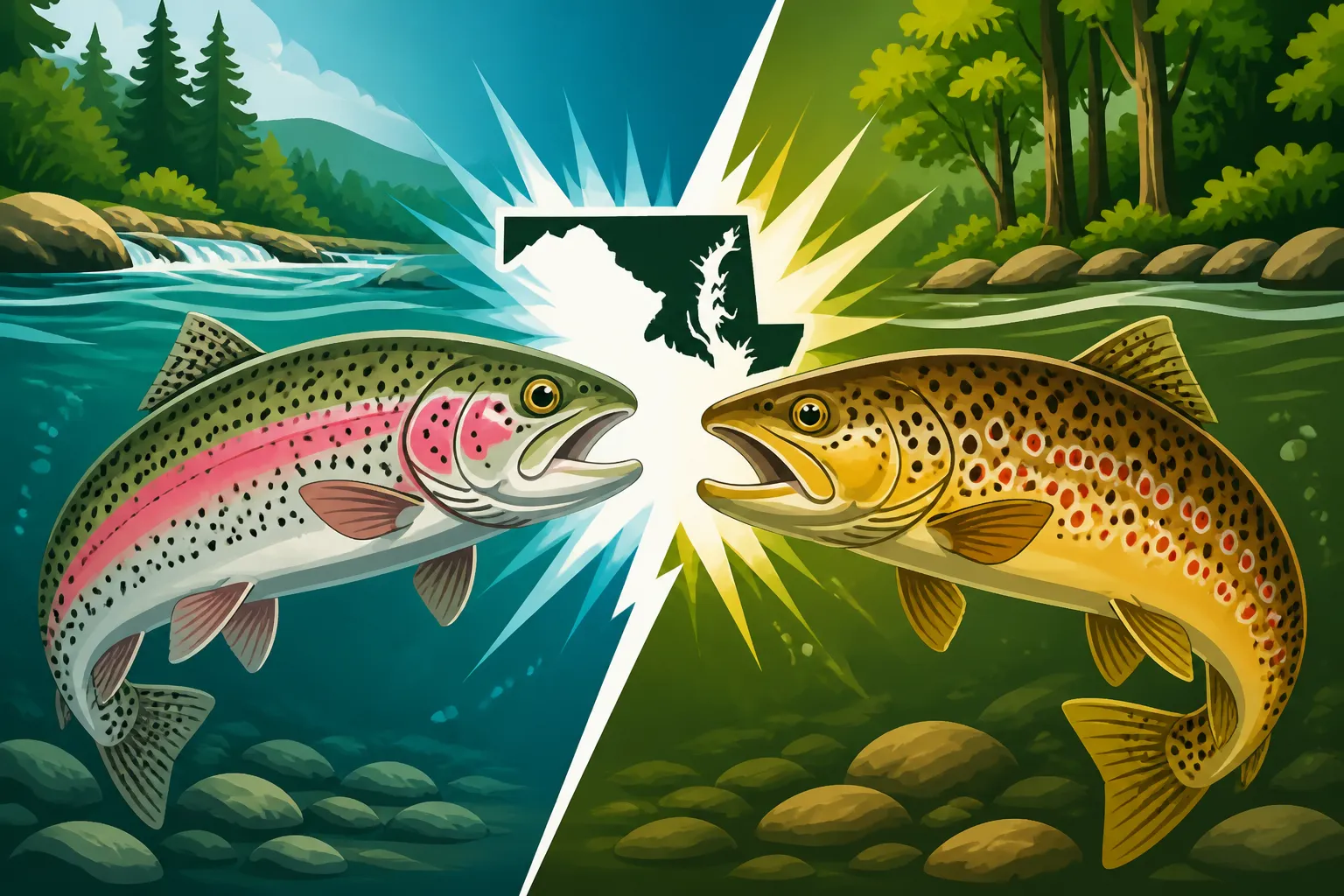
Rainbow trout, as their name suggests, often boast a stunning, iridescent stripe running along their lateral line, shimmering with hues of pink, red, and purple. This vibrant band is particularly pronounced on larger, wilder fish, though it can fade slightly on hatchery-raised individuals. Beyond the stripe, you’ll typically notice a silvery body that transitions to a darker olive or greenish back, covered in numerous small, distinct black spots. These spots extend from their head, across their dorsal fin, and often onto their caudal (tail) fin, which is usually square or slightly forked. Their mouth is relatively small, not extending past the eye. If you’re ever unsure, the combination of that rainbow stripe and pervasive spotting is a dead giveaway. They truly are a sight to behold, especially when caught in their prime. You can learn more about all the different types in our Maryland Trout Species Guide.
Imagine you’re fishing a stocked stream in central Maryland, perhaps the Patapsco River near Sykesville. You cast a small spinner, feel a sharp tug, and after a spirited fight, a fish emerges from the water. Its side glows with a pinkish streak, and its tail is dotted with tiny black specks. That’s your classic rainbow trout, often stocked for their aggressive biting nature and widespread appeal. Their vibrant appearance makes them a favorite for many, especially younger anglers or those new to trout fishing.
Brown Trout's Subtle Camouflage
Brown trout, on the other hand, are masters of disguise, blending seamlessly into their rocky and woody stream environments. Their coloration is usually a more subdued golden-brown or olive, fading to a creamy yellow or white belly. What really sets them apart are the distinctive spots: large, dark spots with pale halos (often red or orange) scattered sparsely across their flanks, usually not extending onto the tail fin. The tail fin itself is typically square and unspotted, a crucial differentiator from the rainbow. Their head can appear a bit larger in proportion to their body, and their mouth often extends noticeably past the eye, a characteristic that hints at their predatory nature. These subtle yet effective markings allow them to ambush prey with incredible efficiency.
Think of a secluded tributary in Western Maryland, a place where the water runs cold and clear year-round, barely touched by the sun. You’re stealthily approaching a deep pool, carefully placing a fly near a submerged log. A flash, a powerful strike, and you land a fish with dark spots surrounded by lighter rings, perhaps a few reddish dots, and a tail with no spots at all. This is likely a wild brown trout, a truly prized catch. Their ability to blend in and their more wary nature make them a challenge that many experienced anglers cherish.
Habitat and Behavior in Maryland's Waters
Understanding where these trout prefer to live and how they behave is fundamental to finding and catching them. While both are trout, their ideal living conditions and personalities can be quite different in Maryland's diverse waterways.
Where Rainbows Thrive in Maryland
Rainbow trout are incredibly adaptable, which is precisely why they are the workhorse of Maryland’s trout stocking program. They can tolerate a slightly wider range of water temperatures than some other trout species, making them suitable for many of our "put-and-take" streams and even some of our larger reservoirs. You’ll find them in places like the Gunpowder Falls after a fresh stocking, or in the deeper, cooler sections of larger lakes in the spring and fall. They thrive in well-oxygenated, flowing water but can also do well in still water if the conditions are right. They are often less shy than brown trout, more willing to chase a lure or fly, especially when newly stocked. This makes them a fantastic target for anglers who enjoy a more active fishing experience.
When the Maryland Department of Natural Resources announces its spring trout stocking schedule, you can almost guarantee that rainbow trout will be a significant part of the mix. Streams like Big Hunting Creek, the Patuxent River, and the upper reaches of the North Branch Potomac are regularly refreshed with thousands of these eager biters. They tend to congregate in pools, around riffles, and near any structure that offers a bit of current break, often feeding readily on insects, small crustaceans, and even other small fish. They're often found in areas that are easily accessible to anglers, making them a popular choice for family outings. For information on when and where these opportunities arise, check out our guide on Fishing Maryland's Spring Trout Stocking Season.
Brown Trout's Preference for Wilder Waters
Brown trout, particularly wild populations, are much pickier about their accommodations. They demand colder, cleaner, and highly oxygenated water, making them excellent indicators of stream health. In Maryland, this often means seeking out the more remote, headwater streams of Western Maryland, where spring-fed tributaries maintain consistently low temperatures even through the summer. They are masters of cover, preferring to hold tight to undercut banks, submerged logs, large rocks, and deep pools, using these hiding spots to ambush unsuspecting prey. Unlike rainbows, browns are notoriously wary. They are often nocturnal feeders, especially the larger specimens, coming out from their daytime cover to hunt during the twilight hours or under the cover of darkness.
You’ll find pockets of native and wild brown trout in pristine streams like the Savage River, the Youghiogheny River system, and various small mountain creeks that retain their wild character. These fish have survived generations in these demanding environments, developing a keen sense of self-preservation. Approaching these areas requires a stealthy foot, quiet movements, and precise presentations. A large brown trout often lives under a particular log for years, claiming it as its territory, and it takes skill and patience to convince it to strike. Anglers seeking these truly wild fish understand that the challenge is part of the reward. If you're looking for these elusive fish, our guide to the Best Trout Streams in Western Maryland can offer some fantastic starting points.
Fishing Techniques and Angler Experience
The differences in appearance and habitat translate directly into different fishing strategies for rainbows and browns. What works for one might not even get a glance from the other, leading to a vastly different experience on the water.
Targeting Energetic Rainbows
Rainbow trout, especially recently stocked ones, are often quite aggressive and less selective about what they’ll strike. This makes them a joy for anglers of all skill levels. For bait fishing, corn, worms, powerbait, and salmon eggs are perennial favorites, often presented on a simple bottom rig or under a bobber. Spin fishermen find success with small spinners, spoons, and inline lures that mimic minnows. Colors like gold, silver, and bright chartreuse often trigger strikes. Fly anglers will find rainbows responsive to a wide array of patterns, from nymphs and wet flies imitating aquatic insects to dry flies during a hatch, and even streamers for larger fish looking for a meal. Their willingness to bite and their acrobatic fights once hooked make them an exciting target. You can find many of these effective lures and baits on platforms like Amazon, making it easy to gear up for your next trip.
When you're fishing a put-and-take stream, particularly right after a stocking, rainbows will often be scattered throughout the water column, actively searching for food. You might find success fishing deeper pools in the morning and then moving to faster-moving riffles as the day warms up and insects become more active. Varying your retrieve speed and experimenting with different baits or lures can quickly tell you what they’re hitting on that particular day. They tend to hit hard and put up a fantastic fight, leaping and thrashing, which is incredibly rewarding. Just remember to be mindful of regulations regarding bait and tackle in specific areas, especially in catch-and-release zones where barbless hooks are often required.
The Elusive Challenge of Brown Trout
Fishing for brown trout, especially the wild ones, demands a completely different approach. Stealth, patience, and precise presentation are paramount. These fish are highly intelligent and easily spooked. For bait fishermen, very natural presentations are key: tiny worms, minnows, or even crickets fished with minimal weight. Spin anglers should opt for smaller, more natural-colored lures and make accurate casts to likely holding lies. The real art, however, often lies in fly fishing for browns. Matching the hatch with dry flies, drifting realistic nymphs through deep runs, or swinging streamers through prime cover can be incredibly effective, but it requires a delicate touch and an understanding of insect life cycles. The strike of a wild brown can be subtle, or it can be a jarring ambush, but the fight is usually powerful and determined, with the fish often diving for cover.
Consider wading a classic Western Maryland trout stream, carefully picking your way through slippery rocks and overhanging branches. You need to cast a perfectly weighted nymph rig upstream, allowing it to drift naturally into the shadows under an old hemlock. One wrong move, one splashy cast, and that wary brown trout you know is there will be gone. Their predatory instinct means they’re looking for a substantial meal, so larger flies or natural baits can sometimes entice the bigger fish. Remember, patience is your best friend when pursuing wild brown trout. It's often about making fewer, better casts than many hurried ones. For specific regulations regarding tackle, especially in special management areas, it's always good to consult the Maryland Trout Stamp Requirements and the DNR guide.
Spawning Habits and Life Cycles
Understanding the reproductive cycles of rainbow and brown trout further highlights their fundamental differences and how they fit into Maryland's aquatic ecosystems. These cycles dictate when and where you might find them concentrating, and also inform conservation efforts.
Rainbow Trout's Springtime Rituals
Rainbow trout are typically spring spawners. In Maryland, this means their reproductive activities often peak between late winter and early spring, usually from February through April, when water temperatures are on the rise. They seek out gravelly stream bottoms in flowing water, often in the upper reaches of streams or tributaries, to create their redds (nests). Females deposit their eggs, which are then fertilized by males. This timing aligns perfectly with Maryland's stocking program, as many of the stocked rainbows are hatchery-raised fish that may or may not naturally reproduce effectively in all Maryland streams. While some wild rainbow populations do exist and spawn naturally, a large portion of the rainbow trout fishing in Maryland is supported by annual stocking efforts.
After stocking, rainbows can be found throughout a waterway, but during their natural spawning period, they will concentrate in specific areas if conditions allow. This can make them more vulnerable, which is why understanding the rules around Maryland Spawning River Closures for Striped Bass (though not specific to trout, it highlights the importance of protecting spawning fish) and general trout regulations is crucial. The newly hatched fry are tiny and face many challenges, which is another reason why widespread natural reproduction of rainbows isn't as prevalent in all our waters compared to the hardier brown trout. This spring spawning window is also a prime time for anglers to target them, though ethical angling practices around spawning fish are always encouraged.
Brown Trout's Fall Spawning in Native Streams
Brown trout, in contrast, are fall spawners. Their spawning season typically runs from late September through November in Maryland, as water temperatures begin to drop. This autumnal schedule allows their fry to hatch and grow through the spring, giving them a head start before the heat of summer. Like rainbows, they also construct redds in gravelly stream beds. However, wild brown trout in Maryland’s truly native streams are often much more successful at natural reproduction, which is vital for sustaining their populations without heavy stocking. Their preference for remote, pristine waters means their spawning grounds are often less disturbed, contributing to stronger wild stocks.
The fall spawning runs of brown trout are a spectacular, albeit often unseen, event in Maryland's colder, wilder streams. The fish take on brilliant spawning colors, with males often developing a hooked jaw (kype). During this time, they become incredibly focused on reproduction, and ethical anglers generally avoid targeting actively spawning fish to ensure the continuation of healthy populations. This natural resilience and ability to maintain self-sustaining populations in specific, high-quality habitats are key reasons why conservationists and anglers alike hold wild brown trout in such high regard. Their lifecycle is a testament to the health and vitality of Maryland's most pristine coldwater fisheries.
Conservation Status and Stocking Efforts
The management and conservation of rainbow and brown trout in Maryland are approached differently due to their varying ecological roles and reproductive successes. Understanding these efforts can give you a better appreciation for the fish you're targeting.
Maryland's Rainbow Trout Stocking Program
Rainbow trout are the backbone of Maryland’s "put-and-take" fisheries, meaning they are primarily stocked for recreational angling opportunities rather than for establishing self-sustaining populations. The Maryland Department of Natural Resources (DNR) invests significant resources into raising and stocking thousands of rainbow trout each year. These stockings occur primarily in the spring and fall, transforming accessible streams and ponds into immediate fishing hotspots. This approach ensures that there are plenty of fish for anglers, providing a high-quality fishing experience for many, especially in areas closer to urban centers where natural trout habitats are less common. This program is essential for accommodating the sheer volume of anglers who enjoy trout fishing in Maryland.
The goal of these stocking programs is to provide accessible fishing for the public, and rainbow trout fit this bill perfectly. They grow quickly in a hatchery environment and are eager to bite when released. While they might not always establish long-term wild populations in every stream they're stocked into, their presence creates fantastic opportunities for anglers to enjoy the sport. Many of these stocked areas are designated as Maryland Put-and-Take Trout Waters, What That Means, where anglers can keep a certain number of fish, contributing to the "put-and-take" philosophy. This is also where you might explore fishing options on Maryland's Free Fishing Days in June and July. The program is a huge success in making trout fishing available to a broad audience across the state.
Protecting Maryland's Wild Brown Trout
The focus for brown trout in Maryland, particularly the wild and native strains, is largely on habitat protection and restoration, rather than extensive stocking. While some brown trout are stocked, especially in specific areas to supplement populations or establish new ones, the priority for truly wild brown trout is to preserve and enhance the pristine coldwater habitats they require to reproduce naturally. These efforts include riparian buffer plantings to shade streams and reduce water temperatures, preventing siltation, and ensuring water quality remains high. Because wild brown trout are so sensitive to environmental changes, their presence is often seen as a benchmark for a healthy, undisturbed stream ecosystem.
Conservation groups, often working in partnership with the DNR, play a crucial role in these efforts. They might undertake stream restoration projects, remove obsolete dams, or educate landowners about best practices for stream management. Anglers targeting wild brown trout are encouraged to practice catch-and-release, especially for larger breeding fish, to help sustain these delicate populations. Many of the designated "Delayed Harvest" or "Catch-and-Release Only" streams in Maryland, such as sections of the Gunpowder Falls or the North Branch Potomac, are managed to protect these wilder fish. Understanding Are There Wild Trout in Maryland Streams? and how to protect them is vital for the future of our most pristine fisheries. Using barbless hooks, readily available at sporting goods stores or online via Amazon, is also crucial in these sensitive areas to minimize harm to fish.
Culinary Appeal and Taste Profiles
For many anglers, the enjoyment of fishing culminates in the delicious meal that follows. Both rainbow and brown trout are excellent table fare, but they do have subtle differences in their meat that can influence how you prepare them.
The Mild Flavor of Rainbow Trout
Rainbow trout are renowned for their mild, delicate flavor and flaky, tender flesh. The color of their meat can vary from white to a light pinkish-orange, depending on their diet. Farm-raised rainbows, which make up the vast majority of what you’ll catch in stocked waters, tend to have a milder, more consistent flavor due to their controlled diets. This makes them incredibly versatile in the kitchen, suitable for a wide range of cooking methods. They can be pan-fried, baked, grilled, smoked, or even served raw as sashimi. Their gentle taste is appealing to a broad palate, even those who might shy away from stronger-flavored fish.
Imagine you've had a successful day fishing a put-and-take stream, bringing home a couple of nice rainbows. Pan-frying them whole with a little butter, lemon, and fresh herbs is a classic preparation that allows their natural, clean flavor to shine through. The meat easily separates from the bone, offering a light and healthy meal that’s hard to beat. Because of their accessible flavor profile, rainbow trout are often a favorite for family dinners and gatherings. Just be sure to check the Maryland Trout Daily Creel Limit before you start filling your cooler!
Brown Trout as a Prized Table Fish
Brown trout, particularly wild specimens, are often considered by connoisseurs to have a richer, more pronounced flavor than rainbows. Their flesh tends to be firmer and can range from a cream color to a deeper orange or red, again influenced by their wild diet of insects, crustaceans, and smaller fish. This stronger, nuttier taste is highly prized by those who appreciate a more "gamey" flavor. While still versatile, their distinct profile often shines in preparations that complement rather than overpower their inherent taste, such as roasting, baking with minimal seasonings, or smoking.
Catching a wild brown trout is an achievement, and enjoying it for dinner can be an equally special experience. Picture a brown trout caught from a pristine Western Maryland stream, its firm, pinkish meat cooked simply over an open fire or baked with some garlic and herbs. The flavor is robust, earthy, and distinctly wild, reflecting the clean, cold environment it came from. Because of their relative scarcity and the effort required to catch them, wild brown trout are often treated with reverence in the kitchen, considered a true delicacy. For those who appreciate a fish with character, the brown trout truly stands out.
| Feature | Rainbow Trout | Brown Trout |
|---|---|---|
| Appearance | Iridescent pink/red stripe; many small black spots on body & tail. | Golden-brown/olive; sparse dark spots with pale halos; unspotted tail. |
| Mouth | Smaller, typically not extending past eye. | Larger, often extending past eye. |
| Habitat | Adaptable; stocked in many streams, rivers, reservoirs. Tolerates slightly warmer water. | Prefers cold, clear, highly oxygenated wild streams. Uses heavy cover. |
| Behavior | Often aggressive, less wary, readily takes various baits/lures. | Wary, elusive, intelligent; often nocturnal feeders. Demands stealth. |
| Spawning Season | Spring (Feb-Apr). | Fall (Sept-Nov). |
| Reproduction | Primarily sustained by stocking in MD; some wild populations reproduce. | Significant natural reproduction in suitable wild streams. |
| Conservation | Focus on "put-and-take" stocking programs. | Focus on habitat protection and wild population enhancement. |
| Flavor Profile | Mild, delicate, flaky, tender; white to light pinkish meat. | Richer, more pronounced, often "gamey"; firmer, cream to orange/red meat. |
Disclaimer
This article is for general informational purposes only and does not constitute professional advice. Laws, prices and regulations vary by location and change over time. Consult a qualified professional for guidance on your specific situation.