Best Crankbaits for Susquehanna Smallmouth Bass
The Susquehanna River in Maryland presents an incredible challenge and reward for smallmouth bass anglers, but choosing the right lure can often feel like searching for a needle in a haystack. Many experienced anglers find themselves staring at a tackle box full of options, wondering which crankbait will truly entice those river bronzebacks to strike. This guide aims to cut through the confusion, helping you understand the specific characteristics and presentations of the best crankbaits that consistently catch smallmouth bass in the diverse conditions of the Susquehanna.
Understanding Susquehanna Smallmouth Behavior and Habitat
Before you even think about tying on a crankbait, it's absolutely crucial to understand the environment you're fishing and the fish you're targeting. The Susquehanna is a powerful, dynamic river with varying depths, currents, and structures, all of which dictate where smallmouth bass will be and what they’ll be willing to chase. Ignoring these factors is like trying to drive a nail with a screwdriver – you might eventually get somewhere, but it won't be efficient or effective.
Seasonal Movements and Feeding Patterns
Smallmouth bass in the Susquehanna, like most fish, are heavily influenced by the seasons. In spring, as water temperatures rise, they move into shallower, rocky areas to spawn. This is a prime time for aggressive strikes, as they’re territorial and feeding actively to build energy. As summer progresses, and water temperatures climb, smallmouth often retreat to deeper, cooler pockets, seeking out current breaks and shade, often becoming more lethargic during the hottest parts of the day. They'll still feed, but their activity windows might be shorter, often favoring dawn and dusk. Fall sees another surge in activity as they gorge themselves in preparation for winter, often moving back to shallower flats and channel edges. Understanding these patterns helps you pick a crankbait that dives to the right depth and mimics the forage available.
During the cooler months, such as early spring or late fall, smallmouth might be less willing to chase a fast-moving bait. This means you might need a crankbait that can be retrieved slowly, or one that has a subtle action. In contrast, during the peak of summer or fall feeding frenzies, a more aggressive, erratic crankbait can trigger vicious reaction strikes. Consider the water clarity too; after heavy rains, the river can become muddy, necessitating brighter colors or louder rattles, whereas clear water might call for more natural, subtle patterns. Anglers often find success adapting their approach to these conditions, rather than sticking to a single "favorite" lure. For a broader look at fishing throughout the year, check out our guide on the Best Time of Year to Fish in Maryland.
Targeting River Structure
The Susquehanna is a maze of rocks, ledges, current seams, and submerged timber, and smallmouth bass absolutely love these structures. They use them for ambush points, shelter from strong currents, and as places to find food. When you're throwing a crankbait, you're not just casting aimlessly; you're trying to bang that bait off rocks, deflect it off logs, or tick the tops of submerged grass beds. These deflections are key triggers for smallmouth, often mimicking a fleeing baitfish or a crayfish scuttling away.
Focus your efforts on areas where there's a distinct change in depth or current. Think about eddies behind large boulders, the edges of submerged rock piles, sudden drop-offs into deeper channels, or areas where tributaries flow into the main river, bringing in nutrients and baitfish. Even subtle current breaks formed by underwater depressions can hold fish. Look for visual cues above water that suggest structure below, such as ripples or calmer pockets in otherwise fast-moving water. This careful observation of the river's contours and currents is paramount to successful crankbait fishing, allowing you to present your lure exactly where a hungry smallmouth might be waiting. Knowing how to read the river helps in finding those honey holes that are often overlooked by less observant anglers. For more insights on fishing specific river features, you might find our article on Wading the Susquehanna River Safely helpful.
Key Crankbait Characteristics for River Smallmouth
Not all crankbaits are created equal, especially when it comes to river smallmouth. The fast currents, rocky bottoms, and specific forage of the Susquehanna demand certain characteristics from your lures. Understanding these nuances will dramatically improve your success rate and prevent you from losing countless lures to snags. It’s not just about picking a pretty color; it’s about choosing a tool designed for the job.
Dive Depth and Lip Design
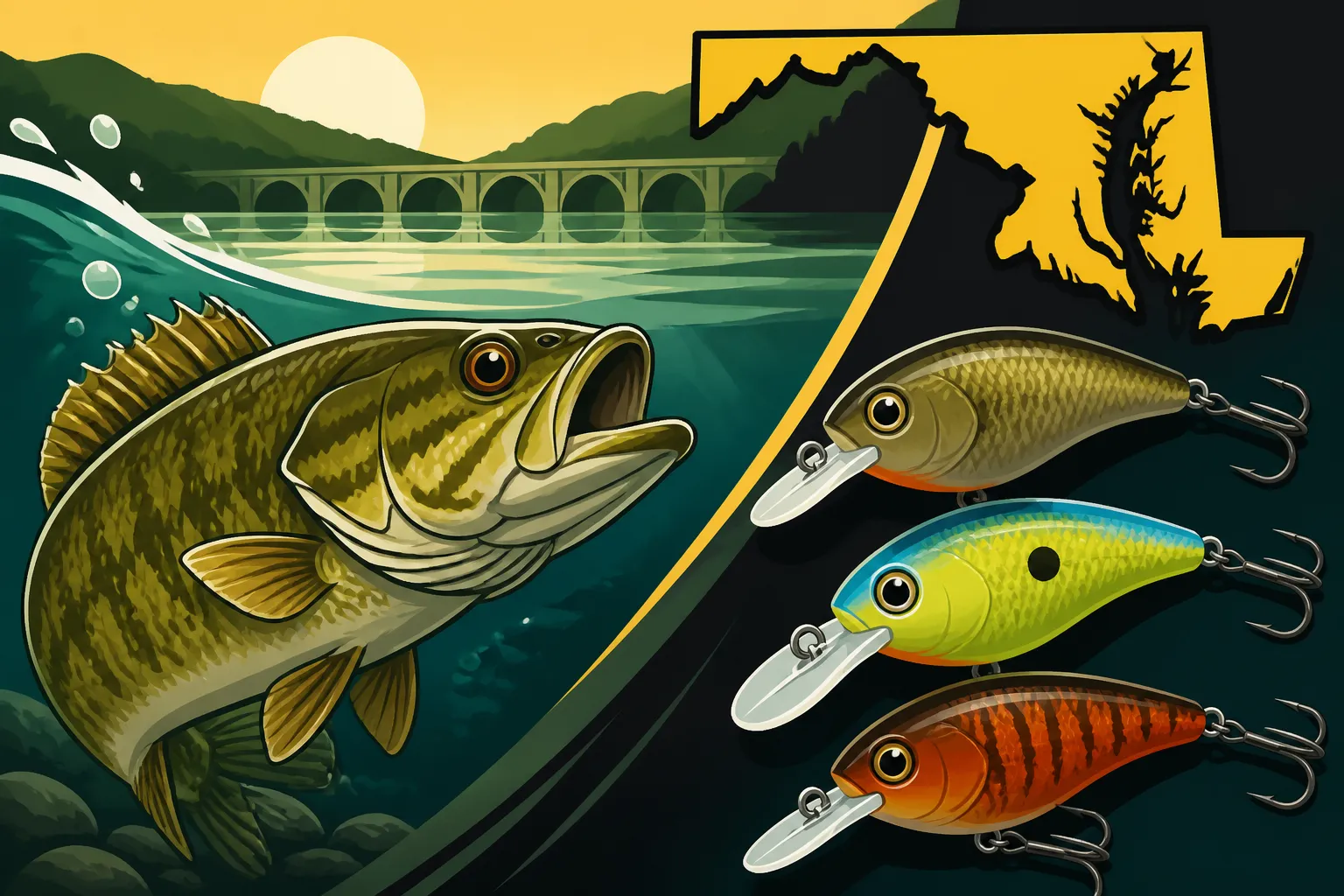
The lip of a crankbait is its most defining feature, determining how deep it dives and how it interacts with structure. For river smallmouth, you'll primarily be looking at shallow-diving and medium-diving models. Shallow-diving crankbaits, often with a shorter, wider lip, are perfect for working rocky flats, shallow eddies, and bouncing off submerged boulders in 2-6 feet of water. These baits tend to have a wider wobble and excellent deflection properties, making them ideal for covering water quickly without constant snagging.
Medium-diving crankbaits, with longer, narrower lips, can reach depths of 6-12 feet, making them suitable for probing deeper runs, channel edges, and larger rock piles. The key here is to select a crankbait that dives just below the depth of the water you're fishing. This allows the lip to contact the bottom or structure, creating those crucial deflections that trigger strikes. If your crankbait is diving too deep, you'll spend more time snagged than fishing. If it's too shallow, it won't be in the strike zone. Matching the crankbait’s dive curve to the depth of the structure is a skill that comes with practice but pays huge dividends.
Color and Pattern Selection
When it comes to crankbait colors for the Susquehanna, a good rule of thumb is to match the hatch, but also be prepared to experiment. Natural patterns are often excellent choices. Crayfish are a primary food source for river smallmouth, so crankbaits mimicking crayfish in shades of brown, orange, and green are almost always a solid bet. Consider variations like "rootbeer" or "chartreuse craw" for different water clarities. Baitfish patterns, such as those resembling shad, shiners, or even juvenile perch, in silver, white, or olive, are also highly effective, particularly in clearer water or when smallmouth are actively chasing schools of bait.
However, sometimes a smallmouth needs a little more convincing. In stained or murky water, brighter, more contrasting colors like chartreuse, fire tiger, or even a bold bluegill pattern can be incredibly productive. These colors create a stronger silhouette and are more easily detected by fish in low visibility conditions. On brighter, sunny days with clear water, subtle, translucent colors might be more effective. Always carry a variety and don't be afraid to change colors frequently until you find what the fish are keying in on. Think about light penetration and water clarity; it's less about human preference and more about what the fish can see and what looks like an easy meal.
Rattles and Action
The internal components of a crankbait play a significant role in its effectiveness. Many crankbaits feature internal rattles, which create noise and vibration in the water. In the often-turbulent and rock-filled Susquehanna, this extra sound can be a major advantage, helping smallmouth locate the lure, especially in stained water or deeper sections. The subtle clatter of a small chamber or the loud thud of a larger, single tungsten ball can make all the difference. Sometimes, a quiet lure might be preferred in clear, calm conditions where fish are easily spooked, but often, the added commotion of a rattling crankbait is a powerful attractant.
Beyond rattles, the action of the crankbait refers to its wobble and how it moves through the water. Squarebill crankbaits, which we'll discuss more, are famous for their erratic, hard-wobbling action and their ability to deflect off structure without snagging. Rounder-bodied crankbaits might have a tighter wobble, suitable for different presentations. The specific action you choose often depends on the mood of the fish and the speed of your retrieve. A wider wobble might be better for attracting aggressive fish, while a tighter shimmy could be more appealing to hesitant ones. Experimenting with different actions will help you fine-tune your approach. You can find a wide selection of these varied options on Amazon, making it easy to build a diverse crankbait arsenal.
Top Crankbait Styles for the Susquehanna
With the basics covered, let's dive into the specific types of crankbaits that consistently perform well for smallmouth bass on the Susquehanna River. These aren't just random picks; they're chosen for their unique strengths in river environments, allowing you to adapt to various conditions and fishing scenarios. Having a few of each of these in your tackle box will put you in a great position to tackle any smallmouth challenge.
Shallow-Diving Crankbaits
Shallow-diving crankbaits are absolute workhorses on the Susquehanna, particularly when fishing rocky shoals, current breaks, and the edges of shallower channels. These baits typically dive from 2 to 6 feet and are characterized by a shorter, often wider, bill. Their primary advantage is their ability to deflect off rocks and timber without getting hung up easily, creating that crucial erratic action that mimics a panicked baitfish or crayfish. This "crash-and-deflect" technique is incredibly effective for triggering reaction strikes from smallmouth.
Brands like Strike King's KVD 1.5 Shallow Runner or Rapala's Scatter Rap Shad are excellent examples. These lures are designed to be retrieved at various speeds, and their wide wobble displaces a lot of water, making them highly detectable. When fishing clearer water, opt for natural baitfish or crayfish patterns. For stained water or overcast days, brighter colors like chartreuse or fire tiger can make a big difference. Many anglers stock up on these versatile shallow divers from Amazon for convenience and variety. These are often the first baits tied on when exploring new stretches of river.
Medium-Diving Crankbaits
When smallmouth move a bit deeper, perhaps into 6 to 10 feet of water along channel edges or in larger pools, medium-diving crankbaits become your go-to. These lures typically have a longer, narrower bill that allows them to reach greater depths while still maintaining good deflection properties. They are perfect for targeting those slightly deeper rock piles, submerged ledges, and areas where the current pushes baitfish into more concentrated zones.
Lures such as the Berkley Dredger or the Lucky Craft LC 2.5 are fantastic choices. Their ability to "grind" the bottom in deeper sections and deflect off structure can be incredibly effective. The key is to select a bait that reaches just a bit deeper than the water you're fishing, ensuring that lip contact for maximum strike-triggering action. A slower retrieve can sometimes be more effective with these deeper divers, allowing the bait to work its way through the structure more deliberately. For those looking to broaden their smallmouth arsenal beyond crankbaits, exploring options like those discussed in our How to Fish a Popper for Smallmouth Bass guide can also add versatility to your approach, especially in different seasons or water conditions.
Squarebill Crankbaits
If there's one style of crankbait that shines brightest in river environments like the Susquehanna, it's the squarebill. These baits are specifically designed with a square-shaped lip that excels at deflecting off hard cover without hanging up. The square bill allows the bait to kick out and away from obstructions rather than nose-diving into them. This erratic deflection is absolutely irresistible to smallmouth bass, often causing a strike the moment the lure bounces off a rock or log.
Popular squarebill models include the SPRO RkCrawler and the Rapala CrushCity Freeloader. Their robust construction can withstand constant banging against rocks, a common occurrence when fishing the Susquehanna. They typically run in the 2-8 foot depth range, making them versatile for many river scenarios. Focus on retrieving them with an irregular cadence, pausing briefly after a deflection to let the bait "float" slightly, mimicking an injured or disoriented prey. This pause-and-go can be a potent trigger. You can often grab great deals on various squarebill options on Amazon, ensuring you have a diverse selection for different situations.
Lipless Crankbaits
While not traditional "crankbaits" in the sense of having a diving lip, lipless crankbaits are incredibly versatile and effective for river smallmouth, earning their place in this discussion. These baits sink, allowing you to fish any depth, and are characterized by a tight, high-frequency wobble and often loud rattles. They are fantastic for covering large amounts of water quickly, especially over shallow flats or across deeper humps.
Brands like the Bill Lewis Rat-L-Trap or the Strike King Redeye Shad are iconic lipless crankbaits. In the Susquehanna, they excel when yo-yoed or ripped through submerged grass beds or over rocky bottom. The vibration they emit is intense and can draw strikes from a distance, even in stained water. They are also excellent for fishing around schools of baitfish, as their profile and action closely mimic fleeing prey. Be mindful of snags when fishing them along the bottom in extremely rocky areas, but their ability to attract active smallmouth makes them an indispensable part of a river angler's tackle box. For a closer look at the species you might encounter, our Smallmouth Bass vs Largemouth Bass in Maryland, How to Tell Them Apart guide offers useful identification tips.
Crankbait Fishing Techniques and Presentation
Knowing which crankbaits to use is only half the battle; the other half is understanding how to present them effectively. River smallmouth fishing demands specific techniques, especially when dealing with current, varying depths, and abundant structure. It's about more than just casting and reeling; it's about making your lure come alive and appear as an irresistible meal.
Casting and Retrieval Strategies
When casting crankbaits for Susquehanna smallmouth, accuracy is paramount. You want to place your lure precisely near structure – the upstream side of a boulder, the edge of a current seam, or right up against a submerged log. Don't just cast out into the open river; identify your target and aim for it. A good quality baitcasting setup with a medium-heavy rod will give you the power and precision needed for this kind of fishing.
The retrieval strategy is where the magic happens. A steady retrieve is often a good starting point, but smallmouth frequently react to changes in speed and direction. Experiment with varying your retrieve, incorporating pauses, short jerks, and sudden bursts of speed. The "stop-and-go" retrieve can be particularly effective, allowing the crankbait to momentarily suspend or float before resuming its erratic motion. Remember, you're trying to mimic a distressed or fleeing baitfish. Any sudden, unpredictable movement can trigger a predatory instinct. Don't be afraid to mix it up until you find what the fish prefer on any given day. To maximize your chances, consider how these techniques fit into the broader seasonal patterns, as detailed in Best Month to Catch Smallmouth Bass in Maryland.
Fishing Around Current and Structure
The Susquehanna's current is a major factor, and understanding how to use it to your advantage is critical. Smallmouth bass often position themselves in current breaks – areas where the water is slower, allowing them to conserve energy while waiting for food to be swept by. Cast your crankbait upstream of these current breaks and allow the current to carry it naturally into the strike zone. This makes the lure look like an easy meal drifting helplessly downstream.
Once the lure is in the strike zone, begin your retrieve, aiming to make contact with any submerged structure. As mentioned earlier, banging the crankbait off rocks or deflecting it off wood is key. When your lure hits an obstruction, pause for a split second, allowing it to "kick out" before continuing your retrieve. This sudden, erratic movement often triggers a strike from a waiting smallmouth. Pay attention to how the current affects your lure; adjust your retrieve speed to maintain optimal depth and action. Sometimes, a slow, deliberate retrieve is best in slower current, while a faster pace might be needed in stronger flows to keep the bait from getting swept away too quickly. For general license information, don't forget to check out the Maryland Fishing License Guide for 2026 before you head out.
| Crankbait Type | Dive Depth (Feet) | Ideal Susquehanna Conditions | Key Action/Feature | Best Use Case |
|---|---|---|---|---|
| Shallow-Diver | 2-6 | Rocky flats, shallow eddies, current breaks, clear water | Wide wobble, deflects | Covering shallow areas, enticing aggressive fish |
| Medium-Diver | 6-10 | Deeper runs, channel edges, larger rock piles | Moderate wobble, dives | Probing deeper structure, summer/fall fishing |
| Squarebill | 2-8 | Heavy rock, submerged wood, irregular bottom, stained water | Erratic deflection, hard | Bouncing off obstacles, triggering reaction strikes |
| Lipless Crankbait | Any (sinking) | Submerged grass, open flats, varying depths, windy conditions | Tight wobble, loud rattle | Searching vast areas, vertical jigging, ripping grass |
Disclaimer
Please remember that fishing regulations in Maryland, including those for the Susquehanna River, can change. Always consult the latest Maryland Department of Natural Resources (DNR) rules and regulations before you go fishing. This guide is for informational purposes only and does not supersede official regulations.