Cold-Weather Fishing Tips for Maryland’s Chesapeake Bay
Oh, the crisp air, the quiet solitude of the water, the challenge of coaxing a bite when the temperatures drop! While many anglers pack away their gear once the leaves fall, some of us know that the colder months in Maryland's Chesapeake Bay offer some truly incredible, and often less crowded, fishing opportunities. But let's be honest, heading out when the mercury plummets can be intimidating. The thought of shivering on the water, struggling with numb fingers, or just plain not knowing where the fish have gone can keep even the most dedicated angler home. This guide is here to tackle those fears head-on, sharing practical, real-world tips and tricks to make your cold-weather fishing adventures in the Bay not just tolerable, but truly rewarding.
Understanding the Winter Bay: What Changes for Fish?
The Chesapeake Bay in winter is a vastly different environment than its summer self, and understanding these shifts is crucial to finding success. Fish don't just disappear; they adapt, and so must we. The key is to think like a fish, understanding their physiological responses to the cold and their search for comfort and sustenance.
Water Temperature's Impact on Fish Behavior
The most significant change in winter is, predictably, the water temperature. As the Bay's vast expanse cools down, fish metabolism slows dramatically. Imagine trying to run a marathon in a deep freeze – your body just wouldn't be as efficient. Similarly, fish become more lethargic, moving slower, eating less frequently, and conserving energy. This means they're less likely to chase a fast-moving bait or expend energy on a risky meal.
For popular species like the iconic rockfish (striped bass) and white perch, this often means congregating in deeper, more stable temperature zones. These areas, like deep channels, holes, or near structure, offer a refuge from the fluctuating surface temperatures and harsh winds. You'll find stripers might move out of the shallow flats they frequented in fall and tuck into the main channel of the Bay or its deeper tributaries. White perch, known for their schooling behavior, will pack tightly into deep pockets, often around oyster beds or bridge pilings, seeking that slight thermal advantage. They won't be as aggressive, so you'll need to present your baits slowly and precisely right where they're holding.
Baitfish Migration and Food Sources
Just like the predators, baitfish also react to the cold. Many migratory species, like menhaden, will either move out of the Bay entirely or seek deeper, warmer waters further south. This scarcity of their usual forage forces resident fish to become opportunistic, or to rely on less mobile food sources. Those baitfish that remain, like silversides or some smaller herring species, will also seek thermal refuge, often in the same deeper channels and holes where predators are lurking.
Understanding this dynamic is key. If the primary food source has left, predators won't be as actively hunting across wide areas. Instead, they'll concentrate where what little food is available is also concentrated. This often translates to targeting bottom-dwelling invertebrates or smaller, slower-moving fish. Anglers need to adjust their bait presentations to mimic these slower, colder food sources. The vibrant, active schools of bait you saw in the fall will be a distant memory, replaced by a more subtle, deep-water hunt for survival.
Tidal Influences and Optimal Fishing Windows
While tides are always a factor in Bay fishing, their influence can feel even more pronounced in cold weather. With fish already less active, strong, ripping currents can make it even harder for them to feed, and they'll often tuck out of the main flow behind structure. Conversely, a gentle current can sometimes be the ticket, bringing food to their doorstep without requiring much effort.
Many seasoned cold-weather anglers will tell you that slack tide, or the periods just before and after, can be golden. During these times, the current is minimal, allowing fish to move more freely and inspect baits without fighting a strong flow. However, it's not a hard and fast rule; sometimes a slow, steady current pushing food over a deep-water ledge is exactly what you need. Observing the water, understanding the specific location's current patterns, and even considering the moon phase can help you pinpoint those optimal feeding windows, which might be shorter and more sporadic than in warmer seasons. Paying attention to these subtle changes in the environment is a hallmark of successful cold-weather angling.
Essential Gear for Cold-Weather Comfort and Safety
Fishing in the cold isn't just about catching fish; it's about staying comfortable and, more importantly, safe. The Chesapeake Bay in winter can be beautiful, but it's also unforgiving. Hypothermia is a real danger, and being unprepared can turn a fun day into a miserable, or even dangerous, experience.
Layering Like a Pro: Staying Warm from Head to Toe
The secret to cold-weather comfort on the water is strategic layering. Forget bulky sweaters that restrict movement; think smart, breathable layers that trap heat and wick away moisture.
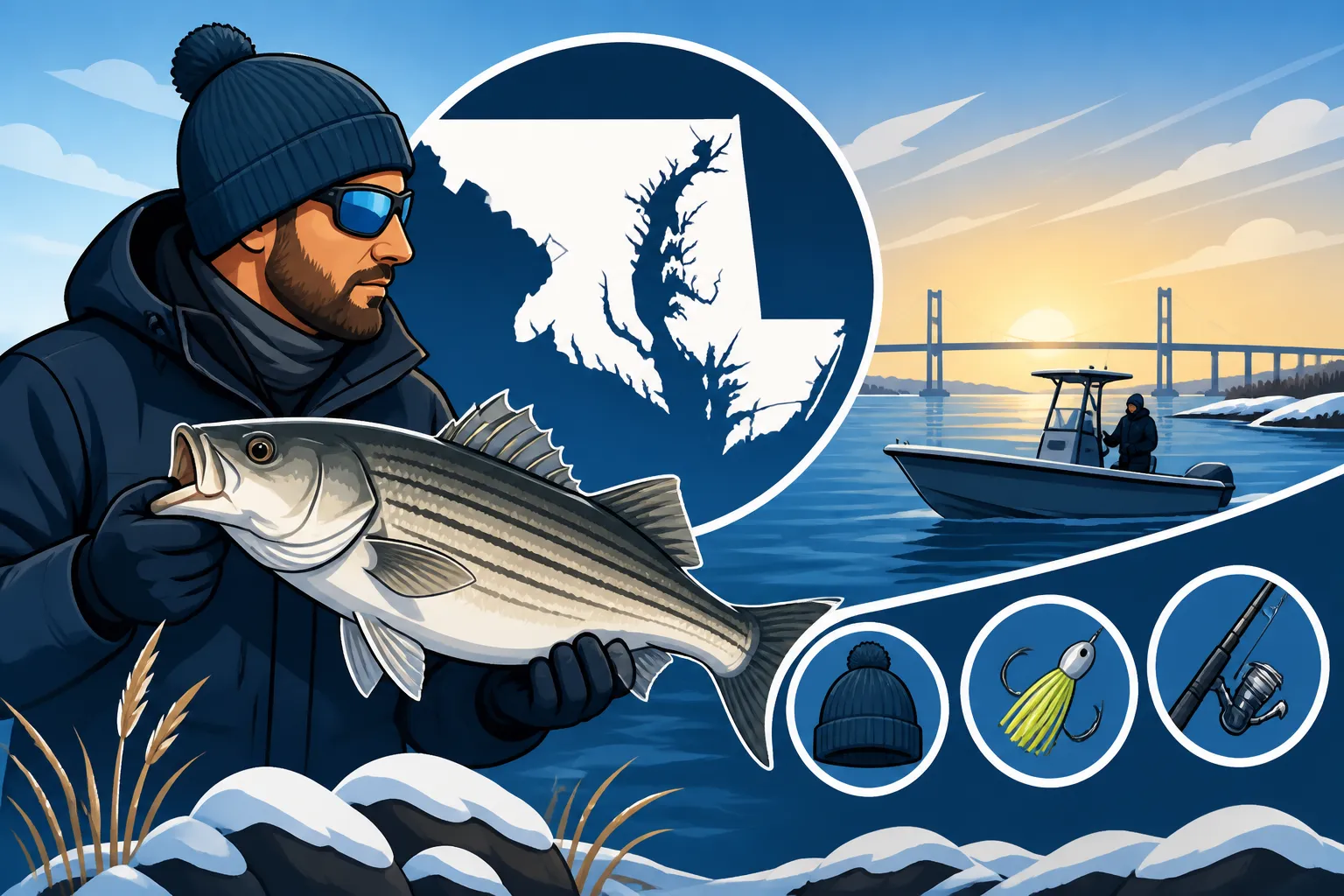
Start with a good base layer. This should be made of moisture-wicking synthetic material or Merino wool, not cotton. Cotton absorbs sweat and stays wet, chilling you to the bone. Brands like Under Armour or Icebreaker are popular for their base layers. Next, add a mid-layer for insulation. This could be a fleece jacket or a heavier wool sweater. The goal here is to trap warm air close to your body. Finally, your outer layer needs to be completely waterproof and windproof. A high-quality fishing bib and jacket combo is invaluable. Look for materials like Gore-Tex or similar waterproof-breathable fabrics. For serious offshore or Bay fishing, consider a float suit, which combines insulation with buoyancy, offering an extra layer of safety. Don't forget your extremities! A warm, windproof hat that covers your ears is non-negotiable. Insulated, waterproof gloves are a must, though you might need thinner liner gloves for dexterity when tying knots. And for your feet, opt for thick wool socks and insulated, waterproof boots. Neoprene waders can also offer excellent insulation if you're shore wading. You can find a huge variety of these essential cold-weather fishing garments on Amazon, often with detailed reviews to help you choose.
Specialized Rods, Reels, and Line for the Chill
Cold weather also impacts your gear's performance and your ability to detect subtle bites. Your summer setup might not cut it. Rod sensitivity becomes paramount when fish are barely nudging your bait. Look for graphite rods with a fast action, which transmit those faint taps directly to your hand. Longer rods can sometimes offer better line control and distance when casting in windy conditions.
Reels need to be well-maintained and capable of smooth operation in lower temperatures. Ensure your drag system is clean and lubricated with cold-weather grease if possible, as standard lubricants can stiffen and cause jerky drag. Line choice is also critical. Monofilament can suffer from memory and stiffness in the cold, making it harder to cast and manage. Braided line, with its lack of stretch and excellent sensitivity, is often preferred, but remember to use a fluorocarbon leader for abrasion resistance and stealth. Heavier line test might be beneficial, not necessarily for fighting larger fish, but for its durability against ice buildup on guides and the increased risk of snagging in deeper, more complex winter structures. Ensure your line guides are clear of ice accumulation, as this can severely impede casting and retrieval.
Safety First: PFDs, Warming Aids, and Emergency Prep
The greatest danger in cold-weather fishing is cold water immersion. Even on relatively mild winter days, the water temperature in the Chesapeake Bay can be lethal within minutes. Always, and I mean always, wear a properly fitted Personal Flotation Device (PFD). An inflatable PFD is less bulky and more comfortable, but ensure it's rated for cold water. Better yet, as mentioned, consider an insulated float suit that doubles as a PFD.
Beyond that, prepare for the worst. Carry multiple sources of warmth: chemical hand warmers and foot warmers are fantastic for keeping fingers and toes functional, and you can buy them in bulk on Amazon. A thermos of hot coffee, tea, or soup is a morale booster and a lifesaver. Pack a dry bag with spare clothes, a thermal blanket, a first-aid kit, and a fully charged cell phone. A marine radio is also highly recommended for boaters, as cell service can be spotty in some Bay areas. Inform someone of your float plan – where you're going, when you expect to return, and who is with you. Being prepared isn't just smart; it's non-negotiable when venturing onto cold water.
Top Techniques for Cold-Weather Success in the Chesapeake Bay
When the water gets cold, fish slow down, and so should your approach. High-speed retrieves and aggressive presentations that worked in summer will likely yield nothing but numb fingers. The name of the game is finesse, patience, and precision.
Slow and Low: Targeting Lethargic Striped Bass
Striped bass, or rockfish as we call them in Maryland, are still catchable in winter, but you need to adjust your tactics. They won't be chasing down schools of bait with the same vigor. Instead, they'll typically be holding tight to structure in deeper water, often near the bottom, conserving energy.
The most effective technique for these lethargic fish is usually a slow, deliberate jigging presentation. Find deep channels, ledges, or humps where fish are likely to congregate. Use a heavy jig head with a soft plastic bait, like a BKD or a Z-Man swimbait. Drop it to the bottom and work it with slow, subtle lifts and drops, mimicking a wounded or dying baitfish. The bites will often be incredibly light – just a slight "thump" or added weight on your line – which is why sensitive gear is so important. Vertical jigging directly over schools of fish marked on your sonar is often the most productive. Remember, they're not going to swim far for a meal, so you need to put the bait right in front of them. For more details on this, check out our guide on Jigging Techniques for Maryland's Chesapeake Bay Striped Bass.
Finding Winter White Perch Honey Holes
White perch are a fantastic cold-weather target because they school up so tightly, making them easier to locate once you find a "honey hole." They'll seek out the deepest parts of rivers and creeks, as well as main Bay structures like bridge pilings, oyster reefs, and channel edges.
Light tackle is key for white perch. Use small jig heads (1/8 to 1/4 ounce) tipped with tiny soft plastics, pieces of Fishbites, or the classic bloodworm. Bloodworms are often considered the gold standard for perch bait, even in winter. Drop your bait directly down to where you see them on your fish finder, or just feel for the bottom in known deep holes. A subtle jigging motion, barely lifting the bait off the bottom, is often all it takes. Once you catch one, keep dropping back down – where there's one white perch, there are usually hundreds! This can provide fast action on an otherwise slow day. You can learn more about these resilient fish in our dedicated article, Winter Fishing for White Perch in Maryland.
Bottom Fishing for Catfish and Other Cold-Hardy Species
While stripers and perch often steal the winter spotlight, don't overlook the incredible opportunities for bottom fishing, particularly for invasive blue catfish. These robust fish thrive in cold water and offer a powerful fight. They're often found in the deeper channels of the Bay's tidal rivers, such as the Potomac, Patuxent, and Choptank.
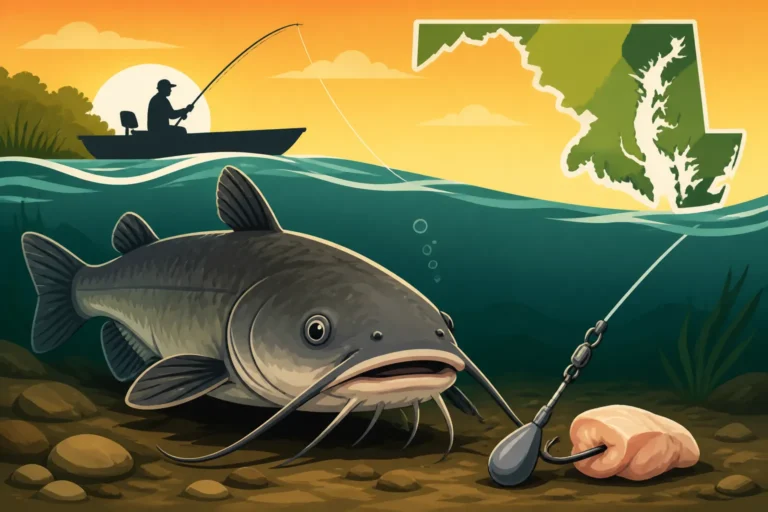
Heavy-duty tackle is recommended for blue catfish, as they can grow to immense sizes. A typical setup involves a heavy sinker (2-8 ounces, depending on current) on a fish-finder rig or a Carolina rig, with a large circle hook. The best bait is often fresh cut bait – pieces of gizzard shad, menhaden, or even chicken liver can be irresistible. Anchor up in a deep channel or near a sharp drop-off and fan cast your baits around. The bites can range from subtle nudges to rod-bending thumps. These fish are not only plentiful but are also delicious, and harvesting them helps the Bay ecosystem by reducing an invasive species. Our guide on Bottom Fishing Techniques for Maryland Catfish has more in-depth advice.
Prime Locations and Best Times for Winter Angling
Knowing how to fish in the cold is important, but knowing where and when to go makes all the difference. Fish aren't evenly distributed in the winter Bay; they concentrate in specific areas for warmth and food.
Chesapeake Bay Tributaries and Deep Channels
When the main Bay gets frigid and rough, the protected tidal rivers and deep channels often hold the key to winter success. Rivers like the Patuxent, Choptank, and Nanticoke offer deeper, more stable water temperatures compared to the wide-open Bay. Fish, especially striped bass and white perch, will often migrate into these tributaries to seek refuge.
Look for the deepest parts of these rivers, particularly where they feature sharp channel bends, humps, or oyster beds. These topographical features can create current breaks and deeper pockets where fish can hold. Some anglers even find success near warm water discharges from power plants, though it's essential to check local regulations around these areas. The fishing can be phenomenal in these tributaries, offering a break from the wind and often calmer waters, making for a more pleasant day. Our guide on Fishing Maryland's Eastern Shore Rivers delves into many of these fertile grounds, and you can explore specific areas like Fishing the Patuxent River for detailed advice.
Structure Fishing: Bridges, Reefs, and Wrecks
Structure is a magnet for fish year-round, but it becomes an even more critical component in cold weather. Bridge pilings, artificial reefs, and submerged wrecks offer both current breaks and stable holding areas. The massive concrete and steel of structures like the Chesapeake Bay Bridge pilings absorb and radiate a bit more warmth than the surrounding water, making them prime winter habitat.
Striped bass will often stack up on the down-current side of bridge pilings or along the edges of deep-water reefs. White perch will also cling to these structures. This type of fishing often requires precise boat positioning and accurate bait placement. Using your sonar to identify schools of fish holding tight to these structures is invaluable. Dropping jigs or live bait directly into these schools, or slowly working them along the structure, is usually the most effective approach. For those targeting the iconic Chesapeake Bay Bridge, our guide on Fishing Near the Chesapeake Bay Bridge provides invaluable insights.
Timing Your Trip: Weather Windows and Tidal Flux
Winter fishing isn't just about cold; it's about how cold and what the weather is doing. The best days for cold-weather fishing are often those with stable high-pressure systems, light winds, and, ideally, a bit of sunshine. These conditions make for a more comfortable experience on the water and can sometimes encourage lethargic fish to become slightly more active. Avoid days immediately following a drastic cold front, as fish will often be shut down.
As mentioned earlier, tides play a significant role. While many anglers favor the periods around slack tide for bottom-dwelling species, a slow, consistent current can also be productive as it delivers food to stationary fish. Always check your local tide charts before heading out. Beyond tides, consider the time of day. While early mornings are often prime in summer, the warmest part of a winter day – usually late morning to mid-afternoon – can sometimes be the most productive, as it corresponds to a slight warming of the shallowest waters or increased fish activity. For a deeper dive into timing your trips, read our comprehensive article on Best Time of Day to Fish Maryland's Chesapeake Bay.
Bait and Lure Selection for Cold-Water Bites
In cold water, fish aren't in a hurry. They're conserving energy, and any meal needs to be worth the effort. This means your bait and lure choices, and more importantly, your presentation, need to reflect that.
The Art of Subtle Presentation
When fish are cold and lethargic, aggressive, fast-moving presentations are rarely effective. Think subtle, slow, and right-in-their-face. Lures should have minimal action and be worked at a snail's pace. If you think you're going slow enough, go even slower.
This might mean letting a jig sit on the bottom for an extended period before a barely perceptible lift, or slowly dragging a soft plastic bait rather than jigging it actively. Colors can also play a role. While bright colors can sometimes trigger a reaction, more natural baitfish patterns or high-contrast colors like chartreuse, white, or dark purple can be effective in murky or deep water. Sometimes, it's about making your offering appear as easy a meal as possible – a slow, vulnerable target that doesn't require much energy to catch. This also emphasizes the need for sensitive rods to detect those extremely light bites. Consider a general guide like Maryland Striped Bass Fishing Techniques for a broader understanding of presentation.
Best Natural Baits for Winter Species
For many cold-water scenarios in the Chesapeake Bay, natural bait reigns supreme. It offers scent, taste, and a lifelike texture that can entice even the most inactive fish.
- Bloodworms: These are perhaps the quintessential cold-water bait for white perch. Their strong scent trail and wiggly action are irresistible to perch, and they can often attract other species too. Thread them carefully onto small hooks.
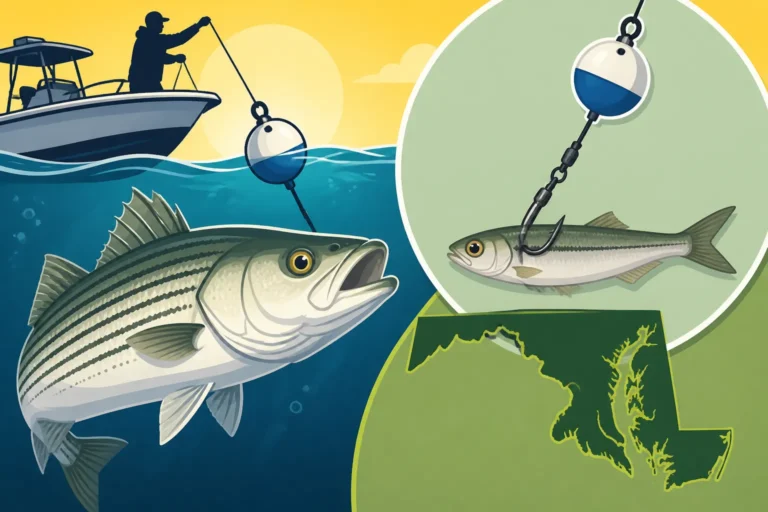
- Minnows: Live or salted minnows can be very effective for both white perch and striped bass. When live-lining minnows for stripers, use a very slow retrieve or simply let them swim naturally near the bottom in deep holes.
- Cut Bait: For blue catfish, cut bait is king. Fresh chunks of gizzard shad, menhaden (if available), or even store-bought chicken liver or clam snouts work well. The strong scent disperses in the cold water, drawing in hungry catfish from a distance. The invasive nature of Maryland Blue Catfish, an Invasive Giant means that harvesting them is encouraged.
Live bait can be harder to come by in winter, so call ahead to your local tackle shop to ensure availability.
Artificial Lures That Get Results
While natural bait is often a go-to, certain artificial lures can also be highly productive if presented correctly.
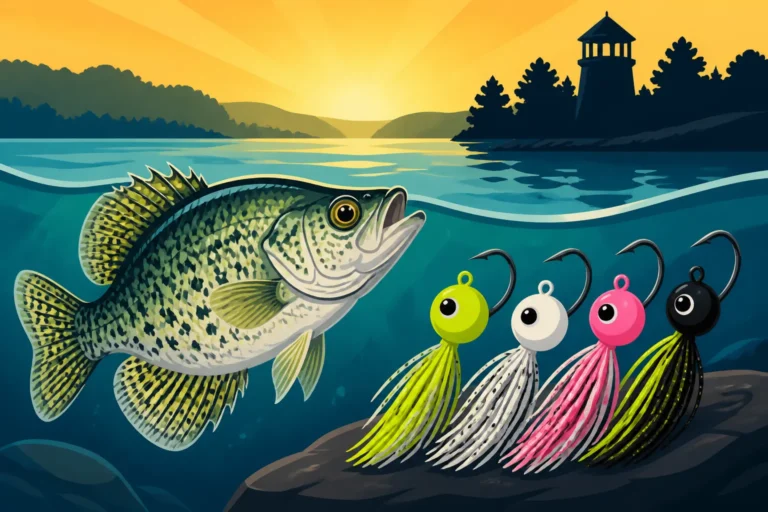
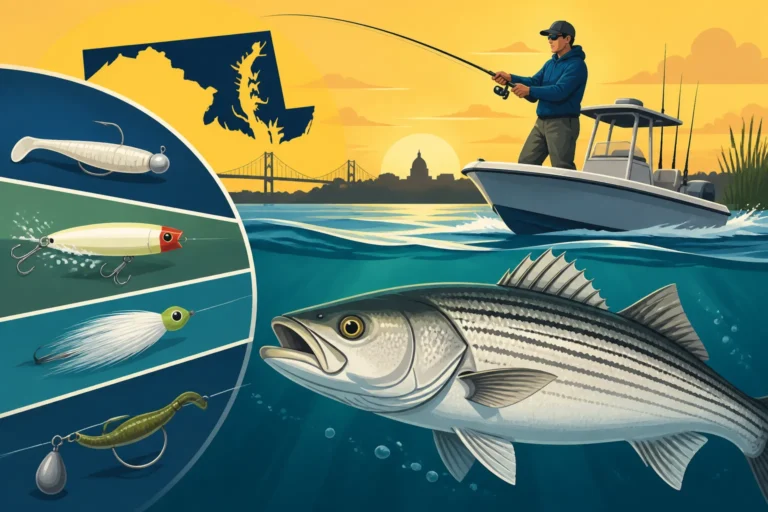
- Soft Plastics on Jig Heads: These are arguably the most versatile winter lures. Paddle tail or curly tail swimbaits, grubs, and even straight-tail worms rigged on lead jig heads allow for a slow, bottom-hugging presentation. Popular options include those from trusted brands like Z-Man or Bass Kandy Delights (BKDs). Look for sizes that mimic small baitfish or bottom forage, usually 3-6 inches for stripers and 1-2 inches for perch. Many anglers swear by white, chartreuse, or pink in cold, darker water, which you can easily find on Amazon.
- Blade Baits: These small, vibrating metal lures can be highly effective when vertically jigged. Their flash and subtle vibration can trigger strikes from lethargic fish that might ignore other offerings.
- Small Spoons: Spoons, particularly slender, casting spoons, can be slowly jigged or trolled at very low speeds to entice bites. The reflective flash can mimic a dying baitfish.
- Scented Baits: Adding fish attractant to your soft plastics can give them an extra edge, especially when fish are relying more on smell than sight in the cold, deep water.
Remember, the retrieve is more important than the lure itself. Slow, methodical, and close to the bottom is almost always the rule for winter artificials.
Comparing Winter Species and Their Preferences
To help you get started, here's a quick overview of some popular winter targets in the Bay:
| Species | Preferred Winter Habitat | Best Baits / Lures | General Technique |
|---|---|---|---|
| Striped Bass | Deep channels, structure, bridge pilings | Soft plastics on heavy jigs, live minnows (if legal) | Slow vertical jigging |
| White Perch | Deep holes, oyster reefs, bridge pilings | Bloodworms, small soft plastics, tiny jig heads | Bottom bouncing, light jigging |
| Blue Catfish | Deep river channels, tidal creeks, mud flats | Fresh cut bait (shad, menhaden), chicken liver | Heavy bottom rig, anchored |
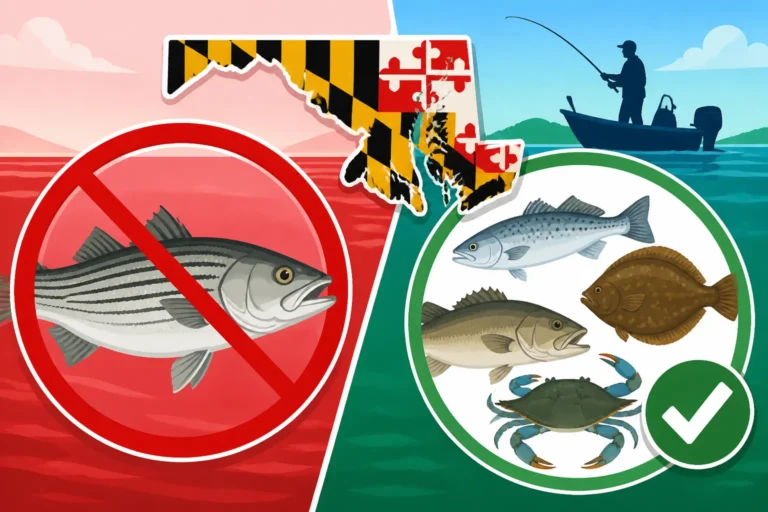
Before you head out, always make sure you're up-to-date on all current Maryland Department of Natural Resources (DNR) regulations, including Maryland Fishing Size and Catch Limits by Species and specific rules for different parts of the Bay or its tributaries. For tidal waters of the Bay, a Maryland Chesapeake Bay Sport Fishing License Explained is typically required, even if you’re fishing from shore or a pier. Knowing the specific regulations for White Perch in Maryland's Chesapeake Bay and Maryland Striped Bass Season and Rockfish Rules is absolutely crucial for a successful and legal trip.
Disclaimer
Please be aware that fishing regulations, seasons, and size/catch limits in Maryland are subject to change by the Maryland Department of Natural Resources (DNR) at any time. Always consult the most current Maryland DNR fishing guide or their official website before embarking on any fishing trip to ensure compliance with all applicable laws. This guide is for informational purposes only and does not supersede official regulations.