Maryland Chesapeake Bay Sport Fishing License Explained
Navigating the ins and outs of fishing regulations can feel like trying to untangle a knotted fishing line – frustrating, confusing, and often, you just wish someone would lay it out simply. Many anglers, especially those new to the Old Line State or venturing into new waters, often wonder about the specific requirements for casting a line in Maryland's iconic Chesapeake Bay. This comprehensive guide is here to untangle that confusion, explaining everything you need to know about the Maryland Chesapeake Bay Sport Fishing License, who needs it, what it covers, and why it's a vital part of enjoying our beautiful Bay.
What Exactly is the Chesapeake Bay Sport Fishing License?
Let's start by clarifying what this particular license is all about. The Maryland Chesapeake Bay Sport Fishing License isn't just another piece of paper; it's your official pass to legally fish in the vast, diverse tidal waters of Maryland. Think of it as your passport to the Bay and its tributaries, from the bustling harbors of Baltimore to the tranquil inlets of the Eastern Shore. This license specifically targets recreational fishing in tidal waters, which is a crucial distinction we'll dive into.
More Than Just a Permit: Understanding its Purpose
At its heart, this license serves multiple critical functions beyond simply granting you permission to fish. Every dollar spent on a Chesapeake Bay Sport Fishing License contributes directly to the conservation and management of Maryland's aquatic resources. This means your purchase helps fund scientific research, habitat restoration projects, fish stocking programs, and enforcement efforts that protect the very fish you're trying to catch. It's an investment in the future of fishing in Maryland, ensuring that future generations can enjoy the same opportunities we do today. Without these funds, the health of our Bay and its incredible fisheries would be at significant risk. It's a system designed to be self-sustaining, where anglers contribute directly to the resource they enjoy.
The Waters It Covers: Tidal vs. Nontidal Distinction
This is where many anglers get tripped up, and it's absolutely vital to understand: the Chesapeake Bay Sport Fishing License specifically covers tidal waters. What does "tidal" mean in this context? It refers to all the waters in Maryland that are influenced by the ebb and flow of the ocean tides. This includes the entire Chesapeake Bay, its numerous rivers and creeks up to the "fall line" (where the tidal influence stops and freshwater streams begin to flow more freely), and the coastal bays like those around Ocean City. If you're fishing saltwater or brackish water, or even the lower reaches of rivers where the water rises and falls with the tide, this is the license you generally need.
It's a common misconception that all fishing in Maryland requires just one license. In reality, Maryland has two main types of general fishing licenses: the Chesapeake Bay Sport Fishing License for tidal waters and the Non-Tidal Fishing License for freshwater. You can learn more about the critical differences in our guide on Maryland Nontidal vs Tidal Fishing License, Explained. Imagine you're fishing for striped bass near the Bay Bridge – definitely tidal. Now picture yourself fly-fishing for trout in the Gunpowder Falls upstream from the tidal influence – that's nontidal. Knowing the difference saves you from potential fines and ensures you're properly licensed for your chosen fishing spot.
Who Needs This Specific License in Maryland?
Determining who needs a Chesapeake Bay Sport Fishing License can sometimes feel like a pop quiz, but once you understand the core rules, it becomes much clearer. The short answer is: most people fishing recreationally in Maryland's tidal waters will need one, with a few key exceptions.
Age Requirements and Exemptions
Let's talk about the youngsters first, because we all want to get kids hooked on fishing responsibly! In Maryland, children under the age of 16 are generally exempt from needing a fishing license to fish in either tidal or nontidal waters. This is fantastic news for families, making it easier and more affordable to introduce the next generation to the joys of angling. So, if you're bringing your little ones out for a day of crabbing and perch fishing in the Bay, they won't need their own license. However, once they hit that magic age of 16, they'll need to secure their own license to continue fishing legally. We cover this in more detail in our article, Do Kids Need a Fishing License in Maryland?
Beyond age, there are a few other, less common exemptions. For instance, anglers fishing on certain designated Free Fishing Days in Maryland are also exempt, providing a perfect opportunity to try out fishing without the upfront cost of a license. Additionally, anglers fishing from a licensed charter boat or a licensed commercial fishing pier typically do not need their own individual license, as the vessel or facility license covers their fishing activity. This is a common arrangement, especially for tourists or those who only fish occasionally.
Residents vs. Nonresidents: Different Paths
Maryland, like most states, differentiates between residents and nonresidents when it comes to fishing license requirements and pricing. If you're a Maryland resident, meaning you've lived in the state for at least six consecutive months, you'll generally qualify for resident pricing, which is typically more affordable. If you don't meet that residency criteria, you'll be considered a nonresident. This distinction impacts not only the cost but also the types of licenses available, as nonresidents often have more short-term options to accommodate vacations or weekend trips.
For nonresidents, the Chesapeake Bay Sport Fishing License is still your ticket to fishing the Bay, but the fees will be higher. This reflects the investment residents make in the state's resources through taxes and other means. It's always best to be clear about your residency status when purchasing your license to avoid any issues down the line. You can find a complete breakdown of these differences in our guide on Resident vs Nonresident Fishing Licenses in Maryland.
When Other Licenses Might Suffice (or Not)
This can be a tricky area! It's easy to assume one license covers all your bases, but that's not always true. If your fishing plans only involve tidal waters (the Chesapeake Bay, its tidal rivers, coastal bays), then the Chesapeake Bay Sport Fishing License is usually all you need. However, if you plan to venture into nontidal freshwater lakes, rivers, or streams – even if they're just a short drive from the Bay – you'll need a separate Maryland Non-Tidal Fishing License.
Alternatively, many anglers opt for a Consolidated Sport Fishing License, which combines both tidal and nontidal fishing privileges into one convenient package. We'll delve deeper into that option later, but it's important to know that having just the Bay license means you're restricted to tidal areas. Trying to fish a freshwater reservoir with only a Chesapeake Bay license could lead to a fine, even if you genuinely misunderstood the rules. Always check the regulations for your specific fishing spot if you're unsure whether it's tidal or nontidal.
What Does This License Cost and How Long Does It Last?
Let's talk about the practical side of things: how much it costs and how long you can enjoy its benefits. Maryland offers various options for the Chesapeake Bay Sport Fishing License, catering to different angler needs, from annual passes to shorter-term permits.
Resident Pricing Breakdown
For Maryland residents, the pricing for the Chesapeake Bay Sport Fishing License is designed to be affordable for regular anglers. An annual resident Chesapeake Bay Sport Fishing License generally costs around $15. This is a fantastic value considering the vast amount of water and diverse fishing opportunities it unlocks for an entire year. There are also specific options for seniors. For example, Maryland offers a Senior Consolidated Sport Fishing License for eligible residents aged 65 and older, which often comes at a significantly reduced price, sometimes as low as $5, and typically covers both tidal and nontidal fishing. This is a great perk for our experienced anglers!
Here's a quick overview of typical resident costs (prices are subject to change, so always check the MD DNR website for the most current figures):
| License Type | Resident Cost (Approx.) | Coverage |
|---|---|---|
| Annual Chesapeake Bay Sport Fishing License | $15 | Tidal waters only, one calendar year |
| Annual Non-Tidal Fishing License | $20 | Nontidal waters only, one calendar year |
| Annual Consolidated Sport Fishing License | $35 | Both tidal and nontidal waters, one calendar year |
| 3-Day Chesapeake Bay Sport Fishing License | $10 | Tidal waters only, 3 consecutive days |
| Senior Consolidated Sport Fishing License (65+) | $5 | Both tidal and nontidal waters, one calendar year |
These prices reflect the state's commitment to making fishing accessible while still funding vital conservation efforts.
Nonresident Pricing Breakdown
Nonresidents have slightly different pricing structures, often with more short-term options to accommodate visitors. An annual nonresident Chesapeake Bay Sport Fishing License typically costs around $22.50. This is a great option for nonresidents who plan multiple trips to Maryland's Bay throughout the year. However, if you're just visiting for a weekend or a single week-long vacation, Maryland also offers shorter-term nonresident licenses, such as a 3-day Chesapeake Bay Sport Fishing License for about $12.50, or a 7-day option which combines tidal and nontidal for around $20.
These flexible options are incredibly helpful for those who don't live in Maryland but want to experience its world-class fishing. It's designed to ensure fair contribution to the state's fisheries management from all who enjoy them. Always verify the current nonresident fishing license costs on the Maryland Department of Natural Resources (DNR) website before making your purchase.
Understanding the License Term and Expiration
A crucial point that often catches anglers off guard is the license term. Most annual Maryland fishing licenses, including the Chesapeake Bay Sport Fishing License, are valid for one calendar year, typically from January 1st to December 31st. This means that if you buy your annual license in July, it will still expire on December 31st of that same year, not one year from your purchase date. It’s not like a subscription that renews exactly a year later. This is important to remember to avoid unknowingly fishing with an expired license.
Short-term licenses, such as the 3-day or 7-day options, are valid for the specific number of consecutive days indicated, starting from the date you specify at purchase. So, a 3-day license purchased to start on a Friday will cover Friday, Saturday, and Sunday, regardless of when you actually fish during those days. Make sure to plan your purchase date strategically to maximize its use! For more details on how long these licenses last, check out our post on How Long a Maryland Fishing License Lasts.
How to Purchase Your Chesapeake Bay Sport Fishing License
Getting your license doesn't have to be a hassle. Maryland has made the process relatively straightforward, offering a couple of convenient options to ensure you're legally equipped before you hit the water. No more last-minute scrambling!
Online Purchase: Convenience at Your Fingertips
In this digital age, the easiest and often most preferred method for buying a Maryland fishing license is online. The Maryland Department of Natural Resources (DNR) offers a user-friendly online licensing system where you can purchase your Chesapeake Bay Sport Fishing License from the comfort of your home, 24/7. This is fantastic because it means you can buy your license moments before heading out for an impromptu fishing trip, even if it's the middle of the night!
The online portal will guide you through the process, allowing you to select the appropriate license type (resident/nonresident, annual/short-term, tidal/consolidated), enter your personal information, and complete the payment. Once purchased, you can often print a temporary license immediately, or simply save a digital copy on your phone to present if asked by a Natural Resources Police officer. Many anglers appreciate this instant gratification, ensuring they're compliant without any delay. You can find more comprehensive steps in our guide on How to Buy a Maryland Fishing License.
In-Person Options: Bait Shops and DNR Service Centers
If you prefer a more traditional approach, or if you need to ask specific questions, purchasing your license in person is always an option. You can buy your Chesapeake Bay Sport Fishing License at various licensed retail agents across the state. These agents are typically bait and tackle shops, sporting goods stores, and some convenience stores – places you might already visit to stock up on gear or grab a snack before your trip. The staff at these locations are often fellow anglers and can be a great resource for local tips and current fishing conditions.
Additionally, you can purchase licenses at Maryland DNR Service Centers. While these have more limited hours than online or many retail agents, they can be helpful for more complex licensing needs or if you prefer speaking directly with a DNR representative. Just remember to check their operating hours before you head out. When buying in person, you'll need to provide the same personal identification and information as you would online.
What Information You'll Need to Provide
Regardless of whether you purchase your license online or in person, you'll need to have some basic information ready. This typically includes:
- Proof of Identity: A valid driver's license or state ID.
- Proof of Residency: If you're claiming resident status, your Maryland driver's license usually suffices. If it's a newer ID or you're an out-of-state college student, you might need additional documentation to prove six consecutive months of residency.
- Date of Birth: To verify age and eligibility for certain licenses (like senior licenses or youth exemptions).
- Basic Contact Information: Your name, address, phone number, and email.
Having this information readily available will make the purchase process smooth and quick, getting you out on the water faster.
What This License Doesn't Cover: Common Misconceptions
Understanding what the Chesapeake Bay Sport Fishing License does cover is important, but knowing what it doesn't cover can save you from unexpected fines and frustration. It's easy to assume a "Bay" license is all-encompassing, but Maryland's regulations have nuances that are good to be aware of.
Freshwater and Nontidal Waters
This is arguably the most common misconception. As we touched on earlier, the Chesapeake Bay Sport Fishing License is strictly for tidal waters. If you decide to go fishing in a freshwater lake, pond, or river upstream of tidal influence (a "nontidal" waterbody), your Chesapeake Bay license won't be valid. For these waters, you need a Maryland Non-Tidal Fishing License or the Consolidated Sport Fishing License.
Imagine you're fishing for striped bass near the mouth of the Patuxent River with your Bay license, and then on another day, you decide to try for largemouth bass at Loch Raven Reservoir. Your Bay license will cover you on the Patuxent, but you'd need the nontidal license for Loch Raven. This is why many experienced anglers who enjoy both types of fishing opt for the Consolidated license to avoid having to buy two separate permits or accidentally violating regulations. The boundary between tidal and nontidal waters can sometimes be subtle, especially on smaller creeks, so if in doubt, check a local fishing map or the MD DNR regulations.
Special Permits: Trout Stamps and Federal Waters
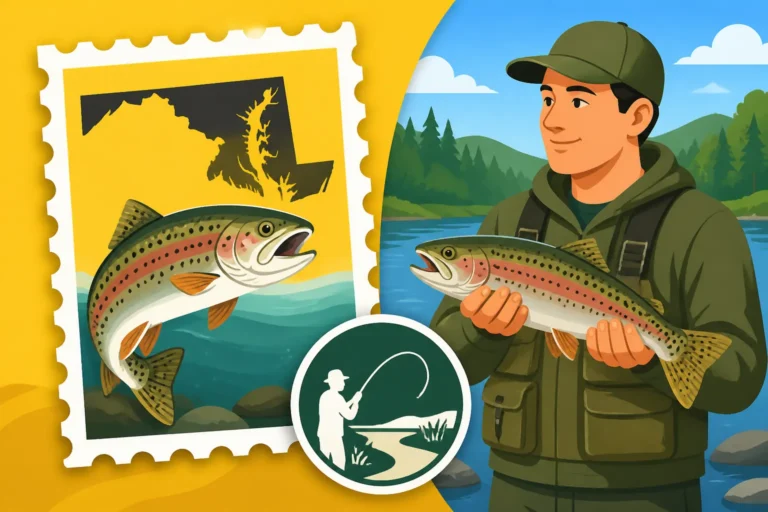
Beyond the basic tidal or nontidal distinction, certain fishing activities or locations require additional permits or stamps. The most prominent example is the Maryland Trout Stamp. If you plan to fish for trout in any designated trout management waters (like put-and-take areas or delayed harvest streams), you'll need to purchase a Maryland Trout Stamp in addition to your regular fishing license. This stamp helps fund trout stocking and management programs specifically. You can add this stamp when you buy your primary license. Our detailed guide on Maryland Trout Stamp Requirements explains everything you need to know about this specific permit.
Another area of potential confusion is fishing in federal waters. While your Maryland Chesapeake Bay Sport Fishing License covers Maryland's state tidal waters, if you venture into federal waters (typically more than three miles offshore in the Atlantic Ocean), you might encounter different or additional federal regulations. For the vast majority of recreational fishing within the Chesapeake Bay, your state license is sufficient, but it's always wise to be aware of the boundaries, especially if you're engaging in offshore fishing from Ocean City.
Crabbing and Other Recreational Activities
While many people associate crabbing with fishing in the Bay, a standard Maryland Chesapeake Bay Sport Fishing License typically does not cover recreational crabbing. If you plan to deploy crab pots, use trotlines, or engage in other forms of recreational crabbing (beyond a hand line or dip net for personal consumption), you will generally need a separate recreational crabbing license or a combination crabbing and fishing license.
This is a critical distinction because crabbing is a hugely popular activity in Maryland, and regulations are in place to manage the blue crab population. Always check the specific crabbing regulations and licensing requirements if you plan to target Maryland's famous blue crabs. Similarly, your fishing license doesn't cover activities like oyster harvesting or clamming, which fall under different sets of regulations and require separate permits. Your fishing license is for fishing, pure and simple.
Why This Specific License is So Important for Bay Anglers
You might wonder why there's so much emphasis on this particular license. Beyond the legal requirement, the Maryland Chesapeake Bay Sport Fishing License plays a critical role in the health and future of one of the nation's most important estuaries and its incredible fisheries.
Supporting Conservation Efforts
Every single Chesapeake Bay Sport Fishing License purchased directly contributes to the sustainability of the Bay's ecosystem. The revenue generated from these licenses goes into a dedicated fund managed by the Maryland Department of Natural Resources (DNR). These funds are then channeled back into vital conservation and management initiatives. This includes:
- Habitat Restoration: Projects aimed at restoring critical habitats like oyster reefs, submerged aquatic vegetation (SAV) beds, and tidal wetlands, which are crucial nursery grounds and feeding areas for countless species.
- Fisheries Research and Monitoring: Scientists continuously study fish populations, spawning patterns, and migration routes to ensure regulations are based on the best available data, preventing overfishing and promoting healthy stocks.
- Fish Stocking Programs: While not as prevalent in the Bay's tidal waters as in some nontidal areas, stocking efforts can supplement populations of certain species when needed.
- Enforcement: Funding also supports the Maryland Natural Resources Police, who patrol the waters to ensure compliance with regulations, protecting the resources from poaching and illegal fishing practices.
Without this financial support from anglers, the incredible progress made in Bay restoration and fisheries management would simply not be possible. It's truly a case where your individual purchase has a collective, positive impact.
Avoiding Fines and Legal Headaches
Let's be blunt: fishing without the proper license in Maryland can lead to significant fines and legal trouble. Natural Resources Police officers regularly patrol the Bay and its tributaries, and they are well within their rights to ask for your license. If you're caught fishing without a valid Chesapeake Bay Sport Fishing License where one is required, you could face a substantial monetary fine, confiscation of your gear, and potentially even court appearances. These penalties are designed to deter illegal fishing and reinforce the importance of supporting conservation.
The fines often far outweigh the cost of an annual license, making it a simple decision to purchase one beforehand. Beyond the financial penalty, there's the embarrassment and hassle of dealing with a violation. A quick check of the regulations and a simple online purchase can save you a lot of stress and money. For more information on potential repercussions, you might want to read our article on Maryland Fishing License Penalties for Violations. It's always better to be safe than sorry.
Protecting Maryland's Iconic Fisheries
The Chesapeake Bay is home to some of the East Coast's most beloved and economically important fish species, none more famous than the striped bass, affectionately known as "rockfish" in Maryland. Beyond rockfish, the Bay boasts vibrant populations of white perch, bluefish, flounder, red drum, and various species of catfish, just to name a few. The health and abundance of these fisheries are directly linked to effective management, which is largely funded by license sales.
By purchasing your license, you're actively participating in the stewardship of these resources. You're helping ensure that future generations of anglers can experience the thrill of a hard-fighting rockfish or the simple pleasure of catching a bucket of white perch for dinner. It's a way to give back to the waters that provide so much enjoyment and sustenance, safeguarding the legacy of Maryland fishing.
Combining Licenses for Comprehensive Coverage
For many anglers, their fishing adventures aren't confined to just the tidal waters of the Chesapeake Bay. They might also enjoy casting a line in a quiet freshwater lake or chasing trout in a mountain stream. Thankfully, Maryland offers options to consolidate your licensing needs, making it easier to be covered no matter where your rod takes you.
The Consolidated Sport Fishing License
If you're an angler who enjoys both the brackish allure of the Chesapeake Bay and the serene beauty of Maryland's freshwater lakes and rivers, the Consolidated Sport Fishing License is your best friend. This single license combines both the Maryland Chesapeake Bay Sport Fishing License and the Maryland Non-Tidal Fishing License into one convenient, annual permit. Instead of purchasing two separate licenses, which could add up to more cost and more paperwork, the Consolidated license offers a streamlined solution.
It's typically slightly more expensive than buying just one type of annual license but offers significant savings compared to buying both individually. For a Maryland resident, the Consolidated license usually runs around $35. This is the ultimate "peace of mind" option for the versatile angler, ensuring you're legally covered whether you're chasing rockfish under the Bay Bridge or smallmouth bass in the upper Potomac River. You can explore the full benefits and costs in our dedicated post, Maryland Consolidated Sport Fishing License.
Understanding Reciprocity with Neighboring States
Fishing in border waters can be a real head-scratcher when it comes to licenses. Maryland shares portions of the Chesapeake Bay and other rivers with neighboring states like Virginia and the District of Columbia. The general rule of thumb is that your Maryland Chesapeake Bay Sport Fishing License is valid only in Maryland's tidal waters. If you cross into the waters of another state, even if it's the same body of water, you will typically need that state's license as well.
However, there are a few important exceptions, particularly with the Potomac River. The Potomac River Fisheries Commission (PRFC) manages fishing in the main stem of the tidal Potomac River. If you hold a valid Maryland tidal fishing license or a Virginia saltwater fishing license, you are generally covered to fish in the main stem of the tidal Potomac under PRFC rules. This is a special reciprocal agreement that simplifies things for anglers in that specific area. Always check the most current agreements if you plan to fish near state borders, as rules can change. For example, if you want to fish the tidal Potomac, you might also be interested in What Is the Potomac River Fisheries Commission License?
When a Combination License Makes Sense
Deciding whether to get a standalone Chesapeake Bay license or a Consolidated one depends entirely on your fishing habits.
- Go for the Consolidated if:
- You regularly fish in both tidal and nontidal waters throughout the year.
- You want the flexibility to spontaneously fish anywhere in Maryland without worrying about being under-licensed.
- You appreciate the simplicity of a single license for all your state-wide fishing adventures.
- Stick to the Chesapeake Bay Sport Fishing License if:
- Your fishing is exclusively confined to the Chesapeake Bay, its tidal tributaries, and Maryland's coastal bays.
- You rarely, if ever, fish in freshwater lakes or rivers.
- You're primarily interested in saltwater species like striped bass, bluefish, flounder, and white perch in tidal environments.
Ultimately, the small extra cost for the Consolidated license is often well worth the peace of mind and expanded opportunities it provides for the average Maryland angler.
Frequently Asked Questions About the Bay License
Even with a detailed explanation, certain questions pop up frequently regarding the Chesapeake Bay Sport Fishing License. Let's address some of these common scenarios to clarify any lingering doubts.
Charter Boats and Passenger Coverage
This is a big one, especially for visitors or those who only fish a few times a year. If you are fishing aboard a licensed Maryland charter boat or head boat (sometimes called a party boat), you generally do not need your own individual Maryland Chesapeake Bay Sport Fishing License. The vessel itself holds a special license that covers all passengers on board. This is a huge convenience and makes charter fishing a fantastic option for tourists or those new to the sport, as all the licensing is handled by the captain.
However, there's a caveat: this only applies to the act of fishing from that licensed vessel. If you go out on a friend's private boat that isn't a licensed charter, then you absolutely need your own individual license. Always confirm with your charter captain if you have any doubts, but generally, if you're paying to fish on a charter or head boat, you're covered. You can find more specific details on this topic in our guide, Maryland Charter Boat License Coverage for Passengers.
Fishing From Piers or Shore in Tidal Waters
What about those casual days spent fishing from a pier, jetty, or directly from the shore along the Bay? The rules here can be a little nuanced. If you are fishing from a public pier that holds a special recreational fishing pier license, you might be exempt from needing your own individual Chesapeake Bay Sport Fishing License. These piers have paid a fee to cover their anglers, much like a charter boat. However, not all public piers have this license, and private piers certainly do not.
If you're fishing from an unlicensed public pier, a private pier (like at a waterfront home or community), a jetty, or any natural shoreline along tidal waters, then yes, you absolutely need your own individual Maryland Chesapeake Bay Sport Fishing License. Don't assume that because your feet are on solid ground, the rules change for tidal waters. The fish don't know the difference between a boat and a pier! Our article on Maryland Fishing License for Piers and Shore Access provides a deeper dive into these specific scenarios.
What Happens If You Lose Your License?
It happens to the best of us. You're organized one day, and the next, your wallet or tackle box decides to eat your fishing license. Don't panic! If you lose your Maryland Chesapeake Bay Sport Fishing License, you can typically obtain a replacement.
If you purchased it online, you can often log back into the MD DNR Compass system and print a duplicate copy. If you bought it in person, you might need to visit a licensed agent or a DNR Service Center, where they can look up your purchase record and issue a replacement for a small fee. It's always a good idea to keep a digital photo of your license on your phone or a printed copy in a separate location as a backup. While having a physical copy is often preferred, a readily accessible digital version can sometimes suffice if checked by Natural Resources Police, but it's always best to have the official printed version if possible.
Disclaimer
Please remember that fishing regulations, including licensing requirements, costs, and specific rules, are subject to change. While every effort has been made to provide accurate and up-to-date information in this guide, it is your responsibility to verify the most current regulations directly with the Maryland Department of Natural Resources (DNR) before engaging in any fishing activities. This guide is for informational purposes only and should not be considered legal advice.