Why Are Menhaden Important Bait Fish in the Chesapeake Bay?
Many Maryland anglers spend their days chasing big rockfish or trophy bass, often overlooking the smaller, less glamorous fish that play an absolutely critical role in the Chesapeake Bay's ecosystem and in our fishing success. It can be frustrating when you hear about the importance of certain baitfish but don't fully grasp why they matter so much. This guide will dive deep into the world of menhaden, explaining exactly why these unassuming fish are so vital to the Bay's health and our fishing adventures.
Understanding Menhaden: The Unsung Heroes of the Bay
When you picture a crucial fish in the Chesapeake Bay, your mind probably jumps to the magnificent striped bass, or maybe even the feisty white perch that provides so much fun. But for sheer foundational importance, few fish can hold a candle to the Atlantic menhaden. These silvery, unassuming fish are often called "bunker" or "pogies" by seasoned anglers, and they are, quite frankly, the backbone of the Bay's food web.
The true significance of menhaden is often hidden beneath the surface, literally. They move in vast schools, sometimes numbering in the thousands, creating shimmering masses that can stretch for acres. If you've ever seen a "nervous water" phenomenon on the Bay – where the surface appears to boil and ripple without any obvious cause – chances are you're witnessing a massive school of menhaden, trying to evade a hungry predator. Their sheer abundance and unique biology make them indispensable.
What Exactly Are Menhaden?
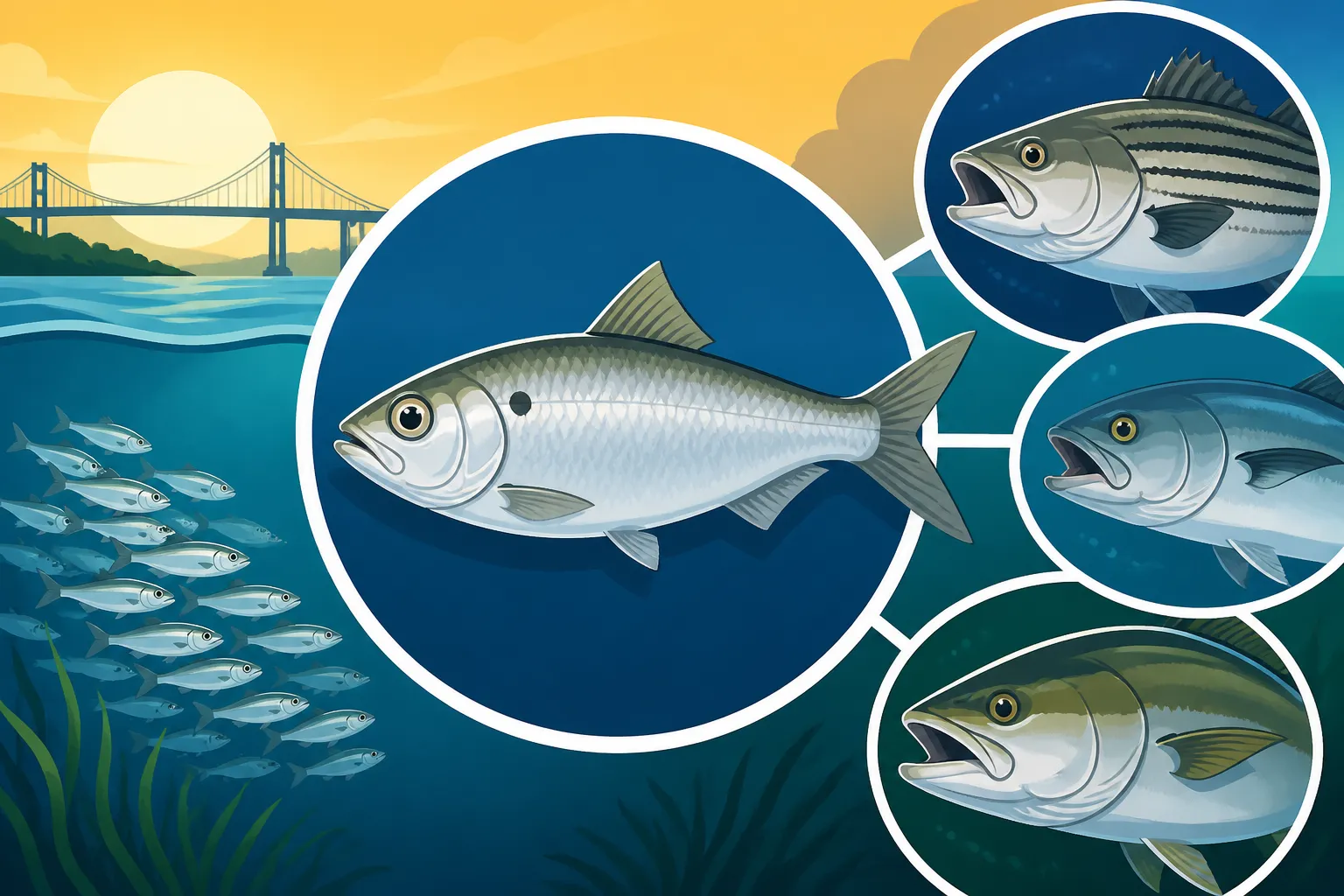
Atlantic menhaden (scientific name: Brevoortia tyrannus) are a type of herring, though they don't look much like the slender river herring we might encounter. They are characterized by their deep, compressed bodies, large heads, and a distinct dark spot behind their gill plate, often followed by several smaller spots. Their scales are relatively large and easily shed, which can be a telling sign when you're netting them. They can grow up to about 15 inches, though most you'll encounter in the Bay are in the 6-12 inch range, perfect "peanut bunker" size for many gamefish.
Unlike many fish that actively hunt smaller prey, menhaden are filter feeders. They swim with their mouths open, sifting vast quantities of plankton and microscopic organisms from the water column through specialized gill rakers. This unique feeding strategy makes them crucial to the Bay's ecosystem, acting as living water filters. Their schools are a sight to behold, often creating a dazzling spectacle when they are near the surface, attracting the attention of both birds and predatory fish.
Where Do Menhaden Live in the Bay?
Menhaden are primarily a schooling, coastal pelagic fish, meaning they live in the open waters of the coast and estuaries, rather than hugging the bottom or residing in freshwater. In Maryland, they are found throughout the Chesapeake Bay and its tidal tributaries, as well as along the Atlantic coast near Ocean City. Their movements are largely dictated by water temperature and the availability of plankton. As water temperatures warm in the spring, large schools migrate into the Bay, often following the baitfish migrations up the various rivers and into shallower coves.
You'll typically find them in the main stem of the Chesapeake Bay, particularly in the mid and lower Bay regions where salinity is higher. However, during warmer months, they can push far up into tidal rivers like the Potomac, Choptank, and Patuxent, seeking out prime feeding grounds. They tend to congregate around channel edges, points, and other structures where currents bring a steady supply of their microscopic food. Knowing where to look for menhaden schools is often the first step to finding the bigger fish that feed on them.
The Ecological Importance of Menhaden
Beyond their role as a stellar bait, menhaden hold immense ecological significance, performing vital functions that ripple throughout the entire Chesapeake Bay food web. Without a healthy population of menhaden, the Bay's delicate balance would be severely disrupted, impacting everything from larger fish species to the very water quality itself. It's a classic example of how even the smallest players can have the biggest roles in an ecosystem.
Anglers who truly understand the Bay appreciate this intricate connection. When you see thriving schools of menhaden, it's often a good sign that the overall health of the local fishery is robust. Conversely, a noticeable absence can be a cause for concern, indicating potential problems further up the food chain. Their health is, in many ways, an indicator of the Bay's health.
Menhaden as a Forage Fish
This is arguably the menhaden's most critical role: they are the primary food source for almost every major predatory fish in the Chesapeake Bay. Think about it – Striped Bass: Maryland's State Fish, bluefish, weakfish, red drum, and even some shark species rely heavily on menhaden as a high-fat, high-protein meal. These oily fish provide the energy these predators need to grow, reproduce, and migrate. Without menhaden, these larger species would struggle immensely to find sufficient sustenance.
Imagine a situation where menhaden populations dwindle. What happens then? Predators like striped bass, which are a major target for recreational anglers, would have to work harder to find food. They might switch to other prey, putting pressure on those populations, or simply not grow as large or be as abundant. This isn't just speculation; it's a real concern for fisheries managers who monitor menhaden stocks closely. The availability of menhaden literally drives the hunting behavior and distribution of many gamefish throughout the year, especially during prime feeding times like the spring and fall migrations.
Their Role in Water Quality
Remember how menhaden are filter feeders? This isn't just a quirky biological fact; it has profound implications for the water quality of the Chesapeake Bay. By swimming with their mouths open and straining plankton from the water, they effectively remove excess algae and other microscopic particles. This process helps to clarify the water, allowing more sunlight to penetrate to the bottom, which is crucial for the growth of submerged aquatic vegetation (SAV) – grasses that provide habitat for countless other species and further improve water quality.
While a single menhaden's filtering capacity might be small, consider the sheer volume of a school comprising millions of individuals. Together, they act as an enormous, natural water purification system. In an estuary like the Chesapeake Bay, which frequently grapples with nutrient pollution and algal blooms, the menhaden's filtering prowess is an invaluable ecological service. It's a natural solution to a complex problem, working quietly and efficiently to keep the Bay cleaner and healthier for everyone.
Why Anglers Value Menhaden as Bait
For anglers, the ecological science behind menhaden is fascinating, but what really gets their attention is the fact that these fish are simply phenomenal bait. Whether you're targeting trophy rockfish or even invasive species, menhaden often provide an irresistible offering. Their unique characteristics make them a go-to choice for many Chesapeake Bay veterans.
I've seen countless trips saved by a well-placed menhaden. There's something about their oily flesh and vibrant appearance that just screams "eat me" to a hungry predator. It’s not just their availability; it’s their entire biological makeup that makes them so effective when used correctly. The secret isn't really a secret; it's just science and angler experience coming together.
Live Bait King: The Allure of Live Menhaden
There's nothing quite like a struggling live bait to entice a wary predator, and live menhaden are top-tier in this department. Their natural swimming action, combined with the distress signals they send out when hooked, creates an irresistible target. Striped bass, in particular, find live menhaden hard to resist. Anglers often fish them on a single circle hook, either free-lining them or slow-trolling them near channel edges, oyster reefs, or bridge pilings. Maryland Striped Bass Fishing Techniques often revolve around presenting live bait effectively.
The key to success with live menhaden is keeping them lively. A stressed or dying bait is far less effective. This means having a good livewell with plenty of oxygen and circulation. Many serious anglers invest in robust bait tanks and aerators, often sourcing high-quality models from reputable online retailers like Amazon, to ensure their menhaden stay frisky. The vibrant flash and panicked movements of a healthy live menhaden are almost always guaranteed to draw attention, making them an indispensable weapon in any serious angler's arsenal.
Cut Bait and Chum: Versatility for Different Species
Even when not alive, menhaden are incredibly effective. Their oily flesh, rich in natural fish oils, releases a powerful scent trail that can attract fish from a significant distance. This makes them ideal for cut bait and for chumming. For bottom feeders like channel catfish, blue catfish, or even large croaker, a chunk of menhaden on a bottom rig is often an unbeatable offering. Best Bait for Blue Catfish in Maryland Rivers often include menhaden. Their strong smell means fish can find them even in murky water or low light conditions.
When it comes to chumming, menhaden are king. A steady stream of ground menhaden (chum) slowly drifting down current creates a scent corridor that can draw in schools of striped bass, bluefish, and even sharks. How to Chum for Striped Bass in the Chesapeake Bay is a technique many Bay anglers swear by, and menhaden are the primary ingredient. Anglers can buy frozen menhaden chum in blocks or grind their own. The oil slicks created by menhaden chum are visual cues to predators that a feeding opportunity is present, triggering aggressive strikes. The sheer versatility of menhaden, whether live, cut, or ground into chum, makes them an invaluable asset for targeting a wide array of Maryland's Most Popular Saltwater Gamefish.
Here’s a quick comparison of how live vs. cut menhaden stack up as bait:
| Feature | Live Menhaden | Cut Menhaden |
|---|---|---|
| Primary Target | Striped Bass, Bluefish, Larger Predators | Catfish, Croaker, Spot, Bottom Feeders, Bluefish |
| Attraction | Movement, Flash, Distress Vibration, Scent | Strong Scent Trail (oil), Visual Food Piece |
| Presentation | Free-lining, Slow Trolling, Suspending under a float | Bottom Rig, Drifting, Trolling (strips) |
| Effort to Keep | High (requires livewell, aeration, cool water) | Low (requires refrigeration/ice) |
| Durability | Fragile, can die quickly if not handled well | Very durable, stays on hook well |
| Cost | Often higher per bait (if buying live) | More economical per bait |
| Key Advantage | Unmatched natural presentation for active predators | Powerful scent for passive or bottom feeders, chumming |
Sourcing and Using Menhaden Effectively
Now that we've established why menhaden are so important, let's talk about the practical side of things: getting them and using them effectively. It's one thing to know they're good bait, it's another to have them fresh and ready when you hit the water. There are a few different routes you can take, each with its own advantages and disadvantages. Sometimes the best approach depends on what kind of fishing you're planning for the day.
Remember, responsible bait sourcing is part of being a good angler. Be mindful of local regulations on baitfish possession and ensure you're using legal methods for catching them. A little bit of preparation goes a long way when it comes to having good bait.
Catching Your Own or Buying From a Tackle Shop
For many DIY anglers, catching your own menhaden is part of the fun and a great way to ensure fresh bait. The most common method is using a cast net. Look for signs of menhaden schools near the surface, often indicated by diving birds, nervous water, or even the shimmering flashes of fish. A good quality cast net, sized appropriately for the bait you're targeting and your strength, can be an excellent investment, available on platforms like Amazon. Sabiki rigs are another effective way to catch smaller "peanut" menhaden, especially around deeper channel markers or piers where cast netting isn't feasible. Just be sure to check local regulations concerning cast netting in specific areas.
If catching your own isn't an option, or if time is short, most local tackle shops and marinas throughout Maryland, especially those along the Chesapeake Bay, will sell live or frozen menhaden. It’s always a good idea to call ahead to ensure they have stock, particularly if you're looking for live bait on a busy weekend. Buying from a reputable shop ensures you're getting bait that's been properly handled. This is often the easiest route for anglers heading out for a quick trip.
Keeping Menhaden Alive and Fresh for Bait
Once you have your menhaden, keeping them alive and frisky is paramount, especially if you plan to live-line them. A properly set up livewell is non-negotiable for live bait. This involves a good pump to circulate fresh water, an aerator to infuse oxygen, and sometimes even a chiller to maintain a cool water temperature during hot summer days. Overcrowding your livewell will quickly lead to dead bait, so always be mindful of how many fish you're trying to keep. Keeping the water clean and oxygenated is essential. You can find robust livewell systems, aerator pumps, and even bait buckets with built-in aerators on Amazon, which can make a huge difference in bait longevity.
For cut bait or chum, proper storage is simpler but equally important. Menhaden spoil quickly, so keep them on ice or frozen until just before use. If you're using them as cut bait, cut them into chunks or strips and keep them in a cooler. For chum, keeping it frozen until you're ready to deploy it will ensure maximum scent dispersion. What Bait Works Best for Chumming Rockfish? often highlights the importance of fresh, oily menhaden for this purpose. Whether live or dead, respecting this valuable resource by keeping it in top condition will undoubtedly lead to more successful fishing trips on the amazing waters of Maryland.
Disclaimer
This article is for general informational purposes only and does not constitute professional advice. Laws, prices and regulations vary by location and change over time. Consult a qualified professional for guidance on your specific situation.