What Bait Works Best for Chumming Rockfish?
There’s nothing quite like the thrill of a striped bass hitting your line, but sometimes those elusive rockfish can be a real challenge to coax into biting. You’ve done all the scouting, found what looks like a perfect channel edge or drop-off, and you know they should be there, but they’re just not cooperating. It can be incredibly frustrating to sit there, rods still, while other boats around you are bending poles. That’s where the magic of chumming comes in, turning a slow day into an action-packed one by drawing fish right to you. This guide will dive deep into the best baits for chumming rockfish in Maryland waters, helping you unlock the secrets to a more successful and satisfying fishing trip.
Understanding Chumming for Maryland Rockfish
Chumming isn't just throwing some food in the water; it's an art and a science, a strategic way to use scent and small particles to attract fish to your boat and keep them there. It's especially effective for species like striped bass (rockfish) that are highly scent-oriented and often feed in schools.
What is Chumming and Why Does it Work?
At its core, chumming involves slowly introducing small amounts of bait into the water, creating a scent trail and a "feeding lane" that fish follow upstream directly to your location. Imagine a delicious smell wafting downwind from a barbecue; that's essentially what a good chum slick does for fish. It appeals to their natural foraging instincts. For rockfish, which are predatory and opportunistic feeders, this continuous stream of small, edible particles signals an easy meal. They get accustomed to the constant flow, dropping their guard and becoming more willing to strike your hooked bait. It's a fantastic technique for when the bite is slow, or when you want to concentrate a school of fish that might be spread out. It works by exploiting the fish's keen sense of smell and lateral line system, drawing them from a distance and keeping them engaged right where you want them.
When and Where to Use Chum for Rockfish
Chumming is most effective in areas where rockfish are likely to congregate or pass through, and when currents are present to carry the chum. Think about those classic Chesapeake Bay fishing spots. Prime locations include channel edges, particularly where the depth changes abruptly, bridge pilings like those under the Chesapeake Bay Bridge, and artificial reefs or oyster beds that hold baitfish. Many anglers also find success chumming near points, humps, or submerged structures. The tide plays a crucial role; you want a decent current to spread your chum slick effectively. Too strong a current, and your chum might disperse too quickly. Too little, and it just sinks straight down. The outgoing tide often works wonderfully, carrying the scent from the shallows to deeper channels where rockfish might be waiting. Early mornings and late evenings, or even during overcast conditions, are generally favorable times, as rockfish tend to be more active in lower light. If you're wondering about the nuances of fishing throughout the year, our guide on How to Fish Maryland's Chesapeake Bay by Season offers more seasonal insights.
The Best Baits for Chumming Rockfish
When it comes to the actual bait you'll use for chumming, not all options are created equal. The key is to select something oily, pungent, and easily digestible, which creates a strong, attractive scent trail in the water.
Cut Bunker (Menhaden) – The Undisputed Champion
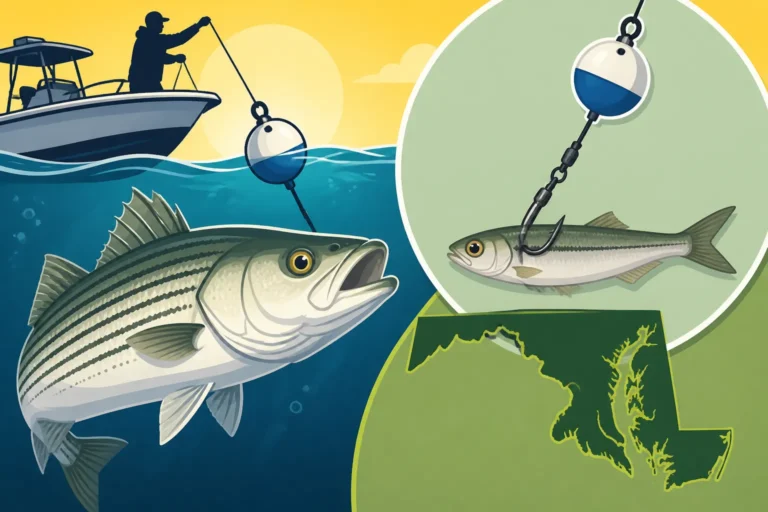
If there's one bait that reigns supreme for chumming rockfish in the Chesapeake Bay, it's Atlantic Menhaden, affectionately known as "bunker" or "alewives." These oily, schooling baitfish are a natural food source for striped bass, and their strong scent is absolutely irresistible. When cut into small pieces or ground, they release a potent oil and blood slick that travels far and wide, effectively calling fish to your boat.
To use bunker effectively, you'll want to get your hands on fresh or frozen whole fish. Many tackle shops around Maryland, especially on the Eastern Shore or along the main Bay, carry frozen bunker in blocks. For those who really get into it, a good bait grinder (you can find various models on Amazon for home use) can turn a block of frozen bunker into the perfect, consistent chum. The consistency is important; you want a mix of small pieces and fine particles that slowly disperses, not large chunks that fill the fish up too quickly. You can also simply chop them by hand with a sharp knife and a sturdy cutting board. This powerful scent is a primary reason Why Are Menhaden Important Bait Fish in the Chesapeake Bay? is such a crucial read for any serious angler.
Alewife and River Herring – A Close Second
While bunker is king, alewife and other river herring species are also fantastic options, especially in certain areas or seasons. Historically, these fish were a huge part of the striped bass diet in spawning rivers. Like menhaden, they are oily and release a potent scent when cut.
However, there's a significant catch: regulations on harvesting river herring and alewives for bait are very strict, and often prohibited, due to conservation concerns. Always check the latest Maryland DNR fishing regulations before even considering using them. Most anglers who use these will be buying them from a licensed bait supplier, where they are typically imported from areas with sustainable harvests. If you happen to be in an area where they are legally available as bait, their effectiveness for chumming is undeniable, often proving just as good as bunker in drawing in hungry rockfish. Understanding species-specific regulations is vital, and our guide on Maryland Striped Bass Season and Rockfish Rules provides much-needed detail.
Other Effective Chumming Baits
Beyond bunker and river herring, several other baits can be used for chumming, often depending on what's available or what species you're also targeting.
- Mackerel: Frozen mackerel, particularly Spanish mackerel, can be a decent substitute when bunker is scarce. They're also quite oily and have a strong scent. Chop them into small pieces or grind them up just like you would bunker. They might not have the same widespread availability in larger quantities as frozen bunker blocks, but they are effective.
- Spot: While often used as live bait for larger rockfish, smaller spot can also be chopped up for chum. They're not as oily as menhaden, but they are a natural food source in the Bay, and the visual component of small fish pieces can still attract attention. This is particularly useful if you're live-lining larger spot alongside your chum slick. Our article on How to Rig a Live Spot for Striped Bass offers great tips on maximizing this technique.
- Eel: Another excellent live bait, especially for trophy striped bass, chopped eel can also be used in a chum slick. Eels are quite oily and their distinct scent can be very attractive. Again, their primary use is typically as a hook bait, but don't discount their potential as an additive to your chum mix.
It’s worth experimenting, but often, the adage "stick with what works" applies, and for Maryland rockfish, that almost always means bunker.
Preparing and Deploying Your Chum
Having the right bait is only half the battle; knowing how to prepare and deploy it properly is just as crucial for creating an irresistible slick. A poorly managed chum line can actually do more harm than good, attracting unwanted species or just drifting away aimlessly.
Essential Tools for Chumming
To set up an effective chumming operation, you'll need a few key pieces of equipment.
- Chum Pot or Bag: This is non-negotiable. A sturdy mesh chum pot (often a wire cage) or a heavy-duty mesh bag is used to hold your chum. It's designed to allow water to flow through, slowly dissolving the chum and releasing its scent and small particles. Make sure it has enough weight to sink and stay put. You can find excellent, durable chum pots made from various materials, including stainless steel or tough nylon mesh, on Amazon or at any well-stocked local tackle shop like Angler's Sport Center or Bass Pro Shops. Some even come with adjustable opening sizes to control the dispersal rate.
- Chumming Buckets: You’ll need a dedicated bucket or two for holding your processed chum, keeping it organized and ready for deployment. Many anglers use 5-gallon buckets.
- Knives and Cutting Board: If you're cutting up whole baitfish, a sharp, sturdy fillet knife and a reliable cutting board are essential. Safety first!
- Gloves: Handling oily, smelly chum can be a messy business. A good pair of waterproof gloves will save your hands from getting too grimy and smelly.
- Anchor System: To stay directly over your chum slick, a reliable anchor system is paramount. You need to be able to hold your position, even in strong currents.
Chumming Techniques for Maximum Attraction
Once you have your bait and tools, it's all about technique. The goal is a consistent, manageable slick that keeps the fish interested without overfeeding them.
- Anchoring Upstream: Always anchor your boat upstream from where you want your chum slick to go. The current will naturally carry the scent and particles downstream, drawing fish from a distance. If you're fishing a channel edge, position your boat slightly upcurrent of the edge.
- Controlling the Flow: This is perhaps the most critical aspect. You don't want to dump a huge amount of chum at once. Instead, a slow, steady release is key. If you're using a chum pot, let the current do its work. If you're using ground chum in a bucket, you can use a small scoop to periodically drop small handfuls into the current. Some anglers even use a weighted ladle to deliver chum to a specific depth. The idea is to create a long, consistent scent trail, not a pile of food directly under your boat.
- Matching the Current: Observe the current speed. On a slow tide, you might need to manually agitate your chum pot or add chum more frequently. On a fast tide, the chum will disperse quickly, so a steady, heavier flow might be needed to maintain the slick. This careful management of the chum line is a cornerstone of Anchoring and Chum Lines for Chesapeake Bay Rockfish in Maryland.
- Depth Placement: For deeper water, a weighted chum pot is essential to ensure the chum gets down to the feeding zone. For shallower areas, a less weighted pot might suffice. Think about where the rockfish are holding in the water column and try to get your chum to that level.
- Start Small, Adjust: Begin with a conservative amount of chum. You can always add more, but you can't take it back. Watch how the slick forms and adjust your deployment rate based on fish activity and current conditions. If you're seeing fish on your sonar but they're not biting, increase the flow slightly.
Combining Chum with Your Hook Baits
Chumming isn't usually about catching fish on the chum itself. It's about drawing them in and setting them up to bite your hook baits. The art is in making your hook bait look like just another piece of the delicious, easy meal they're already enjoying.
Matching the Hatch with Hook Baits
The most logical approach is to use the same bait you're chumming with on your hook. If you're chumming with cut bunker, a fresh piece of cut bunker on a hook is often deadly. The fish are already conditioned to that scent and appearance, so your hook bait blends right in. Presenting it naturally, letting it drift back into the slick with little to no weight, or just enough to get it to the right depth, can be incredibly effective.
For targeting larger rockfish, you might opt for slightly bigger pieces of the same cut bait on your hook. The bigger fish tend to be more aggressive and will readily engulf a larger offering. You can also experiment with different sizes to see what the fish prefer on any given day. Remember, the goal is to make your hook bait indistinguishable from the chum they’re already feasting on.
Live-Lining with Chum
One of the most exciting and productive ways to fish a chum slick is by live-lining. This technique uses live baitfish, such as spot or small eels, fished directly in or around your chum slick.
- Live Spot: Spot are a favorite live bait for many Chesapeake Bay anglers, especially during the warmer months. With a steady chum slick attracting rockfish, a lively spot hooked through the nose or back, free-swimming in the slick, is often irresistible. The rockfish are already in a feeding frenzy, and a struggling live baitfish is the ultimate temptation. Our deep dive into Live-Lining Spot for Maryland's Chesapeake Bay Rockfish covers this technique in detail.
- Live Eel: Eels are another phenomenal live bait, especially for trophy-sized striped bass. Their snakelike action and oily scent are powerful attractants. When fished in a chum slick, a live eel can often pick out the biggest, most aggressive fish in the school. Be prepared for a strong fight when a rockfish hits an eel!
The beauty of live-lining in a chum slick is that you're presenting a natural, active meal to fish that are already in a heightened feeding state. The combination of scent, visual appeal, and natural movement is a dynamite recipe for success.
Maryland Rockfish Chum Bait Comparison
To help you decide which bait is best for your next trip, here’s a quick comparison of the most popular options for chumming rockfish in Maryland:
| Bait Type | Key Features | Pros | Cons | Best Use |
|---|---|---|---|---|
| Cut Bunker | Oily, strong scent, readily available | Highly effective, natural food source, easy to grind/chop | Can be messy, strong smell, may attract unwanted species | All-around best for consistent rockfish action |
| Cut Mackerel | Oily, distinct scent | Good alternative when bunker is scarce, effective | Less common in large quantities, may be more expensive | General chumming, mixed species angling |
| Chopped Spot | Natural Bay bait, visual appeal | Good for live-lining complementary, natural presentation | Less oily/scent than bunker, can be expensive as chum | When also live-lining spot, close-range attraction |
| Chopped Eel | Very oily, strong unique scent, tough | Excellent for trophy fish, very effective when used with live eel | Expensive, less quantity for chum, messy | Targeting large rockfish, specific situations |
| Alewife/River Herring | Oily, natural, potent scent | Extremely effective, highly attractive | Strict regulations/prohibitions, hard to source legally | If legally available, highly potent |
No matter which bait you choose, remember that consistency and proper deployment are key. A steady, appealing scent trail will draw those rockfish in, keeping them focused on your offerings and greatly increasing your chances of a successful day on the water. For further understanding on where to cast your line, consider reading our comprehensive guide on Fishing Maryland's Chesapeake Bay, A Complete Guide.
Disclaimer
Please remember that fishing regulations in Maryland, especially concerning species like striped bass (rockfish) and baitfish like menhaden and river herring, can change frequently. Always consult the latest Maryland Department of Natural Resources (DNR) fishing guide or website before heading out on the water to ensure you are compliant with all current rules, seasons, and catch limits. This information is for educational purposes only and should not be considered legal advice.