Maryland Fishing Size and Catch Limits by Species
There's nothing quite as frustrating as landing a beautiful fish, only to realize you're not entirely sure if it's the right size to keep, or if you've already hit your daily limit for that species. Maryland's fishing regulations can feel like a labyrinth, changing with the seasons and even by specific water body, leaving many anglers scratching their heads and fearing an accidental violation. This comprehensive guide is here to untangle the complexities, offering clear, up-to-date information on Maryland's fishing size and catch limits by species, helping you fish confidently and responsibly.
Why Size and Catch Limits Matter Beyond Just the Rules
It's easy to view fishing regulations as just another bureaucratic hurdle, something to begrudgingly comply with to avoid a fine. But when it comes to size and catch limits in Maryland, these rules are actually the backbone of our incredible fisheries. They're designed with a much larger purpose in mind, one that directly impacts how much enjoyment we all get out of being on the water.
Protecting Our Fisheries for Tomorrow
Think about it: if everyone kept every fish they caught, regardless of size or quantity, our vibrant fish populations wouldn't stand a chance. That's why these limits are put into place—to ensure the long-term health and sustainability of the species we love to target. Minimum size limits, for instance, are crucial because they allow fish to reach sexual maturity and reproduce at least once, contributing new generations to the population before they can be harvested. This is especially important for popular species like striped bass, where responsible management is key to their future. It's a careful balancing act, trying to provide ample opportunity for anglers while safeguarding the very resource that brings us all so much joy. Every time you release an undersized fish or stop fishing once you've reached your daily creel limit, you're actively participating in the conservation effort, ensuring there will be plenty of fish for your kids and grandkids to catch.
The Frustration of Unintended Violations
Let's be honest, no one wants to break the law, especially when they're out enjoying a relaxing day of fishing. The sheer volume and sometimes intricate nature of Maryland's fishing regulations can be incredibly daunting, leading to genuine anxiety for many anglers. You might spend hours on the water, finally hook into a beautiful specimen, only to measure it and realize it's a hair too short, or that you've mistakenly kept one too many. The feeling of disappointment, coupled with the worry of potential fines and penalties, can quickly sour what should have been a fantastic day. It's a legitimate frustration that many of us have faced. The goal of these rules isn't to trick you or make your life harder; it's to create a sustainable environment. However, the onus is on us, the anglers, to stay informed, and that can feel like a full-time job with how often regulations shift.
How Regulations Adapt to Changing Fish Populations
Maryland's fisheries are dynamic ecosystems, constantly influenced by environmental factors, habitat changes, and fishing pressure. Because of this, fishing regulations aren't set in stone; they evolve. The Maryland Department of Natural Resources (DNR) constantly monitors fish populations through scientific surveys, catch data, and angler reports. When a species' population shows signs of decline, like our beloved striped bass, regulations might become more restrictive—think tighter slot limits, reduced creel limits, or even seasonal closures. Conversely, if a population is thriving, or if a species is invasive and detrimental to native fish, regulations might be relaxed or even removed entirely to encourage harvest. This adaptive management approach means that what was legal last year might not be this year, and what applies in the Chesapeake Bay might be different in a freshwater reservoir. It emphasizes the critical need for anglers to check the most current rules before every trip, or at least at the start of each new season, to ensure compliance and support the health of our waters.
Chesapeake Bay and Tidal Water Staples: Striped Bass and White Perch
The Chesapeake Bay and its tributaries are Maryland's crown jewel for anglers, offering a diverse array of species. Among these, the Striped Bass (often called Rockfish) holds a special place, alongside the ever-popular White Perch. But with popularity comes scrutiny, and these species have some of the most detailed regulations.
Navigating Maryland's Striped Bass Rockfish Rules
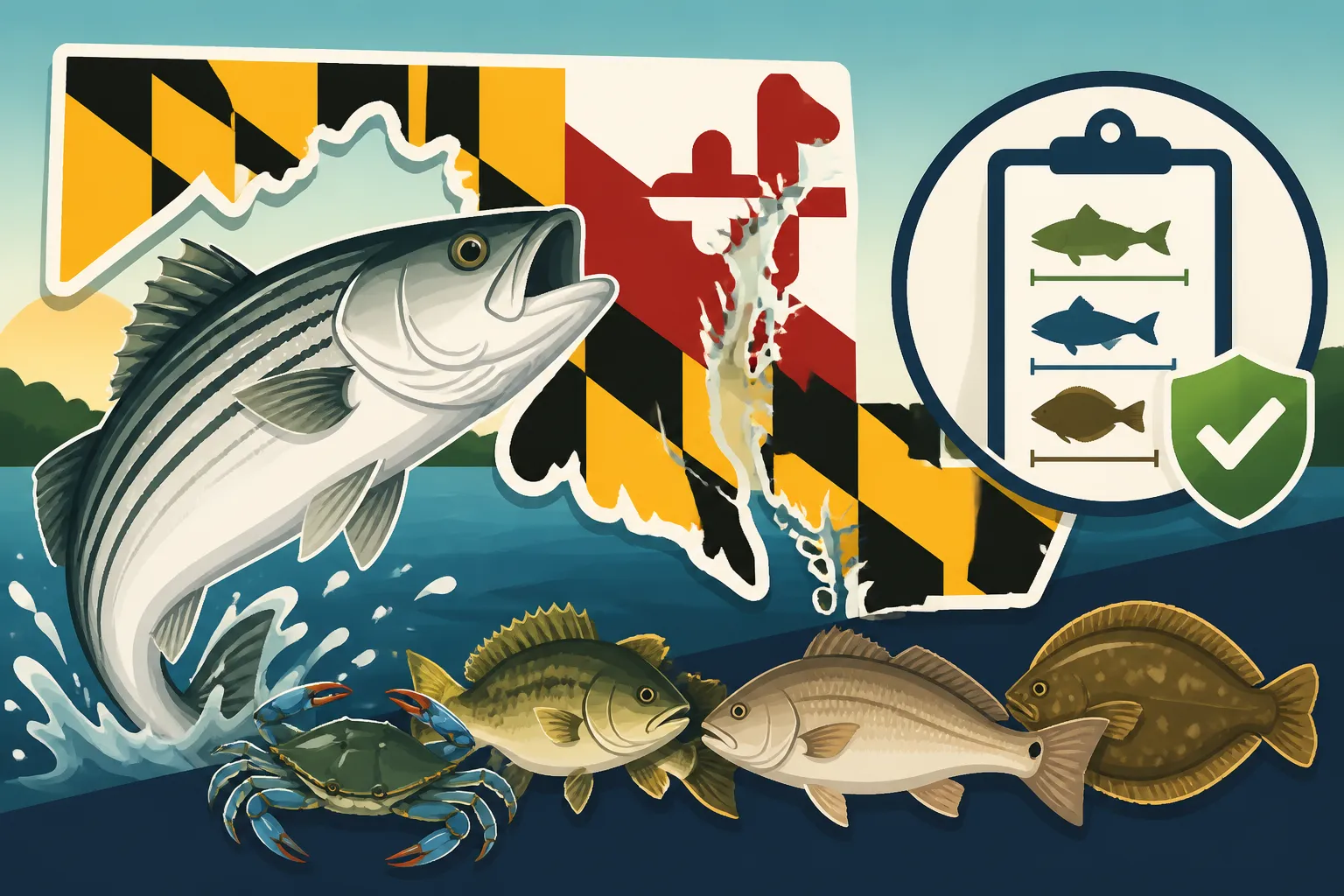
Ah, the striped bass. Maryland's state fish and arguably the most sought-after species in the Chesapeake Bay. Given its ecological importance and immense popularity, its regulations are some of the most complex and frequently updated. You can't just throw a line in and expect a simple rule. For 2024, anglers in the Chesapeake Bay and its tributaries, including the Atlantic Ocean and its coastal bays, are generally allowed one striped bass per person per day. However, the critical part is the slot limit and the season. For the Chesapeake Bay and its tributaries, excluding the Atlantic Ocean and coastal bays, the slot limit for much of the year has been 19 to 24 inches. This means your fish must be within that specific range; anything smaller or larger must be immediately released. These rules are put in place to protect larger, spawning-age fish while allowing for harvest of juvenile and adolescent fish.
It gets even more nuanced when you consider the seasons. Maryland often has a "spring trophy" season, typically in May, where a larger slot limit (e.g., 28 to 31 inches) and different catch limits might apply for a brief period, primarily targeting bigger fish migrating into the Bay for spawning. After that, a summer and fall season usually follows with the standard 19-24 inch slot. Be aware that specific areas, like designated spawning rivers, will have strict closure periods during the spring, meaning no targeting of striped bass whatsoever. Furthermore, there's often a winter catch-and-release season where you can still fish for striped bass, but absolutely none can be kept. It's a lot to keep track of, and the DNR's official guide, or a quick look at the Maryland Striped Bass Season and Rockfish Rules before you head out, is absolutely essential. Remember, these regulations are subject to change, sometimes even mid-season, so staying vigilant is key.
The Abundant White Perch: Daily Limits and How They Factor In
If striped bass are the star, white perch are the reliable supporting cast of the Chesapeake Bay. These feisty, delicious panfish are incredibly abundant throughout the Bay and its tidal tributaries, making them a fantastic target for anglers of all skill levels, especially families and beginners. The good news is that their regulations are far simpler than those for striped bass, which is a welcome relief after grappling with rockfish rules! For white perch, there's typically no minimum size limit in Maryland tidal waters. This means that once you've caught them, as long as they're not absolutely tiny, you can generally keep them.
However, there is a daily creel limit. In Maryland's tidal waters, anglers are usually allowed to keep 25 white perch per person per day. This generous limit ensures that you can bring home a substantial meal while still protecting the overall population. White perch reproduce rapidly and are quite resilient, which is why they can sustain such a liberal harvest. They are often targeted during their spring spawning runs up tidal creeks and rivers, where they congregate in large numbers, making it easy to hit that 25-fish limit quickly. Their widespread availability and straightforward regulations make them a perfect fish for a casual day out on the water, without the constant worry of intricate size requirements.
Understanding Flounder and Other Popular Tidal Species
Beyond the big names, Maryland's tidal waters offer a variety of other popular species, each with its own set of rules. Flounder, for instance, are a highly prized bottom-dwelling fish, known for their delicious white meat and tricky camouflaged nature. For these flatfish, anglers need to pay close attention to both the minimum size limit and the daily creel limit, as these have seen adjustments in recent years due to regional stock assessments. For 2024, flounder in Maryland tidal waters typically have a minimum size limit of 17 inches and a daily creel limit of 4 fish per person. It's crucial that you measure them carefully, laying them flat on a ruler, to ensure they meet the minimum length. Be sure to double-check the Maryland Flounder Size Limit to confirm the most current rules.
Then there are species like Bluefish, a formidable fighter and another popular target, especially during their summer and fall runs in the Bay and coastal waters. Bluefish generally have a minimum size limit of 12 inches for recreational anglers, with a daily creel limit of 10 fish. However, for those targeting larger, "chopper" bluefish, there might be a specific size range (e.g., larger than 32 inches) that allows for only one fish per person within their overall 10-fish limit, to help protect larger breeding stock. For smaller, pan-sized species like Croaker and Spot, Maryland typically has very liberal, or even no, size limits, though daily creel limits often apply (e.g., 25 fish per person for each). These regulations allow for bountiful harvests of these tasty fish, which are also excellent bait for larger predators. As always, consulting the current DNR regulations before your trip is the best way to ensure you're fishing legally and responsibly.
Freshwater Favorites: Bass, Trout, and Panfish
Maryland isn't just about the Bay; its freshwater lakes, rivers, and streams offer incredible fishing opportunities. From the hard-fighting bass of our reservoirs to the delicate trout in our mountain streams, and the ubiquitous panfish in ponds, there's a freshwater adventure for everyone. But just like in tidal waters, specific rules apply.
Largemouth and Smallmouth Bass: Size and Creel Regulations
When it comes to freshwater angling, bass are king. Maryland offers excellent fishing for both Largemouth and Smallmouth Bass, each with distinct habitats and, sometimes, slightly different regulations. Largemouth bass are typically found in warmer, shallower waters of ponds, lakes, and reservoirs across the state. The general statewide regulation for largemouth bass is a minimum size limit of 15 inches, with a daily creel limit of 5 fish. However, some specific water bodies, particularly certain reservoirs or trophy bass management areas, might have unique slot limits or reduced creel limits to manage their populations. For example, some lakes might implement an "18-inch minimum, 2 fish creel" rule to promote the growth of larger fish.
Smallmouth bass, on the other hand, thrive in the cooler, rocky, flowing waters of rivers like the Potomac and Susquehanna. Their statewide regulations are usually a minimum size limit of 12 inches and a daily creel limit of 5 fish. Similar to largemouths, specific river sections or seasons may have different rules. For instance, some stretches of the upper Potomac River might have a protected "no-kill" or "catch-and-release" period during the spring spawning season to ensure successful reproduction. It's really important to know which species of bass you've caught and which body of water you're fishing in, as these details directly impact what you can keep. Checking the specific regulations for the particular lake or river you plan to fish is paramount for a successful and legal outing. You can find more detailed information on techniques and locations in guides like Largemouth Bass Fishing in Maryland and Smallmouth Bass in Maryland's Rivers.
Maryland's Diverse Trout Species and Their Limits
Maryland's trout fisheries are a source of pride, particularly in the cooler, western parts of the state. We have Rainbow, Brown, and Brook Trout, each with varying management strategies that directly affect size and catch limits. Most of Maryland's trout fishing occurs in "put-and-take" streams, which are heavily stocked by the DNR to provide ample angling opportunities, especially during the spring and fall stocking seasons. In these waters, the general rule is a daily creel limit of 5 trout, with no minimum size restriction. This allows anglers to keep a good number of fish for the table, as these streams are managed for recreational harvest.
However, Maryland also has "Delayed Harvest" and "Catch-and-Release Only" sections on some of its prime trout streams, like parts of the Gunpowder River or Savage River. In Delayed Harvest areas, rules are extremely strict during certain periods (typically October 1st to June 15th), allowing only catch-and-release fishing with specific tackle requirements (e.g., artificial lures and flies only, barbless hooks). Outside of these periods, the rules might revert to a general creel limit. Catch-and-Release Only areas are exactly what they sound like—no fish can be kept at any time. These areas are vital for sustaining wild or naturally reproducing trout populations. Furthermore, if you plan to fish for trout, you'll likely need a Maryland Trout Stamp Requirements in addition to your regular fishing license. It's a small extra step, but it helps fund these incredible trout programs. Always consult the Maryland DNR's trout program maps and regulations before heading to your favorite stream.
Panfish Power: Crappie, Bluegill, and Yellow Perch
While bass and trout often get the spotlight, Maryland's panfish offer incredible, accessible fishing for everyone. Crappie, Bluegill, and Yellow Perch are widely distributed across freshwater lakes, ponds, and even some tidal creeks, providing consistent action and delicious fillets. The good news for panfish enthusiasts is that their regulations are typically very generous, reflecting their healthy populations and high reproductive rates. For species like Bluegill and other sunfish (pumpkinseed, redbreast, etc.), there's often no minimum size limit, and the daily creel limit is usually a whopping 50 fish per person. This makes them perfect for a family outing where everyone can catch plenty of fish.
Crappie, both black and white varieties, are also highly sought after. In most Maryland freshwater bodies, crappie usually have no minimum size limit, and a daily creel limit of 15 fish per person. These limits ensure anglers can enjoy a good harvest while maintaining a robust population. Yellow perch are a bit unique; while they are a freshwater species, they also undertake significant spawning runs in tidal freshwater sections of Bay tributaries, particularly in the upper Bay. Their regulations can sometimes vary slightly between tidal and nontidal waters, but generally, there's no minimum size and a daily creel limit of 10 fish per person. These simple, generous limits make panfish a fantastic target, especially for new anglers or those just looking for a relaxing day with lots of bites. For more on these species, check out Maryland Panfish: Crappie, Perch and Sunfish.
The Invasive Species: Blue Catfish and Northern Snakehead
Maryland faces a significant challenge from invasive fish species, particularly the Blue Catfish and Northern Snakehead. These fish pose serious threats to native ecosystems, and as a result, the regulations for them are drastically different from those for native game fish. Instead of protecting them, the DNR actively encourages anglers to harvest and remove them from our waters.
The Unlimited Challenge of Blue Catfish
The Blue Catfish is an absolute powerhouse of a fish, capable of growing to enormous sizes and dominating the waterways it inhabits. Unfortunately, it's also a highly invasive species in Maryland, particularly in the Chesapeake Bay and its tributaries like the Potomac, Patuxent, and Nanticoke Rivers. They outcompete native species for food, prey on economically important fish like striped bass, and reproduce at an alarming rate. Because of their detrimental impact, the regulations for Blue Catfish are essentially non-existent when it comes to harvest limits. There is no minimum size limit and no daily creel limit for Blue Catfish in Maryland. This means you can keep as many as you catch, regardless of their size.
The Maryland DNR actively encourages anglers to harvest blue catfish, and even to transport them dead or alive for consumption, with the caveat that live transport must be to a processing facility or for immediate consumption, and not to introduce them into new waters. Anglers play a crucial role in controlling the spread and population of these invasive giants. Many anglers find them to be excellent table fare, so harvesting them is a win-win: you help the environment and get a delicious meal. For more details on their impact and rules, you can refer to Maryland Blue Catfish Possession Rules and Maryland Blue Catfish, an Invasive Giant. Every blue catfish removed from Maryland waters is a step towards protecting our native fish populations.
Targeting and Managing Northern Snakehead
The Northern Snakehead is another highly aggressive and adaptable invasive species that has established a firm foothold in Maryland waters, particularly in the Potomac River and its tidal creeks, as well as parts of the Eastern Shore. Known for their ability to survive out of water for short periods and their voracious appetites, snakeheads are a serious concern for native fish populations. Because of this, Maryland has a strict "kill on sight" policy for Northern Snakehead. There is no minimum size limit and no daily creel limit for Northern Snakehead. In fact, if you catch a snakehead, you are required by law to not release it alive. You must either immediately kill it or possess it in a manner that prevents its escape. This often means killing them on the spot, usually by bleeding them out or decapitation, and then placing them in a cooler.
The purpose of these stringent rules is to prevent the further spread of this invasive predator. Anglers are considered a vital part of the effort to control snakehead populations. Many anglers actually enjoy targeting snakeheads, as they are powerful fighters and also make for excellent table fare. Dedicated snakehead anglers often use specific techniques like topwater frogs in lily pads or spinnerbaits in thick cover to draw out these elusive fish. When you successfully land and dispatch a snakehead, you're not just enjoying the sport; you're directly contributing to the health of Maryland's native aquatic ecosystems. For more information on how to handle them and why, check out Maryland Snakehead Fishing Rules and Northern Snakehead in Maryland Waters.
Special Considerations and Where to Find Official Rules
Understanding the specific size and catch limits is just one piece of the puzzle. There are other regulations and considerations that can impact your fishing trip in Maryland, and knowing where to get the most accurate and up-to-date information is absolutely critical.
Two-Pole Endorsement and Other Specific Regulations
Beyond the individual species limits, Maryland has some general regulations that can affect your fishing strategy. One common question revolves around the number of fishing rods you can use. In Maryland, a standard fishing license allows an angler to use up to two fishing rods and lines at any given time. However, if you're an avid angler who prefers to fish with more than two rods—say, three, four, or even five—you'll need to purchase a Two-Pole Endorsement. This endorsement is an add-on to your regular fishing license and allows you to use additional fishing apparatus, usually up to a limit of ten rods, depending on the specific water body and species targeted. It's a valuable option for anglers who enjoy techniques like catfishing with multiple lines out or bottom fishing for a variety of species.
Other specific regulations can include rules about certain types of bait (e.g., live bait restrictions in some trout streams), gear restrictions (e.g., barbless hooks in certain catch-and-release areas), or even restrictions on fishing from specific structures like bridges or dams. For instance, fishing below the Conowingo Dam on the Susquehanna River has very specific access rules and seasonal closures that anglers must adhere to. These nuanced rules are often designed to protect particular areas, manage specific species, or ensure safety for all users of Maryland's waters. It’s always best to be informed of these localized rules before you head out, as ignorance of the law is never an excuse for a violation.
The Dynamic Nature of Regulations and How to Stay Updated
One of the biggest frustrations for Maryland anglers is the fact that regulations are not static. They can, and do, change. Sometimes these changes are announced well in advance for the upcoming year, but occasionally, emergency closures or mid-season adjustments are made, often due to unforeseen environmental conditions, updated stock assessments, or regional management agreements. This dynamic nature means that relying on last year's printout or a buddy's memory simply isn't good enough if you want to stay compliant. Imagine planning a trip around a certain season or slot limit, only to find out upon arrival that the rules have changed, forcing you to adjust your plans or risk a fine. It’s a common pitfall.
The most reliable source for current Maryland fishing regulations is always the official Maryland Department of Natural Resources (DNR) website. They publish an annual Fishing and Boating Guide that is updated yearly and provides the most comprehensive overview. However, for any last-minute or emergency changes, the DNR website will often have alerts or news releases that supersede the printed guide. Getting into the habit of checking the DNR's fishing page or even signing up for their email updates before each significant fishing trip or season is the best practice. You can also refer to resources like Maryland's DNR Fishing and Boating Guide, Explained to help navigate the official documents. It's a small investment of time that can save you a lot of headaches and potential penalties down the line.
Essential Gear for Measuring and Compliance
Being prepared isn't just about having the right bait and tackle; it's also about having the right tools to ensure you're compliant with the rules. When you're out on the water, especially when dealing with minimum and maximum size limits, having a reliable measuring device is absolutely non-negotiable. A good quality measuring board or tape measure is essential. Look for one that's clearly marked, easy to read, and ideally, can withstand getting wet and being jostled around in a boat or tackle box. Many companies, readily available on platforms like Amazon, offer waterproof, durable measuring devices specifically designed for fishing, often with raised edges to help you get an accurate measurement against a flat surface.
Beyond just length, some anglers might want a small, portable scale, especially if they are targeting trophy fish or participating in informal contests where weight is a factor. While not strictly required for compliance with state regulations, it can be a fun addition to your gear. Lastly, consider a sturdy cooler. Even if you plan on catch-and-release, having a cooler with ice is crucial for keeping any legal fish you decide to harvest fresh, especially invasive species like snakehead or blue catfish that you're encouraged to remove. Keeping them fresh for consumption aligns with the state's goals and provides you with a tasty reward for your efforts.
Navigating the Nuances: Tidal vs. Nontidal, and Ocean Rules
One of the most frequent sources of confusion for anglers in Maryland is understanding the difference between tidal and nontidal waters, and how that impacts regulations. Add in the unique rules for our coastal ocean waters, and it can feel like you need a law degree to go fishing.
Differentiating Tidal and Nontidal Zones
Maryland is a state defined by water, from the mighty Chesapeake Bay and its tidal rivers to the serene freshwater lakes and winding streams of the western mountains. The key distinction often lies in whether the water is tidal or nontidal. Tidal waters are those influenced by the tides of the Chesapeake Bay and the Atlantic Ocean. This means rivers and creeks up to a certain point (often marked by signs or defined by specific geographical points) will experience the ebb and flow of the tide. In these waters, you'll find a mix of freshwater and saltwater species, and specific tidal fishing licenses and regulations apply. For example, striped bass and white perch are primarily tidal water species with tidal water regulations.
Nontidal waters, conversely, are typically freshwater lakes, reservoirs, ponds, and upstream sections of rivers that are not affected by tidal fluctuations. Here, you'll encounter species like largemouth and smallmouth bass, trout, and various panfish. A separate nontidal fishing license is usually required for these waters, and the regulations for species found here are specific to the freshwater environment. The frustration often arises when an angler crosses from a tidal portion of a river into a nontidal section, or vice-versa, without realizing the rules might instantly change. A simple visual cue, like the presence of brackish water plants or salinity, can sometimes hint at tidal influence, but the most accurate way to know is to check the DNR's maps and rules for specific water bodies. Understanding this difference is foundational to compliance, and you can delve deeper into this distinction in Maryland Nontidal vs Tidal Fishing License, Explained.
Ocean City and Coastal Waters: Specific Regulations
While the Chesapeake Bay is vast, Maryland's Atlantic coast, particularly around Ocean City and Assateague Island, offers a completely different fishing experience with its own set of rules. Here, anglers are targeting species that are more migratory and often subject to federal management plans in addition to state regulations. This means rules for popular species like Black Sea Bass, Tautog, Red Drum, and offshore species like Tuna and Marlin can differ significantly from what you'd encounter in the Bay.
For example, Black Sea Bass, a popular target for wreck and reef fishing out of Ocean City, has specific seasons, minimum size limits (e.g., 12.5 inches), and daily creel limits (e.g., 15 fish per person) that can vary annually. These rules are often set in coordination with other mid-Atlantic states and federal agencies due to the migratory nature of the species. Tautog, another bottom-dweller found around jetties and artificial reefs, also has its own tight regulations, often with a higher minimum size limit (e.g., 16 inches) and a much smaller daily creel limit (e.g., 2-4 fish per person), reflecting their slower growth rate and vulnerability. Red Drum, often caught by surf anglers on Assateague Island, might have a specific slot limit (e.g., 18 to 27 inches) and a low daily creel limit (e.g., one fish per person). Offshore species like tuna and marlin fall under highly regulated federal guidelines, often with complex size, creel, and reporting requirements. If you're planning a trip to the coast, specifically targeting these species, you absolutely must consult the Ocean City Maryland Fishing Guide and specifically look for rules pertaining to Maryland Black Sea Bass Season and Limit and other coastal species, as they can be quite distinct from inland regulations.
Common Mistakes and How to Avoid Fines
Even experienced anglers can slip up when it comes to regulations. The key to avoiding an unpleasant encounter with a Natural Resources Police officer and a hefty fine is proactive awareness. Knowing the common pitfalls is half the battle.
Misidentifying Fish Species
This is perhaps one of the most common and easily made mistakes, especially for new anglers or those venturing into new waters. You hook a fish, it's a decent size, and you assume it's a species you're allowed to keep, only to realize later (or worse, when an officer checks your cooler) that it was a different species with a different, more restrictive limit. For example, telling the difference between a white perch and a yellow perch can be tricky for the untrained eye, but their regulations, particularly regarding location (tidal vs. nontidal) and specific limits, can vary. Similarly, distinguishing between different types of catfish or even smaller bass species can sometimes lead to an accidental violation.
The best way to combat misidentification is to educate yourself before you go fishing. Familiarize yourself with the visual characteristics of the species you plan to target, as well as those commonly found in the same waters. Carry a good fish identification guide (many are available as waterproof cards or laminated sheets, easily ordered from Amazon). Better yet, use a reputable fishing app on your phone that includes detailed species profiles and photos. When in doubt, especially with a fish that might be on the edge of a size limit or if you're unsure of its exact species, the safest bet is always to practice catch and release. It's far better to let a potential keeper go than to face a fine for keeping an illegal fish.
Forgetting to Check Current Regulations
As we've discussed, Maryland's fishing regulations are not set in stone. They change annually, and sometimes even mid-season, due to scientific assessments, conservation efforts, or emergency measures. Relying on what you knew last year, or what your friend told you, is a recipe for disappointment and potential penalties. A prime example is the striped bass slot limit, which has seen numerous adjustments over the years. What was a legal keeper last spring might be undersized or oversized this spring. This dynamic environment can feel overwhelming, but it's a reality of responsible fisheries management.
The simple solution is to make it a habit: always check the current regulations before every fishing trip, or at least at the beginning of each fishing season. The Maryland DNR website is your authoritative source. Bookmark it on your phone or computer. Download the latest fishing guide PDF. A quick 5-minute review can save you from a stressful encounter with a Natural Resources Police officer and the financial burden of fines. Remember, officers are out there to enforce these rules, and they expect anglers to be informed. Ignorance is rarely an accepted excuse. Be proactive, and you'll fish with far greater peace of mind. For an understanding of what could happen, check out Maryland Fishing License Penalties for Violations.
The Importance of Measuring Correctly
You've identified your fish correctly, and you know the regulations for the day. Now comes the critical step: measuring it accurately. Many anglers get this wrong, often unintentionally. The standard for measuring fish in Maryland is typically from the tip of the snout (mouth closed) to the tip of the longest lobe of the tail, with the fish laid flat. This means no pinching the tail, no guessing; the tail should be fanned out naturally, and the measurement should be taken to its absolute furthest point. Any attempt to "stretch" the fish or measure it while it's curving can lead to an inaccurate reading that could get you into trouble.
Using the right tools is key. A soft, flexible tape measure might seem convenient, but it can be prone to error, especially on a moving boat. A sturdy, flat measuring board with clear markings is ideal. Many fishing boats have these permanently affixed, or you can buy portable ones. When measuring, always lay the fish on its side, nose against a flat stop on the board, and gently compress the tail to get the maximum length. If there's any doubt, or if the fish is right on the line, err on the side of caution and release it. A couple of inches can mean the difference between a legal catch and a fine, and it’s a situation where precision truly matters.
Maryland Fishing Size and Creel Limits: At a Glance (General Regulations)
Please remember that these are general guidelines and regulations can change frequently, often varying by specific water body, season, or even method of harvest. Always consult the official Maryland Department of Natural Resources (DNR) website or the current Fishing and Boating Guide before your trip for the most up-to-date and localized rules.
| Species | Minimum Size (Tidal) | Daily Creel Limit (Tidal) | Minimum Size (Nontidal) | Daily Creel Limit (Nontidal) | Special Notes |
|---|---|---|---|---|---|
| Striped Bass | Varies by season/zone (e.g., 19-24 inches) | 1 | N/A (primarily tidal) | N/A | Highly variable. Check current regulations for specific slot limits, open seasons (spring trophy, summer, fall), and localized closures (e.g., spawning rivers, winter C&R only). Atlantic Ocean rules differ. |
| White Perch | None | 25 | None | 25 | Abundant in both fresh and brackish tidal waters. |
| Flounder | 17 inches | 4 | N/A (primarily ocean/bay) | N/A | Primarily found in coastal bays and Atlantic Ocean. |
| Bluefish | 12 inches | 10 (or 9 @ 12-32", 1 >32") | N/A (primarily ocean/bay) | N/A | Often a 'bag limit' for smaller fish, plus one larger 'trophy' fish. Check current rules. |
| Crappie | None | 15 | None | 15 | Includes both Black and White Crappie. |
| Yellow Perch | None | 10 | None | 10 | Popular spring spawning runs in tidal freshwater rivers. |
| Bluegill/Sunfish | None | 50 | None | 50 | Includes various sunfish species (pumpkinseed, redbreast, etc.). |
| Largemouth Bass | N/A (primarily nontidal) | N/A | 15 inches | 5 | Some reservoirs or management areas may have special slot limits or reduced creel limits. |
| Smallmouth Bass | N/A (primarily nontidal) | N/A | 12 inches | 5 | Upper Potomac and other river sections may have specific seasonal closures or catch-and-release only periods. |
| Trout | N/A (primarily nontidal) | N/A | None (Put-and-Take) | 5 (Put-and-Take) | Highly variable. "Put-and-take" areas typically no size limit, 5 creel. "Delayed Harvest" and "Catch-and-Release" areas have strict gear and possession rules, often seasonal. Trout Stamp required. |
| Blue Catfish | None | No Limit | None | No Limit | Invasive Species. Anglers are encouraged to harvest and kill all caught blue catfish. No release of live blue catfish into Maryland waters (except for immediate consumption or transport to processing facility). |
| Northern Snakehead | None | No Limit | None | No Limit | Invasive Species. Anglers are required to kill all caught northern snakehead. It is illegal to release a live snakehead. |
| Black Sea Bass | 12.5 inches | 15 | N/A (primarily ocean) | N/A | Atlantic Ocean/Coastal Bays only. Subject to specific seasons. |
| Tautog | 16 inches | 2-4 (varies seasonally) | N/A (primarily ocean) | N/A | Atlantic Ocean/Coastal Bays/Bay Bridge pilings. Highly variable seasons and limits. |
| Red Drum | 18-27 inches (slot) | 1 | N/A (primarily ocean) | N/A | Atlantic Ocean/Coastal Bays only. |
| Croaker & Spot | None | 25 (each) | N/A (primarily tidal) | N/A | Often caught together in tidal waters. |
Disclaimer
The information provided in this guide is for general informational purposes only and is subject to change. While we strive to offer the most accurate and up-to-date details, fishing regulations in Maryland are complex and can be updated at any time by the Maryland Department of Natural Resources (DNR). It is the angler's sole responsibility to consult the official Maryland DNR website or the latest Maryland Fishing and Boating Guide before engaging in any fishing activity to ensure full compliance with all current laws and regulations. Neither the author nor the publisher assumes any liability for any omissions, errors, or changes in regulations.