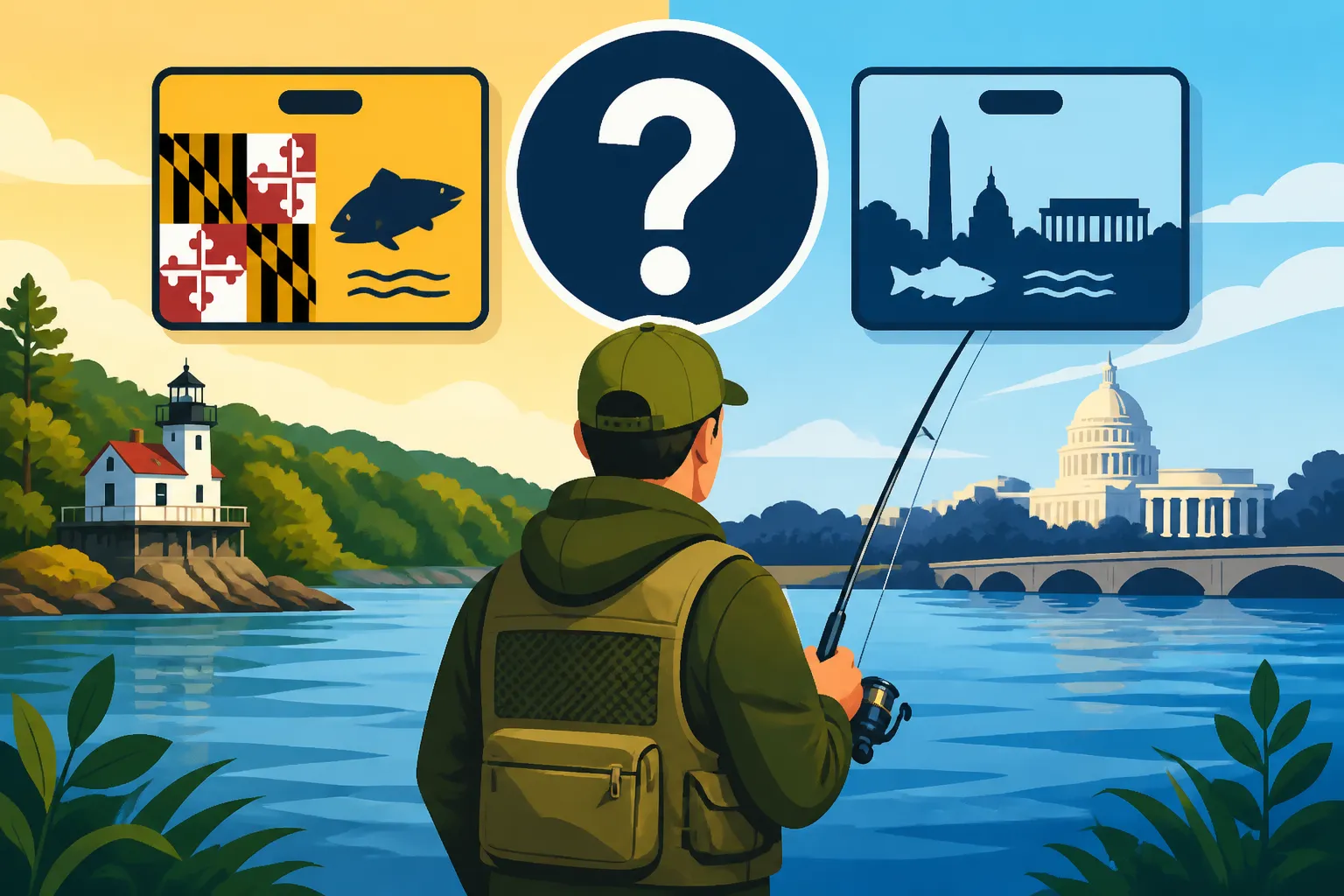
Do You Need Both a Maryland and DC License to Fish the Potomac?
Oh, the Potomac River! It’s a magnificent waterway, teeming with fish, but it also presents one of the most common head-scratchers for anglers in our region: figuring out exactly which fishing license you need. You're not alone if you've ever stood by the water, tackle box in hand, wondering if your Maryland license covers you, or if you need a separate one for the D.C. side. This guide is going to clear up all that confusion, walking you through the ins and outs of fishing the Potomac, especially where Maryland and D.C. jurisdictions meet.
Navigating the Potomac's Waters: Do You Need Two Licenses?
This is the million-dollar question for so many anglers eyeing the Potomac. The simple answer, which often isn't simple at all when it comes to fishing regulations, is it depends on exactly where you plan to cast your line. The Potomac River isn't a single, uniform entity when it comes to licensing. It’s a mosaic of different jurisdictions, primarily Maryland, Virginia, and the District of Columbia, with a unique entity called the Potomac River Fisheries Commission (PRFC) overseeing a significant tidal portion. This complex setup means that while you might be good with just one license in some spots, others could genuinely require another, or even a specific PRFC license that replaces state licenses in its designated zone.
Imagine you're planning a weekend trip. You might fish the upper, non-tidal reaches one day, and then decide to try your luck in the tidal sections closer to the Bay the next. Each move can potentially change your licensing requirements. It's a source of real frustration because no one wants to get out on the water, excited for a day of fishing, only to discover they're on the wrong side of a regulation line. This isn't just about avoiding a fine; it's about respecting the conservation efforts that these licenses help fund.
Many anglers mistakenly believe that because Maryland's border extends to the low-water mark on the Virginia side of the Potomac, a Maryland license covers the entire river. While Maryland does have significant jurisdiction, especially over its tributaries, the mainstem of the tidal Potomac below Washington D.C. is a shared resource, and then there's D.C.'s distinct portion to consider. This nuance is precisely what we need to unpack to ensure you're always fishing legally and responsibly.
The Interplay of State Borders and Waterways
Understanding the political geography of the Potomac is the first step to unraveling the licensing requirements. The river, particularly its tidal sections, forms a natural boundary between Maryland and Virginia. For historical reasons, Maryland's jurisdiction extends to the low-water mark on the Virginia shore of the Potomac. This means that technically, a large portion of the river is considered Maryland water. However, Virginia also has significant fishing interests and regulations, especially concerning its own tributaries that flow into the Potomac.
Then, there's the District of Columbia, an independent federal district, which has its own specific stretch of the Potomac and its own set of rules. This creates an interesting, often confusing, legal environment for anglers. You could literally be standing on one side of a bridge with one set of rules, and a few feet away, another set applies. This is why a simple "yes" or "no" answer to needing both licenses just doesn't cut it. It requires a detailed look at the zones.
Adding to this complexity is the fact that many anglers cross state lines regularly. Someone living in Northern Virginia might fish regularly in Maryland waters, or vice versa. They might also venture into D.C. for a unique urban fishing experience. Each of these scenarios triggers a different set of licensing questions. It's not uncommon for anglers to keep a tab open on their phone or even carry printouts of maps to ensure they're compliant, especially if they've ordered gear like a new tackle box or specialized Potomac River maps from a site like Amazon, eager to use them legally.
Understanding the Potomac River Fisheries Commission (PRFC) License
Here's where things get really specific and, frankly, a bit easier once you understand the system. The Potomac River Fisheries Commission (PRFC) is a bi-state agency, formed by Maryland and Virginia, that manages the fishery resources of the mainstem of the tidal Potomac River. This commission has its own specific license that covers fishing within its jurisdiction.
The PRFC's authority applies to the mainstem of the tidal Potomac River from its mouth upriver to the Woodrow Wilson Memorial Bridge (which connects Alexandria, Virginia, to Oxon Hill, Maryland, via Washington D.C.). This is a crucial distinction: if you are fishing within this specific tidal section of the mainstem Potomac, you generally need a PRFC license. The big benefit? This single license covers you whether you're fishing from the Maryland side or the Virginia side of the river within that PRFC zone. It essentially acts as a unified license for that shared stretch of water.
What's even more helpful is that, for recreational fishing, a valid Maryland recreational fishing license or a valid Virginia recreational fishing license also serves as a PRFC license for residents of those respective states when fishing in the PRFC's waters. So, if you're a Maryland resident with a Maryland Chesapeake Bay Sport Fishing License Explained or a Virginia resident with their state's tidal license, you’re covered in the PRFC waters. However, non-residents might find the PRFC license a streamlined option, as it eliminates the need to buy both a Maryland and a Virginia license if they intend to fish both sides of the river in that zone. This is a common point of confusion, and understanding that the state licenses can substitute for the PRFC license (for residents) is key.
Where the PRFC License Applies
Let's get down to the nitty-gritty of the PRFC's geographical reach. The PRFC's jurisdiction begins at the mouth of the Potomac River, where it meets the Chesapeake Bay, and extends upstream to the Woodrow Wilson Memorial Bridge. This encompasses popular fishing grounds like Point Lookout, the mouth of the Wicomico River, and much of the middle and lower Potomac. If you're targeting species like Striped Bass (Rockfish), White Perch, or Blue Catfish in these tidal stretches, the PRFC rules and licensing come into play.
It's important to remember that this only applies to the mainstem of the Potomac River within these boundaries. Tributaries that flow into the Potomac from Maryland, such as the St. Mary's River or the Patuxent River (which flows into the Chesapeake, not the Potomac, but is a good example of a Maryland-only tributary), fall under Maryland's exclusive jurisdiction. Similarly, Virginia's tributaries feeding the Potomac are under Virginia's control. So, if you launch your boat from a Maryland tributary and head out into the mainstem Potomac, your Maryland license or the PRFC license (or an equivalent Virginia license) covers you depending on where you actually start fishing in the main river.
This dual-coverage or substitutional nature of the PRFC license versus the state licenses is a great convenience, but it also means anglers need to know where the PRFC boundaries truly lie. Local bait shops and marinas along the Potomac, particularly near places like Colonial Beach, Virginia, or Leonardtown, Maryland, are usually well-versed in these distinctions and can offer guidance. Always check the current year's regulations because things like Maryland Striped Bass Season and Rockfish Rules and other limits can change.
How State Licenses Interact with PRFC Rules
As mentioned, for residents, a valid Maryland or Virginia fishing license can cover you in PRFC waters. This simplifies things immensely for those who primarily fish within their home state but occasionally venture onto the Potomac's mainstem. For example, a Maryland resident with a Maryland Nontidal vs Tidal Fishing License, Explained who has purchased a tidal fishing license is good to go in PRFC waters. They don't need a separate PRFC stamp or permit.
However, if you're a non-resident who wants to fish both Maryland and Virginia portions of the PRFC zone, you have a choice. You can purchase a PRFC license, which covers you in the entire commission's jurisdiction, or you could opt to buy both a Maryland nonresident license and a Virginia nonresident license. The PRFC license is often the more economical and straightforward option in this scenario. It's designed to make fishing this shared resource accessible without requiring redundant licenses.
Anglers coming from out of state often find themselves at a crossroads, especially when planning a trip that might span multiple days and multiple sections of the river. Consulting the Resident vs Nonresident Fishing Licenses in Maryland guide can help clarify the costs and options. Many prefer the PRFC license as a one-stop solution for the central Potomac. You can typically purchase PRFC licenses through their official website or from authorized license agents in Maryland and Virginia, much like you would a state license.
Fishing in Washington D.C. Waters: The Separate D.C. License
Now, let's talk about the unique situation of fishing in the District of Columbia's portion of the Potomac River. This is where the "do I need two licenses?" question often gets a definitive "yes." Unlike the PRFC zone which streamlines Maryland and Virginia licensing, D.C. maintains its own separate jurisdiction for the Potomac and its tributaries within the District's boundaries.
The District of Columbia's waters begin upstream of the Woodrow Wilson Memorial Bridge and include the Tidal Basin, Anacostia River, and Rock Creek, as well as the mainstem Potomac as it flows past the National Mall, Georgetown, and other iconic D.C. landmarks. If you plan to fish anywhere in these waters, you must possess a valid D.C. fishing license. Your Maryland or Virginia license, and even a PRFC license, will not cover you in D.C. waters. This is a critical distinction that many anglers overlook, potentially leading to violations.
This means if you're a Maryland angler fishing below the Wilson Bridge with your Maryland tidal license (which covers PRFC waters), and then you decide to motor upstream past the bridge into D.C. waters, you would then need a D.C. fishing license. It's like crossing an invisible line where the rules completely change. The D.C. Department of Energy & Environment (DOEE) is the agency responsible for managing fishing and issuing licenses within the District.
Defining D.C.'s Fishing Boundaries
The boundaries of D.C.'s fishing jurisdiction are generally defined by the District's geographical limits along the Potomac River. Upstream, it begins where the PRFC jurisdiction ends, right at the Woodrow Wilson Memorial Bridge. Downstream, it extends to where the non-tidal upper Potomac begins, near Great Falls. This stretch encompasses a vibrant urban fishery, offering opportunities for bass, catfish, panfish, and even some migratory species.
The Anacostia River, which flows into the Potomac within D.C., is also entirely under D.C.'s jurisdiction. Similarly, Rock Creek, another significant D.C. waterway, requires a D.C. license. Anglers often frequent these areas, especially those living or working in the metropolitan D.C. area, as they offer convenient access to fishing. Piers and shorelines along the Potomac in D.C., such as those near The Wharf or Gravelly Point, all fall under D.C. licensing requirements. Even if you're just doing some casual catch and release, a D.C. license is mandatory.
For out-of-state visitors, this can be an added layer of complexity. If you're visiting Washington D.C. and want to try fishing during your trip, you'll need to purchase a D.C. license. Fortunately, D.C. licenses are typically available online through the DOEE website, making them relatively easy to acquire. You can also find information about Best Fishing Spots Near Washington DC to plan your D.C. angling adventure.
Acquiring a D.C. Fishing License
Obtaining a D.C. fishing license is a straightforward process, typically done online through the D.C. Department of Energy & Environment's permitting and licensing portal. They offer various options, including annual resident and non-resident licenses, as well as shorter-term licenses for those just visiting or planning a brief fishing excursion. The process is similar to how you would buy a How to Buy a Maryland Fishing License.
When applying, you'll generally need to provide personal identification information. The fees for D.C. licenses are comparable to those in neighboring states, and the revenue helps fund D.C.'s fisheries management and conservation programs. It's always a good idea to purchase your license in advance of your trip, ensuring you have it printed or readily accessible on your mobile device before you head to the water. Some anglers even purchase small waterproof cases for their licenses that they might have found on Amazon, just to keep them safe and easily accessible.
It's also worth noting that D.C. has its own set of fishing regulations regarding size and creel limits for different species, which may vary from Maryland or Virginia regulations. So, once you have your D.C. license, make sure to familiarize yourself with the current D.C. fishing regulations to avoid any unwitting violations.
Practical Scenarios and Common Angler Confusions
Let's look at some real-world situations to solidify your understanding of these Potomac River licensing requirements. Because let's be honest, the regulations can feel like a labyrinth at times!
Scenario 1: Fishing Below the Wilson Bridge
You're launching your boat from National Harbor in Maryland, just south of the Woodrow Wilson Bridge, and plan to fish downstream towards Fort Washington. You're staying entirely within what's considered the mainstem tidal Potomac below the Wilson Bridge.
- Required License: As a Maryland resident, your regular Maryland Chesapeake Bay Sport Fishing License Explained covers you. If you're a Virginia resident, your Virginia tidal license covers you. If you're a non-resident of either state, you can either buy a PRFC license or purchase both a Maryland nonresident tidal license and a Virginia nonresident tidal license (though the PRFC option is simpler for non-residents wanting to fish both sides of the mainstem).
- Why: This area falls squarely within the PRFC's jurisdiction, where state licenses (for residents) or a specific PRFC license (often for non-residents or those who prefer it) are valid.
Scenario 2: Fishing Above the Wilson Bridge in D.C.
You want to try your luck fishing from a pier near The Wharf in Washington D.C., or perhaps kayak fish the Anacostia River.
- Required License: You absolutely need a valid D.C. fishing license.
- Why: This area is within the District of Columbia's sovereign waters, which have their own independent licensing requirements. Your Maryland, Virginia, or PRFC license will not be valid here. This is one of the most common mistakes anglers make, assuming their state license covers them throughout the "general" Potomac area.
Scenario 3: Fishing Maryland Tributaries of the Potomac
You're heading to Mattawoman Creek, a popular bass fishing spot in Charles County, Maryland, which flows into the Potomac.
- Required License: A valid Maryland fishing license (tidal, if fishing tidal portions; non-tidal if upstream) is all you need.
- Why: Mattawoman Creek, despite flowing into the Potomac, is considered a Maryland tributary and falls solely under Maryland's jurisdiction. The PRFC license is for the mainstem of the Potomac, not its tributaries. Similarly, if you were fishing a Virginia tributary, you'd need a Virginia license. This distinction is crucial for understanding Maryland Nontidal vs Tidal Fishing License, Explained.
Scenario 4: A Multi-Day Trip Spanning Zones
Let's say you're visiting for a week and plan to fish the lower Potomac (PRFC waters) one day, then drive up and fish in D.C. waters near Georgetown on another day.
- Required Licenses: For the lower Potomac/PRFC waters, you would need either a Maryland or Virginia non-resident tidal license (depending on which state's jurisdiction you prefer to claim for the PRFC reciprocity, or for convenience, a PRFC license itself). For fishing in D.C. waters, you would also need a separate D.C. non-resident fishing license.
- Why: You are crossing distinct jurisdictional lines. The PRFC zone allows for some reciprocity, but D.C. is entirely separate. This is a classic example of when you would need two distinct licenses to cover different parts of the same river. It's why carrying your licenses, perhaps in a durable pouch you picked up from Amazon, is always a good idea.
Fishing Location Segment Required License(s)
PRFC Zone (Mainstem of Tidal Potomac, B/W Wilson & Bay) Maryland or Virginia Tidal Fishing License (for residents of respective states), OR PRFC license (for non-residents or optional for residents). One license covers both MD & VA waters.
Washington D.C. Waters (Potomac above Wilson Bridge, Anacostia, Rock Creek) D.C. Fishing License (mandatory). Maryland/Virginia/PRFC licenses are NOT valid here.
Maryland Tributaries to the Potomac (e.g., Mattawoman Creek, St. Mary's River) Maryland Fishing License (tidal or non-tidal, as appropriate).
Additional Information PRFC Zone (Mainstem of Tidal Potomac, B/W Wilson Bridge and Mouth) **Washington D
Required License(s)
The Potomac River Fisheries Commission: A Quick Guide
The PRFC is essentially a joint commission established by Maryland and Virginia. It acts as the regulatory body for the tidal Potomac River from the mouth of the river upstream to the Woodrow Wilson Bridge. This unique governance means specific licenses apply, fostering uniform management across this shared waterway.
So, the big question on your mind is whether you need both a Maryland and a D.C. fishing license to fish the Potomac. The short answer is: it's complicated, and depends entirely on where on the Potomac you plan to cast your line. Fishing licenses in Maryland and D.C. have distinct jurisdictions, and the Potomac River, while seemingly one continuous body of water, is actually split into several legal zones, including a special area managed by the Potomac River Fisheries Commission (PRFC). Let's break down this often confusing situation so you can fish legally and confidently.
Navigating the Potomac: Understanding Different Jurisdictions
The Potomac River is a vital waterway, and its legal boundaries for fishing can be a real head-scratcher. It's not simply a matter of fishing from one bank or the other; the river itself is carved into zones that dictate which licenses are valid. This complexity often frustrates anglers, especially those planning a trip that might involve different segments of the river. You want to focus on catching fish, not on deciphering legal maps while out on the water!
The key to understanding the Potomac's licensing requirements lies in recognizing three distinct zones: the mainstem tidal Potomac River below the Woodrow Wilson Bridge, which is governed by the Potomac River Fisheries Commission (PRFC); the waters within the District of Columbia, which include the Potomac above the Wilson Bridge; and the various tributaries that flow into the Potomac, which fall under the exclusive jurisdiction of either Maryland or Virginia. Missing these distinctions can lead to confusion and, potentially, fines.
Many anglers assume their home state license is sufficient everywhere on the Potomac, especially if they are Maryland residents, given Maryland's historical claim to the entire riverbed up to the Virginia low-water mark. While Maryland does hold significant sway, particularly over its own tributaries, the mainstem tidal Potomac and D.C.'s section have specific rules that often supersede or coexist with state regulations. It's crucial not to generalize and to understand each segment individually.
The Role of the Potomac River Fisheries Commission (PRFC)
The Potomac River Fisheries Commission (PRFC) is a unique, bi-state agency established by Maryland and Virginia. Its primary role is to manage and regulate the fisheries in the mainstem of the tidal Potomac River, specifically from its mouth at the Chesapeake Bay upriver to the Woodrow Wilson Memorial Bridge. This commission aims to ensure uniform regulations and conservation efforts for this shared resource.
For anglers, the PRFC zone means a specific set of licensing rules. If you are fishing within this defined tidal section of the mainstem Potomac, you are covered if you possess either a valid Maryland recreational fishing license (tidal) or a valid Virginia recreational fishing license (tidal), provided you are a resident of the state that issued your license. Essentially, these state licenses serve as the PRFC license for residents within the PRFC's jurisdiction.
However, if you are a non-resident of either Maryland or Virginia, or if you simply prefer, you can purchase a specific PRFC license. This PRFC license will cover you for fishing the mainstem tidal Potomac between the Wilson Bridge and the river's mouth, regardless of whether you're fishing closer to the Maryland shore or the Virginia shore. This is often the most straightforward option for out-of-state anglers who plan to fish this specific stretch of the river. It removes the need to buy two separate state non-resident licenses. You can find more detailed information by looking into What Is the Potomac River Fisheries Commission License?.
Maryland's Jurisdiction on the Potomac's Tributaries
While the PRFC manages the mainstem tidal Potomac, Maryland retains full jurisdiction over its own tributaries that flow into the Potomac. This is where your standard Maryland fishing license comes into play without any PRFC or D.C. complications. Examples include popular fishing destinations like Mattawoman Creek, Piscataway Creek, or the St. Mary's River.
If you are fishing in any of these Maryland tributaries, you will need a Maryland fishing license. The type of Maryland license (tidal or non-tidal) will depend on whether the tributary is tidal or non-tidal at the point you are fishing. For instance, the lower, tidal reaches of Mattawoman Creek would require a Maryland tidal license, while the upper, freshwater portions of a different tributary might require a non-tidal license. Understanding the distinction between a Maryland Nontidal vs Tidal Fishing License, Explained is crucial here.
This clear distinction is important for local anglers. Many Maryland residents focus their fishing efforts within these tributaries for species like largemouth bass, snakeheads, or white perch, where they know their Maryland license is unequivocally valid. Information on specific Maryland tributary fishing can often be found in resources like the Fishing the Potomac River in Maryland guide, which details spots and species within Maryland's direct control.
The District of Columbia's Separate Waters
Here's the critical point where anglers often get caught out: the waters within the District of Columbia's boundaries. The Potomac River, once it flows north (upstream) of the Woodrow Wilson Memorial Bridge, enters D.C. jurisdiction. This also includes the entire Anacostia River, Rock Creek, and the Tidal Basin, all of which are located within D.C.
If you plan to fish anywhere within these D.C. waters—whether from shore, a pier, or a boat—you are legally required to possess a valid D.C. fishing license. Your Maryland, Virginia, or PRFC license will not cover you in D.C. waters. This is a common pitfall for anglers who might start their day in PRFC waters and then decide to move upstream past the Wilson Bridge, unknowingly entering a new regulatory zone without the proper authorization.
The D.C. Department of Energy & Environment (DOEE) is the agency responsible for issuing fishing licenses and managing fisheries within the District. They have their own set of regulations concerning seasons, size limits, and creel limits, which may differ from those in Maryland or Virginia. It's always best practice to check D.C.'s specific regulations once you've secured your D.C. license.
Where D.C. Licenses are Required
The D.C. fishing license is required for any fishing activity on the Potomac River and its tributaries that fall within the geographical boundaries of the District of Columbia. This includes, but isn't limited to:
- Potomac River: From the Woodrow Wilson Memorial Bridge upstream to the District's northern border.
- Anacostia River: Its entire length within D.C.
- Tidal Basin: The iconic reservoir adjacent to the National Mall.
- Rock Creek: As it flows through D.C.
Popular fishing spots in D.C. where you would need this license include the docks around The Wharf, the shorelines near Georgetown, any fishing spots along the Anacostia River, and even casual fishing from the banks of Rock Creek Park. Many people enjoy the unique experience of urban fishing with the city's landmarks as a backdrop. For a fun outing, you might want to explore some of the Best Fishing Spots Near Washington DC and ensure you have your D.C. license handy.
It's a straightforward rule: if you're in D.C. waters, you need a D.C. license. There's no reciprocity with Maryland, Virginia, or the PRFC for D.C.'s internal waters. This separation is rooted in the District's independent governmental status and its responsibility for managing its own natural resources.
How to Get a D.C. Fishing License
Acquiring a D.C. fishing license is quite simple, thanks to online resources. The most convenient way to purchase one is directly through the D.C. Department of Energy & Environment (DOEE) website. They offer various license types, including annual resident and non-resident options, as well as shorter-term licenses (e.g., 1-day or 7-day) that are perfect for visitors or those planning a brief fishing trip to the District.
The online process typically involves providing your personal identification information and paying the associated fee. Once purchased, you can often print your license or keep a digital copy on your phone. Just like with a Maryland license, it's a good idea to have it readily accessible. Many anglers keep their licenses in a waterproof wallet or clear pouch, especially if they've stocked up on fishing essentials from Amazon that come with such accessories. Remember that even if you're just practicing Maryland Catch and Release Rules During Closed Seasons in D.C. waters, the license is still required.
It’s always prudent to purchase your license before you head out, rather than trying to figure it out last minute. While some tackle shops in the D.C. metro area might be authorized agents, the online portal is generally the quickest and most reliable method.
Real-World Scenarios and Avoiding Common Mistakes
Let's consolidate this information with a few more practical examples to help you avoid common pitfalls. The Potomac's unique regulatory environment means a bit of foresight goes a long way.
Scenario 1: Charter Fishing on the Potomac
You've booked a charter boat out of Calvert County, Maryland, to fish for striped bass in the mainstem Potomac, well below the Wilson Bridge.
- Required License: Generally, passengers on a licensed Maryland charter boat are covered under the boat's license, so you typically do not need your own individual Maryland fishing license for that trip in PRFC waters. However, it's always a good idea to confirm this with your charter captain when booking. If you are fishing a private boat, then the rules for individual anglers apply.
- Why: Charter boats operate under specific commercial licenses that often extend coverage to their paying passengers within their operating jurisdiction. For more on this, check out Maryland Charter Boat License Coverage for Passengers.
Scenario 2: Moving Between D.C. and Maryland/PRFC Waters on the Same Day
You start your morning fishing for catfish in the Anacostia River (D.C. waters) and in the afternoon decide to head downstream to fish for white perch near Fort Washington (PRFC/Maryland waters).
- Required Licenses: You would need both a valid D.C. fishing license AND a valid Maryland tidal fishing license (or a PRFC license if you are a non-resident of MD/VA).
- Why: You are crossing a jurisdictional boundary. The D.C. license is required for D.C. waters, and the Maryland/PRFC license is required for PRFC waters. This is the clearest example of needing "both" licenses.
Scenario 3: Potomac River Boundary Waters
What if you're fishing directly from the Virginia shore of the Potomac, for example, near Alexandria, but below the Wilson Bridge?
- Required License: As a Virginia resident, your Virginia tidal fishing license would cover you. As a Maryland resident, your Maryland tidal fishing license would also cover you due to the PRFC reciprocity. As a non-resident, a PRFC license would be the most efficient choice.
- Why: This area is within the PRFC's jurisdiction. The PRFC license, or a reciprocal Maryland or Virginia tidal license, covers the mainstem tidal Potomac, regardless of which side you are fishing from (as long as it's within the PRFC zone). This is a great example of how the PRFC streamlines cross-state fishing.
It’s always better to be over-prepared than under-prepared. Before any fishing trip on the Potomac, especially if you're exploring new areas, take a moment to confirm the specific jurisdiction and licensing requirements. A quick check of the Maryland Department of Natural Resources (DNR) website, the Virginia Department of Wildlife Resources (DWR) website, or the D.C. Department of Energy & Environment (DOEE) site can save you a headache. Also, local bait and tackle shops are invaluable resources for up-to-date information on local rules and current fishing conditions. Knowing which license you need allows you to truly relax and enjoy the incredible fishing opportunities the Potomac River offers. If you ever find yourself in doubt, it’s best to err on the side of caution and acquire the license you think might be needed. Ignorance of the law is never an excuse, and Maryland Fishing License Penalties for Violations can be costly.
Disclaimer
The information provided in this guide is for general informational purposes only and does not constitute legal advice. Fishing regulations can change frequently. Always consult the official websites of the Maryland Department of Natural Resources, the Virginia Department of Wildlife Resources, the Potomac River Fisheries Commission, and the D.C. Department of Energy & Environment for the most current and accurate regulations before you go fishing.