Maryland Charter Boat Fishing License, Who Needs One
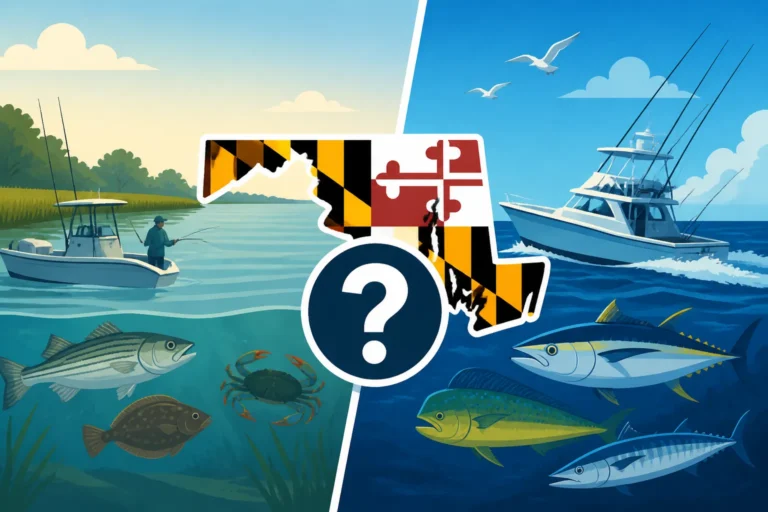
It can be incredibly confusing trying to figure out all the nuances of Maryland fishing licenses, especially when you're planning a fun trip on a charter boat. Many anglers wonder if they still need to buy their own personal fishing license or if the charter captain's permits cover everyone on board. This guide will cut through the uncertainty, explaining exactly who needs what when you step onto a Maryland charter boat to chase those prized Chesapeake Bay rockfish or offshore species.
Understanding Maryland's Charter Fishing Regulations
Maryland's Department of Natural Resources (DNR) has specific rules designed to regulate commercial fishing operations, including recreational charter boats. These rules are in place to manage fish populations, ensure safety, and make sure everyone is playing by the same book. The key distinction often boils down to whether you're fishing recreationally for personal enjoyment or if you're engaging in a for-hire activity where a licensed captain is providing the service.
Who is Covered by a Charter Boat's License?
For most recreational anglers boarding a legitimate, licensed charter boat in Maryland, the good news is that you typically do not need your own individual fishing license. This is one of the biggest perks of booking a trip with a professional captain! The charter vessel itself operates under a specific Commercial Tidal Fish License (CTFL) issued to the captain, which covers all paying recreational passengers on board for the duration of that specific trip. Think of it as a blanket coverage that allows everyone to legally participate in the fishing activity.
This means you can focus on the fishing itself – casting, reeling, and enjoying the beautiful waters of the Chesapeake Bay or the Atlantic coast – without the added hassle of purchasing and carrying a separate state fishing license. This arrangement simplifies things immensely, especially for out-of-state visitors or those who only fish occasionally. The captain is responsible for ensuring the vessel holds the correct licenses and endorsements, such as the required permits for specific species like striped bass. For instance, if you're eyeing a trophy rockfish, your captain will have the necessary Maryland Striped Bass Season and Rockfish Rules and commercial endorsements to legally pursue them with clients.
When Individual Licenses are Still Required
While charter boats largely exempt passengers from needing their own licenses, there are a few important exceptions and scenarios where you might still need one. It's crucial to be aware of these situations to avoid any unexpected fines or legal issues. One common scenario involves fishing in waters not specifically covered by the charter's tidal license, such as pure freshwater (nontidal) lakes or rivers if the charter somehow ventured there for a specialized trip. However, most Chesapeake Bay and Ocean City charters stick to tidal waters where their licenses apply.
Another point of confusion can arise if you're on a "private" boat where the owner is not a licensed charter captain, but perhaps just a friend who happens to charge you for gas or bait. If that boat owner doesn't hold a valid Commercial Tidal Fish License, then everyone on board who is 16 years or older, including the boat owner and any guests, would need their own individual Resident vs Nonresident Fishing Licenses in Maryland. The key is the for-hire designation and the captain's commercial licensing. If it's a casual outing where you're simply chipping in for costs on a private boat, that's not a charter, and individual licenses are a must. Also, if you plan to do any recreational crabbing from shore or a private boat before or after your charter, you'd likely need a separate Maryland Crabbing and Fishing Combination License unless exempted by age or specific regulations.
Types of Licenses for Maryland Charter Operators
Operating a successful and legal fishing charter in Maryland isn't just about knowing where the fish are biting; it requires a robust set of licenses and certifications from both state and federal agencies. These licenses ensure that the captain is knowledgeable, the vessel is safe, and the fishing activities comply with conservation efforts.
Commercial Tidal Fish Licenses CTFL
The Maryland Department of Natural Resources (DNR) issues what's known as a Commercial Tidal Fish License (CTFL) to the operators of for-hire charter boats. This is the cornerstone of a charter's legality from a fishing perspective. The CTFL isn't a single, generic license; it often comes with various endorsements that specify what species the charter can target and harvest commercially or recreationally for clients. For example, a captain might have a General Finfish endorsement, or a specific Striped Bass endorsement, which allows them to take paying clients fishing for striped bass within the legal seasons and limits.
These licenses are critical for managing fish stocks. The DNR uses the data from these commercial licenses to monitor harvest rates and ensure sustainability. A captain needs to renew their Maryland Fishing License Renewal annually and ensure all relevant endorsements are current. This means that when you book with a licensed charter, you're tapping into a system designed to keep fishing viable for future generations, while also ensuring your trip is fully compliant with state regulations. Without the proper CTFL, a captain cannot legally take clients fishing for money, and any fish caught could be considered illegally harvested.
Coast Guard OUPV or Master License
Beyond the state-level fishing permits, every charter boat captain in the United States must hold a valid credential issued by the U.S. Coast Guard (USCG). This is not a fishing license, but rather a mariner's license that certifies the operator's competence and legal authority to command a vessel carrying passengers for hire. The most common credentials for recreational charter fishing are the OUPV (Operator of Uninspected Passenger Vessels), often called a "Six-Pack" license because it allows the carriage of up to six passengers, or a Master's license, which permits more passengers and larger vessels.
These USCG licenses are about maritime safety and seamanship. To obtain one, captains must pass rigorous exams covering navigation, safety procedures, first aid, fire fighting, rules of the road, and more. They also need to accumulate a certain number of sea service hours and undergo regular drug testing and physicals. When you step onto a charter boat, knowing your captain holds a valid USCG credential gives you peace of mind that they are professionally trained to ensure your safety on the water. This federal licensing is non-negotiable for any legitimate for-hire operation, whether you're fishing in the Bay or offshore from Ocean City. If you're ever in doubt, don't hesitate to ask your captain about their USCG license – a professional will be proud to show it off!
Navigating Common Misconceptions and Specific Scenarios
The world of fishing regulations can be complex, and charter fishing often generates a few common questions and misunderstandings. It's easy to get caught up in old wives' tales or assume rules from one state apply to another. Let's clear up some of those murky waters.
The "No License Needed on a Charter" Myth vs. Reality
The statement "No license needed on a charter" is mostly true, but like a good fishing story, it has its nuances. The reality is that for licensed, for-hire recreational fishing charters in Maryland, the vessel's Commercial Tidal Fish License (CTFL) covers the passengers. This means you, as a passenger, typically do not need to buy your own individual Maryland Fishing License Guide for 2026 for the fishing portion of the trip. The captain is the one holding the necessary commercial permits.
However, the "myth" part comes in when people apply this universally. As discussed earlier, if you're on a friend's private boat and simply chipping in for gas, that's not a charter, and you would need your own personal fishing license if you're 16 years or older. Another angle to consider is if you decide to jump off the charter boat onto a public pier or jetty after the trip and continue fishing. In that scenario, you'd likely need your own individual license, as the charter's coverage applies specifically to you on their vessel during the paid trip. It's always best practice to confirm with your chosen charter captain before your trip if you have any specific concerns. You can even check out the Maryland Fishing License Age Requirements if you're unsure about younger anglers on board.
What About Crabbing or Other Activities on a Charter?
Most Maryland fishing charters are primarily geared towards, well, fishing. However, some captains offer combination trips that include crabbing or other recreational harvesting activities. This is where it gets a little more specific. If the charter explicitly advertises and is licensed for crabbing for hire, then the captain's commercial crabbing permits would typically cover passengers for crabbing activities, similar to how fishing is covered.
However, if your charter is purely a fishing charter, and you decide on a whim to drop a hand line for crabs off the side, you might run into issues. Maryland has specific Maryland Recreational Crab Pot Limit Per License and regulations for crabbing, and these might not be covered by a standard fishing charter license. It's crucial to clarify with your captain beforehand if you intend to combine fishing with crabbing or any other type of harvesting. They can inform you if their existing licenses cover those activities or if individual permits (like a separate crabbing license) would be required for passengers.
Private Guides vs. Registered Charters
The distinction between a "private guide" and a "registered charter" might seem subtle, but it's critically important when it comes to licensing. A registered charter is a vessel operated by a captain holding both a USCG credential and a Maryland Commercial Tidal Fish License (CTFL) with the appropriate endorsements to carry paying passengers for recreational fishing. These are the operations that typically cover your fishing license needs as a passenger.
A "private guide," on the other hand, might be someone who takes a few friends out on their personal boat, or perhaps an individual who offers informal guiding services without the full commercial licensing. If they are not operating as a for-hire business with the proper state and federal permits, then everyone on board who needs one would require their own individual Maryland Fishing License for Non-Boat Anglers or a general fishing license. Always ask for credentials. A legitimate charter captain will openly share their USCG Master or OUPV license number and their Maryland DNR CTFL information. This transparency is key to a legal and worry-free trip.
How to Verify a Charter Boat's Licensing
You've picked a date, gathered your crew, and you're excited for a day on the water. Before you hand over your deposit, taking a few minutes to verify your charter boat's licensing status is a smart move. It protects you, ensures a legal trip, and supports responsible operators.
Asking the Right Questions Before Booking
When you're talking to a potential charter captain, don't be shy about asking questions regarding their licenses and insurance. A professional and reputable captain will appreciate your diligence and be happy to provide the information. Here are some key questions to ask:
- "Are all fishing licenses for passengers covered by the boat's commercial license?" This directly addresses your primary concern.
- "What U.S. Coast Guard credential do you hold, and what's your license number?" This verifies their federal authority to carry passengers for hire.
- "What Maryland Commercial Tidal Fish License (CTFL) endorsements do you have, especially for the species we plan to target?" This confirms they are properly licensed for fishing in Maryland waters.
- "Are you insured for carrying passengers for hire?" While not directly a fishing license, insurance is critical for your safety and protection.
- "Do you require me or my group to have Maryland Saltwater Angler Registration Requirements if we're fishing tidal waters?" (The answer should be no, as the charter's CTFL usually negates this for passengers).
If a captain is evasive or seems annoyed by these questions, that's a red flag. A legitimate operator understands why you're asking and will readily provide proof. Many captains display their licenses prominently on their website or on the boat itself. You can find many reputable charters listed on sites like FishAnywhere or directly through local marinas in places like Deale, Annapolis, or Ocean City.
Resources for Verification
For the truly diligent angler, there are ways to independently verify a captain's credentials. While you can't typically look up individual passenger coverage, you can certainly check on the captain's and vessel's commercial status:
- Maryland Department of Natural Resources (DNR): The Maryland DNR maintains records of Commercial Tidal Fish Licenses. While they don't have a public-facing search tool for all commercial licenses, if you have concerns about a specific captain, you could contact their licensing division directly with the captain's name or vessel registration number. They can confirm if the vessel holds the necessary CTFL and endorsements for for-hire recreational fishing.
- U.S. Coast Guard (USCG): The USCG provides a public database to verify a mariner's credential status. If you get a captain's USCG Merchant Mariner Credential number, you can search for its validity. This is a crucial check, as it confirms their legal authority and safety compliance. You'd typically perform this search through the USCG's official website, not through third-party sites.
- Review Sites and Local Marinas: While not official verification, reputable review sites (like those found through a quick search on Amazon for fishing charters) and local marina offices often list or recommend licensed and respected captains. Positive reviews that mention professionalism and safety can be a good indicator, but nothing beats direct verification of credentials.
By performing these checks, you're not just being careful; you're ensuring your fishing trip is safe, legal, and truly hassle-free, allowing you to fully enjoy the thrill of Maryland fishing!
Summary of Maryland Fishing License Requirements on Charters
This table outlines common scenarios to help you quickly understand who needs what when it comes to fishing licenses on Maryland waters.
| Scenario | Who Needs a Personal Maryland Fishing License? (Ages 16 and older) | Explanation |
|---|---|---|
| Licensed Fishing Charter Passenger | No | The charter captain's Commercial Tidal Fish License (CTFL) covers all paying passengers for fishing activity on board. |
| Passenger on a Friend's Private Boat | Yes | If the boat owner does not hold a CTFL, all individuals 16+ years old on board need their own individual recreational fishing license. |
| Fishing from a Public Pier/Shore | Yes | Your own individual license is required unless fishing on a designated "Free Fishing Day" or you are under 16 years old. Learn more about Maryland's Free Fishing Days. |
| Crabbing on a Fishing Charter | Depends on Charter's License | Clarify with the captain. If the charter is specifically licensed for for-hire crabbing, passengers may be covered. Otherwise, individual crabbing permits might be needed for separate crabbing activities. |
| Fishing in Nontidal (Freshwater) Lakes | Yes | Even if on a private boat, a nontidal license is required for freshwater fishing if you are 16 or older. Charter licenses are typically for tidal waters. |
| USCG Licensed Captain | Yes (for personal recreational fishing) | A captain's USCG license is for operating the vessel, not for their personal recreational fishing when they are off duty or fishing for personal harvest. They need a separate recreational license. |
Disclaimer
Please remember that fishing regulations, license requirements, and related laws can change frequently. While this guide provides comprehensive information based on current Maryland regulations, it is always your responsibility to verify the most up-to-date rules with the Maryland Department of Natural Resources (DNR) or the U.S. Coast Guard (USCG) before engaging in any fishing or charter activities. This article is for informational purposes only and should not be considered legal advice.