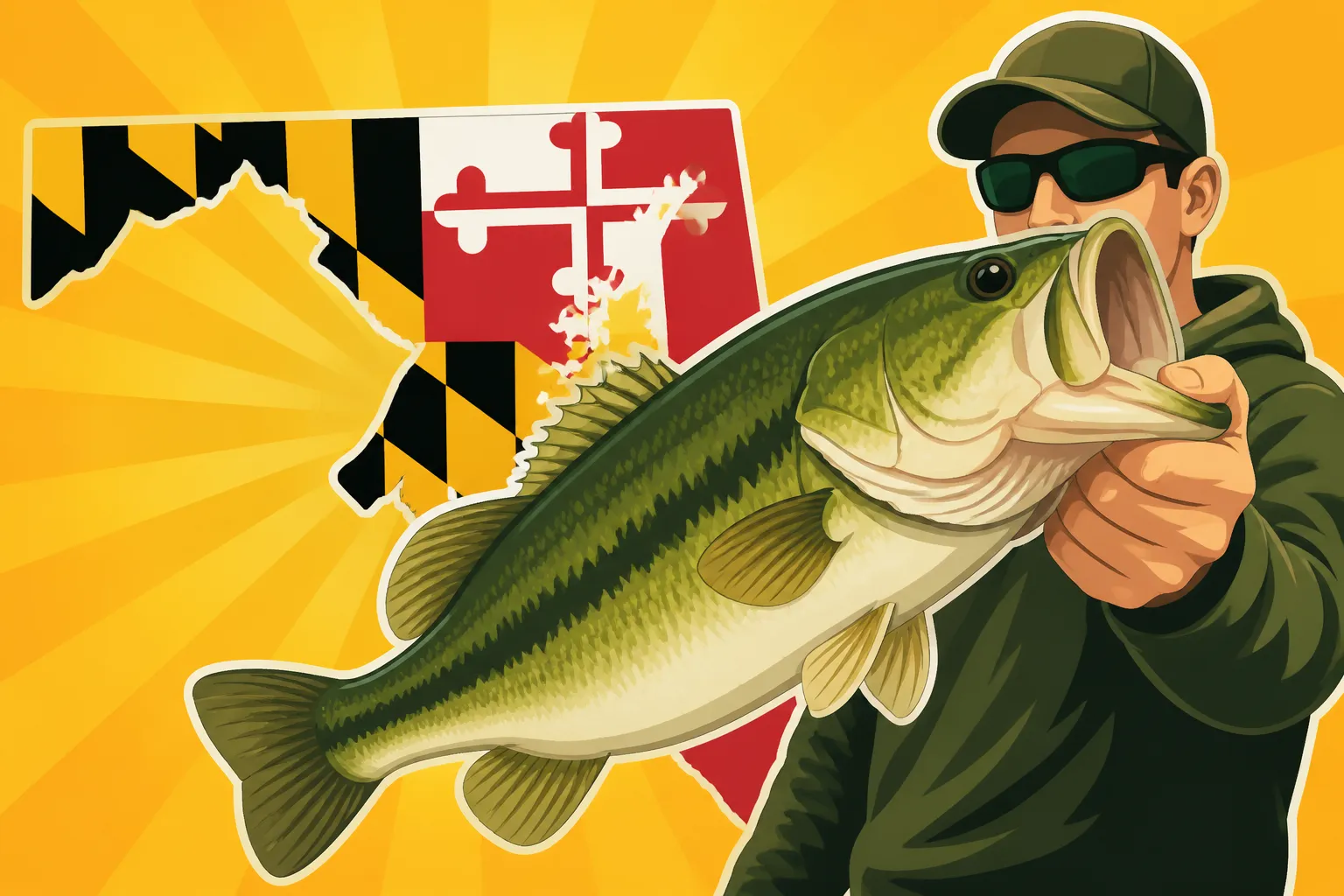
Largemouth Bass State Record in Maryland
Every angler who's spent time on Maryland's freshwater lakes and rivers has likely dreamed of it: that moment when the rod bends double, the drag screams, and you know, just know, you've hooked into something truly special. For many, that "something special" is a largemouth bass of epic proportions, a fish worthy of state record books. Understanding the benchmark and the pursuit of such a legendary catch is a thrill in itself, and this guide is here to shed light on Maryland's top largemouth bass achievements and how you might join the ranks of those who've landed a lunker.
The Enduring Allure of the Maryland Largemouth Bass Record
There's something uniquely captivating about chasing a state record, especially when it comes to a beloved game fish like the largemouth bass. It’s more than just the size of the fish; it’s about the story, the challenge, and the validation of countless hours spent on the water. For Maryland anglers, the largemouth record represents a pinnacle of achievement, a testament to the health of our waters and the potential for true giants to lurk beneath the surface.
A Legacy of Giants and Dedication
The history of fishing records is filled with tales of incredible catches, often made by ordinary people in extraordinary moments. Each state record largemouth bass isn't just a number on a scale; it's a snapshot in time, a reflection of the angler's persistence, knowledge, and perhaps a touch of good fortune. These records inspire generations of fishermen and women, driving them to hone their skills, explore new waters, and push the boundaries of what's possible. It fosters a healthy competitive spirit, but more importantly, a deep respect for the fish and the ecosystems they inhabit. The pursuit of such a record connects us to the history of fishing in Maryland, back to the pioneers who first recognized the incredible potential of our waters.
The Personal Quest for a Trophy Catch
For many, the idea of catching a state record isn't just about fame; it's a deeply personal quest. It represents the culmination of years of learning, adapting, and refining techniques. Imagine the thrill of battling a fish that eclipses all your previous personal bests, knowing that every decision, every twitch of the rod, led to that moment. Even if the fish doesn't break a record, the pursuit of a true trophy largemouth is an experience that stays with you forever. It's about testing your limits, understanding fish behavior on a profound level, and engaging with nature in a way that few other activities allow. Many anglers spend their entire lives trying to crack the code of these big fish, poring over maps, weather patterns, and even lunar phases, all in hopes of that one glorious strike.
Maryland's Legendary Largemouth: The Current State Record Holder
Every state has its legendary fish, and in Maryland, the current largemouth bass state record holds a special place in the hearts of freshwater anglers. This isn't just any bass; it's the bass, the one all others are measured against. Knowing the details of this magnificent catch provides both inspiration and a realistic target for those aspiring to make their own mark in the record books.
The Record-Setting Fish and Its Angler
The current Maryland state record largemouth bass was caught by Mike French, and it weighed an astounding 10 pounds, 4 ounces. This colossal fish was landed back in 1983, a testament to both the angler's skill and the quality of Maryland's fisheries even decades ago. It wasn't just a heavy fish; it was a true monster that captured the imagination of anglers across the state. This record has stood the test of time, proving to be an incredibly tough benchmark for subsequent generations of bass fishermen. It reminds us that while tactics and gear evolve, the fundamental challenge of finding and catching a truly exceptional fish remains constant.
Where and When This Giant Was Landed
Mike French's record-breaking largemouth was caught from a private pond in Montgomery County. This detail is often a source of both hope and a little frustration for many anglers. On one hand, it shows that huge bass can come from unexpected places; on the other, it highlights the challenge of public access to similar trophy waters. The fact that it was caught in a private pond emphasizes the importance of consistent habitat, minimal fishing pressure, and a thriving forage base – conditions often found in well-managed private waters. While most anglers will focus on public reservoirs and rivers, this record serves as a reminder that the potential for a lunker can exist almost anywhere conditions are right, even in a small, unassuming pond. It also underscores that early spring or late fall are often prime times for giant bass, as they feed aggressively before or after the spawn.
Prime Waters for Pursuing Trophy Largemouth in Maryland
While the state record came from a private pond, Maryland boasts an array of public waters known for producing exceptionally large largemouth bass. From sprawling reservoirs to intricate tidal rivers, the Old Line State offers diverse habitats where a new record could be lurking. Successfully targeting these areas requires understanding their unique characteristics and fishing patterns. If you're serious about your bass fishing, you'll find these spots are worth exploring.
Top Reservoirs Known for Lunkers
Maryland's large reservoirs are perennial favorites for trophy largemouth bass. These deep, clear, and often rocky impoundments provide excellent cover, abundant forage, and the stable environment needed for bass to grow to impressive sizes.
- Loch Raven Reservoir: Located near Baltimore, Fishing Loch Raven Reservoir for Largemouth Bass is legendary for its big bass. With deep channels, submerged timber, and extensive creek arms, it offers diverse structure. Anglers frequently report bass over 5 pounds, and the potential for double-digit fish is always present. The challenge here is the sheer size and depth of the lake, requiring patience and knowledge of seasonal patterns. Many keen anglers religiously follow its trends, often investing in high-quality electronics to pinpoint hidden structure.
- Liberty Reservoir: Another gem in the central Maryland area, Fishing Liberty Reservoir is known for its clear waters and steep drop-offs. While it can be a tougher nut to crack due to its clarity, the rewards are often spectacular. Deep diving crankbaits, jigs, and finesse techniques shine here. It’s a lake that demands a methodical approach, but those who learn its secrets often find themselves battling truly massive fish. The forage base, including herring and panfish, helps bass grow fat and healthy in this challenging environment.
- Piney Run Reservoir: Nestled in Carroll County, Piney Run is a smaller, but incredibly productive, reservoir. Its extensive weed lines, standing timber, and various coves provide ideal ambush points for big bass. It’s a fantastic lake for both boat and shore anglers, offering numerous opportunities to target quality fish. How Big Do Largemouth Bass Get in Maryland Ponds? will give you an idea of the potential here, even in smaller impoundments.
Tidal Rivers: A Unique Challenge and Reward
Maryland's tidal rivers, especially those feeding into the Chesapeake Bay, offer a completely different but equally exciting challenge for largemouth bass anglers. These waters are influenced by the ebb and flow of the tides, creating dynamic conditions and unique habitats.
- Potomac River: The tidal Potomac is arguably one of the East Coast's premier largemouth bass fisheries. Known for its vast grass beds, lily pad fields, and extensive spatterdock, it's a prime location for big fish, especially during warmer months. Fishing the Potomac River in Maryland offers insight into this incredible fishery. Anglers regularly pull in bass over 5 pounds, and double-digit fish are caught every year. Flipping jigs, pitching plastics, and working topwater frogs over the dense vegetation are popular and effective strategies. The constant current and changing water levels mean you have to adapt your approach throughout the day.
- Nanticoke River: Flowing through the Eastern Shore, the Nanticoke is another excellent tidal river system. Its stained waters, cypress trees, and oxbow lakes provide excellent cover for bass. It's a river where you can often find fish tucked deep into cover, requiring precise casts and robust tackle. The Nanticoke's rich ecosystem supports a healthy population of baitfish, allowing largemouth to achieve substantial size. Patience and a willingness to explore its many creeks and backwaters can lead to some incredible catches.
| Water Body | Type | Key Features | Typical Trophy Size (lbs) | Prime Seasons | Common Baits/Techniques |
|---|---|---|---|---|---|
| Loch Raven Reservoir | Nontidal Lake | Deep, clear, submerged timber, rock piles | 5-8+ | Spring, Fall | Jigs, Deep Cranks, Swimbaits |
| Liberty Reservoir | Nontidal Lake | Clear, rocky, steep drops, sparse cover | 4-7+ | Spring, Fall | Jerkbaits, Finesse Worms, Drop Shots |
| Potomac River | Tidal River | Extensive grass beds, lily pads, current | 5-9+ | Spring, Summer | Frogs, Jigs, Chatterbaits |
| Piney Run Reservoir | Nontidal Lake | Weedy, standing timber, coves, smaller | 4-7+ | Spring, Summer, Fall | Senkos, Spinnerbaits, Topwater |
| Nanticoke River | Tidal River | Stained water, cypress trees, oxbows | 4-7+ | Spring, Summer | Soft Plastics, Buzzbaits, Shallow Cranks |
Strategies and Gear for Targeting Record-Sized Largemouth Bass
Chasing a state record largemouth isn't just about showing up at the right lake; it's about a highly refined approach, specific gear, and an understanding of what truly big bass are looking for. These aren't your average 2-pounders; these fish are survivors, often solitary, and incredibly wary. To catch one, you need to think differently.
Heavy Tackle and Specific Baits
When you're targeting fish that could potentially weigh 10 pounds or more, your tackle needs to be up to the task. Light spinning gear simply won't cut it, especially in the thick cover where these giants often reside.
- Robust Rods and Reels: Think heavy-power, fast-action casting rods, typically 7 to 8 feet long, capable of handling heavy lines and big baits. Paired with a baitcasting reel that has a strong drag system and a high gear ratio, you'll have the power to pull big fish out of dense vegetation or off deep structure. Having reliable gear is crucial. You can find a vast selection of these specialized rods and reels on platforms like Amazon, ensuring you get the right tools for the job.
- Strong Line: Braided line, often 50 to 80-pound test, is a must for its incredible strength and sensitivity, especially when flipping heavy cover. You might use a fluorocarbon leader for abrasion resistance and stealth in clearer waters, but the main line needs to be bulletproof.
- Trophy Baits: Forget tiny worms. Giant bass want a substantial meal. Large jigs (¾ ounce to 1.5 ounces), big swimbaits (5-8 inches), oversized crankbaits designed to dive to extreme depths, and massive soft plastics (10-inch worms, big creature baits) are the order of the day. How to Fish a Chatterbait for Maryland Largemouth Bass describes one excellent option that can entice bigger fish with its unique vibration. These baits are meant to mimic the larger forage items that trophy bass key in on, such as big bluegill, gizzard shad, or even smaller turtles and snakes.
Understanding Seasonal Patterns and Locations
Trophy largemouth bass are highly attuned to seasonal changes and will move to different parts of their habitat based on water temperature, forage availability, and spawning cycles. Knowing when and where to find them is paramount.
- Spring Pre-Spawn: This is arguably the best time to catch a true giant. As water temperatures rise into the 50s and 60s, big females move into shallower areas to feed heavily before spawning. They are at their heaviest during this period. Look for transition areas where deep water meets shallow flats, near points, submerged humps, and the mouths of creeks. Best Month to Catch Largemouth Bass in Maryland often points to spring as a prime time.
- Summer Patterns: While challenging, big bass can be caught in summer. They'll often move to deeper, cooler water during the day, relating to thermoclines, offshore structure, or deep grass beds. Early morning and late evening topwater bites can be phenomenal. Best Season for Topwater Bass Fishing in Maryland delves into this exciting technique. During the heat of the day, pitching jigs into the densest cover imaginable, like thick lily pads or hydrilla mats, can produce results.
- Fall Turnover and Feed: As water temperatures cool in the fall, bass once again go on a feeding frenzy, bulking up for winter. They'll often school up and chase baitfish in open water, but also return to shallower cover as water cools. This period, especially after the fall turnover, can yield some spectacular catches as bass become highly aggressive. Finding schools of baitfish is key during this time, as big bass will not be far behind.
The Path to Official Record: Catching, Verifying, and Celebrating
Landing a potential state record largemouth bass is just the first step. The process of getting it officially recognized requires strict adherence to regulations and careful documentation. It's not enough to simply say you caught a giant; you have to prove it, and Maryland's Department of Natural Resources (DNR) has a clear process for this.
Official Weighing and Documentation
Once you land what you believe could be a state record, every second counts, especially if you plan to release the fish. The immediate goal is to get it to an official weigh station.
- Certified Scales: The fish must be weighed on a scale that has been certified by the Maryland Department of Agriculture. This usually means finding a local tackle shop, marina, or grocery store that has a certified scale. Call ahead to verify. The weigh-in must be conducted in the presence of witnesses, ideally two or more individuals not related to you.
- Photographic Evidence: Take multiple clear photos of the fish, especially with measuring devices (if safely possible) and with yourself. While not always required for the initial submission, these photos are invaluable for documentation and personal memories. A picture with a witness holding a reputable fishing magazine or newspaper showing the date can also add credibility.
- Length and Girth Measurements: While weight is the primary factor for state records, accurate length and girth measurements are crucial for DNR records and for creating a replica mount if you choose to release the fish. Use a reliable measuring tape, laid flat against the fish.
- Submission Form: Maryland DNR provides specific forms for submitting potential record catches. You'll need to fill this out completely, including angler information, catch details (date, time, location, bait used), and witness signatures. This form is typically available on the DNR website, which is a great resource for all fishing regulations, as explained in Maryland's DNR Fishing and Boating Guide, Explained.
The Verification Process and DNR Role
After submission, the Maryland DNR takes over to verify the catch. This is where their expertise comes into play, ensuring the integrity of the state's fishing records.
- Species Identification: DNR biologists will verify the species of fish. While a largemouth bass is generally easy to identify, some hybrids or similar species could potentially be mistaken.
- Review of Evidence: The DNR will review all submitted documentation, including witness statements, photos, and weigh slips, to confirm that all procedures were followed correctly. They might even contact witnesses for further verification. Their goal is to ensure fairness and accuracy.
- Fish Condition and Fate: Depending on the situation, the DNR might also inquire about the fish's condition and whether it was released. While the record books traditionally focus on harvested fish, there's growing interest in promoting catch-and-release for trophy fish, especially for those that could contribute to the gene pool.
- Official Recognition: Once everything is verified, the DNR will officially recognize the new state record. This typically comes with a certificate, public announcement, and the angler's name being etched into Maryland's fishing history. It's a moment of immense pride and recognition for the angler's dedication. Remember to always consult Maryland Fishing Size and Catch Limits by Species for general regulations, even when chasing records.
Stewarding Our Waters: Preserving Maryland's Trophy Bass Fishery
The pursuit of a state record largemouth bass is thrilling, but it also carries a responsibility: to protect the very resource that makes such dreams possible. Responsible angling practices, conservation efforts, and a commitment to healthy aquatic ecosystems are vital for ensuring that future generations can also chase their own giants. Every angler has a role to play in preserving Maryland's fishing heritage.
Catch and Release Ethics for Trophy Fish
Catch and release has become a cornerstone of modern trophy bass fishing. While the existing state record was a harvested fish, many anglers today choose to release exceptionally large bass, especially females, to allow them to spawn and contribute to the fishery.
- Minimizing Stress: When handling a potential record, speed and gentle care are paramount. Use a large, knotless net to land the fish quickly. Avoid dragging it on rough surfaces or handling it by the gills. Support its full body weight horizontally when taking photos, rather than vertically by the jaw, which can cause internal damage. Wet your hands before touching the fish to protect its slime coat.
- Quick Weighing and Measuring: If you intend to release a potential record, have your certified scale and measuring tape ready. Perform the weigh-in and measurements as quickly and efficiently as possible, then get the fish back into the water. If the fish appears stressed, take extra time to revive it by holding it upright in the water until it swims away under its own power. Some anglers even have specialized livewells for such large fish, equipped with aeration and water circulation to keep the fish healthy during transit to a weigh station.
- Considering a Replica Mount: Many anglers choose to have a replica mount made of their trophy catch. This allows them to memorialize the fish without removing it from the ecosystem. Simply take detailed photos from all angles, note precise measurements (length, girth), and you can commission a high-quality replica that looks exactly like your catch. This is an excellent option for celebrating a truly special fish while contributing to conservation. Many tackle shops and online retailers like Amazon also offer items that support catch-and-release, such as specialized fish-friendly nets and measuring boards.
Habitat Protection and Invasive Species Impact
Healthy bass populations depend on healthy habitats. Anglers can play a significant role in protecting these vital ecosystems, which in turn helps ensure the existence of trophy fish.
- Protecting Spawning Grounds: Largemouth bass rely on specific shallow areas with cover for spawning. Avoiding these areas during the spring spawning season can help protect future generations of fish. Be mindful of prop wash and boat traffic in sensitive spawning flats.
- Water Quality Advocacy: Support efforts to improve and maintain water quality in Maryland's lakes and rivers. This includes responsible disposal of waste, minimizing chemical runoff, and advocating for environmental protection initiatives. Clean water is the foundation of a thriving fishery.
- Understanding Invasive Species: Invasive species, such as northern snakeheads and blue catfish, can have a complex impact on native largemouth bass populations. While some large bass may prey on juvenile invasives, established populations of these non-native species can compete for food and habitat. Understanding the dynamics of these species, as detailed in articles like Maryland Invasive Fish Rules: Blue Catfish and Snakehead or Northern Snakehead in Maryland Waters, is crucial for responsible angling. Anglers can help by following DNR guidelines on harvest and reporting of invasives, thereby helping to protect the delicate balance of Maryland's aquatic environments.
Disclaimer
This article is for general informational purposes only and does not constitute professional advice. Laws, prices and regulations vary by location and change over time. Consult a qualified professional for guidance on your specific situation.