How to Fish a Chatterbait for Maryland Largemouth Bass
There's nothing quite as frustrating as heading out to your favorite Maryland bass spot, armed with your trusty rod and reel, only to find the largemouth just aren't biting what you're throwing. We've all been there, casting everything in the tackle box without a sniff. But what if there was a lure that cut through the noise, created an undeniable ruckus, and triggered those aggressive strikes, even when the bass seem completely shut down? This comprehensive guide is going to reveal the secrets of fishing a chatterbait for Maryland largemouth bass, transforming your approach and filling your livewell.
Understanding the Chatterbait: Why It's a Largemouth Magnet in Maryland
The chatterbait, often known as a bladed jig, isn't just another lure; it's a dynamic fishing tool that has revolutionized how many anglers target largemouth bass. Its unique design creates a vibration and flash unlike almost anything else, making it incredibly effective in a wide range of conditions found across Maryland's diverse waterways.
The Unique Vibration and Flash
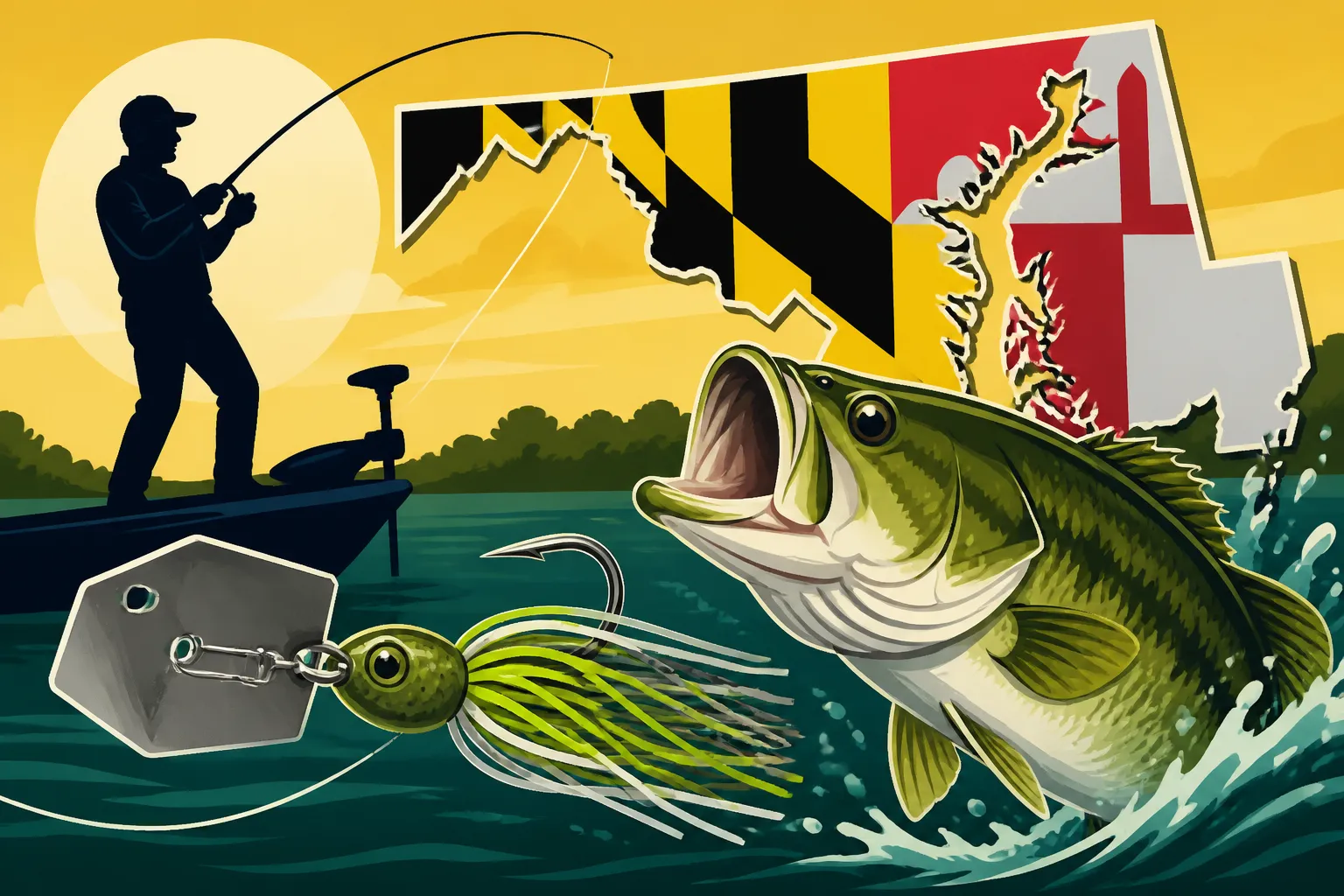
At the heart of the chatterbait's appeal is its hexagonal blade, usually attached to the line tie of a jighead. As you retrieve it through the water, this blade oscillates rapidly, causing the jighead and its skirt to thump and vibrate violently. This isn't just a subtle quiver; it's a powerful, rhythmic pulse that sends vibrations through the water, alerting bass to its presence from a distance. Think of it as a fleeing baitfish, injured and struggling, kicking up a fuss. That intense vibration, combined with the flash off the blade and the undulating skirt, often triggers a predatory instinct in largemouth that other lures simply can't replicate.
Compared to traditional spinnerbaits, which offer a continuous flash and vibration, or a jig, which relies more on subtle movements, the chatterbait provides a more aggressive, erratic action. This makes it particularly effective when fishing in murky water conditions, common after a spring rain on many of Maryland's tidal rivers, or during windy days when wave action disrupts the water surface. The distinct thumping noise and visual disturbance cut through these challenging elements, making it easier for bass to locate the lure. It also shines in post-frontal conditions, when bass can be finicky and need an extra stimulus to commit to a strike.
Versatility Across Maryland's Diverse Waters
One of the greatest strengths of the chatterbait is its incredible versatility. Whether you're casting into the deep hydrilla beds of the upper Potomac River, skipping under docks on Loch Raven Reservoir, or fishing the cypress knees in the Blackwater River, there's a chatterbait presentation that will work. The heavy vibration allows it to be retrieved slowly through thick cover without snagging excessively, yet it can also be burned across open flats to cover water quickly.
You can find chatterbaits in various sizes and weights, making them adaptable to different depths and current conditions. Lighter models (1/4 to 3/8 ounce) are perfect for shallow grass flats or skinny water creeks, while heavier versions (1/2 to 3/4 ounce or more) excel in deeper channels, strong currents, or when you need to punch through thicker vegetation. This adaptability means you don't need a whole new set of tactics when moving from a calm pond to a tidal river; you just adjust your chatterbait choice and retrieve. It's a true workhorse in a Maryland angler's arsenal, consistently proving its worth against a variety of structures and cover.
Essential Gear and Setup for Chatterbait Success
Having the right equipment is crucial for maximizing your chatterbait's effectiveness and ensuring you can handle the aggressive strikes and strong fights Maryland largemouth are known for. It's not just about throwing the lure; it's about feeling the bite and having the power to pull those fish out of heavy cover.
Rod, Reel, and Line Choices for Maryland Bass
For chatterbait fishing, a medium-heavy to heavy power casting rod, typically between 7' and 7'6" in length, is ideal. The longer rod provides better casting distance, especially important when covering large flats or making long casts parallel to grass lines. A moderate-fast or fast action tip is preferred; this allows for enough tip flex to load up on the cast and absorb the shock of a strike without tearing the hook out of a bass's mouth, but quickly transitions to backbone for powerful hooksets and controlling the fish through dense vegetation. For anglers looking to enhance their Largemouth Bass Fishing in Maryland experience, the right rod choice can make all the difference.
Pair your rod with a baitcasting reel that has a gear ratio in the 6.4:1 to 7.3:1 range. A reel with a slightly faster retrieve allows you to take up slack quickly and keep pace with a fast-moving fish, but it also gives you the option to slow-roll the chatterbait effectively. A good quality reel with smooth drag is essential, as largemouth bass can make powerful runs, especially when hooked near cover.
When it comes to line, you have a couple of solid options. Fluorocarbon line, in the 15-20 lb test range, is an excellent choice. It offers low stretch, providing superior sensitivity to feel the chatterbait's vibration and detect subtle bites, while also being highly abrasion-resistant—a big plus when fishing around jagged docks or submerged timber in places like Liberty Reservoir. Alternatively, braided line (30-50 lb test) is another popular choice, particularly in very heavy cover. Its zero stretch gives you immense power for ripping the lure free from weeds and setting the hook, and it floats, which can be beneficial for keeping the lure higher in the water column when needed. Many anglers opt for a braid main line with a fluorocarbon leader for a good blend of sensitivity, strength, and stealth.
Choosing the Right Chatterbait and Trailer
The market is flooded with chatterbaits, but a few key features will help you narrow down your selection. First, consider the blade color. Gold blades are fantastic in stained or murky water, as they provide a strong visual presence. Silver blades are excellent in clear water, mimicking the flash of natural baitfish. Black or dark-colored blades can be surprisingly effective on cloudy days or in very dirty water, providing a strong silhouette. The skirt color is equally important; classic choices like green pumpkin, black and blue, and white are staples for a reason, mimicking common forage species found in Maryland waters. For instance, a white chatterbait can imitate a shad, while green pumpkin works well for bluegill or sunfish.
Now, for the trailer – this is where you can really customize your presentation. A trailer is a soft plastic bait threaded onto the hook behind the chatterbait's skirt, adding bulk, action, and profile. Paddle tail swimbaits are a perennial favorite, providing a strong thumping action that complements the chatterbait's vibration perfectly. Creatures baits or craw imitations can add a more defensive, bulky profile, often triggering bites from bass that might be wary of a fast-moving baitfish imitation. For a more subtle approach, especially in colder water or when fish are pressured, a straight-tail worm or grub can add just enough action without overpowering the main lure. Don't be afraid to experiment with different trailer styles and colors until you find what the bass are keying in on. You can find a huge selection of chatterbaits and trailers on Amazon to get started, ensuring you have options for any scenario you might encounter on Maryland's waterways.
Mastering Chatterbait Retrieve Techniques for Maryland Largemouth
The beauty of the chatterbait lies not just in its design, but in the myriad ways you can work it through the water. While it's relatively simple to cast and reel, varying your retrieve is key to unlocking its full potential and enticing those stubborn largemouth bass.
The Standard Steady Retrieve
Sometimes, simplicity is king. The most fundamental and often highly effective way to fish a chatterbait is with a steady retrieve. Cast your chatterbait out, let it sink to your desired depth (or right after it hits the water if you're targeting shallow grass), and then begin a consistent, moderate retrieve. The chatterbait will do all the work, sending out those enticing vibrations and flash.
This steady retrieve is excellent for covering a lot of water, especially when you're searching for active fish in areas like large grass flats or open points. It allows the lure to maintain a consistent depth and action, which can be very appealing to bass looking for an easy meal. You can vary the speed slightly; a slow roll is fantastic in cooler water or when bass are sluggish, allowing the blade to pulse rhythmically without too much aggression. A slightly faster retrieve can trigger reaction strikes from more aggressive fish or when you're trying to quickly identify active feeding zones. Remember, the goal here is consistency – let the lure's inherent action be the primary draw.
Rip and Kill: Advanced Techniques for Finicky Fish
When bass are a bit more finicky, or when you're fishing around specific pieces of cover, the "rip and kill" technique can be absolutely deadly. This retrieve mimics an injured or dying baitfish, a prime target for any opportunistic largemouth. After casting, let the chatterbait sink down into the cover or to a specific depth. Then, give your rod tip a sharp, upward rip or twitch, causing the chatterbait to dart erratically, almost like it's trying to escape. Immediately after the rip, let the lure fall back on a semi-slack line. Most often, the strike will occur as the chatterbait is falling, when it appears vulnerable.
This technique is particularly effective when fishing around lily pads, submerged timber, or sparse clumps of grass. By ripping the bait free from the cover, you're not only creating a sudden burst of action but also generating a strong vibration that can call bass out of their hiding spots. As it falls, it presents an easy target. This retrieve requires more focus, as you need to be ready for a strike on the fall, but it can be incredibly rewarding. It's a fantastic tactic for those bass holding tight to structure in many of Maryland's smaller lakes and ponds or even along the creek mouths of tidal rivers. For more active presentations, consider also exploring Best Season for Topwater Bass Fishing in Maryland.
Pairing Chatterbaits with Maryland's Seasonal Bass Behavior
Understanding how largemouth bass behave throughout the year in Maryland will significantly improve your chatterbait success.
- Spring: During the pre-spawn phase, bass are actively feeding to bulk up before spawning. A chatterbait is exceptional around shallow cover like emerging grass, docks, and rocky points. A steady retrieve or a moderate rip-and-kill can entice these aggressive fish. As bass transition to the actual spawn, they become more defensive; a slower retrieve, almost crawling the chatterbait along the bottom near beds, can trigger a territorial strike. Knowing What Water Temperature Do Bass Spawn at in Maryland? can help you time your approach perfectly.
- Summer: When the summer heat hits, bass often move to deeper grass lines, shaded docks, or submerged structure. Heavier chatterbaits are useful here to reach these depths. A steady retrieve along the edge of a hydrilla bed or skipping the lure under dock pilings can be highly effective. The "rip and kill" can also trigger lethargic bass hiding in thick vegetation.
- Fall: Fall is another prime time for chatterbaits, as bass are aggressively feeding in preparation for winter. They often school up and chase baitfish. A faster, more erratic retrieve, mimicking a fleeing school of bait, can be incredibly productive on open flats or around creek mouths. Targeting areas where you see baitfish busting the surface with a white or silver chatterbait can lead to explosive strikes.
This table summarizes common retrieve speeds and when they are most effective:
| Retrieve Speed/Style | Description | Ideal Conditions/Season | Target Behavior |
|---|---|---|---|
| Slow Roll | Steady, slow retrieve, just enough to get blade thumping. | Cold water, post-frontal, finicky fish, thick cover. | Neutral, sluggish, or defensive bass. |
| Moderate Steady | Consistent, mid-speed retrieve, classic approach. | General searching, active fish, clear to stained water. | Actively feeding, cruising bass. |
| Burn | Very fast retrieve, skipping over cover or open water. | Warm water, aggressive fish, schooling bait, reaction bites. | Chasing prey, highly active bass. |
| Rip and Kill | Rip rod up, then let fall on slack line; repeat. | Around heavy cover (grass, wood, docks), finicky fish. | Triggering reaction or predatory strikes on vulnerable prey. |
| Bottom Contact | Allowing chatterbait to bump and drag along the bottom, occasionally hopping. | Deeper structure, ledges, when fish are feeding on bottom. | Bass feeding on crawfish or slow-moving bottom dwellers. |
Where to Throw a Chatterbait in Maryland for Maximum Impact
Maryland offers an incredible variety of waters, from vast tidal rivers to serene freshwater lakes, each with its own unique challenges and opportunities for largemouth bass. The chatterbait, given its versatility, truly shines in many of these environments.
Targeting Grass Beds and Hydrilla
Maryland is blessed with extensive grass beds, especially in the tidal sections of rivers like the Potomac and many Eastern Shore rivers. These submerged green jungles are prime largemouth habitat, offering cover, ambush points, and a thriving ecosystem of baitfish. A chatterbait is a phenomenal tool for fishing these areas. The lure's distinct vibration helps it cut through the vegetation, and its single hook is relatively weedless compared to a treble hook bait.
When fishing hydrilla or milfoil beds, cast your chatterbait just over or into the lighter sections of the grass. Retrieve it steadily, but be prepared to "rip" it free whenever you feel it snag in the vegetation. This sudden release often triggers an immediate strike from a bass lurking nearby, perceiving the lure as a baitfish attempting to escape. Don't be afraid to experiment with how deep you let it sink into the grass; sometimes a bass wants it just tickling the top, other times they'll follow it down into the pockets. Focus on grass lines, points, and transition areas within the larger beds. Places like the expansive grass beds of the upper Potomac are legendary for their largemouth fishing, and a chatterbait can be your ticket to success. To gain an edge in specific locations, consider reading our guide on Fishing the Potomac River in Maryland.
Docks, Laydowns, and Other Structure
Docks provide crucial shade and structure for largemouth bass, especially during bright, sunny days or in the heat of summer. Skipping a chatterbait under docks can be incredibly effective, reaching areas that many other lures can't. A medium-heavy rod and fluorocarbon line can help you make those precise casts. Once it's under the dock, a slow, steady retrieve or a subtle "rip and kill" near the pilings can coax out bass seeking refuge.
Laydowns – fallen trees or branches extending into the water – are also bass magnets. Pitch your chatterbait to the thickest part of the laydown, allowing it to sink slightly, then slowly work it around and over the branches. The lure's vibration will often call out bass hidden deep within the wood. Reservoirs like Loch Raven Reservoir and Liberty Reservoir are prime examples of places where docks and laydowns hold quality largemouth throughout the year. The key here is patience and precision; these are ambush points, and you need to get the lure right into their strike zone.
Tidal Waters and Transition Zones
Maryland's tidal rivers, such as the Nanticoke River and the Choptank River, offer a dynamic environment where current and tide play a huge role in bass behavior. Largemouth bass in these waters often position themselves in transition zones or along current breaks to ambush prey. Creek mouths, points where current sweeps by, and the edges of marsh grass are all prime chatterbait spots.
When fishing tidal waters, pay close attention to the tide cycles. Often, the moving tide, especially incoming or outgoing, will position bass in predictable areas. Cast your chatterbait upcurrent and allow it to drift naturally with the flow, while slowly retrieving to maintain tension and blade action. As the lure approaches a current seam or a submerged point, a bass will often be waiting to strike. The chatterbait's vibration is excellent at getting noticed even in swift currents or stained tidal flows, making it an indispensable lure for these unique Maryland environments.
Disclaimer
This article is for general informational purposes only and does not constitute professional advice. Laws, prices and regulations vary by location and change over time. Consult a qualified professional for guidance on your specific situation.