What’s the Difference Between Bluegill and Pumpkinseed?
It’s a scenario every freshwater angler in Maryland has faced: you reel in a beautiful, colorful little sunfish, and you think, “Is that a bluegill? Or a pumpkinseed?” The truth is, these two common panfish, while distinct, share enough similarities to cause confusion, especially for those new to the delights of pond and lake fishing. This guide is here to help you confidently tell the difference between these two fantastic species, ensuring you know exactly what you’ve caught and perhaps even refining your fishing approach to target one over the other.
The Basics: What Are Bluegill and Pumpkinseed?
Before we dive into the nitty-gritty of identification, let's get acquainted with these two beloved members of Maryland's panfish family. Both are part of the larger sunfish family (Centrarchidae), which explains their shared characteristics and why they're so often mistaken for one another. They're both fantastic sport on light tackle and provide excellent table fare, making them a staple for anglers across the state.
Meet the Bluegill: Maryland's Ubiquitous Panfish
Ah, the bluegill! If you've ever fished a pond, lake, or even a slow-moving creek in Maryland, chances are you've encountered one of these feisty little fighters. They are arguably the most recognizable and widespread sunfish species in North America, and Maryland is no exception. Bluegill thrive in a variety of freshwater environments, from the expansive waters of Loch Raven Reservoir down to the smallest farm pond. They're adaptable, resilient, and always seem willing to bite, making them a favorite for beginners and seasoned anglers alike.
Visually, bluegill typically sport a deep, compressed body, often with an olive-green to bluish-gray back that fades to lighter yellow or orange on their belly. Many specimens will display faint vertical bars along their sides, especially when pulled from darker water or under stress. Their most distinguishing feature, and the one that often leads to their name, is the iridescent blue or purplish sheen on their gill plates and the lower jaw. They're not usually massive, but a healthy bluegill can put a surprising bend in an ultralight rod, providing endless entertainment. You can often find them lurking around submerged structures, weed beds, or fallen timber, waiting to ambush a passing insect or tiny minnow.
Getting to Know the Pumpkinseed: A Flash of Color
Now, let's talk about the pumpkinseed sunfish, often regarded as one of the most vividly colored freshwater fish in Maryland. While perhaps not as universally abundant as the bluegill, pumpkinseeds are common in many of our state's quieter, shallower, and weedier waterways. Their vibrant, almost kaleidoscopic appearance makes them a true gem to behold when you pull one from the water, often eliciting "oohs" and "aahs" from fellow anglers.
Pumpkinseeds share the deep, compressed body shape typical of sunfish, but their coloration is where they truly stand out. They exhibit an incredible array of iridescent spots and wavy lines of orange, blue, green, and gold, particularly on their operculum (gill cover) and sides. Their belly is usually a bright yellow or orange, adding to their striking appeal. These fish are generally a bit smaller than the average bluegill, but what they lack in size, they more than make up for in sheer beauty. They prefer clear, slow-moving or still waters with plenty of aquatic vegetation, where they can forage for small invertebrates and insects.
Key Differences: Spotting Them Apart in Maryland Waters
Distinguishing between a bluegill and a pumpkinseed doesn't have to be a guessing game. There are a few key visual markers that, once you know them, will make identification much easier. Forget the overall "color" because that can vary wildly depending on water clarity, diet, and habitat. Instead, focus on these consistent anatomical features.
Visual Cues: Coloration and Body Shape
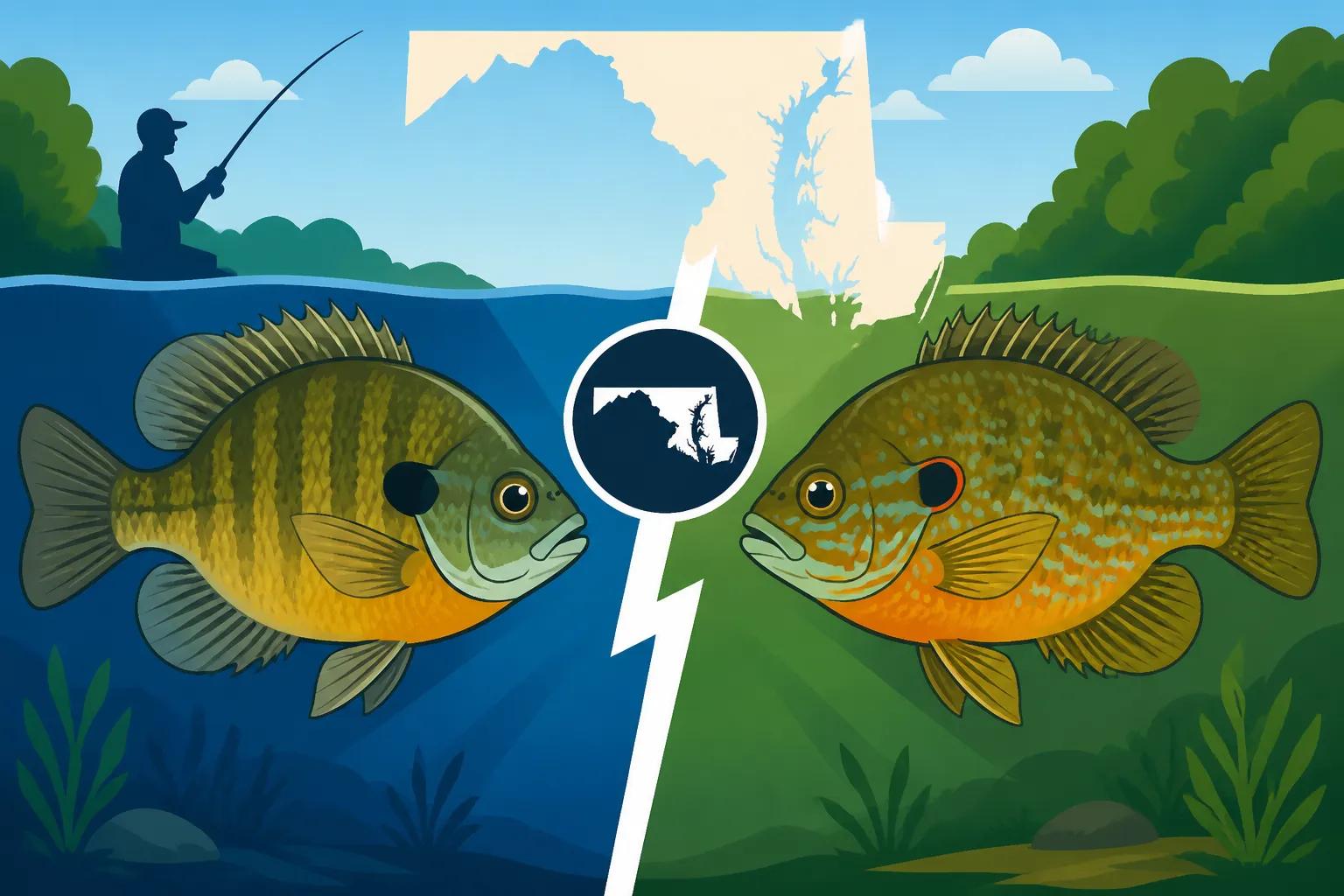
While general coloration can be tricky due to environmental factors, there are some patterns to look for. Bluegill often have those subtle, dark vertical bars on their sides, which might be quite pronounced or almost invisible. Their overall tone leans more towards olive, blue, and dusky browns. The blue sheen on their lower jaw and gill plate is a consistent feature, giving them that "blue gill" look. Their bodies tend to be very round and deep, almost like a dinner plate turned on its side, especially larger specimens.
Pumpkinseeds, on the other hand, boast a much more intricate and flamboyant pattern. Think of it as nature's stained-glass window. You'll see irregular spots and worm-like markings that are often bright blue, green, and orange. Instead of bars, they might have more of a mottled or speckled appearance. Their bellies are frequently a brighter, almost fiery orange or yellow, contrasting sharply with their patterned sides. While also deep-bodied, their profile might feel slightly less exaggeratedly round than a large bluegill. It’s those vibrant specks and squiggles that truly give the pumpkinseed its unique charm.
The "Ear Flap" and Pectoral Fin – Dead Giveaways
This is arguably the most reliable trick for telling these two apart! Look closely at the "ear flap" – that fleshy extension on the back of the gill cover (operculum).
- Bluegill: The bluegill's ear flap will almost always be solid black, without any distinct colored margin. It's a clean, dark spot. Sometimes it might have a very thin, faint white or pale edge, but it won't be a vibrant color.
- Pumpkinseed: This is where the pumpkinseed truly shines! Its ear flap will also have a prominent black spot, but it is always bordered by a distinctive, brightly colored margin, usually a striking red, orange, or sometimes a vibrant yellow. This little "red dot" on the ear flap is the ultimate pumpkinseed calling card.
Another key identifier lies in their pectoral fins – those fins just behind the gill covers, on the sides of the fish.
- Bluegill: Their pectoral fins are relatively long and pointed, extending well past the eye if folded forward.
- Pumpkinseed: In contrast, the pumpkinseed's pectoral fins are shorter and more rounded, typically not extending past the eye.
This combination of the ear flap and pectoral fin characteristics offers a foolproof method for identification. You'll be amazed how quickly you can distinguish them once you train your eye!
Mouth Size and Other Subtle Identifiers
Beyond the primary visual cues, there are some other subtle differences, though these can be harder to discern quickly on a squirming fish. The mouth size is one such example. Bluegill generally have a smaller mouth, designed for picking small insects and larvae. If you gently open a bluegill's mouth, you'll notice it's quite compact, reflecting its diet.
Pumpkinseeds, while still having relatively small mouths compared to a bass, tend to have a slightly larger gape than bluegill. This minor difference might allow them to tackle slightly bigger prey items. For instance, if you're comparing two fish of similar body length, the pumpkinseed's mouth might appear marginally wider or deeper. Other minor differences can include scale counts or fin ray counts, but these are really for ichthyologists with microscopes, not for anglers out on the water. For most practical purposes, focusing on the ear flap and pectoral fin will serve you best.
Habitat, Behavior, and Fishing for Both in Maryland
Understanding where these fish prefer to live and what they like to eat can not only help with identification but also significantly improve your chances of catching them. While both are considered panfish and can be caught with similar techniques, there are subtle preferences that can guide your efforts in Maryland's diverse waters.
Where You'll Find Them: Preferred Maryland Habitats
Both bluegill and pumpkinseed are freshwater fish, but they do have some preferred hangouts. Bluegill are the true generalists; you'll find them almost everywhere there's freshwater that isn't too fast-flowing or polluted. They thrive in Maryland's larger reservoirs like Prettyboy Reservoir and Piney Run Reservoir, smaller ponds, slow rivers like the Monocacy River, and even in some of the less brackish tidal creeks. They are incredibly adaptable and can tolerate a wider range of water conditions, from clear to somewhat murky. Look for them around any kind of cover: fallen trees, docks, weed beds, submerged brush piles, and even open water schooling in deeper areas. How Many Sunfish Species Live in Maryland Waters? is a testament to the variety, with bluegill being one of the most common.
Pumpkinseeds, while also found throughout Maryland, tend to be a bit more selective. They prefer clearer, calmer water, often with abundant aquatic vegetation, like lily pads or thick submerged weeds, which provide cover and a rich feeding ground. You're more likely to encounter them in smaller ponds, quiet coves of larger lakes, and less disturbed natural areas. They might be less common in the most heavily trafficked or very large, open reservoirs where bluegill often dominate. If you're exploring some of Maryland's more secluded or shallow, weedy spots, keep an eye out for these vibrant beauties. For general spots, check out Best Maryland Lakes for Freshwater Fishing.
Feeding Habits and Best Baits for Each Species
Both bluegill and pumpkinseed are primarily insectivores, feasting on a diet of aquatic insects, their larvae, small crustaceans, and even tiny snails. This shared diet means many baits and lures will work for both, but there can be subtle preferences. For bluegill, a classic approach is a small piece of nightcrawler or a red worm fished under a bobber. They also love crickets, grasshoppers, and even corn or small pieces of bread. Tiny jigs, especially those tipped with a piece of worm or scented bait, are incredibly effective, as are micro-spinners. You can find a fantastic selection of small hooks, bobbers, and ultralight fishing line on Amazon to get set up for panfish.
Pumpkinseeds, with their slightly larger mouths, might occasionally take a slightly bigger bite, but they generally respond to the same offerings. Because they often inhabit denser cover, presenting your bait in these tight spots is key. Small pieces of worm, mealworms, waxworms, or tiny artificial baits like crappie jigs can be highly productive. Since both species share similar feeding behaviors and are often found in the same areas, it’s not uncommon to catch both species on the same setup during an outing. Many anglers enjoy the simplicity and effectiveness of fly fishing for these species, using small poppers, nymphs, and wet flies.
Fishing Strategies and Conservation
When fishing for either bluegill or pumpkinseed, light tackle is your best friend. A lightweight rod, a small spinning reel, and 4-6 pound test line are perfect. The fight these small fish put up on such gear is surprisingly fun! For bluegill, try fishing around structure, moving slowly from one brush pile to the next, or casting along the edges of weed lines. They can be found from just a few feet deep to 15-20 feet in larger lakes, often suspended or near the bottom. For pumpkinseeds, focus your efforts on shallower, very weedy areas. They often hide right in the thick of things, so a weedless presentation might be beneficial.
While panfish populations are generally robust, practicing responsible angling, like catch and release for larger specimens, ensures healthy future populations. Both species are excellent eating, but taking only what you need helps maintain the balance. Consider picking up a multi-species lure kit from Amazon that includes small spinners, jigs, and perhaps even tiny crankbaits, giving you versatility on the water. For more general fishing advice in Maryland, the Maryland's DNR Fishing and Boating Guide, Explained is an invaluable resource that can help you understand local regulations and best practices.
Why the Distinction Matters to Anglers
You might wonder why it's so important to tell the difference between two fish that are both fun to catch and good to eat. While it might seem like a minor detail, knowing your panfish can enhance your fishing experience and understanding of Maryland's aquatic environments in several meaningful ways.
Identifying Your Catch: Beyond Just "Sunfish"
For many casual anglers, a small, brightly colored fish pulled from a pond might simply be labeled a "sunfish." And that's perfectly fine! However, taking the time to correctly identify it as a bluegill, a pumpkinseed, or perhaps even a What Is a Sunfish Called Locally in Maryland? like a redear sunfish adds another layer of appreciation to your outing. It’s like learning the names of birds in your backyard—it makes you feel more connected to the natural world. Knowing what you've caught validates your skills and observations and allows you to accurately log your catches, which can be useful for tracking patterns or simply for personal satisfaction.
Furthermore, while Maryland's regulations for panfish are generally quite broad and generous, there might be nuances. For example, some specific waters could have particular rules for certain species or size limits that, while often encompassing "sunfish" generally, could theoretically be applied with more precision if you know exactly what you're targeting. For most recreational anglers, it's more about the joy of identification and the deepening of knowledge than strict legalities. Maryland Panfish: Crappie, Perch and Sunfish covers the broader category, and precise identification helps you appreciate the individual nuances.
Understanding the Ecosystem and Local Waters
The presence and abundance of specific fish species can tell you a lot about the health and characteristics of a particular body of water. Bluegill, being more tolerant, can thrive in a wider range of conditions. Pumpkinseeds, on the other hand, often prefer clearer, weedier, and perhaps slightly less disturbed environments. If you consistently catch vibrant pumpkinseeds in a certain pond, it might indicate good water quality and a healthy aquatic plant community.
Both species play crucial roles in the aquatic food web as both predators of insects and prey for larger game fish like bass, pickerel, and even larger Maryland Blue Catfish, an Invasive Giant. By observing which panfish are prevalent, you gain insight into the broader ecological dynamics. This knowledge can also inform your choice of fishing spots. If you're looking for an indicator of pristine, natural pond habitats, the presence of thriving pumpkinseed populations could be a good sign. For general spots to find these fish, consider Best Family-Friendly Fishing Spots in Maryland or Best Public Fishing Piers in Maryland.
Gear Considerations for Targeted Panfish
While the tackle for bluegill and pumpkinseed often overlaps, having a clear understanding of the subtle differences can sometimes lead to more successful, or at least more deliberate, fishing trips. Knowing that pumpkinseeds love dense, shallow vegetation might encourage you to use tiny weedless jigs or topwater micro-poppers. For bluegill, especially those schooling in deeper water, a small jigging spoon or a heavier beetle spin might be more effective.
The beauty of panfish is that they don't require expensive, specialized equipment. A basic ultralight rod and reel combo, some small hooks, bobbers, and a few worms are all you truly need. However, if you want to refine your approach, perhaps targeting a specific species, you might explore different types of artificial baits. For instance, tiny insect imitation flies are superb for fly fishing both species. You can find a wealth of suitable and affordable ultralight fishing gear, small tackle boxes, and specialized panfish lures on Amazon to enhance your angling adventures.
| Feature | Bluegill | Pumpkinseed |
|---|---|---|
| Gill Plate "Ear Flap" | Solid black, no distinct colored margin | Black with a prominent red/orange/yellow margin |
| Pectoral Fin | Longer and pointed, extends past the eye | Shorter and rounded, typically doesn't reach the eye |
| Body Color/Pattern | Olive-green to blue-gray, often with vertical bars; blue sheen on lower jaw/gill | Mottled with vibrant blue, green, orange, gold spots/lines; bright yellow/orange belly |
| Mouth Size | Relatively smaller | Slightly larger than bluegill (relative to body size) |
| Preferred Habitat | Versatile: lakes, ponds, slow rivers, various cover, wider water conditions | Clearer, calmer, shallow waters with abundant aquatic vegetation |
| Common Size | Can reach larger sizes, though typically pan-sized | Generally smaller than bluegill |
Disclaimer
This article is for general informational purposes only and does not constitute professional advice. Laws, prices and regulations vary by location and change over time. Consult a qualified professional for guidance on your specific situation.