How Many Sunfish Species Live in Maryland Waters?
Many anglers, especially beginners, often wonder about the small, feisty fish they pull from ponds and creeks across Maryland. You hear terms like 'bream,' 'panfish,' and 'sunfish' thrown around, and it can get a little confusing trying to figure out what's what. This guide is here to untangle that mystery, diving deep into the fascinating world of sunfish in Maryland and helping you understand exactly how many species, both common and less-seen, call our beautiful waters home, making your next outing more informed and successful.
Decoding "Sunfish": The Maryland Perspective
When you ask "how many sunfish species live in Maryland waters?", it's a question that often comes with a bit of a twist, because "sunfish" itself is a broad term. It's not just one specific type of fish, but rather a whole family! Think of it like saying "dog" – there are many breeds under that umbrella. The same goes for sunfish. In Maryland, when most people refer to "sunfish," they're generally talking about the smaller, brightly colored fish that are fantastic for a relaxing day of fishing.
The Broad Sunfish Family (Centrarchidae)
Scientifically speaking, sunfish belong to the family Centrarchidae, which is a group of freshwater ray-finned fish native to North America. This family includes not only what we commonly call "sunfish" (like bluegill and pumpkinseed) but also the much larger and more celebrated game fish: bass. Yes, largemouth bass and smallmouth bass are technically part of the sunfish family, though no one usually calls them "sunfish." This is where some of the confusion begins for many anglers. Understanding this family tree is the first step to truly appreciating the diversity of sunfish in our state.
The Centrarchidae family is characterized by their somewhat flattened bodies, spiny dorsal fins, and generally aggressive feeding habits, especially for their size. They are incredibly important to Maryland's freshwater ecosystems, serving as both forage for larger predators and a popular target for recreational fishing. They thrive in a variety of habitats, from slow-moving rivers and marshy backwaters to pristine lakes and farm ponds.
Common Misconceptions and Local Names
It's easy to get lost in the local jargon. Depending on where you grew up fishing in Maryland, you might hear a sunfish called a "bream," a "panfish," a "kiver," or even a "pond perch." While these terms are often used interchangeably, it's helpful to know the distinctions, especially when talking about regulations or specific fishing techniques.
- Bream: This term is more commonly used in the Southern United States, but you'll certainly hear it around Maryland's freshwater lakes and ponds. It's usually a general term for bluegill and other similar sunfish.
- Panfish: This is a fantastic and accurate catch-all term for any fish that's small enough to fit in a frying pan! It includes sunfish, crappie, and often yellow perch. These are fish that are usually caught for their delicious table fare.
- Pond Perch/Kiver: These are informal, local names that vary from one body of water to another. They generally refer to any small sunfish species.
The key takeaway here is that while the casual names are endearing and part of our fishing heritage, for clarity and understanding species diversity, it's best to learn the individual species names. This also helps when you're looking up regulations for Maryland Fishing Size and Catch Limits by Species or trying to find the best bait to target a specific fish. Knowing the exact species means you can fine-tune your approach, whether you're trying a new ultralight rod and reel combo (which you can find plenty of options for on Amazon) or experimenting with different tiny jigs.
The Core Cast: True Sunfish Species in Maryland
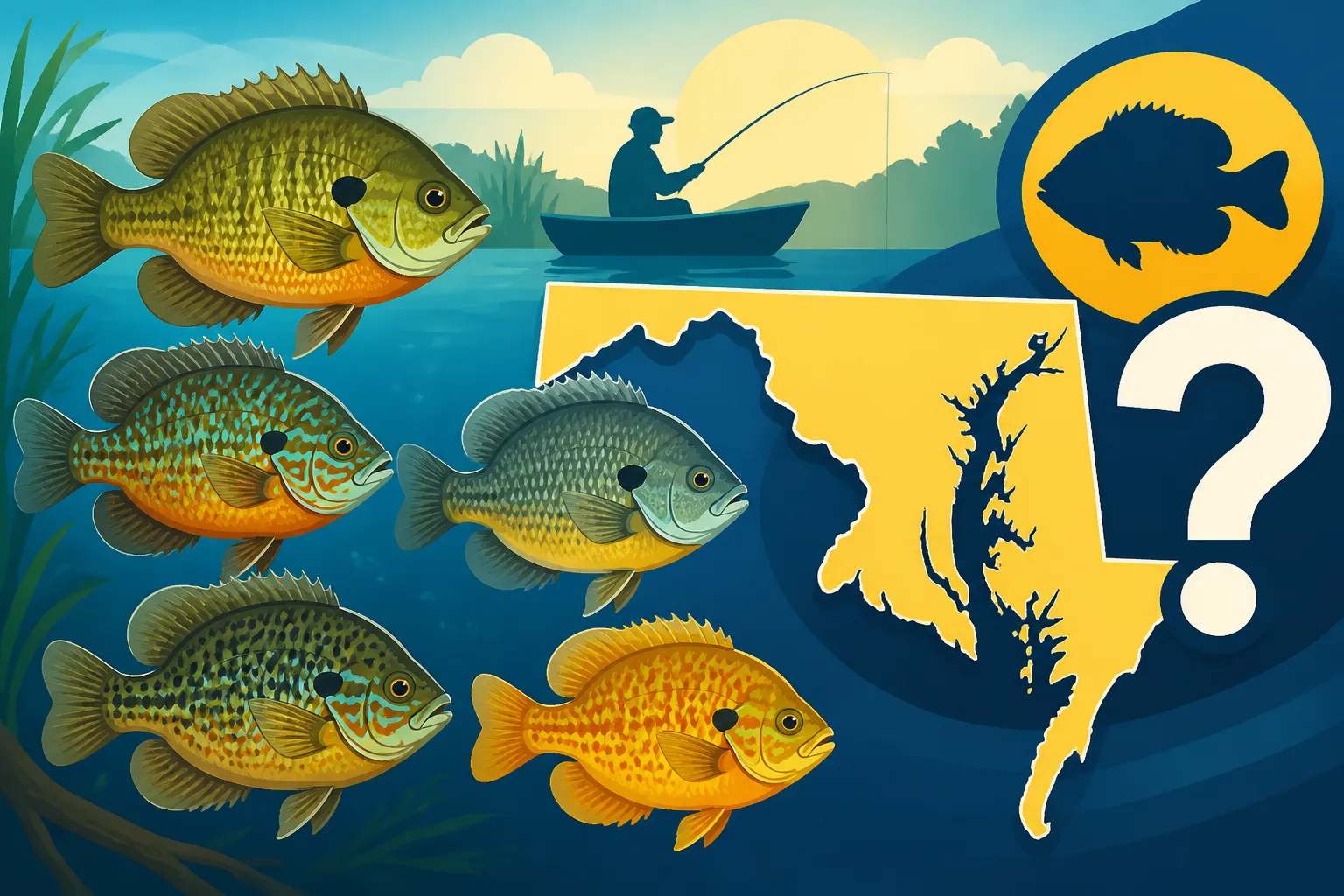
Alright, let's get down to brass tacks. When people talk about "sunfish" in the traditional sense – those smaller, colorful fish that are a blast to catch – Maryland is home to several distinct species. These are the fish you'll most commonly encounter in ponds, lakes, and slower-moving rivers across the state. While the number of species might not be as vast as some other fish families, the ones we do have offer fantastic fishing opportunities.
Here are the primary species of "true" sunfish you can expect to find in Maryland:
Bluegill: The Backyard Champion
The bluegill (Lepomis macrochirus) is undeniably the most widespread and popular sunfish in Maryland, and probably in the entire country. They are the quintessential panfish – round-bodied, usually with a dark spot at the base of the dorsal fin, and a distinctive black "ear flap" on their gill cover. Their flanks can range from olive green to yellowish, often with vertical bars. Males often display a vibrant blue-orange throat and belly during spawning.
You'll find bluegill almost everywhere there's freshwater in Maryland, from the smallest farm pond to major reservoirs like Loch Raven and Liberty. They thrive in clear, vegetated waters where they can find insects, small crustaceans, and plant matter to munch on. They're incredibly aggressive feeders and will hit almost any small bait or lure, making them perfect for beginners and seasoned anglers alike. When they're schooling, you can catch them one after another, providing non-stop action. Many anglers swear by tiny worms, crickets, or even small pieces of bread on a hook no larger than a size 8. If you're looking for a simple setup for a casual day of bluegill fishing, you can often find affordable panfish tackle kits on Amazon that include small hooks, bobbers, and weights.
Pumpkinseed: A Flash of Color
The pumpkinseed (Lepomis gibbosus) is easily one of Maryland's most beautiful fish, often recognized by its striking iridescent spots and wavy blue lines on its gill covers, giving it a jewel-like appearance. Like the bluegill, it has a black "ear flap," but the pumpkinseed's usually has a distinct red or orange spot at the rear edge. They tend to have a more elongated, less stout body shape compared to some bluegill.
Pumpkinseeds share much of the same habitat as bluegill, preferring shallow, clear water with plenty of aquatic vegetation or submerged structure. They're common in many of Maryland's smaller lakes and ponds, particularly in the northern and western parts of the state. They have small mouths, so tiny hooks and baits are key. Think micro-jigs, small pieces of worm, or even a single kernel of corn. Catching a vibrantly colored pumpkinseed is always a treat, especially when the sun hits their scales just right.
Redbreast Sunfish: River Dwellers
The redbreast sunfish (Lepomis auritus) stands apart with its more elongated body and, as the name suggests, a prominent reddish-orange breast and belly. They have a distinctively long, slender "ear flap" that is entirely black. While other sunfish prefer still or slow waters, the redbreast sunfish is most at home in rivers and larger creeks with some current, particularly those with rocky bottoms and submerged logs.
In Maryland, you'll find redbreasts in many of our beautiful flowing waters, including the Monocacy River, Antietam Creek, and the upper reaches of the Patuxent River. They are aggressive fighters for their size and provide excellent sport on light tackle. They feed on aquatic insects, small minnows, and crayfish. Small spinners, beetlespins, or live bait like worms and crickets are very effective. If you're looking to explore different river systems, understanding the unique preferences of species like the redbreast sunfish can greatly improve your success. This species often gets overshadowed by bass, but it's a worthy target in its own right.
Green Sunfish: Hardy and Widespread
The green sunfish (Lepomis cyanellus) is another common species, often identifiable by its stout body, relatively large mouth, and bright green-blue spots on its flanks. Its "ear flap" is typically black with a pale, often yellowish, margin. They tend to be a bit more mottled in appearance than bluegill or pumpkinseeds and can sometimes look like a smaller version of a largemouth bass due to their mouth size.
What truly sets the green sunfish apart is its incredible hardiness and adaptability. They can tolerate a wider range of water conditions, including murkier, warmer, and less oxygenated environments than many other sunfish. This makes them prevalent in nearly every type of freshwater in Maryland, from small ditches and muddy ponds to larger reservoirs. They're aggressive feeders, often outcompeting other sunfish for food, and will readily strike a variety of baits and lures, including small crankbaits, jigs, and worms. For anglers just starting out, the green sunfish is often one of the first fish they'll catch, offering consistent action when other species are finicky.
Other Less Common Sunfish Species
While bluegill, pumpkinseed, redbreast, and green sunfish are your primary targets, Maryland's waters can also occasionally host a few other "true" sunfish species, though they might be less widespread or harder to distinguish. These include:
- Warmouth (Lepomis gulosus): A more robust sunfish, often mottled brown and olive, with tooth patches on its tongue and a reddish eye. They prefer heavily vegetated, often murky waters and are found in some southern Maryland rivers and ponds.
- Longear Sunfish (Lepomis megalotis): Known for its incredibly long, black "ear flap" that can be longer than its eye. They are less common in Maryland and usually found in cleaner, clearer stream environments.
- Orange Spotted Sunfish (Lepomis humilis): A smaller sunfish with bright orange spots on its sides. Also less common and typically found in slower, sometimes turbid streams and small lakes, often with heavy vegetation.
So, if we're counting the easily identifiable and commonly encountered "true" sunfish species, Maryland is home to at least four main species (bluegill, pumpkinseed, redbreast, green sunfish), with a few others making occasional appearances.
Here's a quick comparison of the most common sunfish you'll encounter in Maryland:
| Feature | Bluegill (Lepomis macrochirus) | Pumpkinseed (Lepomis gibbosus) | Redbreast Sunfish (Lepomis auritus) | Green Sunfish (Lepomis cyanellus) |
|---|---|---|---|---|
| Appearance | Round body, small mouth, black ear flap (no margin) | Round body, small mouth, iridescent spots, red/orange spot on ear flap | Elongated body, long black ear flap, red/orange breast | Stout body, large mouth, green-blue spots, pale-margined ear flap |
| Primary Habitat | Ponds, lakes, slow rivers (vegetated) | Shallow, clear lakes, ponds (vegetated) | Rivers, large creeks (rocky bottoms, current) | Ponds, lakes, streams (wide range of conditions) |
| Distinguishing Mark | Black spot on dorsal fin, solid black ear flap | Iridescent spots, red spot on ear flap | Red/orange breast, elongated black ear flap | Large mouth, robust body, sometimes looks like a small bass |
| Size | Up to 10-12 inches (common 6-8) | Up to 8-10 inches (common 4-6) | Up to 10-12 inches (common 6-9) | Up to 8-10 inches (common 5-7) |
| Availability | Very High, statewide | High, especially northern/western MD | Moderate, specific river systems | Very High, highly adaptable statewide |
Beyond the Classics: Other Centrarchidae in Maryland's Waters
As we touched on earlier, the broader sunfish family, Centrarchidae, includes more than just the panfish-sized "sunfish" you're likely thinking of. Maryland is also home to other incredibly popular game fish that are scientifically related, even if they're not called "sunfish" in everyday angling conversations. Understanding this connection helps illustrate the full diversity and richness of this important fish family in our state.
Crappie: The Larger Panfish Cousins
Crappie, both black crappie (Pomoxis nigromaculatus) and white crappie (Pomoxis annularis), are very much part of the Centrarchidae family and are revered as top-tier panfish. They grow significantly larger than most "true" sunfish, often reaching over a foot in length, making them a fantastic target for their fighting spirit and delicious white meat.
- Black Crappie: Generally prefer clearer water with abundant vegetation. They have 7-8 dorsal spines and a more speckled appearance. You'll find them in many of Maryland's larger reservoirs like Deep Creek Lake and Loch Raven.
- White Crappie: More tolerant of turbid water and often found in slower rivers and larger ponds. They typically have 5-6 dorsal spines and a pattern of faint vertical bars.
Both crappie species are highly sought after, especially in spring and fall when they school up. Fishing for crappie often involves small jigs, minnows, or even tiny spinnerbaits. They tend to hang around submerged structure like brush piles, dock pilings, and bridge abutments. If you're interested in learning more about these fantastic panfish, check out our guide on Crappie Fishing in Maryland Reservoirs. Many anglers stock up on their favorite crappie jigs and soft plastics through retailers like Amazon, ensuring they're ready for the next hot bite.
Bass: The Apex Predators of the Family
Perhaps the most surprising members of the sunfish family for many are the various species of bass we have in Maryland. Largemouth bass (Micropterus salmoides) and smallmouth bass (Micropterus dolomieu) are legendary game fish, and while they might not look like a bluegill, their scientific classification places them squarely in the Centrarchidae family.
- Largemouth Bass: The king of Maryland's freshwater lakes and ponds, known for its aggressive strikes and powerful fights. They prefer warmer, weedy waters. If you're passionate about targeting these giants, our guide Largemouth Bass Fishing in Maryland is a must-read.
- Smallmouth Bass: Often found in cooler, clearer, rocky rivers and streams, like the Potomac River and the Susquehanna River. They are renowned for their incredible fighting ability and aerial acrobatics. You can delve deeper into their world with our article on Smallmouth Bass in Maryland's Rivers.
These larger sunfish cousins provide incredible sport fishing opportunities throughout Maryland, appealing to anglers who love the challenge of pursuing bigger fish. While you won't hear them called "sunfish" in common conversation, it's a fascinating biological tidbit that connects them all.
Why Species Identification Elevates Your Maryland Fishing Game
Knowing your sunfish species isn't just about impressing your friends with trivia; it genuinely makes you a more effective and successful angler in Maryland. Each species has its own preferences, habits, and typical haunts. By understanding these nuances, you can tailor your approach, find more fish, and contribute to healthier fisheries.
Targeting Specific Species
Imagine you're out on a pond in Cecil County. If you just cast a worm and hope for "a sunfish," you'll probably catch something. But if you know that bluegill often congregate around lily pads and submerged timber, while green sunfish might be more active closer to the banks, you can adjust your casting location and presentation.
For instance, if you're specifically targeting those beautiful pumpkinseeds, you'll want to focus on clear, shallow areas with lots of vegetation and use smaller baits, perhaps even some tiny flies. If you're after redbreast sunfish, you'll be looking for rocky stretches in rivers with a decent current. Identifying the fish you're catching also helps you understand if you're in the right spot for your desired target. If you keep pulling in green sunfish when you're hoping for bluegill, it might be time to move to a different type of cover or depth. This knowledge becomes especially valuable when tackling more nuanced fishing spots in Maryland.
Conservation and Ecosystem Health
Being able to identify sunfish species also plays a role in conservation. While sunfish are generally abundant, understanding their distribution helps us appreciate the health of different aquatic environments. For example, if you start seeing a decline in a particular sunfish species in a specific pond, it could be an indicator of environmental changes or habitat degradation.
Moreover, while sunfish regulations are typically quite liberal due to their prolific nature, certain species or specific bodies of water might have unique rules. Being able to correctly identify your catch ensures you're always fishing responsibly and within the law. Always remember to check Maryland Fishing Size and Catch Limits by Species before you head out, as rules can change. Many experienced anglers keep a waterproof fish identification guide in their tackle box, and a quick search on Amazon will show you plenty of options for Maryland or East Coast freshwater fish.
Fun for All Ages and Skill Levels
Ultimately, sunfish are fantastic for fostering a love of fishing in people of all ages. Their aggressive nature and widespread availability make them ideal for beginners and kids. There's nothing quite like the excitement of a young angler reeling in their first brightly colored bluegill or pumpkinseed.
For seasoned anglers, sunfish offer a chance to fine-tune light tackle techniques, experiment with micro-lures, or simply enjoy a relaxing day catching plenty of fish. Whether you're introducing a child to the sport with a simple bobber and worm or challenging yourself with ultralight fly fishing, sunfish provide endless opportunities for enjoyment. Many parents find excellent starter fishing kits for their kids, complete with a basic rod, reel, and tackle, available with quick shipping from Amazon. Maryland offers so many great spots for family fishing, and knowing your sunfish will only enhance those outings. You might be surprised at how many great spots exist for a fun day out, so do some research on Best Family-Friendly Fishing Spots in Maryland.
In conclusion, Maryland is home to a wonderful array of sunfish species, each offering its own charm and challenges. From the ubiquitous bluegill to the river-dwelling redbreast, these small but mighty fish are a cornerstone of our freshwater fisheries. By taking the time to learn their differences, you'll not only become a more knowledgeable angler but also deepen your connection to Maryland's beautiful aquatic environments.
Disclaimer
This article is for general informational purposes only and does not constitute professional advice. Laws, prices and regulations vary by location and change over time. Consult a qualified professional for guidance on your specific situation.