What Documents You Need to Buy a Maryland Fishing License
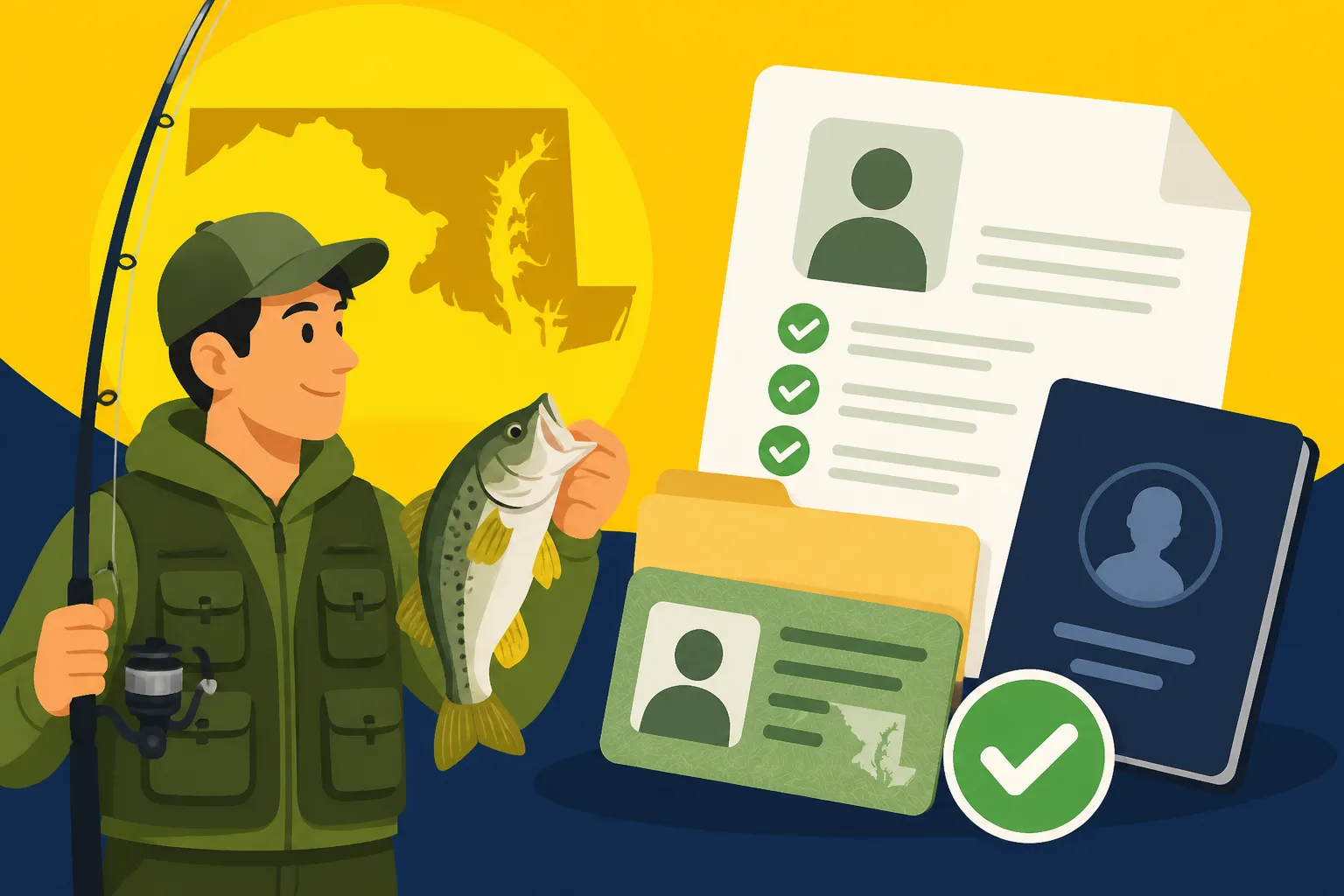
Figuring out exactly what paperwork you need just to enjoy a simple day of fishing in Maryland can feel like navigating a bureaucratic maze. It's frustrating when you're ready to hit the water, only to realize you've forgotten a crucial piece of identification or residency proof. This comprehensive guide is here to cut through the confusion, clearly outlining all the documents you'll need to successfully purchase your Maryland fishing license, ensuring your next angling adventure starts smoothly.
Understanding the Basic Maryland Fishing License Requirements
Before you even think about which type of license you need – whether it's for the sprawling Chesapeake Bay or a peaceful nontidal stream – the Maryland Department of Natural Resources (DNR) requires some fundamental information to process your request. This isn't just about collecting data; it's about verifying your identity, your age, and most importantly, your residency status. These factors directly impact the cost of your license and ensure you're eligible for specific categories, like a senior or military discount.
Why Documentation Matters for License Purchase
Think of your fishing license as a contract with the state. Maryland, like every other state, uses licenses to fund conservation efforts, manage fish populations, and enforce regulations. To do this effectively, they need to know who is buying licenses and where they reside. This verification process helps prevent fraud and ensures that the appropriate fees are collected for residents versus nonresidents. Without proper documentation, the system simply can't function as intended, leading to potential denials or delays in getting you out on the water. It's not personal; it's about maintaining healthy fisheries for everyone.
General Identification You'll Need
At the very least, regardless of whether you're a Maryland resident or just visiting, you'll need a primary form of identification that confirms who you are. This usually means a government-issued photo ID. The most common and widely accepted forms include:
- A valid driver's license: This is usually the easiest and most preferred method, as it often includes both your photo and current address.
- A state-issued identification card: If you don't drive, a state ID card from your home state works just as well.
- A valid passport: For those without a driver's license or state ID, a passport is an internationally recognized form of identification.
These documents serve as your primary proof of identity and age. Without one of these, purchasing a license, especially in person, can become significantly more challenging, if not impossible. Always make sure your chosen ID is current and not expired to avoid any last-minute hiccups.
Specific Documentation for Maryland Residents
Maryland residents generally benefit from lower license fees compared to non-residents. However, to qualify for these rates, you'll need to clearly demonstrate that you meet the state's residency criteria. The DNR has specific guidelines to determine who is a resident, and having the right paperwork ready is key to a smooth transaction. You can find more details about the cost differences in our guide on Maryland Resident Nontidal Fishing License Cost.
Proving Maryland Residency
Simply stating you're a Maryland resident isn't enough; you need to provide tangible proof. While your Maryland driver's license is typically the gold standard, there are other acceptable documents, especially if your driver's license doesn't reflect your current address or if you've recently moved. Maryland law defines a resident as someone who has resided in the state for at least six consecutive months immediately preceding the application for a license.
Here are the most common ways to prove your Maryland residency:
- Valid Maryland Driver's License or State ID: This is almost always sufficient if it shows your current Maryland address.
- Maryland Vehicle Registration Card: If your driver's license is new or doesn't have your current address, a vehicle registration in your name with a Maryland address can help.
- Current Utility Bill: A utility bill (electric, gas, water, internet) issued within the last 60 days, showing your name and Maryland address, is often accepted as supplementary proof.
- Maryland Voter Registration Card: This is another strong indicator of residency.
- Deed or Lease Agreement: A property deed or a rental lease agreement in your name for a Maryland residence can also serve as proof.
It's always a good idea to have at least two forms of residency proof, especially if you're buying in person. This helps clear up any potential ambiguities and speeds up the process, preventing you from having to make a second trip.
Special Cases: Minors, Seniors, and Military Personnel
Maryland offers various exemptions and discounts based on age and service, but these also come with their own documentation requirements. Understanding these can save you money and ensure compliance with regulations.
- Minors: Generally, children under a certain age are exempt from needing a fishing license in Maryland. Currently, children under the age of 16 do not need a license. However, if you're applying for a minor who does need a specific permit or is just nearing the age where a license becomes mandatory, you might need to provide a birth certificate or other proof of age. You can dive deeper into this topic with our article, Do Kids Need a Fishing License in Maryland?.
- Seniors: Maryland offers a discounted or consolidated license for qualifying senior residents. To apply for a Maryland Senior Consolidated Sport Fishing License, you'll need to provide proof of age, usually a driver's license or state ID showing your date of birth, and proof of Maryland residency. The specific age threshold for senior discounts can vary, so it's always wise to confirm the current requirements with the DNR website or a license agent.
- Military Personnel: Active-duty military personnel permanently stationed in Maryland may be eligible for resident rates, even if their home state is elsewhere. This typically requires presenting a valid military ID and official orders or a letter from their commanding officer verifying their Maryland duty station. Veterans with certain disabilities might also qualify for special licenses, requiring documentation of their disability status from the Department of Veterans Affairs.
Having these specialized documents ready ensures you receive the correct license at the appropriate price, recognizing your unique circumstances.
Documentation for Non-Residents and Out-of-State Anglers
If you're visiting Maryland from another state and plan to cast a line, you'll also need to purchase a license. While you won't need to prove Maryland residency, you will still need to verify your identity and home state residency. Non-resident licenses are typically more expensive, reflecting your contribution to Maryland's fisheries management without paying state income taxes. Our guide on Maryland Nonresident Fishing License Cost provides a detailed breakdown of these fees.
Standard Non-Resident Identification
For non-residents, the process is usually straightforward:
- Valid Driver's License or State ID from Your Home State: This is the primary document needed. It proves your identity and your residency in another state, which is crucial for distinguishing you from a Maryland resident.
- Valid Passport: As with residents, a passport is an acceptable alternative if you don't have a state-issued ID.
Make sure your ID is current and readable. The purpose here is simply to confirm who you are and where you permanently reside, which dictates the type of license you'll purchase. Whether you're looking for a short-term option like a Maryland 7-Day Fishing License Options or an annual pass, this ID is essential.
College Students and Special Permits
There are sometimes specific considerations for out-of-state college students attending Maryland universities. While often still classified as non-residents, some states offer special provisions.
- Out-of-State College Students: If you're an out-of-state student attending a Maryland college or university, you generally still fall under the non-resident category for fishing licenses. However, some states do have special provisions or forms of temporary residency for students. It's always best to check the Maryland DNR website or contact them directly. You would typically need your student ID and a driver's license or state ID from your home state. Always refer to information like our Maryland Fishing License for Out-of-State College Students guide for the most up-to-date rules.
- Potomac River Fisheries Commission (PRFC) License: For those fishing the main stem of the Potomac River, an additional license from the Potomac River Fisheries Commission might be required, depending on where exactly you are fishing. This is a special case that often requires your standard fishing license as a prerequisite. It's important to understand What Is the Potomac River Fisheries Commission License? before heading out on the Potomac.
These specific scenarios highlight the importance of checking current regulations, especially if your situation isn't a clear-cut resident or typical non-resident.
Where and How to Purchase Your License with Documents in Hand
Once you have all your necessary documents gathered, the next step is to make the purchase. Maryland offers several convenient ways to buy your fishing license, each with slightly different implications for how your documents are verified. For a full rundown on purchase options, check out How to Buy a Maryland Fishing License.
In-Person Purchase Locations
Buying your license in person is often the most straightforward method, especially if you have complex residency questions or special circumstances. You can visit various authorized vendors throughout the state.
- Authorized License Agents: These are typically local tackle shops, sporting goods stores, and even some convenience stores. They have the equipment and authorization to process your license on the spot. When you go to an agent, you'll present your physical documents (driver's license, proof of residency, etc.), and they will verify them visually before issuing your license. This is a great way to support local businesses and often get some invaluable fishing advice from the shop owners. While you can't buy the license itself on Amazon, many local tackle shops, which do sell licenses, also have an online presence where you might find gear to pick up after your license purchase.
- Maryland DNR Service Centers: The DNR operates several regional service centers across the state. These offices can also issue licenses and are excellent resources for any detailed questions you might have about regulations or documentation. They often have specialists on hand who can help clarify nuanced situations.
- Department of Natural Resources Mobile Apps: Maryland's DNR also has mobile apps that can link to your fishing license information after purchase, but you still need to complete the initial purchase either online or in person.
Bringing your original documents is always recommended for in-person purchases, as copies may not always be accepted as valid proof of identity or residency.
Online and Phone Purchase Considerations
For many anglers, buying a license online or over the phone offers unparalleled convenience. This is often the quickest way to get your license, allowing you to print it at home or save it digitally to your phone.
- Online Purchase: The Maryland DNR website (compass.dnr.maryland.gov) is the official portal for buying licenses online. When you use this system, you'll typically enter information from your driver's license or state ID, which the system then cross-references with state databases. For residency, it usually relies on the address associated with your driver's license or a question-based verification process. It's crucial that the information you enter precisely matches your official documents to avoid errors. This method often requires you to create an account, which makes future renewals much easier, as explored in How to Renew a Maryland Fishing License Online.
- Phone Purchase: Some states offer phone purchasing options, where a representative guides you through the process and verifies information over the phone. You'll still need to provide the same identifying details as you would online, and the representative will often rely on the same database verification methods. Be prepared to provide driver's license numbers, dates of birth, and addresses accurately.
While convenient, always ensure you're using the official Maryland DNR website or phone line to avoid scams. After completing an online purchase, you can often print a temporary license immediately, which is valid until your official hard copy arrives in the mail, or simply keep a digital copy on your phone.
What Happens If You Don't Have the Right Documents
It's a common scenario: you rush to get your license, excited for a day on the water, only to realize you left your driver's license at home or your proof of residency isn't sufficient. This can lead to significant headaches and delays.
Delays and Denials
Without the proper documentation, you simply won't be able to purchase a Maryland fishing license. This isn't about being difficult; it's about adherence to state law and regulations.
- In-Person Delays: At a license agent or DNR center, if you don't have the required ID or proof of residency, the agent cannot complete the transaction. This means you'll have to go home, retrieve the correct documents, and return, wasting valuable fishing time. For example, if you're trying to purchase a senior license but can't prove your age or Maryland residency, you might be denied the discounted rate or the license altogether.
- Online/Phone Denials: If the information you submit online or over the phone doesn't match state records, or if you fail to provide sufficient details for verification, your application may be flagged or denied. This can lead to a frustrating cycle of troubleshooting or require you to visit a DNR center in person to resolve the issue.
Fishing without a valid license, or with an improperly obtained license, can lead to serious consequences, including fines and penalties. Our article on Maryland Fishing License Penalties for Violations outlines these repercussions in detail.
Avoiding Common Pitfalls
Preparing beforehand is the best way to ensure a seamless license purchase. Here are a few tips to help you avoid common documentation pitfalls:
- Double-Check Your Wallet: Before heading out, always ensure your primary photo ID (driver's license, state ID, or passport) is in your wallet and is current, not expired.
- Verify Your Address: If you've moved recently, make sure your driver's license or state ID reflects your current Maryland address. If not, bring a supplementary document like a current utility bill.
- Know Your Category: Understand if you qualify for any special licenses (senior, military, youth exemption) and gather the specific proof needed for that category. For example, if you're a senior, confirm the exact age cutoff for the Do Seniors Need a Fishing License in Maryland? and have your ID ready.
- Plan Ahead: Don't wait until the morning of your fishing trip to buy your license. Purchase it a few days in advance, especially if buying online, to allow for any potential delays or technical issues.
- Keep a Digital Copy: Even if you buy in person, consider taking a photo of your license or saving a digital copy to your phone as a backup. While not always acceptable as primary proof, it can be helpful if your physical license is lost or damaged.
- Consult the DNR Guide: The official Maryland's DNR Fishing and Boating Guide, Explained is an invaluable resource that details all licensing requirements and regulations. A quick review before you go can save you a lot of trouble.
By taking a few moments to gather your documents and understand the requirements, you can ensure your trip to the bait shop or the DNR website is a quick success, getting you on the water faster and without stress.
Summary of Documents for Maryland Fishing Licenses
To help clarify the various documentation needs, here's a quick reference table. Always remember that having more than one form of proof, especially for residency, is generally a good idea.
| Angler Type | Primary ID (Photo/DOB) | Residency Proof (if applicable) | Special Docs (if applicable) |
|---|---|---|---|
| Maryland Resident | MD Driver's License / State ID | MD Driver's License / State ID (current address), Utility Bill, Voter Card, Lease/Deed | |
| Non-Resident | Home State Driver's License / State ID, Passport | (Not applicable for MD residency, but proves home state) | |
| Minor (under 16) | (Generally not required, check specific rules) | (Generally not required, check specific rules) | Birth Certificate (for age verification if needed) |
| Senior (MD Resident) | MD Driver's License / State ID (showing age) | MD Driver's License / State ID, Utility Bill | |
| Military (Active Duty in MD) | Military ID | Official Orders / Letter verifying MD duty station | |
| Out-of-State College Student | Home State Driver's License / State ID, Student ID | (Not applicable for MD residency) |
This table provides a concise overview, but always check the most current regulations on the Maryland DNR website or consult a license agent if you have any doubts about your specific situation.
Disclaimer
The information provided in this guide is for general informational purposes only and is not intended as legal advice. Fishing regulations and license requirements in Maryland can change frequently. Always consult the official Maryland Department of Natural Resources (DNR) website or contact them directly for the most current and accurate information before purchasing a license or going fishing.