Maryland Red Drum Size Limit
It can be incredibly frustrating to head out for a day of fishing, excited about the possibility of reeling in a magnificent Red Drum, only to realize you're not entirely clear on the current size limits. Rules and regulations can feel like a labyrinth, and the last thing any angler wants is to accidentally violate a conservation law. This guide is here to untangle the specifics of Maryland's Red Drum size limits and catch restrictions, helping you fish confidently and responsibly.
Understanding the Importance of Size Limits for Red Drum in Maryland
When you're out on the water, the thrill of the catch is undeniable, especially when a powerful fish like a Red Drum hits your line. But beyond the excitement, there's a vital reason why strict rules exist for these magnificent fish: conservation. These regulations aren't arbitrary hoops for anglers to jump through; they are carefully crafted measures designed to protect fish populations and ensure healthy fisheries for generations to come.
Why Regulations Matter for Red Drum Conservation
Red Drum, also affectionately known as Redfish, are an incredibly popular and ecologically significant species along the Atlantic coast, including Maryland's coastal waters. They play a crucial role in the marine ecosystem, acting as both predator and prey, contributing to the delicate balance of their habitat. Their popularity among recreational anglers, however, means that without proper management, their numbers could quickly dwindle. Imagine a scenario where everyone kept every Red Drum they caught, regardless of size. Soon enough, there would be fewer mature fish to reproduce, leading to a rapid decline in the population.
Size limits are specifically designed to address this by protecting two critical groups of fish: the juveniles and the large spawners. Juvenile Red Drum need time to grow and mature before they can reproduce. If they are harvested too young, they never get the chance to contribute to the next generation. On the other end of the spectrum, very large Red Drum (often referred to as "bull reds") are typically the most prolific spawners, producing a vast number of eggs. Protecting these large, mature fish allows them to continue their crucial role in perpetuating the species. By establishing a "slot limit" – a specific size range within which fish can be kept – Maryland helps ensure that enough fish survive to reproductive age and that the most productive breeders are left in the water. This careful balance ensures that future anglers will also have the opportunity to experience the joy of catching these incredible fish.
The Role of Maryland DNR in Setting Red Drum Rules
The regulations you find for Red Drum, or any species in Maryland for that matter, aren't just pulled out of thin air. They are the result of extensive scientific research and monitoring conducted by dedicated professionals at the Maryland Department of Natural Resources (DNR). These experts collect data on fish populations, spawning success, habitat health, and fishing pressure. They track migration patterns, assess age structures, and analyze environmental factors that impact Red Drum.
Based on this comprehensive data, the DNR develops management strategies, which include setting size limits, creel limits (the number of fish you can keep), and season dates. It's a dynamic process, meaning that these rules can and do change over time. What was legal last year might be different this year, or even later in the season, if new data suggests a need for adjustment. For instance, if a particularly successful spawning year is observed, the DNR might consider slightly adjusting limits to allow more harvest, or conversely, if numbers are declining, they might tighten restrictions. This constant vigilance and adaptability are essential to sustainable fisheries management. This is why staying informed by regularly checking official sources like the Maryland DNR website or the annual Maryland Fishing Regulations Guide is paramount for any angler.
Maryland's Current Red Drum Size Limits and Catch Restrictions
Let's get down to the brass tacks: what are the actual rules for keeping Red Drum in Maryland? Navigating these specifics is essential for responsible angling and avoiding any potential penalties. Maryland, like many states, employs a slot limit system for Red Drum, which means there's both a minimum and a maximum size requirement for any fish you intend to keep.
The Legal Slot Limit for Red Drum in Maryland
For Red Drum caught in Maryland's coastal and Atlantic Ocean waters, anglers must adhere to a strict slot limit. The current legal slot limit for Red Drum in Maryland is a minimum of 18 inches and a maximum of 27 inches. This means that any Red Drum you catch must measure at least 18 inches long, but it cannot be more than 27 inches long, to be legally retained.
Understanding what a slot limit truly entails is crucial. If you catch a Red Drum that is, for example, 17 inches, it's considered too small (under the minimum) and must be immediately released. Similarly, if you land a magnificent 28-inch bull red, it's considered too large (over the maximum) and must also be released unharmed. The philosophy behind this is to protect the younger fish, allowing them to grow and mature, and to safeguard the older, larger fish, which are often the most prolific spawners, ensuring they can continue to contribute to the population.
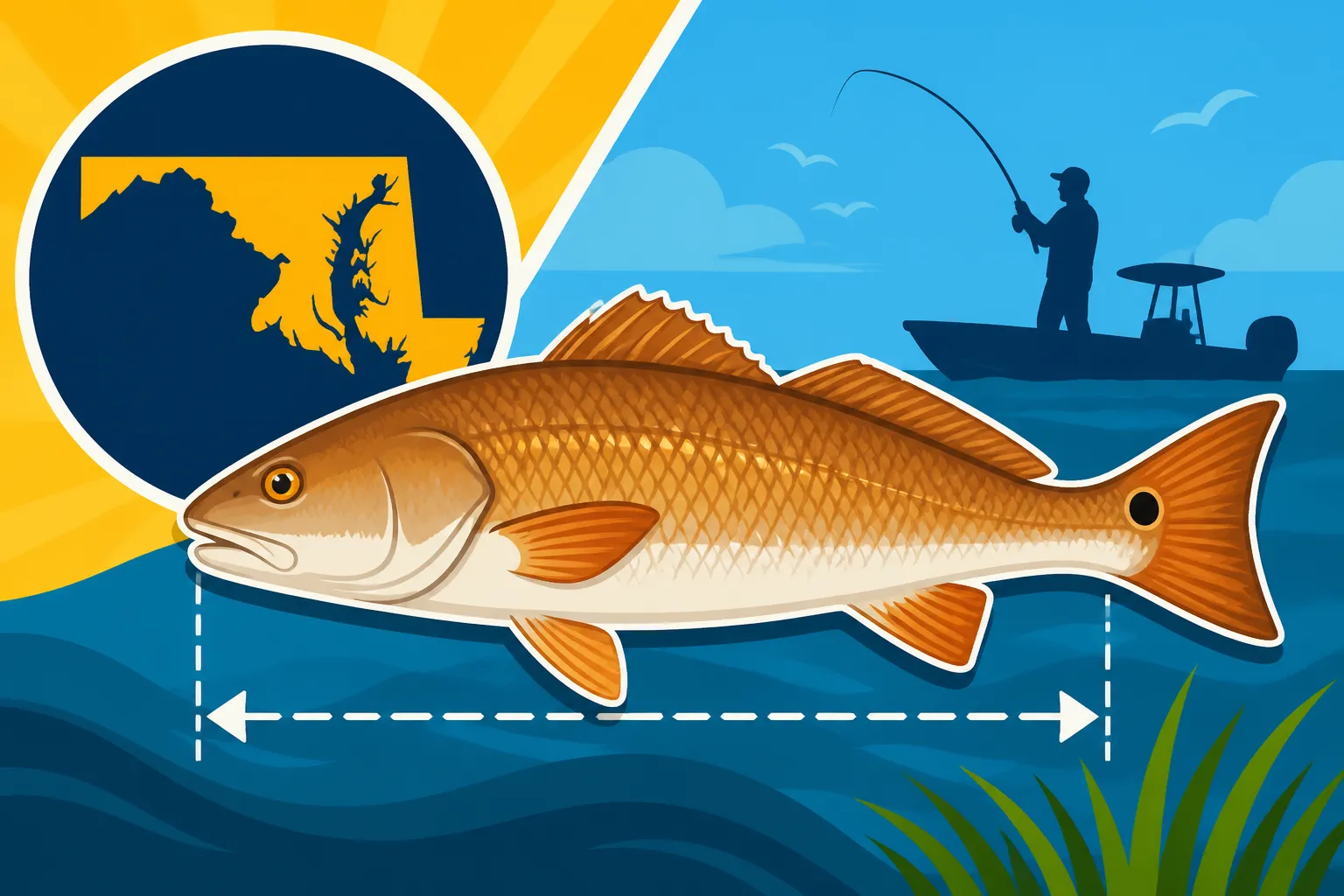
Accurate measurement is critical. To properly measure a Red Drum, lay the fish flat on a measuring board or against a tape measure. The measurement should be taken from the tip of the jaw (with the mouth closed) to the tip of the tail, with the tail pinched together to get the maximum length. It’s always a good idea to have a reliable measuring device on board, clearly marked for quick reference. Many anglers prefer a sturdy measuring board that can handle a flopping fish, preventing inaccurate readings. You can find durable and clear measuring boards on platforms like Amazon that make the process straightforward and less stressful for the fish. Remember, if there's any doubt about the length, it's always best to err on the side of caution and release the fish. For more on specific size limits across species, check out the Maryland Fishing Size and Catch Limits by Species guide.
Daily Creel Limits and Possession for Red Drum
Beyond the size, there's also the question of how many Red Drum you can actually keep once you've found one that fits the slot. Maryland's daily creel limit for Red Drum is one (1) fish per person per day. This means that each individual angler is allowed to harvest only one Red Drum within the legal slot limit during a 24-hour period.
This creel limit is an important part of managing the overall harvest pressure on the Red Drum population. Even if you're having an incredible day and catching Red Drum left and right, once you've kept your one legal fish, any subsequent Red Drum you catch – regardless of whether they fit the slot – must be immediately released. This is where diligent catch and release practices become vital, which we'll delve into shortly.
Regarding possession, generally, your possession limit aligns with the daily creel limit while you are actively fishing or on your way home immediately after fishing. However, if you've been on a multi-day trip or have fish stored in a freezer at home, separate rules might apply. For most recreational anglers on a day trip, one legal Red Drum in the cooler is the standard. It's crucial to ensure that any fish you've retained are easily countable and measurable if you encounter a Maryland DNR officer. This helps prevent any misunderstandings or accusations of exceeding limits. Anglers often keep their fish whole until they get home, or at least leave a portion that allows for species identification and length verification, to avoid any issues. Always remember that the rules are in place to ensure fair fishing and healthy fish stocks, so adhering to them diligently is a sign of a responsible angler.
Practical Tips for Anglers Targeting Red Drum in Maryland
Fishing for Red Drum can be an exhilarating experience, especially when you're targeting them in Maryland's vibrant coastal areas. To ensure you're not only successful but also a responsible steward of the fishery, having the right gear and knowledge about handling fish is crucial.
Essential Gear for Accurate Measurement
When you're out on the water, the last thing you want is to be fumbling with a flimsy tape measure or guessing a fish's length. Accurate measurement is not just a suggestion; it's a legal requirement to ensure you're adhering to Maryland's Red Drum slot limit. Having the right tools at your fingertips makes the process quick, stress-free for the fish, and compliant with regulations.
A sturdy, reliable measuring board is perhaps the most essential piece of gear. Look for one made from durable plastic or aluminum, with clear, easy-to-read markings. Many boards even have a small lip or stopper at one end to butt the fish's nose against, ensuring a consistent starting point for your measurement. This eliminates guesswork and helps you get an accurate length from the tip of the jaw to the pinched tail. Some anglers even mark their boards at 18 and 27 inches (Maryland's Red Drum slot limits) with waterproof markers or colored tape for an instant visual reference. These can be easily found at most tackle shops or online retailers. For instance, you can find a wide selection of robust and accurate fish measuring devices on Amazon, ranging from simple tape measures to specialized bump boards, designed to make measuring quick and humane.
Beyond the measuring device itself, consider how you'll handle the fish during measurement. A pair of fish-friendly gloves can protect both you and the fish, giving you a better grip without stripping away its protective slime coat. Always wet your hands thoroughly before touching the fish. Minimize the time the Red Drum spends out of the water, especially during warmer months. The goal is to get an accurate measurement quickly, and if it's outside the legal slot, release it back into the water as swiftly and gently as possible. Remember, a Red Drum struggling out of water is under immense stress, and every second counts for its survival.
Best Practices for Catch and Release
Given that you can only keep one Red Drum per day within the slot limit, it's highly likely you'll be releasing many more than you keep. Therefore, mastering proper catch and release techniques is not just good sportsmanship; it's essential for the sustainability of the fishery. Poor handling can lead to delayed mortality, even if the fish swims away seemingly fine.
Firstly, use appropriate tackle. While you might want to use heavy gear for a bull red, make sure your rod, reel, and line are matched to the size of fish you expect to encounter. Overly light tackle can prolong the fight, exhausting the fish to the point of no return. Circle hooks are a game-changer for Red Drum, especially when bait fishing. These hooks are designed to catch in the corner of the fish's mouth, significantly reducing instances of gut-hooking, which is often fatal. If you're using artificial lures, consider crushing the barbs on your treble hooks or replacing them with single, barbless hooks. This makes dehooking much easier and quicker.
When you bring a Red Drum to the boat or shore, handle it gently. Avoid dragging it onto hot sand or rough surfaces. If possible, keep the fish in the water while you remove the hook. Use a good pair of dehooking pliers or a specialized dehooking tool, which can reach deep-set hooks without causing further damage. Many professional guides swear by these tools, stating they are invaluable for quickly and safely releasing fish. For trophy-sized Red Drum, which are often outside the slot limit, avoid lifting them vertically by the jaw, as this can damage their internal organs. Instead, support their belly with one hand while holding the lower jaw, or use a net or lip gripper that allows the fish to stay horizontal. Minimize air exposure to just a few seconds for a quick photo, if you must, before gently lowering the fish back into the water. Hold the fish upright by the tail and support its belly until it regains its strength and can swim away on its own. These practices are especially important for species like Red Drum, which are often found in areas like Assateague Island where responsible angling directly impacts local populations. Dive deeper into specific methods with our guide on Techniques for Catching Red Drum at Assateague.
Staying Up-to-Date with Regulation Changes
The world of fishing regulations is rarely static. What's legal today might change tomorrow due to scientific findings, environmental shifts, or new management initiatives. As a responsible angler, it's your duty to stay informed. Relying on outdated information or hearsay from a buddy could inadvertently lead to a violation, which nobody wants.
The most authoritative source for Maryland's fishing regulations is the Maryland Department of Natural Resources (DNR). Their official website is a treasure trove of current information, often updated in real-time if emergency closures or rule changes occur. Before every fishing trip, especially if it's been a while since your last outing or if you're targeting a new species or area, take a few minutes to review the latest regulations for the specific waters you'll be fishing and the species you intend to target. You can usually find a direct link to the full Maryland DNR Fishing and Boating Guide, Explained online, which is updated annually.
Beyond the website, consider signing up for email alerts from the DNR. Many states offer this service, sending out notifications directly to your inbox whenever significant regulation changes are implemented. Follow reputable Maryland fishing forums or social media groups where experienced local anglers often share updates and discussions about rule changes. Just be sure to always cross-reference information with official DNR sources. Unexpected mid-season changes are not uncommon, particularly for highly managed species or in response to unforeseen environmental factors. Staying connected and proactive ensures you're always fishing within the legal framework, protecting both yourself and the invaluable Red Drum fishery. If you're concerned about potential infractions, learning about Maryland Fishing License Penalties for Violations can provide important context.
Maryland Red Drum Regulations at a Glance
To make things easy, here’s a quick summary of the current Red Drum regulations for Maryland’s coastal and Atlantic Ocean waters. Remember to always verify these rules with the official Maryland DNR before heading out, as regulations can change.
| Regulation Type | Details | Notes |
|---|---|---|
| Size Limit (Slot) | Minimum 18 inches, Maximum 27 inches | Fish must fall between these two measurements to be legally kept. |
| Daily Creel Limit | 1 fish per person per day | Each angler may only keep one Red Drum within the slot limit per 24-hour period. |
| Possession Limit | Aligns with daily creel limit while fishing | Typically one fish per person while actively fishing or immediately after. |
| Location | Coastal and Atlantic Ocean Waters | These regulations apply specifically to Maryland's ocean-side and nearshore waters. |
| Measurement | Tip of jaw to tip of pinched tail | Ensure accurate, gentle measurement to protect the fish. |
| Release | Required for fish outside the slot limit | Immediately release any Red Drum smaller than 18" or larger than 27". |
For a broader overview of various species, you might find the guide on Maryland's Most Popular Saltwater Gamefish helpful, and for specific seasonal advice, check out Best Time of Year for Red Drum Near Assateague.
Disclaimer
Please remember that fishing regulations, including size and catch limits, are subject to change by the Maryland Department of Natural Resources (DNR) at any time. While this guide provides the most current information available at the time of writing, it is the angler's responsibility to verify all regulations with the official Maryland DNR website or their latest printed fishing guide before engaging in any fishing activity. Non-compliance can result in significant penalties.