How to Catch Snakehead With Topwater Lures
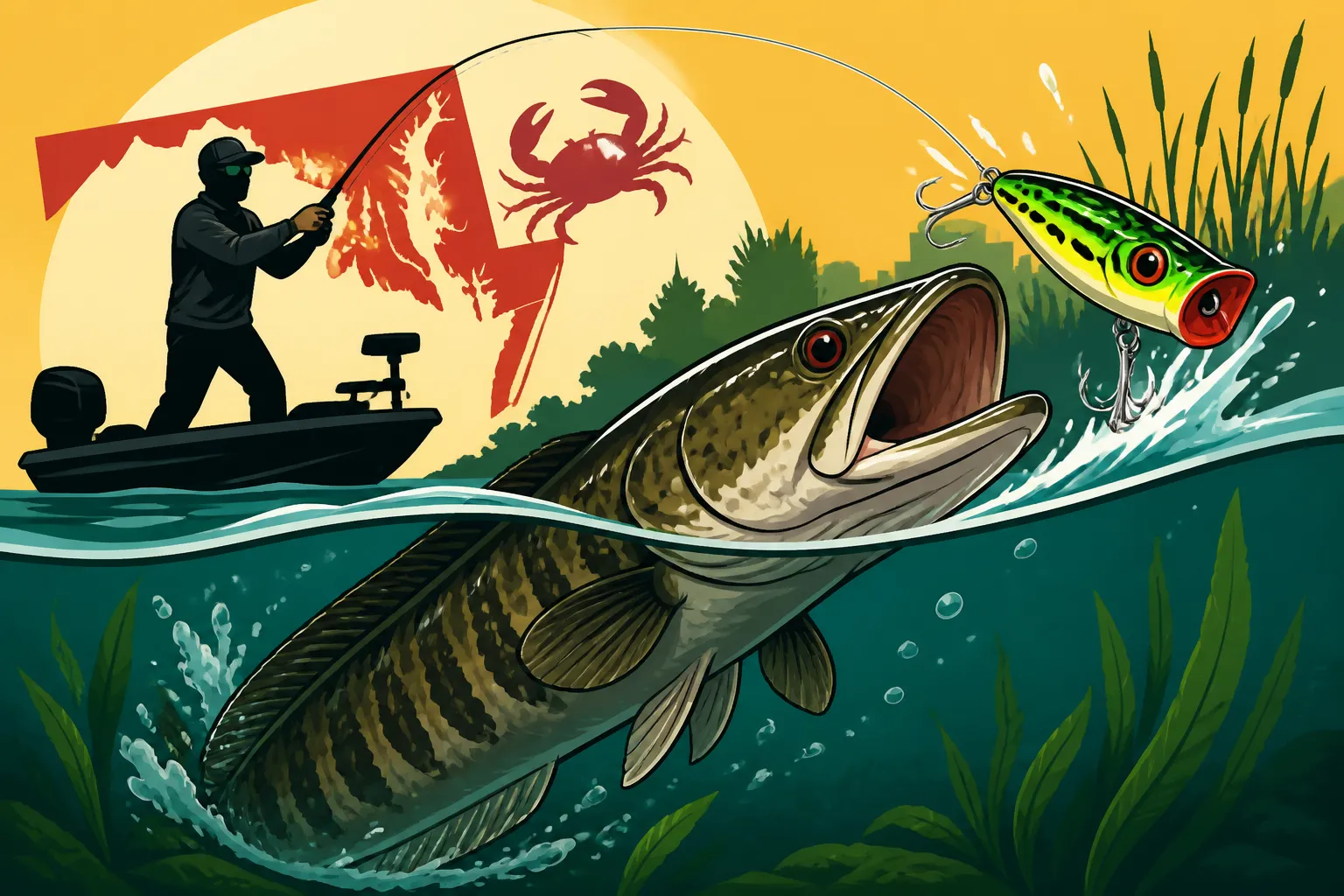
Ah, the Northern Snakehead! If you've spent any time fishing the shallow, vegetated waters of Maryland, you've probably encountered this toothy, aggressive invasive species. They're not always easy to trick, and the frustration of a missed strike or a fish that spooks can be enough to make you want to throw your rod in the water. But fear not, fellow angler! This guide is all about equipping you with the knowledge and techniques to effectively catch snakeheads using one of the most exciting methods there is: topwater lures.
Understanding the Northern Snakehead's Topwater Appeal
Snakeheads are truly fascinating creatures, and their behavior makes them perfectly suited for topwater action. They're often found lurking in dense cover, waiting for an unsuspecting meal to cross their path. Knowing their habits is the first step to tricking them into an explosive topwater strike.
Why Topwater Works So Well for Snakeheads
Imagine a shallow, murky pond or a slough choked with lily pads and thick grass. This is prime snakehead territory. These fish are ambush predators through and through. They're built for short, powerful bursts of speed to pounce on prey. And because they can breathe atmospheric air, they're perfectly comfortable in oxygen-depleted waters that might send other fish scurrying. This unique ability means they don't have to stay deep; they can hang out right under the surface, making them incredibly susceptible to a well-presented topwater lure.
Their aggression is another key factor. Especially during certain times of the year, snakeheads become fiercely territorial. A lure skittering across their patch of water isn't just seen as food; it's seen as an intruder. That territorial instinct often triggers an immediate, violent strike, even if they're not actively feeding. It’s an adrenaline rush like no other when a snakehead blows up on your topwater bait! For more general info on this species, check out our guide on the Northern Snakehead in Maryland Waters.
Prime Conditions for Topwater Success
You can't just throw a topwater lure out anytime and expect consistent results. Snakeheads, like all fish, are influenced by environmental factors.
- Time of Day: Early morning and late evening are often prime times. The water is cooler, the light is lower, and snakeheads are typically more active. Overcast days can extend this bite throughout the day, as the reduced sunlight penetration makes them feel less exposed. During bright, sunny afternoons, they tend to burrow deeper into dense cover, making them harder to entice with a topwater bait.
- Water Temperature: Snakeheads prefer warmer water, generally above 60 degrees Fahrenheit, but not excessively hot. When the water gets too warm (think mid-summer afternoons above 90 degrees), they can become lethargic. Ideal temperatures usually fall between 70-85 degrees, which aligns perfectly with when aquatic vegetation is at its thickest.
- Habitat: This is critical. Look for areas with dense aquatic vegetation – lily pads, hydrilla mats, spatterdock, submerged grass beds, and even fallen timber or brush piles. These areas provide shade, cover, and ambush points. They love the edges of these mats, pockets within the vegetation, and channels running through them. Understanding Where Snakehead Feed in Shallow Maryland Water is crucial for effective topwater fishing.
- Weather: Overcast skies or light rain can often turn on a fantastic topwater bite, as it diffuses light and makes fish feel more secure feeding closer to the surface. A sudden drop in barometric pressure (like before a storm) can also sometimes trigger a feeding frenzy, but severe weather can shut them down.
Essential Topwater Lures and Gear for Maryland Snakeheads
Alright, let's talk about the tools of the trade. You can't just grab any old bass lure and expect it to hold up to a snakehead's toothy maw or the brutal fight through dense vegetation. You need specialized gear and a selection of topwater lures designed for this exact purpose.
Top Topwater Lures for Snakehead Fishing
When it comes to topwater, there are a few stars of the show that consistently produce for snakeheads.
- Frog Lures: This is arguably the most popular and effective topwater lure for snakeheads, especially when fishing in heavy cover. Hollow-bodied frog lures are designed to be weedless, meaning they can be dragged directly over dense lily pads, grass mats, and submerged timber without snagging. Brands like Lunkerhunt, Booyah Pad Crasher, and Spro Bronzeye Frog are widely popular. You can find a fantastic selection of these on Amazon, often in multi-packs with different colors.
- Retrieval: The beauty of a frog lure is its versatility. You can "walk the dog" with it, mimicking a frog swimming erratically, or twitch it slowly, letting it sit enticingly in open pockets. Sometimes a simple, steady retrieve that causes it to gurgle and splash is all it takes. The key is to experiment. Many anglers swear by a "stop-and-go" retrieve, letting the frog sit for a few seconds after a twitch, which often provokes a strike from a curious snakehead. For more in-depth tips, check out How to Fish a Frog Lure for Snakehead.
- Buzzbaits: These lures feature a propeller blade that churns the water, creating a commotion and a distinct "buzzing" sound that can call in snakeheads from a distance. Buzzbaits are excellent for covering water quickly, especially along the edges of vegetation or in slightly more open, shallow areas.
- Retrieval: A steady, medium-to-fast retrieve is usually best to keep the blade spinning and the lure on the surface. Don't be afraid to experiment with slight pauses or changes in speed.
- Whopper Ploppers and Walking Baits: Lures like the River2Sea Whopper Plopper (also available on Amazon) or traditional "walk-the-dog" style baits (like a Zara Spook) create significant surface disturbance and commotion. The Whopper Plopper has a unique rotating tail that slaps the water, creating a loud, gurgling sound that can be irresistible to aggressive snakeheads. Walking baits require a specific retrieve technique to make them zig-zag across the surface, imitating a wounded baitfish.
- Retrieval: For Whopper Ploppers, a steady retrieve at varying speeds works well. For walking baits, a rhythmic twitch-twitch-pause of the rod tip is necessary to get that distinctive side-to-side sashay.
Rod, Reel, and Line Selection
Your gear needs to be robust to handle the power of a snakehead and their tendency to dive into heavy cover.
- Rod: You'll want a heavy-power, fast-action casting rod, typically in the 7-foot to 7-foot 6-inch range. This power gives you the backbone to pull fish out of thick vegetation, and the fast action provides the sensitivity and quick hook-setting power needed for topwater strikes. Graphite rods offer good sensitivity without being overly heavy.
- Reel: A baitcasting reel with a strong drag system is essential. Look for a gear ratio in the 7.0:1 to 8.1:1 range. The faster retrieve helps you pick up slack quickly after a strike and keep the fish moving out of cover. A high-quality reel from brands like Shimano or Daiwa will stand up to the abuse.
- Line: Braided line is non-negotiable for snakehead fishing, especially with topwater lures in heavy cover. Its zero stretch, incredible strength, and abrasion resistance are paramount. Opt for 50-65 lb test braided line. This heavy line will cut through vegetation, prevent break-offs when a fish wraps you up, and provide the pulling power you need.
- Leader (Optional but Recommended): While some anglers tie braid directly to their lure, a short (12-18 inch) leader of heavy fluorocarbon (50-80 lb) or even heavy monofilament can be beneficial. This provides a bit of stretch and extra abrasion resistance against their sharp teeth, which can sometimes fray braid. The slight bit of invisibility from fluorocarbon can also be a plus in clearer waters, though snakeheads are not particularly line-shy.
Mastering Topwater Techniques for Maryland Snakeheads
Once you have your gear sorted, it's time to refine your approach. Catching snakeheads on topwater isn't just about throwing a lure; it's about thoughtful presentation and a strong hook set.
Casting and Presentation Strategies
Accuracy is your best friend when targeting snakeheads with topwater.
- Targeting Cover: Look for open pockets within dense lily pad fields, narrow channels in grass mats, the shady side of fallen trees, or areas where vegetation thins out slightly. These are often ambush points. Make precise casts that land your lure right on the edge of or within these prime areas.
- Quiet Entry: Unlike some species where a loud "plop" can attract attention, snakeheads can be surprisingly wary. Try to make your lure land softly, especially when fishing smaller pockets or close to visible cover. A gentle entry can be less alarming and more enticing.
- Multiple Casts: Don't just cast once to a spot and move on. Snakeheads might be sluggish or simply not see the lure on the first pass. Make several casts from different angles to the same promising area. Sometimes, a snakehead needs a few passes to decide to strike, or to just get annoyed enough to attack. You might also want to consult Best Time of Day to Catch Snakehead in Maryland for optimal casting times.
The Art of the Retrieve
Each topwater lure has its own rhythm, and mastering it is key.
- Frog Lures: As mentioned, variety is key.
- Walk-the-dog: A series of subtle twitches of the rod tip while reeling in slack will make the frog zig-zag enticingly. This is deadly in open pockets or along edges.
- Stop-and-go: Cast, twitch a few times, then let it sit for 3-5 seconds. Twitch again. This often triggers an aggressive strike from a snakehead that was watching it. The pause makes them commit.
- Steady Gurgle: Sometimes a simple, steady retrieve that keeps the frog bubbling and gurgling across the surface is all you need, especially in very thick cover where it's hard to impart much action.
- Buzzbaits: The trick with a buzzbait is to get it spinning and on the surface as soon as it hits the water. A fast retrieve right after the cast will achieve this. Maintain a steady pace that keeps the propeller churning and creating that distinct noise. Buzzbaits are excellent for covering water and searching for active fish.
- Whopper Ploppers and Walking Baits:
- Whopper Plopper: A simple, steady retrieve often works best, allowing the unique tail to do its job. Experiment with retrieve speed. Sometimes a faster retrieve generates more splash and noise, which can be good in murky water or to call fish from deeper cover.
- Walking Baits: This takes practice. Hold your rod tip down, about waist-high, and use short, rhythmic twitches while reeling in slack. The goal is to make the lure sashay from side to side without moving forward too quickly. This mimics a struggling baitfish and can be highly effective.
Hook Set and Landing
This is where many anglers miss their first snakehead strike. Their powerful bites and the heavy cover they inhabit require a specific approach.
- The Delayed Hook Set for Frog Lures: When a snakehead blows up on a frog lure, your natural instinct will be to immediately set the hook. Resist this urge! Snakeheads often grab the lure and then turn their head to engulf it. If you set too early, you'll pull the lure out of its mouth. Instead, wait a second or two after the strike, feel the weight of the fish, and then set the hook with a strong, sweeping motion, often two or three times to ensure penetration.
- Fighting the Fish Out of Cover: Once hooked, snakeheads will immediately try to dive into the nearest available cover. You need to apply heavy, constant pressure to get them out. Your heavy rod and braided line are crucial here. Don't let them bury themselves in the vegetation, or it's often game over.
- Landing Tools: Snakeheads have sharp teeth and are incredibly strong and slippery. Never try to lip a snakehead like a bass. Use a sturdy pair of fish grippers or a heavy-duty net to land them safely. Once landed, control them immediately. For specific advice on what to do, see our guide on What to Do If You Catch a Snakehead in Maryland.
Safety and Conservation When Targeting Snakeheads in Maryland
While snakeheads offer incredible sport, it's vital to remember that they are an invasive species in Maryland. This means there are specific regulations and responsibilities you need to be aware of. You can learn more about this by reading Maryland Invasive Fish Rules: Blue Catfish and Snakehead.
Handling Snakeheads Safely
As exciting as catching a snakehead can be, handling them requires caution.
- Watch the Teeth: Snakeheads have a mouth full of sharp, conical teeth designed to grip prey. Always use long-nosed pliers to remove hooks and never put your fingers near their mouth.
- They're Slippery and Strong: Even a modest-sized snakehead can be surprisingly powerful and squirmy once out of the water. Use those fish grippers to maintain control and prevent accidental drops or flailing.
- Use Proper Tools: Beyond pliers and grippers, a small, blunt object (like a fishing priest or even a stout stick) can be useful for dispatching the fish quickly and humanely once it's landed, as per Maryland regulations.
Respecting the Ecosystem
Even though snakeheads are invasive, it's still important to be a responsible angler.
- Minimize Habitat Disturbance: While fishing in heavy cover is part of the game, try to minimize unnecessary damage to native vegetation. Your goal is to remove invasives, not harm the overall ecosystem.
- Proper Disposal: Maryland's rules are clear: if you catch a snakehead, you cannot release it alive. This means you need a plan for what to do with the fish. Many anglers keep them for consumption (they are quite good eating!), while others dispose of them properly. Never just leave them on the bank. This is also covered in Is It Illegal to Release a Snakehead in Maryland?. For specific regulations, be sure to check Maryland Snakehead Fishing Rules.
Important Maryland Regulations
The Maryland Department of Natural Resources (DNR) has strict rules regarding Northern Snakeheads because of their detrimental impact on native ecosystems.
- Catch and Do Not Release: This is the most crucial rule. If you catch a Northern Snakehead, you are legally required to humanely kill it and not return it to the water. This applies to all Maryland waters. Transporting a live snakehead is also prohibited, and there can be a Fine for Transporting a Live Snakehead in Maryland.
- No Size or Creel Limits: Because they are an invasive species, there are currently no size or creel limits on Northern Snakeheads in Maryland. You can keep as many as you catch, regardless of size. This makes targeting them a great way to help the environment while enjoying some thrilling fishing. You might be curious about How Big Do Snakehead Get in Maryland?; they can grow quite large, offering a real fight!
- Report New Sightings: If you catch a snakehead in a body of water where they are not typically found or reported, consider reporting it to the Maryland DNR. This helps them track the spread of the species.
| Lure Type | Best Conditions | Key Retrieval Techniques | Advantages |
|---|---|---|---|
| Hollow-Body Frog | Dense vegetation (lily pads, grass mats), pockets | Walk-the-dog, stop-and-go (pauses are key), steady gurgle | Weedless, excellent in thick cover, mimics natural prey, triggers aggressive strikes. |
| Buzzbait | Edges of vegetation, slightly more open shallow water | Steady, medium-fast retrieve to keep propeller churning | Covers water quickly, creates significant noise and splash, calls fish from distance. |
| Whopper Plopper | Open water, edges, sparse vegetation | Steady retrieve (vary speed), allows unique tail action | Creates loud gurgle and splash, easy to use, effective for aggressive fish. |
| Walking Bait | Open water, sparse cover, clear water | Walk-the-dog (rhythmic twitch-twitch-pause) | Mimics wounded baitfish, subtle yet effective, good for wary fish. |
Targeting snakeheads with topwater lures is an incredibly exciting and rewarding way to fish in Maryland. With the right gear, a bit of patience, and a willingness to learn their habits, you'll be experiencing those explosive surface strikes in no time! For more general techniques to catch this species, read our guide on Techniques for Catching Snakehead in Maryland.
Disclaimer
Please remember that fishing regulations can change. Always consult the latest Maryland Department of Natural Resources (DNR) fishing guide and regulations before heading out on the water to ensure compliance.