How to Fish a Frog Lure for Snakehead
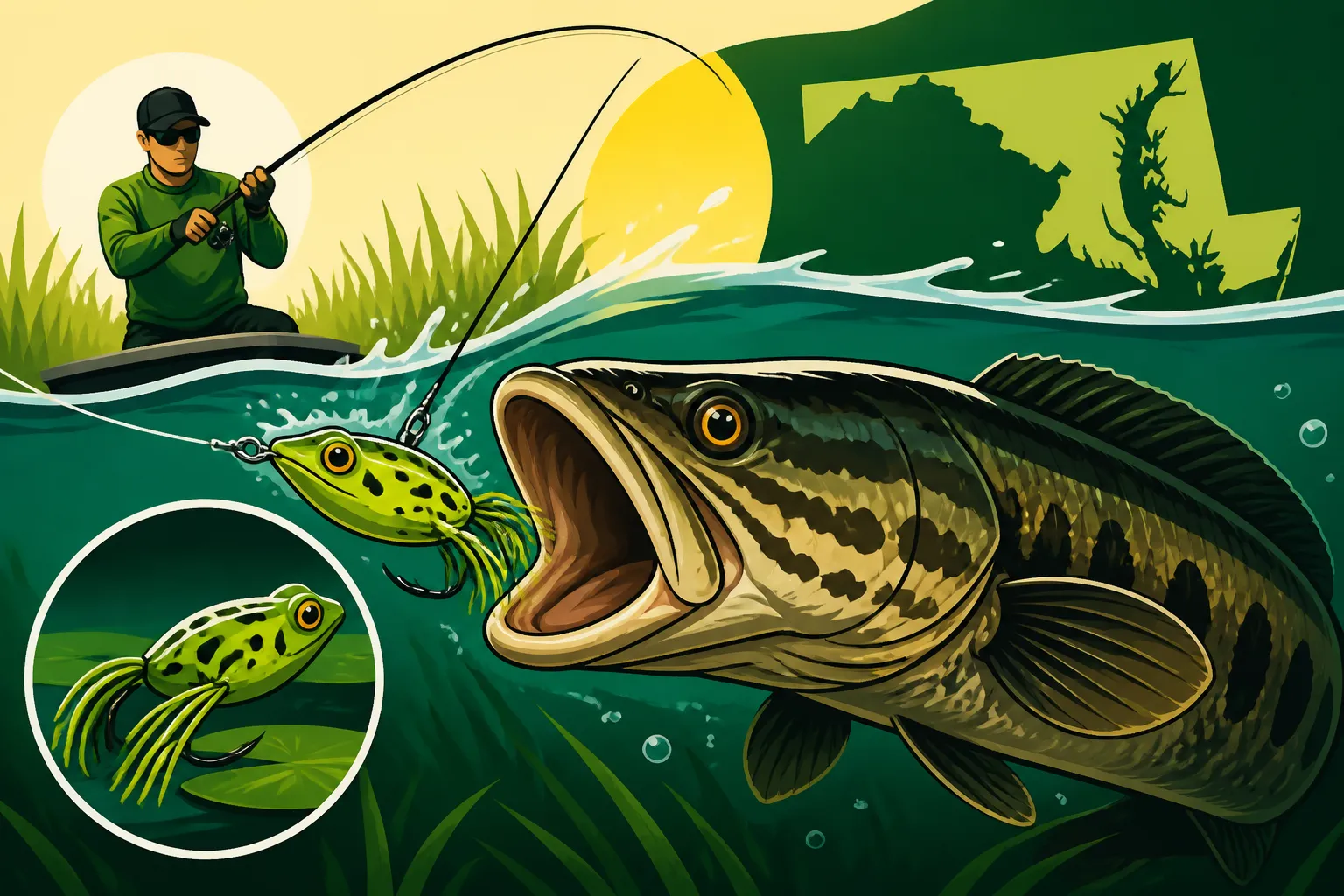
Catching Northern Snakehead can be one of the most exhilarating experiences in Maryland's freshwater and brackish environments, but getting them to commit to a topwater frog can be maddeningly difficult. Many anglers struggle to get past the explosive blow-up without a solid hook-set, often leaving them frustrated with missed opportunities. This comprehensive guide will walk you through everything you need to know about effectively fishing a frog lure for snakehead, from understanding their ambush tactics to mastering your retrieve, ensuring you turn those splashes into fish in the net.
Understanding the Northern Snakehead's Habitat and Behavior
Before you even think about tying on a frog lure, you need to understand the creature you're targeting. Northern Snakehead are truly unique, and their behavior dictates how and where you should present your bait. They're an invasive species here in Maryland, which means there are specific Maryland Invasive Fish Rules: Blue Catfish and Snakehead you need to be aware of, but it also means they’re often aggressive and highly predatory.
Where Snakeheads Hunt: Shallow, Vegetated Waters
Snakehead absolutely thrive in dense, shallow cover. Think lily pads, hydrilla, cattails, submerged grass beds, and even thick fallen timber that creates shaded pockets. These environments are their fortresses, offering perfect ambush points for unsuspecting prey like baitfish, smaller panfish, and yes, even frogs. They prefer water that's not too deep, often in the 2-6 foot range, especially in the back coves, creeks, and stagnant channels of rivers like the Potomac River and its tributaries, or the Eastern Shore rivers such as the Nanticoke or Blackwater.
When you're looking at a stretch of water, picture yourself as a snakehead. Where would you hide to surprise a meal? Look for breaks in the vegetation, small pockets, or the edges where dense cover meets slightly more open water. These are prime strike zones. They are incredibly patient predators, often lying perfectly still, blending into their surroundings, waiting for the opportune moment. Understanding these preferred haunts is the first step to success. You'll often find that Where Snakehead Feed in Shallow Maryland Water are exactly the places where a topwater frog shines brightest.
Why Frog Lures Work: Mimicking Natural Prey
Frog lures are incredibly effective for snakehead because they perfectly imitate one of their natural food sources. Not only do frogs live in the same kind of vegetated environments that snakehead inhabit, but their erratic movement and tempting silhouette on the surface trigger the snakehead's instinctual predatory response. The sound of a frog lure skittering, popping, or walking across the water's surface can draw a snakehead out from heavy cover that other baits might not penetrate or entice.
The beauty of a hollow-body frog lure is its weedless design. The hooks are tucked tightly against the body, allowing it to slide over and through dense lily pads and thick grass without snagging. This is absolutely critical because if your lure is constantly getting hung up, you'll spend more time clearing weeds than fishing, and you'll quickly spook any fish in the area. The realistic action and weedless nature make frog lures a top choice for any angler serious about targeting these aggressive fish. Many experienced anglers will tell you that learning How to Catch Snakehead With Topwater Lures is a game-changer for these fish.
Essential Gear for Frog Lure Fishing for Snakehead
Having the right equipment is non-negotiable when you're targeting snakehead, especially with frog lures. These fish are powerful, live in heavy cover, and often try to bury themselves in it once hooked. Your gear needs to be up to the task to prevent heartbreak and ensure you can land these tough fighters.
Rod, Reel, and Line Selection
Let's talk about power. For snakehead, you need heavy tackle. A medium-heavy to heavy power baitcasting rod, typically 7 to 7.5 feet long, is ideal. The stout backbone is necessary to punch through heavy vegetation and to physically pull a snakehead out of that mess. A fast action tip will give you the sensitivity to feel subtle takes and the quick power for a strong hook-set, which is crucial given the snakehead's bony mouth. Many popular brands offer excellent rods for this application, readily available on platforms like Amazon.
Pair your heavy rod with a reliable baitcasting reel that has a strong drag system and a good retrieve ratio, something in the 7.1:1 to 8.1:1 range. This higher speed allows you to quickly pick up slack line and maintain control once a fish blows up on your frog. Your line choice is paramount: braided line, and lots of it. A minimum of 50-65 lb test braided line is recommended. Braid has no stretch, which gives you direct contact with your lure, exceptional sensitivity, and the raw power needed to cut through weeds and pull a fish from heavy cover. Fluorocarbon or monofilament lines simply won't cut it in these conditions; they stretch too much and will break under the strain of pulling fish from dense cover.
Choosing the Right Frog Lures
Not all frog lures are created equal, and having a few different styles in your tackle box can make a big difference. The most common and effective type is the hollow-body frog. These are designed to be weedless, with the hooks tucked up against the body. They come in various sizes and colors, but generally, a 2.5 to 3-inch frog is a good starting point. Natural frog colors like greens, browns, and black are always a solid bet, but don't shy away from brighter colors like white, yellow, or even chartreuse, especially on overcast days or in stained water. Some popular hollow-body brands include Spro Bronzeye Frogs, Lunkerhunt, and Livetarget frogs, which can be found in a variety of patterns and sizes on Amazon.
Beyond the classic hollow-body, you might also consider popper frogs. These have a cupped face that, when twitched, creates a spitting and gurgling sound, mimicking a frog struggling on the surface. They can be excellent for drawing strikes from fish that are hiding deeper in the cover or when you need to make a bit more commotion to get their attention. Think about the conditions: if the water is heavily matted with vegetation, a traditional hollow-body frog will be easier to work. If there are more open pockets, a popper frog can really shine.
Here’s a quick comparison of popular frog lure types for snakehead:
| Lure Type | Key Feature | Best Use Case | Pros | Cons |
|---|---|---|---|---|
| Hollow-Body | Weedless, soft body | Dense vegetation, lily pads, matted grass | Highly weedless, versatile retrieve | Can be harder to set hook due to soft body |
| Popper Frog | Cupped face, spitting | Open pockets, edges of cover, calm water | Creates surface commotion, attracts attention | Less weedless than hollow-body |
| Walking Frog | Flat face, walk-dog | Open water, sparse cover, clear water | Excellent "walk-the-dog" action | Not ideal for heavy cover, can snag easily |
| Buzz Frog | Propeller or paddle | Covering water quickly, aggressive retrieves | High commotion, great for active fish | Not truly weedless, less subtle |
Mastering Frog Lure Techniques for Maryland Snakehead
This is where the rubber meets the road! Getting a snakehead to blow up on your frog is one thing; getting it into the net is another. Mastering your retrieve and hook-set is absolutely critical.
The Walk-the-Dog Retrieve
The "walk-the-dog" retrieve is a classic topwater technique that mimics a struggling or scurrying frog on the surface. It creates an enticing side-to-side, zig-zagging motion that is incredibly effective for enticing predatory fish, and snakehead are no exception. To execute this, cast your frog lure past your target area. Let it sit for a few seconds – sometimes the splashdown itself is enough to draw a strike. Then, using a series of short, downward twitches of your rod tip while simultaneously reeling in slack, make the frog "walk." It's all in the wrist and timing.
Don't overwork the lure. A smooth, rhythmic cadence is key. You want to make the frog appear lifelike, not like something being dragged across the surface. Vary your retrieve speed. Sometimes a slow, deliberate walk with long pauses is best, especially in cooler water or when fish are less active. Other times, a faster, more erratic walk can trigger aggressive strikes. Practice in open water to get the feel for it, then take it to the lily pads. Remember, snakehead often follow the lure for a bit before striking, so maintain that enticing action all the way back to the boat or shore.
Stop-and-Go and Twitch-and-Pause Methods
While the walk-the-dog is fantastic, sometimes snakehead prefer a different presentation. The stop-and-go and twitch-and-pause methods are simpler but equally effective, especially when snakehead are a bit lethargic or holding tight to cover. For a stop-and-go, simply cast your frog and retrieve it with a few quick turns of the reel, then pause. Let it sit perfectly still for 5-10 seconds, then retrieve again. The key here is the pause. Many times, a snakehead will strike the lure when it's completely still, appearing vulnerable.
The twitch-and-pause is similar but focuses on subtle twitches during the retrieve. Cast out, let it sit, then give your rod tip one or two sharp twitches to make the frog splash or gurgle, then pause. Repeat this sequence. This mimics a frog that's alive but maybe injured or trying to escape, making it an easy target. This technique can be especially deadly when fishing small pockets within thick grass or along the edges of weed lines. Experiment with the length of your pauses and the aggressiveness of your twitches to see what the fish are responding to on a given day. These tactics are vital for anyone looking into Best Time of Day to Catch Snakehead in Maryland as presentation matters greatly.
Setting the Hook and Fighting the Fish
This is arguably the most crucial part of frog lure fishing for snakehead, and where many anglers get it wrong. When a snakehead blows up on your frog, your natural instinct is to set the hook immediately. Resist this urge! Snakehead often "mouth" the frog first, or simply push water without fully taking the bait. If you set the hook too early, you'll pull the lure away from the fish.
Instead, when you see or hear the strike, wait. Count to "one Mississippi, two Mississippi," or simply wait until you feel the actual weight of the fish and the line tightening. Once you feel that solid pull, then deliver a powerful, sweeping hook-set. Because of the heavy braided line and the rod's backbone, you can really lean into it. A strong hook-set is essential to drive those hooks past the frog's soft body and into the snakehead's bony mouth. You might even consider a double hook-set to be absolutely sure.
Once hooked, don't let up. Snakehead are incredibly strong and will immediately try to dive into the nearest cover. Keep your rod tip high, reel hard, and try to keep their head up and out of the vegetation. Your heavy gear is designed for this brute force, so use it. Don't play the fish gently; you need to dominate it and pull it out quickly. If they get tangled in thick weeds, you might have to give a bit of slack and let them swim out, but keep tension and be ready to pull again. This aggressive fight is part of what makes catching How Big Do Snakehead Get in Maryland? so exciting.
Advanced Tips and Common Mistakes to Avoid
Success with snakehead on frog lures often comes down to attention to detail and learning from common missteps. Let's dig into some advanced strategies and things you definitely want to avoid.
Fishing Under Various Conditions
Snakehead are warm-water fish, and their activity levels are heavily influenced by water temperature and weather. They tend to be most active when water temperatures are between 70-85 degrees Fahrenheit. This means late spring, summer, and early fall are prime times. On bright, sunny days, they'll often be tucked deep into the shadiest, densest cover, making accurate casts and slow, deliberate retrieves paramount. In these conditions, letting your frog sit for a long time after the splashdown can often trigger a strike from a cautious fish.
On overcast days or during low-light periods like dawn and dusk, snakehead might be more willing to roam and venture into slightly more open water or less dense cover. This is when a faster, more aggressive retrieve or even a popper frog creating more commotion can be highly effective. After a rainstorm, especially one that doesn't drastically cool the water, the water levels might rise slightly, and new feeding lanes or ambush points could become available. Always adapt your presentation to the conditions. Understanding Maryland Striped Bass Season and Rockfish Rules also highlights how various species have different seasonal patterns, and snakehead are no different.
Another often overlooked factor is pressure. If a particular spot has been fished heavily, the snakehead there will be warier. Try less obvious areas, or fish during off-peak times. Kayak fishing can be particularly effective for accessing these untouched, shallow, weed-choked areas where bigger boats can't go. If you're considering Kayak Fishing Techniques for Maryland Waters, remember this advantage.
Ethical Considerations and Maryland Regulations
It's critical to remember that Northern Snakehead are an invasive species in Maryland. This means the rules for them are different than for native species. According to Maryland Snakehead Fishing Rules, anglers are legally required to immediately kill any Northern Snakehead they catch and cannot transport them alive. This isn't just a suggestion; it's a critical part of managing their population and protecting Maryland's native fish ecosystems. You can't just catch and release them back into the water, even if you don't intend to keep them.
Knowing What to Do If You Catch a Snakehead in Maryland is not only about legal compliance but also about being a responsible angler. Carry a sturdy stringer or a cooler with ice, and a blunt object like a priest or a sturdy club to humanely dispatch the fish immediately upon landing. This helps ensure they don't escape back into the water. While it might feel counter-intuitive to kill a fish you've caught, it's the right thing to do for the environment in this specific case. And don't worry, many people find snakehead to be excellent eating, so it's not a wasted catch!
Always stay updated on current Maryland Department of Natural Resources (DNR) regulations. Rules can change, and being informed ensures you're always fishing legally and responsibly. Checking the DNR's fishing guide annually is a good habit.
Disclaimer
Please note that fishing regulations and conditions can change. Always consult the latest official Maryland Department of Natural Resources (DNR) regulations before heading out. The information provided here is for general guidance and educational purposes only.