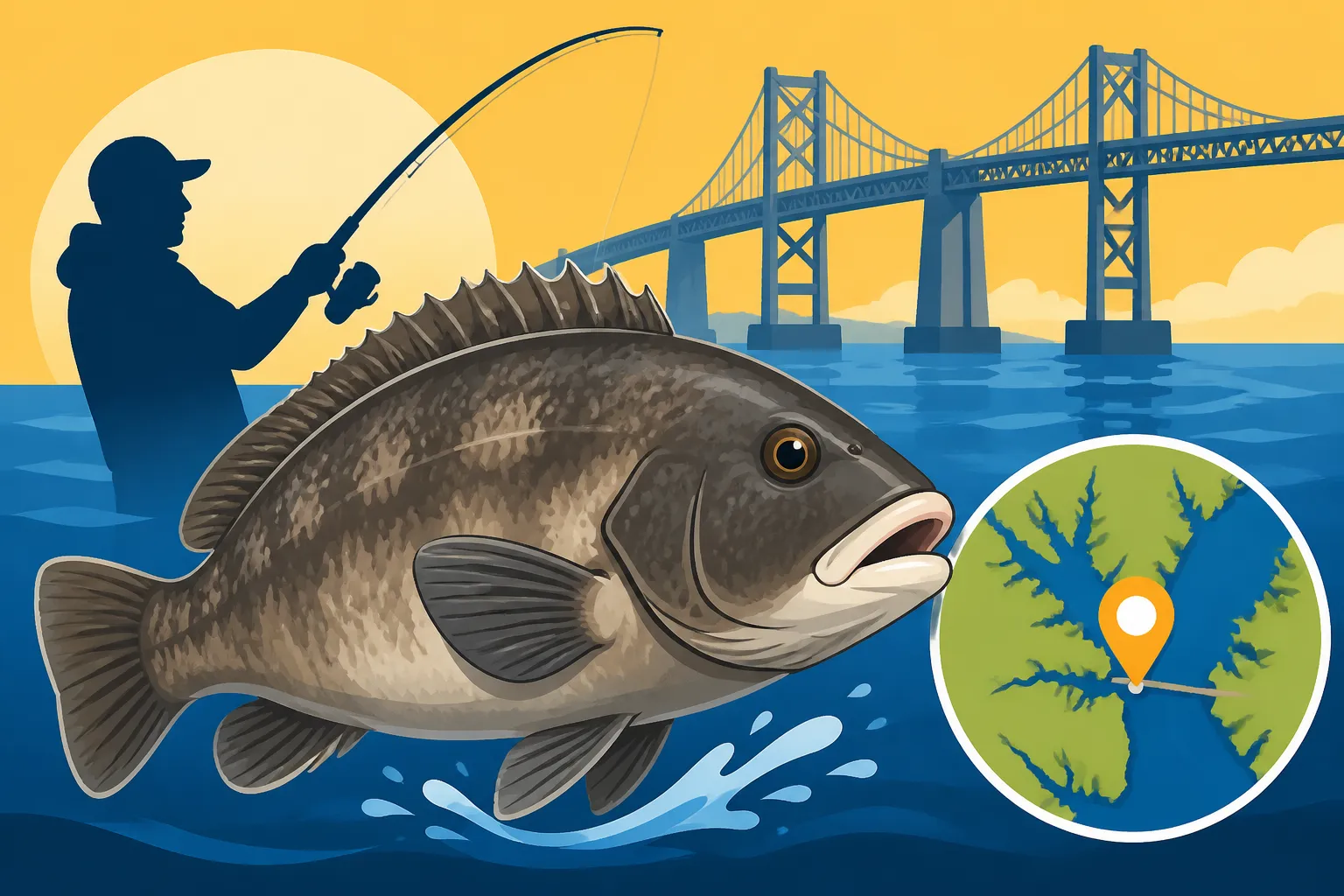
How Big Do Tautog Get Around the Bay Bridge?
One of the most thrilling parts of fishing near the Chesapeake Bay Bridge is the potential to hook into a big tautog. Many anglers spend countless hours poring over charts and perfecting their rigs, all while wondering just how large these strong, elusive fish can actually get in this iconic Maryland spot. This guide will dive deep into the typical sizes you can expect, the record-breaking potential, and the best strategies to increase your chances of landing a truly memorable tautog around the Bay Bridge.
The Anatomy of Bay Bridge Tautog: What Influences Their Size?
Tautog, often affectionately called "tog" by those who pursue them, are known for their powerful bites and incredible fighting spirit, especially around rocky structures. The Chesapeake Bay Bridge provides an ideal habitat for these fish, offering an abundance of pilings, rubble, and concrete that serve as both shelter and a buffet of their favorite crustaceans and mollusks. It's this unique environment that largely dictates how big tautog can grow in these waters.
Typical Tautog Dimensions Around the Bridge
When you're fishing the pilings and rock piles of the Bay Bridge, you'll encounter a range of tautog sizes. Many of the fish you'll pull up will fall within the "keeper" range, which means they meet Maryland's minimum size requirements. These fish often measure in the mid-to-high teens, perhaps 15 to 20 inches, and offer a solid fight. They're respectable fish, perfect for a tasty dinner, and quite common if you're hitting the right spots with the right bait. However, it's the bigger ones, those approaching or exceeding 20 inches, that really get an angler's heart pounding. These larger fish are typically older, wiser, and have spent more time growing fat on the bridge's bountiful offerings.
It's important to understand that while a 15-inch tautog is a good catch, the Bay Bridge holds the potential for much larger specimens. We're talking about fish that stretch tape measures well into the 20s, and sometimes even creep close to the 30-inch mark, which is truly a giant for this species. These bigger fish are often found in deeper, less pressured parts of the structure, or in areas with particularly dense cover where they can live undisturbed for years. They are also incredibly strong, and hooking one on lighter tackle can lead to a quick break-off if you're not ready.
Environmental Factors and Food Sources Shaping Growth
The environment around the Chesapeake Bay Bridge is a perfect storm for tautog growth. The sheer amount of structure—miles of concrete pilings, rip-rap, and various debris from decades of construction and use—creates an intricate underwater city for marine life. This structure is home to an incredible diversity of crabs, mussels, barnacles, and other invertebrates that form the primary diet of tautog. Think about it: a tautog lives in a constant buffet, with new food sources growing on every surface. This plentiful, consistent food supply allows them to pack on pounds and grow to impressive sizes.
Water temperature also plays a critical role. Tautog are a cold-water species, and while they can tolerate warmer temperatures, they thrive in cooler conditions. Maryland's seasons provide a cycle where the tautog can feed aggressively in the spring and fall, putting on significant weight before the colder winter months. The deep waters around the Bay Bridge also offer thermal refuge, allowing larger fish to retreat to more stable temperatures when surface waters fluctuate. Furthermore, the immense size of the Chesapeake Bay itself and its connection to the Atlantic Ocean means there's a constant influx of nutrients and a vast ecosystem supporting the food chain that ultimately feeds these bottom dwellers. Learning about How Tides Affect Fishing in Maryland's Chesapeake Bay can also give you an edge, as tidal flows bring fresh food to their doorstep.
Maryland's Trophy Tautog: State Records and Angler Expectations
For many anglers, simply catching a tautog is a blast. But for others, there's a burning desire to land a true trophy, something that will make the local tackle shop wall or at least garner serious bragging rights. The Bay Bridge is certainly a place where such dreams can become reality, given its reputation for harboring some seriously large fish.
The Allure of the State Record and What It Means for Bay Bridge Anglers
Maryland has a state record for tautog that stands as a testament to the species' potential in our waters. While records are tough to break, every season brings stories of anglers getting close or catching fish that would be personal bests for most. The current state record, which is certainly a massive fish, serves as a benchmark and a constant source of motivation. It tells us that these giants are out there, swimming among the bridge pilings. For Bay Bridge anglers, this means you always have a shot at something extraordinary.
When considering the state record, it’s not just about luck; it’s often about dedicated effort, skill, and being in the right place at the right time with the right gear. Anglers who consistently target tautog around the bridge, especially those who venture out in varying conditions and explore different parts of the structure, are the ones who put themselves in the best position. While most of us won't break the record, knowing it exists and that the Bay Bridge can produce such fish adds an exciting element to every tug on the line. It's a reminder of the wildness and potential hidden beneath the surface of the Chesapeake.
Recognizing a Keeper vs. a True Trophy Tautog
So, what differentiates a respectable "keeper" from a genuine "trophy" tautog when you're fishing near the Bay Bridge? The legal minimum size for tautog in Maryland is certainly an important factor for keeping fish, and you can always check Maryland Fishing Size and Catch Limits by Species for the latest figures. However, a trophy is often measured by more than just meeting the regulation. A common keeper tautog from the Bay Bridge might be 16-20 inches, offering a solid plate of white, flaky meat. These are fantastic fish to catch and take home.
A true trophy tautog, however, pushes well beyond that. We're generally talking about fish in the 25-inch range and up, with some approaching 30 inches. These fish are not just long, but they are also incredibly stout, with broad shoulders and thick bodies that reflect years of healthy feeding. When you hook one of these, you'll know it immediately by the sheer power of its fight and its determination to dive back into the structure. They represent a significant achievement for any angler and are often released after a quick photo, especially if they are breeders, to ensure the health of the population. Understanding Tautog Fishing Around Maryland's Bay Bridge can help you refine your approach to targeting these larger specimens.
Here’s a quick comparison of what you might expect:
| Tautog Category | Typical Length (Inches) | Typical Weight (Pounds) | Characteristics |
|---|---|---|---|
| Small Keeper | 15-18 | 2-4 | Legal to keep, good eating, offers a fun fight. Common around bridge structure. |
| Average Keeper | 18-22 | 4-7 | Stronger fight, excellent table fare. More experienced anglers target these consistently. |
| Large Keeper | 22-25 | 7-10+ | Becoming a "personal best" for many, very strong. Requires careful handling and heavier tackle. |
| Trophy Tautog | 25+ | 10-20+ | Rare, powerful, often older fish. Targeted by dedicated tautog anglers. Often released. |
| State Record | 28.8 (current) | 20.3 (current) | The ultimate prize, represents a lifetime of growth. A true giant of the species. |
Note: Lengths and weights are estimates and can vary based on individual fish and conditions.
Strategies for Catching Larger Tautog at the Bay Bridge
Targeting bigger tautog isn't just about showing up with a rod and reel; it requires a more refined approach. These older, larger fish are often warier and tend to hold tighter to the structure, making them a challenge to entice and even harder to pull out. But with the right gear and techniques, you can significantly increase your chances.
Specialized Tackle and Essential Rigging
When hunting for larger tautog around the Bay Bridge, your standard bottom-fishing gear might not cut it. These fish are masters of their rocky domain, and they will exploit any weakness in your setup. You need stout rods with plenty of backbone, capable of wrenching a stubborn fish away from the pilings. Many anglers opt for medium-heavy to heavy conventional rods, typically 6.5 to 7.5 feet long, paired with a robust conventional reel spooled with strong braided line. I often browse Amazon for high-quality braided line, like 50-65 lb test, because the abrasion resistance is paramount. A strong leader, usually 40-60 lb fluorocarbon, is also non-negotiable, as it provides invisibility and extra protection against the sharp edges of the bridge.
For rigging, the classic "tog jig" or a simple snelled hook rig are popular choices. Tog jigs, which are essentially heavy lead heads with a stout hook, allow for a more direct connection to the fish and help you feel the subtle bites. If you're using a traditional bottom rig, ensure your hooks are incredibly strong and sharp. Many experienced tautog anglers will tell you that a weak hook is a guaranteed way to lose a big fish. Using a strong, sharp hook found on Amazon can make all the difference when a big tautog takes the bait. Make sure your knots are impeccable; a weak knot is often the Achilles' heel when battling a Bay Bridge beast. Don't forget a sturdy landing net or gaff designed for powerful fish.
Baits and Presentation for Targeting Bigger Fish
Tautog are opportunistic feeders, but when targeting bigger ones, bait selection and presentation become even more critical. Their primary diet consists of crustaceans, so it's no surprise that crabs are king. Green crabs, fiddler crabs, and hermit crabs are all excellent choices. For truly large tautog, some anglers swear by larger baits like whole blue crabs (if legal and available) or pieces of clam, which can appeal more to the biggest fish. The key is to present your bait naturally and keep it tight to the structure.
When you're fishing the pilings, you need to feel for the subtle taps that indicate a tautog is mouthing your bait. It's a game of patience and finesse, often followed by a powerful, immediate hook set. Presenting your bait right on the bottom, as close to the barnacle-encrusted pilings or rock piles as possible, is crucial. This is where the big ones live and feed. Drifting your bait slowly, or precisely dropping your jig to where you mark fish on your sonar, will yield better results. Consider reviewing tips on Best Bait for Tautog Fishing in Maryland to ensure you're using the most effective offerings for these picky eaters. Remember, the presentation needs to be perfect; a clumsy drop can spook a wary trophy tautog.
Responsible Angling: Preserving Maryland's Bay Bridge Tautog Population
As anglers, we have a responsibility to not only enjoy the incredible fishing opportunities the Chesapeake Bay Bridge provides but also to protect them for future generations. Tautog are a relatively slow-growing species, and the largest fish are often the most important breeders. Practicing responsible angling, especially when targeting larger specimens, is key to the long-term health of the fishery.
Understanding Catch-and-Release for Sustainable Fishing
Catch-and-release isn't just a philosophy; it's a vital tool for conservation, particularly for species like tautog where large, mature individuals contribute significantly to spawning. While keeping a few legal-sized tautog for dinner is perfectly fine and often encouraged, releasing the true giants, especially if they are healthy and can be safely revived, helps ensure that strong genetics continue in the population. These large fish have survived countless challenges and have proven their ability to reproduce.
When practicing catch-and-release, minimizing stress on the fish is paramount. Use appropriate tackle to bring the fish in quickly, avoid excessive handling, and use a dehooking tool if possible to remove hooks cleanly. If the fish is bleeding or deeply hooked, it's often best to keep it if it's within the legal limits. However, for healthy fish, a quick photo and a gentle release are the best choices. Ensure the fish is revived and strong enough to swim away on its own before letting it go. Proper handling techniques are easy to learn, and many resources, including helpful videos, can be found on platforms like Amazon. Engaging with communities that support Tautog Season Dates and adhere to ethical practices also fosters a strong conservation mindset.
Navigating Regulations and Future Outlook
Maryland's fishing regulations are designed to manage fish populations sustainably, and they are regularly updated to reflect the health of various species. For tautog, there are specific size and creel limits, as well as seasons, that anglers must adhere to. Staying informed about these rules is your responsibility and is crucial for legal and ethical fishing. You can find comprehensive guides like the Maryland Fishing License Guide for 2026 which covers general regulations, and more specific information from the Maryland Department of Natural Resources (DNR).
The future of tautog fishing around the Bay Bridge largely depends on a combination of responsible management and angler compliance. If we all do our part—respecting limits, releasing trophy fish, and educating ourselves on the best practices—this incredible fishery will continue to thrive. The Bay Bridge is a unique asset, offering not only fantastic fishing but also a glimpse into the vibrant ecosystem of the Chesapeake Bay. By taking care of it, we ensure that the thrill of catching a big tautog remains a highlight for generations of Maryland anglers. Always be sure to check current regulations before heading out, as they can change. Also, remember that even if you're fishing from a pier attached to the bridge, you likely still need a license, so checking Do You Need a License to Fish From a Maryland Pier? is a good idea.
Disclaimer
This article is for general informational purposes only and does not constitute professional advice. Laws, prices and regulations vary by location and change over time. Consult a qualified professional for guidance on your specific situation.