Do Bluefish Bite Through Fishing Line?
If you've spent any time fishing in Maryland's beautiful Chesapeake Bay or off our Atlantic coast, especially when the bluefish are running, you've likely experienced that heart-sinking moment: a powerful strike, a thrilling fight, and then… nothing. Just a slack line, a phantom bite, and the realization that your carefully tied leader or even your main fishing line has been cleanly severed. This guide is dedicated to shedding light on why bluefish seem to have a knack for doing just that and, more importantly, how you can arm yourself with the right knowledge and tackle to keep those toothy critters from making off with your lures and your catch.
The Truth About Bluefish Teeth and Line
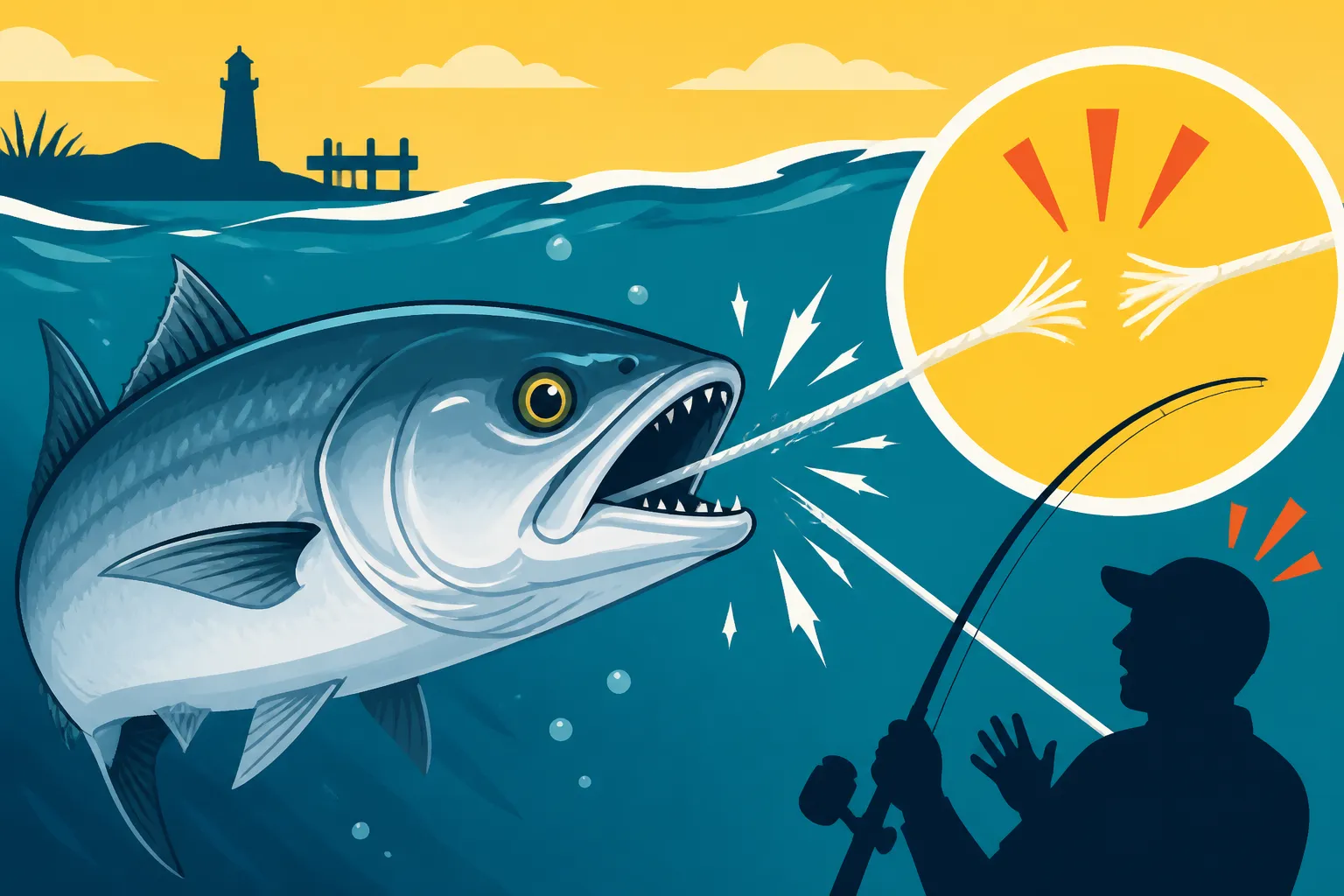
Let's get straight to it: do bluefish bite through fishing line? Absolutely. And they do it with alarming efficiency. It's one of the most common frustrations for anglers targeting these aggressive, powerful fish, whether you're chasing a blitz in the Bay or casting into the surf. Their dentistry is perfectly evolved for slicing through schools of baitfish, and unfortunately, your fishing line often gets caught in the crosshairs.
Why Bluefish Are So Destructive
Imagine a pair of tiny, super-sharp scissors designed for high-speed cutting, then give that scissor incredible jaw strength and an insatiable appetite. That's essentially what you're up against with a bluefish. Their mouths are packed with razor-sharp, triangular teeth that are perfectly aligned for shearing. They don't just "chew" their food; they slash and gorge.
When a bluefish strikes a lure or bait, it's often a violent, committed attack. If the hook doesn't immediately set firmly in the corner of its mouth, or if the fish takes the lure deep, those teeth can easily come into contact with your line. Compounded by the fish's thrashing head shakes and powerful runs, a soft, supple monofilament or even standard fluorocarbon line doesn't stand a chance. It's like trying to cut a steak with dental floss – it's just not going to work. Many anglers have stories of reeling in a perfectly good lure, only to find the line frayed or cleanly cut just above the leader, a testament to the bluefish's formidable dental work.
The Anatomy of a Bite-Off
A bluefish bite-off isn't usually a slow, grinding process. It's often instantaneous, happening during that initial strike or in the first few seconds of the fight. Here’s how it typically unfolds:
- The Strike: A bluefish hits your lure with incredible force and speed. Because they're ambush predators, they're not just nipping; they're trying to engulf.
- Lure Position: If the lure goes deep into the mouth, the line has a high chance of brushing against those sharp teeth. Even a momentary contact under tension can be enough.
- Head Shakes and Runs: Bluefish are notorious for their aggressive head shakes and strong, short runs. These movements, coupled with the angler pulling back, create immense pressure and friction on the line where it contacts the teeth.
- Shear Force: The sharp, inward-curving teeth act like tiny blades. With enough pressure and movement, they simply shear through the line. Finer diameter lines, like lighter braided lines or monofilaments, are particularly susceptible. It's less about the line strength and more about its abrasion resistance to sharp, cutting edges. Even a 50 lb test monofilament, while strong in a straight pull, can be easily cut by a bluefish if it brushes against a tooth.
Understanding this process is the first step in preventing it. You're not just fighting a fish; you're protecting your line from a living set of shears.
Choosing the Right Mainline for Bluefish
While your mainline isn't the primary defense against bluefish teeth (that's what leaders are for, which we'll get to), selecting the right type can still play a role in your overall success and confidence. Different lines offer different characteristics, and understanding their pros and cons for bluefish fishing is key.
Braided Line: Strength vs. Abrasion
Braided line is incredibly popular for saltwater fishing in Maryland, and for good reason. It offers superior strength-to-diameter ratio, virtually no stretch for excellent sensitivity, and long casting capabilities. You can find a huge variety of quality braided lines on Amazon that are perfect for your main spool. However, when it comes to bluefish, braid has a critical weakness: its susceptibility to cutting.
Think of braided line as a bundle of very thin, strong fibers woven together. While incredibly strong in tensile strength, those individual fibers are easily cut by a sharp edge. A bluefish tooth can slice through braided line like a hot knife through butter if there's no leader protecting it. This doesn't mean you shouldn't use braid – far from it! The sensitivity and power of braid are fantastic for feeling those aggressive bluefish strikes and setting the hook firmly. The trick is to always pair it with a proper leader, which we'll discuss next. Without a leader, your expensive braided line will become a sacrifice to every bluefish that takes your lure deep. When you're fishing for species like Maryland Striped Bass Fishing Techniques or even How to Fish Maryland's Chesapeake Bay by Season where bluefish might be a bycatch, knowing this distinction is vital.
Monofilament and Fluorocarbon: The Trade-offs
Traditional monofilament line, made from a single strand of nylon, has been a staple for decades. It offers excellent knot strength, a forgiving stretch that can absorb powerful runs, and is generally more affordable. However, against bluefish teeth, monofilament is highly vulnerable. Its relatively soft, pliable nature makes it easy for those sharp teeth to pinch and cut through, especially in lighter pound tests. If you're using straight monofilament for bluefish, expect frequent bite-offs.
Fluorocarbon line, on the other hand, is a step up. Made from polyvinylidene fluoride, it boasts higher abrasion resistance than monofilament and is nearly invisible underwater, a huge advantage in clear water or when fish are wary. Many anglers choose fluorocarbon for their leaders because of these properties. While significantly tougher than monofilament, it's crucial to understand that even heavy-test fluorocarbon is not entirely bite-proof against a determined bluefish. A larger, more aggressive bluefish, or one that takes the lure deep and thrashes, can still sever a fluorocarbon leader. It's a trade-off: you gain stealth, but you still have a vulnerability compared to wire. For smaller bluefish or when they're not biting aggressively, a stout fluorocarbon leader might suffice, but never underestimate the power of a bluefish's jaws.
| Line Type | Strength-to-Diameter | Stretch | Abrasion Resistance | Bluefish Bite Vulnerability | Primary Use for Bluefish |
|---|---|---|---|---|---|
| Braided Line | Excellent | Very Low | Low | Very High | Mainline (always with leader) |
| Monofilament | Good | High | Moderate | High | Not recommended as main bluefish line |
| Fluorocarbon | Good | Low | Good | Moderate-High | Leader (heavy test), some mainlines |
| Wire Leader | High | None | Excellent | Very Low | Essential Leader |
The Indispensable Role of Leaders
This is where the rubber meets the road. If you want to consistently catch bluefish in Maryland and avoid constant frustration and tackle loss, a proper leader is not just recommended, it's essential. This goes for whether you're targeting them specifically, or just encountering them while fishing for other Maryland's Most Popular Saltwater Gamefish like rockfish.
Why You Need a Leader When Chasing Bluefish
Think of your leader as a sacrificial shield. It’s a short section of tougher, more bite-resistant material tied between your main fishing line and your lure or hook. Its sole purpose is to take the brunt of the bluefish's sharp teeth, protecting your more vulnerable mainline. Without a leader, you’re basically sending your lure into a dental grinder with a flimsy string attached.
Beyond just preventing bite-offs, leaders can also play a role in lure presentation. While wire leaders can sometimes impede a lure's natural action, a carefully chosen leader can actually help your lure perform better or be less visible to wary fish. However, for bluefish, protection almost always trumps stealth. If the leader is too light or too short, the bluefish will simply bite through it or up above it. For a species known for its voracious appetite during Bluefish Runs in Maryland's Chesapeake Bay, having that protective barrier is non-negotiable.
Wire Leaders: The Ultimate Protection
When bluefish are the target, or even a likely bycatch, a wire leader is your best friend. Period. There's simply no substitute for metal when it comes to resisting those sharp teeth.
There are a few types of wire leaders you’ll encounter:
- Single-strand wire: This is typically stainless steel or titanium-nickel alloy. It's very stiff and offers incredible bite resistance. It can be a bit tricky to work with, often requiring haywire twists or crimps for connections. Its stiffness can affect lure action, but for fast-moving lures or bait, it's often negligible.
- Multi-strand (braided) wire: Made from several fine strands of wire woven together, this type is much more flexible and knot-friendly than single-strand. It's often nylon-coated for added protection against kinks and corrosion. While slightly less bite-proof than a solid single strand, it's still vastly superior to mono or fluorocarbon. It's a popular choice for its balance of protection and ease of use. You can find excellent quality multi-strand wire leaders, often pre-rigged with swivels and snaps, on Amazon.
When to use wire leaders: Always, if you are specifically targeting bluefish, or if they are prevalent in the area you are fishing (e.g., during How to Fish a Chesapeake Bay Bluefish Blitz). You might sacrifice a little lure action or stealth, but you'll save a lot of lures and a lot of fish. The feeling of reeling in a bluefish knowing your line is secure is worth any minor trade-off. For other species like Maryland Flounder Size Limit, you might opt for a less conspicuous fluorocarbon leader, but for bluefish, go wire.
Heavy Fluorocarbon Leaders: A Stealthier Alternative
As mentioned earlier, heavy fluorocarbon can offer a compromise between stealth and abrasion resistance. If you’re fishing in extremely clear water, or for smaller bluefish that aren’t quite as aggressive, a 50-80lb test fluorocarbon leader might be enough to prevent most bite-offs. It's much less visible than wire, which can be an advantage if the fish are finicky, though bluefish aren't usually known for their shyness!
However, it's critical to manage your expectations. A large, angry bluefish can still bite through heavy fluorocarbon, especially if it's frayed or nicked from previous encounters. Many anglers, including myself, have experimented with heavy fluorocarbon only to learn the hard way that wire is king when bluefish are truly active. If you choose fluorocarbon, ensure it's a short leader (12-18 inches) and check it constantly for nicks and abrasions. Replace it immediately if you see any signs of wear. Brands like Seaguar or Berkley make excellent fluorocarbon leader material, readily available on Amazon, that offer some of the best abrasion resistance if you decide to go this route.
Terminal Tackle and Techniques to Minimize Losses
Beyond choosing the right line and leader, your terminal tackle and how you approach the fight can significantly impact your success rate against bluefish and reduce those dreaded bite-offs.
Hooks and Lures: Avoiding the "Swallowing" Risk
The type and size of your lure and hook can make a difference. Bluefish, with their large mouths, will often engulf smaller lures entirely, putting the line directly in harm's way.
- Larger Lures: When possible, use lures that are substantial enough that the bluefish can't easily swallow them whole. A bigger metal spoon or a longer plug might get caught on the edge of the mouth more often than a tiny jig. For Best Lures for Bluefish Blitzes in the Bay, larger, sturdy options are usually preferred.
- Sturdy Hooks: Bluefish are powerful fighters, and cheap, flimsy hooks can bend or break. Invest in quality, strong hooks that can withstand their power.
- Single Hooks vs. Trebles: Some anglers prefer to swap treble hooks on lures for large, strong single hooks. Single hooks tend to hook more securely in the jaw and are less likely to be swallowed deep where the line is vulnerable. They're also easier on the fish if you're practicing catch and release.
Knots and Connections: The Weakest Link
Even the toughest line and leader are only as strong as your knots. A poorly tied knot can be the weakest point in your entire setup, leading to break-offs even without a bluefish's teeth involved.
- Strong Knots for Mainline to Leader: If you're using braided mainline to a fluorocarbon or wire leader, a strong, slim knot is essential. The FG knot, Albright knot, or a double Uni knot are popular choices for connecting two different line types. Practice these knots until you can tie them reliably.
- Swivels and Snaps: When using wire leaders, small, strong swivels and snaps are commonly used. A quality barrel swivel or ball-bearing swivel can prevent line twist, especially when using spoons or spinning lures. A sturdy snap allows for quick lure changes, which is helpful when the bluefish are biting hard and you need to get back in the water quickly. Just ensure the snap is strong enough to handle a bluefish's power without straightening out.
- Crimps: For heavier single-strand wire leaders, crimps are often used to create loops and attach swivels or lures. Make sure you use the correct size crimp for your wire and a proper crimping tool for a secure connection.
Playing the Fish: Minimizing Line Contact
How you fight a bluefish can also influence whether you end up with a bite-off.
- Keep Tension: Maintain constant tension on the line. Slack line gives the bluefish more freedom to thrash and saw at the line with its teeth.
- Rod Angle: Try to keep your rod tip high and maintain an angle that pulls the fish's head up and away from the line. This can help keep the line out of its mouth as much as possible, especially if the lure isn't deeply swallowed.
- Quick Landing: Once the bluefish is tired and at the boat or shore, land it quickly and efficiently. The longer it thrashes at boatside, the more chances it has to chew through the line, even a wire leader. Use a net or a lip-gripper if possible to secure the fish quickly. Remember to check local Maryland Fishing Size and Catch Limits by Species before deciding whether to keep your catch.
By combining the right tackle—especially a robust leader—with sound fishing techniques, you can drastically reduce the number of bluefish bite-offs you experience. It's all about being prepared for these aggressive, toothy predators that make Maryland fishing so exciting. Next time you're heading out to the Bay or ocean, double-check your leader and get ready for some thrilling action!
Disclaimer
This article is for general informational purposes only and does not constitute professional advice. Laws, prices and regulations vary by location and change over time. Consult a qualified professional for guidance on your specific situation.