Best Lures for Bluefish Blitzes in the Bay
There's nothing quite like the electrifying chaos of a bluefish blitz in Maryland's Chesapeake Bay. One moment, the water is calm, and the next, it erupts into a violent, frothing spectacle of feeding fish, diving birds, and pure adrenaline. It's exhilarating, but it can also be frustrating if you're throwing the wrong lure and missing out on the action. This guide is all about cutting through that confusion, helping you pick the absolute best lures to get in on the frenzy and make the most of those incredible bluefish blitzes.
Understanding the Bluefish Blitz Phenomenon in Maryland
Before we dive into the tackle box, it’s really helpful to understand what a bluefish blitz actually is and why it happens in Maryland's waters. These aren't just fish casually feeding; this is an all-out, coordinated attack that creates some of the most exciting fishing you'll ever experience. Knowing the "why" and "how" can significantly improve your chances of being in the right place at the right time with the right gear.
What is a Bluefish Blitz, Really?
Imagine a pack of wolves, but underwater and with fins and razor-sharp teeth. That's essentially a bluefish blitz. These aggressive predators work together to corral schools of baitfish – often bunker (Atlantic menhaden), silversides, or mullet – pushing them to the surface. Once the bait is trapped against the surface, the bluefish go into a feeding frenzy, slashing through the schools with incredible speed and power. This intense surface activity attracts sea birds, which also dive into the chaos, creating a spectacle that's hard to miss.
It's a high-energy event, often characterized by boiling water, thrashing fish, and diving gulls. The key here is the sheer aggression and speed. Bluefish are built for the chase, and during a blitz, they're not finicky eaters. They're looking for anything that looks like a struggling, fleeing baitfish, and they hit it with ferocity. This is why your lure choice needs to stand up to the punishment and mimic that frantic, desperate action.
Why Bluefish Love Maryland's Bay Waters
Maryland's Chesapeake Bay and its coastal waters offer an ideal environment for bluefish, especially during their migratory periods. The Bay acts as a massive nursery and feeding ground, teeming with the very baitfish that bluefish crave. As the seasons change, particularly in late spring, through summer, and into the fall, bluefish move into these nutrient-rich waters. The water temperatures are just right, and the abundance of forage makes it a prime location for them to fatten up.
You'll often find strong Bluefish Runs in Maryland's Chesapeake Bay in specific areas where baitfish congregate, such as channel edges, points, and the mouths of tributaries. These are natural ambush points where bluefish can easily trap and disorient their prey. Understanding these patterns and locations is crucial, as it guides you to where the next blitz is likely to erupt. It's all about being prepared for that explosive moment when the feeding begins.
Spotting a Blitz: Signs and Signals
Knowing how to spot a bluefish blitz is half the battle. The most obvious sign is often the presence of diving birds, particularly gulls and terns, which will be frantically swooping down to pick off disoriented baitfish or scraps left by the bluefish. If you see a cluster of birds working a specific area of the water with unusual intensity, chances are there's a blitz happening below.
Beyond the birds, look for visual cues on the water itself. You'll see patches of "boiling" or "splashing" water, often with baitfish showering out of the surface as they try to escape. Sometimes, you'll even see the dark shapes of the bluefish themselves, or the tell-tale green-blue flash of their backs as they turn. Pay attention to changes in water color too; often, a blitz will stir up the bottom or leave an oily sheen from the dismembered baitfish. Best Time of Day to Fish Maryland's Chesapeake Bay can often coincide with these blitzes, especially around dawn and dusk, or when How Tides Affect Fishing in Maryland's Chesapeake Bay push bait into certain areas. Keep a keen eye on those channel edges, humps, and points, as these are common staging areas for bluefish to corner their prey.
Essential Characteristics of Effective Bluefish Lures
When bluefish are in a blitz, they aren't exactly shy. But that doesn't mean any lure will do. In fact, selecting the right type of lure can make a huge difference, not just in catching fish, but in keeping your tackle intact. These fish are incredibly strong, aggressive, and armed with some serious dental work.
Durability is Key: Dealing with Razor-Sharp Teeth
This cannot be stressed enough: bluefish have teeth like tiny, incredibly sharp razor blades. They're designed for slashing and tearing, not gentle biting. If you throw a flimsy lure with weak hooks or an easily cut leader, you're going to be incredibly frustrated. I’ve seen countless anglers lose a favorite lure to a bluefish simply because the tackle wasn’t up to the task.
You need lures with heavy-duty components. Look for strong, saltwater-grade treble or single hooks that won't straighten out under pressure. Many seasoned anglers opt to replace stock hooks on new lures with stronger, corrosion-resistant versions right out of the box. A wire leader is often a non-negotiable for bluefish, as they can snip through monofilament or fluorocarbon like butter. While it might reduce your bites slightly on more finicky species, for blitzing bluefish, it's a necessary evil to ensure you actually land your catch and keep your expensive lures.
Action That Mimics Fleeing Baitfish
During a blitz, bluefish are focused on one thing: a frantic, easy meal. Your lure needs to mimic this perfectly. Think about how a baitfish reacts when being chased by a predator – it dashes, darts, changes direction erratically, and often tries to get to the surface to escape. This is the action you want to replicate.
Surface poppers create a commotion that sounds like a struggling baitfish, drawing explosive strikes. Erratic swimbaits, jerkbaits, and metal jigs retrieved at high speeds or with sharp jerks will dart and flash, looking like a panicked fish desperately trying to escape. A lure that simply swims in a straight, predictable line isn't going to get the same attention as one that seems to be in sheer panic. The more realistic the "flight" you can simulate, the more likely you are to trigger that aggressive predatory instinct.
Weight and Casting Distance for Reaching the Action
Bluefish blitzes often occur at a distance from shore, or if you're on a boat, the school might be moving quickly, just out of casting range. This is where the weight of your lure becomes paramount. You need something heavy enough to cast a significant distance, cutting through the wind and reaching the heart of the action. A small, lightweight lure, no matter how good its action, is useless if it can't get to where the fish are.
This is especially true for How to Fish a Chesapeake Bay Bluefish Blitz from shore or from a pier. Lures designed for casting distance, often compact and dense, are invaluable. They allow you to hit the edge of the blitz, or even cast beyond it and retrieve through the fish, without spooking the main school. Having a few different weight options in your tackle box means you can adapt to various conditions, from a calm day when a lighter lure might suffice, to a windy day where maximum casting distance is crucial.
Top Lure Categories for Conquering Bluefish Blitzes
Now that we understand the "why" and "what," let's talk about the "how" – specifically, which lures consistently perform during those incredible bluefish blitzes in the Chesapeake Bay. While bluefish aren't generally picky, some lures are just better suited for the task due to their durability, action, and casting ability.
Metal Jigs and Spoons: The Classic Blitz Busters
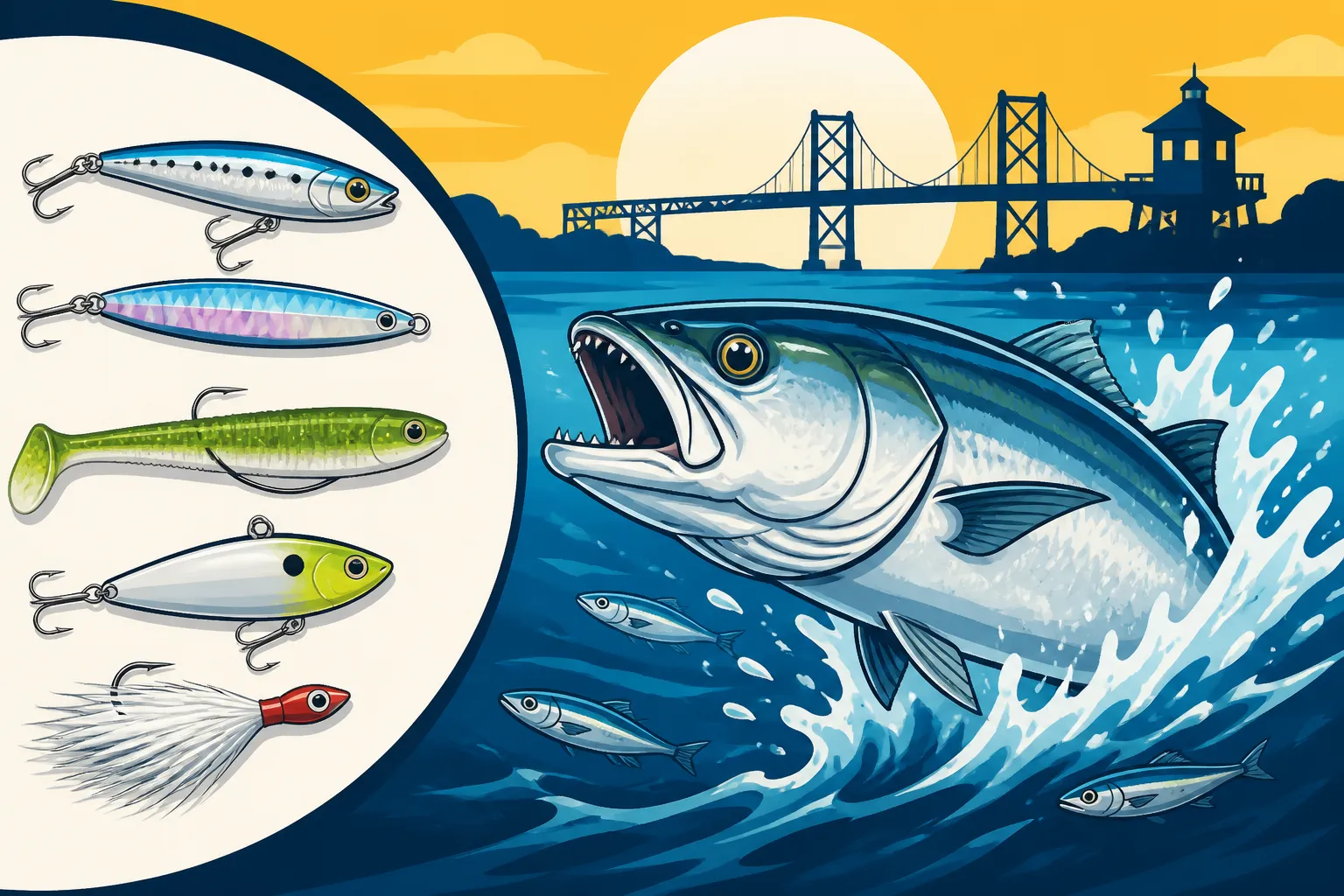
When it comes to bluefish, you can't go wrong with metal jigs and spoons. These are often the first lures many seasoned anglers reach for during a blitz, and for good reason. Their compact, dense design allows for incredible casting distance, which is often crucial when the blitz is just out of reach. Brands like Hopkins, Kastmaster, and Sting Silvers are household names among saltwater anglers. You can often find a great selection of these on platforms like Amazon, making it easy to stock up before your next trip.
Pros:
- Exceptional Casting Distance: Their weight means you can heave them a mile, reaching distant blitzes.
- Durability: Made of solid metal, they can withstand countless bluefish attacks.
- Versatile Action: Can be retrieved fast and erratic, jigged vertically, or allowed to flutter down.
- Flash: The metallic flash mimics baitfish scales, triggering strikes.
Cons:
- Can Twist Line: Very fast retrieves without a swivel can lead to line twist.
- Heavy for Prolonged Casting: Your arm might get a workout if you're casting heavy jigs all day.
To use them effectively, simply cast them as far as you can into or beyond the blitz. Then, reel in quickly, occasionally adding a twitch or pause to give it an erratic, fleeing action. The faster you retrieve, the more desperate the baitfish imitation. Don't be afraid to experiment with different sizes; sometimes a smaller, faster jig will outperform a larger one, and vice-versa, depending on the size of the baitfish the bluefish are currently targeting.
Poppers and Stickbaits: Surface Excitement
There's nothing quite like the explosive thrill of a bluefish hitting a topwater lure. Poppers and stickbaits are designed to create commotion on the surface, perfectly mimicking a struggling baitfish or one showering across the water. The visual strike is absolutely electrifying and often makes these lures a favorite for sheer excitement. Common examples include Cotton Cordell poppers, Heddon Zara Spooks (or similar "walking-the-dog" style stickbaits), and various chuggers. These types of lures are also readily available from online retailers, making it convenient to explore different shapes and sizes.
Pros:
- Incredible Strikes: Bluefish will often engulf these with a violent, splashy explosion.
- Visual Excitement: Watching the take on the surface is an experience in itself.
- Great for Locating Fish: The noise can draw fish from a good distance.
- Fools Aggressive Fish: Bluefish in a blitz are not subtle, and these lures match their energy.
Cons:
- Less Durable Hooks: Treble hooks can sometimes be bent or broken by large blues.
- Not for Deep Fish: Only effective when fish are actively feeding on the surface.
- Shorter Casting Distance: Generally don't cast as far as metal jigs.
When working a popper, use short, sharp downward jerks of the rod tip, reeling in the slack to make the lure "pop" and splash. For stickbaits, master the "walk-the-dog" retrieve by rhythmically twitching the rod tip while reeling to make the lure zigzag across the surface. This erratic movement is irresistible to bluefish looking for a panicked meal. Always check your hooks after a few fish, as those sharp bluefish teeth can do a number on them.
Soft Plastics on Jig Heads: Versatility and Natural Appeal
While bluefish are often drawn to aggressive, hard lures, don't overlook the versatility and natural appeal of soft plastics rigged on jig heads. These can be particularly effective when the bluefish are being a little more finicky (yes, even bluefish can have their moments!) or when the blitz is starting to die down and the fish are dropping a bit deeper. Paddle tails, jerk shads, and curly tail grubs in baitfish colors like white, chartreuse, or silver can be deadly. You can buy these in bulk on Amazon, which is a good idea given how often they get torn up by bluefish.
Pros:
- Natural Presentation: Soft plastics have a very realistic look and feel in the water.
- Versatility: Can be retrieved at various depths and speeds, mimicking different baitfish behaviors.
- Economical: Often cheaper than hard lures, especially if bought in bulk.
- Good Action at Slower Speeds: Can still have good action even if you're not burning them in.
Cons:
- Durability Issues: Bluefish teeth will shred soft plastics, so bring plenty of spares.
- Shorter Casting Distance: Unless paired with a heavy jig head, they won't cast as far as metal.
The key to fishing soft plastics for bluefish is to match your jig head weight to the depth and current. In a blitz, you'll likely want a heavier head (like 1/2 oz to 1 oz or more) to cast effectively and get the lure down quickly if needed. Retrieve with a steady crank, or incorporate a "swim and pause" technique, letting the lure flutter down slightly before cranking again. The paddle tail will create a tempting vibration, while jerk shads can be twitched aggressively. Even though they get chewed up, they're often worth the cost for the bites they generate.
Here's a quick comparison of these top lure types:
| Lure Type | Primary Action/Appeal | Best Use Case | Pros | Cons |
|---|---|---|---|---|
| Metal Jigs & Spoons | Flash, erratic flutter | Distant blitzes, deep fish, fast retrieval | Max casting distance, highly durable, versatile | Can twist line, heavy for continuous casting |
| Poppers & Stickbaits | Surface commotion, splash | Active surface blitzes, high excitement | Explosive visual strikes, attracts fish from afar, thrilling | Hooks prone to damage, not for subsurface fish, shorter casting distance |
| Soft Plastics (on jig) | Natural appearance, subtle | When fish are finicky, slightly deeper bites | Realistic look/feel, versatile retrieval, economical (in bulk) | Easily shredded by teeth, requires heavier jig head for distance |
Retrieval Techniques for Maximizing Your Bluefish Blitz Success
Having the right lure is only half the battle. How you present that lure – your retrieval technique – can be just as crucial, especially when dealing with the frenetic energy of a bluefish blitz. Bluefish are opportunists during these feeding events, but understanding their predatory behavior can give you a significant edge.
High-Speed Retrieves: Mimicking Escaping Prey
When bluefish are in a blitz, they are in full-on attack mode, chasing down and slashing at baitfish. This means your lure needs to look like a baitfish that's absolutely terrified and trying to get away as fast as possible. A slow, languid retrieve will often be ignored. The general rule for blitzing bluefish is: the faster, the better!
Start by casting your lure beyond the visible action or to the edges of the blitz. As soon as your lure hits the water, engage your reel and crank it in at a high rate of speed. Think about mimicking a baitfish darting for its life. Sometimes, a completely steady, fast retrieve is all it takes. Other times, adding quick, sharp jerks of the rod tip throughout the retrieve can impart an erratic, panic-stricken action that triggers an even more aggressive strike. Don't be afraid to burn that lure back to the boat or shore; bluefish are built for speed and will readily chase down a fast-moving target. Check out Techniques for Catching Bluefish in Maryland for more ideas on how to work your lures.
Varying Depths and Actions: Adapting to the Blitz
While bluefish blitzes are often highly visible on the surface, the fish aren't always just in the top few feet of the water column. Sometimes, the initial aggressive surface feeding might die down, but the fish are still feeding deeper beneath the surface commotion. Or, perhaps the baitfish are being pushed to a specific depth by current or structure. This is where varying your depths and actions becomes crucial.
If you're getting no bites on the surface or with a fast retrieve, try letting your metal jig sink for a few seconds before starting your retrieve. Count down to estimate the depth. You can also try a "yo-yo" retrieve where you let the jig sink, then reel up quickly, then let it sink again, mimicking a struggling baitfish that's rising and falling in the water. For soft plastics, varying jig head weights allows you to probe different depths. The key is to be adaptable; if one retrieve isn't working, don't be afraid to change it up and see what the fish respond to. Bluefish might be aggressive, but they can also be selective about where in the water column they want to eat.
Strategic Casting: Hitting the Edges of the Chaos
It might seem counterintuitive, but sometimes casting directly into the center of a bluefish blitz isn't the most effective strategy. While you might get a hook-up, you can also spook the main school of baitfish or the bluefish themselves, causing the blitz to disperse prematurely. A more strategic approach is often to cast ahead of the moving school, or to the edges of the visible commotion.
Think of it this way: when bluefish are pushing bait, the baitfish are constantly trying to escape. They'll often try to break free from the sides of the main school. By casting your lure to the periphery of the blitz, or leading the fish by casting into their probable path, you're presenting your lure as a single, desperate escapee, which can be an easier target for an individual bluefish. This also allows you to retrieve through the main body of the fish without casting over their heads and potentially lining them. It's about being smart and observing the patterns of the blitz, rather than just throwing blindly into the fray. How to Fish a Chesapeake Bay Bluefish Blitz effectively means thinking a few steps ahead of the fish.
Disclaimer
This article is for general informational purposes only and does not constitute professional advice. Laws, prices and regulations vary by location and change over time. Consult a qualified professional for guidance on your specific situation.