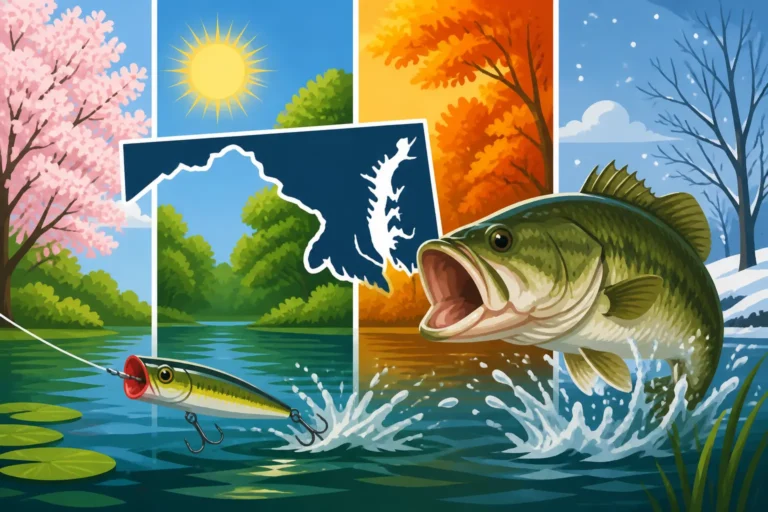
Best Time of Year to Fish the Potomac for Smallmouth
Oh, the quest for smallmouth bass on Maryland's majestic Potomac River! It's a question I hear all the time: "When's the absolute best time to go?" The truth is, there's no single magic day, but rather a seasonal rhythm that dictates when these feisty fish are most active and willing to bite. Anglers often get frustrated trying to hit the water when conditions just aren't right, or when they're using the wrong approach for the season. This comprehensive guide will break down the smallmouth bass fishing opportunities on the Potomac throughout the year, helping you understand their behavior and pinpoint those prime windows for success.
The Rhythmic Dance of Seasons: Smallmouth Behavior on the Potomac
Understanding smallmouth bass behavior is the foundation of consistent success on the Potomac. These fish are creatures of habit, yet their habits shift dramatically with the changing seasons, primarily driven by water temperature, light, and the availability of their favorite snacks.
Understanding Their Habitat Preferences
Smallmouth bass are quintessential river fish, utterly in love with moving water and structure. On the Potomac, that means targeting rocky bottoms, ledges, submerged boulders, current seams, and eddies. They aren't usually found loafing in vast, open, featureless areas. Instead, they position themselves strategically to ambush prey or conserve energy. As the seasons progress, their preferred depth and the specific type of structure they inhabit can change. For example, in cooler water, they might gravitate towards deeper pools where temperatures are more stable. When the water warms up, they might be much shallower, especially in the mornings and evenings, seeking out riffles and oxygenated water. Knowing where to look for them is half the battle, and that location is heavily dictated by the time of year. If you're looking for prime spots, check out Fishing the Nontidal Upper Potomac for Smallmouth Bass.
The Influence of Water Temperature
Water temperature is arguably the most crucial factor influencing smallmouth bass activity. It dictates their metabolism, their feeding drive, and their reproductive cycles. Smallmouth have a preferred temperature range where they are most comfortable and active. Outside of this range, they become lethargic or seek refuge in areas with more stable temperatures.
- Cold Water (Below 45°F): During the coldest parts of winter, smallmouth are very inactive. They'll typically hold in the deepest, slowest pools, conserving energy. Bites are subtle and infrequent.
- Cooling Water (45-55°F): As water begins to warm in early spring or cool in late fall, smallmouth start to become more active. They're looking for easy meals but might still be somewhat sluggish. This is often when pre-spawn or late-fall feeding frenzies occur.
- Ideal Activity Range (58-72°F): This is the sweet spot for smallmouth. They are actively feeding, spawning, and generally aggressive. If you hit the Potomac when the water is in this range, you're in for a treat.
- Warm Water (75°F+): In the heat of summer, smallmouth can become stressed. They'll seek out cooler, more oxygenated water, which often means deeper holes, shaded areas, or areas with stronger current. Early morning and late evening bites become paramount.
Understanding these temperature zones helps you choose the right baits and techniques, from slow, deep presentations in cold water to fast-moving topwaters in the right summer conditions.
Spring Fling: Potomac Smallmouth in Pre-Spawn and Spawning Modes
Spring is a highly anticipated time for smallmouth anglers on the Potomac, offering some of the most consistent and exciting action of the entire year. As the river thaws and water temperatures begin their upward climb, these bronze beauties start to stir from their winter slumber, initiating a period of intense feeding and reproduction.
Pre-Spawn Aggression (March – April)
As winter grudgingly gives way to spring, typically from early March through April, the Potomac River's smallmouth bass enter their pre-spawn phase. This is a truly fantastic time to target them. The fish are moving out of their deep wintering holes and migrating towards shallower, rockier areas where they will eventually spawn. They are absolutely ravenous, needing to build up energy reserves for the strenuous spawning process ahead. The water temperatures usually range from the low 40s, creeping up into the low to mid-50s.
During this period, smallmouth will often stage in slightly deeper runs adjacent to future spawning grounds, like rocky flats or gravel bars. Look for them around current breaks, submerged boulders, and the edges of drop-offs where they can ambush baitfish and crayfish. They're not particularly picky right now and will often smash a variety of lures. Jerkbaits are phenomenal for eliciting aggressive strikes, as are lipless crankbaits and spinnerbaits. Jigs, especially those with crayfish imitators, are also highly effective when fished slowly along the bottom. You can find a fantastic selection of these pre-spawn essentials on Amazon, often with reviews from other river anglers. Hitting the Potomac during this aggressive phase can lead to some truly memorable catches, often yielding larger fish eager to pack on weight.
The Spawning Window (Late April – May)
The peak spawning period for Potomac smallmouth typically occurs from late April through May, when water temperatures consistently settle into the mid-50s to low 60s. During this time, male smallmouth move onto shallower gravel or rocky bottoms to fan out circular nests, and females join them to lay eggs. The males then guard these nests ferociously, attacking anything that comes too close. This makes them highly vulnerable to anglers.
While it can be tempting to target fish directly on their beds, many anglers practice catch-and-release during this sensitive period to allow the fish to successfully reproduce. If you do encounter spawning fish, consider quick, respectful handling and immediate release. After the spawn, the females often retreat to deeper water to recover, while the males remain on the beds for a period. Post-spawn, both sexes enter another aggressive feeding period to regain energy lost during spawning. This can be another fantastic window, often extending into early June. During this time, topwater baits, small swimbaits, and finesse presentations like tube jigs can be incredibly effective. Always be mindful of the rules, like the Maryland Smallmouth Bass Catch and Release Rules, especially during these critical periods.
Summer Strategies: Navigating the Potomac's Warm Water
As the calendar flips to summer, the Potomac River transforms. Warm water presents both challenges and unique opportunities for smallmouth bass anglers. The key to summer success is understanding how these fish adapt to rising temperatures and increased recreational pressure.
Early Summer (June) – Post-Spawn Recovery
Early summer, typically June, can be a transitional but still highly productive period on the Potomac. Water temperatures are generally in the mid-60s to low 70s, which is still well within the smallmouth's comfort zone for active feeding. Many fish are in a post-spawn recovery phase, meaning they're still eager to eat and regain their strength. The river is often flowing nicely, and insect hatches can be abundant.
During this time, smallmouth will spread out more across the river, utilizing a wider variety of cover. They'll still be around rocky current breaks, but also near submerged logs, weed beds, and any structure that offers a bit of shade or a current seam. Mornings and evenings offer the best bite, as the sun isn't as high and the water is a bit cooler. Topwater lures can be incredibly exciting during this period, especially as the sun begins to creep above the tree line. Pop-R's, walking baits, and buzzbaits can provoke explosive strikes. Spinnerbaits and crankbaits worked through riffles and current are also very effective. For those who love the flexibility of a small craft, Kayak Fishing Techniques for Maryland Waters can be particularly effective during early summer when the water is inviting.
Mid to Late Summer (July – August) – Seeking Refuge
The dog days of summer, from July through August, bring the warmest water temperatures to the Potomac, often climbing into the upper 70s and even into the 80s. This is when smallmouth bass behavior shifts significantly. The fish become more lethargic during the brightest, hottest parts of the day and will actively seek refuge in cooler, more oxygenated water. This means focusing your efforts on specific types of structure and fishing during low-light conditions.
Look for smallmouth in deeper pools, around strong current breaks, where they can escape the sun and find cooler water. Shaded areas provided by overhanging trees or large boulders are also prime spots. The bites will often be concentrated at dawn, dusk, and even into the night. Topwater action can still be fantastic during these low-light periods, as the fish feel more secure coming to the surface. However, during the day, finesse tactics become key. Small tube jigs, soft plastic worms, and grubs fished slowly along the bottom, mimicking crayfish or small baitfish, are highly effective. You might also want to check Amazon for some of the best finesse jigs and soft plastics, as having a variety can make all the difference when fish are finicky. Accurate casting to isolated cover and stealthy approaches are paramount when the water is clear and the sun is high. Remember that during these hot months, proper fish handling is even more critical for their survival after release.
Autumn's Bounty: The Fall Feeding Frenzy on the Potomac
Just as spring offers an energetic start to the smallmouth season, fall provides a powerful, often overlooked, grand finale. As the air chills and the water temperatures begin their gradual descent, Potomac smallmouth bass enter another period of intense feeding, driven by the instinct to pack on weight for the lean winter months ahead.
Early Fall (September – October) – Building Winter Stores
Early fall, covering September and often much of October, is arguably one of the "best" times to fish the Potomac for smallmouth bass, especially for those seeking aggressive strikes and good numbers of fish. Water temperatures are typically in the upper 60s and gradually drop into the low 50s. This temperature range is ideal for smallmouth, as their metabolism is high, and they know winter is coming. They feed relentlessly, often in predictable patterns, making them a joy to target.
During this time, smallmouth will actively hunt along current seams, around rocky outcroppings, and in the edges of deeper pools. They're often less spooky than in summer, allowing for more aggressive presentations. Spinnerbaits, swimbaits, and crankbaits that mimic shad or other baitfish are incredibly effective. Jerkbaits can also draw vicious strikes as the water cools. The fish are often schooled up, so if you find one, there are likely more in the vicinity. Falling leaves, while beautiful, can sometimes make for challenging fishing, as leaf litter can foul lines and lures. However, the overall activity level of the smallmouth during this period makes it well worth navigating any minor inconveniences.
Late Fall (November) – The Last Hurrah
As November progresses and the Potomac's water temperatures dip further into the 40s, the smallmouth bass fishing transitions from an aggressive frenzy to a more deliberate, albeit still productive, affair. This is often the "last hurrah" before winter truly sets in and the fish become largely dormant. Smallmouth begin to migrate to their deeper wintering areas, often large, slow-moving pools with plenty of rocky structure.
While they may not be as overtly aggressive as in early fall, they will still feed opportunistically. Slower presentations are the name of the game here. Jigs, especially those with subtle action like hair jigs or creature baits, become incredibly effective. Vertical jigging in deeper holes can entice strikes from lethargic fish. Crankbaits with a tight wobble that can be worked slowly along the bottom might also trigger a bite. Anglers who are patient and willing to slow down their presentation can still be rewarded with some solid catches, often including some of the larger smallmouth that are less pressured. Remember that fishing conditions can change rapidly with late fall weather, so always check the forecast. For more general advice on seasonal fishing, take a look at Best Time of Year to Fish in Maryland.
Beyond the Calendar: Key Factors Influencing Potomac Smallmouth Success
While seasons provide a broad framework for understanding smallmouth behavior, success on the Potomac ultimately comes down to adapting to real-time conditions. Factors like water level, clarity, and sudden weather changes can completely alter a fishing day, regardless of the time of year.
Water Level and Clarity
The Potomac River is a dynamic system, and its water levels and clarity can fluctuate dramatically. Heavy rains upstream can cause the river to rise rapidly, become muddy, and increase current. Conversely, prolonged dry spells can lead to very low, clear water. Both extremes require different approaches.
- High, Muddy Water: When the river is high and off-color, smallmouth often move out of the main current into eddies, backwaters, and slower pockets where the current isn't as strong and the water is slightly clearer. They rely more on scent and vibration to find food. This is a time for larger, dark-colored lures that create a lot of vibration, like spinnerbaits with Colorado blades or rattling crankbaits. Fishing close to the banks, especially near fallen trees or other structure that provides a current break, can be very effective.
- Low, Clear Water: When the Potomac is low and crystal clear, smallmouth become much more wary and easily spooked. Long casts, lighter lines, and finesse presentations are essential. Small worms, tube jigs, and grubs fished on light jig heads, mimicking natural forage, work well. Stealth is paramount – avoid heavy footsteps on the bank or sudden movements in the boat. Fishing during low-light conditions (dawn, dusk, or even night) can also mitigate the challenges of clear water. Understanding these variables can greatly enhance your chances. For details on river safety, considering Wading the Susquehanna River Safely offers relevant insights for river fishing in general.
Weather Patterns and Fronts
Just like humans, smallmouth bass are influenced by the weather. While we might grumble about a cold snap, they react physiologically, and these reactions impact their willingness to bite. Fronts, in particular, can be game-changers.
- Approaching Fronts (Pre-Frontal Conditions): Often characterized by stable, sometimes warm weather, falling barometric pressure, and increasing cloud cover. Smallmouth frequently go on a feeding binge just before a front hits. This can be an incredible time to fish, with aggressive strikes and high activity. Use faster-moving baits and cover water.
- Post-Frontal Conditions: After a cold front passes, the weather usually becomes clear, sunny, and often colder, with high barometric pressure. This can make fishing tough. Smallmouth often become lethargic and move to deeper, denser cover. Bites will be subtle, and a slow, methodical approach with finesse baits is usually required. Don't be surprised if you have to really work for your fish. For more on this, check out How Weather Fronts Affect Maryland Bass Fishing.
- Rainy Days: A light, steady rain can sometimes turn on the bite, especially in summer, as it darkens the sky and adds oxygen to the water. Heavy downpours, however, can quickly blow out the river.
Forage Availability and Prey Movements
Smallmouth bass are opportunistic predators, and their location is heavily influenced by where their food is. On the Potomac, their primary diet consists of crayfish, various minnows (like shiners and darters), juvenile sunfish, and insects (especially during hatches).
- Matching the Hatch (or the Bait): Pay attention to what's in the water. If you see crayfish scurrying or baitfish schooling, odds are smallmouth are keying in on them. Choosing lures that mimic the size, color, and action of the predominant forage can be incredibly effective. For instance, if crayfish are abundant, a brown or green tube jig or soft plastic creature bait fished on the bottom can be deadly. If minnows are schooling, jerkbaits or small swimbaits are good choices. Many anglers will check a reputable online retailer like Amazon for a wide variety of lures to match any forage they might encounter.
- Seasonal Movements of Prey: Baitfish and insects also have seasonal patterns. White perch and yellow perch, for example, have spring spawning runs up tributaries, which can draw smallmouth to those areas. Learning about these movements will help you predict where the smallmouth might be. This kind of nuanced understanding comes with experience on the river, but paying attention to what you see (or don't see) in and around the water is crucial. For specific lure recommendations, you might find tips in articles like Best Crankbaits for Susquehanna Smallmouth Bass or even How to Fish a Popper for Smallmouth Bass.
No matter the time of year, being prepared for these variables will significantly increase your chances of a successful smallmouth outing on the Potomac.
Here's a quick overview of what to expect for Potomac smallmouth fishing throughout the year:
| Season | Best Months | Water Temps (F) | Key Behavior | Recommended Lures |
|---|---|---|---|---|
| Spring | March – May | 45-68 | Pre-spawn staging, spawning, post-spawn recovery, aggressive feeding | Jerkbaits, lipless crankbaits, spinnerbaits, jigs, tube jigs |
| Summer | June – August | 70-85 | Deeper water, low light feeding, seeking current breaks and shade | Topwater (dawn/dusk), soft plastics (worms, grubs), finesse jigs |
| Fall | September – November | 50-70 | Heavy feeding for winter, moving to deeper holes later in season | Spinnerbaits, swimbaits, jerkbaits, crankbaits, jigs |
| Winter | December – February | Below 45 | Deep, slow-moving water, very lethargic, occasional opportunistic feeding | Small jigs, hair jigs, blade baits (slowly presented) |
Ultimately, the "best" time to fish the Potomac for smallmouth depends on what you're looking for. If it's aggressive topwater action, spring and early summer or early fall are fantastic. If it's the chance at a trophy fish, the pre-spawn can be incredible. Even in the heat of summer or the chill of late fall, there are strategies to find success. The Potomac is a phenomenal smallmouth fishery, offering opportunities nearly year-round for those willing to learn its rhythms. For more specific techniques to apply, consider reading Techniques for Catching Smallmouth Bass in the Potomac.
Disclaimer
This article is for general informational purposes only and does not constitute professional advice. Laws, prices and regulations vary by location and change over time. Consult a qualified professional for guidance on your specific situation.