Techniques for Catching Flounder in Maryland’s Back Bays
Fishing Maryland's back bays for flounder can be one of the most rewarding and, at times, most frustrating experiences an angler can have. It's easy to spend hours casting into what looks like perfect habitat only to come up empty-handed. This guide is here to cut through that frustration, offering proven techniques, gear recommendations, and local insights to help you consistently find and catch flounder in the intricate maze of Maryland's shallower, sheltered waters.
Unpacking Flounder Behavior in Maryland's Back Bays
To truly conquer flounder fishing in the back bays, you first have to think like a flounder. These flatfish aren't just swimming around aimlessly; they're ambush predators with very specific preferences about where they like to hang out and what they like to eat. Understanding these habits is half the battle won.
Their Preferred Habitat and Structure
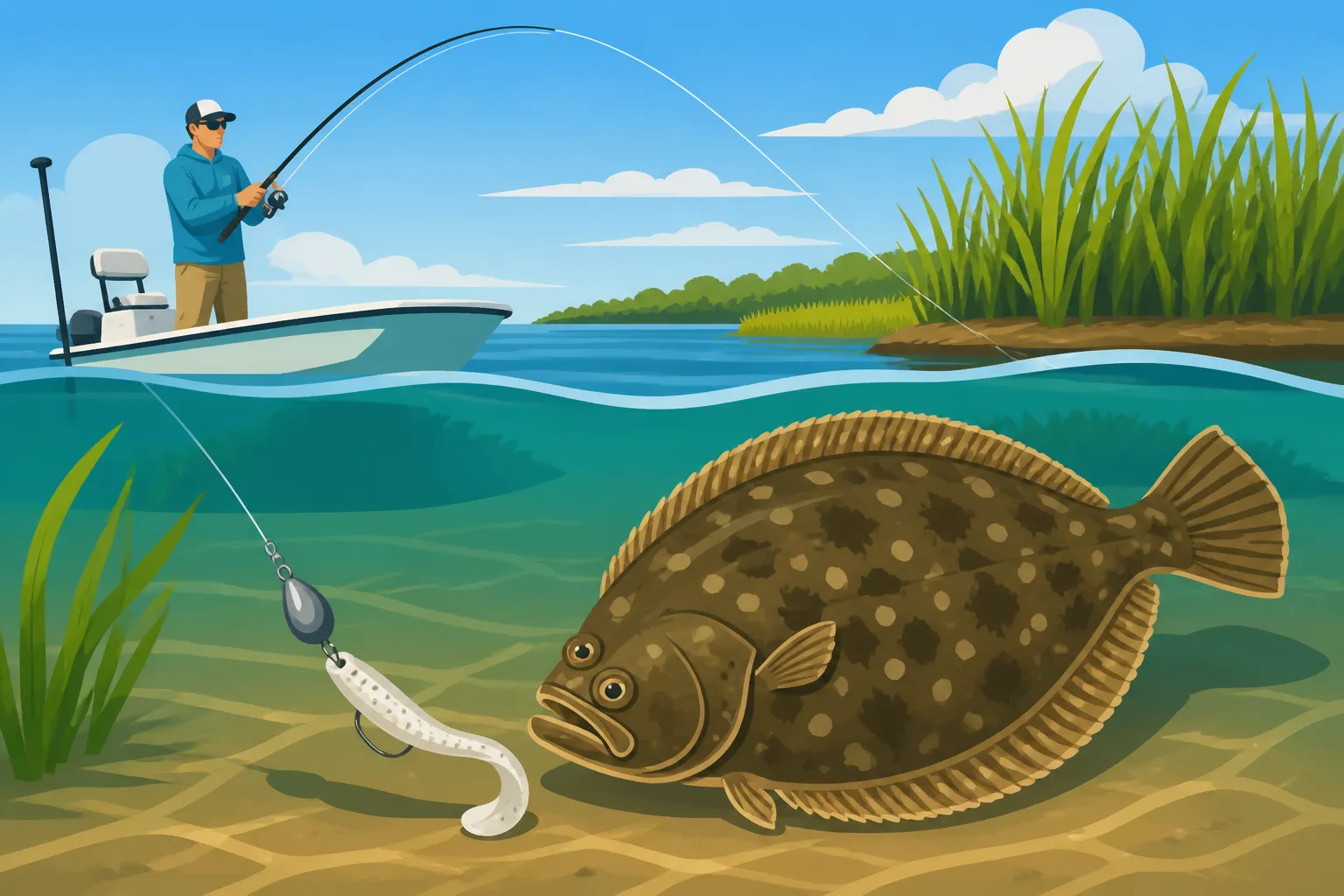
Imagine yourself as a flounder, perfectly camouflaged on the sandy bottom, one eye scanning upwards, waiting for an unsuspecting meal to drift by. That's the life of a flounder, and it dictates their chosen real estate. In Maryland's back bays, this often means they gravitate towards very specific types of bottom and underwater features.
Flounder love soft, sandy bottoms, but they prefer these areas when they're near some kind of structure that creates current breaks or offers additional cover. Think about the edges of navigation channels where the depth quickly drops off. These channel edges are prime ambush points because the current often sweeps baitfish and crustaceans right along them. Similarly, oyster bars and shell beds are magnets for flounder. These areas not only provide excellent camouflage and a hard-bottom refuge but also attract the smaller baitfish and crabs that flounder prey upon. Don't overlook submerged grass beds either, particularly those with sandy patches interspersed throughout. These "potholes" in the grass are perfect hiding spots where flounder can blend in and dart out when a meal presents itself. Piers, docks, and bridge pilings also act as artificial reefs, drawing in bait and, consequently, flounder. When fishing around these structures, focus your efforts on the down-current side, as this is where flounder will typically position themselves to wait for food. Flounder are delicious, and understanding the nuances of their feeding behavior and preferred habitats in the back bays is key to consistently putting them in the cooler, especially with the recent Flounder Size Limit Change in Maryland.
Seasonal Movements and Feeding Habits
Flounder in Maryland's back bays aren't static; their behavior changes with the seasons and water temperatures. Generally, you'll find the best flounder fishing from late spring through early fall. As the water temperatures begin to rise in late spring, flounder start moving into the shallower, warmer back bay areas from deeper wintering grounds. They're usually hungry after the colder months, making this a fantastic time to target them.
During the peak of summer, when bay waters can get quite warm, flounder might move to slightly deeper channels within the back bays or closer to the inlets where cooler, ocean-fed water circulates. Their feeding can sometimes slow down during the hottest parts of the day, making early mornings and late evenings more productive. As fall approaches and the water temperatures start to drop, flounder begin to feed aggressively again, fattening up before migrating back out to deeper ocean waters for the winter. This fall run is often considered one of the best times for both quantity and quality of flounder. Their diet largely consists of whatever small baitfish and crustaceans are abundant in the back bays – think silversides, mummichogs, grass shrimp, and small crabs. Understanding these seasonal shifts helps you predict where flounder will be and when they're most likely to bite.
Essential Gear and Tackle for Back Bay Flounder
Having the right tools for the job makes all the difference, especially when you're trying to coax a camouflaged flatfish off the bottom. You don't need a massive, heavy setup, but precision and sensitivity are key.
Rod, Reel, and Line Setup
For back bay flounder, you'll want a setup that offers a good balance of sensitivity for detecting subtle bites and enough backbone to handle a decent-sized fish. A medium-light to medium power spinning rod, typically in the 6'6" to 7'6" range, with a fast action tip, is ideal. The fast action tip allows you to feel those delicate taps and quickly set the hook.
Pair this rod with a reliable 2500 or 3000 series spinning reel. This size reel provides sufficient line capacity and a smooth drag system, which is crucial for fighting a flounder that might make a surprising run. For your main line, 10 to 15-pound braided line is an excellent choice. Braid's no-stretch characteristic enhances sensitivity, making it easier to detect light bites, and its thinner diameter allows for longer casts. Always tie on a fluorocarbon leader, typically 15 to 20-pound test, using a strong knot like a FG or Albright knot. Fluorocarbon is nearly invisible underwater and offers excellent abrasion resistance, which is important when fishing around oyster shells, docks, or other snags. A common mistake is using line that is too heavy, which can hinder your casting distance and reduce your feel for the bait. This balanced setup will give you the control and sensitivity you need to be successful.
Baits and Lures That Flounder Can't Resist
Flounder are not overly picky, but they do have preferences, and offering them something appetizing is paramount. When it comes to natural baits, live minnows (often called "killifish" or "mud minnows" in Maryland) are absolutely deadly. Their lively action is irresistible to a hungry flounder. Small spot, if you can catch them, also make fantastic live bait. When live bait isn't available or practical, cut bait like strips of squid, smelt, or even fresh bunker can be very effective. The scent trail they leave in the water is a huge draw for flounder.
Artificial lures have also come a long way. Scented soft plastics, particularly those from brands like Berkley Gulp!, are incredibly popular and often outperform natural bait. Grubs, swimming mullet, and shrimp profiles in white, chartreuse, or natural baitfish colors are excellent choices. Many anglers swear by live minnows or small spot, but artificial options like Gulp! scented baits can be incredibly effective, often available in multi-packs on Amazon. Small bucktail jigs, tipped with a strip of bait or a Gulp! trailer, are another classic flounder killer. Jig head weights will vary depending on current and depth, but having a selection from 1/4 ounce to 1 ounce is a good starting point. Experimentation is key; sometimes flounder will prefer a specific bait or color on any given day. If you're looking for more specific recommendations on baits, our guide on the Best Bait for Flounder in Ocean City offers some fantastic insights.
Rigging for Success
The way you present your bait to a flounder is just as important as the bait itself. The goal is to keep your bait near the bottom where flounder lie in wait, while also allowing it to move naturally. The most common and effective rig for flounder in Maryland's back bays is a simple flounder rig, often called a "top-and-bottom" rig or a "hi-lo" rig. This rig typically consists of a leader with two dropper loops, allowing you to attach two hooks (often sizes 1/0 to 3/0, Kahle or baitholder style) at different heights, and a sinker at the very bottom. This setup keeps your bait off the bottom slightly, making it more visible, while the sinker maintains contact with the seafloor, helping you feel bites.
Another highly effective rig is the Carolina rig. This rig involves threading an egg sinker (1/2 to 1 ounce, or heavier depending on current) onto your main line, followed by a bead (to protect your knot), and then tying on a swivel. To the other end of the swivel, you attach a fluorocarbon leader (18-36 inches) and then your hook. The Carolina rig allows your bait to drift more naturally and freely behind the sinker, which can be particularly enticing to wary flounder. When using artificial lures like bucktails or jig heads, a simple jig knot is all you need to tie directly to your leader. Always ensure your knots are strong and your hooks are sharp. You can often find these specialized rigs, along with a good selection of terminal tackle, readily available on retailers like Amazon, making it easy to prepare for your next outing.
Here’s a quick comparison of common flounder rigs:
| Rig Type | Description | Pros | Cons | Best Use Case |
|---|---|---|---|---|
| Top-and-Bottom (Hi-Lo) | Two hooks on dropper loops, sinker at bottom. | Easy to tie, presents two baits, good bottom contact. | Can tangle easily, may look less natural to wary fish. | General bait fishing, moderate current, targeting multiple depths. |
| Carolina Rig | Egg sinker, bead, swivel, then a fluorocarbon leader to hook. | Natural bait presentation, excellent sensitivity, less snagging. | Only presents one bait, can require more finesse. | Drifting, light current, presenting live bait, finicky fish. |
| Bucktail Jig | Lead head jig with deer hair or synthetic skirt, often tipped with bait. | Active presentation, excellent for targeting structure, versatile. | Requires active working, can be too aggressive for some fish. | Casting and retrieving, fishing structure, strong currents. |
Effective Flounder Fishing Techniques
Once you've got your gear dialed in, it's time to put those techniques to work. Flounder fishing isn't usually about casting far and reeling fast; it's a more methodical approach that often involves covering ground slowly or meticulously working a promising spot.
Drifting the Channels and Flats
One of the most productive ways to catch flounder in Maryland's back bays is by drifting. This technique allows you to cover a significant amount of water, presenting your bait to numerous flounder as your boat slowly moves with the tide or wind. The key is to control your drift speed. Ideally, you want to drift just fast enough to allow your bait to bounce along the bottom, mimicking a wounded baitfish or a foraging crustacean. If you're drifting too fast, your bait will lift off the bottom or snag excessively; too slow, and you might not cover enough ground.
Many anglers use a drift sock or sea anchor to slow down their boat's movement, especially on windy days or strong tides. As you drift, fan-cast your rigs ahead of the boat, letting them sink to the bottom. Once your sinker hits, begin a slow retrieve, occasionally lifting and dropping your rod tip to make your bait "hop" along the bottom. Pay close attention to your line for any subtle taps, pulls, or even just a feeling of "heaviness." When you feel a bite, don't set the hook immediately. Flounder often mouth the bait before fully committing, so give them a few seconds to inhale it before sweeping your rod back to set the hook. This detailed discussion on moving versus stationary tactics can also be found in our dedicated piece on Drifting vs Anchoring for Flounder in Maryland. It’s a rewarding technique that allows you to methodically search for those flatfish hotspots.
Anchoring and Fan Casting
While drifting is excellent for covering ground, there are times when anchoring and fan casting is the superior strategy. This technique shines when you've found a concentrated area of flounder, perhaps indicated by a drop-off, a shell bed, or a promising pothole in a grass flat. Instead of moving, you anchor your boat up-current from the hotspot and systematically cast in a fan pattern, covering the entire area.
Begin by casting directly up-current and allowing your bait to drift naturally back towards the boat, maintaining bottom contact. Then, make subsequent casts a few degrees to the left or right, slowly working your way around until you've covered a 180-degree arc in front of your boat. This meticulous approach ensures you present your bait to any flounder lying in wait. If you get a bite or catch a fish, make a mental note of the cast direction and distance, and concentrate more casts in that specific zone. This often indicates a "flounder hole" or a particularly attractive piece of structure. Fan casting from an anchored position also allows you to be more precise with your bait placement, especially around specific pieces of structure like a submerged wreck or a dock piling, offering a patient approach that can pay dividends when flounder are holding tight to a particular area.
Working Structure Effectively
Flounder are masters of camouflage and ambush, and structure provides them with the perfect environment to hide and hunt. Docks, piers, bridge pilings, bulkheads, and even channel markers can all hold flounder, especially if there's a good current flow around them. The key to working structure effectively is precision and understanding how the current interacts with it.
When fishing docks or piers, cast your rig as close to the pilings as possible without getting snagged. Flounder often lie right up against these vertical structures, waiting for bait to be swept past. Let your bait sink to the bottom and then slowly retrieve it, making it hop and skip along the bottom right in the flounder's strike zone. For bridge pilings, target the eddies and current breaks on the down-current side. These are prime ambush points. If you're fishing near bulkheads, look for any irregularities, small indentations, or slight drop-offs that might offer a flounder a place to hide. Sometimes, these spots might only hold one or two fish, but consistently working different pieces of structure can add up to a successful day. If you're exploring different access points, our guide on Best Kayak Fishing Spots in Maryland might reveal some hidden gems that are perfect for chasing flounder in the shallow bay waters, offering unique access to hard-to-reach structures.
Timing Your Flounder Trips for Success
Beyond understanding their habits and having the right gear, knowing when to go fishing for flounder can drastically improve your chances. Timing is everything, particularly in tidal waters like Maryland's back bays.
Tidal Influence on Flounder Activity
In a tidal environment like Maryland's back bays, moving water is synonymous with fishing success, and this holds especially true for flounder. Flounder are opportunistic predators, and the tides act as a conveyor belt, bringing food right to their doorstep. While both incoming and outgoing tides can be productive, many experienced anglers prefer the outgoing tide, especially as the water begins to drop and baitfish are pushed out of shallow marsh grass and creek mouths. This concentrates the bait, making it easier for flounder to ambush them.
However, the incoming tide can also be excellent, particularly when it pushes cooler, oxygenated ocean water into the bays. The key takeaway is moving water. Slack tide – that period of stillness at the peak of high tide or the bottom of low tide – is generally the slowest for flounder fishing. During slack tide, the current dissipates, and baitfish disperse, making flounder less active. As soon as the water starts moving again, that's your cue to be on the water. Pay attention to local tide charts and plan your trip to coincide with the beginning or middle of a strong incoming or outgoing tide. This understanding of tidal patterns is fundamental to consistently catching flounder in our bay systems. Understanding these local patterns is crucial for anyone keen on Fishing the Ocean City Back Bays for Flounder.
Best Times of Day and Season
While tides dictate short-term feeding windows, the overall season and time of day play a crucial role in flounder success. As mentioned earlier, late spring through early fall generally offers the best opportunities. Spring sees flounder moving into the bays, actively feeding after their winter dormancy. This can be a prime time for both quantity and eagerness.
Summer, while popular for fishing, can present challenges. During the hottest months, flounder might become lethargic in the midday heat, especially in shallower areas. Your best bet during summer is to hit the water at dawn or dusk. These cooler periods often spark a feeding frenzy, as flounder capitalize on lower light conditions and more comfortable water temperatures. As fall sets in, flounder become incredibly active again, often referred to as the "fall run." They're gorging themselves in preparation for their migration to deeper waters, making them highly receptive to baits and lures. A detailed look at the current rules can be found in our comprehensive guide to Maryland Flounder Regulations for 2026, which can help you plan your trips around any specific seasonal regulations. No matter the season, remember that clear water is often preferred by flounder, so planning your trip after a heavy rain might mean waiting a day or two for the bay waters to clear up.
Disclaimer
This article is for general informational purposes only and does not constitute professional advice. Laws, prices and regulations vary by location and change over time. Consult a qualified professional for guidance on your specific situation.