Fishing the Ocean City Back Bays for Flounder
There's nothing quite as frustrating as heading out to the Ocean City back bays with high hopes for flounder, only to return with an empty cooler and a feeling of bewilderment. Many anglers find themselves wondering where these elusive flatfish hide, what baits they truly prefer, and how to navigate the complex system of channels and grass flats. This comprehensive guide is here to demystify flounder fishing in Ocean City's back bays, providing you with the knowledge and tactics you need to consistently catch these delicious fish.
Understanding Ocean City's Back Bays and Flounder Habits
The back bays of Ocean City, Maryland, are a vibrant and dynamic ecosystem, offering a unique challenge and rewarding experience for flounder anglers. These shallow, intricate waterways are vastly different from the open ocean or the deeper parts of the Chesapeake Bay, and understanding their unique characteristics is key to finding success.
Anatomy of the Back Bays for Flounder Success
Ocean City's back bays, primarily Isle of Wight Bay, Assawoman Bay, and Little Salisbury Bay, are characterized by their relatively shallow depths, extensive grass beds, oyster reefs, and numerous dredged channels. This complex underwater landscape provides a perfect habitat for flounder, offering both ambush points and abundant food sources.
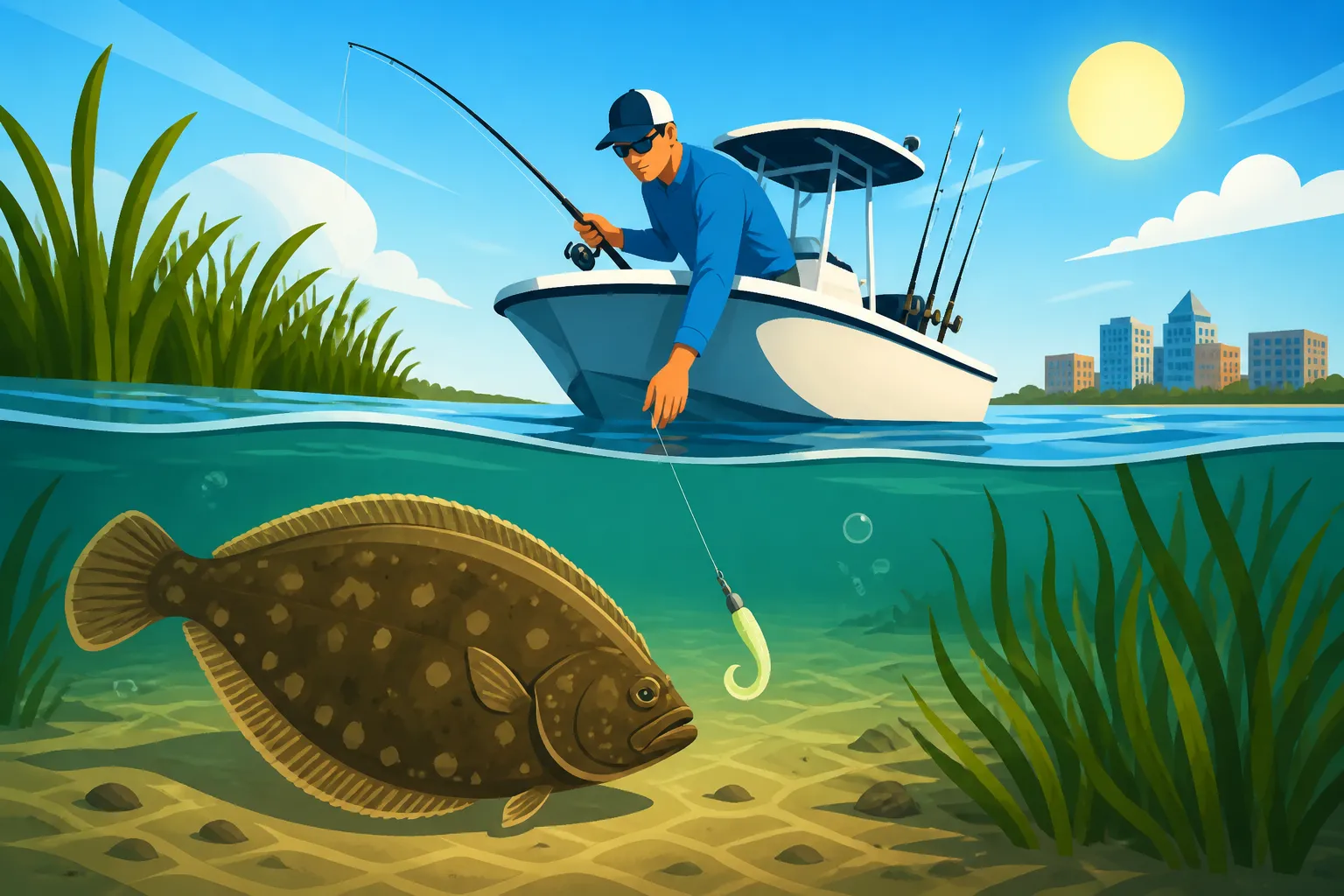
Flounder, being bottom-dwellers, are masters of camouflage and prefer to lie in wait, partially buried in the sand or mud, ambushing unsuspecting baitfish and crustaceans. Therefore, focusing your efforts around structure is paramount. This includes the edges of dredged channels, particularly where shallower water drops off sharply into deeper troughs. Think about areas near bridges like the Route 90 bridge or the Route 50 bridge, where currents naturally scour out deeper holes and create turbulent zones. The pilings themselves also offer cover and attract bait. Furthermore, look for changes in bottom composition – where sand meets mud, or where grass beds abruptly end. These transitional zones are prime feeding grounds. Marinas and docks, while often busy, can also hold flounder, especially around their deeper slips and seawalls. The key is to think like a flounder: where would you hide to ambush prey, and where would you find an easy meal without expending too much energy?
When and Why Flounder Are in the Back Bays
Flounder presence in the back bays is highly seasonal, driven largely by water temperature and their spawning cycle. Typically, you'll start to see a good number of flounder moving into the back bays in late spring, usually around April or May, as the water temperatures climb into the 60s Fahrenheit. They spend the warmer summer months feeding aggressively in these rich, protected waters. This period from late spring through early fall offers the most consistent flounder action.
As fall progresses and water temperatures begin to drop, usually by October and into November, flounder will start their migration out of the back bays and towards the deeper, warmer waters of the ocean for their spawning rituals. This fall migration can offer some fantastic fishing opportunities, as flounder tend to feed heavily to build up reserves for the winter and spawning. During this transition, they might stage in deeper channels or near the inlets before heading offshore. Understanding these seasonal movements helps you pinpoint where they might be at any given time. For instance, in early summer, they might be more scattered across the shallower flats, while in late fall, they'll consolidate in deeper channels and near the inlets. Keep an eye on local fishing reports and water temperature gauges; these are invaluable tools for knowing when the bite is on. If you're wondering about the big picture, you can learn more about the Best Time of Year to Fish in Maryland.
Essential Gear and Bait for Back Bay Flounder Fishing
Having the right tackle and bait can make all the difference when you're targeting flounder in Ocean City's back bays. These aren't necessarily trophy fish that require heavy-duty gear, but sensitivity and the ability to detect subtle bites are crucial.
Rods, Reels, and Line for Inshore Flounder
For back bay flounder, you want a setup that offers a good balance of sensitivity, moderate power, and manageability. A medium-light to medium-action spinning rod, typically in the 6'6" to 7'6" range, is ideal. This length provides enough leverage for casting while maintaining the sensitivity needed to feel a flounder's often delicate take. The rod tip should be relatively soft to detect those subtle taps, but with enough backbone to set the hook and handle a decent-sized flatfish. Brands like St. Croix, Ugly Stik, or Penn offer reliable options that won't break the bank.
Pair this with a 2500 to 3000 series spinning reel. Look for a reel with a smooth drag system, as flounder can put up a surprising fight, especially larger ones. Shimano, Daiwa, and Penn all make excellent reels suitable for this type of fishing. For line, 10-15 lb braided line is highly recommended. Braid offers superior sensitivity due to its lack of stretch, allowing you to feel even the lightest bites and discern bottom structure. It also has a smaller diameter for its strength, which helps with casting distance and cutting through the current. Always tie on a 2-3 foot leader of 15-20 lb fluorocarbon. Fluorocarbon is nearly invisible underwater, providing a stealthy presentation, and its abrasion resistance protects your main line from oyster shells and other sharp objects on the bottom.
Best Baits and Rigs for Ocean City Flounder
Flounder are opportunistic feeders, and a variety of baits and lures can entice them. However, some are consistently more effective than others in the back bays. The classic choice is live or fresh baitfish.
Live minnows (killifish or mummichogs) are exceptionally effective. You can buy these at most local bait and tackle shops like Bahia Marina or Oyster Bay Tackle Shop. Other excellent natural baits include small strips of fresh squid, silversides (spearing), or small strips of any fresh fish, especially flounder belly or sea robin. Many anglers swear by a "Gulp!" Swimming Mullet or Shrimp in white, chartreuse, or pink, either tipped onto a jig head or a bucktail, or used as a standalone bait on a bottom rig. The scent and action of these artificials are incredibly enticing. If you want to dive deeper into bait choices, check out our guide on the Best Bait for Flounder in Ocean City.
For rigs, the most popular and effective is the traditional "flounder rig" or "bottom rig." This usually consists of a three-way swivel, a leader for your hook, and a weight dropper. A typical setup would be a Sinker slide with a barrel swivel above it, followed by a bead, and then tied to the main line. To the barrel swivel, you'd attach an 18-36 inch leader of 15-20 lb fluorocarbon with a size 1 or 1/0 Kahle hook (also known as a wide-gap hook). Then, from the sinker slide, you'd have a separate 6-12 inch dropper line to attach a bank sinker or pyramid sinker, typically ranging from 1/2 oz to 2 oz depending on the current and depth. This allows your bait to be presented just off the bottom while the sinker maintains contact. Another popular option, especially for active fishing, is a jig head tipped with a Gulp! artificial or a strip of natural bait. Jig heads from 1/4 oz to 1 oz are common, with colors like white, chartreuse, or pink often producing good results. For a detailed guide on setting up your tackle, consider reading about a Bottom Rig Setup for Maryland Flounder Fishing.
Effective Techniques for Targeting Flounder in the Back Bays
Catching flounder isn't just about having the right gear; it's about understanding how to present your bait and work the waters effectively. Flounder can be surprisingly lazy, so you often need to bring the bait right to them or entice them with subtle movements.
Drifting vs. Anchoring
The choice between drifting and anchoring largely depends on the current, wind, and your preferred style of fishing.
Drifting is arguably the most popular and often most effective method for flounder in the back bays. It allows you to cover a lot of water and present your bait to numerous potential ambush points. When drifting, you let the current and/or wind slowly carry your boat across likely flounder habitat, such as channel edges, grass flats, or across the mouths of creeks. The key is to keep your bait near the bottom and moving naturally. Use just enough weight to maintain bottom contact – too much weight will drag and snag, too little will lift your bait off the bottom. A slow, steady drift is ideal. If you're drifting too fast, consider deploying a drift sock or sea anchor to slow your boat down. Pay close attention to your rod tip; a flounder bite can feel like a subtle tap, a slight weight, or even just a sudden stoppage in your line's movement. When you feel something, don't immediately set the hook. Give the flounder a few seconds to fully mouth the bait before a gentle but firm hookset. This technique is particularly effective when you're unsure exactly where the flounder are holding. You can explore more about Drifting vs Anchoring for Flounder in Maryland to help you decide.
Anchoring can be effective when you've located a productive "honey hole" – perhaps a deep hole, a specific oyster bar, or a particular section of a channel edge where you've caught fish before. Once you've anchored, you can cast out multiple lines in different directions, letting your baits sit on the bottom or slowly retrieve them. This method works well if you're fishing with multiple people or if you want to soak bait in a high-percentage area. However, the downside is that you're only covering a small amount of water. If the fish aren't in that exact spot, you might be waiting a while. Anchoring is also a good option when the wind or current is too strong for an effective drift, as it allows you to hold your position.
Reading the Tides and Current for Flounder
Tides and current are paramount in back bay flounder fishing. Flounder are ambush predators, and they use the current to their advantage, positioning themselves facing into the flow to wait for baitfish and crustaceans to be swept past them.
The incoming tide and outgoing tide can both be productive, but generally, one phase will be better than the other on any given day for a particular spot. Many seasoned anglers find that the last two hours of an incoming tide and the first two hours of an outgoing tide are often the most productive. During these periods, the current is usually stronger, which washes more food past the flounder and makes baitfish more disoriented. Focus your efforts on the down-current side of structures, points, and channel edges, as this is where flounder will typically hold to pick off food brought to them by the flow. They don't want to fight the current; they want it to do the work for them. Pay attention to changes in current speed – sometimes a slack tide can be slow, but often as the current begins to pick up, the bite turns on. Learning to "read" the water and observe bait activity during different tidal stages can dramatically improve your success.
Key Spots and Structures to Target
Ocean City's back bays are dotted with numerous locations that consistently hold flounder. Knowing these general areas and understanding why they are productive will guide your efforts.
- Channel Edges: This is probably the most crucial type of structure. The dredged channels winding through the bays, such as those leading to and from the inlet, or those maintained for navigation, create sharp drop-offs. Flounder love to lie along these edges, waiting for prey to move between the shallow flats and the deeper water.
- Bridge Pilings and Abutments: The Route 50 and Route 90 bridges are prime examples. The pilings themselves provide cover and attract bait. The current around these structures often creates scour holes and deeper pockets on the bottom, which are ideal flounder habitat. Fish around the shadows and the turbulent water where baitfish gather.
- Inlet and Bay Side of the Jetties: The Ocean City Inlet is a major thoroughfare for fish moving between the ocean and the back bays. The areas just inside the inlet, particularly the bay side of the jetties, are fantastic spots. The strong currents here concentrate bait and create deep holes.
- Marinas and Docks: While not always thought of as prime flounder spots, the deeper slips and channel entrances of marinas can hold fish, especially early and late in the season. These spots offer cover and consistent depth.
- Oyster Beds and Grass Flats: While flounder prefer to lie on sand or mud, they will venture onto the edges of oyster beds and sparse grass flats, especially during higher tides, to feed on shrimp, crabs, and small baitfish hiding there. Target the transition zones.
- The Thorofare: This is a well-known area specifically for flounder in Ocean City, running parallel to the coastline between Ocean City and the barrier island to its west. It's characterized by deeper channels and good current. Many anglers find success drifting the edges of the main Thorofare channel.
- Assawoman Bay: Just north of the main Ocean City bays, Assawoman Bay offers similar structure and excellent flounder fishing opportunities, particularly in its deeper channels and around the public access points. You might find a good guide for Fishing Assawoman Bay Near Ocean City.
Consider hiring an Ocean City Maryland Inshore Flounder Charter if you're new to the area or want to quickly learn the ropes from an expert. Services like FishingBooker can help you find reputable local captains who specialize in flounder fishing in these specific back bay waters.
Navigating Regulations and Maximizing Your Catch
Successful and responsible flounder fishing in Maryland's back bays involves more than just good technique; it also means adhering to regulations and practicing ethical angling.
Maryland Flounder Regulations
Maryland's fishing regulations, especially for popular species like flounder, are subject to change based on stock assessments and conservation needs. It's absolutely crucial to always check the most current Maryland Department of Natural Resources (DNR) Fishing Guide before you head out, as rules can change even mid-season.
As of recent guidelines, flounder typically have a minimum size limit and a daily creel (possession) limit per angler. For instance, the Maryland flounder size limit has been 17 inches for many anglers, with a daily creel limit of four fish per person. However, these numbers are illustrative and might have changed. Sometimes there are specific periods for "Maryland flounder regulations for 2026" that might have a slightly different rule set compared to past years. It’s imperative to consult the official DNR website or a current physical copy of the guide. Ignoring regulations can lead to significant penalties, including fines and potential loss of fishing privileges, so always be informed. Remember, measuring your fish accurately is key. Always measure from the tip of the nose to the tip of the tail, laying the fish flat. If in doubt, release the fish. Also, ensure you have a valid Maryland Fishing License Guide for 2026 for the waters you intend to fish.
| Bait/Lure Type | Effectiveness (1-5) | Best Conditions | Notes |
|---|---|---|---|
| Live Minnows (Killifish) | 5 | All conditions, especially light current | Natural movement, often triggers aggressive strikes. |
| Fresh Squid Strips | 4 | All conditions | Durable, good scent, easy to rig. |
| Gulp! Swimming Mullet | 4 | Drifting, jigging, all conditions | Scented, vibrant colors, good alternative when live bait is scarce. |
| Silversides (Spearing) | 3 | Drifting, light current | Smaller baitfish, good for finicky flounder. |
| Bucktail Jigs (tipped) | 4 | Active jigging, stronger current | Covers water quickly, good for targeting specific structure. |
| Flounder Belly Strips | 5 | All conditions | Highly effective, natural scent and texture. |
Ethical Fishing and Conservation Practices
Beyond just following the rules, being an ethical angler contributes to the long-term health of the fishery. Catch-and-release is a vital practice, especially for fish that are undersized or when you've already met your creel limit.
When practicing catch-and-release, handle the fish as little as possible. If a fish is deeply hooked, consider cutting the line as close to the hook as possible rather than trying to rip the hook out, as this can cause more internal damage. Always use appropriate tackle that minimizes harm, and if you plan to release fish, avoid using treble hooks where single hooks would suffice. When you do catch a keeper, bleed the fish immediately by cutting a gill arch. This improves the meat quality significantly. Ice your catch down quickly to preserve freshness.
Another important aspect of responsible fishing is being mindful of your environment. Avoid leaving trash, tangled lines, or discarded bait on the docks or in the water. Properly dispose of all waste. Respect private property and other anglers. If you're on a crowded pier or drifting a popular channel, be aware of other boats and maintain a respectful distance. Being a good steward of the environment ensures that the fantastic fishing opportunities in Ocean City's back bays will be available for generations to come. FishingBooker also emphasizes the importance of ethical angling practices when recommending charters and guides.
With these tips and a solid understanding of flounder habits and their habitat, you’ll be much better equipped to enjoy successful days targeting these delicious flatfish in the beautiful Ocean City back bays. Don't forget that persistence is key, and every trip out is a learning experience! The more time you spend on the water, the more you'll learn the nuances of these dynamic fishing grounds.
Disclaimer
Please remember that fishing regulations, including size and creel limits, can change. Always consult the official Maryland Department of Natural Resources (DNR) website or the most current Maryland Fishing Guide before heading out. This article is for informational purposes only and should not be considered a substitute for official regulations.