Can You Ice Fish on Maryland’s Reservoirs?
The lure of a crisp winter day, bundled up on a frozen lake, waiting for that tell-tale twitch of the line is a dream for many anglers. But if you’re fishing in Maryland, that dream often comes with a dose of reality: ice conditions can be notoriously finicky, leading to a lot of confusion and frustration about where it’s actually safe, or even legal, to drop a line through the ice. This comprehensive guide will clear up the mystery of ice fishing on Maryland's reservoirs, detailing where it's permitted, the strict safety measures you absolutely must follow, and what to expect when you finally hit the hard water.
The Reality of Ice Fishing on Maryland Reservoirs: A Mixed Bag
Maryland's climate, particularly in the central and eastern regions, often makes consistent, safe ice a rarity, especially on large bodies of water. This leads to a patchwork of regulations across the state, primarily dictated by who owns and manages the reservoir. While the idea of ice fishing on a large, easily accessible reservoir is appealing, the reality is that many of the biggest ones you might think of are either off-limits or present extremely dangerous conditions that are rarely safe.
Permitted Reservoirs and Key Considerations for Ice Safety
When it comes to ice fishing in Maryland, Western Maryland, with its higher elevations and colder temperatures, is typically your best bet. Deep Creek Lake, for instance, stands out as the state’s premier ice fishing destination, offering more reliable and thicker ice than almost anywhere else. Here, anglers can find good conditions for targeting various species, making it a popular winter getaway for those eager to experience hardwater angling. You can learn more about Ice Fishing at Deep Creek Lake, Maryland in our dedicated guide.
Beyond Deep Creek, some smaller, county-managed reservoirs occasionally open up to ice fishing, but this is entirely dependent on sustained cold weather and diligent monitoring. Piney Run Reservoir in Carroll County is a prime example where ice fishing is permitted when conditions allow. However, even in these locations, anglers are expected to exercise extreme caution and always verify ice thickness before venturing out. The general rule of thumb from the Maryland Department of Natural Resources (DNR) is a minimum of four inches of clear, solid ice for safe foot travel, but this is a bare minimum, and more is always better, especially if you're bringing gear or a group. You might consider checking out our article on How Thick Does Ice Get at Deep Creek Lake? for more specifics on ice formation.
Reservoirs Where Ice Fishing is Prohibited or Strongly Discouraged
It’s crucial to understand that many of Maryland's largest and most accessible reservoirs, particularly those serving as public drinking water sources for metropolitan areas, strictly prohibit ice fishing. These include:
- Loch Raven Reservoir: Managed by the Baltimore City Department of Public Works (BCDPW), Loch Raven is a vital drinking water source. Safety concerns due to variable ice thickness, fluctuating water levels, and the sheer volume of boat traffic (even limited during winter) make ice fishing explicitly forbidden. Any attempt to ice fish here could result in fines and immediate removal. If you're looking for winter fishing options on Loch Raven, you'll need to stick to traditional methods, as detailed in our guide on Fishing Loch Raven in Winter.
- Liberty Reservoir: Also managed by BCDPW and serving as a drinking water source, Liberty Reservoir shares the same strict prohibition against ice fishing. The primary concerns are angler safety given the erratic ice conditions and protecting the municipal water supply.
- Prettyboy Reservoir: The third major BCDPW reservoir, Prettyboy, similarly bans ice fishing. These regulations are in place to safeguard both public safety and the integrity of the water supply for Baltimore residents.
- Triadelphia Reservoir and Rocky Gorge Reservoir: These reservoirs, managed by WSSC Water (Washington Suburban Sanitary Commission), also prohibit ice fishing for similar reasons of safety and water supply protection. Access is often restricted to certain areas, and any activity on the ice is strictly forbidden.
The reasons for these prohibitions are clear: angler safety is paramount. Maryland's mid-Atlantic climate means periods of cold are often interspersed with warmer days, leading to unreliable ice. Additionally, these reservoirs have fluctuating water levels that can create air pockets and unstable ice, making them incredibly dangerous. Beyond safety, the protection of drinking water sources often involves limiting human activity that could introduce contaminants or otherwise impact water quality.
It can be really frustrating to look at a vast, frozen expanse and know you can't fish it, especially when the itch for ice angling is strong. But these rules are in place for serious reasons, and it's always better to err on the side of caution and adhere to the regulations. Always check with the managing authority (DNR, county parks, city water departments) for the most current regulations before you ever contemplate stepping foot on the ice.
Safety First: Essential Ice Fishing Guidelines for Maryland's Lakes
Maryland’s ice fishing season, even in the best years, is often fleeting and unpredictable. This makes safety not just a recommendation, but an absolute requirement. Ignoring safety protocols on the ice can quickly turn a fun day into a life-threatening situation.
Understanding Ice Thickness and Formation
The cardinal rule of ice fishing is: No ice is 100% safe. However, understanding how ice forms and how to assess its thickness can significantly mitigate risks. Ice thickness recommendations are crucial:
- 2 inches or less: STAY OFF. This ice is far too thin and dangerous.
- 4 inches: Suitable for ice fishing on foot. This is the absolute minimum for a single angler.
- 5-7 inches: Good for a small group of anglers or snowmobiles.
- 8-12 inches: Generally safe for small vehicles (cars, light trucks).
- 12-15 inches: Supports medium-sized vehicles.
Maryland's ice often forms unevenly. Factors like currents, springs, underwater structures, and even sunlight can create dangerously thin spots adjacent to thick, seemingly safe ice. Therefore, continuously checking ice thickness as you move across a body of water is non-negotiable. A spud bar or ice auger should be used to test the ice every 15-20 feet, especially in unfamiliar areas.
Furthermore, pay attention to ice color. Clear or blue ice is generally the strongest. White or opaque ice, often caused by freezing snow, is much weaker, as is gray ice, which indicates the presence of water and a melting state. Always be wary of areas around inlets, outlets, docks, or over submerged structures, as these areas often have thinner ice due to water flow or heat absorption. Remember to consult local reports and conditions, perhaps by talking to tackle shops or other anglers, as well as checking the DNR website, which may offer updates for popular spots. Our article, Ice Fishing Safety on Deep Creek Lake, delves deeper into these crucial aspects.
Essential Gear for Safe Ice Angling
Being prepared with the right equipment is just as important as knowing the ice conditions. This isn't just about catching fish; it's about staying alive.
Here’s a breakdown of critical gear:
| Category | Essential Items | Why It's Crucial |
|---|---|---|
| Personal Safety | Ice picks/spikes: Worn around the neck for quick access. | Self-rescue tool to pull yourself out if you break through. |
| Rope: At least 50 feet of buoyant rope. | For rescuing others or being rescued from a distance. | |
| Whistle: | To signal for help if in distress. | |
| Flotation suit/Vest: Insulated and provides buoyancy. | Offers thermal protection and keeps you afloat in freezing water, significantly increasing survival time. | |
| First-aid kit: | For minor injuries, which can be exacerbated by cold conditions. | |
| Ice & Mobility | Spud bar: Heavy steel bar for testing ice thickness. | Essential for striking the ice ahead of you to check its integrity as you walk. |
| Ice auger: Manual or power auger for drilling holes. | Creates fishing holes and allows for continuous ice thickness checks. A good quality auger is an investment you won't regret. | |
| Portable sled or bucket: | To carry gear and provide a seat. | |
| Angling Gear | Short ice fishing rods: Specific rods for ice fishing. | Designed for detecting subtle bites and working in confined spaces. |
| Tip-ups: Devices that signal a bite automatically. | Allows you to fish multiple lines (where legal) and cover more area. | |
| Appropriate bait and lures: Often small jigs, minnows, wax worms, or maggots. | Tailored to species targeted in cold water. You can find a wide variety of these on Amazon. | |
| Comfort & Warmth | Layered clothing: Moisture-wicking base layers, insulating mid-layers, waterproof/windproof outer layers. | Prevents hypothermia by allowing you to adjust to changing conditions. Look for reputable outdoor brands on Amazon for quality gear. |
| Insulated, waterproof boots: | Keeps feet warm and dry, crucial for comfort and preventing frostbite. Easily found on Amazon. | |
| Hat, gloves/mittens: | Significant heat loss occurs through the head and extremities. | |
| Portable shelter (shanty/tent): | Provides protection from wind and cold, making long waits more tolerable. Many excellent portable shelters are available on Amazon. | |
| Portable heater (propane): With proper ventilation. | Essential for staying warm in a shelter during prolonged exposure. | |
| Thermos with hot beverages: | Helps maintain core body temperature. |
When gearing up, prioritize quality, especially for safety items and insulated clothing. Cold exposure is a serious threat, and being comfortable and dry is key to a successful and safe outing.
What to Expect When Ice Fishing Maryland Waters
Once you’ve found a legal and safe spot to ice fish in Maryland, and you're properly geared up, it's time to enjoy the unique experience of hardwater angling. While the season might be short, the fishing can be surprisingly good.
Common Fish Species Targeted Through the Ice
Maryland's freshwater reservoirs, particularly those in Western Maryland and specific county ponds, offer a variety of species for ice anglers. The cold water often concentrates fish, making them easier to locate once you find a school.
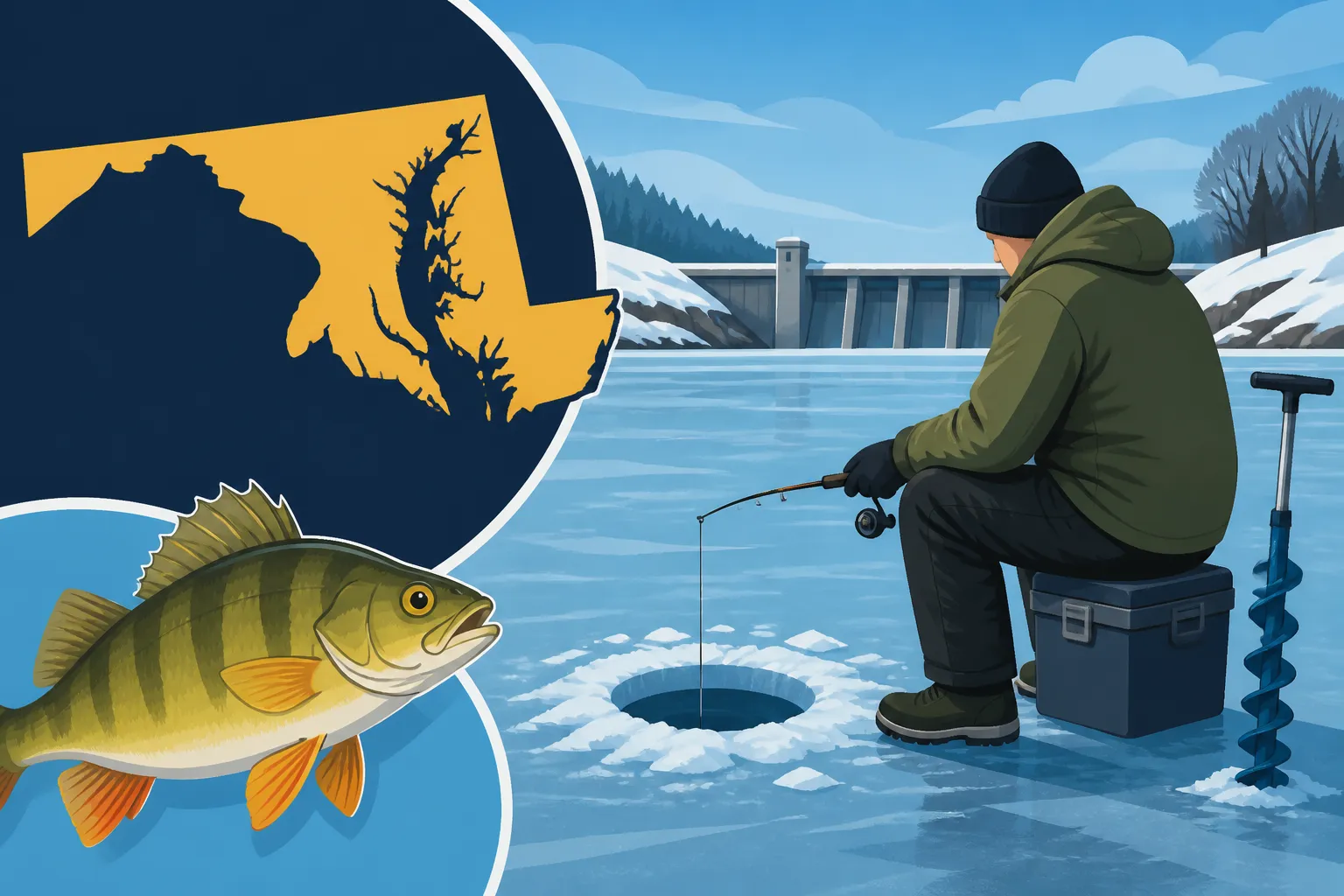
- Yellow Perch: These are often a primary target for ice anglers in Maryland. They are prolific, cooperative, and make for excellent table fare. Deep Creek Lake, and sometimes other smaller lakes, can hold good numbers of yellow perch. They tend to school, so once you find one, you're likely to find more.
- Crappie: Both black and white crappie can be caught through the ice. They often suspend in deeper water over structure or channel edges. Small jigs tipped with minnows or plastics are highly effective.
- Bluegill and Other Sunfish: These feisty panfish are abundant in many Maryland lakes and ponds. They are a great target for beginners and provide consistent action. Small baits like wax worms or maggots on tiny jigs are usually irresistible.
- Largemouth Bass: While not typically the primary target, bass are often caught incidentally while fishing for panfish. They become sluggish in cold water but can still be enticed by slow-moving baits or tip-ups rigged with live minnows.
- Trout: In areas like Deep Creek Lake, where trout are stocked, you might encounter them. Some put-and-take trout waters might freeze over, but check local regulations carefully as many have specific winter fishing rules or are not managed for ice fishing. Our article on Maryland Trout Season, Month by Month provides more information on trout fishing throughout the year.
The thrill of seeing a flag fly on a tip-up or feeling a subtle tap on your ice rod is unlike any other fishing experience. The key is often patience and a willingness to move if the fish aren't biting in one spot.
Basic Ice Fishing Techniques and Tips
Ice fishing requires a slightly different approach than open-water angling. The confined space of a hole and the vertical presentation mean your techniques need to be precise.
- Jigging: This is the most common and active form of ice fishing. Using short, specialized ice rods, anglers vertically jig small lures, often tipped with bait, up and down in the water column. The action is usually subtle, a gentle lift and fall, to entice sluggish, cold-water fish. Experiment with different jigging patterns and depths until you find what the fish prefer.
- Tip-Ups: These passive fishing devices consist of a spool of line submerged in the water and a flag mechanism that springs up when a fish takes the bait. Tip-ups are excellent for covering more water and targeting larger, cruising fish like bass or walleye with live minnows. They require less active attention, allowing you to focus on jigging another hole or staying warm in your shelter.
- Bait Selection: Live bait is often king for ice fishing. Small minnows are excellent for perch, crappie, and bass. Wax worms, maggots, and mealworms are superb for panfish. Scented soft plastics designed for ice fishing can also be very effective. It's often a good idea to bring a variety of baits and lures to see what the fish are keying in on that day.
- Finding the Fish: Fish behavior changes in winter. They often school up and relate to specific structures, such as drop-offs, points, submerged humps, or weed lines. Using a portable fish finder (flasher or traditional sonar) is incredibly helpful for locating fish, determining their depth, and even seeing your lure in relation to them. Don't be afraid to drill multiple holes and move around until you find where the fish are holding. In winter, fish are looking for thermal refuge or concentrated food sources, so understanding the lake's topography is key.
- Keep it Warm: Your hands, specifically. Handling fish and tying knots in sub-freezing temperatures can be brutal. Using thin, dexterous gloves or fingerless gloves can help maintain feeling and function. A small hand warmer can also be a lifesaver.
Ice fishing, when done safely and in permitted areas, offers a peaceful yet exhilarating winter escape. It’s a chance to experience Maryland's waters in a completely different light, often with fewer crowds and unique angling opportunities. Just remember that vigilance and adherence to safety guidelines are your best companions on the ice.
Disclaimer
The information provided in this guide is for general informational purposes only and is not intended as legal advice. Fishing regulations, ice conditions, and safety recommendations can change rapidly. Always consult the official Maryland Department of Natural Resources (DNR) website and local managing authorities (e.g., Baltimore City Department of Public Works, WSSC Water, county park services) for the most current rules, conditions, and safety advisories before planning any ice fishing trip. Ice thickness can vary greatly across a single body of water and is never 100% safe. Anglers assume all risks associated with ice fishing.