Best Lures for Ice Fishing Yellow Perch in Maryland
When the chill bites deep and Maryland's freshwater lakes and reservoirs solidify into a winter wonderland, a unique angling opportunity emerges: ice fishing for yellow perch. While many anglers pack away their gear, those who embrace the hardwater know the thrill of drilling a hole and dropping a line through the ice. It’s a completely different game than open water fishing, and if you're not using the right lures, those delicious yellow perch can be incredibly frustrating to coax. This guide is all about equipping you with the knowledge and the specific lure recommendations to make your next Maryland ice fishing trip for yellow perch a resounding success.
Understanding Yellow Perch Behavior Under Ice
Before we even talk about lures, it’s crucial to understand how yellow perch behave once the water turns to ice. Their world changes dramatically, and so must your approach. They're still fish, but they operate on a much slower, more energy-efficient schedule.
Where Yellow Perch Hide in Winter
When the ice forms, yellow perch don't just disappear; they simply adjust their patterns. You'll typically find them schooling up tightly, often near the bottom, but their specific hangouts are heavily influenced by the lake's structure and available forage. Think about areas with subtle depth changes, underwater points, and the edges of weed beds – especially if those weeds are still green and producing oxygen.
For instance, at popular Maryland ice fishing spots like Deep Creek Lake, you might find them congregated around the deeper sections of humps or along sharp drop-offs. In reservoirs such as Liberty Reservoir or Loch Raven Reservoir, they'll often relate to old creek channels, submerged timber, or the steeper breaks where they can transition between different depths easily. Rocky Gap State Park Lake, with its clear waters, might see perch tucking into rock piles or along the cleaner edges where food might settle. They're looking for comfort, food, and protection from predators, all while conserving energy in the cold water. Finding these "sweet spots" is often the first and most critical step.
How Water Temperature and Oxygen Influence Perch Location
Under the ice, the water column stabilizes dramatically. Unlike open water where currents and wind continually mix things up, an ice-covered lake develops a more consistent temperature profile. While thermoclines, which are significant temperature barriers, typically disappear in winter, oxygen levels can become a determining factor.
As the season progresses, decaying organic matter under the ice can deplete oxygen in deeper, stagnant areas. This forces fish, including yellow perch, to seek out areas with higher oxygen concentrations. Often, these are shallower zones near inlets, areas with some natural springs, or the aforementioned green weed beds that continue to photosynthesize, albeit slowly, releasing oxygen. However, it's not always about the warmest water, which might be just under the ice. Perch are cold-blooded and adjust to the cold. They're looking for that optimal balance of oxygen, available food, and comfort. This is why paying attention to subtle clues and being willing to move your ice holes can make all the difference in locating a productive school. Understanding How Thick Does Ice Get at Deep Creek Lake? is important for safety, but also for appreciating the stable environment perch live in.
Essential Lure Types for Maryland Ice Fishing Yellow Perch
Now that we know where to look, let's talk about what to present to them. Yellow perch, especially in their winter sluggishness, often prefer smaller, subtle presentations, but sometimes a bit of flash and vibration is exactly what's needed to trigger a bite.
Jigging Spoons: The Flash and Flutter Advantage
Jigging spoons are absolute workhorses for ice fishing yellow perch, especially when you’re looking to cover water or when the fish are slightly more active. Their primary appeal lies in their flash and flutter on the drop, mimicking a dying baitfish or an injured insect. This visual stimulus can attract perch from a distance, even in somewhat stained water.
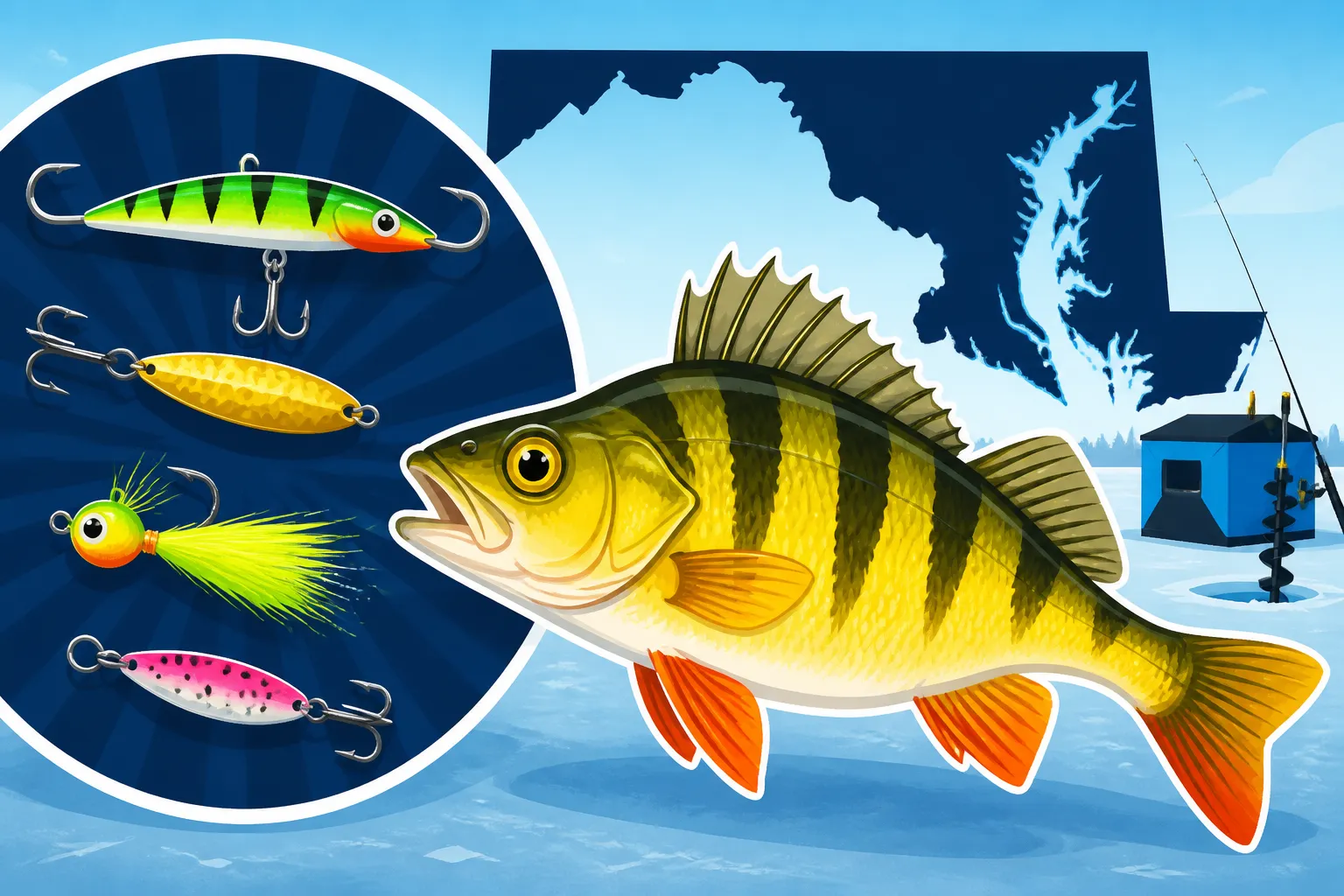
You'll find various styles, each with a slightly different action. The classic Swedish Pimple, for example, has a wide wobble and a good flash. Acme Kastmaster spoons are another popular choice, known for their strong vibration and ability to sink quickly. VMC Tingler spoons offer a more erratic, horizontal fall, which can be deadly when perch are finicky. When choosing sizes, think small – typically 1/16 oz to 1/8 oz is perfect for yellow perch. For colors, silver and gold are perennial favorites, mimicking natural baitfish. However, don't shy away from glow-in-the-dark options, especially in deeper water or low light conditions, as these can be incredibly effective. Many of these excellent jigging spoons can be found readily available on popular online retailers like Amazon, making it easy to stock up before your next trip.
Small Jigs and Plastics: Subtle Seduction
When perch are particularly finicky, or when you’ve found a tight school and want to pick them off one by one, small jigs tipped with plastics or live bait are your secret weapon. The key here is subtlety and profile. Yellow perch have relatively small mouths, and in cold water, they often aren't willing to chase down a large meal.
Tungsten jigs have become incredibly popular because they are much denser than lead, allowing for a smaller profile at the same weight. This means you can get a tiny jig down to depth quickly without sacrificing sensitivity. Jigs like the Clam Drop-Kick jig or Northland Mud Bug jigs are fantastic examples. Pair these with tiny plastic trailers, such as Berkley Gulp! Alive! Waxies or various soft plastics with minnow or insect profiles, usually no more than 1.5 to 2 inches long. The movement of these plastics, even with the slightest twitch of the rod tip, can be enough to entice a hesitant perch. Tipping these jigs with a live wax worm, mealworm, or a few maggots adds scent and natural appeal, often turning a looker into a committed bite. You can find a huge selection of these small jigs and various soft plastics on Amazon, offering a wide range of colors and styles to match any fishing condition.
Blade Baits: Vibration and Reaction Strike Triggers
Blade baits are a bit of a niche presentation for yellow perch ice fishing, but they can be incredibly effective when used in the right circumstances. Unlike spoons that flutter, blade baits vibrate intensely as they are lifted, creating a strong sonic presence that can trigger aggressive reaction strikes from perch, even when they’re not actively feeding.
Lures like the Rapala Jigging Rap or Rapala Jigging Shad Rap are classic examples. They have a distinct nose-down swimming action on the fall, darting erratically like a fleeing baitfish. These are best used when you're targeting slightly more active fish or fishing in deeper water where the vibration can help fish locate your lure. They also tend to attract larger perch, which can be a bonus. Sizes around 1/8 oz to 1/4 oz are ideal for yellow perch. Again, natural baitfish colors are a good starting point, but don't be afraid to experiment with brighter or glow patterns, especially if you're marking fish but they're not committing to more subtle presentations. If you're looking to expand your arsenal, a quick search on Amazon will reveal many different blade bait options to try out.
Comparison of Key Lure Types for Maryland Yellow Perch
To help you decide which lure might be best for your next trip, here’s a quick comparison:
| Lure Type | Best for… | Pros | Cons |
|---|---|---|---|
| Jigging Spoons | Active fish, attracting from a distance, deeper water | Lots of flash and vibration, good erratic fall, quick to sink | Can be too aggressive for finicky fish, may attract smaller fish |
| Small Jigs/Plastics | Finicky fish, tight schools, shallow water | Very subtle, natural presentation, high sensitivity, excels with live bait | Sinks slower (unless tungsten), less flash for long-distance attraction |
| Blade Baits | Aggressive fish, reaction bites, deeper water | Strong vibration, fast sink rate, often triggers larger fish | Can be too intimidating for very lethargic fish, may foul hooks more often |
Strategies for Presenting Ice Fishing Lures to Yellow Perch
Having the right lure is only half the battle; knowing how to present it effectively is what truly seals the deal. Ice fishing often comes down to minute details and subtle movements that can make all the difference.
Mastering the Jigging Motion
Unlike casting and retrieving in open water, ice fishing jigging is all about vertical presentation through a hole, and the nuances of your rod tip movements are crucial. For yellow perch, subtle is often better. Start with a series of small, short lifts – maybe 6-12 inches – followed by a pause. The pause is absolutely critical, as many strikes occur on the fall or during this stationary moment.
Experiment with your cadence. Sometimes a quick jig, jig, jig, pause is what they want. Other times, a slow, single lift and a long pause is more effective. The "dead stick" technique, where you simply leave your lure perfectly still or with the most minuscule tremor, can be incredibly deadly for finicky perch. Don't be afraid to let your lure hit bottom and then just barely lift it up a few inches; perch often feed along the bottom. The goal is to make your lure look like an easy, injured meal, not something trying to escape aggressively.
Reading Your Electronics: Finding the Fish
In modern ice fishing, a good flasher or fish finder is arguably more important than any specific lure. These devices allow you to see the bottom, your lure in the water column, and any fish that approach it, all in real-time. This instant feedback is invaluable.
When you drop your lure down, watch your flasher. You'll see your lure as a distinct mark (often green or yellow, depending on intensity). Look for fish arches or lines approaching your lure. If a fish comes up to your lure but doesn't strike, you can instantly adjust your jigging motion, raise or lower your lure, or even change its action to try and tempt that fish. If fish are consistently below your lure, try dropping it down to them. If they're above, reel up a few feet. It's a constant, interactive dance that a flasher makes possible. Brands like Humminbird and Garmin offer excellent portable flasher units that are perfect for ice fishing, helping you truly understand what's happening beneath your hole. Without electronics, you're essentially fishing blind, hoping for a random encounter. For more general Cold-Weather Fishing Tips for Maryland's Chesapeake Bay, remember electronics are key there too.
The Role of Live Bait Tipping
While artificial lures are fantastic on their own, tipping them with a tiny piece of live bait is often the ace up your sleeve when targeting yellow perch under the ice. This isn't cheating; it's smart fishing! The live bait adds natural scent, taste, and a subtle wriggling action that can be irresistible to a cautious perch.
Small minnows, wax worms, mealworms, and maggots (also known as "spikes") are the go-to choices. For jigging spoons, a small minnow hooked through the back can add extra allure. For tiny tungsten jigs, a single wax worm or a few maggots threaded onto the hook is often all it takes. The live bait provides that extra confidence boost for a perch that might be hesitant to commit to a purely artificial presentation. It gives them something real to smell and taste, often prompting them to hold onto the lure for a split second longer, giving you time to set the hook. Even when fish are extremely finicky, a small jig lightly tipped with a single maggot, presented with a "dead stick" technique, can often trigger bites when nothing else will.
Top Lures for Different Ice Fishing Scenarios in Maryland
Just like in open water, different conditions call for different approaches. The best lure isn't always the same from one day to the next, or even one hole to the next. Being adaptable is key to consistent success.
Clear Water vs. Stained Water
The clarity of the water significantly impacts a perch's ability to see and react to your lure. In Maryland's clearer lakes, such as parts of Deep Creek Lake or Rocky Gap State Park Lake, perch rely heavily on their eyesight. Here, more natural colors like silver, gold, white, or light green often outperform brighter, more aggressive patterns. Smaller, more realistic lure profiles tend to be better, as anything too flashy might spook them. A small jig with a natural-colored plastic or a light-colored jigging spoon might be the ticket.
Conversely, in stained or murky waters, like some areas of Loch Raven Reservoir or other less clear impoundments, visual appeal is diminished, and you need lures that create more attention. This is where brighter colors like chartreuse, orange, or even dark glow patterns shine. The added vibration from a blade bait or a larger jigging spoon can also help fish locate your offering. You're trying to appeal to their lateral line system more than their eyesight. When it comes to Fishing Loch Raven Reservoir, matching your lure to water clarity is always important.
Active vs. Finicky Perch
The mood of the fish is perhaps the biggest variable you'll encounter. Sometimes, you'll drill a hole into a school of actively feeding perch that hit anything you drop. In these glorious moments, a more aggressive jigging spoon or a blade bait can be excellent for quickly putting fish on the ice. Use a quicker jigging motion, and don't be afraid to experiment with slightly larger presentations.
However, more often than not, you'll encounter finicky perch – fish that show up on your flasher but refuse to bite. This is when you need to slow way down and downsize. Switch to the smallest tungsten jig you have, tip it with a single wax worm or maggot, and implement a subtle dead stick or tiny jigging motion. Focus on the pause. Often, the fish will hit the lure as it's suspended motionless. Sometimes, even the weight of a miniscule split shot above a bare hook with live bait is all it takes. Patience is a virtue here, and a sensitive rod will help you detect those barely-there bites. You might even find them more willing to bite during Maryland's Free Fishing Days when fishing pressure might be lower.
Dealing with Depth and Structure
Yellow perch can be found from just a few feet under the ice down to 30 feet or more, depending on the lake and the time of year. Your lure choice needs to match the depth. In deeper water, heavier jigs and spoons sink faster, reducing the time your lure takes to reach the fish and keeping your line tight for better sensitivity. Tungsten jigs truly shine here. Make sure your jigging spoon has enough weight to get down quickly and maintain control.
When fishing around structure like submerged timber, rock piles, or dense weed beds, you might want to consider lures that are less prone to snagging. While not entirely weedless, some jigs have a more vertical fall which can help avoid snags. Alternatively, fishing just above the structure can often be more effective than trying to pick through it. Pay close attention to your electronics to pinpoint the exact depth where the fish are holding relative to the structure. Knowing Can You Ice Fish on Maryland's Reservoirs? means you'll definitely encounter varied depths and structures. For a successful trip, remember to check the Maryland Fishing License Guide for 2026 beforehand to ensure you're compliant with all regulations.
Disclaimer
Fishing conditions and regulations in Maryland can change, sometimes without much notice. Always consult the latest Maryland Department of Natural Resources (DNR) fishing guide or website before heading out on the ice. Safety first, always check ice thickness and conditions. This content is for informational purposes only and does not constitute professional advice.