Trolling Bucktails for Maryland Striped Bass
If you've spent any time on the Chesapeake Bay or its tributaries, you know the thrill and frustration of chasing Maryland striped bass, our beloved rockfish. Sometimes they're everywhere, boiling on the surface, and other days they're as elusive as a ghost. When those surface blitzes aren't happening, and you're searching for a consistent way to put fish in the boat, trolling bucktails can be your absolute secret weapon. This comprehensive guide will walk you through everything you need to know to master this incredibly effective technique.
Why Bucktail Jigs Remain a Top Choice for Maryland Striped Bass
There's something wonderfully timeless about a bucktail jig. In a world of ever-evolving lures and complex electronics, the simple bucktail continues to prove its worth year after year, especially when it comes to targeting striped bass in the diverse waters of Maryland.
The Enduring Effectiveness of Bucktails
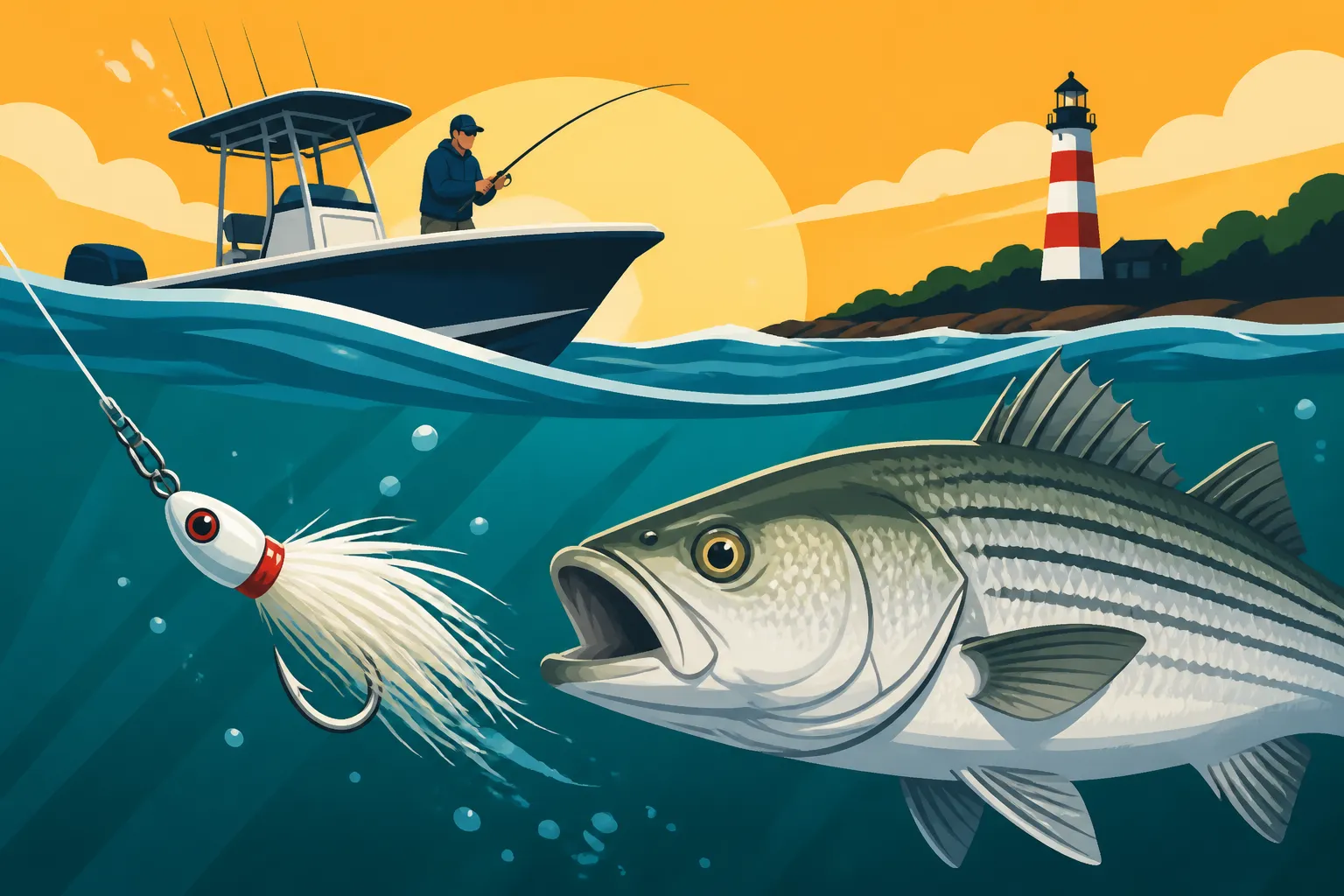
Bucktail jigs have been catching fish for generations, and for good reason. Their design inherently mimics many of the forage fish that striped bass feast on in the Chesapeake Bay – think of them as convincing imitations of silversides, bay anchovies, or even juvenile menhaden. The natural hair, usually deer hair, breathes and undulates in the water, creating a lifelike swimming action that fish simply can't resist. This subtle, pulsing movement, combined with the flash and vibration of the jighead, triggers aggressive strikes from hungry rockfish. They're not just looking for a meal; they're often reacting to a perceived fleeing baitfish, and a properly trolled bucktail does an excellent job of presenting that illusion. It's a testament to their design that even with all the modern advancements, these classic lures still outperform many newcomers in certain situations.
The weight distribution of a bucktail jig is also key to its appeal. It allows the lure to sink quickly and maintain a precise depth, which is crucial when you're trying to present a bait right in the strike zone of suspended fish or along a specific channel edge. The streamlined profile helps it cut through the water efficiently, reducing drag and making it easier to troll at various speeds without spinning out or fouling. This simple, yet highly effective, design is why many seasoned anglers consider them indispensable, especially when searching for fish over vast areas of the Bay. If you're looking to broaden your arsenal of approaches, understanding Maryland Striped Bass Fishing Techniques is a great next step.
Versatility Across Different Conditions and Seasons
One of the greatest strengths of the bucktail jig is its sheer versatility. You can effectively troll them in shallow creeks, over oyster bars, along deep channel edges, or even in the open Bay. They excel in a wide range of water conditions, from clear to murky, and can be adapted for nearly every season when striped bass are active. In the spring, when rockfish are migrating and feeding aggressively before their spawn, a larger, heavier bucktail trolled deep can entice those big trophy fish. During the warmer summer months, when striped bass might be holding in cooler, deeper waters, a lighter bucktail can be trolled higher in the water column or over specific submerged structures.
Furthermore, bucktails are adaptable to various bait preferences. While they work wonders on their own, they can also be tipped with soft plastic trailers, natural baits like strips of squid or cut bait, or even a live minnow, adding extra scent and visual appeal. This adaptability means that with a well-stocked box of bucktails in different weights and colors, you're prepared for almost anything the Chesapeake Bay throws at you. You'll find that the debate between Trolling vs Jigging for Maryland Striped Bass often comes down to personal preference and conditions, but bucktails perform admirably in both scenarios.
Essential Gear for Trolling Bucktails in Maryland
Getting set up properly for trolling bucktails is crucial for success. You don't need the most expensive gear on the market, but having the right tools for the job will significantly increase your chances of landing those Maryland rockfish.
Rods, Reels, and Line Selection
For trolling bucktails, you'll want a rod that can handle the stress of pulling heavy lures and potentially large fish, yet still offer enough sensitivity to detect subtle bites or when your lure fouls. A medium-heavy to heavy action conventional (boat) rod, typically 6 to 7.5 feet in length, is ideal. Look for a rod with a stout backbone to set the hook and fight powerful striped bass, but a forgiving tip that absorbs the shock of strikes and helps prevent pulling hooks. Many anglers find fiberglass rods or composite rods to be excellent choices for their durability and parabolic bend.
When it comes to reels, a sturdy conventional reel with a reliable drag system is a must. A reel in the 4000 to 6000 size class (or equivalent in conventional terms, like a Penn Squall 30 or Shimano Tekota 600) is generally suitable. It needs to hold a good amount of line, typically 200-300 yards, to allow for longer trolling passes and accommodate any deep runs from a large fish. A smooth, powerful drag is non-negotiable, as it will be your primary tool for tiring out strong striped bass. For line, many anglers prefer a main line of 30-50 pound test braided line due to its low stretch and superior sensitivity. Braid allows you to feel what your bucktail is doing, detect light bites, and notice when seaweed or debris fouls your lure. However, since braid is highly visible to fish and can be abrasive, it's wise to connect a 30-50 pound test fluorocarbon or monofilament leader of about 6-10 feet to the end of your braid. This leader provides shock absorption, stealth, and abrasion resistance. Remember that a proper Maryland Fishing License Guide for 2026 will cover all the regulatory basics before you even cast a line.
Bucktail Styles, Sizes, and Colors
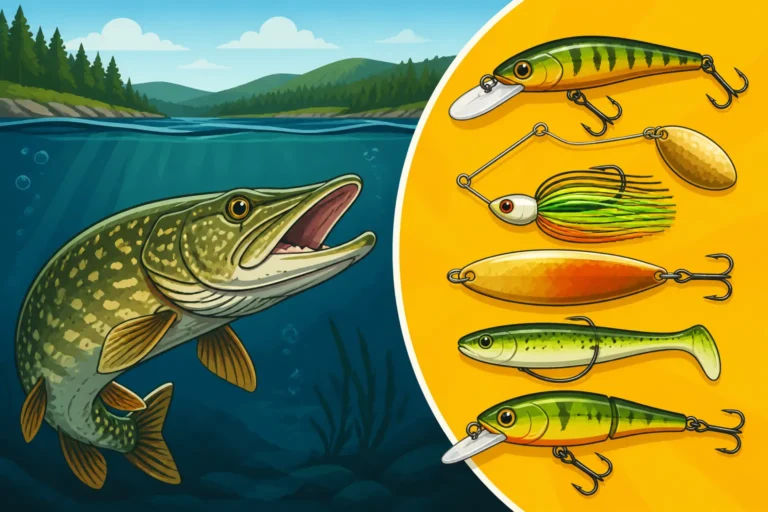
Choosing the right bucktail is more art than science, but there are some fundamental guidelines to follow. The "bucktail" refers to the deer hair tied onto a lead jighead, and these can vary wildly in shape, weight, and color.
- Weight: This is probably the most critical factor when trolling. You'll need a range of weights to effectively cover different depths and current speeds. Common weights for Bay trolling can range from 1 ounce for shallower waters or lighter presentations, up to 4 ounces or even heavier for deep channels or strong currents. The goal is to maintain contact with the bottom or a specific depth without constantly snagging.
- Shape: Most bucktails have a round or bullet-shaped head. The shape influences the jig's action and sink rate. Some anglers swear by specific head designs, but the "feel" and action are often more important than the exact shape.
- Color: This can be a hotly debated topic, but generally, natural colors like white, chartreuse, olive, and various combinations (e.g., white with a chartreuse stripe, or olive with a white belly) are proven producers. In clear water, more natural, subdued colors tend to work well. In murky or stained water, brighter colors like chartreuse or bright white can offer better visibility. Having a variety of colors and experimenting is key. You might find a particular "hot" color on any given day. If you're looking for more general guidance on visual attractants, our guide on Best Lure Colors for Jigging Chesapeake Bay Rockfish has some relevant insights, too.
- Hair Quality: The quality and density of the bucktail hair significantly impact the lure's action in the water. Look for bucktails with natural, well-tied hair that flows and pulses realistically. Some manufacturers like Spro and Andrus are known for their quality bucktails, available on platforms like Amazon.
Adding Trailing Baits and Stinger Hooks
While a bucktail jig is effective on its own, adding a trailer can significantly enhance its appeal and increase your hook-up ratio. The most common trailers are soft plastics, such as:
- Sassy Shads or Paddletails: These soft plastic swimbaits, typically 4-6 inches long, are rigged directly onto the bucktail hook. Their paddle tails create extra vibration and a lifelike swimming motion that striped bass find irresistible. Chartreuse, white, and clear with glitter are popular choices.
- Gulp! Baits: Berkeley Gulp! products, like curly-tail grubs or shrimp imitations, release a scent that can attract fish and trigger bites, especially in murkier water or when fish are less active.
- Natural Bait Strips: A strip of squid, cut bunker, or even a piece of chicken breast (yes, really!) can add scent and a fluttering action to your bucktail.
Stinger Hooks: Striped bass sometimes "short strike" a bucktail, meaning they nip at the tail of the lure rather than engulfing the entire jig. A stinger hook, a small treble or single hook tied on a short piece of monofilament or wire and attached to the main hook or shank, can dramatically improve your hook-up rate by catching those finicky biters. Just be mindful that stinger hooks can sometimes increase snagging on bottom structure or weeds, so use them judiciously. Make sure to check local regulations, as some areas or species may have restrictions on treble hooks or multiple hooks.
Mastering Trolling Techniques for Chesapeake Bay Rockfish
Trolling bucktails isn't just about dragging lures behind a boat. It's a nuanced technique that involves understanding depth, speed, current, and the underwater landscape to present your bait in the most appealing way possible.
Depth Control and Presentation
One of the biggest challenges, and keys to success, when trolling is getting your bucktails to the correct depth. Striped bass are often found holding at specific depths, sometimes just a few feet off the bottom, or suspended over a thermocline. Precision in depth control is paramount.
Several methods can be used to achieve the desired depth:
- Weight of the Bucktail: As discussed, a heavier bucktail sinks faster and trolls deeper. This is your first line of defense in depth control.
- Line Out: The more line you have out, the deeper your bucktail will run. This is why having plenty of line on your reel is important.
- Speed: A slower trolling speed allows your bucktail to sink deeper, while a faster speed will make it ride higher.
- Lead Core Line: This specialized line has a lead center wrapped in a braided sheath. Different colors on the line indicate specific lengths, and each color (typically 10 yards) will sink to a certain depth at a given speed. For example, a 7-color lead core might get your lure 30-35 feet down at 2.5 mph. This is an incredibly effective way to achieve consistent depth.
- Snap Weights: These are clip-on weights (1-8 ounces) that attach directly to your main line. You let out your bucktail to the desired distance, then clip on a snap weight a certain distance in front of it. They allow you to add weight without changing your bucktail.
- Trolling Sinkers/Planers: These devices are designed to dive and pull your lure down. They come in various sizes and designs, each offering a different dive curve.
- Downriggers: For ultimate depth precision, downriggers are unbeatable. They use a heavy cannonball weight to carry your fishing line (which is clipped to the downrigger wire) to an exact, desired depth. When a fish strikes, the line pops free from the clip, and you fight the fish directly on your main line.
The goal is to present your bucktail just above or directly in the strike zone of the fish. If they're hugging the bottom, you want your bucktail bumping the bottom occasionally, kicking up puffs of sand or mud to attract attention. If they're suspended, match your depth to their position. Understanding How Tides Affect Fishing in Maryland's Chesapeake Bay will also be critical in managing your depth and presentation.
Speed, Current, and Boat Control
Trolling speed is incredibly important and often overlooked. For bucktails, a typical trolling speed ranges from 2.0 to 3.5 knots, but this can vary significantly based on current, water temperature, and fish activity.
- Slower Speeds: Allow bucktails to sink deeper and provide a more subtle action, often effective in colder water or when fish are lethargic.
- Faster Speeds: Make bucktails ride higher and give them a more erratic, darting action, which can be great for covering ground and triggering reaction strikes, especially when fish are aggressive.
Current: The Chesapeake Bay is a tidal environment, and current plays a huge role. Trolling with the current might require a faster boat speed to achieve the same lure action as trolling against it, or vice-versa. Always pay attention to how your lures are performing in relation to the current. Sometimes, a "slack tide" (when the current changes direction) can be a prime feeding window.
Boat Control: Don't just motor in a straight line. Incorporate S-turns or wide turns into your trolling pattern. When your boat turns, the lures on the inside of the turn will slow down and drop, while the lures on the outside will speed up and rise. This change in speed and depth can often trigger a strike from a following fish. Varying your engine RPM slightly can also create an enticing "yo-yo" effect on your bucktails. Consider areas like the main stem of the Bay or larger rivers; our guide to the Best Places to Fish in Maryland can help identify prime trolling grounds.
Reading Sonar and Structure for Success
Your boat's fish finder (sonar) is an invaluable tool for trolling bucktails. It allows you to "see" the underwater world and make informed decisions about where and how to troll.
- Locating Baitfish: Striped bass are almost always where the bait is. Use your sonar to locate bait balls—dense schools of smaller fish like menhaden or silversides. Troll your bucktails around and through these bait concentrations.
- Identifying Structure: Look for underwater structure that attracts fish. This includes:
- Channel Edges: Where a deeper channel meets a shallower flat. Striped bass often patrol these edges, ambushing baitfish.
- Humps and Bumps: Raised areas on the bottom that provide ambush points.
- Oyster Reefs: Natural or artificial reefs provide excellent habitat for bait and predatory fish.
- Wrecks and Artificial Reefs: Man-made structures that hold a variety of marine life.
- Finding Fish: Of course, your sonar will also show you larger fish arches. If you see arches holding near structure or bait, target that area with your bucktails. Pay attention to the depth at which the fish are holding, and adjust your trolling depth accordingly.
Learning to interpret your sonar effectively is a skill that comes with practice. The more time you spend on the water, relating what you see on the screen to what you're catching (or not catching), the better you'll become at using this technology to your advantage.
Common Challenges and Troubleshooting When Trolling Bucktails
Even the most seasoned angler encounters challenges when trolling. The Chesapeake Bay is a dynamic environment, and conditions can change rapidly. Knowing how to troubleshoot common issues can save a frustrating day and turn it into a successful one.
Dealing with Fouled Lines and Weeds
One of the most annoying, yet common, problems when trolling bucktails is dealing with fouled lines and weeds. Seaweed, grass, or even floating debris can accumulate on your line or bucktail, completely killing its action and making it unattractive to fish.
- Regular Checks: The best defense is a good offense. Periodically check your lines, especially after making turns or passing through areas with visible debris. Even if you're not getting bites, reel in a line or two every 10-15 minutes to inspect your bucktail. A fouled lure is a wasted trolling pass.
- Prop Wash and Current: Be mindful of how your prop wash might be stirring up debris from the bottom in shallower areas, or how strong currents might be concentrating floating weeds.
- Line Cleanliness: Keep your lines clean and free of kinks or frayed spots, as these can snag debris more easily.
- Bucktail Design: Bucktails with sparse, stiffer hair might shed weeds a bit better than those with very long, soft hair. Some anglers trim their bucktails slightly to reduce snagging.
- Electronics to Avoid Debris: Use your sonar to identify areas with heavy vegetation or floating debris. Sometimes, moving just a short distance can get you into cleaner water.
- Dealing with "Mystery Fouls": Sometimes your line feels heavy, but nothing is on your bucktail when you reel it in. This can often be micro-algae or very fine debris that accumulates on the line itself. A quick reel-in and rinse can clear it.
Adjusting to Finicky Fish and Changing Conditions
There will be days when the fish seem to have lockjaw, despite you doing everything "right." This is where adaptability and experimentation come into play. Finicky fish are often a sign that you need to change something in your approach.
- Change Your Speed: If a steady pace isn't producing, try slowing down considerably or speeding up. Often, a subtle change in retrieve speed during a turn, allowing the bucktail to momentarily drop, can trigger a strike.
- Vary Your Depth: Even if your sonar shows fish at a certain depth, they might be willing to rise or drop a few feet for a more enticing presentation. Experiment with different weights, line lengths, or even switching to a snap weight to quickly change your bucktail's running depth.
- Switch Colors or Sizes: If white isn't working, try chartreuse. If a 2-ounce bucktail isn't getting attention, try a 3-ounce to get it deeper or a 1-ounce for a more subtle presentation. Sometimes, a slight change in the size of your trailer can make all the difference.
- Add Scent: Tipping your bucktail with a scented soft plastic (like Gulp!) or a small strip of natural bait can entice inactive fish. The added scent can trigger a bite even when the visual appeal isn't quite enough.
- Fish the "Edges": If fish are scattered, focus your efforts on distinct structure like channel edges, oyster reefs, or points. These are natural ambush points where fish gather.
- Monitor Environmental Factors: Pay attention to changes in tide, current, water temperature, barometric pressure, and even cloud cover. All these factors can influence fish behavior. If the bite suddenly shuts down, one of these factors might be at play. Our article on Maryland Striped Bass Size and Catch Limits by Species will help you understand what you can keep once you've enticed those finicky fish.
Advanced Strategies for Maximizing Your Bucktail Catch
Once you've mastered the basics of trolling bucktails, there are several advanced tactics you can employ to further increase your success rate and cover more water effectively. These methods allow for more precise depth control, wider coverage, and a more enticing presentation.
The "Maryland Style" Tandem Rig
The tandem rig, often referred to as the "Maryland Style" rig when trolling for striped bass, is an incredibly popular and effective setup that allows you to present two bucktails at different depths simultaneously. This essentially doubles your chances of a strike and helps you pinpoint the fish's preferred depth.
Here's how it generally works:
- Components: You'll typically use a three-way swivel or a specialized trolling spreader.
- Heavy Bottom Bucktail: A heavier bucktail (e.g., 3-6 ounces) is attached to one eye of the three-way swivel with a shorter leader (18-36 inches). This bucktail acts as your main weight, getting the entire rig down to the desired depth and often bouncing along the bottom or just above it.
- Lighter Top Bucktail: A lighter bucktail (e.g., 1.5-3 ounces) is attached to the second eye of the three-way swivel with a longer leader (4-8 feet). This bucktail trails above and behind the heavier one, mimicking a smaller baitfish following a larger one, or a baitfish that has been disoriented by the bottom bucktail.
- Main Line: Your main line from the reel connects to the third eye of the three-way swivel.
Advantages:
- Depth Zone Coverage: Effectively covers a wider vertical strike zone, increasing the odds of finding fish.
- Doubles Your Chances: Two lures in the water mean two chances for a bite on each rod.
- Enticing Presentation: The heavier bucktail can stir up the bottom, attracting attention, while the lighter one offers an easier target for a predator.
- Weight Without Bulk: Allows you to achieve significant depth without having to use an excessively large or heavy single lure.
It's a fantastic rig for probing channel edges, humps, and other bottom structure where striped bass might be stacked up. Just be mindful of potential tangles if you're making sharp turns, and always check your rig for weeds or debris after a few passes. Before you head out, confirm you have a valid Maryland Chesapeake Bay Sport Fishing License Explained and understand the regulations for multiple lines.
Trolling with Planer Boards and Downriggers
For the serious troller, incorporating planer boards and downriggers can elevate your game, especially when you need to cover a vast area or target precise depths.
-
Planer Boards:
- Purpose: Planer boards are designed to pull your fishing lines away from the boat, spreading them out horizontally. This allows you to troll more lines simultaneously without tangles and present your bucktails over a wider swath of water. This is particularly useful in open areas of the Chesapeake Bay.
- How They Work: Your main line is attached to a release clip on the planer board. As the boat moves, the board "planes" out to the side, taking your line with it. When a fish strikes, the line pulls free from the clip, and you fight the fish directly.
- Advantages: Increased coverage, ability to run lures in undisturbed water away from the boat, and fewer tangles with multiple rods.
- Considerations: Can be cumbersome to deploy and retrieve, especially in rough water. Requires practice to manage effectively. You can often find a good selection of quality planer boards and their associated hardware, like specialized clips, on Amazon.
-
Downriggers:
- Purpose: Downriggers are mechanical devices used to precisely control the depth of your lures. They are essential when fish are holding at very specific depths in the water column and you need pinpoint accuracy.
- How They Work: A heavy lead ball (cannonball) is lowered to the desired depth on a wire cable. Your fishing line is clipped to this cable with a special release clip. The downrigger takes your lure down to the depth of the cannonball. When a fish strikes, the tension pulls your line free from the clip, allowing you to fight the fish without the resistance of the heavy weight.
- Advantages: Unmatched precision in depth control, ability to target suspended fish or fish holding tight to bottom structure, and a cleaner fight once the fish is hooked.
- Considerations: Can be a significant investment. Requires understanding of how to operate and maintain the equipment. Ideal for targeting deeper striped bass, especially during summer months when they retreat to cooler waters.
Using a combination of these advanced tools, or even just one, can make a significant difference in your trolling success, allowing you to fine-tune your presentation and truly maximize your efforts on the water.
Seasonal Considerations for Trolling Bucktails
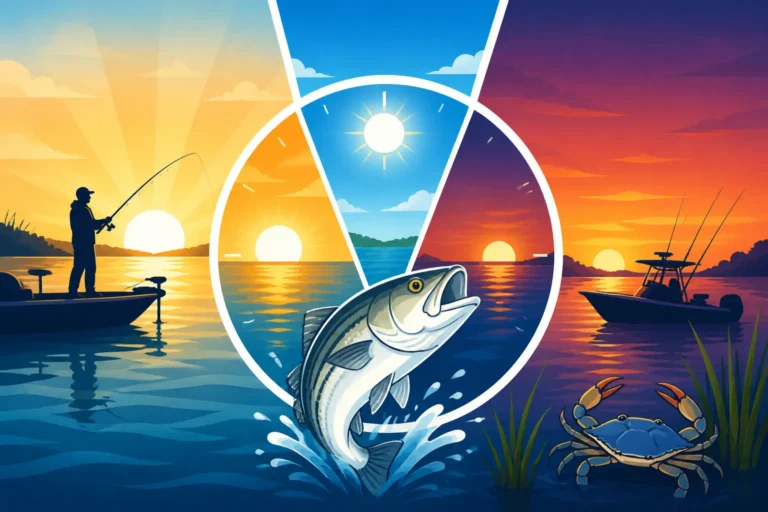
The beauty of trolling bucktails for striped bass in Maryland is that it's a technique that can be adapted and employed successfully throughout much of the fishing season. However, understanding how fish behavior changes with the seasons is key to tailoring your approach. You'll find that Best Time of Year to Fish in Maryland for striped bass often correlates directly with bucktail effectiveness.
Spring and Fall Trophy Season Tactics
Spring and fall are often considered the prime times for targeting large, trophy-sized striped bass in Maryland, and bucktails play a crucial role during these periods.
Spring (Pre-Spawn and Post-Spawn):
- Pre-Spawn (April-May): As water temperatures rise, large female striped bass migrate into the Chesapeake Bay and its spawning rivers. They are often incredibly hungry and looking for substantial meals to fuel their spawning efforts. This is a fantastic time to troll larger bucktails (3-6 ounces) with substantial trailers (6-9 inch sassy shads or large Gulp! baits) along main channel edges, particularly near the mouths of spawning rivers. Slow to moderate trolling speeds are often effective, presenting the lures just off the bottom or where baitfish concentrations are visible on your sonar. Focus on areas where schools of bunker or other baitfish are gathering. Be sure to be acutely aware of Maryland's 2026 Striped Bass Season Dates and any spawning river closures, as targeting areas where fish are actively spawning is prohibited and often unproductive.
- Post-Spawn (Late May-June): After spawning, the big females drop back out of the rivers and begin to move down the Bay, recovering and feeding heavily. They might be a bit more scattered, but still very catchable. Continue to troll channel edges, but also pay attention to prominent points, ledges, and transition zones where these fish might be recuperating and feeding. Smaller bucktails (2-4 ounces) might become more effective as they begin to target a wider variety of forage.
Fall (September-December):
- The Fall Run: This is arguably the most exciting time for striped bass fishing in Maryland, as large schools of rockfish push baitfish, often menhaden, down the Bay towards the ocean. These fish are in full feeding mode, gorging themselves before winter. Trolling bucktails can be exceptionally effective during the fall run.
- Tactics: You'll want to cover a lot of water. Troll bucktails of various sizes (2-5 ounces) with paddle-tail or sassy shad trailers. Look for birds diving, which often indicates baitfish being pushed to the surface by actively feeding striped bass. Troll around these areas, targeting the edges of the schools. Speed can vary, but often a moderate to faster troll is effective as fish are aggressive. Depths can range from shallow (10-20 feet) when fish are busting on the surface, to deeper (30-50+ feet) along channel edges when they are holding lower in the water column. The fall can be an incredible time for multiple hook-ups, so having a well-organized spread of rods is key. Consult Maryland Striped Bass Season and Rockfish Rules for precise size and creel limits.
Summer and Winter Approaches
While spring and fall grab most of the headlines, trolling bucktails can still be productive during the hotter summer months and colder winter periods, albeit with different strategies.
Summer (July-August):
- Deeper, Cooler Water: During the peak of summer, striped bass in the main stem of the Chesapeake Bay often retreat to deeper, cooler water, particularly along the main shipping channels or where cooler ocean water pushes in. They will often hold near the thermocline (the boundary between warm surface water and cooler deep water).
- Tactics: This is where precise depth control with downriggers, lead core line, or heavy snap weights becomes crucial. Troll heavier bucktails (3-8 ounces, often on tandem rigs) at depths of 30-60 feet or even deeper, targeting specific depths where you see fish or bait on your sonar. Slower trolling speeds can be more effective as fish may be less active. Look for structure in deeper water—channel bends, ledges, and artificial reefs. The August "Rockfish Closure" in Maryland means you cannot keep striped bass, but catch-and-release trolling for other species or targeting striped bass outside the Bay can still be an option. Remember to release fish quickly and carefully during warm water periods to minimize stress.
Winter (January-March):
- Challenging but Rewarding: Winter fishing for striped bass in Maryland can be tough, but for those willing to brave the cold, it can be incredibly rewarding. Striped bass will often congregate in very deep channels in the lower and mid-Bay, sometimes holding in vast schools.
- Tactics: Extremely slow trolling is the name of the game. Use very heavy bucktails (5-10 ounces or more, often with Mojo rigs or tandem rigs) to get right down to the bottom in deep channels (40-80+ feet). Scented trailers are a huge plus. The fish are often lethargic, so a slow, subtle presentation is key. Watch your sonar religiously for dense schools of fish, and once you find them, be prepared to make repeated passes over the same area. The bites can be very subtle, so sensitive rods and braided line are a must. While challenging, these winter fish are often in prime condition. This can be a great time for charter trips targeting these deep-water fish, and understanding Maryland Charter Boat License Coverage for Passengers can be helpful if you plan on booking one. For more ideas across the year, our general Maryland Striped Bass Fishing Techniques guide provides a good overview.
| Season | Typical Bucktail Weight | Trolling Speed (Knots) | Key Depths/Locations | Trailer Recommendation |
|---|---|---|---|---|
| Spring | 2-6 oz | 2.5-3.5 | Channel edges, river mouths | Large Sassy Shad (6-9") |
| Summer | 3-8 oz | 1.8-2.5 | Deep channels, thermocline | Gulp! Grub, Cut Bait |
| Fall | 2-5 oz | 2.8-4.0 | Baitfish schools, Bay mainstem | Sassy Shad, Paddle Tail |
| Winter | 5-10+ oz | 1.0-2.0 | Very deep channels | Large Gulp!, Cut Bait |
Disclaimer
Please remember that fishing regulations, including seasons, sizes, and catch limits, can change. Always consult the latest Maryland Department of Natural Resources (DNR) rules and regulations before heading out on the water. This guide is for informational purposes only and does not constitute legal advice.