Trolling vs Jigging for Maryland Striped Bass
Staring out at the vast, often unpredictable waters of the Chesapeake Bay, many anglers wonder how to best target Maryland's beloved striped bass, locally known as rockfish. The choice between actively working a lure with a jigging rod or systematically dragging baits and lures behind a boat through the water, known as trolling, can feel like a high-stakes decision. This comprehensive guide will strip away the confusion, diving deep into the nuances of trolling and jigging, equipping you with the knowledge to decide which technique suits the conditions, your gear, and your fishing style for a truly successful day on the water.
Understanding the Maryland Striped Bass Landscape
Before we even cast a line, it's crucial to understand the magnificent fish we're after: the Maryland striped bass. These powerful, silver-flanked beauties are more than just a prize catch; they're a vital part of our state's ecosystem and fishing heritage. Knowing their habits, preferences, and movements is the first step to successful angling.
The Allure of Rockfish in Maryland
There's something undeniably captivating about chasing striped bass in Maryland. Perhaps it's their incredible fighting spirit, the thrill of a powerful strike, or the simple joy of spending a day on the iconic Chesapeake Bay. For generations, anglers have flocked to these waters, drawn by the promise of a hefty rockfish. They're strong, they're smart, and they demand respect, making every catch feel like a hard-won victory. Whether you're a seasoned veteran or just starting your journey, the pursuit of these fish embeds itself deep in your soul.
Beyond the personal challenge, striped bass also hold immense cultural and economic significance here. Local economies thrive on fishing tourism, bait and tackle shops, and charter boat operations. Many of us grew up with stories of our grandparents pulling in huge rockfish, and we're eager to pass that tradition down. It's more than just a fish; it's a symbol of Maryland's natural bounty and a shared passion that brings people together on the water.
Seasonal Movements and Feeding Habits
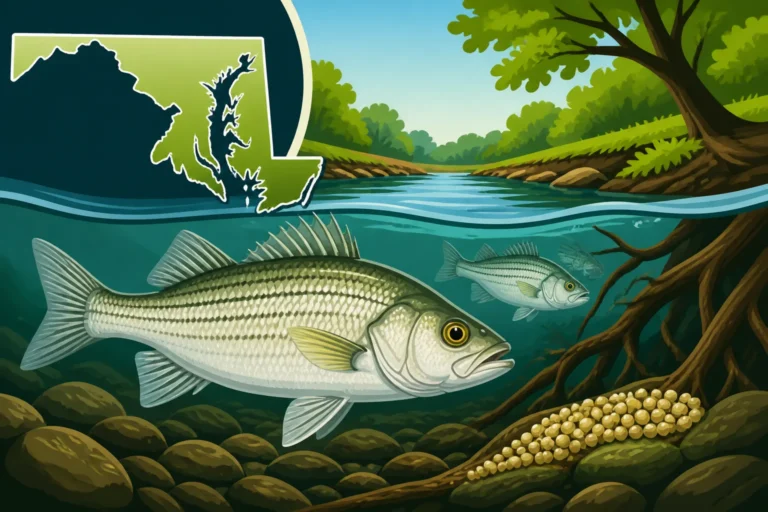
Striped bass are migratory fish, and their presence in Maryland waters ebbs and flows with the seasons, heavily influenced by water temperature and spawning cycles. In spring, as water temperatures rise, massive schools migrate from the ocean into the Chesapeake Bay and its tributaries to spawn. This is often the time when anglers get a shot at truly trophy-sized fish, though regulations during this period are often very strict to protect the spawning stock. Understanding these patterns is key to figuring out where the fish might be and what they might be eating.
During the warmer summer months, after spawning, striped bass disperse throughout the Bay, seeking cooler, deeper waters or areas with abundant baitfish. They become more focused on feeding, chasing schools of menhaden, spot, and other forage fish. As fall approaches, they begin to gather again, gorging themselves in preparation for their migration back to the ocean, creating exciting "fall run" opportunities. Different times of year will dictate different depths and feeding behaviors, directly impacting whether trolling or jigging will be more effective. For detailed information on specific dates, make sure to check the current Maryland Striped Bass Season and Rockfish Rules and consult the Maryland Department of Natural Resources (DNR) official guide.
The Art of Trolling for Striped Bass
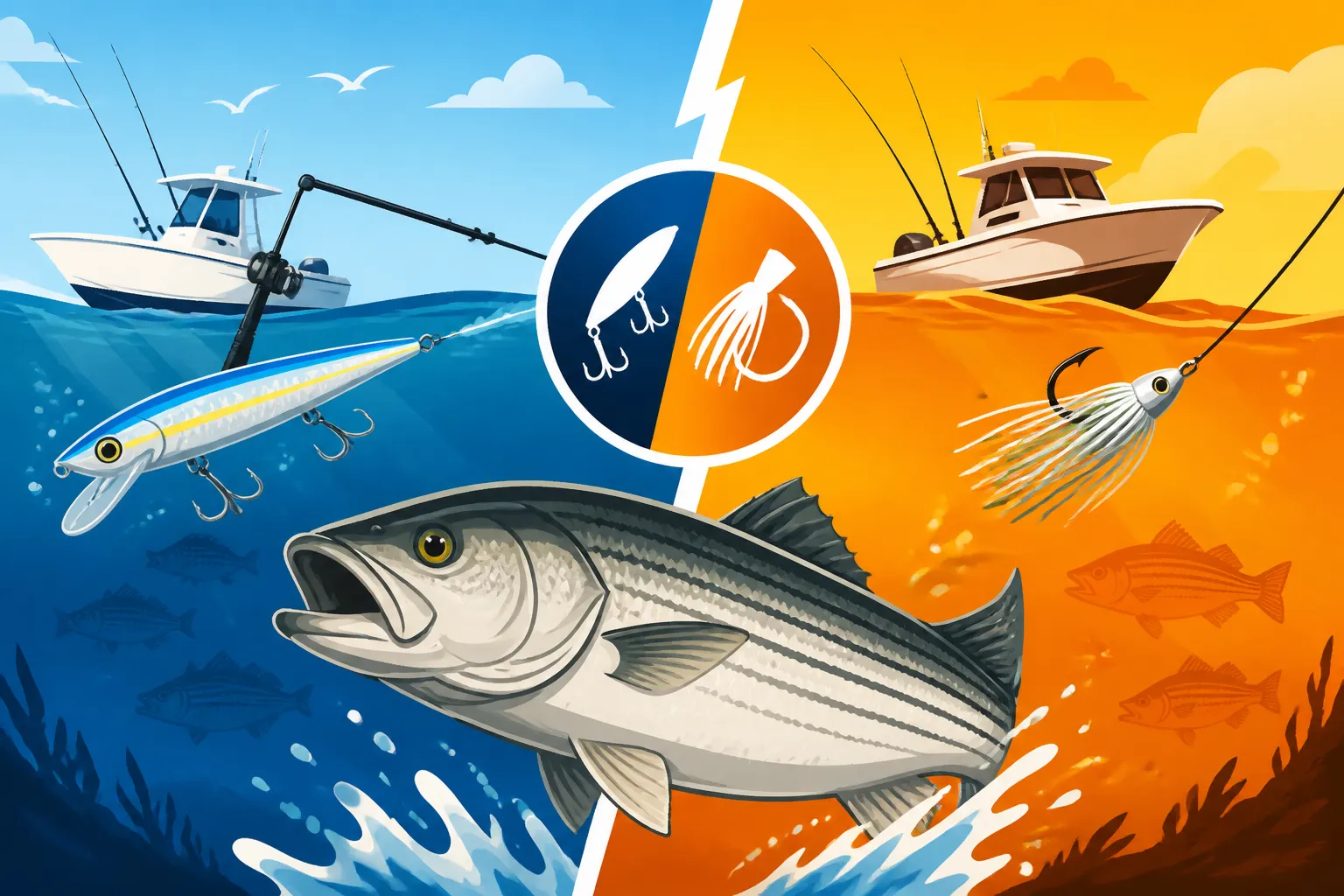
Trolling is a classic technique, especially popular on the vast waters of the Chesapeake Bay. It involves dragging lures or baits behind a moving boat, covering large areas of water and allowing you to present multiple offerings simultaneously. It's often favored when fish are dispersed, or when you're trying to locate schools of actively feeding fish.
Gear Essentials for a Trolling Setup
To troll effectively for Maryland striped bass, you'll need a specialized setup that can handle the strain of heavy lures, multiple lines, and powerful strikes. The cornerstone is a stout trolling rod, typically 6 to 7.5 feet long with a medium-heavy to heavy action, designed to absorb the shock of a big fish while still providing enough backbone to reel it in. These rods are usually paired with conventional reels, known for their incredible line capacity and powerful drags. Reels like the Penn Squall or Shimano Tekota are popular choices, capable of holding hundreds of yards of 30 to 50 lb braided line, often with a monofilament or fluorocarbon leader.
Beyond rods and reels, you'll need a variety of weights and planer boards to get your lures down to the desired depth and spread them out from the boat. Trolling sinkers, inline planers, or even downriggers are common tools. For lures, umbrella rigs, tandem rigs with bucktails or surgical hoses, and large diving crankbaits are staples. Many anglers source these components from reliable retailers like Amazon, ensuring they have a well-stocked tackle box. Having a diverse selection of colors and sizes allows you to adapt to changing conditions and fish preferences.
Mastering Trolling Depths and Speeds
One of the biggest challenges, and ultimately rewards, of trolling is consistently presenting your lures at the right depth and speed. Striped bass often hug structure, channel edges, or specific thermoclines, and if your lures aren't in their strike zone, you're just dragging metal through empty water. Different lures are designed to run at different depths at specific speeds, and understanding this relationship is crucial. For instance, a heavy diving plug might reach 20 feet at 3 knots, while a lighter umbrella rig might need a 10 oz inline sinker to get to the same depth.
Your boat's speed is equally important. Most striped bass trolling occurs between 2.5 and 5 knots, but the ideal speed can vary depending on the lure type, water temperature, and how active the fish are. Sometimes, a slower speed allows a lure to "swim" more enticingly, while other times, a faster retrieve might trigger a reaction strike from aggressive fish. Pay close attention to your sonar to identify where fish are holding and adjust your tackle and speed accordingly. You'll often find that changing your trolling speed by even half a knot can be the difference between a silent spread and multiple hookups.
Popular Trolling Spreads and Baits
A "trolling spread" refers to the arrangement of lines, lures, and weights behind your boat, designed to cover a wide area of the water column. A typical spread might involve multiple rods, each rigged differently. You might run deep-diving crankbaits directly behind the boat, umbrella rigs with inline sinkers off the transom, and then use planer boards to send lighter bucktails or surgical eels out to the sides, away from the boat's wake. This creates a virtual "wall" of lures, increasing your chances of intercepting a school of fish.
When it comes to baits, live spot, eels, or bunker (menhaden) can be deadly when trolled slowly, often on a free-line or with minimal weight. Artificial lures, however, are the bread and butter of trolling. Umbrella rigs, which mimic a school of baitfish, are incredibly effective, often featuring multiple teasers and a larger "stinger" lure in the center. Bucktail jigs dressed with soft plastics or surgical hoses are also highly productive. Colors like chartreuse, white, and bunker patterns are perennial favorites. Experimentation is key; what works one day might not work the next, so having a diverse tackle box filled with different options is paramount.
The Dynamics of Jigging for Striped Bass
Jigging, in contrast to the passive nature of trolling, is an active, hands-on technique that requires constant engagement from the angler. It's all about mimicking injured baitfish with a vertical presentation, typically when you've located a concentrated school of striped bass.
Essential Jigging Rods and Reels
For jigging, you want a setup that offers sensitivity, power, and comfort, as you'll be holding and working the rod constantly. Jigging rods are generally shorter than trolling rods, often 6 to 7 feet, with a fast action tip that helps you feel subtle bites and impart action to your jig, coupled with a strong backbone to hoist a heavy fish. Both spinning and conventional setups are popular for jigging. Spinning reels offer ease of casting and a quick retrieve, while conventional reels provide immense power and control when fighting a fish.
Look for reels with a smooth, reliable drag system, as striped bass can make powerful runs. Braided line, typically 20 to 40 lb test, is a must-have for jigging due to its low stretch, which enhances sensitivity and transmits every bump and bite directly to your hands. A fluorocarbon leader of 30 to 50 lb test is usually tied to the braid to provide abrasion resistance and make your presentation less visible to the fish. When you're constantly dropping and retrieving, the comfort and balance of your rod and reel combo become incredibly important, especially during long days on the water.
Various Jigging Techniques and Lures
Jigging isn't just about dropping a lure and reeling it in; it's an art form with many variations. The most common technique is vertical jigging, where you drop a metal jig or a bucktail jig to the desired depth and then use a series of sharp lifts and drops of the rod tip to make the lure "dance." The goal is to imitate a frantic, wounded baitfish, irresistible to a hungry striped bass. Some anglers prefer a faster, more aggressive jigging motion, while others find a slower, rhythmic presentation more effective.
Soft plastic paddletails or swimbaits rigged on heavy jig heads are also incredibly popular, offering a more natural, lifelike action. These can be "pitched" to breaking fish or dropped vertically. When the fish are holding close to the bottom, "bouncing" a jig along the structure can trigger strikes. For deeper water or faster currents, heavier jigs are necessary to ensure your lure reaches the fish quickly. Understanding How Deep to Jig for Striped Bass in the Bay will give you an advantage. Experiment with different jig weights, colors (white, chartreuse, and natural baitfish patterns are always good), and retrieval speeds until you find what the fish are responding to that day.
Reading the Sonar for Jigging Success
Jigging is incredibly reliant on your boat's electronics, especially your fishfinder or sonar. Unlike trolling, where you're covering ground hoping to stumble upon fish, jigging thrives on precision. You need to identify schools of striped bass, baitfish, or productive structure directly beneath your boat. Modern sonar units, particularly those with side-scanning and down-scanning capabilities, are invaluable for this.
Learning to interpret those colorful blobs and arches on your screen is paramount. Big, distinct arches often indicate larger fish, while dense clouds could be baitfish or a tightly packed school of stripers. Once you mark fish, you can precisely drop your jig right into the strike zone. Pay attention to the depth at which the fish are holding and adjust your jig's descent accordingly. Sometimes, the fish are suspended mid-water column, other times they're glued to the bottom. If you mark fish that seem hesitant to bite, try moving slightly to find a more active part of the school or adjust your presentation.
When to Troll vs. When to Jig: A Strategic Breakdown
Deciding between trolling and jigging isn't just a matter of preference; it's a strategic choice dictated by a myriad of factors, from the time of year to the specific location and the behavior of the fish. Each technique has its strengths, and understanding these will empower you to make the most informed decision.
Conditions Favoring Trolling
Trolling shines when you need to cover a lot of water. If you're on a vast stretch of the Chesapeake Bay and the fish are widely dispersed, or you're just starting out and don't have a precise location for the fish, trolling allows you to systematically search an area. It's particularly effective during the warmer summer months when striped bass might be holding in deeper channel edges or suspended over open water, chasing schools of baitfish. Think of it as a broad sweep, increasing your chances of encountering a school.
It's also a fantastic technique when fishing with larger groups or if you prefer a more relaxed fishing experience. You can set out multiple lines, sit back, and enjoy the ride, waiting for a rod to bend over. Trolling also allows for the presentation of larger, more aggressive lures that imitate substantial baitfish, which can be irresistible to trophy-sized stripers. If you're targeting those elusive big fish during the spring or fall runs, and they're spread out, a well-executed trolling spread can often be your best bet.
Situations Ideal for Jigging
Jigging truly excels when you've pinpointed a specific concentration of fish. Whether they're breaking on the surface, marked tightly on your sonar over a reef, or huddled around bridge pilings, jigging allows you to present a lure directly into their midst with precision. This makes it incredibly effective in areas with distinct structure, like the Bay Bridge pilings, artificial reefs, or deep-water wrecks, where fish congregate. If you're seeing birds diving or baitfish scattering, indicating a surface blitz, jigging into the melee can lead to immediate hookups.
Furthermore, jigging offers a more interactive and often more thrilling experience. Feeling the jig descend, the subtle twitch as a fish investigates, and then the explosive strike is incredibly addictive. It's also an excellent choice when fish are finicky or lethargic; a precisely presented jig can often coax a strike when a trolled lure might be ignored. If you're looking for an active, hands-on approach and have good electronics to locate fish, jigging will provide immense satisfaction.
Combining Techniques for Maximum Success
Here's a secret that many seasoned anglers employ: don't think of trolling and jigging as mutually exclusive. Often, the most successful days on the water involve a strategic combination of both. You might start your day trolling to locate active schools of fish. Once a rod goes off, indicating you've found a concentration, you can quickly switch gears.
For instance, if you get a strike while trolling, mark the spot on your GPS. Then, you can circle back, cut your engines, and have everyone on board pick up a jigging rod to drop into the marked area. This allows you to capitalize on the discovery made by trolling with the precision and excitement of jigging. Conversely, if you're jigging a piece of structure and the bite slows, but your sonar still shows fish in the general vicinity, a quick pass with a few trolled lines might reignite the action or pick off stragglers. This dynamic approach ensures you're always adapting to the fish's behavior and the conditions, maximizing your chances for a successful outing. You might even discover that Fishing the Upper Chesapeake Bay requires a different blend of these techniques than fishing the lower Bay.
Advanced Tactics and Common Pitfalls
Mastering striped bass fishing in Maryland, whether by trolling or jigging, goes beyond the basic mechanics. It involves an understanding of environmental factors and learning to avoid common mistakes that can lead to frustration.
Adjusting to Tides, Currents, and Water Clarity
The Chesapeake Bay is a tidal estuary, and the movement of water profoundly impacts striped bass behavior and the effectiveness of your techniques. Understanding How Tides Affect Fishing in Maryland's Chesapeake Bay is paramount. Strong currents can position fish in ambush points or force them to expend more energy, making them more receptive to a passing lure. For trolling, strong currents might necessitate heavier weights to keep your lures at depth or require you to adjust your boat's speed to maintain optimal lure action. For jigging, knowing which side of a structure the current is hitting can tell you where fish are likely to be staging, waiting for bait to be swept to them. You might need heavier jigs to combat the current and maintain a vertical presentation.
Water clarity is another crucial factor. In clear water, fish can be more wary, making natural-colored lures and longer fluorocarbon leaders essential. In murkier conditions, brighter, more flashy lures or those that create strong vibrations might be more effective at attracting attention. Recent rain can dramatically change water clarity, especially in the tributaries, and this requires constant adaptation. Always observe the water around you; it's telling you a story about what's happening beneath the surface.
Avoiding Common Trolling Mistakes
One of the most frequent mistakes in trolling is not varying your spread. Running the same lures at the same depths and speeds, even if they aren't producing, is a recipe for a slow day. Anglers often get stuck in a rut with their "go-to" setup. Instead, constantly experiment with different lure colors, sizes, and types. Try changing your depth by adding or removing weight. Vary your boat speed in short bursts. Don't be afraid to pull a line, change the lure, and redeploy it.
Another pitfall is ignoring your rod tips. A bent rod tip doesn't always mean a fish; it could indicate a fouled lure, weed in the line, or simply your lure running incorrectly. Periodically check your lures to ensure they're swimming properly. Finally, many beginners forget to stay aware of other boats and navigation channels. A good troll often requires long, straight runs, but you must always be mindful of your surroundings and adhere to all boating regulations.
Overcoming Jigging Challenges
Jigging, for all its excitement, comes with its own set of challenges. One major hurdle is maintaining contact with the bottom, or with the specific depth where fish are holding, especially in strong currents or deeper water. If your jig is too light, it'll drift away from the strike zone. If it's too heavy, it might not have the natural action you desire. It's a delicate balance.
Another common issue is missing bites. Striped bass can be incredibly subtle, especially when lethargic. You might feel a slight "tick" or a sudden slack in the line rather than an aggressive tug. It's crucial to be constantly alert and set the hook at the slightest indication of a bite. Furthermore, many anglers become overly repetitive with their jigging motion. If the fish aren't responding, try varying the intensity of your lifts, the length of your pauses, or the speed of your retrieve. Sometimes, a completely different jigging style, from a rapid "snap-jig" to a slow "lift-and-drop," can be the key to triggering a bite.
Safety and Ethical Angling Considerations
Fishing, especially on a large body of water like the Chesapeake Bay, requires a commitment to safety and ethical practices. Our actions on the water not only impact our own well-being but also the health of the fishery and the enjoyment of others.
Prioritizing Safety on the Water
Safety should always be your top priority, whether you're trolling miles offshore or jigging close to shore. Always wear a life jacket or have one readily accessible for everyone on board. Before heading out, check the weather forecast and understand that conditions on the Bay can change rapidly. A calm morning can quickly turn into a choppy, uncomfortable afternoon. Ensure your boat is in good working order, with all necessary safety equipment onboard, including flares, a first-aid kit, and communication devices.
If you're out trolling or jigging, especially in busy channels, stay vigilant. Other boats might not see you, and you need to be prepared to take evasive action. If you're using heavy trolling gear, be careful when deploying and retrieving lines, as hooks can swing dangerously. For jigging, especially if you're standing and working the rod, ensure you have good footing. A slippery deck and a sudden strike from a big fish can easily lead to a fall. It's also important to remember that all anglers need to have a valid Maryland Fishing License Guide for 2026, which helps fund conservation efforts.
Practicing Responsible Catch and Release
Many anglers practice catch and release for striped bass, either due to personal preference, to target larger "trophy" fish outside the slot limit, or during closed seasons when harvest is prohibited. If you intend to release your catch, doing so responsibly is critical to the fish's survival. Handle the fish as little as possible, and always with wet hands to protect its slime coat. Avoid dragging the fish onto dry surfaces.
Use appropriate tools like de-hookers to remove hooks quickly and gently. If the hook is deeply embedded, it's often better to cut the line as close to the hook as possible rather than risk internal damage trying to retrieve it. For larger fish, revive them by holding them upright in the water, facing into the current, until they are strong enough to swim away on their own. Knowing Maryland Catch and Release Rules During Closed Seasons is essential, as is understanding Maryland Striped Bass Minimum Size in the Ocean vs the Bay to ensure you're compliant with regulations if you do decide to keep a legal fish. Every angler plays a role in sustaining this incredible fishery for future generations.
Choosing Your Approach: Personal Preference and Payoff
Ultimately, the choice between trolling and jigging comes down to a blend of strategy, conditions, and what you personally enjoy most about fishing. Both methods can be highly effective, but they offer vastly different experiences on the water.
The Thrill Factor: Trolling vs. Jigging Experience
For many, the "thrill factor" is a significant part of the fishing experience. Jigging, with its active, hands-on nature, often offers a more immediate and visceral connection to the fish. Feeling that distinct thump as a striped bass engulfs your jig, followed by the immediate, powerful pull, is an adrenaline rush that's hard to beat. You're constantly interacting with your lure, trying different retrieves, and feeling every subtle change in the water. It’s a dynamic, engaging style that appeals to anglers who love to "work" for their fish.
Trolling, while sometimes perceived as less active, has its own unique thrills. The anticipation of a rod suddenly bending over hard, line screaming off the reel, often after a long period of quiet, can be just as exhilarating. The chaos of a "double" or "triple" hookup on a trolling spread, with multiple anglers scrambling to grab rods, is an unforgettable experience. It's a more methodical approach, but the payoff can be immense, especially when you connect with a truly massive fish that tested your gear to its limits.
Efficiency and Enjoyment on the Water
When considering efficiency, trolling generally covers more ground, making it a powerful tool for searching large areas for fish. If you have a limited amount of time on the water and the fish are scattered, trolling can increase your odds of encountering them. It's also excellent for those days when you want to relax a bit more, enjoying the scenery and companionship while the boat and lures do the work. Plus, with a well-maintained setup, you can often pick up tackle like leader material or replacement lures from Amazon to keep your efficiency high.
Jigging, on the other hand, maximizes efficiency when fish are concentrated. If you've got them pinned on sonar or actively feeding on the surface, a quick-dropping jig can often elicit more bites in a shorter amount of time from a specific school. It also allows for a lighter, more sporting tackle setup, which can enhance the fighting experience. Ultimately, the "best" method is the one that brings you the most enjoyment and consistent success given the specific conditions of your fishing day. Learning about Best Time of Year to Fish in Maryland can further inform your choice of technique.
Here's a quick comparison to help you weigh your options:
| Feature/Technique | Trolling | Jigging |
|---|---|---|
| Active/Passive | More passive, boat motion works lures | Very active, constant rod work by angler |
| Coverage | Excellent for covering large areas, searching | Best for targeting localized schools/structure |
| Precision | Less precise in targeting individual fish | Highly precise, drops lure directly on fish |
| Gear | Heavier rods, conventional reels, weights, planers | Lighter, sensitive rods, spinning/conventional reels |
| Bite Feel | Often a strong, sudden strike | Subtle taps to explosive strikes, felt directly |
| Best Conditions | Dispersed fish, open water, locating schools | Concentrated fish, structure, breaking schools |
| Learning Curve | Moderate (rigging spreads, depth control) | Moderate (lure action, feeling bites, sonar) |
| Engagement | Can be relaxed, but chaos on multiple hookups | Constant physical and mental engagement |
| Typical Depth | Can target various depths, often deeper | Very versatile, from surface to deep bottom |
| Space Required | Requires boat movement, clear area behind boat | Can be done from anchored boat or drifting quickly |
Disclaimer
Fishing regulations, including seasons, size limits, and creel limits for striped bass and other species in Maryland, are subject to change by the Maryland Department of Natural Resources (DNR). While we strive to provide the most current information, it is the angler's responsibility to verify all regulations before fishing. Always consult the official Maryland DNR website or their annual fishing guide for the most up-to-date rules. This guide is for informational purposes only and does not constitute legal advice regarding fishing regulations.