How Deep to Jig for Striped Bass in the Bay
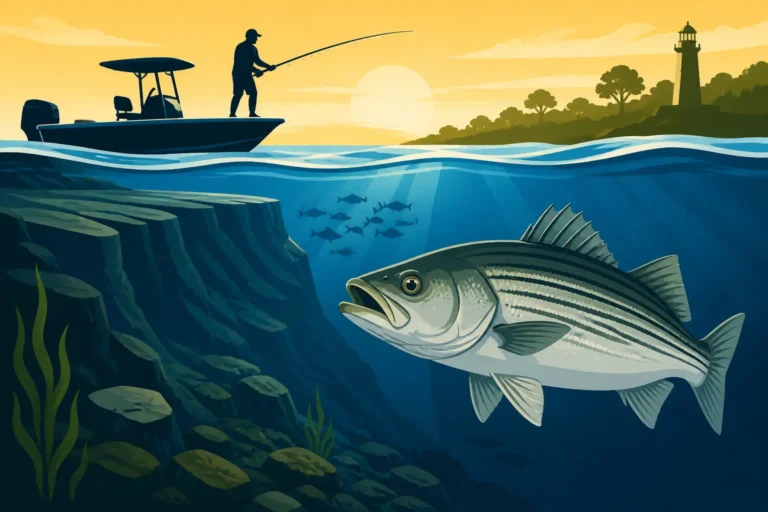
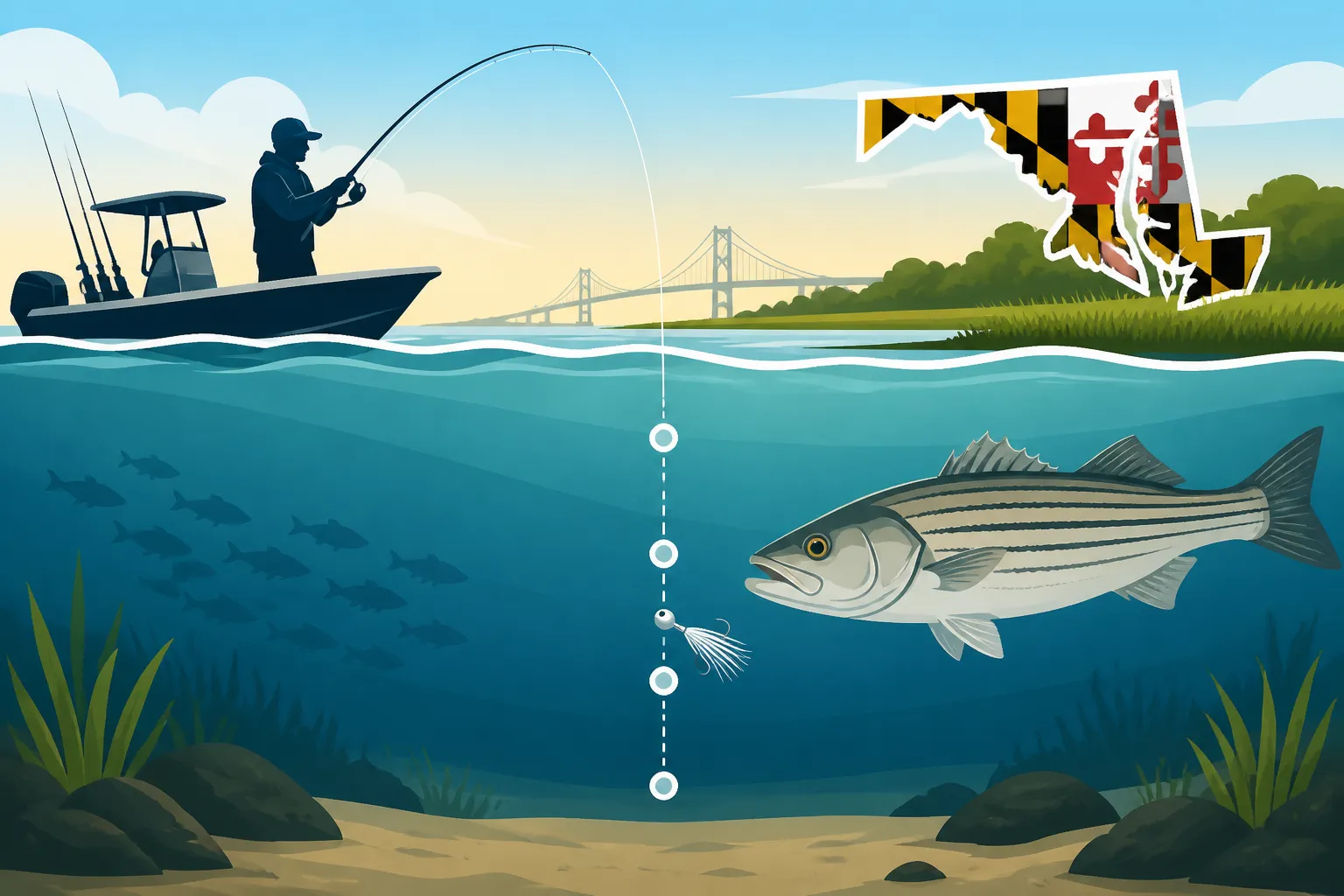
It can be incredibly frustrating to be out on the vast expanse of the Chesapeake Bay, boat idling over a promising spot, knowing full well that striped bass are lurking somewhere below, but feeling completely lost on how deep your jig needs to go to entice a strike. Many anglers struggle with pinpointing that elusive depth, leading to wasted casts and missed opportunities. This guide is dedicated to demystifying the art of jigging for striped bass in the Bay, helping you understand the factors that influence fish depth and providing practical strategies to get your lure right in front of their noses.
Understanding Striped Bass Behavior and Depth
Before you even pick up your rod, it's crucial to understand why striped bass position themselves at certain depths. They aren't just randomly distributed throughout the water column; their location is driven by a few primary instincts: feeding, comfort, and seeking shelter.
Seasonal Movements and Water Temperature
Water temperature is a massive factor dictating where striped bass will hold. As the seasons change, so does their preferred depth range.
In the spring, after their arduous spawning journey, stripers are often found in shallower waters, especially in the upper reaches of tributaries like the Choptank or Patuxent rivers. The warmer surface temperatures in these areas, often around 50-60°F, make them more active and willing to feed. They're recovering from the spawn and chasing baitfish that are also moving into shallower, warmer waters to reproduce. Early mornings and late evenings can see them very shallow, even just a few feet under the surface. However, as the sun climbs and heats the very top layer, they might drop down to 10-20 feet for cooler, more oxygenated water, especially if deeper channels are nearby. Understanding the typical Maryland Striped Bass Season and Rockfish Rules is key to knowing where to start looking.
During the summer, when Bay temperatures can soar, striped bass often seek refuge in deeper, cooler water, particularly during the middle of the day. They'll gravitate towards areas with cooler thermoclines, which can be anywhere from 20 to 60 feet deep, sometimes even deeper in the main channels of the Bay. During low light conditions – dawn, dusk, or overcast days – they might push up shallower to ambush bait, but generally, summer jigging requires targeting deeper structures. If you're out during the heat, don't be afraid to drop your jigs down to 30, 40, or even 50 feet if your sonar is marking fish. Keep in mind that Maryland's 2026 Striped Bass Season Dates will dictate when you can actively target and keep fish, especially during warmer months.
The fall brings a revitalized bite as water temperatures cool down, triggering the infamous "fall run." Stripers become incredibly active, feeding aggressively to build up fat reserves for winter. They can be found at a wide range of depths, often following massive schools of baitfish like menhaden. This is a time when they might be anywhere from 10 feet deep to 60 feet deep, often suspended in the water column directly beneath or within large bait balls. Early fall often sees them still somewhat deep, but as late fall approaches and temperatures drop further, they might consolidate into deeper, warmer channels before migrating out of the Bay or seeking wintering grounds.
Forage and Structure
Striped bass are opportunistic predators, and their depth is intrinsically linked to the presence and depth of their prey. If the baitfish are holding at 30 feet, that's precisely where the stripers will be, regardless of other factors.
Baitfish: Learning What Do Striped Bass Eat in the Chesapeake Bay? will give you a huge advantage. They primarily target smaller fish like menhaden, alewives, spot, and various silversides. These baitfish often congregate in dense schools. When you see these schools on your sonar, look for the arches or lines representing stripers either directly beneath, within, or just above the bait. Their position will tell you exactly how deep to jig. If the bait is scattered, the stripers might be more spread out, making them harder to pinpoint at a specific depth. Sometimes, baitfish will "ball up" tightly when predators are present, looking like a dense cloud on your sonar. This is a prime jigging scenario.
Structure: Underwater structure acts as an ambush point and a current break for striped bass. These features include:
- Channel edges and drop-offs: These are classic striper hangouts. Fish will sit on the deeper side, facing into the current, waiting for bait to be swept over the edge. Jigging along these depth contours, often at the break point, is highly effective. You might find them right on the edge at 25 feet, or a bit deeper at 40 feet at the base of the channel.
- Wrecks and reefs: These provide excellent cover and attract bait. Fish can be found right on top of the structure, or sometimes slightly off to the side, particularly on the "down-current" side where the current is broken. You'll need to drop your jig right into the structure to get bites.
- Bridge pilings: The pilings of the Chesapeake Bay Bridge, for example, are notorious striper magnets. Fish hold tight to these structures to break the current. Jigging directly against the pilings can be effective, and the depth will vary depending on the specific piling and the current. Sometimes they're at 15 feet, sometimes at 40 feet, clinging to the concrete.
- Oyster reefs: While often shallower, these natural formations are magnets for bait and predators. Jigging over oyster beds, especially during times of lower boat traffic, can be very productive.
Knowing how to effectively read your sonar to identify these structures, and then positioning your boat to jig them precisely, is a game-changer.
Key Factors Influencing Jigging Depth
Beyond fish behavior, several environmental factors directly influence how deep you need to present your jig. Ignoring these can mean presenting your lure miles above or below the fish.
Current and Tide
The movement of water, whether from tidal flow or river current, plays a critical role in where stripers will hold and how your jig behaves. The Chesapeake Bay is a tidal estuary, so How Tides Affect Fishing in Maryland's Chesapeake Bay is a daily consideration.
Current Speed: Strong currents can push stripers closer to the bottom or tightly against structure to conserve energy. If the current is ripping, they won't expend energy chasing bait up and down the water column. Instead, they'll often position themselves in "current breaks" – areas where the water flow is reduced, like behind a piling or a submerged hump. In these conditions, your jig needs to get down fast and stay in the strike zone longer. A heavier jig is often required to combat strong currents, allowing it to sink quickly and maintain a more vertical presentation.
Tidal Influence: Tides dictate the direction and strength of the current. During a strong incoming or outgoing tide, fish will often orient themselves to face the current, waiting for food to be delivered. The peak of the tide (slack tide) often sees fish become less active or disperse, while the beginning and end of a strong current flow can be highly productive. Understanding the tidal swings in your specific fishing area is crucial for predicting fish depth and activity. For example, during a fast outgoing tide near a channel edge, stripers might be holding right on the lip of the channel at 30 feet, but during slack tide, they might move up into shallower areas or suspend off the bottom.
Baitfish Presence and Location
I can't stress this enough: find the bait, find the fish. Your sonar is your best friend here.
Visualizing Bait on Sonar: Modern fishfinders, especially those with CHIRP technology, are incredibly good at marking baitfish. They'll often appear as dense clouds or schools of small dots. Larger baitfish, like menhaden, might show up as distinct individual marks within a school. When you see these bait schools, pay very close attention to their depth. If the bait is at 25 feet, start jigging there. If it's at 45 feet, drop your jig to 45 feet.
Stripers with Bait: Striped bass will often be marked as larger, distinct arches or lines, either directly under, within, or just on the periphery of these bait schools. When you see big arches right inside a bait ball, that's a feeding frenzy waiting to happen. Your jig needs to penetrate that bait ball and mimic a struggling baitfish to trigger a strike. Sometimes, stripers will be holding deeper than the main bait school, waiting for disoriented bait to drop down. This is where Jigging Techniques for Maryland's Chesapeake Bay Striped Bass come in handy, allowing you to drop quickly to the bottom and work your way up.
Sonar Interpretation
Using your sonar effectively is the single most important skill for determining jigging depth. It's not just about seeing fish; it's about understanding what you're seeing.
Reading the Screen:
- Bottom Contour: Your sonar will show you the bottom. Pay attention to sudden changes in depth, humps, ledges, and channels. These are prime areas.
- Hard vs. Soft Bottom: Harder bottoms (like shell or rock) often show a thicker, more intense return line, while soft bottom (mud) will be thinner. Stripers often prefer hard bottom.
- Fish Arches: Larger, more distinct arches usually indicate bigger fish. The depth displayed next to the arch is your target depth. Don't just look for one or two arches; look for clusters or schools of fish.
- Bait Balls: As mentioned, these look like clouds. Their density and depth are key.
- Thermoclines: Sometimes, you'll see a distinct line on your sonar where the water temperature changes abruptly. Fish will often hold above or below this line, seeking comfortable temperatures.
Adjusting Sensitivity and Range: Don't be afraid to adjust your sonar's sensitivity to get a clearer picture. Too high, and you'll get clutter; too low, and you'll miss faint returns. Also, adjust your depth range. If you're fishing in 60 feet of water, set your range to 0-80 feet to get a detailed view of the entire water column. If you're only seeing fish from 30-40 feet, you can zoom into that range for an even closer look. Many anglers also utilize side-scanning sonar to locate schools of fish off to the sides of the boat, helping them position the boat directly over the fish before dropping a jig.
Practical Strategies for Finding the Right Depth
Now that we understand the "why," let's dive into the "how." These strategies will help you systematically find the strike zone.
The Count-Down Method
This is a fundamental technique, especially useful if you're fishing without or with limited sonar, or if you just want a quick estimate.
How it Works:
- Drop your jig: Cast your jig out and let it sink on a semi-slack line.
- Count: As it sinks, count steadily "one thousand one, one thousand two, one thousand three…" until your line goes completely slack, indicating it has hit the bottom.
- Calculate: Based on that count, you'll get an approximate sink rate. For example, if a 1-ounce jig takes 10 seconds to hit bottom in 30 feet of water, it's sinking roughly 3 feet per second.
- Target: If you then see fish marked at 20 feet on your sonar, you know you need to count down for about 6-7 seconds before engaging your reel and starting your retrieve.
Tips for Success:
- Consistent Jigs: Use the same weight and type of jig to maintain a consistent sink rate.
- Vary the Count: Don't just count down once. Try it a few times to get an average.
- Wind/Current: Strong wind or current will affect your sink rate, making the jig swing out and take longer to reach the desired depth. You'll need to compensate by adding a few seconds to your count or increasing jig weight.
- Line Type: Braided line, with its thinner diameter and less stretch, will sink faster and give you better feel for the bottom than monofilament.
This method allows you to repeatedly hit a specific depth zone, even if you're not constantly glued to your screen.
Fan Casting and Depth Zones
The Chesapeake Bay isn't a bathtub; fish move, and they often aren't in a perfect vertical column beneath your boat. Fan casting helps you cover a wider area and multiple depth zones.
Method:
- Start shallow: Cast your jig out and let it sink for a short count (e.g., 5 seconds), then begin your retrieve, covering the upper water column.
- Go deeper: On your next cast, count down longer (e.g., 10 seconds), retrieving through a middle depth range.
- Hit the bottom: On the third cast, let your jig sink all the way to the bottom, then work it up.
- Fan Out: Instead of just casting straight out, cast to your left, then straight, then to your right, creating a "fan" pattern around your boat. This covers more horizontal as well as vertical water.
Hypothetical Scenario: You're over a channel edge, marking fish at 35-40 feet. Instead of just dropping straight down, try casting slightly up-current of the edge. Let your jig sink to, say, 30 feet as it drifts over the edge, then work it down. The fish might be looking up for an easy meal as bait drifts past. This technique is particularly effective when you're looking for suspended fish or those holding slightly off the main structure. It's a great approach for Maryland Striped Bass Fishing Techniques where you're trying to locate the active biters.
Adjusting to Strikes and Marks
The fish will tell you what they want, but only if you're paying attention and willing to adapt.
Listen to the Bites:
- Depth of Strike: If you get a strike at 20 feet on the count-down, focus your next few casts on that 15-25 foot range. That's the active zone.
- No Strikes: If you're counting down to 30 feet and getting nothing, but your sonar is marking fish at 40 feet, adjust immediately. Drop deeper.
- "Up Bites": Sometimes, fish will chase a jig that's being retrieved upwards. This means they're active and looking up, so you might not need to let your jig sink as deep on subsequent casts.
- "Down Bites": Other times, they'll hit the jig as it falls. This suggests they're lethargic or holding tight to the bottom, and a slower, deeper presentation is warranted.
Observe Your Sonar Continuously: Don't just look for fish once and assume they'll stay put. Striped bass are constantly on the move, especially when feeding. If the fish marks disappear from 30 feet and reappear at 50 feet, adjust your jigging depth accordingly. If you stop seeing bait, move on. Fishing the Best Time of Day to Fish Maryland's Chesapeake Bay often means continuously adjusting to changing conditions.
Table: Jig Weight and Depth Guidelines (Approximate)
| Jig Weight (Ounces) | Typical Depth Range (Feet, light current) | Heavy Current / Deep Water Notes | Target Species & Conditions |
|---|---|---|---|
| 3/4 – 1 oz | 5 – 20 ft | Use for very shallow water or slack tide. | Shallow stripers, white perch |
| 1.5 – 2 oz | 15 – 35 ft | Good all-around weight for moderate current. | Most common striper jigging |
| 3 – 4 oz | 30 – 60 ft | Essential for strong current or deep channels. | Deeper stripers, bottom fish |
| 5 – 8 oz+ | 50 – 100 ft+ | For extremely deep water or ripping currents. | Trophy stripers, offshore species |
Note: These are approximations. Actual depth achieved depends heavily on current, line diameter, and retrieve speed.
Essential Gear for Effective Deep Jigging
Having the right tools for the job makes a huge difference, especially when you're trying to feel those subtle bites deep underwater.
Jig Selection and Weight
Your jig is your primary tool, and choosing the right one for the conditions is paramount.
Bucktail Jigs: These classic jigs are incredibly versatile. They come in various weights and colors. For deeper jigging, you'll need heavier bucktails, often 2 to 4 ounces, sometimes even more. Their natural hair pulsates in the water, mimicking baitfish. Pair them with a soft plastic trailer (like a curly tail or a paddletail) for added action and scent. Brands like Spro and Gibbs make excellent bucktails. When fishing deep, a white, chartreuse, or natural baitfish color often works well. You can find a wide selection of bucktails on Amazon to experiment with different weights and colors.
Metal Jigs (Vertical Jigs): These are designed to sink fast and have a specific action on the retrieve. They often resemble slender baitfish. Examples include diamond jigs, spoon jigs, and flutter jigs. Their heavy, compact profile makes them ideal for getting down to 40-60 feet quickly and cutting through current. The action can be varied: a fast lift-and-drop, or a slower, more sweeping motion. They're particularly effective when Trolling vs Jigging for Maryland Striped Bass is the discussion, as they excel in vertical presentations. Popular metal jigs include Crippled Herring and Shimano Butterfly jigs.
Soft Plastic Jigs: While often lighter, soft plastics on heavy jig heads (1-3 ounces) can be very effective. The key is to match the jig head weight to the depth and current. Paddletails, swim shads, and curly tails from brands like Z-Man, Bass Kandy Delights, or Gulp! are popular. These offer incredible action and come in a myriad of colors. The texture and scent of some soft plastics can be a huge draw for stripers, even at depth.
The rule of thumb for weight is to use the lightest jig you can that still reaches the desired depth and allows you to maintain contact with the bottom or the strike zone. Too light, and you won't get down; too heavy, and you'll tire yourself out and lose some of the jig's natural action.
Rod, Reel, and Line for Deep Jigging
Your setup needs to be robust enough to handle heavy jigs, strong currents, and powerful striped bass.
Rod:
- Length: A 6'6" to 7'6" rod is typically ideal. Shorter rods (under 7') offer more leverage for fighting big fish and tend to be stiffer for working heavier jigs, while longer rods can cast farther and provide a wider sweep for jigging action.
- Power: You'll want a medium-heavy to heavy power rod. This provides the backbone needed to properly work heavier jigs and absorb the shock of a hard strike from a large striper.
- Action: A fast to extra-fast action rod is preferred. This means the rod bends mostly in the tip, allowing for quick, responsive jigging movements and excellent sensitivity to feel subtle bites, even in deep water. You need to feel every tap, bump, and change in pressure.
Reel:
- Spinning or Conventional: Both have their place. Spinning reels (size 4000-6000) are generally easier for beginners and offer quick casts. Conventional reels (low profile baitcasters or small star drag reels) excel at vertical jigging, offering more torque for fighting big fish and often better line capacity for heavier braid.
- Gear Ratio: A moderate to high gear ratio (6.0:1 or higher) is beneficial for quickly retrieving slack line and keeping up with fast-moving fish, especially when Best Lure Colors for Jigging Chesapeake Bay Rockfish are working.
- Drag System: A smooth, powerful drag system is non-negotiable. Ensure your reel can handle at least 15-20 pounds of drag to control a big striper.
Line:
- Braided Line: This is your go-to for deep jigging. Its lack of stretch provides unparalleled sensitivity, allowing you to feel even the lightest bites. Its thin diameter cuts through the water better, helping your jig get down faster and reducing current drag. Use 20-50 lb test braided line, depending on the jig weight and target fish size.
- Leader: Always tie on a fluorocarbon leader (20-40 lb test, 3-6 feet long). Fluorocarbon is nearly invisible underwater, more abrasion-resistant than braid, and provides a crucial shock absorber. Connect it to your braid with a strong knot like an FG knot or an Albright knot.
- Line Capacity: Ensure your reel has enough line capacity to hold a full spool of your chosen braid, especially if you're fishing in 50+ feet of water. You can find excellent quality braided lines and fluorocarbon leaders on Amazon from brands like PowerPro, Sufix, and Seaguar.
By combining an understanding of striper behavior, environmental factors, and precise jigging techniques with the right gear, you'll be well on your way to consistently finding and hooking striped bass at depth in the Chesapeake Bay.
Disclaimer
Fishing regulations, seasons, and licensing requirements can change. Always consult the latest Maryland Department of Natural Resources (DNR) rules and regulations before heading out on the water. This guide is for informational purposes only and should not be considered legal advice.